外汇管制

Search documents
传奇投资人瑞·达利欧:黄金仍是重要对冲资产
Guo Ji Jin Rong Bao· 2026-02-05 10:08
Group 1 - Ray Dalio stated that the world is on the brink of a "capital war," with central banks and sovereign wealth funds preparing for measures such as foreign exchange controls and capital controls [1][2] - The ongoing geopolitical tensions and volatility in capital markets are contributing to this situation, with the potential for capital markets to be weaponized through trade embargoes and restricted access [2] - Dalio highlighted the fear among European investors holding dollar-denominated assets regarding potential sanctions, while also noting similar concerns from the U.S. about capital access from Europe [2] Group 2 - Despite recent market sell-offs, gold remains one of the best investment choices, with gold and silver showing signs of recovery as of February 3 [3] - Gold has increased by approximately 65% over the past year but has since retraced about 16% from its peak, indicating its volatility [3] - Dalio emphasized the importance of maintaining a diversified investment portfolio, suggesting that central banks and sovereign wealth funds should consider a significant allocation to gold as a risk diversification tool [3]
海南封关:能打开外汇管制的金融国门吗?
Sou Hu Cai Jing· 2025-12-29 18:18
Core Viewpoint - Hainan cannot open its financial borders or allow free currency exchange due to its integration with mainland China, contrasting with Hong Kong's unique status as a Special Administrative Region [2][9]. Group 1: Financial Control and Currency Exchange - Hainan operates under a single accounting system with mainland China, making it impossible to implement free currency exchange or open financial borders [2][9]. - The concept of "one line open, two lines controlled" primarily relates to taxation, with other areas remaining tightly regulated, such as the internet and media [2]. - Allowing free currency exchange in Hainan would lead to a massive outflow of capital as wealthy individuals would convert RMB to USD, undermining the financial system [5][8]. Group 2: Economic Predictions and Currency Valuation - International institutions predict the RMB will appreciate, with a projected exchange rate of 6.8:1 by 2026, but this is driven by external factors rather than internal economic strength [6]. - The long-term outlook suggests a higher likelihood of RMB depreciation due to increasing money supply and rising government debt, which dilutes currency purchasing power [7]. - The disparity in deposit interest rates between USD and RMB incentivizes individuals to prefer USD savings, further complicating Hainan's financial landscape [8]. Group 3: Comparison with Other Free Ports - Hainan lacks the independence of established free ports like Hong Kong and Singapore, which allow for free capital movement and currency exchange [11]. - Successful free ports typically feature unrestricted currency flow and minimal regulatory barriers, contrasting sharply with Hainan's stringent controls [11].


全球航空公司收入滞留问题集中在非洲和中东地区
Shang Wu Bu Wang Zhan· 2025-12-18 07:26
Group 1 - The core issue is that global airlines are facing significant challenges in repatriating revenues, with approximately $1.2 billion stuck due to foreign exchange controls, predominantly in Africa and the Middle East, highlighting the fragility of the foreign exchange systems in these regions [1][2] - Africa and the Middle East account for about 93% of the total blocked airline revenues, indicating a concentrated problem in these areas [1] - Algeria is identified as the country with the most severe issue, with $307 million in airline revenues unable to be repatriated, followed by six countries in Central Africa with a combined total of approximately $179 million [1] Group 2 - Although the global situation has improved since April 2025, certain countries, particularly Algeria, are experiencing worsening conditions due to increasingly complex administrative procedures and ongoing political and economic instability [2] - The International Air Transport Association (IATA) emphasizes that the political and economic instability in Africa and the Middle East is a significant driver of foreign exchange controls, which complicates the distribution of foreign exchange [2] - IATA warns that the inability to repatriate airline revenues not only undermines the financial health of airlines but also disrupts their operations in affected countries, impacting air connectivity, tourism, and overall economic stability [2]
以色列央行原行长独家专访:控通胀如何铸就“创业国家”传奇
2 1 Shi Ji Jing Ji Bao Dao· 2025-10-30 11:44
Core Viewpoint - The independence of central banks is crucial for economic stability, especially in the current international context where political pressures can undermine effective monetary policy [1][14]. Group 1: Central Bank Independence - Central bank independence is essential for implementing necessary and sometimes difficult decisions, as political systems tend to focus on short-term goals [1][14]. - The independence of central banks allows for a long-term perspective in monetary policy, which is vital for sustainable economic outcomes [14][15]. Group 2: Israel's Economic Transformation - Israel's economic success in the 1990s was attributed to a comprehensive strategy that included stabilizing inflation, reducing budget deficits, developing capital markets, and enhancing exchange rate flexibility [2][12]. - The influx of highly skilled immigrants and improved geopolitical conditions contributed to Israel's transformation into a "startup nation," with high-tech exports accounting for over half of its total exports [2][12]. Group 3: Global Economic Governance - The shift from globalization to fragmentation is concerning, as countries are increasingly competing rather than cooperating, which can lead to unhealthy economic practices [6][8]. - China is recognized as a vital player in the global economy and should take on a larger role in global governance, responding to traditional systems' inadequacies [3][8]. Group 4: Emerging Markets Representation - Emerging markets have shown resilience and performed better than developed countries in recent years, but their representation in international institutions like the IMF does not reflect their economic weight [7][8]. - There is a growing recognition of the need to enhance the representation of emerging markets in global governance structures [7]. Group 5: Debt and Economic Stability - The accumulation of public debt is a long-term issue resulting from persistent budget and current account deficits, which can lead to systemic risks [9][10]. - Responsible government behavior and the development of robust capital markets are essential to manage high debt levels and maintain economic stability [10]. Group 6: Lessons from Israel - The experience of Israel in achieving price stability and economic openness can serve as a model for other emerging or middle-income economies [14][15]. - Effective public communication and building public support for monetary policy are critical for central banks to maintain their independence and achieve economic stability [15].

【锋行链盟】纳斯达克IPO外国股东的重点要求
Sou Hu Cai Jing· 2025-10-03 16:23
Core Points - The article discusses the requirements imposed by Nasdaq on foreign shareholders, focusing on transparency, compliance, lock-up periods, and information disclosure to ensure trust in the shareholder structure and adherence to U.S. securities regulations [2][3] Group 1: Definition and Classification of Foreign Shareholders - Nasdaq defines "foreign shareholders" as shareholders who are non-U.S. residents or non-U.S. registered entities, including foreign individual investors, institutional investors (such as sovereign wealth funds, pension funds, hedge funds, commercial banks), foreign governments or their agencies, and offshore registered companies [4] Group 2: Key Requirements - **Equity Structure and Information Disclosure**: Companies must fully disclose information about foreign shareholders to ensure investors understand the equity distribution and potential conflicts of interest [2] - **Lock-up Period**: Major shareholders, including foreign shareholders, must adhere to a 6-month lock-up period post-IPO, which may extend to 12 months in certain cases, to stabilize stock prices and prevent market volatility from large sell-offs [2] - **Compliance**: Foreign shareholders must comply with anti-money laundering (AML) regulations and foreign exchange controls when opening accounts through U.S. brokers or depositary banks [3] Group 3: Disclosure Requirements - Major shareholders must disclose their identities and shareholdings in the S-1 filing and annual reports (10-K), including the top ten shareholders and any foreign shareholders holding 5% or more of the company’s shares [4] - Special disclosures are required for foreign government or sovereign wealth fund shareholders regarding their political connections and investment intentions [4] - If foreign shareholders engage in related-party transactions, these must be disclosed in the 10-K, detailing transaction amounts, terms, necessity, and financial impact [4] Group 4: Voting Rights and Taxation - Foreign shareholders can exercise voting rights through U.S. depositary banks (ADR depositary) or directly via brokers, with tax implications on dividends subject to U.S. withholding tax based on tax treaties [5] Group 5: Control Changes and ADR Holders - If a foreign controlling shareholder sells a significant number of shares leading to a change in control, Nasdaq's rules on control changes must be followed, including notifying Nasdaq and disclosing the reasons for the change [5] - For companies listed via American Depositary Receipts (ADR), specific requirements apply to the disclosure of ADR structures and major ADR holders [5] Group 6: Summary of Core Requirements - Nasdaq's core requirements for foreign shareholders emphasize transparency, compliance, and stability, necessitating that foreign shareholders understand U.S. capital market rules and cooperate with companies and intermediaries to ensure a smooth IPO process and protect their interests [5]

突然,暴跌!阿根廷紧急救市!
证券时报· 2025-09-21 04:35
Core Viewpoint - Argentina is facing a severe currency crisis, prompting the central bank to intervene in the foreign exchange market by selling a total of $1.11 billion to support the peso, which has depreciated nearly 11% against the dollar in the past month and 30.1% year-to-date [1][4][6]. Group 1: Central Bank Intervention - The Argentine central bank sold $678 million on Friday, marking the third intervention of the week, following sales of $379 million on Thursday and $53 million on Wednesday [3][4]. - The scale of intervention is considered astonishing given Argentina's limited foreign exchange reserves [1]. Group 2: Government Measures and Economic Impact - The government has introduced new foreign exchange controls to stabilize the peso, with the economy minister vowing to use "the last dollar" to defend the currency [7][8]. - The economic impact of selling dollars to support the peso could lead to a significant contraction in economic activity, potentially causing credit tightening and economic shrinkage [8]. Group 3: Political Context and Market Reactions - The peso's collapse is attributed to a political crisis, including unexpected electoral defeats for President Javier Milei's party, which undermined investor confidence in his ability to maintain a free-market agenda [14][16]. - The yield on Argentine sovereign bonds has surged by 5.5 percentage points in two weeks, reflecting growing concerns over the government's debt repayment capacity [16]. Group 4: IMF Loan and Reserve Situation - An IMF loan of $20 billion, obtained in April, has become a significant part of the central bank's reserves, which total approximately $39 billion [10][11]. - Despite the IMF loan temporarily bolstering reserves, it has not led to any additional accumulation of reserves, leaving Argentina with limited foreign exchange resources [11].

阿根廷比索首次突破交易区间上限,但央行否认,米莱政府外汇策略面临考验
Hua Er Jie Jian Wen· 2025-09-17 22:28
Core Insights - The Argentine peso has breached the upper limit of the government-set trading band for the first time, prompting the central bank to intervene using foreign reserves, indicating a setback for President Milei's policies aimed at controlling inflation and stabilizing the currency [1][2] Group 1: Currency and Market Intervention - The peso depreciated nearly 0.4% against the dollar, reaching 1,474.50 pesos per dollar, surpassing the IMF-agreed trading band limit of 1,474.345 pesos [1] - The central bank sold $53 million in foreign reserves for market intervention, marking the first direct market operation since the new exchange rate framework was implemented [1][2] - The central bank later denied that the peso had breached the trading band limit, citing internal calculations that suggested a different upper limit, but market sentiment reflects concerns over the fragility of the government's foreign exchange strategy [1][2] Group 2: Policy Challenges and Economic Implications - The breach of the trading band presents a policy dilemma, as defending the band could be costly in terms of foreign reserves, with analysts suggesting that the government may need to raise the band instead [2] - The central bank's report confirmed the sale of $53 million in international reserves, highlighting the challenges of maintaining the new exchange rate framework [2] - The Milei administration has tightened foreign exchange controls, including stricter rules for banks and prohibiting certain financial transactions, in an effort to curb dollar demand and stabilize the peso [3] Group 3: Political Context and Market Sentiment - The tightening of foreign exchange controls is viewed as a response to the pressure on the peso, with analysts expressing skepticism about the sustainability of these measures amid rising electoral uncertainties [3] - The government has also increased the reserve requirements for commercial banks, which has temporarily supported the peso but added pressure to the banking system and the overall economy [3] - Investors are closely monitoring the results of provincial elections as an indicator of public acceptance of Milei's economic policies, which will influence the outlook for the upcoming national midterm elections [4]
阿根廷收紧外汇管制 抑制美元需求以稳住比索
Xin Hua Cai Jing· 2025-09-15 23:12
Core Viewpoint - Argentina's regulatory actions aim to suppress the demand for US dollars in the financial market, reflecting the government's commitment to defend the peso amid ongoing economic challenges [1] Regulatory Actions - The Argentine National Securities Commission (CNV) recently clarified existing regulations, prohibiting brokers from selling local dollar-denominated financial instruments if they hold peso-denominated repurchase agreements (REPO) or other short-term loan positions [1] - This regulation effectively prevents market participants from using short-term peso financing to purchase US dollars, indicating a tightening of foreign exchange controls [1] Government Intervention - The government, under the leadership of Javier Milei, has increased its buying power in dollar futures and implemented measures to tighten market liquidity [1] - Despite these interventions, the peso approached the upper limit of its trading range on the following Monday, suggesting ongoing pressure on the currency [1] Economic Analysis - Economist Juan Manuel Trucco from Buenos Aires consulting firm Outlier described the recent regulatory changes as a clear tightening of foreign exchange controls [1]
内地卖淫团伙头目向境外汇款,被瑞银前高管私吞1.3亿港元,“在伦敦买楼,还登记了6辆豪车”!法院判了
新浪财经· 2025-09-05 10:13
Core Viewpoint - The case involves UBS AG's former executive Sun Jianrong, who was convicted of money laundering and contempt of court for embezzling over HKD 130 million from clients, leading to a prison sentence of ten years and six months, along with a lifetime ban from the financial industry [2][3]. Group 1: Embezzlement Details - Sun Jianrong embezzled funds from clients, specifically a couple named Yu Quanli and Lou Xiaojie, between November 2016 and February 2018, transferring a total of 1.3 billion RMB into various bank accounts, including 5 million RMB directly into his own account [2][3]. - The funds were disguised through fake transaction documents and monthly statements that mimicked UBS's official formats, misleading the clients into believing their money was secure [2][3]. Group 2: Discovery of Fraud - The fraud was uncovered in June 2018 when a new advisor took over the couple's accounts and found discrepancies, revealing that over 100 million HKD was missing from the accounts [3]. - Investigations showed that the embezzled funds were funneled into Sun's controlled accounts at HSBC and Hang Seng Bank, and he used the money to purchase properties in London and luxury cars [3]. Group 3: Criminal Background of Victims - The plaintiffs, Yu Quanli and Lou Xiaojie, were identified as involved in organized illegal activities, specifically a prostitution ring in Nanjing, which raised questions about the source of the funds [5][7]. - Yu Quanli was convicted in 2020 for operating a large-scale prostitution ring and sentenced to 15 years in prison, which further complicated the legal proceedings regarding the embezzled funds [7].

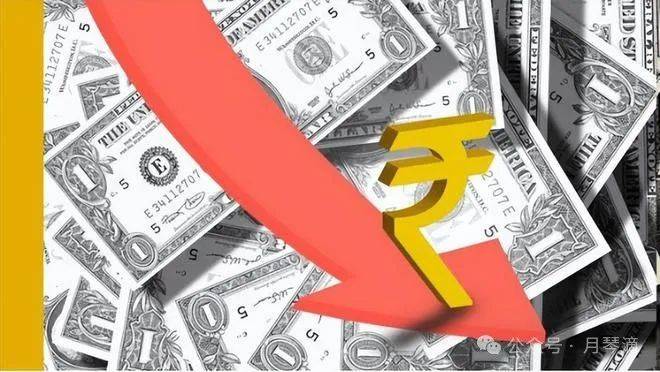
割不动中国,美国收割印度,数万亿资金撤离,莫迪的重大失误
Sou Hu Cai Jing· 2025-08-07 09:46
Core Viewpoint - The article discusses the significant capital outflow from the Indian market, likening it to the financial turmoil of 1999, and highlights the challenges faced by the Modi government in managing the economy amidst this crisis [1][3]. Group 1: Capital Outflow - On October 3, a massive capital withdrawal occurred, with $1.017 billion in bonds and $18.5 billion in stocks sold off in a single day [5]. - The outflow is attributed to the Federal Reserve's interest rate adjustments, which triggered a rapid shift of global funds away from emerging markets like India [5][12]. - The withdrawal is characterized as a strategic move by international capital, aiming to pressure the Indian government to relax foreign exchange controls [5][12]. Group 2: Economic Impact - India's economy is heavily reliant on foreign markets, with exports accounting for over 20% of GDP, making it vulnerable to external financial shifts [7]. - The depreciation of the rupee and rising prices have led to a loss of orders across various sectors, including textiles and IT services, impacting the overall economic landscape [9][10]. - Analysts warn that if the current trends continue, India's economy could regress to levels not seen since around 2000, representing a 24-year setback [3]. Group 3: Government Response - The Modi government is in a precarious position, needing to balance market stability with the demands of international investors [12][14]. - The government's inconsistent policy approach—oscillating between easing and tightening regulations—has created uncertainty, leading to frustration among foreign investors [12][14]. - The outcome of this crisis will be a critical test for the Modi administration, with potential long-term implications for India's economic trajectory [14].