
藏粮于技

Search documents
新华时评|秋分岁稔道丰年
Xin Hua She· 2025-09-23 13:33
Core Viewpoint - The article highlights the successful agricultural production in China despite challenges posed by natural disasters, emphasizing the importance of technology and policy support in achieving food security and quality improvement [2][3]. Group 1: Agricultural Production - China's agricultural production has overcome challenges such as drought and flooding, leading to stable summer grain production and increased early rice yield, with expectations for another abundant harvest [2]. - The article stresses the impact of global climate change on food production, noting the increasing frequency of extreme weather events that pose challenges to maintaining and improving grain production [2]. Group 2: Policy and Technological Support - The government is committed to prioritizing agricultural and rural development, implementing strong policies to support farmers and enhance agricultural foundations [2]. - The article advocates for the development of new agricultural production capabilities and the cultivation of new farmers, moving away from traditional farming methods [2]. Group 3: Recognition of Farmers - The article emphasizes the role of farmers and agricultural workers as the main contributors to the harvest, acknowledging their hard work and dedication [2]. - It highlights various roles played by agricultural workers, including those involved in land protection, scientific research, and marine farming, showcasing their contributions to food supply [2]. Group 4: Future Outlook - The year marks the end of the "14th Five-Year Plan" and the final year of the transition period for consolidating poverty alleviation achievements and rural revitalization [3]. - The article calls for reflection on valuable experiences and successful practices in agriculture, while also emphasizing the importance of planning for future harvests [3].
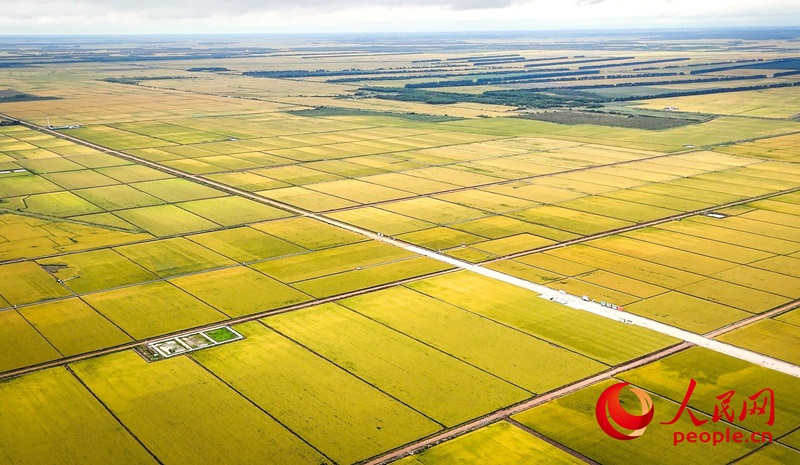
东北米饭何以格外香?
Ren Min Wang· 2025-09-23 01:28
Core Insights - The article highlights the significant contribution of the Beidahuang Agricultural Reclamation Group's Jian Sanjiang branch to China's rice supply, producing 13.9 billion jin of grain from only 0.6% of the national arable land in 2024 [2][18] - The focus is on innovative agricultural practices that enhance soil quality and crop yield, emphasizing the importance of tailored fertilization and land management techniques [6][11] Group 1: Agricultural Innovations - Jian Sanjiang has implemented side-deep fertilization technology, which allows for precise nutrient delivery to rice plants, resulting in an average yield increase of 36 to 48 kg per mu and an average income increase of 109.2 yuan per mu while reducing fertilizer usage by over 10% [6][10] - The region has shifted from traditional broad application of fertilizers to a more scientific approach, treating soil with organic fertilizers and customized nutrient plans [6][11] Group 2: Soil Management - Farmers in Jian Sanjiang have recognized the need for soil aeration, leading to the adoption of satellite-guided leveling machines that improve soil structure without flooding, enhancing crop growth [8][10] - The transformation of fragmented farmland into larger, more efficient plots has increased operational efficiency by 15% to 30%, allowing for better use of agricultural machinery [14][15] Group 3: Sustainable Practices - The establishment of 702 monitoring points for black soil health and the implementation of a "field chief system" for soil protection demonstrate a commitment to sustainable land management [15][18] - The integration of various agricultural practices, such as crop rotation and full straw return, supports a comprehensive green farming system that balances productivity with ecological health [11][18]

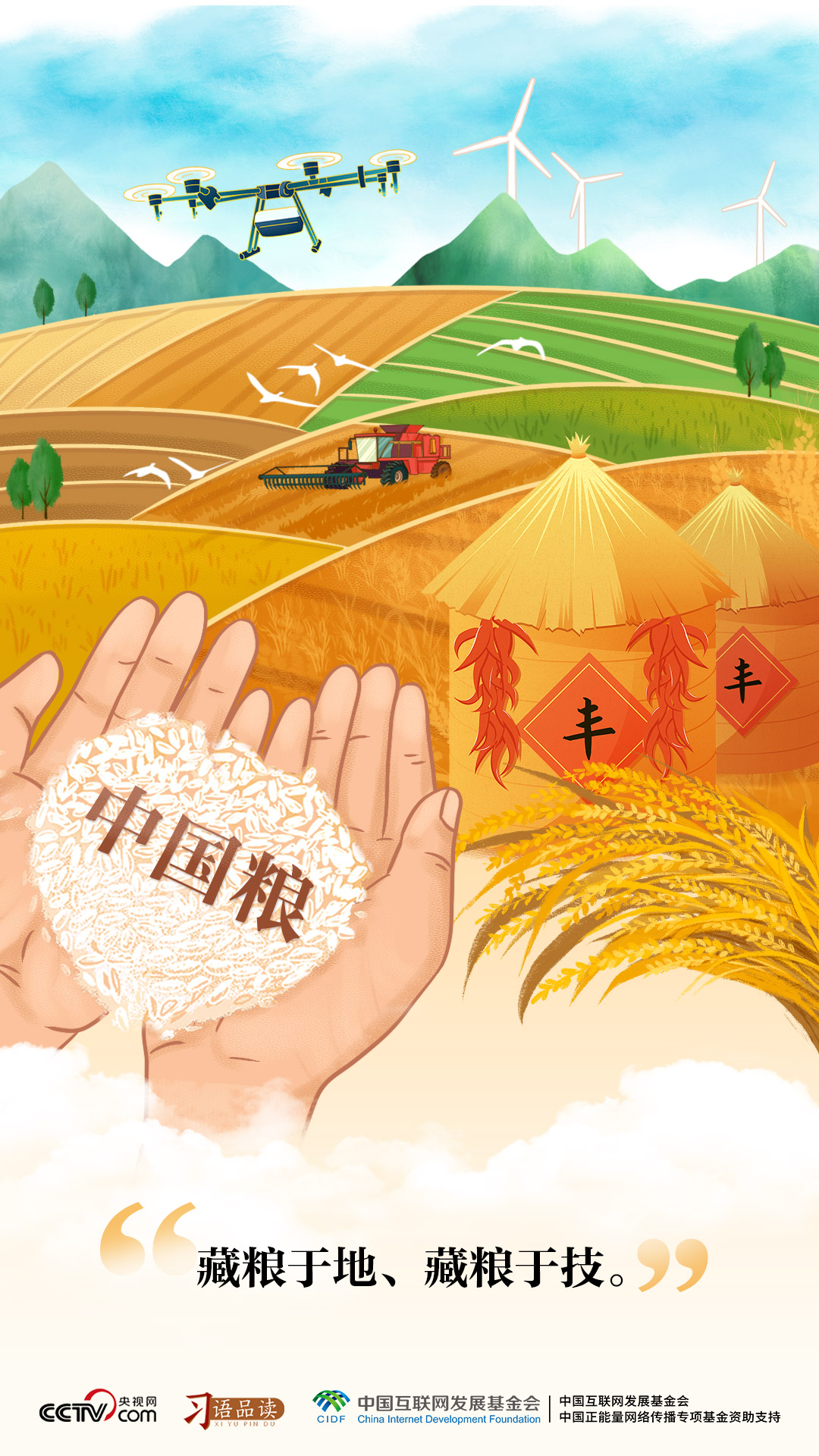
习语品读|藏粮于地、藏粮于技
Yang Shi Wang· 2025-09-22 23:47
Core Viewpoint - The importance of food security in China is emphasized, highlighting that it is essential for social stability, national security, and economic development. The government prioritizes ensuring food supply as a top governance task [4][6]. Group 1: Food Security Strategy - The strategy of "storing grain in the land and technology" is introduced, which focuses on protecting arable land and enhancing agricultural productivity through technological innovation [4][9]. - The government has committed to strict land protection measures, ensuring that the quality and quantity of arable land are maintained, with a target of 1.8 billion mu of arable land [5][6]. Group 2: Agricultural Development - As of 2024, China's grain production is projected to reach 1.4 trillion jin, with a per capita grain availability of 500 kg, significantly above the international safety line of 400 kg [6][8]. - The contribution rate of agricultural technology is expected to reach 63.2% by the end of 2024, with over 75% mechanization in crop farming and a seed coverage rate exceeding 96% [8][9]. Group 3: Long-term Vision - The government stresses the need for continuous vigilance in agricultural production, emphasizing that complacency due to past successes could jeopardize future food security [7][9]. - The focus on self-sufficiency in grain production is reiterated, with a clear directive that the majority of food must be domestically produced to ensure strategic food security [8][9].
再生稻如何提升种粮质效(新知)
Ren Min Ri Bao· 2025-09-22 21:55
Core Viewpoint - The development of regenerative rice is becoming a key player in stabilizing grain production and increasing farmers' income, supported by modern agricultural technology [1][3]. Group 1: Production and Economic Benefits - Regenerative rice cultivation allows for two harvests from one planting, significantly increasing productivity with average yields of 600 kg per mu in Anhui and 719.3 kg per mu in Hunan [1][2]. - The cultivation method reduces production costs by 400-500 yuan per mu, as it eliminates the need for re-seeding and reduces the use of fertilizers and pesticides [1][2]. - The quality of rice produced in the second season is often superior due to favorable growing conditions, leading to higher market prices [2]. Group 2: Technological Innovations and Challenges - The main challenge for the expansion of regenerative rice is the damage caused by traditional harvesting machinery, which can crush the dormant buds necessary for regeneration [2]. - Innovations such as narrow-track, wide-cut harvesting machines and the "wide-narrow row planting model" are being developed to minimize damage and improve yields [2]. Group 3: Policy and Future Development - The Ministry of Agriculture aims to increase the area of regenerative rice by approximately 10 million mu by 2030, emphasizing the integration of good seeds and farming practices [3]. - Technological advancements, including precision agriculture tools, are crucial for enhancing production efficiency and ensuring food security [3]. - The promotion of hybrid rice in over 20 African countries reflects China's commitment to agricultural modernization and international cooperation [3].
多维度夯实大国粮仓产能根基
Ren Min Ri Bao· 2025-09-22 00:29
Core Insights - The recent implementation of the "Permanent Basic Farmland Protection Red Line Management Measures" and the establishment of innovation hubs in key grain-producing regions highlight China's commitment to food security and self-sufficiency [2][3][4] - The focus on improving grain production capacity through land protection, technological innovation, and farmer motivation is essential for ensuring stable food supply amidst environmental challenges [2][3][4] Group 1: Policy and Regulation - The "Permanent Basic Farmland Protection Red Line Management Measures" will take effect on October 1, emphasizing the importance of farmland protection and management principles [2][3] - The policy aims to promote the "优进劣出" (better in, worse out) principle, reinforcing the foundation for stable production and income growth in agriculture [3] Group 2: Technological Innovation - The establishment of innovation hubs in the Huang-Huai region and Northeast China aims to enhance agricultural technology integration and application, addressing bottlenecks in the innovation chain [4] - The contribution of yield improvement from single crop production has exceeded 80% in recent years, indicating the effectiveness of integrating quality land, seeds, machinery, and methods [3] Group 3: Farmer Engagement - The strategy of "storing grain in the land and technology" emphasizes the need to motivate farmers, particularly smallholders, through subsidies and minimum purchase prices [4] - Initiatives like the "Grain King Competition" and targeted training programs are being implemented to encourage larger producers and farm owners to take the lead in increasing grain yields [4] Group 4: Environmental Challenges - Despite adverse weather conditions such as droughts and heavy rainfall, China has managed to stabilize summer grain production and increase early rice yields, setting a solid foundation for a good harvest [2][3] - The effective management of farmland and the application of appropriate strategies in land, technology, and human resources are crucial for achieving agricultural stability [2][3]
多维度夯实大国粮仓产能根基(人民时评)
Ren Min Ri Bao· 2025-09-21 22:00
Core Insights - The recent implementation of the "Permanent Basic Farmland Protection Red Line Management Measures" and the establishment of technological innovation hubs in key grain-producing regions highlight the importance of effective governance and strategic resource allocation in ensuring food security in China [1][2][3] Group 1: Policy and Regulation - The "Permanent Basic Farmland Protection Red Line Management Measures" will take effect on October 1, emphasizing the need for clear principles in the designation, control, and protection of permanent basic farmland [2] - The policy aims to promote the "优进劣出" (better in, worse out) principle, reinforcing the foundation for stable production and increased income in the agricultural sector [2] Group 2: Agricultural Production and Technology - China's agricultural strategy focuses on enhancing both the quantity and quality of arable land, with initiatives like the black soil protection project and high-standard farmland construction [2] - The exploration of technological innovation hubs in the Huang-Huai region and Northeast China aims to address bottlenecks in the agricultural innovation chain, facilitating collaboration among research institutions and enterprises [3] Group 3: Farmer Engagement and Support - The government recognizes the importance of motivating farmers, particularly smallholders, through mechanisms such as grain subsidies and minimum purchase prices to enhance their production enthusiasm [3] - Policies are being developed to link support for new agricultural business entities with income growth for farmers, thereby fostering a more robust agricultural economy [3]
地缘经济论 | 第五章 粮食安全与农产品制裁
中金点睛· 2025-09-21 01:05
Core Viewpoint - Agriculture plays a crucial role in human survival and national strategy, with food self-sufficiency being vital for global food security, particularly for populous countries like China and India, which achieve this through policy choices rather than just natural resources [2][3]. Group 1: Contemporary Geoeconomic Implications of Agriculture - Agriculture remains an essential industry despite its declining share in the global economy, as food supply gaps pose threats to national security [3]. - Food inflation significantly impacts low-income groups, with food expenditure constituting a larger share of their income compared to higher-income households [3]. - Supply-demand imbalances in agricultural products can lead to price volatility, affecting policy decisions in agriculture, finance, trade, and diplomacy [4]. Group 2: Food Security Risks in Low-Income Countries - Low-income countries face greater food security risks due to lower grain self-sufficiency and per capita production, exacerbated by geopolitical factors [20][22]. - Armed conflicts and extreme weather events are primary contributors to food insecurity in these regions, with significant portions of the population facing severe hunger [21][30]. - Economic sanctions and trade disruptions can further elevate food prices and reduce purchasing power, leading to nutritional deficiencies [22]. Group 3: Strategies for Ensuring Food Security - Maintaining a reasonable level of food self-sufficiency is crucial for mitigating the impacts of international market fluctuations [26]. - China's agricultural development has been driven by production advancements and market reforms, significantly increasing grain yield per capita since 1949 [28][29]. - The focus on technological innovation and market-oriented reforms has been pivotal in enhancing agricultural productivity and farmer income [28][29][36].
谭婷婷:筑牢农业发展“耕”基
Jing Ji Ri Bao· 2025-09-19 00:05
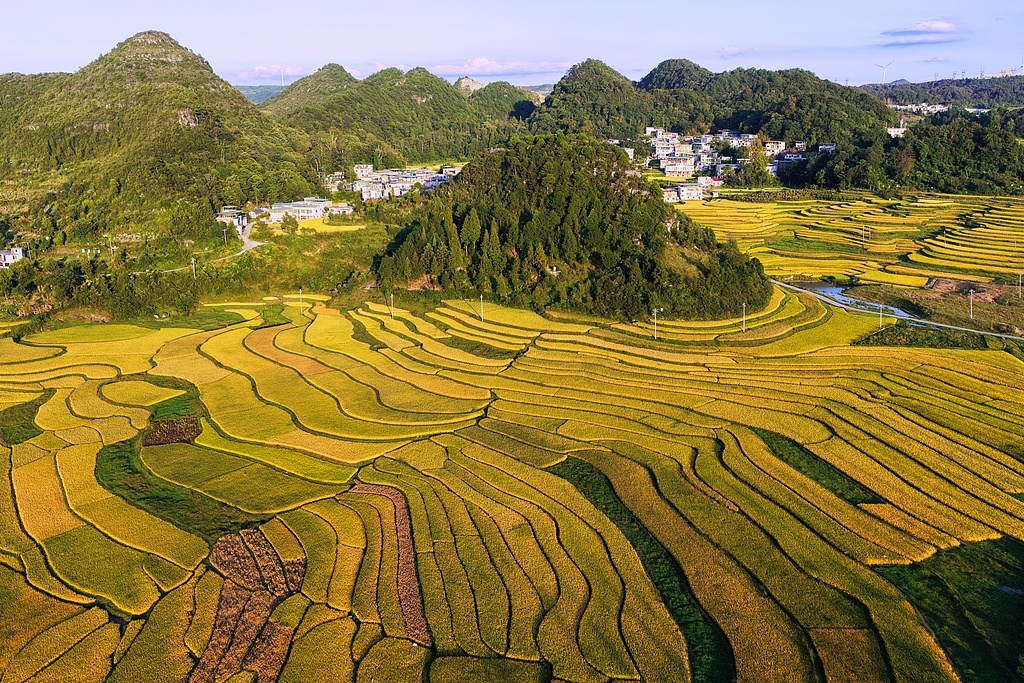
Core Viewpoint - The construction of high-standard farmland is a key initiative for promoting high-quality agricultural development in China, focusing on transforming traditional farmland into modern production systems through systematic engineering, technological application, and innovative mechanisms [1]. Group 1: Achievements and Importance - Significant achievements have been made in high-standard farmland construction, with over 1 billion acres built by July this year, accounting for more than 53% of the total arable land area [1]. - This initiative supports the national grain production strategy, ensuring stable grain output of over 1.3 trillion jin for several consecutive years [1]. - High-standard farmland construction has been emphasized in central government documents for over a decade, highlighting its importance for national food security and long-term agricultural development [1]. Group 2: Strategies for Advancement - The approach to advancing high-standard farmland construction includes a dual focus on "technological innovation + ecological protection" to establish a foundation for green productivity [2]. - Digital technology is being integrated to create a smart management loop, enhancing decision-making and regulatory traceability through comprehensive digital records [2]. - A multi-faceted investment mechanism is being developed to strengthen funding efficiency, involving government guidance, market operations, and performance-linked funding management [2]. - Regional strategies are being implemented to ensure precise execution, balancing productivity enhancement with ecological safety [2].
中国经济信心说丨饭碗端得更牢了,“十四五”这份答卷“沉甸甸”
Yang Shi Xin Wen· 2025-09-18 12:08
Core Insights - China's grain production exceeded 1.4 trillion jin for the first time last year, with agricultural technology contributing 63.2% to this achievement, indicating significant progress in high-quality agricultural development since the 14th Five-Year Plan [1][3] - The continuous increase in grain production over the past nine years, maintaining above 1.3 trillion jin, reflects the country's commitment to food security amidst challenges such as limited arable land and extreme weather [3][4] - The government has invested over 700 billion yuan in high-standard farmland construction during the 14th Five-Year Plan, with over 100 million acres of high-standard farmland established, enhancing agricultural productivity [4][6] Agricultural Technology and Innovation - The comprehensive mechanization rate for crop farming has surpassed 75%, and the coverage rate of quality seeds exceeds 96%, emphasizing the role of technology in increasing grain yield [6] - Breakthroughs in high-yield crop varieties, such as water-saving and disease-resistant wheat, have enabled China to rely on domestic seeds for its grain supply, reducing dependency on foreign sources [6] Rural Development and Infrastructure - The rural road network has exceeded 4.64 million kilometers, with a tap water coverage rate of 94% and a sanitary toilet coverage rate of 76%, contributing to improved living conditions in rural areas [6] - The deepening of rural reforms, including the extension of land contracts, has provided farmers with stability and support, fostering the development of new agricultural business entities [6] Future Outlook - The foundation for agricultural and rural development is becoming more solid, with the goal of achieving agricultural modernization and modern living conditions in rural areas by 2035 [7]
“薯”光耀南粤!广东甘薯有种有力量
Nan Fang Nong Cun Bao· 2025-09-16 08:05
Core Viewpoint - The article emphasizes the importance of sweet potato cultivation in Guangdong as a key agricultural product that contributes to food security and rural revitalization, highlighting the province's efforts in enhancing the sweet potato industry through innovation and quality improvement [2][8][12]. Group 1: Industry Overview - Sweet potatoes are significant food crops that drive farmers' income and rural development [2]. - Guangdong has a large scale of sweet potato cultivation, with 2.65 million acres planted in 2023, yielding 4.43 million tons of sweet potatoes and 0.65 million acres of potatoes with a production of 1.06 million tons [10][11]. - Sweet potatoes have become a competitive agricultural industry in Guangdong, with a focus on seasonal planting to maximize market value [12][14]. Group 2: Technological and Strategic Initiatives - The province is implementing strategies to ensure food security through land and technology, emphasizing the need for high-yield and adaptable crops like sweet potatoes [7][8]. - Guangdong is constructing an integrated sweet potato industry chain, focusing on breeding, production, processing, and marketing to enhance overall quality [16][17]. - The provincial government has selected seven leading sweet potato varieties, including five sweet potato and two potato varieties, to improve market offerings [18][19]. Group 3: Processing and Market Development - The sweet potato processing sector is diversifying, producing a range of products such as sweet potato fiber cakes, dried sweet potatoes, and functional foods [27][28]. - The nutritional value of sweet potatoes is being leveraged to upgrade traditional food products and develop new health-oriented and convenience foods [29][30]. - The Ministry of Agriculture and Rural Affairs has proposed a three-year action plan (2024-2026) to promote the development of the agricultural processing industry, aligning with Guangdong's efforts to enhance its sweet potato sector [32][42].
