
金融开放

Search documents
“两区”建设以来西城累计纳入市级项目945个
Zhong Guo Xin Wen Wang· 2025-09-12 02:31
Core Insights - The "Two Zones" initiative in Beijing has significantly contributed to the high-quality economic development of the Xicheng District, with a total of 945 projects amounting to 768.23 billion yuan over five years [1][3]. Financial Sector Development - Xicheng has focused on financial openness, with 208 projects in the financial sector totaling 620.96 billion yuan, accounting for 80.83% of the district's total project value [1][3]. - Notable projects include the establishment of the Beijing Stock Exchange and the Beijing Financial Court, enhancing the role of the national financial management center [1]. Technological Advancements - The district has positioned itself as a national-level financial technology demonstration zone, providing 350,000 square meters of quality industrial space to support the concentrated development of the fintech industry [3]. - Xicheng hosts 9 national key laboratories and 14 Beijing key laboratories, fostering a diverse ecosystem of research institutions and high-tech enterprises [3]. Digital Economy Growth - Over the past five years, Xicheng has made strides in digital infrastructure, leading the city in 5G base station density and establishing a digital infrastructure resource management service hub [3]. - The digital economy's added value is projected to exceed 240 billion yuan in 2024, with over 2,600 core digital economy enterprises and 718 large-scale data companies generating over 200 billion yuan in revenue [3]. Future Initiatives - Xicheng plans to enhance innovation capabilities and leverage city-level policies to create replicable and scalable innovation case studies [4]. - The district aims to deepen financial openness and attract more international financial organizations to improve the internationalization of financial services [4]. - There is a focus on optimizing the business environment and upgrading service mechanisms to support enterprises throughout their lifecycle [4].

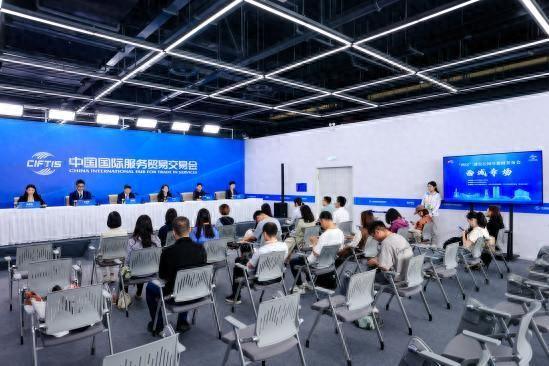
金融科技融合 产品亮点纷呈
Jin Rong Shi Bao· 2025-09-12 01:59
Group 1 - The core viewpoint of the articles highlights the expansion of payment services in China, driven by the increasing number of international travelers and the launch of new initiatives by Mastercard to enhance payment convenience for foreign visitors [1] - Starting in 2024, Mastercard will upgrade its "Seamless China, Mastercard" payment facilitation project, introducing multiple measures to promote inclusive payment and card-based market development [1] - The annual service trade fair showcased various innovative technologies and services, including the introduction of "foreign card access" services in major cities like Beijing, Shanghai, and Chengdu, enhancing the travel experience for international visitors [1][2] Group 2 - The service trade fair attracted 97 domestic and foreign financial institutions, with 46 being foreign entities, indicating a significant international presence and showcasing China's commitment to financial openness [3] - HSBC's Asia and Middle East Co-CEO emphasized China's large market, comprehensive industrial support, and vibrant innovation ecosystem as key factors attracting multinational companies to invest in China [3] - The fair served as an important platform for demonstrating China's financial openness and the increasing integration of global markets, creating long-term development opportunities [3]

金融服务:金融科技融合 产品亮点纷呈
Jin Rong Shi Bao· 2025-09-12 01:41
Group 1 - The article highlights the expansion of Mastercard's payment facilitation project in China, aimed at enhancing the payment experience for foreign travelers starting in 2024 [1] - Mastercard has introduced new initiatives to promote inclusive payment and card-based market development, including support for public transportation systems in major cities like Shanghai and Chengdu [1] - The annual service trade fair in Beijing showcases innovative technologies and services, with a focus on enhancing the consumer experience for international visitors [1] Group 2 - The service trade fair attracted 97 domestic and foreign financial institutions, with 46 being foreign, indicating a significant international presence in China's financial services sector [3] - The fair serves as a platform to demonstrate China's commitment to financial openness and innovation, attracting multinational companies to invest in the Chinese market [3] - HSBC's executive emphasized China's large market, robust industrial support, and innovative ecosystem as key factors driving foreign investment and economic collaboration [3]
数字人民币闪耀服贸会 中国金融开放加速“链接全球”
Zheng Quan Ri Bao· 2025-09-11 16:51
Group 1 - The core focus of the financial services exhibition is the innovative applications of digital RMB and the international expansion of financial institutions [1][2] - The digital RMB experience area spans nearly 1,000 square meters, featuring a collaborative display from multiple banks, including China Bank and Agricultural Bank, showcasing a variety of digital RMB applications [2][3] - The exhibition highlights the popularity of digital RMB, with various interactive experiences attracting large crowds, including personalized coffee and cultural-themed hardware wallets [2][3] Group 2 - The exhibition also emphasizes cross-border financial services, showcasing China's increasing openness and innovation in the financial sector [4] - China UnionPay presented its international online business development and innovative payment tools, with a global acceptance network extending to 183 countries and regions [4] - China Galaxy Securities shared its experience in expanding into Southeast Asia, highlighting the need for comprehensive financial services to support Chinese enterprises going abroad [4]




2025服贸会金融服务专题聚焦开放智能普惠,97家机构参展
Bei Jing Shang Bao· 2025-09-11 03:09
Group 1 - The 2025 Service Trade Fair highlights the financial services sector as a key focus area, showcasing the achievements and innovations in China's financial openness [1] - Nearly 100 domestic and international financial institutions participated in the event, indicating a strong interest in financial services [1] - The internationalization rate of participating institutions reached 47.4%, with 46 foreign institutions present, demonstrating a significant global engagement in China's financial market [1]
渣打银行:以 “超级连接器” 角色,深度参与金融开放与中企出海 | 活力中国调研行
Xin Lang Cai Jing· 2025-09-10 06:57
Group 1 - Standard Chartered Bank has been deeply integrated into the Chinese market for 167 years, acting as both a witness and participant in China's financial reforms and opening-up initiatives since 2016 [1][3] - The bank positions itself as a "super connector" in the context of the new era of globalization and financial openness, continuously enhancing its strategic layout and business actions in China [1][3] Group 2 - Standard Chartered emphasizes its support for cross-border trade, which is part of its core DNA, leveraging its global network that aligns with the Belt and Road Initiative [3][5] - The bank has established over 40 outlets in Belt and Road markets and has deployed teams specifically for Chinese enterprises in more than 20 markets to provide localized services [5] Group 3 - Over the past five years, Standard Chartered has supported more than 720 Belt and Road-related projects, totaling $130 billion, becoming a crucial financial partner for Chinese companies going global [5] Group 4 - Standard Chartered has actively participated in China's financial market opening, being involved in initiatives like Bond Connect and the launch of RMB options and government bond futures [7] - The bank has become one of the most comprehensive international banks in terms of licenses and business scope in mainland China, achieving several industry firsts [7] Group 5 - In 2022, Standard Chartered announced a $300 million investment plan in its China-related businesses by the end of 2024, which has been successfully completed, leading to the expansion of its operations in various cities [8] - The bank aims to mobilize $300 billion for sustainable financing by 2030 to support the green transformation of Chinese enterprises [8] Group 6 - Recent data shows that foreign investors are increasingly investing in the Chinese stock market, with foreign holdings of A-shares reaching 2.57 trillion yuan, accounting for 2% of the total market [9] - Standard Chartered has maintained an overweight view on Chinese assets since April, driven by positive policy impacts and improving macroeconomic data [9][10] Group 7 - The bank identifies three key sectors for investment in the Chinese stock market: technology, communication services, and discretionary consumption, with a particular focus on discretionary consumption due to its higher elasticity compared to necessary consumption [10]

今日视点:外资券商乘势而起彰显中国金融开放新格局
Zheng Quan Ri Bao· 2025-09-04 23:20
Group 1 - The core viewpoint is that foreign securities firms are increasingly entering the Chinese market, benefiting from the country's high-level financial openness and significant growth potential [1][2] - The continuous opening-up policies of China's capital market have created a favorable environment for foreign securities firms, with 16 foreign-controlled securities firms currently operating in the market [2][3] - The performance of foreign securities firms has shown strong growth, with total assets of 53.28 billion and net assets of 29.63 billion, reflecting a year-on-year increase of 10% and 6.96% respectively [3][4] Group 2 - The significant growth in scale and business of foreign securities firms indicates their enhanced service capabilities and optimized profit models in the Chinese market [4][5] - Foreign securities firms are not only participants in the Chinese securities market but also contributors to the high-quality development of the industry, bringing management experience and innovative business models [5][6] - The development of foreign securities firms in China demonstrates the country's commitment to financial openness and the actual results achieved, with expectations for greater roles in serving the real economy and promoting capital market development [6]
外资券商乘势而起彰显中国金融开放新格局
Zheng Quan Ri Bao· 2025-09-04 16:18
Core Viewpoint - The article highlights the significant growth and opportunities for foreign securities firms in China's capital market, driven by high-level financial openness and the potential for market expansion [1][3]. Group 1: Development Opportunities - The continuous opening-up policies of China's capital market have created a favorable environment for foreign securities firms, with the removal of foreign ownership limits since 2020 leading to a gradual lowering of entry barriers [3]. - Major international financial institutions like JPMorgan, Goldman Sachs, and Standard Chartered are establishing wholly-owned or controlling subsidiaries in China, with a total of 16 foreign-controlled securities firms currently operating in the market [3][4]. Group 2: Performance Growth - Foreign securities firms have shown remarkable performance, with total assets reaching 53.28 billion yuan and net assets at 29.63 billion yuan, reflecting year-on-year growth of 10% and 6.96% respectively [4]. - The firms achieved a combined revenue of 4.36 billion yuan and a net profit of 710 million yuan, marking year-on-year increases of 19.88% and 580%, indicating strong confidence in the long-term value of the Chinese market [4]. Group 3: Market Dynamics - The growth of foreign securities firms not only demonstrates successful business expansion but also reflects their enhanced service capabilities and optimized profit models in the Chinese market [5]. - The increasing demand for diversified, specialized, and global financial services aligns well with the strengths of foreign firms, particularly in cross-border business, wealth management, and emerging sectors like green finance and digital transformation [5]. Group 4: Competitive Landscape - Foreign securities firms contribute to the high-quality development of the industry by bringing management experience, technological systems, and innovative business models, which help domestic firms accelerate their transformation and improve service levels [6]. - The competition has prompted domestic firms to address weaknesses in cross-border integration and benchmark their specialized services against international standards, enhancing overall efficiency in serving the real economy [6].
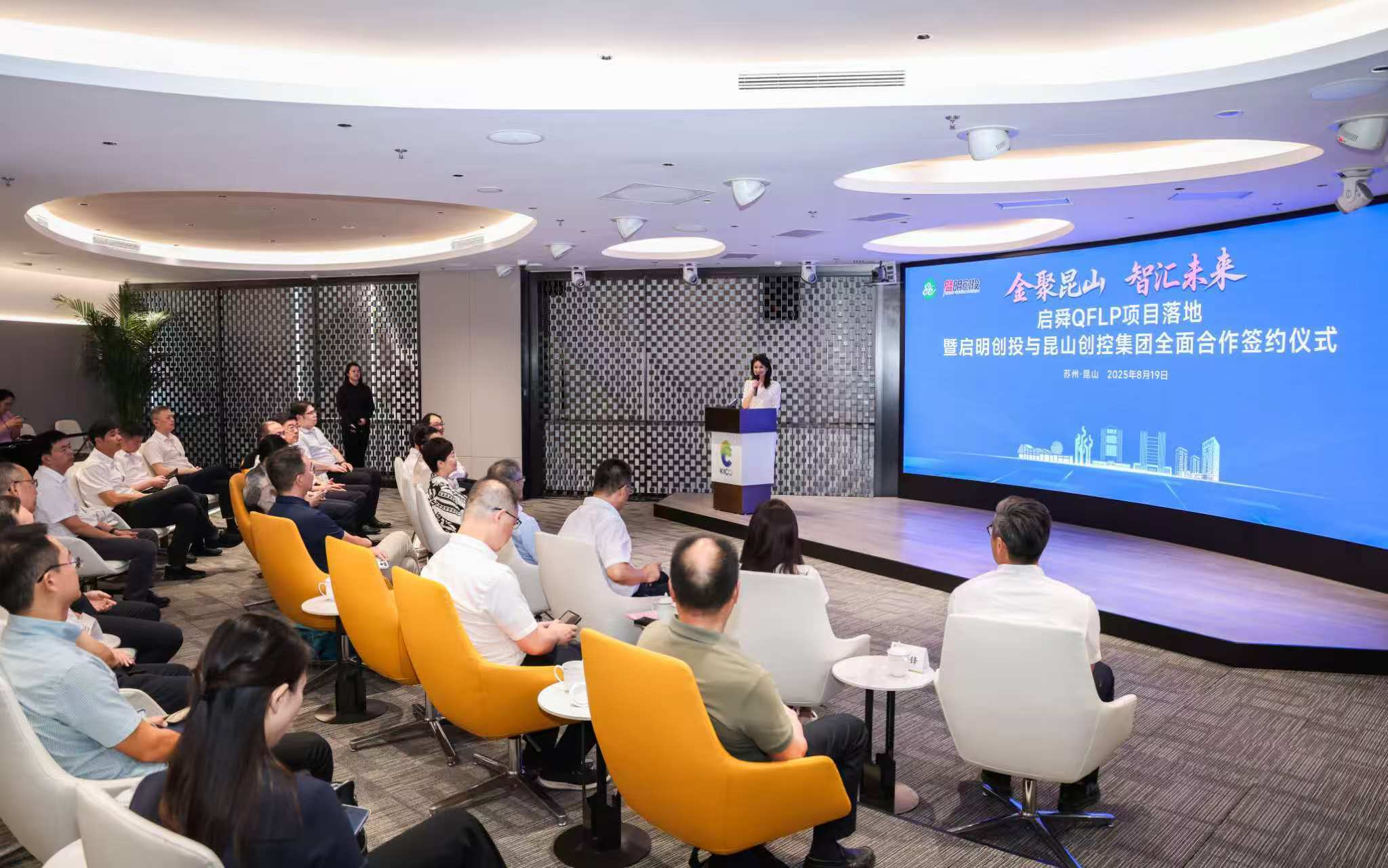
国际顶尖投资机构,这一次为何坚定地选择昆山
Sou Hu Cai Jing· 2025-09-03 11:32
Core Insights - The establishment of the second QFLP fund by Qiming Venture Partners in Kunshan, Jiangsu, marks a significant development in the cross-border investment landscape, following the first fund launched in Shanghai in 2011 [1][8] - QFLP serves as a crucial tool for international investors to access China's private equity market, facilitating the conversion of foreign currencies into RMB and bypassing complex approval processes [4][5] - The successful launch of the QFLP project in Kunshan reflects the city's strong industrial foundation, innovative ecosystem, and favorable regulatory environment, making it an attractive destination for international capital [9][11] QFLP Overview - QFLP (Qualified Foreign Limited Partner) allows foreign investors to invest in domestic equity investment funds after passing qualification reviews and foreign exchange regulations, providing multiple advantages such as flexible currency exchange and investment convenience [4][5] - The QFLP fund can channel investments into emerging sectors like renewable energy and AI, benefiting both foreign capital and local enterprises [4][5] Kunshan's Competitive Advantages - Kunshan is recognized for its robust industrial base, with an economic output exceeding 500 billion RMB, and is focusing on developing a new industrial system that includes core industries, AI, and green low-carbon initiatives [8][11] - The city has established itself as a financial reform pilot zone, offering innovative policies that facilitate cross-border investment, thus creating a "green channel" for QFLP fund establishment [11][19] - Efficient government services and a collaborative mechanism between Kunshan and Qiming Venture Partners have expedited the fund's establishment process, showcasing the city's commitment to fostering a conducive investment environment [15][19] Strategic Collaborations - The partnership between Qiming Venture Partners and Kunshan has been ongoing since 2021, with previous investments in technology companies and a focus on integrating international technological advancements into local industries [12][14] - The recent QFLP project signifies an upgrade in collaboration, with plans for further investments in early-stage and growth-stage companies in technology and medical innovation sectors [7][14] Future Implications - The launch of the QFLP project in Kunshan is seen as a new starting point, transitioning the city from merely attracting capital to leveraging capital to drive industrial growth, providing a model for other cities exploring similar financial and industrial integration strategies [20]
交通银行:锚定上海主场把握金融开放机遇
Jin Rong Shi Bao· 2025-09-03 01:03
Core Viewpoint - The strategic decision to establish the headquarters of the Bank of Communications (BoCom) in Shanghai is aimed at enhancing its role in supporting the city's development as a global financial center, leveraging its unique advantages in technology finance and cross-border financial services [1][2]. Group 1: Financial Market Participation - BoCom is actively participating in the construction of Shanghai's financial market, with its trading volumes in Bond Connect and Swap Connect ranking among the top in the market. In the first half of the year, BoCom was approved as a custodian and clearing bank for the Southbound Trading [1]. - The bank's cross-border trade financing balance increased by nearly 40% compared to the beginning of the year, reflecting its commitment to supporting domestic and international dual circulation [1]. Group 2: Comprehensive Financial Services - BoCom is enhancing its comprehensive financial services across various sectors, including equity, loans, bonds, leasing, and trust services, focusing on key customer groups in technology and cross-border trade [2]. - The bank has seen significant growth in equity investments in technology enterprises in Shanghai and led the underwriting of the first technology innovation bond in the interbank market for the city [2]. - As of June, BoCom has established 23 specialized branches for technology in Shanghai, aiming to better serve the city's leading industries and contribute to its development as a global innovation center [2]. Group 3: Future Plans - The senior management of BoCom plans to further implement central government policies under the guidance of financial management departments and local authorities, focusing on developing technology finance, cross-border finance, and offshore finance [2].