全球治理

Search documents
“2025从都国际论坛”12月2日开幕 200多位中外嘉宾齐聚羊城
Nan Fang Ri Bao Wang Luo Ban· 2025-12-02 08:04
Group 1 - The "2025 Chengdu International Forum" is being held in Guangzhou from December 1 to 3, gathering over 200 global leaders, experts, and business leaders to discuss global development and cooperation [1][2] - The forum aims to address significant global challenges such as security, governance reform, and sustainable development, with a focus on enhancing international cooperation and understanding [2][3] - Since its inception in 2014, the forum has invited over 200 international dignitaries and 600 experts, increasing its global influence and fostering dialogue on various themes including multilateralism and sustainable development [3][4] Group 2 - The forum serves as a high-level platform for civil diplomacy, emphasizing the need for dialogue and cooperation in a complex international environment [3][4] - Guangdong province is highlighted as a key window for international engagement, showcasing China's development and reform achievements, and attracting global attention [5][6] - The forum is positioned as a significant opportunity for international participants to better understand China and its development path, reflecting the growing interest in China's role in global affairs [6][7]
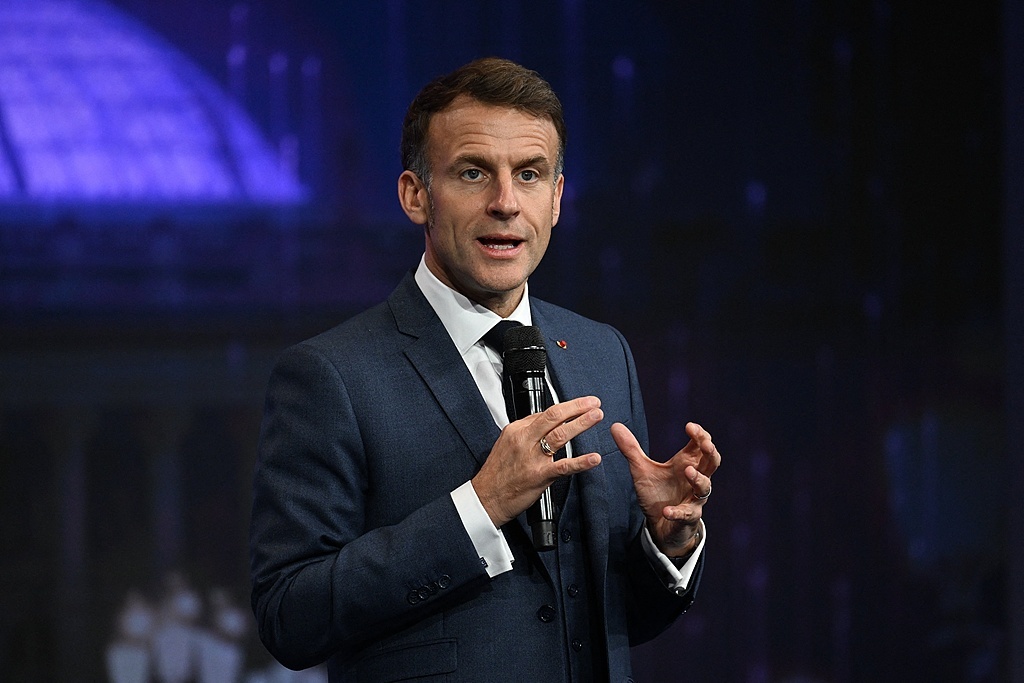
合作应对全球挑战,推动法中关系发展,法媒期待马克龙本周访华
Huan Qiu Shi Bao· 2025-11-30 22:42
《论坛报》还称,法国希望与中国共同推动"稳健而可持续的增长",并重点就供应链疏通及未来产业关键材料稳定获取开展合作。该报还引用法 国总统府消息人士的观点称:"中国需要先进芯片,欧洲需要稳定的稀土供应,双方在共享和加速技术创新方面拥有共同利益。总统也希望在此逻 辑基础上行事。" Boursorama网站还称,法国总统府一名高级顾问表示,法国还希望吸引更多来自中国的投资。"经过多年的全球化,中国得以发展和创新,如今中 国拥有一些非常先进的技术,可以与值得信赖的伙伴,特别是欧洲伙伴分享。" 据法国国际广播电台报道,爱丽舍宫透露,马克龙此行将与中方签署主要涉及"交通和能源"的协议。 法国TF1电视台引述爱丽舍宫消息称,总统此次访华将"继续推动法中关系的发展"。两国元首将围绕双边关系、国际热点问题和合作应对全球挑 战等议题展开会谈。另据法国国际广播电台报道,除北京外,马克龙还将前往四川成都。该市设有大熊猫繁育研究基地,日前接收了此前在法国 动物园饲养的大熊猫"欢欢"和"圆仔"。 法国Boursorama网站称,最近,乌克兰问题出现新谈判窗口,中日因为日本首相涉台言论关系紧张,全球经济议题备受关注。马克龙访华前夕, 中共 ...

王毅同法国总统外事顾问通电话:中法应当在涉及对方核心利益问题上坚定相互支持
Bei Jing Qing Nian Bao· 2025-11-28 16:10
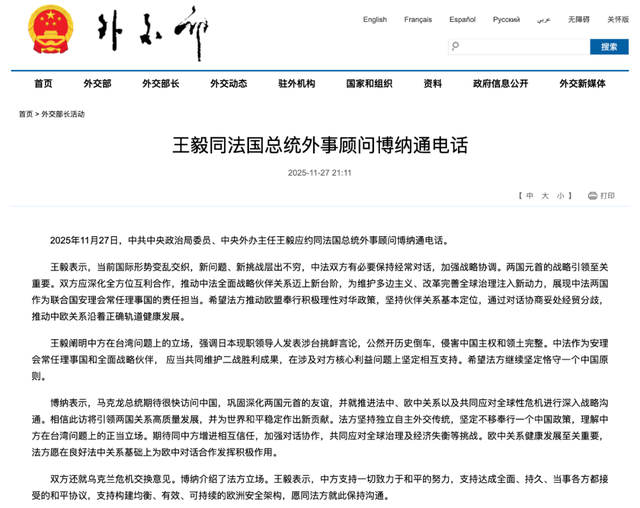
11月27日,中共中央政治局委员、中央外办主任王毅应约同法国总统外事顾问博纳通电话。 王毅表示,当前国际形势变乱交织,新问题、新挑战层出不穷,中法双方有必要保持经常对话,加强战 略协调。两国元首的战略引领至关重要。双方应深化全方位互利合作,推动中法全面战略伙伴关系迈上 新台阶,为维护多边主义、改革完善全球治理注入新动力,展现中法两国作为联合国安理会常任理事国 的责任担当。希望法方推动欧盟奉行积极理性对华政策,坚持伙伴关系基本定位,通过对话协商妥处经 贸分歧,推动中欧关系沿着正确轨道健康发展。 王毅阐明中方在台湾问题上的立场,强调日本现职领导人发表涉台挑衅言论,公然开历史倒车,侵害中 国主权和领土完整。中法作为安理会常任理事国和全面战略伙伴, 应当共同维护二战胜利成果,在涉 及对方核心利益问题上坚定相互支持。希望法方继续坚定恪守一个中国原则。 博纳表示,马克龙总统期待很快访问中国,巩固深化两国元首的友谊,并就推进法中、欧中关系以及共 同应对全球性危机进行深入战略沟通。相信此访将引领两国关系高质量发展,并为世界和平稳定作出新 贡献。法方坚持独立自主外交传统,坚定不移奉行一个中国政策,理解中方在台湾问题上的正当立场 ...
“开辟中俄协作新局面,落实全球治理新愿景”研讨会在莫斯科举行
Xin Hua She· 2025-11-28 10:47
新华社莫斯科11月28日电(记者黄河)"开辟中俄协作新局面,落实全球治理新愿景"研讨会27日在中国 驻俄罗斯大使馆举行。中俄政界、学界和媒体代表40余人出席活动,共话中俄协作完善全球治理体系广 阔前景。 ...
视频丨意大利电视节目关注中国在南南合作中的引领作用
Yang Shi Xin Wen Ke Hu Duan· 2025-11-28 00:08
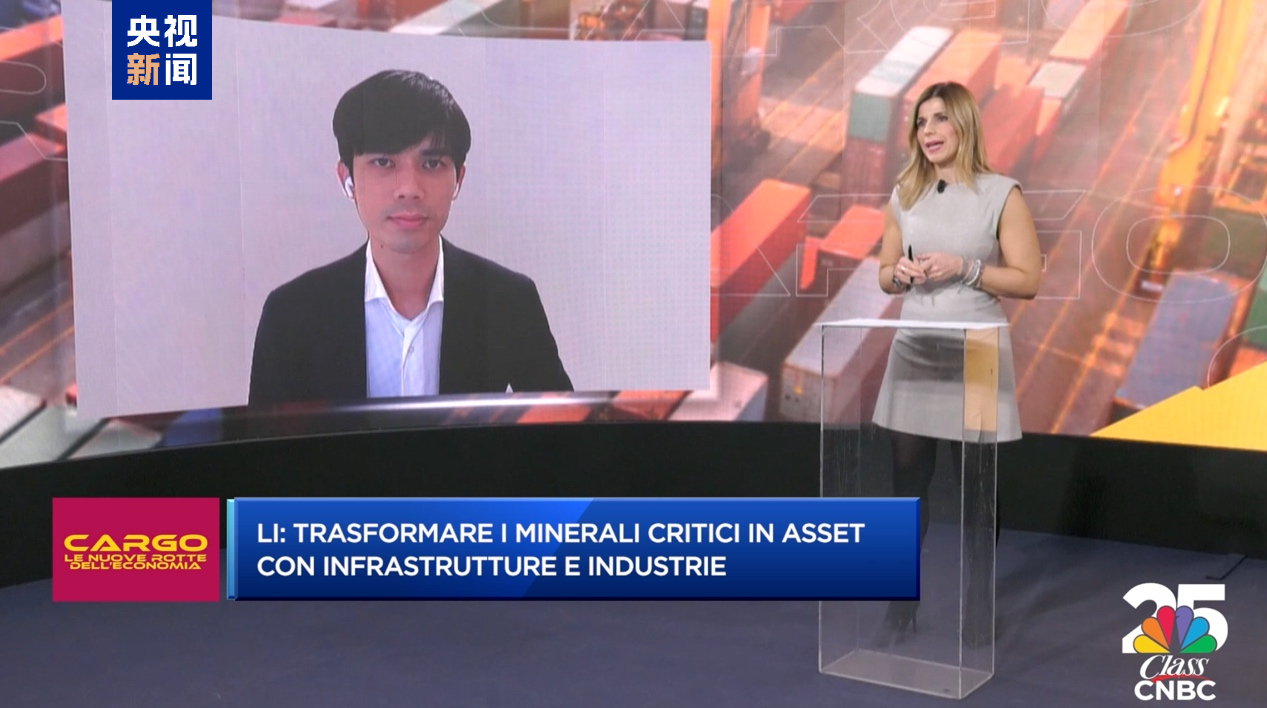
当地时间11月25日,意大利ClassCNBC电视频道大型访谈栏目《远航》推出特别节目,聚焦在南非约翰内斯堡闭幕的2025年二十国集团(G20)峰会,并重 点关注中国在南南合作中的关键作用。 节目指出,在引领南南合作、推动共同发展和深化全球治理改革等关键维度上,中国已成为不可替代的重要推动者,其长期积累的治理经验与务实合作模式 正在为国际社会提供新的发展思路。 栏目邀请南非商业联合总会首席执行官库瓦迪亚、意大利路易斯大学研究员瓦莱里亚尼、经济学家古扎尔蒂等嘉宾深度解析峰会成果。总台记者李耀洋以连 线方式参与节目,从关键矿产合作、绿色能源转型、基础设施互联互通和多边治理改革等方面介绍中国的立场与贡献,展示中国作为全球发展重要贡献者的 责任担当。 嘉宾普遍认为,本届峰会的意义远不止于通过122条声明本身,更体现出全球治理理念正在发生深层次结构性变化。在多边机制面临重塑、全球不确定性不 断上升的背景下,以中国为代表的新兴经济体正在通过开放合作、发展援助与制度创新,为发展中国家争取更大代表性,为全球南方提升制度性话语权,为 全球治理注入稳定力量,从而成为推动国际体系更加公平、包容的重要支点。 总台记者李耀洋在节目连线 ...
法国最新涉台表态
第一财经· 2025-11-27 16:01
2025.11. 27 本文字数:893,阅读时长大约2分钟 据外交部网站消息,11月27日,中共中央政治局委员、中央外办主任王毅应约同法国总统外事顾问 博纳通电话。 推荐阅读 博纳表示,马克龙总统期待很快访问中国,巩固深化两国元首的友谊,并就推进法中、欧中关系以及 共同应对全球性危机进行深入战略沟通。相信此访将引领两国关系高质量发展,并为世界和平稳定作 出新贡献。 法方坚持独立自主外交传统,坚定不移奉行一个中国政策,理解中方在台湾问题上的正 当立场。 期待同中方增进相互信任,加强对话协作,共同应对全球治理及经济失衡等挑战。 欧中关 系健康发展至关重要,法方愿在良好法中关系基础上为欧中对话合作发挥积极作用。 双方还就乌克兰危机交换意见。博纳介绍了法方立场。王毅表示,中方支持一切致力于和平的努力, 支持达成全面、持久、当事各方都接受的和平协议,支持构建均衡、有效、可持续的欧洲安全架构, 愿同法方就此保持沟通。 微信编辑 | 雨林 第 一 财 经 持 续 追 踪 财 经 热 点 。 若 您 掌 握 公 司 动 态 、 行 业 趋 势 、 金 融 事 件 等 有 价 值 的 线 索 , 欢 迎 提 供 。 专 用 ...
王毅:日本现职领导人发表涉台挑衅言论 公然开历史倒车
Xin Lang Cai Jing· 2025-11-27 15:39
1月27日,中共中央政治局委员、中央外办主任王毅应约同法国总统外事顾问博纳通电话。 王毅表示, 当前国际形势变乱交织,新问题、新挑战层出不穷,中法双方有必要保持经常对话,加强战略协调。两 国元首的战略引领至关重要。双方应深化全方位互利合作,推动中法全面战略伙伴关系迈上新台阶,为 维护多边主义、改革完善全球治理注入新动力,展现中法两国作为联合国安理会常任理事国的责任担 当。希望法方推动欧盟奉行积极理性对华政策,坚持伙伴关系基本定位,通过对话协商妥处经贸分歧, 推动中欧关系沿着正确轨道健康发展。 王毅阐明中方在台湾问题上的立场,强调日本现职领导人发表 涉台挑衅言论,公然开历史倒车,侵害中国主权和领土完整。中法作为安理会常任理事国和全面战略伙 伴, 应当共同维护二战胜利成果,在涉及对方核心利益问题上坚定相互支持。希望法方继续坚定恪守 一个中国原则。(央视新闻) ...
视频丨国务院新闻办公室发布《新时代的中国军控、裁军与防扩散》白皮书
Yang Shi Xin Wen Ke Hu Duan· 2025-11-27 13:46
Core Viewpoint - The white paper titled "China's Arms Control, Disarmament and Non-Proliferation in the New Era" emphasizes China's commitment to advancing modernization under Xi Jinping's thought, promoting global initiatives, and contributing to international security and cooperation [2][3]. Group 1: International Security and Arms Control - The white paper outlines the complex and severe international security and arms control situation, highlighting China's role as a significant force in promoting global governance in arms control [3]. - China, as a permanent member of the UN Security Council, actively maintains the authority and effectiveness of international arms control mechanisms and participates constructively in multilateral arms control processes in nuclear, biological, and chemical fields [3]. Group 2: Emerging Areas of International Security Governance - The white paper identifies outer space, cyberspace, and artificial intelligence as new strategic security focal points and emphasizes the need for a globally recognized governance framework in these emerging areas [3]. - China advocates for a governance system that enhances the representation and voice of developing countries, promoting broad consensus among nations [3]. Group 3: Non-Proliferation and Peaceful Use of Technology - The white paper stresses China's ongoing efforts to strengthen non-proliferation capabilities and actively participate in international non-proliferation processes [3]. - China promotes international cooperation for the peaceful use of technology and aims to improve global governance in non-proliferation [3].
清华大学阎学通:2026年国际形势的动荡情况将弱于2025年,中美实力差距一定会缩小
Sou Hu Cai Jing· 2025-11-27 08:51
Core Viewpoint - The international situation in 2026 will be less turbulent than in 2025, primarily influenced by the behavior of major power decision-makers rather than structural factors [2][5][6]. Group 1: International Relations Dynamics - The turbulence in international relations in 2026 is expected to be weaker than in 2025 due to the continuity of Trump's leadership, which will provide more predictability [6][7]. - Major power decision-makers have learned how to respond to Trump's policies, leading to a reduction in uncertainty and turbulence [7][8]. - The lack of leadership in global governance will continue, with a regression in global governance and an increase in de-globalization [8][9]. Group 2: U.S.-China Relations - The power gap between China and the U.S. is anticipated to narrow in 2026, as Trump's policies may hinder U.S. economic growth and technological advancement [9][10]. - The strategic relationship between the U.S. and its allies is expected to weaken, prompting these countries to reconsider their balance between the U.S. and China [9][10]. - The U.S. will maintain its policy of containing China's technological progress, regardless of the administration in power, as technological innovation is seen as a core element of national security and global influence [12][13]. Group 3: Regional Relationships - China's relationships with neighboring countries, excluding Japan, are expected to improve in 2026, with a notable shift in India's stance towards China [10][11]. - The political concept of the "West" is becoming less relevant due to increasing divisions among Western countries, particularly between the U.S. and Europe [11].
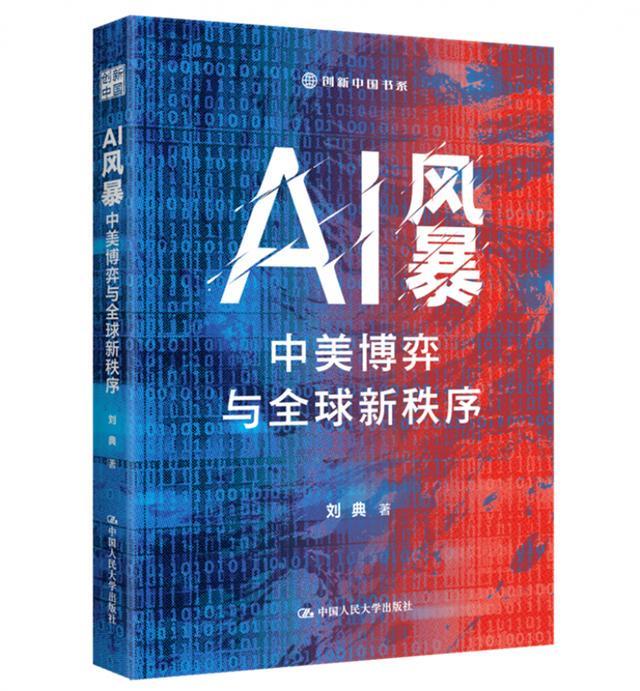
AI时代的中美竞合与全球秩序重构
Hua Xia Shi Bao· 2025-11-27 05:58
Core Insights - AI has evolved from an abstract academic issue to a profound transformative force in global society, impacting work, life, and international relations [2] - The rapid development of AI technology is reshaping the global political and economic landscape, with significant implications for national strategies, particularly between the US and China [2][4] - The competition in AI is not just about technology but also about control over data, computing power, and algorithms, which are becoming new sources of power [4] Group 1: AI's Impact on Global Dynamics - AI is redefining the future of human civilization and altering the global power structure, leading to a complex new phase in international relations [2] - The US is leveraging its technological advantages and policies to maintain global leadership, while China is seeking to catch up through its unique institutional advantages and large market [2][4] - The book "AI Storm: US-China Competition and Global New Order" explores the dynamics of AI competition and its implications for global governance [4][5] Group 2: Dimensions of US-China AI Competition - The first dimension reveals the competitive landscape in AI between the US and China, focusing on the "new tripartite power structure" around data, computing power, and algorithms [5] - The second dimension analyzes the differing AI development paths: the US's militarized technology model supported by the military-industrial complex and China's innovation route driven by a national system and large market [5] - The third dimension examines the paradoxes and conflicts in global AI governance, particularly the tensions between data sovereignty, security, and algorithm transparency [5] Group 3: Future Considerations - The technological revolution necessitates a balance between innovation and security, openness and autonomy, cooperation and confrontation [6] - The future of AI will significantly influence international political economy, social ethics, and human civilization, raising critical questions about global cooperation versus division [6] - The challenges lie not only in technological breakthroughs but also in ensuring equitable benefits from technology while mitigating social injustices and security risks [6]