养老金融

Search documents
上海国际金融中心一周要闻回顾(1月19日—1月25日)
Guo Ji Jin Rong Bao· 2026-01-25 04:05
Group 1 - The Shanghai Municipal Party Committee has approved the proposal for the 15th Five-Year Plan, emphasizing the enhancement of the international financial center's competitiveness and influence, with specific deployments for building a global RMB asset allocation center and risk management center [1] - The Shanghai financial system work meeting highlighted the importance of party organization coverage in the financial sector and shared progress on the coverage of non-public financial enterprises [2] - The "Action Plan to Enhance the Commodity Level of Nonferrous Metals" was released, aiming to strengthen the linkage between futures and spot markets [3] Group 2 - The Shanghai Financial Regulatory Bureau issued the "Action Plan for High-Quality Development of Pension Finance," proposing 20 measures to build a pension management system with Shanghai characteristics [5] - The first delivery of the futures contract for coated printing paper was successfully completed, with a total delivery volume of 1,840 tons and a delivery amount of nearly 7.6 million yuan [6] - The Shanghai Asset Management Association announced ten major initiatives for building a global asset management center by 2025, reflecting innovative achievements in the sector [8] Group 3 - The Shanghai Futures Exchange announced adjustments to the margin ratios and price limits for copper, aluminum, gold, and silver futures, effective from January 22, 2026 [9] - The Shanghai International Energy Exchange is seeking public opinion on revising its risk control management rules, with feedback due by January 28, 2026 [10] - HSBC China has launched its first local public fund custody business, providing custody services for a fund managed by E Fund Management [11] Group 4 - The launch of the "Intelligent Reporting and Review Project for Ship Insurance Certificates" by PICC Shanghai and the Shanghai Maritime Bureau marks a shift towards online and intelligent processes in insurance certificate review [12] - The Construction Bank has introduced a new RMB structured deposit product in the free trade zone, successfully facilitating two offshore enterprises in managing their funds [13] - The first batch of technology innovation convertible bonds was successfully issued, providing low-cost long-term funding for tech enterprises [14] Group 5 - Shanghai Securities has received approval for its sponsorship business qualification, marking a significant breakthrough in its core business license layout [15] - The successful implementation of the first domestic credit certificate electronic document submission business by the Bank of Communications Shanghai branch represents a new financial service breakthrough [16] - Three branches of Shanghai Rural Commercial Bank have been recognized as the first batch of green branches in Shanghai, promoting sustainable finance [17] Group 6 - The People's Bank of China is focusing on creating a favorable monetary and financial environment to support high-quality economic development [19] - The minimum down payment ratio for commercial property loans has been adjusted to no less than 30% to adapt to changes in the real estate market [20] - The State Administration of Financial Supervision has issued new regulations to standardize the administrative licensing process for financial institutions [24] Group 7 - The China Securities Regulatory Commission has expanded the range of futures market products available for foreign investors, adding 14 new futures options [29] - The CSRC has approved the registration of options for 20 rubber, low-sulfur fuel oil, and international copper, ensuring a smooth launch and operation of these products [30] - Longqi Technology has completed its "A+H" listing, marking a significant milestone in its capital market strategy [31]
【智库圆桌】深耕普惠金融促发展惠民生
Xin Lang Cai Jing· 2026-01-25 00:45
Core Viewpoint - The development of inclusive finance in China reflects a people-centered approach, emphasizing the importance of financial services for all social strata, particularly small and micro enterprises, to promote social equity and inclusive growth [2][3]. Group 1: Importance and Achievements of Inclusive Finance - Inclusive finance is defined as providing appropriate and effective financial services at affordable costs to all social groups, focusing on equal opportunities and commercial sustainability [2]. - Since the concept was introduced by the UN in 2005, China has made significant progress in inclusive finance, with policies established since 2013 to support its development [2][3]. - The 2023 State Council's implementation opinions highlight the need for high-quality development of inclusive finance to promote common prosperity for all [2]. Group 2: Support for Micro and Small Enterprises - Inclusive finance is crucial for enhancing the vitality of micro and small enterprises, which play a vital role in stabilizing employment and promoting innovation [3]. - Challenges such as high financing costs and difficulties in obtaining subsidies persist for these enterprises, necessitating improved financial services [3][4]. - Financial institutions are innovating products and services tailored to the unique needs of small enterprises, leading to increased loan volumes and reduced costs [5]. Group 3: Policy and Service System Development - China has established a comprehensive policy and service system for inclusive finance, significantly improving service coverage, accessibility, and satisfaction [4]. - By the end of 2024, there will be an average of 1.62 bank outlets per 10,000 people, with nearly 98% coverage in rural areas [4]. - The development of digital financial services has led to a substantial increase in mobile payment transactions in rural areas, reaching 339.33 billion transactions in 2024, a 33.03% increase year-on-year [4]. Group 4: Technological Empowerment - The integration of advanced technologies such as big data and artificial intelligence is transforming the operational model of inclusive finance, addressing challenges of high costs and risks [6]. - Digital banks are innovating lending models that significantly enhance loan application efficiency, such as the "310" model, which allows for quick loan processing [6]. Group 5: Reform Pilot Zones and Innovations - Various pilot zones for inclusive finance reform have been established, focusing on different regional needs and challenges, such as supporting rural revitalization and small enterprises [7][8]. - Innovations in credit information sharing and risk-sharing mechanisms have been implemented to enhance financial support for rural areas and small businesses [8][9]. Group 6: Enhancing Financial Services for Vulnerable Groups - Inclusive finance targets five key groups: micro enterprises, agricultural workers, new urban residents, the elderly, and flexible employment individuals, each facing unique financial challenges [12]. - Efforts are being made to improve the quality of financial services in the livelihood sector, ensuring that financial products are better suited to the needs of these groups [12][13]. Group 7: Future Directions and Recommendations - Continued emphasis on policy coordination and incentive mechanisms is necessary to support financial resources in underserved areas [15]. - The development of a national integrated financing credit service platform is recommended to enhance data sharing and improve financial service delivery [15]. - Financial institutions are encouraged to innovate products that cater to the specific cash flow characteristics of small enterprises and flexible employment [15].
香港金融业如何对接“十五五”?
Xin Lang Cai Jing· 2026-01-24 10:16
Core Viewpoint - The financial industry in Hong Kong will focus on "consolidating advantages, innovation-driven, internal and external linkage, and safety control" over the next five years, with a strategic emphasis on four key areas [6]. Group 1: Integration with National Development - The Hong Kong Legislative Council passed a motion to align the region's development vision with the national "14th Five-Year Plan," emphasizing the need for a long-term development strategy [3]. - A high-level dedicated agency is proposed to coordinate and implement long-term planning, addressing the current lack of comprehensive planning in Hong Kong [3]. Group 2: Financial Industry Development Strategies - The Hong Kong government has outlined four strategic areas for the financial industry to integrate with national development, focusing on market advantages, financial security, internal and external linkages, and innovation [6][7]. - The government aims to enhance Hong Kong's market competitiveness, particularly in the stock market and offshore RMB business, while attracting family offices and optimizing the tax system [6]. Group 3: Financial Security Measures - The government will work closely with regulatory bodies to improve market supervision and prevent systemic risks, as highlighted in the "14th Five-Year Plan" [6]. Group 4: Internal and External Linkages - The Hong Kong government plans to expand connectivity through existing frameworks like Stock Connect and Bond Connect, and will promote new initiatives such as including REITs in connectivity mechanisms [7]. - Hong Kong aims to play a pivotal role in facilitating mainland enterprises' international expansion while attracting foreign businesses and international capital [7]. Group 5: New Growth Opportunities - The financial sector will focus on technology finance, assist mainland tech companies in financing, and explore new opportunities in commodities and green finance [8]. - In 2024, Hong Kong is expected to issue over $84 billion in green and sustainable debt, maintaining its position as the leading market in Asia [8]. Group 6: Gold Market Developments - The Hong Kong Monetary Authority has introduced new policies to promote green finance, including the inclusion of manufacturing and ICT sectors in sustainable finance classifications [9]. - Plans are underway to expand gold storage capacity at Hong Kong International Airport to over 2,000 tons within three years, aiming to establish an international gold trading center [9][10].


中国银行业理财市场年度报告(2025年)
银行业理财登记托管中心· 2026-01-24 02:10
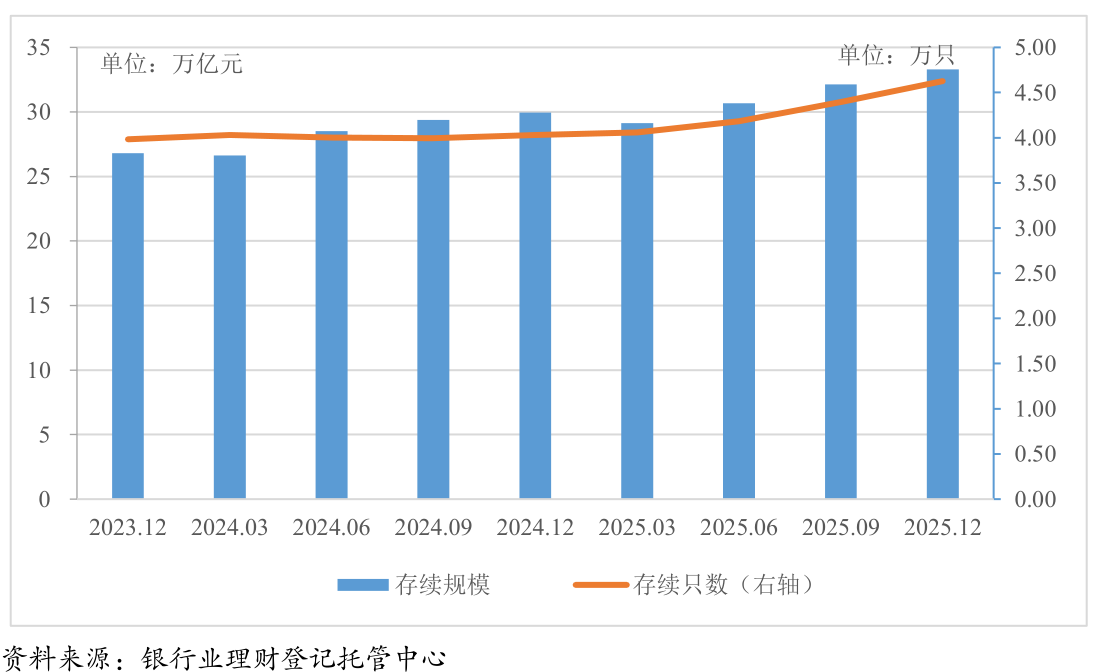
Investment Rating - The report does not explicitly provide an investment rating for the industry Core Insights - The banking wealth management market in China reached a total scale of 33.29 trillion yuan by the end of 2025, reflecting an 11.15% increase from the beginning of the year, with 3.34 million new wealth management products issued, raising 76.33 trillion yuan in funds [6][20] - The report emphasizes the importance of the wealth management industry in supporting the real economy, with approximately 21 trillion yuan allocated to support various sectors [6] - The number of investors holding wealth management products reached 143 million, a growth of 14.37% year-on-year, generating returns of 730.3 billion yuan for investors throughout the year [6] Summary by Sections Development Environment of the Wealth Management Industry - The report highlights the complex changes in the development environment, including global geopolitical tensions and domestic economic challenges, while emphasizing the resilience and potential of China's economy [8] - The "14th Five-Year Plan" and the upcoming "15th Five-Year Plan" outline the strategic direction for the financial sector, focusing on technology finance, green finance, inclusive finance, pension finance, and digital finance [8][9] Wealth Management Products - By the end of 2025, the total number of wealth management products in the market was 46,300, with a total scale of 33.29 trillion yuan, marking a 14.89% increase in the number of products [21][24] - The report indicates a shift from single-asset driven strategies to multi-asset allocation, with a focus on risk management and dynamic adjustments to enhance portfolio resilience [26][27] - Fixed income products dominate the market, accounting for 97.09% of the total scale, while mixed and equity products remain relatively small [32][33] Investor Profile - The report notes that the wealth management industry has seen a significant increase in the number of investors, with a focus on enhancing investor protection and appropriate management of wealth management products [19][40] - The risk management framework is emphasized, with a focus on compliance and transparency to safeguard investor interests [14][16] Market Institutions and Services - The report discusses the establishment of various wealth management companies and the importance of digital financial services, including the use of AI and big data in wealth management [10][12] - It highlights the role of wealth management companies in supporting the pension finance sector and the ongoing development of a centralized data exchange platform for wealth management products [7][12]
加大年金投入、推动个人养老金增长……上海锚定未来五年养老金融发展目标
第一财经· 2026-01-23 14:09
Core Viewpoint - The article discusses the challenges of aging population in Shanghai and the need for innovative pension finance solutions during the "14th Five-Year Plan" period to address these challenges effectively [3]. Group 1: Action Plan Overview - The Shanghai Banking and Insurance Regulatory Bureau released the "Action Plan for High-Quality Development of Pension Finance" which outlines a clear development blueprint and practical path for pension finance over the next five years [3][4]. - The plan aims to establish a comprehensive pension finance work mechanism, diversify pension financial products, and create a replicable and scalable pension finance system [3][4]. Group 2: Goals and Targets - The action plan sets specific goals for the next five years, including significant achievements in pension finance development, a unique pension management system, and a robust risk prevention and regulatory framework [3][5]. - It emphasizes that the growth rate of loans to the pension industry should exceed the overall loan growth rate [3]. Group 3: Key Measures - The action plan proposes 20 measures across six areas: building a pension security system, strengthening support for the pension industry, meeting financial needs of the elderly, improving internal governance of financial institutions, enhancing business regulation, and establishing collaborative mechanisms [4][6]. - It supports various financial institutions in managing basic pension insurance funds and increasing resources for enterprise annuities and occupational pensions [5]. Group 4: Financial Support for Pension Industry - The plan emphasizes increasing financial support for the pension industry, encouraging banks to innovate credit models and allocate long-term funds for health and pension facilities [6]. - It also promotes the use of financial tools like REITs and ABS to provide stable funding for the pension industry, which is expected to see more projects led by large insurance companies and brand operators in the coming years [6]. Group 5: Product Supply and Governance - The action plan calls for banks and insurance institutions to offer comprehensive pension financial solutions, transitioning from single product services to a comprehensive service ecosystem [7]. - It encourages the establishment of specialized departments for pension finance within financial institutions and the creation of a Shanghai Pension Finance Alliance for dynamic monitoring and evaluation [7].

加大年金投入、推动个人养老金增长……上海锚定未来五年养老金融发展目标
Di Yi Cai Jing· 2026-01-23 11:53
Core Insights - Shanghai is facing significant aging challenges and has launched a comprehensive action plan to develop a distinctive commercial pension finance system during the 14th Five-Year Plan period [1] Group 1: Action Plan Overview - The Shanghai Banking and Insurance Regulatory Bureau has released the "Action Plan for High-Quality Development of Pension Finance in Shanghai," outlining a clear roadmap for the next five years [1] - The plan aims to establish a robust pension finance mechanism, diversify pension financial products, and create a replicable and scalable pension finance system [1] - Key goals include ensuring that the growth rate of pension industry loans exceeds that of other loans, thereby addressing the challenges and opportunities posed by an aging population [1] Group 2: Pension Security System - The action plan addresses the three pillars of China's multi-tiered pension security system, focusing on enhancing the first pillar through participation from banks and insurance companies in basic pension fund management [2] - For the second pillar, it emphasizes increased resource allocation by banks and insurance institutions towards enterprise annuities and occupational annuities [2] - The third pillar aims to expand personal pension accounts and innovate products to steadily grow account numbers and fund sizes [2] Group 3: Financial Support for Pension Industry - The action plan calls for increased financial support for the pension industry, encouraging banks to innovate credit models and allocate long-term funds for health and pension facility construction [3] - Insurance institutions are guided to provide stable funding through equity investments and REITs, while trust institutions are encouraged to offer customized services [3] - The market is expected to see a rise in pension REITs and asset-backed securities (ABS) as common financial tools for the pension industry [3] Group 4: Product Supply and Governance - The action plan requires banks and insurance institutions to offer comprehensive pension financial solutions, transitioning from single product services to a comprehensive service ecosystem [4] - It encourages the establishment of specialized departments or mechanisms for pension finance within financial institutions [4] - The plan also explores the creation of a Shanghai Pension Finance Alliance and a dynamic monitoring and evaluation mechanism for pension finance development [4]
理财市场规模突破33万亿,1.43亿投资者分享7303亿收益
2 1 Shi Ji Jing Ji Bao Dao· 2026-01-23 11:08
21世纪经济报道记者冯紫彤 1月23日,银行业理财登记托管中心发布《中国银行业理财市场年度报告(2025年)》(下称"报告")。报告显示,截至2025年末,中国银行理财市场存续规模达 33.29万亿元,较年初增长11.15%,全年新发产品3.34万只,募集资金高达76.33万亿元,显示出强劲的市场活力。 市场参与热情持续升温,持有理财产品的投资者数量攀升至1.43亿个,较年初增长14.37%。更为直观的是,2025年理财产品累计为投资者创造收益7303亿 元,全年平均收益率达到1.98%,在波动的市场环境中提供了稳健的财富增值渠道。 理财存续规模增加11.15% 2025年,理财市场实现了规模与质量的同步提升。 报告显示,截至2025年末,理财市场存续产品数量增至4.63万只,较年初增加14.89%;存续规模33.29万亿元,较年初增加11.15%,稳健迈上新台阶。 从市场主体看,理财公司已成为绝对主力。截至2025年末,全国32家理财公司存续产品3.37万只,存续规模30.71万亿元,同比增长16.72%,占全市场比例 高达92.25%。相比之下,传统银行机构的存续规模占比持续收缩。 从产品类型看,固定收益 ...
上海金融监管局:支持信托公司开展定制化家族信托、保险金信托等服务
Xin Lang Cai Jing· 2026-01-23 05:33
Group 1 - The Shanghai Financial Regulatory Bureau has issued an action plan to support the development of customized family trusts, family service trusts, and insurance trusts as part of enhancing the pension financial system [1][7] - The action plan includes 20 measures focusing on building a multi-level pension security system, strengthening support for the pension industry, and meeting the financial needs of the elderly [1][8] - Trust companies are encouraged to integrate diversified family assets to meet the comprehensive pension needs of the elderly and explore new types of pension service trusts and special needs service trusts [1][8] Group 2 - Several trust companies have recently launched their first special needs trust projects, including a real estate special needs trust for families with autism and a trust focused on long-term care for special needs individuals [2][9] - Special needs trusts typically do not have a set minimum investment amount, allowing trust companies to establish flexible entry points, commonly starting around 300,000 yuan [3][10] - Trust companies are advised to collaborate with care institutions to facilitate direct payment of service fees from the trust, enhancing convenience for clients [3][10]
建行上海市分行打造“金融+”养老生态新家园
Zhong Guo Jin Rong Xin Xi Wang· 2026-01-23 05:07
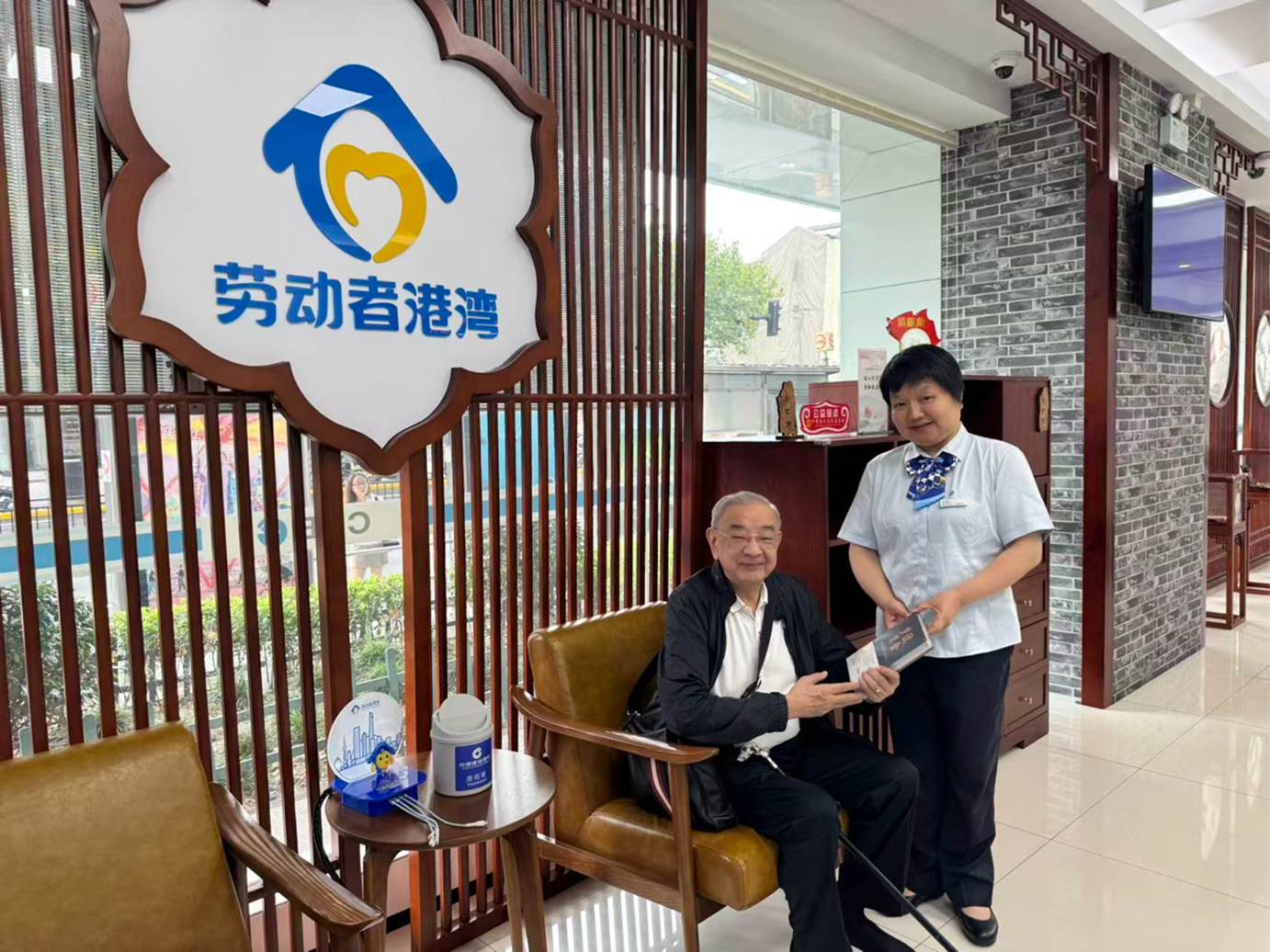
Core Viewpoint - The article highlights the innovative approach of the China Construction Bank (CCB) Shanghai Branch in addressing the financial needs of the elderly population in Shanghai, emphasizing the importance of personalized and community-oriented financial services for seniors [1][14]. Group 1: Financial Services for the Elderly - CCB Shanghai Branch has developed the "Golden Years" financial handbook, which is tailored for elderly readers with large fonts and clear color contrasts, making it accessible for seniors [2][3]. - The handbook includes a voice feature through QR codes, allowing seniors to listen to policy explanations and service guides, enhancing accessibility for those with visual impairments [3]. - The handbook is divided into three sections: "Policy Guide," "Wealth Management," and "Active Living Map," providing essential information on long-term care insurance, financial literacy, and community resources for seniors [3]. Group 2: Community Engagement and Support - CCB has established 30 "Health and Care" financial service outlets across Shanghai, designed to be accessible and welcoming for elderly clients, featuring facilities like barrier-free access and comfortable seating [6]. - These outlets serve as community hubs, offering educational classes on smartphone use, financial fraud prevention, and other relevant topics, thereby fostering a supportive learning environment for seniors [7]. - The bank's customer managers act as online companions for seniors, providing 24/7 assistance and guidance, which enhances the emotional connection and trust between the bank and its elderly clients [4][6]. Group 3: Innovation in Elderly Care Industry - CCB is investing in the broader elderly care industry by supporting innovative companies in the "Big Zero Bay" elderly care technology industrial park, providing over 500 million yuan in loans to more than 270 enterprises [12]. - The bank is also exploring the establishment of a national fund focused on supporting long-term technological advancements in elderly care, such as rehabilitation robots and disease management solutions [13]. - CCB's initiatives reflect a shift from standardized financial products to personalized, ecosystem-based services that prioritize the well-being of the elderly [14].
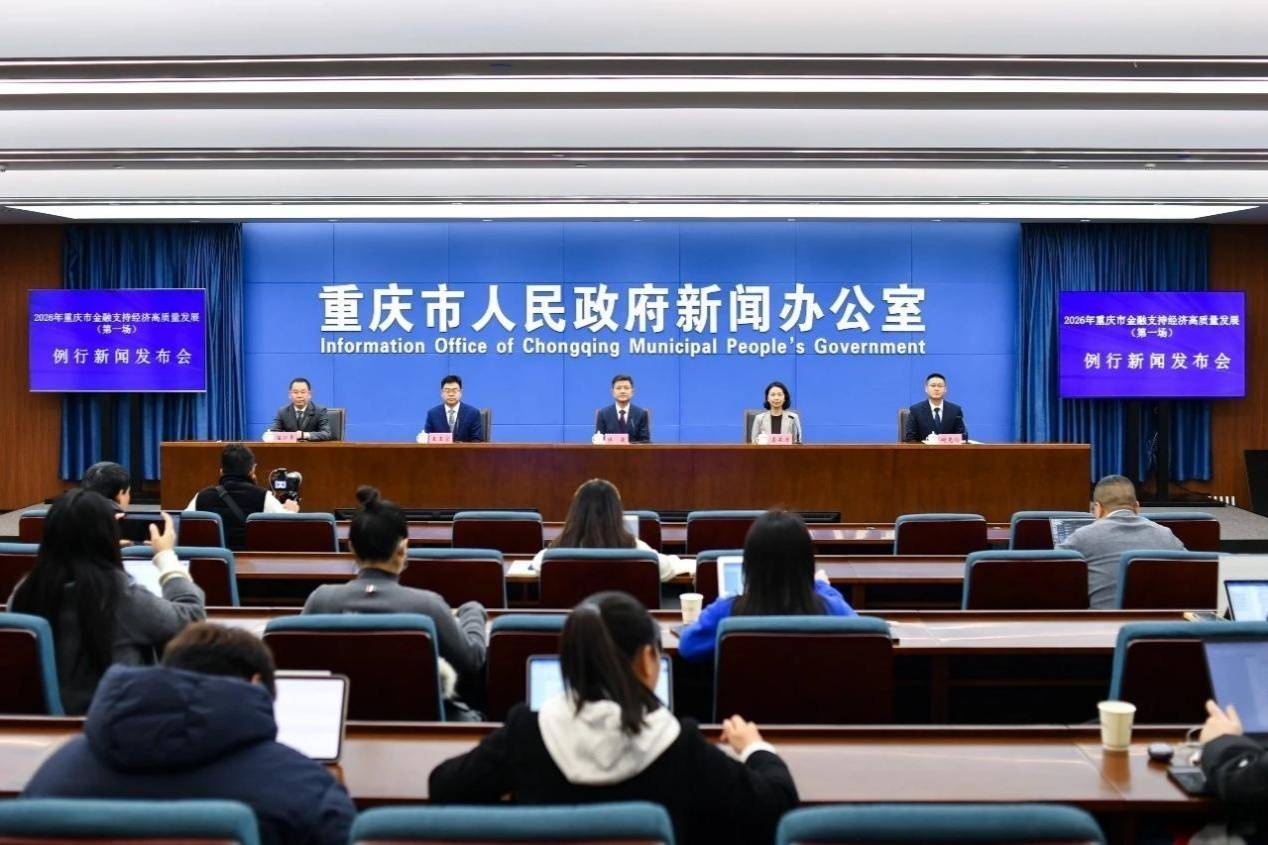
人行重庆市分行为重庆提质增效贡献金融力量
Sou Hu Cai Jing· 2026-01-23 04:46
Core Viewpoint - The financial sector in Chongqing has played a significant role in supporting the city's economic recovery and high-quality development during 2025, leveraging various monetary policy tools and innovative financing solutions [1][3]. Financial Support for Economic Development - The People's Bank of China Chongqing Branch implemented five major policy tools, collectively known as "渝科融," "渝绿融," "渝消融," "渝通融," and "渝民融," with a total funding of 127.7 billion yuan, leading to an increase of 430.2 billion yuan in loans for the city [3]. - By the end of 2025, the total loan balance in Chongqing grew by 7.2% year-on-year, consistently exceeding the national average for ten consecutive months [3]. - The branch also facilitated direct financing of 734.76 billion yuan in the interbank market and introduced innovative financial products to stabilize funding sources for enterprises [3]. Interest Rate Policies - The average interest rate for newly issued corporate loans in December 2025 was 3.15%, a decrease of 0.2 percentage points year-on-year, effectively reducing the financial burden on enterprises [4]. Targeted Credit Allocation - The Chongqing Branch led the nation in promoting a financial implementation plan focusing on key sectors such as technology, inclusive finance, and elderly care, with over 60% of new loans directed towards these areas [5]. - Loans for technology-oriented SMEs grew by over 30% in 2025, while loans for the elderly care industry surged by 72.8% year-on-year [5]. Green Finance Initiatives - The city has made significant progress in green finance, with the total balance of green loans surpassing 1 trillion yuan, maintaining a growth rate among the highest in the country [6]. - The Chongqing Branch has developed nearly 40 green transition financial standards and over 330 innovative green financial products [6]. Cross-Border Financial Services - The Chongqing Branch launched ten scenarios on the national foreign exchange management bureau's cross-border financial service platform, facilitating financing and settlement for over 1,800 enterprises, with a total financing amount of 75.6 billion USD [7]. - The implementation of a digital RMB settlement pilot project has enabled cross-border transactions exceeding 2 billion yuan [7]. Future Outlook - The Chongqing Branch aims to enhance financial services for the real economy, focusing on high-quality development and deepening reform and opening up, contributing to the construction of a modernized Chongqing and a strong financial nation [8].