
再生医学

Search documents
正海生物2025年中报:营收与利润双降,费用占比显著上升
Zheng Quan Zhi Xing· 2025-08-05 22:17
Overview of Financial Performance - The total revenue for the first half of 2025 was 188 million yuan, a decrease of 5.14% year-on-year [2] - The net profit attributable to shareholders was 46.49 million yuan, down 45.97% year-on-year [2] - The net profit after deducting non-recurring gains and losses was 40.28 million yuan, a decline of 46.77% year-on-year [2] - In Q2 2025, total revenue was 90.43 million yuan, a decrease of 16.57% year-on-year [2] - The net profit attributable to shareholders in Q2 was 19.86 million yuan, down 56.5% year-on-year [2] - The net profit after deducting non-recurring gains and losses in Q2 was 16.44 million yuan, a decline of 59.44% year-on-year [2] Profitability Analysis - The gross margin was 83.92%, a decrease of 3.24% year-on-year [3] - The net profit margin was 24.75%, down 43.04% year-on-year [3] - Earnings per share were 0.26 yuan, a decrease of 45.83% year-on-year [3] Expense Control and Cash Flow - Total operating expenses (selling, administrative, and financial expenses) amounted to 86.98 million yuan, accounting for 46.31% of revenue, an increase of 43.77% year-on-year [4] - Selling expenses increased by 38.87% due to targeted marketing efforts [4] - Financial expenses rose by 52.52% due to a decrease in current interest income [4] - The net cash flow from operating activities was 0.26 yuan per share, a decrease of 42.05% year-on-year, primarily due to increased selling expenses [4] Asset Status - As of the end of the reporting period, cash and cash equivalents were 49.30 million yuan, a decrease of 48.81% year-on-year [5] - Accounts receivable stood at 56.74 million yuan, an increase of 0.87% year-on-year [5] - The net cash flow from investing activities decreased by 126.57% due to reduced maturity of financial products [5] - The net cash flow from financing activities increased by 48.61% due to a decrease in dividend distribution [5] Main Business Composition - Main business revenue primarily comes from meninges series products and oral repair membranes, accounting for 42.73% and 41.05% of main revenue, respectively [6] - The gross margin for meninges series products was 88.84%, while for oral repair membranes it was 85.98% [6] - Other main business and supplementary revenue accounted for 16.19% and 0.03%, respectively [6] Development Review and Outlook - The company is a leading player in the domestic regenerative medicine sector, focusing on the R&D, production, and sales of biological regenerative materials [7] - The company has successfully incubated multiple products and has been selected in various provincial centralized procurement projects [7] - Despite facing intensified market competition, the company is enhancing brand awareness and academic influence through optimizing sales team structure and cost-reduction initiatives [7]

Cryoport(CYRX) - 2025 Q2 - Earnings Call Transcript
2025-08-05 22:00
Financial Data and Key Metrics Changes - Cryoport reported a 14% increase in total revenue from operations for the second quarter, with service revenue increasing by 21% year over year, accounting for 54% of total revenue from continuing operations [6][7] - Revenue from commercial cell and gene therapies grew by 33%, while BioStorage Bioservices increased by 28%, indicating strong demand for integrated temperature control supply chain solutions [7][12] - The company reaffirmed its full year 2025 revenue guidance, reflecting a commitment to sustainable long-term profitability [9][12] Business Line Data and Key Metrics Changes - Life sciences services revenue grew by 21% year over year, driven by significant increases in commercial cell and gene therapy support and BioStorage Bioservices [7][12] - Life sciences products experienced an 8% year-over-year revenue growth, primarily due to improved demand from animal health customers [8][12] - The launch of new products, such as the next-generation MVE SC42V and SC43V vapor shippers, contributed to the overall performance [8] Market Data and Key Metrics Changes - As of June 30, Cryoport supported a record 728 clinical trials, representing approximately 70% of the industry cell and gene therapy trials [11] - The company anticipates up to 20 additional application filings and one new therapy approval for the remainder of 2025 [11] - Despite some clients receiving negative opinions from regulatory bodies, analysts remain optimistic about future approvals due to recent changes within the FDA [11][12] Company Strategy and Development Direction - The strategic partnership with DHL Group, including the sale of Cryo PDP, is expected to enhance Cryoport's global biologics capabilities and expand its life sciences business [9][12] - The company aims to develop a strong global partner network to complement its core capabilities [9] - Cryoport is focused on driving long-term shareholder value while supporting the growth of the global regenerative medicine market [12] Management's Comments on Operating Environment and Future Outlook - Management acknowledged challenges faced by some clients but emphasized the overall strength and resilience of Cryoport's performance [12] - The company is optimistic about the future growth of commercial revenue, driven by additional therapies reaching commercialization [12] - Management remains cautious about the global economic and geopolitical uncertainties, which influenced the decision to maintain revenue guidance [22] Other Important Information - The company recorded an estimated revenue impact of approximately $2 million from a gene therapy client that temporarily paused distribution [10] - Cryoport's gross margin increased, with adjusted EBITDA showing significant improvement as part of its pathway to profitability initiative [9][27] Q&A Session Summary Question: Update on non-cell and gene therapy demand and EntegraCell adoption - Management noted that MVE revenue improved by 8% and that EntegraCell is on track for revenue production initiation this quarter, with meaningful revenue expected in 2026 [16][20] Question: Phasing on 2H guidance and reasons for not increasing guidance - Management stated that they maintained guidance due to uncertainties in the global economy and geopolitical factors, despite a strong quarter [21][22] Question: Update on capital allocation philosophy and M&A appetite - Management indicated a prudent approach to capital allocation, including share repurchases, while remaining open to compelling acquisition opportunities [29][34] Question: Impact of late quarter FDA update on REMS - Management expressed positive feedback from clients regarding the FDA ruling, anticipating beneficial impacts on patient volumes [38][39] Question: Competitive dynamics in the commercial market - Management observed increased interest from clients in securing supply and scalability, with larger players seeking collaboration rather than competition [50][51] Question: Updates on tariffs and cost impacts - Management reported no significant impact from tariffs and indicated that any costs would be passed through to clients if necessary [58] Question: Growth in China and market expectations - Management does not expect market expansion in China for 2025, reflecting ongoing monitoring of customer conditions and government stimulus programs [64] Question: Customer response to Cryoport's carrier agnosticism post-DHL transaction - Overall customer feedback has been positive, with excitement about the logistics solutions and flexibility offered through the DHL partnership [66][67]

营销投入打水漂 正海生物失速
Bei Jing Shang Bao· 2025-08-05 16:36
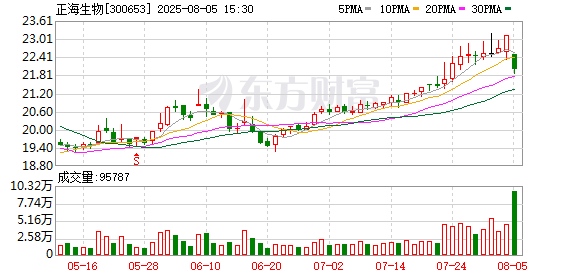
Core Viewpoint - Zhenghai Biological is facing significant challenges with a nearly halved net profit and sluggish growth in its main products, indicating a development bottleneck [1][2]. Financial Performance - In the first half of 2025, Zhenghai Biological reported revenue of 188 million yuan, a year-on-year decline of 5.14% [2][3]. - The net profit attributable to shareholders was 46.49 million yuan, down 45.97% year-on-year, marking the second consecutive year of mid-year profit decline [2][3]. - The company's net profit growth has been slowing since 2022, with a historical peak of 191 million yuan in 2023, but the growth rate dropped to 2.98% [2][3]. Marketing and Sales Expenses - Sales expenses for the first half of 2025 reached 71.18 million yuan, a 38.87% increase compared to 51.25 million yuan in the same period of 2024 [3][4]. - The increase in marketing expenses did not translate into profit growth, with the revenue from the brain membrane series only increasing by 5.88% while its gross margin declined by 3 percentage points [3][4]. Product Performance - Zhenghai Biological's main products include oral repair membranes and brain membrane series, with the oral repair membrane revenue declining by 19.38% to 77.12 million yuan [3][4]. - The company has received approval for 13 medical device products, with 9 classified as Class III medical devices, primarily used in various surgical fields [2][3]. New Product Development - The company is focusing on the commercialization of its active biological bone product, "Haiyu," which is the first drug-device combination bone repair material in China [4][5]. - Despite the potential of "Haiyu," there is uncertainty regarding market acceptance and subsequent sales performance, as no specific sales data has been disclosed [4][5]. Market Challenges - Zhenghai Biological faces intense competition in the domestic bone repair materials market, with numerous domestic and international players vying for market share [5]. - The company needs time to cultivate the market and enhance awareness and acceptance of its new products among doctors and patients [5].
正海生物失速:营收下滑、利润腰斩,营销投入打水漂
Bei Jing Shang Bao· 2025-08-05 13:57
Core Viewpoint - Zhenghai Biological is facing significant challenges with a nearly halved net profit and sluggish growth in its main products, indicating a development bottleneck [2][4]. Financial Performance - In the first half of 2025, Zhenghai Biological reported operating revenue of 188 million yuan, a year-on-year decrease of 5.14% [3][4]. - The net profit attributable to shareholders was 46.49 million yuan, down 45.97% year-on-year, marking the second consecutive year of decline in mid-year net profit [2][4]. - The net profit after deducting non-recurring gains and losses was 40.28 million yuan, a decrease of 46.77% compared to the previous year [3][4]. - Cash flow from operating activities was 47.67 million yuan, down 42.05% year-on-year [3]. - Basic and diluted earnings per share were both 0.26 yuan, compared to 0.48 yuan in the same period last year [3]. Marketing and Sales Expenses - Sales expenses surged by 38.87% to 71.18 million yuan in the first half of 2025, compared to 51.25 million yuan in the same period of 2024 [4][5]. - The increase in marketing expenses was attributed to precise marketing and academic promotion efforts [5]. - Despite the high marketing expenditure, profit growth did not materialize, with the main revenue sources experiencing significant declines [5]. Product Performance - Zhenghai Biological's primary business focuses on regenerative medical products for tissue repair and reconstruction, with 13 approved medical device products, including 9 Class III devices [5]. - The revenue from the oral repair membrane decreased by 19.38% to 77.12 million yuan, and the gross margin also declined [5]. - The brain membrane series saw a slight revenue increase of 5.88%, but the gross margin dropped by 3 percentage points due to price pressures from competitive bidding [5]. New Product Development - Zhenghai Biological is actively working on commercializing its active biological bone product, "Haiyu," which is the first domestic drug-device combination bone repair material [6]. - The product has been approved and launched, but specific sales figures have not been disclosed, raising concerns about market acceptance and future performance [6][7]. - The company is collaborating with distributors to promote the "Haiyu" product, but market cultivation will take time [7]. Market Challenges - The domestic bone repair materials market is highly competitive, with numerous domestic and international players, as well as emerging technologies posing threats to Zhenghai Biological [7]. - The management faces the challenge of converting high marketing investments into profits, which is critical for the company's performance in the second half of the year [8].

正海生物: 2025年半年度报告
Zheng Quan Zhi Xing· 2025-08-04 16:23
Core Viewpoint - Yantai Zhenghai Bio-Tech Co., Ltd. focuses on the research and commercialization of regenerative medicine products, primarily oral repair membranes and dura mater products, which are the main sources of revenue for the company. The company faces increasing market pressures and competition while actively developing new products to enhance its revenue growth potential [2][3]. Company Overview - The company is a high-tech enterprise dedicated to the research, production, and sales of biological regenerative materials, being one of the earliest players in the regenerative medicine sector in China [9][11]. - The company has developed a range of products, including oral repair membranes, absorbable dura mater patches, and bone repair materials, which are widely used in various medical fields [11][21]. Financial Performance - For the first half of 2025, the company reported a revenue of approximately 187.84 million yuan, a decrease of 5.14% compared to the same period in 2024. The net profit attributable to shareholders decreased by 46.77% to approximately 40.28 million yuan [7][14]. - The basic earnings per share were 0.26 yuan, down 45.83% from the previous year [7][14]. Market Environment - The Chinese medical device industry is experiencing rapid growth, with an average annual growth rate of 10% from 2014 to 2023, and the market size reached 1.31 trillion yuan in 2023 [8][9]. - The implementation of centralized procurement policies for high-value medical consumables is increasing pressure on companies in the sector, with the government aiming to control prices and improve service quality [3][9]. Product Development and Innovation - The company is actively developing new products, including calcium silicate bio-ceramic bone repair materials and other regenerative products, to enhance its product portfolio and market competitiveness [2][16]. - The company has a robust pipeline of products under development, including a uterine repair membrane and breast patches, which are expected to expand its clinical application areas [16][20]. Competitive Position - The company has established a strong market presence with over 1,175 distributors nationwide, ensuring a broad and balanced marketing network [22]. - The company has received multiple certifications and honors, including being recognized as a national "little giant" enterprise and a high-tech enterprise, which underscores its commitment to innovation and quality [11][20]. Operational Efficiency - The company has implemented digital management systems to enhance operational efficiency, reduce errors, and improve decision-making speed [18][19]. - Continuous efforts in cost reduction and efficiency improvement have been made, focusing on optimizing production processes and enhancing quality control [17][18].
正海生物: 公司章程
Zheng Quan Zhi Xing· 2025-08-04 16:22
烟台正海生物科技股份有限公司 章程 烟台正海生物科技股份有限公司 目 录 第一章 总则 第二章 经营宗旨和范围 第三章 股份 第一节 股份发行 第二节 股份增减和回购 第三节 股份转让 第四章 股东和股东会 第一节 股东的一般规定 第二节 控股股东和实际控制人 第三节 股东会的一般规定 第四节 股东会的召集 第五节 股东会的提案与通知 第六节 股东会的召开 第七节 股东会的表决和决议 第五章 董事和董事会 第一节 董事的一般规定 第二节 董事会 第三节 独立董事 第四节 董事会专门委员会 第六章 高级管理人员 第七章 财务会计制度、利润分配和审计 第一节 财务会计制度 第二节 内部审计 第三节 会计师事务所的聘任 第八章 通知和公告 第一节 通知 第二节 公告 第九章 合并、分立、增资、减资、解散和清算 第一节 合并、分立、增资和减资 第二节 解散和清算 第十章 修改章程 第十一章 附则 第一章 总则 第一条 为维护公司、股东、职工和债权人的合法权益,规范公司的组织和行为, 根据《中华人民共和国公司法》(以下简称"《公司法》")、《中华人民共和国证券法》 (以下简称"《证券法》")和其他有关规定,制订本章程。 ...
全球细胞冷冻保存液市场前10强生产商排名及市场占有率
QYResearch· 2025-08-04 08:48
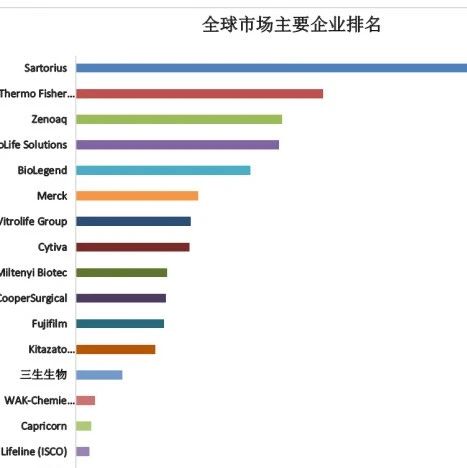
Core Viewpoint - The global cell freezing preservation solution market is projected to reach $160 million by 2031, with a compound annual growth rate (CAGR) of 4.8% from 2025 to 2031 [2]. Market Size, Classification, and Application - The global market for cell freezing preservation solutions is expected to grow significantly, driven by advancements in regenerative medicine and cell therapy [15][21]. - The major demand source currently comes from biotechnology companies, accounting for approximately 54.8% of the market share [10]. - The leading product type is serum-free cell freezing culture medium, which holds about 92.7% of the market share [11]. Industry Development Trends - There is a growing demand in niche markets, particularly in stem cell therapy, immune cell therapy (such as CAR-T), and gene therapy, which is driving market diversification [14]. - Serum-free freezing solutions are gaining traction due to their ability to reduce external substance interference and improve cell quality [14]. - Innovations in products and technology, including new cryoprotectants and smart monitoring systems, are enhancing the efficiency and precision of cell freezing [14][20]. Major Driving Factors - The progress in regenerative medicine and cell therapy is leading to an increased demand for high-quality cell freezing solutions [15]. - The rise of precision medicine is creating a growing need for personalized treatment, particularly for patient-specific cell preservation [16]. - The development of biobanks and tissue sample banks is also contributing to the sustained demand for cell freezing solutions [19]. Industry Development Constraints - High production and usage costs of cell freezing solutions pose a challenge, particularly for small and medium enterprises and in developing countries [22]. - The lack of standardization in technology and application can lead to varying preservation outcomes for different cell types [23]. - Despite advancements, cell damage during the freezing process remains a significant issue, particularly affecting cell viability in immune and stem cell therapies [24]. - Regulatory and compliance requirements vary by country, complicating international market expansion [25]. - Limited awareness and education about cell freezing solutions in emerging markets may hinder broader acceptance [26].
爆款出圈又陷专利纠纷,绽美娅用“造皮技术”能讲好护肤品故事吗?
Sou Hu Cai Jing· 2025-08-02 06:37
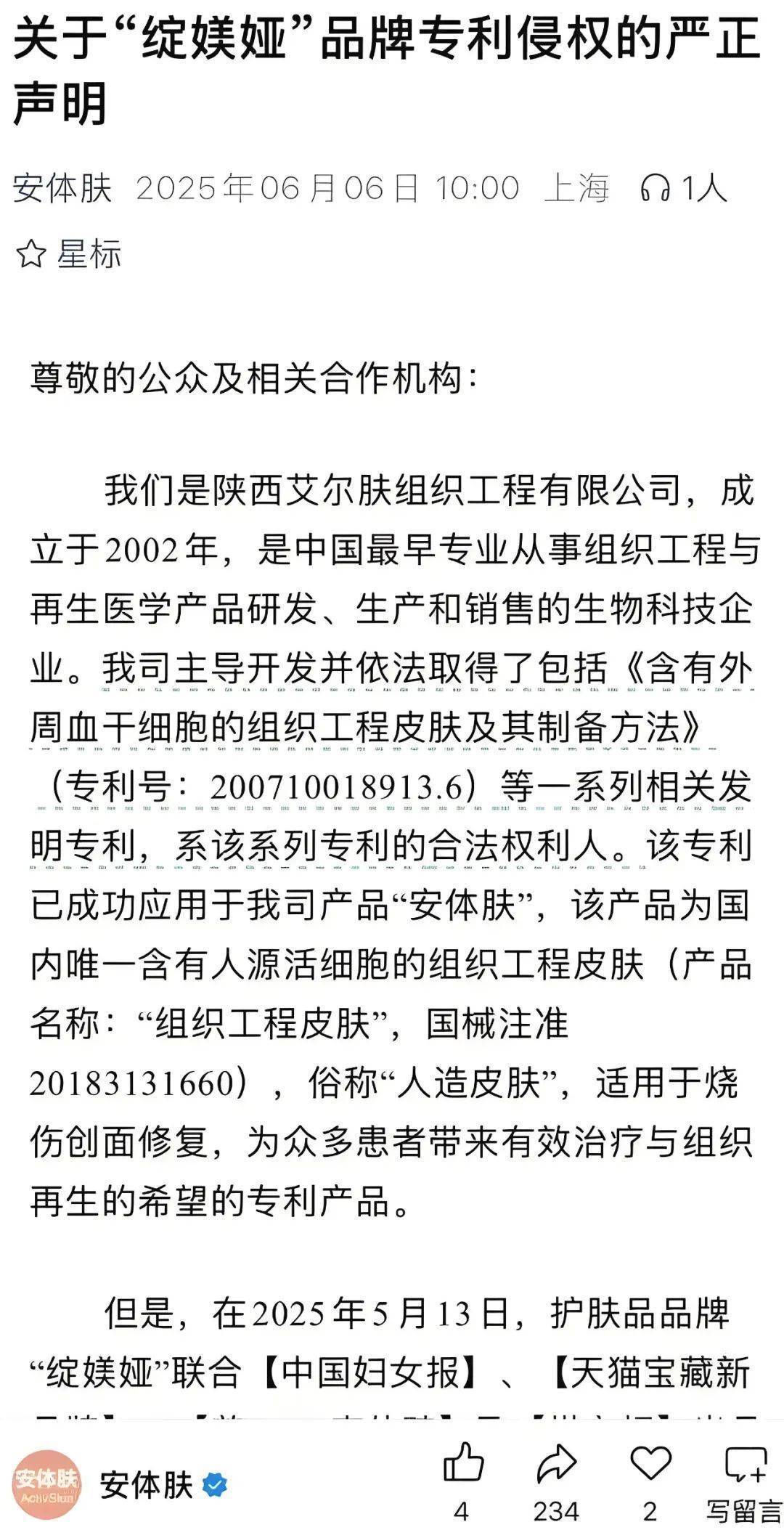
Core Viewpoint - The article discusses the controversy surrounding the skincare brand Jumiya and its product PDRN Energy Stick, highlighting issues of patent infringement and the complexities of translating scientific research into commercial products [1][2][4]. Group 1: Patent Infringement Controversy - Jumiya's promotional video claims to have developed China's first artificial skin, which has led to accusations of patent infringement from Aierfu, a company holding relevant patents [2][4]. - Aierfu asserts that Jumiya's promotional content overlaps significantly with its patented technology without permission, leading to consumer confusion [4][8]. - Jumiya counters that its technology is based on a different patent related to a 3D epidermal model, which is a self-developed technology distinct from Aierfu's claims [4][8]. Group 2: Product Popularity and Market Response - The PDRN Energy Stick has gained significant consumer attention, with 200,000 samples sold out during a live-stream event hosted by Li Jiaqi [2][21]. - The product contains 1.575 mg of PDRN per stick, priced at 999 yuan for a pack of 30, with promotional prices dropping to 259 yuan [23]. - Despite its popularity, there are reports of allergic reactions among some consumers, raising questions about the product's safety and efficacy [24][27]. Group 3: Scientific and Technical Background - Jumiya's core technology involves a patented method for creating a nano-emulsion that enhances the stability and penetration of PDRN, which is claimed to improve skin repair functions [23][24]. - The company emphasizes that its technology is based on biomedical research and aims to integrate regenerative medicine into skincare [18][19]. - The application of PDRN in skincare remains controversial, with debates over its effectiveness and safety compared to more established ingredients like collagen and hyaluronic acid [21][24]. Group 4: Industry Context and Implications - The situation reflects broader trends in the beauty industry where scientific advancements in regenerative medicine are being marketed in skincare products, raising issues of patent rights and efficacy claims [27]. - The intersection of scientific research and commercial marketing in the beauty sector necessitates clear communication regarding the origins and effectiveness of new technologies [27].
政策破冰,2000亿抗衰老赛道爆发,市场新蓝海浮现
Sou Hu Cai Jing· 2025-07-30 17:31
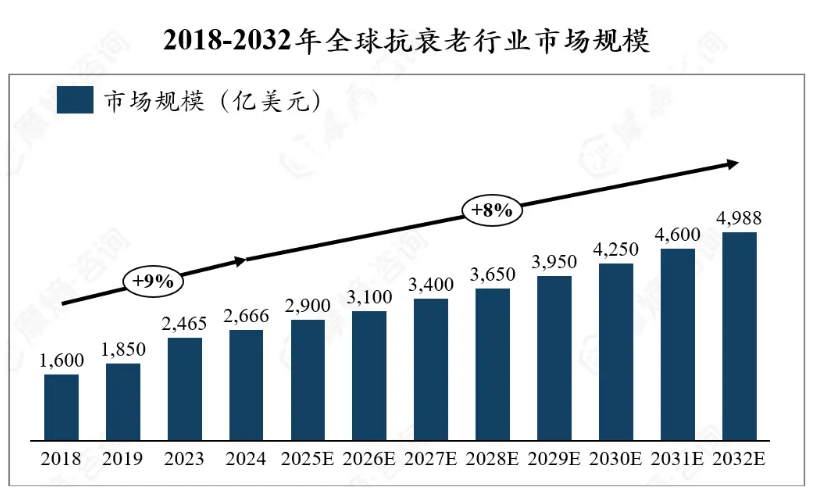
Group 1 - The global anti-aging product market is projected to reach $266.2 billion by 2024, with a compound annual growth rate (CAGR) of 8% driven by an aging population [2] - In January 2024, the State Council of China officially recognized the anti-aging industry, marking a significant policy shift that is expected to lead to clearer industry standards and regulatory frameworks [3] - The aging population in China, with over 19% aged 60 and above, is driving demand for anti-aging products, while younger generations are also emerging as significant consumers due to heightened health awareness [3] Group 2 - The anti-aging market is thriving across multiple sectors, including aesthetic medical institutions, where non-surgical facial rejuvenation projects are experiencing rapid growth [4] - The health supplement market is seeing substantial demand for oral anti-aging products, with collagen-based products alone exceeding a market size of $10 billion [5] - Smart home devices for anti-aging, such as radiofrequency beauty devices and laser hair removal instruments, are gaining popularity, significantly impacting traditional beauty salon market shares [7] Group 3 - Advances in life sciences and technology are propelling the anti-aging industry, with stem cell technology being explored for skin rejuvenation and disease treatment [8] - Research into molecular mechanisms of aging is ongoing, with major biopharmaceutical companies focusing on developing drugs targeting pathways like mTOR and AMPK to potentially extend healthy lifespan [8] - Synthetic biology is being utilized to efficiently produce rare natural anti-aging active substances, reducing costs and increasing availability for consumers [8] Group 4 - The anti-aging market is transitioning from rapid growth to a phase of standardization and technological advancement, with the potential for significant growth in the health sector [10] - The industry is becoming a key growth area within the broader health market, driven by both technological innovations and changing consumer demands [10]
正海生物迎来股东密集减持 技术驱动毛利率超90%
Chang Jiang Shang Bao· 2025-07-28 03:04
Core Viewpoint - Zhenghai Biological has experienced significant shareholder reductions despite its ongoing growth and strong financial performance, raising concerns about market confidence and future stability [1][4][8]. Shareholder Reduction - The controlling shareholder, Mi Bohai, has reduced his stake by 5% from August 5 to February 3, resulting in a decrease from 42.53% to 37.53% [7]. - Longwood, the second-largest shareholder, has also been reducing its holdings, with its stake dropping to 9.27% [7]. - Together, the two major shareholders have cashed out approximately 5.77 billion yuan, with Mi Bohai realizing about 3.70 billion yuan and Longwood about 2.07 billion yuan [7][8]. Financial Performance - Zhenghai Biological has shown consistent revenue and net profit growth since 2013, with a projected annual revenue of 3.38 billion yuan and a net profit of 1.31 billion yuan for 2020, reflecting a growth rate of around 20% [2]. - The company reported revenue of 216 million yuan and net profit of 95 million yuan for the first three quarters of 2020, marking year-on-year increases of 7.39% and 19.74%, respectively [1][2]. Business Model and Product Offering - Zhenghai Biological specializes in the research, development, production, and sales of biological regenerative materials, including oral and skin repair membranes, and bone repair materials [2]. - The company maintains a high gross margin exceeding 90% since 2012, attributed to its advanced technology [2][3]. Market Challenges - The company faced unprecedented challenges during the COVID-19 pandemic, particularly in its core business areas such as oral and neurosurgery, which were significantly impacted [2].