
抗战精神

Search documents
杨靖宇之孙,拿出一块传家宝!
Ren Min Wang· 2025-09-16 03:20
"我们家有一个传家宝 拿出了一块珍藏的传家宝 0:00 是从我爷爷牺牲的地方 带回来的一块树皮 我爷爷就是靠这些东西果腹 靠共产党人的意志支撑" 杨靖宇将军(原名马尚德)之孙马继志 讲述爷爷的故事时 撕裂沈阳城头的黎明 当卢沟桥的硝烟 笼罩宛平城的上空 平津危急! 华北危急! 中华民族危急! "如果我们中国人都投降了 还有中国吗?" 这是杨靖宇牺牲前 对劝他投降的村民说的话 当"九一八"的炮声 在这民族危亡之际 谁能在硝烟弥漫中看清胜利方向? 做光荣自豪中国人 9月16日 谁能在生死攸关前扛起民族大义? 谁能在泥沙俱下时担当中流砥柱? 0:00 为纪念中国人民抗日战争 暨世界反法西斯战争胜利80周年 全国大中小学生同上一堂思政大课 弘扬伟大抗战精神 让我们回望烽火岁月 叩问历史 探寻答案 点击观看完整课程↓↓ 本次思政大课分为小学课程"众志成城"、初中课程"中流砥柱"、高中(中职)课程"精神丰碑"、大学课 程"大国担当"四个篇章,按学段在9月15日至18日依次推出,敬请关注! 责编:张靖雯、王瑞景 ...
弘扬伟大抗战精神 全国大中小学生同上抗战思政大课
Yang Shi Wang· 2025-09-15 22:57
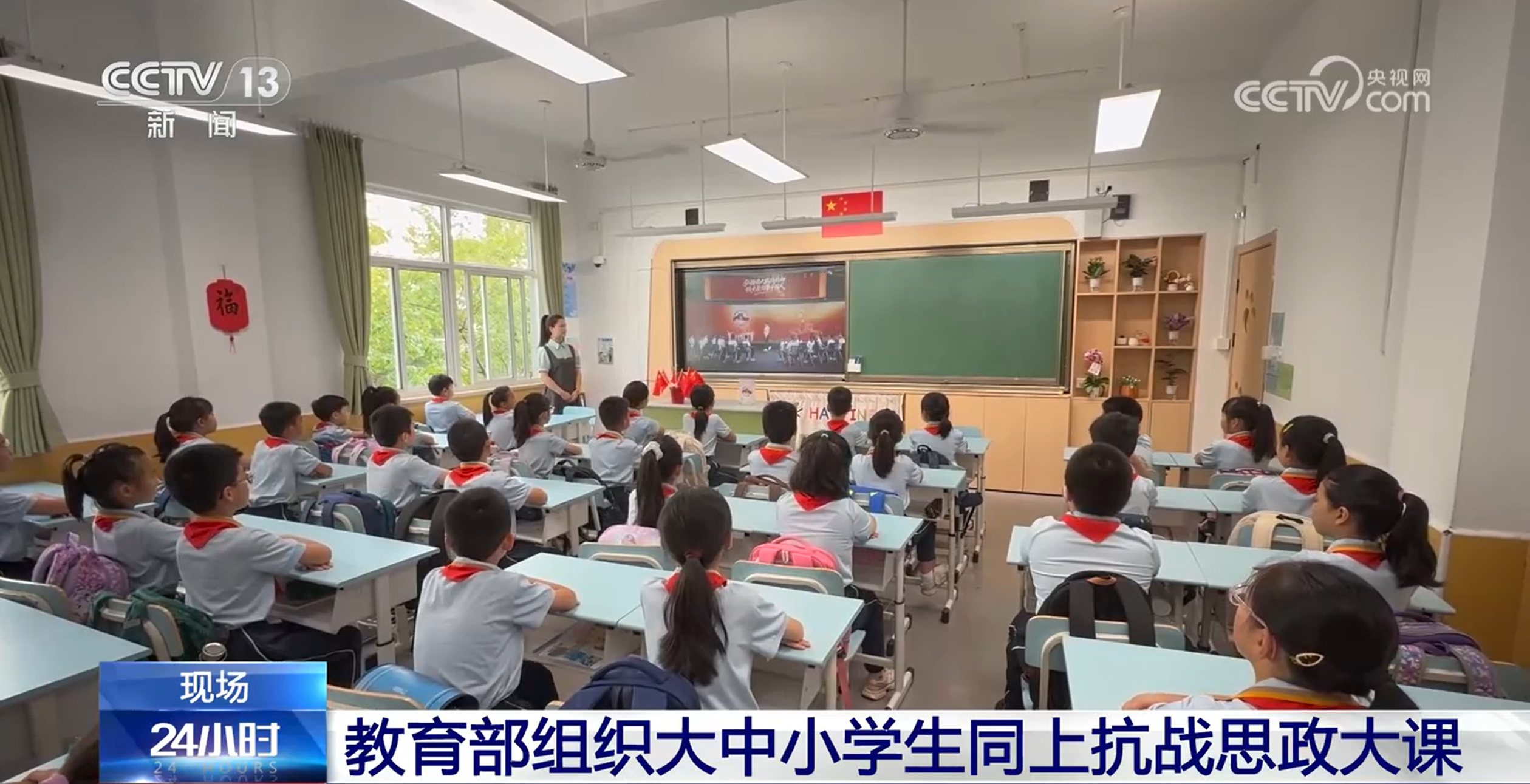
全国大中小学生同上抗战思政大课,针对不同学段学生的认知规律,分为小学篇"众志成城"、初中篇"中流砥柱"、高中(中职)篇"精神丰碑"和大学篇"大 国担当",从9月15日至18日每日播出一篇。小学段课程《众志成城》率先播出,赵一曼家书等珍贵历史资料,借助AI技术,引导孩子们沉浸式感悟抗战精 神。 靖宇县三道湖镇兴平希望学校学生 宫本爽:我真的很难想象杨靖宇将军他们是怎么在零下三四十摄氏度的冬天里坚持下来的。我在信里告诉他,我们现在 每天都能吃饱穿暖,坐在明亮的教室里学习。我们国家现在有航母,有高铁,有飞船,如果他能看到就好了。我还想对杨靖宇将军说,请您放心,我们一定 会珍惜现在的一切,好好学习,将来把祖国建设得更强大。 上海浦东新区张江高科实验小学学生 朱星潆:赵一曼阿姨的故事让我特别感动,她那么爱自己的孩子,却愿意为国家牺牲,她的绝笔信就好像在跟我们说 话一样。 央视网消息:为纪念抗战胜利80周年,教育部联合中央网信办、国家文物局等单位,组织全国大中小学生同上抗战思政大课,主题是"弘扬伟大抗战精神 做 光荣自豪中国人"。 上海浦东新区张江高科实验小学学生 杨浩毓:听了这节思政大课,我才真正明白了众志成城这个词的 ...

弦歌不辍为家国(金台随笔)
Ren Min Ri Bao· 2025-09-15 22:22
Core Viewpoint - The commemoration of the 80th anniversary of the victory in the Chinese People's War of Resistance Against Japanese Aggression emphasizes the importance of anti-war songs in preserving historical memory and promoting patriotism and national spirit [1][3]. Group 1: Historical Significance - Anti-war songs serve as a vital medium for collective memory and cultural identity, reflecting the resilience and determination of the Chinese people during wartime [1][2]. - Songs like "Yellow River Cantata" and "On the Songhua River" express both the spirit of resistance and the emotional connection to homeland, highlighting the shared experiences of the nation [1][2]. Group 2: Social Impact - The power of song unites individuals across different regions and backgrounds, fostering a sense of collective identity and purpose during times of national crisis [2]. - The mobilization of the masses through music was crucial in rallying support for the war effort, as simple melodies and lyrics resonated deeply with the populace [2][3]. Group 3: Contemporary Relevance - The themes of resilience, unity, sacrifice, and optimism embedded in anti-war songs remain relevant today, serving as a source of inspiration in facing modern challenges [3]. - The ongoing relevance of these songs is highlighted in contemporary cultural events, which aim to instill a sense of national pride and collective effort towards national rejuvenation [3].
东航北京分公司参观《为了民族解放与世界和平》主题展览
Zhong Guo Min Hang Wang· 2025-09-15 08:05
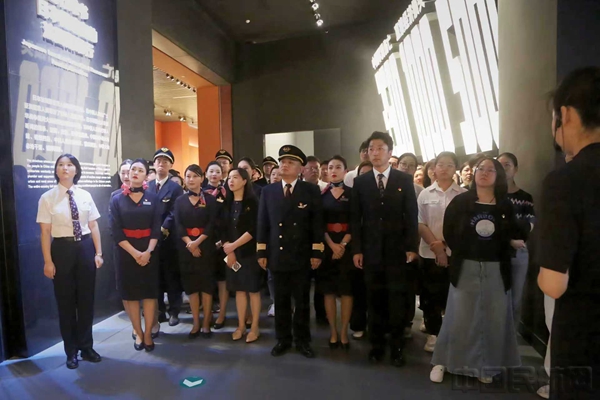
Core Viewpoint - Eastern Airlines Beijing Branch employees participated in a commemorative exhibition to honor the 80th anniversary of the victory in the Chinese People's Anti-Japanese War and the World Anti-Fascist War, reflecting on historical significance and the importance of peace [1][3]. Group 1: Exhibition Details - The exhibition features 8 thematic areas centered around "Remembering History, Honoring Heroes, Cherishing Peace, and Creating the Future" [3]. - A total of 1,525 photographs and 3,237 cultural relics are displayed, utilizing AI interaction and holographic imaging technologies to recreate significant historical moments [3]. Group 2: Employee Participation - 50 flight crew members and relevant personnel from Eastern Airlines Beijing Branch attended the event, which was organized for central enterprise staff in Beijing by the State-owned Assets Supervision and Administration Commission [3][6]. - Employees expressed their commitment to uphold the spirit of the Anti-Japanese War, emphasizing the importance of safety in aviation operations and service quality [6].

经典抗战雕塑:镌刻不屈的力量
Hai Nan Ri Bao· 2025-09-15 02:38
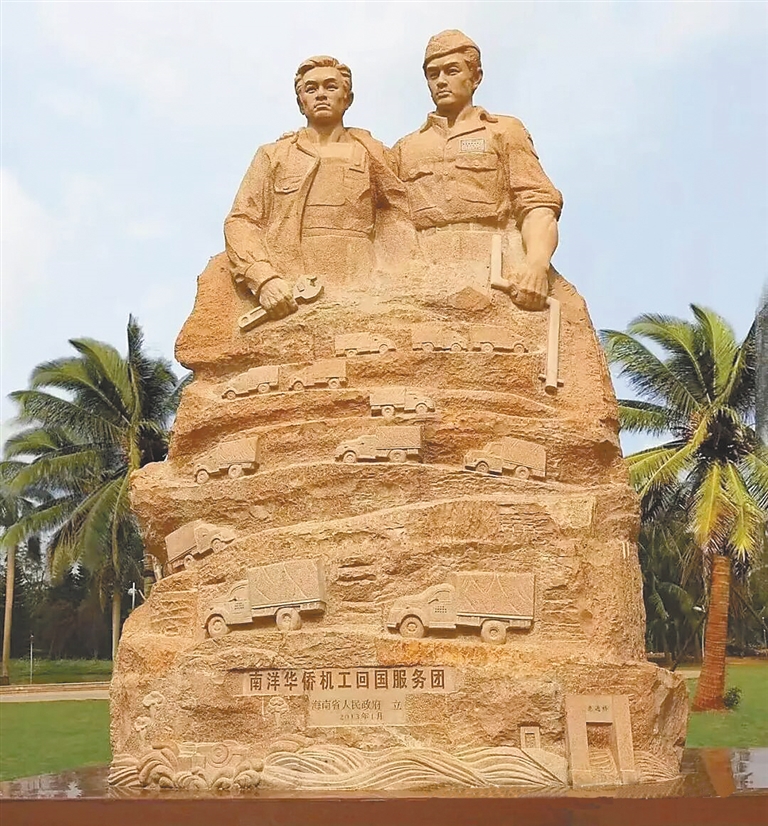
Core Viewpoint - The article emphasizes the significance of war sculptures as a means to commemorate the unyielding spirit of the Chinese people during the Anti-Japanese War, capturing moments of bravery, support, suffering, and the transmission of spirit through art [8][15]. Group 1: Battlefield Charge - The sculptures encapsulate the steel will of soldiers during critical battles, such as the 1932 Shanghai and 1940 Taihang Mountain conflicts, showcasing their determination and heroism [9]. - Liu Kaiqu's sculpture "1.28 Shanghai Anti-Japanese Martyrs Memorial" is highlighted as a pioneering work in the "battlefield charge" theme, focusing on the resolute expressions of soldiers and officers [9]. - Wu Weishan's "Zuo Quan" sculpture adds a nuanced representation of a military leader, blending strength and compassion, symbolizing the deep connection between the military and the land [10]. Group 2: National Support - The "National Support" theme illustrates the contributions of various groups, including overseas Chinese and local civilians, during the war, reflecting a collective patriotism [11]. - The group sculpture "The March of the Big Knife," created by Pan He and Liang Mingcheng, depicts diverse individuals, including soldiers and civilians, united in their fight against the enemy [11]. - Chen Xuebo's sculpture "Nanyang Chinese Workers' Return Service Corps" highlights the dedication of overseas Chinese workers, showcasing their sacrifices and commitment to the nation [12]. Group 3: Remembering Suffering - Sculptures like "Home Broken and Family Lost" at the Nanjing Massacre Memorial serve as poignant reminders of the atrocities faced, emphasizing the importance of remembering history to cherish peace [13]. - Wu Weishan's work focuses on emotional details rather than graphic violence, aiming to convey the profound pain of loss experienced by victims of the massacre [13]. - The group sculpture "Fleeing" captures the harrowing experiences of families during the war, with intricate details reflecting real historical accounts [13]. Group 4: Spiritual Continuation - The newly unveiled sculpture "March of the Volunteers" in Guangzhou symbolizes the transmission of revolutionary spirit to younger generations, emphasizing the importance of national pride and responsibility [14]. - The work by Li Ming integrates music and history, illustrating the narrative of the national anthem and the collective struggle for independence [14]. - The interactive design of the sculpture allows for a visual representation of the connection between historical events and contemporary values, reinforcing the enduring significance of these artistic expressions [15].
是歌声,是号角(寻访)
Ren Min Ri Bao· 2025-09-14 22:03
Core Viewpoint - The article highlights the indomitable spirit of the Chinese people during the Anti-Japanese War, focusing on the contributions of ordinary citizens and the powerful impact of music, particularly the song "The Great Wall Song," in uniting and motivating the nation against invaders [1][2][3]. Group 1: Historical Context - The narrative recounts the fervent patriotism and collective resistance of the Chinese populace during the war, emphasizing the emotional connection to the song "The Great Wall Song" [1][2]. - The song was performed by Zhou Xiaoyan, who became a symbol of hope and resilience, intertwining her life with the song's legacy [1][3]. Group 2: Zhou Xiaoyan's Journey - Zhou Xiaoyan's most cherished moment was joining the Communist Party in 1956, which she viewed as a pivotal point in her life dedicated to serving the people through music [2]. - The tragic loss of her brother, Zhou Deyou, who died for the revolutionary cause, deeply influenced her commitment to using her voice for the nation's struggle [6][7]. Group 3: The Power of Music - "The Great Wall Song" emerged as a cultural weapon during the war, with its lyrics resonating deeply with the suffering and aspirations of the people [5][9]. - The song's popularity spread widely, becoming a rallying cry for both domestic and overseas Chinese communities, inspiring donations and support for the war effort [9][10]. Group 4: Impact and Legacy - The Wuhan Choir, which Zhou Xiaoyan was part of, performed extensively, raising significant funds and boosting morale among Chinese expatriates [10][11]. - The enduring legacy of "The Great Wall Song" is reflected in its continued resonance in Chinese culture, symbolizing national unity and resilience [11][12][15].
第十二届世界华文传媒论坛举办
Ren Min Ri Bao· 2025-09-14 20:32
Core Viewpoint - The 12th World Chinese Media Forum held in Kunming, Yunnan, emphasized the role of Chinese media in promoting national spirit and anti-war values while fostering international communication and understanding [1] Group 1: Forum Theme and Objectives - The forum's theme was "Winning Victory, Discussing Rejuvenation, Seeking Commonality," coinciding with the 80th anniversary of China's victory in the Anti-Japanese War and the global anti-fascist war [1] - Participants highlighted the importance of Chinese media in conveying China's commitment to peaceful development and mutual benefit to the international community [1] Group 2: Media's Role and Responsibilities - The forum called for Chinese media to unite overseas Chinese communities and effectively narrate China's story through a cross-cultural narrative approach [1] - Experts and media representatives engaged in discussions on nurturing national sentiment and the development paths for Chinese media in the intelligent media era [1] Group 3: Commemorative Activities - A donation ceremony took place where China News Service donated a painting titled "Lifeline: The Burma Road" to the Nanyang Chinese Workers' Anti-Japanese Memorial Hall, honoring history and preserving memory [1]
聆听白山黑水间的热血壮歌(文化中国行·走进抗战专题博物馆(纪念馆))
Ren Min Ri Bao· 2025-09-13 21:50
Core Viewpoint - The article emphasizes the historical significance of the September 18 Incident (九一八事变) and the enduring spirit of resistance demonstrated by the Northeast Anti-Japanese United Army during the 14 years of struggle against Japanese aggression, highlighting the role of the Chinese Communist Party in mobilizing the masses for the anti-Japanese war [6][9][12]. Group 1: Historical Context - The September 18 Incident occurred on September 18, 1931, when the Japanese Kwantung Army staged an explosion on the South Manchuria Railway as a pretext to attack the Northeast Army and seize control of Shenyang [6][9]. - The incident marked the beginning of the Chinese people's resistance against Japanese invasion and the start of the global anti-fascist war [6][9]. - The Northeast Anti-Japanese United Army was formed as a response to the invasion, with the first declaration of resistance issued by the Chinese Communist Party's Manchurian Provincial Committee the day after the incident [7][9]. Group 2: Role of the Chinese Communist Party - The Chinese Communist Party was pivotal in organizing the resistance, issuing multiple declarations and strategies to mobilize the masses and establish guerrilla warfare [7][8]. - The establishment of the Northeast People's Revolutionary Army marked a transition from scattered guerrilla tactics to a more organized and unified military force [8][9]. - By 1936, the Northeast People's Revolutionary Army and other anti-Japanese forces unified under the Northeast Anti-Japanese League, comprising over 30,000 troops [9]. Group 3: Resistance and Sacrifice - The Northeast Anti-Japanese United Army faced overwhelming odds, with Japanese forces sometimes numbering up to 700,000, yet they continued to resist fiercely, significantly contributing to the national anti-Japanese effort [11]. - Many leaders and soldiers of the Northeast Anti-Japanese United Army sacrificed their lives, with over 100 senior officers reported killed [11][12]. - The story of Zhao Yiman, a notable figure in the resistance, exemplifies the courage and determination of those who fought against the invaders, as she endured torture without revealing any information [12]. Group 4: Legacy and Education - The history of the Northeast's resistance is crucial for educating younger generations about patriotism and national responsibility, as highlighted by the activities at the September 18 Historical Museum [13][14]. - Annual commemorative events, such as the "Never Forget September 18" ceremony, serve to remind the public of the historical significance and the sacrifices made during the anti-Japanese war [14].
“抗日救国之信仰,坚如磐石”(以物鉴史)
Ren Min Ri Bao· 2025-09-12 22:16
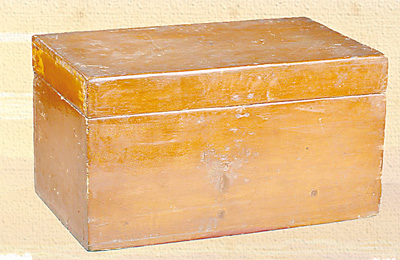
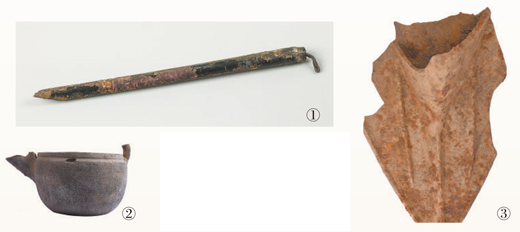
Core Viewpoint - The article commemorates the 80th anniversary of the victory in the Chinese People's Anti-Japanese War and the World Anti-Fascist War, highlighting the significance of the Red Stone Lazi anti-Japanese base and the legacy of General Yang Jingyu and other heroes [2][3]. Summary by Sections Historical Context - General Yang Jingyu led anti-Japanese forces to the Red Stone Lazi area in Jilin Province 93 years ago, seeking national liberation [3]. - In 2021, an archaeological team followed Yang's footsteps to uncover 14 years of anti-Japanese history hidden beneath the forest [3]. Archaeological Findings - The archaeological site includes semi-subterranean houses known as "dizhuangzi," where anti-Japanese soldiers took refuge [3]. - Various artifacts, including weapon parts and tools, were discovered, indicating the area's use for production activities despite its simplicity [4]. Living Conditions and Defense Structures - The site features a network of combat fortifications and living quarters, designed for concealment and defense [5][6]. - The living quarters, identified as "密营" (secret camps), were used by General Yang and other officials, with notable artifacts like brushes used for writing patriotic poetry found [4][6]. Strategic Importance - The Red Stone Lazi site served as a crucial base for guerrilla warfare, providing valuable experience for future anti-Japanese efforts across Northeast China [7]. - The area is described as a "military academy without walls," nurturing numerous anti-Japanese leaders [7]. Cultural Significance - The remnants of the site symbolize the enduring spirit of resistance and the cultural struggle for national independence [7].
为世界和平与发展注入正能量
Ren Min Ri Bao· 2025-09-12 22:16
Group 1 - The Chinese government has announced the fourth batch of 34 national-level anti-Japanese war memorial facilities, including 4 overseas sites, to commemorate the 80th anniversary of the victory in the anti-Japanese war [1] - Various Chinese communities abroad are organizing memorial activities at these sites to honor the heroes and promote the spirit of the anti-Japanese war [1][2] - The activities aim to remind people of the importance of history and the need to cherish peace, emphasizing the interconnectedness of all nations [6][7] Group 2 - In Myanmar, a memorial event was held at the Chinese Expeditionary Force Monument, attended by over 200 representatives from various organizations, highlighting the contributions of the Chinese Expeditionary Force during World War II [2] - In Papua New Guinea, a cemetery for Chinese soldiers and victims of the war was recognized, where over 600 Chinese soldiers are buried, including some from the "Eight Hundred Heroes" [2] - In Malaysia, a memorial park was inaugurated to honor the South Sea Chinese workers who supported the war effort, with over 3,000 names inscribed on a commemorative wall [5] Group 3 - The Chinese government is committed to protecting and managing overseas anti-Japanese war memorial facilities, aiming to tell the story of China's contributions to world peace and the fight against fascism [9] - The activities and memorials serve as a platform to promote a correct understanding of World War II history and the importance of international cooperation [8][9]