
数字技术

Search documents
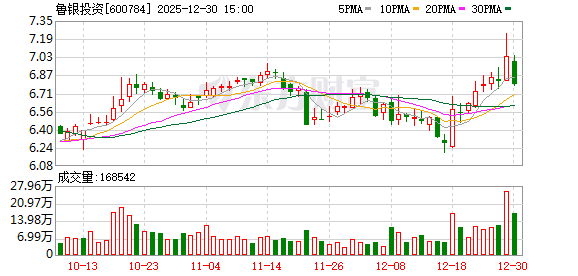
鲁银投资:公司积极推动数字技术深度赋能业务场景
Zheng Quan Ri Bao· 2025-12-30 12:07
Group 1 - The company is actively promoting the deep integration of digital technology into its business scenarios while enhancing its cybersecurity and data security systems [2] - Digital methods are being utilized to improve governance efficiency and service quality, with intelligent applications explored in areas such as warehousing systems and data analysis [2] - By 2025, the traceability system for the salt industry segment will be fully operational, providing a stronger "technological barrier" for consumer food safety through this system upgrade [2]


联合国前副秘书长索尔海姆接受《环球时报》专访:“全球治理倡议将成为世界未来发展的重要基石”
Huan Qiu Shi Bao· 2025-12-28 22:58
Core Viewpoint - The article discusses China's global governance initiative, which aims to establish principles that promote equality among nations and enhance international cooperation amidst a changing geopolitical landscape [1][2]. Group 1: Global Governance Initiative - China's global governance initiative emphasizes five core principles: sovereign equality, adherence to international law, multilateralism, a people-centered approach, and action-oriented strategies [1]. - The initiative has garnered widespread recognition from various countries, including major global South nations like India, Brazil, South Africa, and Indonesia, as well as support from several European countries [1][2]. Group 2: Challenges in Global Governance - There is a significant disparity between legal sovereignty and actual power dynamics, with strong nations often overshadowing weaker ones in terms of influence and rule-making [2]. - The existing international system, particularly institutions like the United Nations, is seen as outdated and not reflective of the current global power structure, necessitating deep reforms [3]. Group 3: Future of International Institutions - New international platforms such as the Shanghai Cooperation Organization and the Asian Infrastructure Investment Bank are viewed as essential supplements to traditional institutions, providing a voice for developing countries [3]. - The shift in global power dynamics indicates that developing nations will play a crucial role in future international rule-making, necessitating their active participation in multilateral dialogues [3]. Group 4: Sustainable Development and International Law - The core challenge of sustainable development is rooted in domestic policy discrepancies among nations, which complicate international cooperation [4]. - The article highlights that while major economies are advancing green transitions, the absence of U.S. participation does not hinder progress, as other nations can still lead initiatives [4]. Group 5: Perspectives on Future International Affairs - The outlook for 2026 suggests that China will continue its steady development and lead in global green initiatives, while the U.S. may struggle with internal divisions and declining relative power [6]. - Other regions, particularly India and Europe, are expected to accelerate their development and strategic autonomy, with hopes for peace in conflict areas like Ukraine and Gaza [6].
持续提高数字贸易竞争力
Jing Ji Ri Bao· 2025-12-28 21:51
Core Viewpoint - The revised Foreign Trade Law draft emphasizes the support and encouragement of digital trade development, providing legal guarantees for its growth, which is seen as a crucial engine for high-quality foreign trade development in China [1][2]. Group 1: Digital Trade Development - Digital trade is characterized by data as a key production factor, digital services as core content, and digital ordering and delivery as main features, encompassing various sectors such as digital services, digital products, and cross-border e-commerce [1]. - During the "14th Five-Year Plan" period, China has achieved significant expansion, structural optimization, and system improvement in digital trade, enhancing its cultural soft power and international influence through competitive advantages in cloud computing and artificial intelligence [1][2]. Group 2: Policy Framework and Legal Basis - The digital trade policy framework is gradually being established with the introduction of laws and regulations like the "Data Exit Security Assessment Measures" and "Regulations on Promoting and Regulating Cross-Border Data Flow," which strengthen the legal foundation for digital trade [2]. - Core digital trade carriers such as free trade pilot zones and national digital service export bases are addressing systemic barriers and creating replicable experiences that stimulate the potential for digital trade development [2]. Group 3: Challenges and Solutions - Current challenges in China's digital trade include intensified competition for global digital trade rule dominance, insufficient core technology innovation capabilities, and lagging intellectual property protection mechanisms [3]. - To address these issues, a multi-faceted approach is needed, focusing on innovation-driven development, enhancing digital infrastructure, and supporting key technology research in areas like high-end chips and AI algorithms [3][4]. Group 4: Regulatory and Institutional Enhancements - There is a need to accelerate the legislative process in the digital trade sector, improving foundational systems related to data property rights, transaction rules, and security guarantees [4]. - A modern regulatory framework that aligns with digital trade forms should be established, utilizing technologies like big data and blockchain for smart regulation [4]. Group 5: Global Integration and Influence - China aims to actively integrate into the global digital trade system, enhancing its rule-making power and influence in global digital trade governance, transitioning from a rule participant to a rule builder [5]. - Strengthening the construction of standardization technical organizations and fostering influential industry associations are essential for expanding the space for digital trade development [5].
数字技术重塑传统林业管理模式
Xin Lang Cai Jing· 2025-12-28 20:29
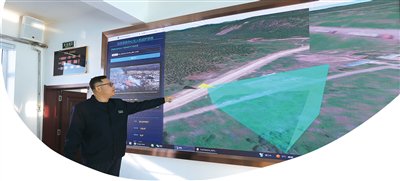
Core Viewpoint - The Inner Mongolia Forest Industry Group is undergoing a significant digital transformation, enhancing forest management and fire prevention through advanced technologies such as drone surveillance and improved communication networks [4][10]. Group 1: Digital Infrastructure Development - The company has constructed 409 communication base stations and laid 5,261 kilometers of optical fiber, significantly improving communication coverage in the forest area [6][8]. - The implementation of the 10th phase of the national telecommunications universal service project will see the construction of 25 new communication base stations and the installation of 381 kilometers of optical fiber in 2024 [5][6]. - The group has adopted a resource-sharing model with the State Grid and telecom operators to reduce construction costs and enhance project efficiency [6] Group 2: Smart Forestry Initiatives - The "Smart Forestry" platform has enabled real-time monitoring of a 1,447.5 square kilometer ecological area, improving fire risk assessment and response times [7][9]. - Drone patrols can cover 300 square kilometers, significantly increasing the efficiency of forest surveillance and reducing false alarm rates by 80% [7][9]. - The company has developed 10 core systems for emergency dispatch, organizational work, and digital archiving, enhancing operational efficiency and reducing the need for in-person interactions [9][12]. Group 3: Strategic Partnerships and Investments - A partnership with China Telecom aims to invest nearly 200 million yuan in enhancing information capabilities and communication network coverage in the forest area [8][10]. - The project has reached 72.32% completion, with 1,720 kilometers of the planned 1,800 kilometers of optical fiber already constructed [8][10]. - The company is focusing on talent development to address challenges in digital transformation, including training programs for new employees in emergency communication and drone operation [11][12]. Group 4: Emergency Response and Management - The group has established a comprehensive emergency communication guarantee mechanism, conducting multiple joint drills to enhance emergency response capabilities [12]. - The implementation of a monitoring center and data center has improved data collection and processing, supporting the overall digital transformation strategy [11][12]. - The company is addressing technical challenges in fire prevention through upgrades to video monitoring systems, achieving an 80% video return rate [10][12].
AI在古文字研究中潜力巨大
Xin Lang Cai Jing· 2025-12-28 19:25
12月26日,清华大学历史系教授、中国古文字研究会副会长赵平安做客2025名人大讲堂"汉字源流"季, 在四川大学文学与新闻学院,为师生及线上网友带来题为《战国文字的形形色色》的讲座,并接受该校 青年传习志愿者的提问。 来自四川大学汉语言文学专业的学生李春榕请教赵平安教授:"近年来人工智能和数字技术的发展,在 古文字的研究中起了哪些作用?这些新的技术有没有可能帮助我们解决传统考释中的一些问题?" 赵平安解答,人工智能和数字技术广泛地运用到人们的生活之中,对古文字研究的帮助巨大。比如"'殷 契文渊'——甲骨文大数据平台",为AI模型提供了海量的、标准化的数据基础,古文字工程的有关单位 用AI开展了诸如甲骨缀合(拼图)、未释字考释、卜辞语法分析等前沿研究。AI在古文字的研究中展 现了巨大的潜力,他视AI为"畏友",称将与之热情拥抱,共创美好的未来。 四川大学古典文献学专业的学生李雪珊提问:"刘邦和项羽都是楚国人,推翻了秦朝之后,他们为什么 不恢复楚国的文字和货币呢?"赵平安认为,秦朝虽然不到20年历史,但毕竟是大一统的成功范例。一 个大一统的汉朝,再用楚国的东西,原来的六国人肯定不服,秦人也不服。当时汉承秦制,文字 ...

激活新质生产力动能 培育新型消费增长极
Xin Lang Cai Jing· 2025-12-28 19:25
Core Viewpoint - The article emphasizes the importance of new productive forces driven by technological innovation in facilitating the upgrade of consumption and addressing the challenges of insufficient effective demand in China's economic development during the upcoming "15th Five-Year Plan" period [1]. Group 1: New Productive Forces and Consumption Upgrade - New productive forces, characterized by high quality and efficiency, are essential for industrial upgrading and driving new consumption patterns [1]. - The integration of new productive forces and new consumption is a necessary outcome of consumption upgrades and productive development, aligning with the economic principle of "supply creates demand, and demand drives supply" [1]. Group 2: Mechanisms of New Productive Forces Empowering New Consumption - Technological innovation redefines the consumption supply system, leading to comprehensive upgrades in product forms, service models, and supply efficiency [2]. - Breakthroughs in artificial intelligence and renewable energy technologies have significantly reduced costs and expanded the availability of smart and green products, enhancing new consumption supply [2]. - The deep integration of digital technology with the real economy enables flexible and customized production, effectively addressing the disconnect between traditional supply and consumer demand [2]. Group 3: Expanding Consumption Scenarios through Industrial Upgrading - New productive forces promote the construction of a modern industrial system, facilitating the integration of advanced manufacturing, modern services, and agriculture, thus creating innovative consumption scenarios [3]. - The development of low-altitude economy has led to new consumption scenarios such as low-altitude tourism and short-distance commuting [3]. - The integration of humanoid robotics with services like elderly care and education has created new consumption scenarios that cater to high-quality living service demands [3]. Group 4: Practical Pathways for Empowering New Consumption - Focusing on technological innovation is crucial for enhancing the supply capacity of new consumption, including breakthroughs in digital technologies and expanding the supply of green products [4]. - The integration of advanced manufacturing with modern services is essential for upgrading consumption from product-based to service-oriented consumption [4]. - Emphasizing demand-driven strategies will cultivate new consumption hotspots, such as promoting green and health-oriented consumption [4]. Group 5: Policy Support for New Consumption - Establishing a cross-departmental coordination mechanism is vital for integrating policies related to technology, industry, consumption, and finance to avoid fragmentation [5]. - Increasing financial support for technology innovation in the consumption sector is necessary to enhance residents' consumption capacity [5]. - Strengthening legal frameworks and market regulation in the new consumption sector will protect consumer rights and ensure fair market practices [6].
秋粮收购总量超2亿吨 数字技术贯通“收储供”全链条
Yang Shi Xin Wen· 2025-12-28 01:40
Core Insights - The National Grain and Material Reserve Bureau reported that the autumn grain procurement has entered a peak season, with over 200 million tons collected, an increase of 32 million tons year-on-year, marking a record high for this period in recent years [1] Group 1: Procurement Progress - The grain procurement progress has surpassed 200 million tons, reflecting a year-on-year increase of 32 million tons [1] - The procurement scale has reached a new high for the same period in recent years [1] Group 2: Technological Advancements - Digital technology is facilitating grain sales even in adverse weather conditions, such as snow and low temperatures [1] - Farmers can use the "Hui San Nong" app to pre-schedule grain sales, significantly reducing waiting times [1] - The China Grain Reserves Corporation's Heilongjiang branch has implemented a visual management system for resource allocation, enhancing efficiency in grain procurement [1] Group 3: Operational Efficiency - The Heilongjiang branch has activated 83 minimum purchase price rice procurement points, with a maximum daily procurement volume of approximately 140,000 tons [1]
专访诺奖得主斯宾塞:全球经济在碎片化中寻找新均衡
21世纪经济报道· 2025-12-27 03:06
Core Viewpoint - The global economy is navigating through profound changes, characterized by geopolitical conflicts, restructuring of global supply chains, and adjustments in national policies between "efficiency" and "security" [1] Group 1: Economic Characteristics of 2025 - The most significant change is the drastic shift in U.S. foreign economic policy, reflected in increased tariffs and withdrawal from multilateral agreements like the Paris Accord [4] - The fragmentation trend in the global economy, which began before the Trump administration, has been accelerated by external shocks and geopolitical tensions, leading to a diversification of supply chains [4] - The initial uncertainty caused by tariffs has largely dissipated, with a new, manageable tariff system emerging, allowing global trade and investment to continue despite the changes [5] Group 2: Emerging Markets and Growth Engines - India has shown considerable resilience with a recent growth rate of approximately 8%, while several ASEAN countries are also performing strongly, albeit dependent on China's economic performance [9] - African nations have potential for growth if they can implement growth-oriented policies, benefiting from a young demographic [9] Group 3: 2026 Economic Forecast - The baseline prediction for global economic growth in 2026 is between low and moderate, contingent on the absence of major disruptions such as large-scale conflicts or deteriorating relations among major economies [11] - The U.S. economy, accounting for about 25% of global GDP, plays a crucial role in determining global economic directions, particularly regarding sanctions and trade restrictions [11] Group 4: Federal Reserve's Complex Situation - The Federal Reserve's interest rate cuts typically ease global monetary conditions, which can be beneficial for the economy, but rapid or excessive cuts may reignite inflation [13] - The Fed faces a complex situation with signs of economic weakening, particularly in sectors reliant on the lower half of the income distribution, while inflation remains above target levels [13][14] Group 5: U.S. Consumer Dependency on High-Income Groups - U.S. consumer spending is increasingly reliant on the top 25% of income earners, supported by rising asset prices, while the lower 50% face economic pressures leading to weakened consumption in certain sectors [17][18] Group 6: Debt Sustainability Concerns - The current trajectory of deficits and debt is unsustainable in the long term, with the timing and manner of potential crises dependent on economic growth performance [20][21]

新闻分析|大规模设备更新促进产业变革
Xin Lang Cai Jing· 2025-12-27 00:11
Group 1 - The core viewpoint is that large-scale equipment updates are driving industrial transformation in Hebei, with significant investment growth in equipment and tools [1][2] - From January to November, Hebei's investment in equipment and tools increased by 34.2% year-on-year, outpacing the provincial fixed asset investment growth by 28.1 percentage points [1] - The carbon four new materials integration project by Kaiyi New Materials has generated significant revenue, with 1.2 billion yuan in revenue and 150 million USD in export earnings from methyl tert-butyl ether [2][3] Group 2 - The industrial sector is the main battlefield for equipment updates, with Hebei being a major manufacturing province that has substantial potential for equipment renewal [4] - The provincial government has implemented various supportive policies to promote equipment updates, including financial incentives and comprehensive communication strategies to ensure businesses are informed [4][5] - The equipment updates are not only modernizing production lines but also enhancing efficiency and sustainability, with companies reporting significant improvements in production capabilities and cost savings [5][6] Group 3 - Hebei's industrial investment grew by 13.4% year-on-year, ranking fifth nationally, and contributing to a 4.1 percentage point increase in overall fixed asset investment [7][8] - The manufacturing sector's investment increased by 6.2%, surpassing the national average of 4.3%, indicating a robust growth trajectory [7][8] - The province has selected 1,600 projects for recommendation to the Ministry of Industry and Information Technology, with a total planned investment exceeding 600 billion yuan [7]
服贸会明年首设中小企业展览专区
Bei Jing Ri Bao Ke Hu Duan· 2025-12-26 22:42
Group 1 - The 2026 China International Service Trade Fair (CIFTIS) is scheduled to be held from September 9 to 13, 2026, with participation from over 10 countries and international organizations, including Norway and the World Intellectual Property Organization [1] - Since its inception in 2012, CIFTIS has successfully held 12 sessions, attracting 1.47 million exhibitors and visitors from nearly 200 countries and regions [1] - Starting in 2025, CIFTIS will be held annually during the second week of September at Shougang Park, with a five-day duration and plans for a permanent venue upgrade [1] Group 2 - The 2026 CIFTIS will host a high-profile global service trade summit, inviting foreign dignitaries, international organization leaders, and CEOs of multinational companies to participate and speak [2] - The fair will feature specialized exhibitions in key service trade areas such as financial services, cultural tourism, education, and sports, focusing on industry trends and showcasing new technologies [2] - A new "Overseas Zone" and a small and medium-sized enterprise exhibition area will be introduced, providing platforms for showcasing service and technology exports, along with tailored services for SMEs [2] Group 3 - CIFTIS 2026 will organize various cultural, business, and tourism-related activities at distinctive venues like the Shougang Ski Jump, creating a relaxed atmosphere for business negotiations [3] - Business investigation routes will be offered to provide exhibitors with immersive service experiences [3]


