
数字产品制造

Search documents
安徽16个市全部达到“千兆城市”标准
Xin Lang Cai Jing· 2026-02-26 16:38
Group 1 - The digital economy in the province is experiencing significant growth, supported by enhanced digital infrastructure and technology applications, becoming a crucial pillar for high-quality economic development [1] - By 2025, the total telecommunications business volume in the province is projected to reach 66.92 billion yuan, with a growth rate of 9.8%, driven by mobile internet and IoT services, which are expected to grow by 15.9% and 20.4% respectively [1] - The province has achieved "Gigabit City" status across all 16 cities, indicating a robust digital infrastructure [1] Group 2 - By 2025, the core digital economy industries in the province are expected to generate operating income of 1,431.85 billion yuan, reflecting a year-on-year growth of 14.3%, which is 7.3 percentage points higher than the overall growth of "four above" enterprises [2] - The digital product manufacturing sector is projected to achieve operating income of 965.51 billion yuan, with a growth rate of 14.7% [2] - The software and service industry is also on a growth trajectory, with digital product services expected to reach operating income of 112.5 billion yuan, growing by 37.1% [2]
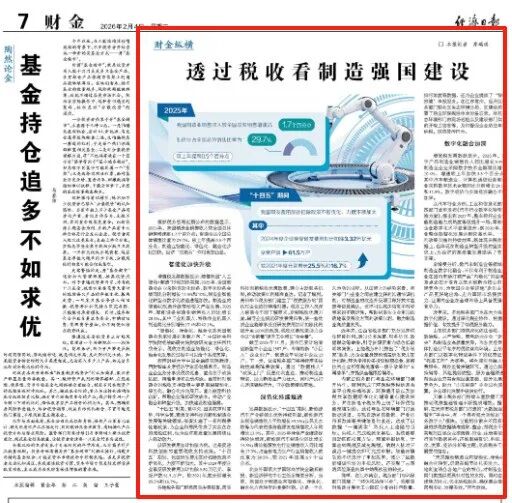
经济日报:透过税收看制造强国建设
Xin Lang Cai Jing· 2026-02-04 12:20
Core Insights - The manufacturing sector in China is projected to grow faster than the overall national sales growth by 1.7 percentage points by 2025, with its share of total sales reaching 29.7%, an increase of 0.5 percentage points from the previous year, highlighting its role as an economic stabilizer [2][14]. Intelligent Upgrading - By 2025, the procurement of automation and digital equipment by manufacturing enterprises is expected to increase by 11.3% and 10% year-on-year, respectively, indicating a rapid transformation towards intelligent manufacturing [4][16]. - The sales revenue of the intelligent equipment manufacturing sector is anticipated to grow by 28.1% year-on-year, with industrial robots and special operation robots seeing increases of 17.4% and 42.1%, respectively [4][16]. - Tax policies are being tailored to support the intelligent, green, and integrated development of the manufacturing sector, encouraging technological innovation and reducing R&D costs [4][16]. Green Development - The sales revenue of the new energy vehicle manufacturing sector is expected to grow by 14.3% year-on-year by 2025, while the clean energy generation sector is projected to see a 17.3% increase, with its share of total electricity production revenue rising to 38.5%, up 6.9 percentage points from 2021 [7][19]. - The government is focusing on establishing effective communication mechanisms between departments and enterprises to facilitate the accurate enjoyment of tax benefits related to green development [7][19]. Digital Integration - The sales revenue of the digital product manufacturing sector is projected to grow by 9.4% year-on-year by 2025, with manufacturing enterprises' procurement of digital technologies increasing by 10.4%, reflecting a deepening integration of the digital economy with the real economy [10][22]. - The automotive industry is set to enhance its digital transformation capabilities significantly by 2027, with a goal of achieving a high level of digital development by 2030 [10][22]. - Local tax authorities are enhancing their digital capabilities to improve tax services and compliance, thereby supporting the manufacturing sector's transition towards intelligent, green, and integrated development [10][22]. Tax Incentives and Support - During the "14th Five-Year Plan" period, tax incentives have been implemented to support technological innovation and manufacturing development, resulting in significant tax reductions for businesses [5][17]. - The R&D expense deduction policy has been optimized, with an expected deduction of 3.32 trillion yuan for 2024, benefiting 615,000 enterprises, marking increases of 25.5% and 16.7% from 2021 [5][17]. - Local tax departments are actively engaging with enterprises to ensure they can access these tax benefits effectively, including personalized support for R&D expense deductions [5][17][18].

2025中国经济关键词丨动能强劲,创新活力持续迸发
Xin Hua Wang· 2026-01-27 13:04
Group 1 - In 2025, China's economy effectively responded to various risks and challenges, achieving significant results through a focus on innovation and development [1] - China's R&D expenditure intensity reached 2.8%, surpassing the OECD average for the first time, indicating a strong commitment to innovation [1] - The World Intellectual Property Organization reported that China's innovation index entered the global top ten for the first time [1] Group 2 - The emphasis on technological and industrial innovation in China has led to strategic positioning, large investment scales, strong support systems, and high conversion efficiency in key sectors such as AI, robotics, and quantum communication [2] - In 2025, the value added of China's digital product manufacturing industry grew by 9.3%, with significant increases in the production of servers and industrial robots [5] - The integration of technological and industrial innovation has resulted in smarter, greener manufacturing, accelerated upgrades of traditional industries, and rapid growth of emerging industries [5] Group 3 - A virtuous cycle of "technology-industry-finance" is forming in China, providing stronger financial support for industrial transformation and upgrading [7] - The current ecosystem for technology transfer and transformation is being improved, promoting collaboration among government, industry, academia, and research [7] - The rapid development of industry-education integration and innovation is characterized by strong policy guidance and fast conversion of results [7] Group 4 - China's systematic layout and high-intensity investment in frontier fields have enabled a leap from following to keeping pace and leading in various industries [9] - The focus during the 14th Five-Year Plan period is on nurturing emerging and future industries while consolidating existing advantages and strategically planning new sectors [9]
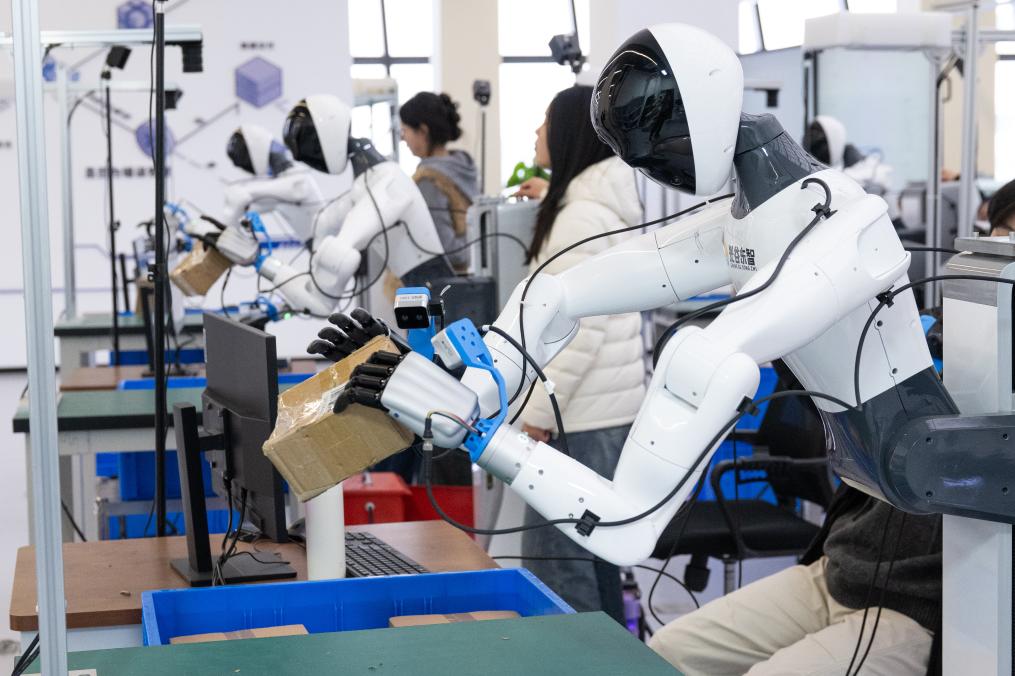
税收数据显示2025年我国科技创新与产业创新融合发展加快
Zhong Guo Xin Wen Wang· 2026-01-27 09:32
Group 1 - The core viewpoint of the articles highlights the accelerated integration of technological innovation and industrial innovation in China by 2025, showcasing significant growth in strategic emerging industries and improved efficiency in technology transfer [1][2] Group 2 - Strategic emerging industries are experiencing robust growth, with high-tech industry sales revenue projected to increase by 13.9% year-on-year in 2025. Specifically, high-tech manufacturing and high-tech services are expected to grow by 10.1% and 16.6%, respectively. Notable sectors include lithium-ion battery manufacturing, service robots, industrial robots, and biopharmaceuticals, with sales revenue growth rates of 25.1%, 60.7%, 17.4%, and 7.7% respectively [1] - The conversion of scientific and technological achievements is continuously improving, with sales revenue in the scientific research and technical service industry expected to rise by 20.4% year-on-year in 2025. Knowledge-intensive industries are also projected to see a 10.7% increase in sales revenue, indicating a stronger application of technological achievements. The national technology contract transaction amount is expected to grow by 19.1% [1] - The integration of digital technology with the real economy is deepening, with core digital economy industries projected to see a 9.4% increase in sales revenue in 2025. Related sectors such as digital product manufacturing and digital technology application are expected to grow by 9.4% and 13.8%, respectively. Additionally, enterprise procurement of digital technology is anticipated to rise by 9.6%, with manufacturing sector procurement increasing by 10.4% [2] - Traditional industries are accelerating their transformation and upgrading, particularly in automation. The procurement of automation equipment in traditional sectors such as petrochemicals, steelmaking, and ironmaking is expected to increase by 17.3%, 11.7%, and 12.7% year-on-year, respectively [2] - The data reflects solid achievements in China's technological self-reliance and the cultivation of new productive forces, indicating a strong and sustainable internal momentum for high-quality development [2]
税收数据显示:2025年我国科技创新与产业创新融合发展加快
Yang Shi Xin Wen· 2026-01-27 03:30
Group 1 - The core viewpoint of the articles highlights the accelerated integration of technological innovation and industrial innovation in China by 2025, showcasing significant growth in strategic emerging industries and advancements in technology transfer [1][2] Group 2 - Strategic emerging industries are experiencing robust growth, with high-tech industry sales revenue projected to increase by 13.9% year-on-year in 2025. High-tech manufacturing and high-tech service sectors are expected to grow by 10.1% and 16.6% respectively [1] - Key sectors such as lithium battery manufacturing, service robots, industrial robots, and biopharmaceuticals are showing remarkable sales growth, with increases of 25.1%, 60.7%, 17.4%, and 7.7% respectively [1] Group 3 - The conversion of scientific and technological achievements is gaining momentum, with sales revenue in the scientific research and technical service industry expected to rise by 20.4% year-on-year in 2025. Knowledge-intensive industries are projected to see a 10.7% increase in sales revenue [1] - The national technology contract transaction amount is anticipated to grow by 19.1%, indicating a stronger application of technological achievements [1] Group 4 - The integration of digital technology with the real economy is deepening, with core digital economy industries expected to see a sales revenue increase of 9.4% in 2025. Digital product manufacturing and digital technology application sectors are projected to grow by 9.4% and 13.8% respectively [2] - Enterprises are increasing their procurement of digital technology, with a year-on-year growth of 9.6%, and manufacturing sector procurement expected to rise by 10.4% [2] Group 5 - Traditional industries are accelerating their transformation and upgrading, particularly in automation, with significant increases in procurement of automation equipment in sectors like petrochemicals, steelmaking, and ironmaking, showing growth rates of 17.3%, 11.7%, and 12.7% respectively [2]
锐财经丨工业经济持续向优向新发展
Ren Min Ri Bao Hai Wai Ban· 2026-01-26 03:07
Group 1: Industrial Growth and Performance - In 2025, the industrial added value of large-scale industries increased by 5.9% compared to the previous year, showing a faster growth rate, up by 0.1 percentage points [2] - The mining, manufacturing, and electricity, heat, gas, and water production and supply industries saw added value growth of 5.6%, 6.4%, and 2.3% respectively [2] - Among 41 major industrial categories, 36 experienced growth, resulting in a growth coverage of 87.8% [2] Group 2: Export Performance - Large-scale industrial enterprises achieved an export delivery value of 15.8 trillion yuan, a 2.2% increase from the previous year, demonstrating strong resilience [2] - The equipment manufacturing sector showed significant export performance, with railway, shipbuilding, aerospace, and specialized equipment exports increasing by 24.2%, 10.2%, and 7.5% respectively [2] Group 3: Profit Structure Improvement - From January to November 2025, profits of large-scale industrial enterprises continued to grow, with the equipment manufacturing sector's profits increasing by 7.7%, contributing 2.8 percentage points to the overall profit growth of large-scale industrial enterprises [2] Group 4: High-tech Manufacturing Growth - In 2025, the added value of high-tech manufacturing increased by 9.4%, the highest growth rate since 2022, contributing 26.1% to the overall industrial growth [5] - Specific industries such as integrated circuit manufacturing, aircraft manufacturing, and biopharmaceuticals saw added value growth rates of 26.7%, 24.8%, and 12.1% respectively [5] Group 5: Digital Product Manufacturing - The added value of the digital product manufacturing industry grew by 9.3% in 2025, contributing 20.3% to the overall industrial growth [7] - Production of communication products like mobile communication base station equipment and 5G smartphones increased by 13.5% and 12.5% respectively [7] Group 6: Technological Innovation and Product Development - Companies are focusing on technological and industrial innovation, with examples like the AI-powered unmanned bulldozer deployed in complex mining environments [4] - New technologies such as perovskite materials and quantum computing are advancing rapidly, with successful prototypes being developed [4] Group 7: Consumer Supply and Market Trends - The industrial sector is adapting to new consumption trends, with a focus on optimizing product supply and enhancing brand development [8] - The integration of 5G, industrial internet, and other technologies into various sectors is expected to support the digital transformation of the economy [8]
工业经济持续向优向新发展
Ren Min Ri Bao Hai Wai Ban· 2026-01-26 01:16
Group 1 - The Ministry of Industry and Information Technology announced the 2025 National Key R&D Program for the industrialization of high-tech achievements, highlighting advancements in ultra-high energy density dielectric materials, large-tonnage carbon fiber composite materials, and high-performance sealing components for aerospace hydraulic systems [1] - In 2025, the industrial added value of large-scale industries increased by 5.9% compared to the previous year, with mining, manufacturing, and electricity, heat, gas, and water production and supply sectors growing by 5.6%, 6.4%, and 2.3% respectively [2] - The export delivery value of large-scale industrial enterprises reached 15.8 trillion yuan, a 2.2% increase from the previous year, showcasing resilience, particularly in the equipment manufacturing sector, which saw significant export growth in railways, ships, and aerospace [2] Group 2 - The high-tech manufacturing sector's added value grew by 9.4% in 2025, contributing 26.1% to the overall industrial growth, with notable increases in integrated circuit manufacturing, aircraft manufacturing, and biopharmaceuticals [5] - The digital product manufacturing sector's added value increased by 9.3%, contributing 20.3% to the overall industrial growth, with significant production increases in mobile communication base station equipment and 5G smartphones [6][7] - The Ministry of Industry and Information Technology emphasized the importance of optimizing product supply to support consumption upgrades and enhance consumer vitality, focusing on smart, green, and integrated development in the consumer goods industry [7]
工业经济持续向优向新发展(锐财经)
Ren Min Ri Bao Hai Wai Ban· 2026-01-25 22:49
Core Insights - The Ministry of Industry and Information Technology announced the 2025 National Key R&D Program for the industrialization of high-tech achievements, highlighting advancements in ultra-high energy density dielectric materials, large-tonnage carbon fiber composite materials, and high-performance sealing components for aerospace hydraulic systems [2] - In 2025, China's industrial production is expected to remain stable and improve, with significant growth in equipment manufacturing and high-tech manufacturing sectors, reflecting a shift towards high-quality industrial development [3][4] Industrial Growth - In 2025, the industrial added value of large-scale industries is projected to grow by 5.9% year-on-year, with mining, manufacturing, and electricity, heat, gas, and water production and supply sectors increasing by 5.6%, 6.4%, and 2.3% respectively [3] - Among 41 major industrial categories, 36 are expected to see growth, resulting in a growth coverage of 87.8% [3] - The export delivery value of large-scale industrial enterprises is anticipated to reach 15.8 trillion yuan, a 2.2% increase from the previous year, showcasing resilience in the face of external uncertainties [3] Profit Structure Improvement - From January to November 2025, profits of large-scale industrial enterprises are expected to grow, with the equipment manufacturing sector's profits increasing by 7.7%, contributing 2.8 percentage points to the overall profit growth of large-scale industries [3] Technological Innovation - The high-tech manufacturing sector's added value is projected to increase by 9.4% year-on-year, contributing 26.1% to the overall industrial growth, with significant growth in integrated circuit manufacturing (26.7%), aircraft manufacturing (24.8%), and electronic materials (23.9%) [6] - Innovations in AI and autonomous machinery, such as the deployment of the AI electric unmanned bulldozer in complex mining environments, demonstrate the industry's shift towards automation and efficiency [5] Digital Product Manufacturing - The added value of the digital product manufacturing sector is expected to grow by 9.3%, contributing 20.3% to the overall industrial growth, with notable increases in the production of mobile communication base station equipment (13.5%) and 5G smartphones (12.5%) [7] - The integration of new technologies like 5G, industrial internet, and robotics is expected to create vast market opportunities for rapid industrialization of new products [7][8]
理响中国|从“140万亿元”看中国经济韧性与活力
Huan Qiu Wang· 2026-01-22 09:19
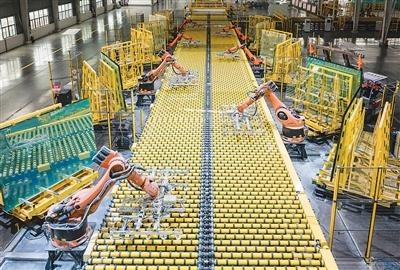
Core Viewpoint - In 2025, China's GDP surpassed 140 trillion yuan, marking a 5.0% growth from the previous year, solidifying its position as the world's second-largest economy and demonstrating robust economic resilience and stability [1][2]. Economic Performance - The 5.0% growth rate was achieved despite external challenges, reflecting a steady growth trajectory with strong risk resistance and effective regulation [2]. - High-tech manufacturing's value added rose to 17.1%, indicating significant quality improvement alongside reasonable growth [2]. - Final consumption contributed over 50% to economic growth, reinforcing domestic demand as the main engine [2]. - Real disposable income per capita grew by 5.0%, aligning closely with economic growth, highlighting the importance of living standards [2]. New Growth Drivers - The digital product manufacturing sector saw a 9.3% increase in value added, while daily production of new energy vehicles reached 45,000 units [3]. - The express delivery sector processed over 500 million packages daily, showcasing the rapid growth of new productivity [3]. - Continuous reforms and policies aimed at reducing social costs and stimulating market vitality are enhancing the transition from traditional to new growth drivers [3]. Future Outlook - The overall economic environment presents more opportunities than challenges, supported by unique institutional advantages and a large market [4]. - By the end of 2025, core CPI remained stable above 1%, and the manufacturing PMI returned to expansion, indicating a positive accumulation of factors [4]. - Central policies for 2026 emphasize stability and quality improvement, with expectations for accelerated implementation of key projects [4]. - International organizations have raised their growth forecasts for China, reflecting global confidence in its economic prospects [4]. Conclusion - The achievement of 140 trillion yuan in GDP is both a culmination of the "14th Five-Year Plan" and a starting point for future ambitions, emphasizing the importance of high-quality development and effective policy implementation for the "15th Five-Year Plan" [5].
国际人士积极评价2025年中国经济成绩单:为推动全球经济复苏与发展贡献重要力量
Ren Min Ri Bao· 2026-01-22 00:02
Economic Growth and Performance - In 2025, China's GDP reached 140 trillion RMB, marking a 5.0% increase from the previous year, demonstrating resilience amid complex domestic and international economic conditions [1] - China's economic growth rate is expected to contribute approximately 30% to global economic growth, maintaining its position as a major contributor and stabilizer in the world economy [2][3] - The ability of China to maintain stable economic performance amidst geopolitical tensions and uncertainties highlights its robust macroeconomic management and competitive industrial base [2][3] Innovation and High-Quality Development - The proportion of high-tech manufacturing value added to total industrial value added rose to 17.1%, with digital product manufacturing increasing by 9.3% [4] - China has become a global leader in renewable energy, with installed capacity for wind and solar power surpassing that of thermal power for the first time in 2025 [5] - The rapid development in high-tech manufacturing, digital economy, and green economy reflects China's commitment to high-quality development and innovation [5][6] Global Economic Impact and Opportunities - International organizations have raised their growth forecasts for China, indicating confidence in its long-term economic stability and high-quality development [7] - China's economic structure and demand for high-quality products create opportunities for regional cooperation and benefit developing countries [8] - The ongoing development of projects under the "Belt and Road" initiative is expected to further enhance China's role in global economic recovery and sustainable development [8]