
无废城市

Search documents
“十四五”徐州3家钢铁企业全部实现超低排放
Zhong Guo Xin Wen Wang· 2025-12-15 01:05
Core Insights - The "14th Five-Year Plan" period is crucial for ecological civilization construction in China, focusing on carbon reduction and promoting green transformation in economic and social development [1] - Xuzhou has made significant progress in ecological protection and restoration, showcasing its achievements during a recent press conference [1] Environmental Protection and Pollution Control - Xuzhou aims to reduce PM2.5 concentrations, achieving ultra-low emissions from 18 thermal power plants and 3 steel enterprises, with over 1,700 companies completing VOCs management [2] - The city has initiated a "waste-free city" project and has undertaken actions to manage new pollutants, including the remediation of 4,927 river and lake discharge outlets [2] - A comprehensive ecological environment zoning control system has been established, providing approval services for 622 major projects and 322 high-tech and green low-carbon energy projects [2] Water Ecological Investigation and Management - A three-year investigation of key river basins in Xuzhou has been completed, identifying national-level "ecological fossils" [3] - The city has constructed 13 ecological safety buffer zones and has signed 15 cooperation agreements for cross-regional ecological management [3] - The implementation of a pollutant discharge permit system has resulted in 1,575 licensed polluting entities, with a significant increase in non-site enforcement actions [3] Ecological Restoration and Urban Green Development - Xuzhou has launched 84 ecological restoration projects since 2021, focusing on comprehensive management and restoration of mining subsidence areas [4] - The city has developed several wetland parks and has achieved an 83% remediation rate for mining subsidence areas, laying a solid foundation for urban green development [4] Forest and Green Space Development - Since 2021, Xuzhou has planted 301,100 acres of trees, ranking first in the province, and has established multiple national and provincial forest parks [5] - Projects like the ecological restoration of the Yellow River's ancient riverbed have been recognized as exemplary cases [5] River and Lake Quality Improvement - Xuzhou has implemented a "river chief system" to enhance water quality, resulting in significant improvements in river and lake conditions [6][7] - The city has constructed 1,017 "happy rivers and lakes," focusing on sustainable water use and ecological health [6][7] County-Level Ecological Development - Feng County has adopted a dual approach of development and protection, enhancing the ecological environment while promoting tourism and economic growth [8] - The district of Jiawang has focused on pollution prevention and ecological restoration, improving environmental quality and ecosystem stability [8][9] Future Outlook - Xuzhou plans to continue improving environmental quality and deepen ecological protection efforts, aiming for sustainable development and enhanced ecological safety [9]
支持一大平台,天津“十五五”肩负绿色新使命
Zhong Guo Xin Wen Wang· 2025-12-13 13:05
Core Viewpoint - Tianjin is tasked with a significant national mission during the 14th Five-Year Plan period to develop a green low-carbon circular economy model, contributing to the country's ecological civilization construction [1][5] Group 1: National Strategy and Economic Development - The inclusion of China Resources Recycling Group in Tianjin's five-year planning highlights its critical role in the national circular economy framework [2] - The establishment of the headquarters of China Resources Recycling Group in Tianjin marks a breakthrough for the city as the first central enterprise focused on circular economy [2] - Tianjin's advantages include a strong industrial base, a complete port logistics system, and its position within the Beijing-Tianjin-Hebei market, making it a natural hub for resource allocation [2] Group 2: Green Transformation and Industry Development - Tianjin is focusing on creating a comprehensive industrial chain for recycling, from collection to processing and reuse, aligning with the goal of building a circular economy industrial cluster [3] - The city has implemented innovative mechanisms for carbon emission reduction, leading to millions of tons of carbon reductions and fostering a market-driven cycle [3] - The "waste-free city" initiative provides numerous application scenarios for the recycling industry, integrating waste classification and resource recovery [3] Group 3: International Cooperation and Global Vision - Tianjin's green mission includes an international perspective, with plans to establish a China-Shanghai Cooperation Organization (SCO) green industry cooperation platform [4] - The SCO green industry cooperation platform in Tianjin aims to connect with Eurasian countries, enhancing international green cooperation [4] - China Resources Recycling Group is a founding member of the China-SCO Green Industry Cooperation Alliance, which has gathered over a hundred member units to align domestic recycling networks with international green development needs [4]
博盈特焊:国内垃圾焚烧炉市场需求可以分为存量市场与增量市场
Zheng Quan Ri Bao Wang· 2025-12-10 13:45
Core Viewpoint - The domestic waste incineration furnace market is driven by both stock and incremental demand, influenced by national strategies such as "Ecological Civilization Construction" and "Waste-Free Cities" [1] Group 1: Market Demand - The demand for waste incineration is categorized into stock market and incremental market [1] - The need for "harmless, reduced, and resource-based" waste treatment is a rigid requirement due to the deepening of national strategies [1] - Stricter policies on emission standards, operational efficiency, and energy recovery rates are creating a demand for technological upgrades and replacements of existing incineration furnaces [1] Group 2: Stock Market - There is a market for updating old and inefficient incineration furnaces to meet new standards such as "ultra-low emissions" [1] - The replacement of outdated equipment with more advanced and environmentally friendly devices is essential to comply with new regulations [1] Group 3: Incremental Market - The incremental market is particularly evident in the central and western regions of China, as well as in third and fourth-tier cities [1] - These areas are experiencing accelerated urbanization and increased waste production, but lack sufficient treatment facilities, making them the main market for new projects [1]
“无废城市”的能源密码:如何用畜粪炼成船舶“绿能”?
Zhong Guo Xin Wen Wang· 2025-12-09 13:32
Core Insights - The article discusses the transformation of livestock waste into green energy, specifically focusing on a large-scale pig farm in Shanghai that converts pig manure into biogas and ultimately into green methanol for shipping fuel [1][3]. Group 1: Project Overview - The pig farm, located in Shanghai's Jinshan District, has an annual stock of over 45,000 pigs, making it the largest of its kind in the city [1]. - The biogas produced from anaerobic fermentation of pig manure is primarily used for electricity and heating at the farm, with excess biogas previously being flared off, leading to resource waste and environmental concerns [1][3]. Group 2: Technological Implementation - A systematic upgrade has been implemented to purify the biogas into biomethane, which is then converted into green methanol for use as ship fuel, marking a significant shift from waste to energy [1][3]. - As of September this year, approximately 500,000 cubic meters of biomethane have been integrated into Shanghai's gas network, serving as a core raw material for a 100,000-ton green methanol project [3]. Group 3: Future Developments - A second phase of the biomass utilization project is set to begin in 2025, focusing on a nearby dairy farm that will utilize cow manure and vegetable waste, replicating the successful model established at the pig farm [4]. - The project aims to extend the industrial chain and explore new technologies and models for anaerobic fermentation of agricultural waste, indicating a broader potential for biomass energy development [4]. Group 4: Industry Context - The global exploration of biomass energy is accelerating, with Shanghai positioned as a pioneer in developing biogas systems, despite not being a major agricultural province [4]. - The initiative not only addresses waste management but also seeks to establish a sustainable development pathway for large urban areas [4].


政企合作解难题 助力南通飞灰处置零填埋
Yang Zi Wan Bao Wang· 2025-12-08 14:52
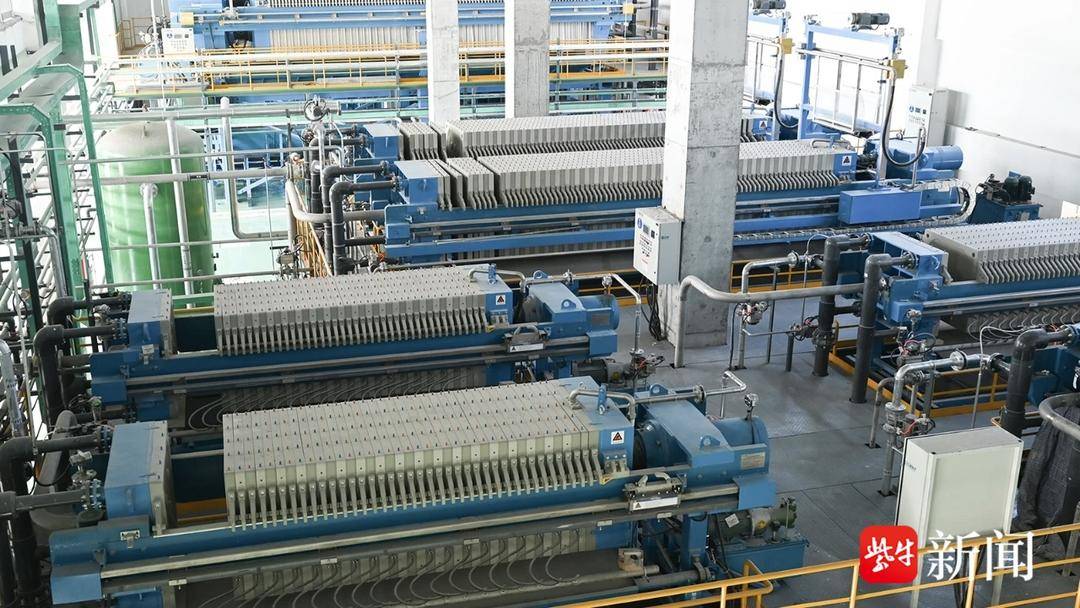
Group 1 - The core objective is to accelerate the construction of "waste-free cities" and achieve "dual carbon" goals by implementing national policies on fly ash resource utilization and zero landfill disposal [1][3] - Nantong City is actively introducing national-level specialized "little giant" enterprises, such as Le'er Intelligent Company, to promote fly ash resource disposal application projects and production of resource disposal equipment [1][3] - The project has received a hazardous waste operation license, marking a significant step in the resource utilization of fly ash [1][3] Group 2 - The project is divided into two phases, with the first phase already operational, involving a total investment of 160 million yuan, utilizing low-temperature pyrolysis technology [6] - The project significantly reduces the dioxin content in treated fly ash, which is well below national standards, and aims to further develop high-temperature melting technology in the second phase [6] - Once fully operational, the project will have an annual processing capacity of 60,000 tons of fly ash, converting it into A1-grade fireproof rock wool, new environmentally friendly building materials, and potassium chloride, saving 25 acres of land annually [6]
西藏阿里厚植“无废细胞”守护高原生态
Zhong Guo Xin Wen Wang· 2025-12-07 23:18
Core Viewpoint - The construction of a "waste-free city" in the Ali region of Tibet has made significant progress since its initiation in 2022, focusing on the cultivation of "waste-free cells" to enhance ecological sustainability and promote green development in the region [1][2]. Group 1: Waste-Free City Construction - The Ali region has implemented a comprehensive evaluation system for "waste-free cell" construction, establishing a standard system covering 20 categories and setting annual goals for 20 "waste-free cells" across 8 fields [1]. - A total of 48 units actively applied for the "waste-free cell" initiative, leading to a significant reduction, resource utilization, and harmless disposal of solid waste [1][2]. Group 2: Green Transformation in Industries - The express delivery industry in the Ali region is actively pursuing green transformation, with the procurement of 40,000 green packaging items and significant year-on-year increases in the use of circular packaging boxes (52.8%), packaging bags (3.4%), and collection bags (142.8%) [2]. - The government of Gar County has established a "public warehouse" to manage idle office assets, resulting in savings of approximately 400,000 yuan [2]. Group 3: Community Engagement and Innovation - The Napu community in Geji County has developed a "waste-free community" system, utilizing a three-level governance structure and engaging in community service activities to promote waste reduction [2][3]. - An innovative "points supermarket" model has been established, allowing residents to earn points through waste classification, which can be exchanged for essential goods, thereby fostering a culture of waste reduction [3]. - The Ali region has publicly announced the completion of 36 "waste-free cells" and plans to consolidate achievements and promote experiences to encourage societal participation in the "waste-free city" initiative [3].
1500吨/日,深能环保将以1.8亿美元在海外投建垃圾焚烧厂
Xin Lang Cai Jing· 2025-12-05 12:56
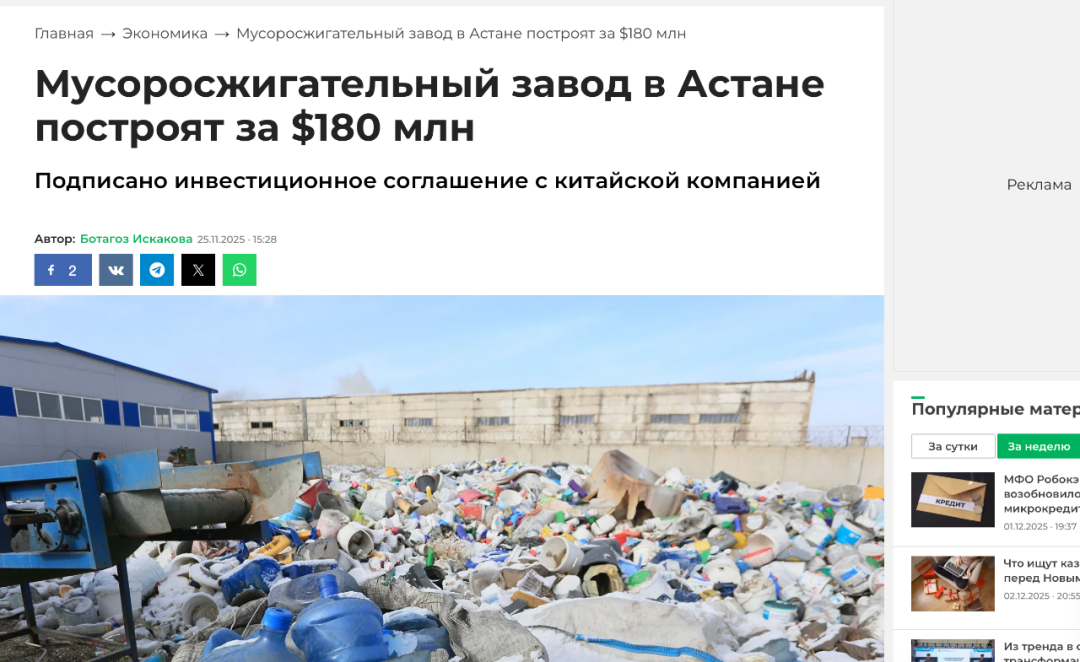
中国固废网了解到,阿斯塔纳市长阿克米尔·杰尼斯·卡辛贝克在政府会议上宣布,当地将与中国企业深圳能源环保股份有限公司合作,计划建设发电垃圾 焚烧厂。该项目投资额为1.8亿美元。 据悉,该项目垃圾处理量为每天1500吨,发电机组功率为50兆瓦,建设周期为36个月。 "截至目前,投资协议已签署。施工安装工作将于2026年第一季度开始",市长指出。 该市首次实现了对市政和建筑废弃物处理所有阶段的数字化。针对市政废弃物,已实施Waste Management信息系统。市行政长官展示了其工作成果:服务 覆盖率达100%且及时;投诉量从200起减少到每周1-2起,即减少了99%;考虑交通拥堵和天气条件优化了运输路线;对CPS进行监控,并对废弃物清运前 后的状况进行拍照固定;利用人工智能元素进行数据分析。 据悉,2024年7月2日,深圳能源与阿斯塔纳市政府签订了合作框架协议,双方就环保领域的项目开发达成共识。作为综合性能源集团,深圳能源秉承绿色 发展理念,坚持高标准设计、高质量建设、高水平运营的"三高"质量理念,将积极向世界推广深圳建设"无废城市"成功经验和"建一座工厂,还一个公 园"的成功模式,并积极推动合作框架协议内容落 ...

清空一座垃圾山,崛起一座未来城
Qian Zhan Wang· 2025-12-05 07:00
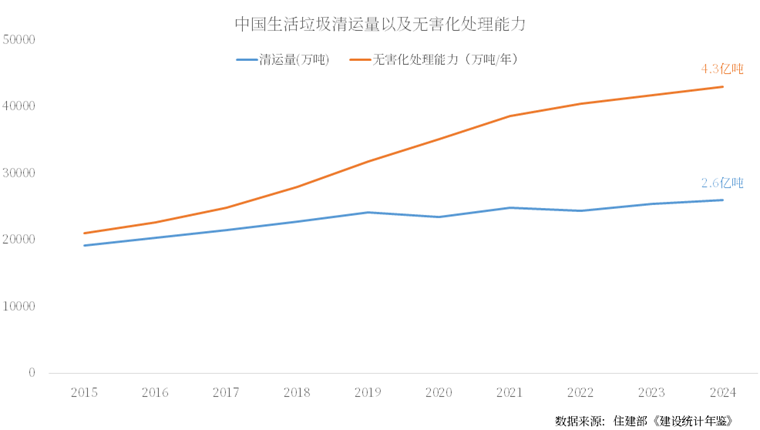
Core Viewpoint - The transformation of the Yulong landfill in Shenzhen from a waste site into a resource-rich industrial area represents a strategic shift in China's waste management approach, addressing the dual challenges of insufficient waste for incineration and the need for urban land resource optimization [1][2][4]. Group 1: Challenges in Waste Management - Shenzhen's waste incineration facilities are facing a decline in the volume of combustible waste due to effective waste classification and reduction policies, leading to a situation where the total amount of waste is decreasing while its quality is changing [2][4]. - There are over 100,000 informal waste dumping sites across China, with more than 8 billion tons of legacy waste posing environmental risks and potential resource opportunities [4]. Group 2: Strategic Initiatives - The Yulong landfill project is part of Shenzhen's "14th Five-Year Plan" aimed at promoting a "waste-free city," with plans to excavate and utilize 2.55 million cubic meters of aged waste [5]. - The project employs a large-scale green canopy system to facilitate a clean excavation process, minimizing environmental impact and maintaining high cleanliness standards [5][6]. Group 3: Resource Recovery and Economic Impact - The excavation process at Yulong landfill is expected to recover approximately 330,000 tons of combustible materials, generating enough energy to power around 26,000 households for a year [8]. - The project aims to release about 30 hectares of prime industrial land, potentially accommodating over 1 million square meters of buildings, thus creating significant economic opportunities and attracting over 15 billion yuan in fixed asset investment [9]. Group 4: Policy Evolution and Implementation - Shenzhen has been at the forefront of waste management policy evolution, becoming a pilot city for "waste-free" initiatives and implementing mandatory waste classification to enhance waste reduction and quality [11][12]. Group 5: Global Implications - The Yulong landfill project is gaining international attention as a replicable model for urban waste management, showcasing a comprehensive approach that integrates environmental remediation, space reclamation, and industrial development [12].
总投资约70亿元!中能建千万吨级煤矸石综合利用项目陶粒中试线建成投运
Xin Hua Cai Jing· 2025-12-04 08:58
Group 1 - The Shanxi Datong 10 million-ton coal gangue comprehensive utilization demonstration project has successfully completed its trial operation, marking a significant advancement in the high-value transformation of coal gangue into green resources [2] - The core equipment, a coal gangue ceramic particle belt roasting machine with waste heat utilization, enables the complete utilization of coal gangue, contributing to the construction of "waste-free cities" and promoting the transformation and upgrading of traditional industries [2] - The first batch of high-strength ceramic particles produced has been recognized in the market for its lightweight, high strength, and thermal insulation properties, being referred to as "breathable building materials" [2] Group 2 - The project, as the first integrated project for the comprehensive disposal of coal gangue and the development of new components in China, has a total investment of approximately 7 billion yuan, with a planned annual disposal capacity of 10 million tons of coal gangue [3] - The first phase of the project involves an investment of 1.16 billion yuan, aiming to achieve an annual disposal target of 2 million tons of coal gangue, covering a complete industrial chain from ceramic particle trials to kaolin processing and waste heat power generation [3]
“无废城市”建设工作成效明显
Qi Lu Wan Bao· 2025-12-03 14:26
Core Viewpoint - The construction of a "waste-free city" is a crucial initiative for solid waste management, promoting ecological civilization, and achieving sustainable economic and social development [1][2] Group 1: Industrial Solid Waste Management - The city has implemented clean production audits in high-energy-consuming industries, supporting pollution reduction and resource recycling [3] - A green manufacturing system has been established, focusing on tailored solutions for individual enterprises and parks to enhance resource utilization efficiency [3] - The comprehensive utilization rate of general industrial solid waste has exceeded 75%, with significant projects recognized as typical cases for pollution reduction and carbon reduction [3] Group 2: Agricultural Solid Waste Utilization - Initiatives have been launched to reduce agricultural solid waste at the source, including the promotion of biodegradable films and green pest control technologies [4] - The resource utilization rate of livestock manure has stabilized above 90%, with multiple model bases established for manure recycling [4] - A comprehensive waste recovery system for agricultural waste has been developed, including the establishment of collection points for used agricultural films [4] Group 3: Living Source Solid Waste Management - The city has implemented a waste classification system, covering approximately 150,000 residents and 3,000 commercial establishments, achieving a resource utilization rate of 87% for urban waste [6] - New green buildings have been promoted, with over 2 million square meters of new construction meeting green building standards since 2022 [6] - The city operates six waste incineration power plants with a daily processing capacity of 4,200 tons, effectively managing urban waste [6] Group 4: Recycled Resources - A comprehensive recycling network has been established with 260 registered enterprises, focusing on various recyclable materials [7] - New recycling models, including "Internet + Recycling," have been explored to enhance the efficiency of electronic waste collection [7] - The city is promoting the standardized development of the recycling industry, with several enterprises recognized for their compliance with industry norms [7]