
电信诈骗

Search documents
12万枚比特币被扣,千亿电诈帝国崩塌:太子集团陈志的双面人生!
Sou Hu Cai Jing· 2025-10-17 15:08
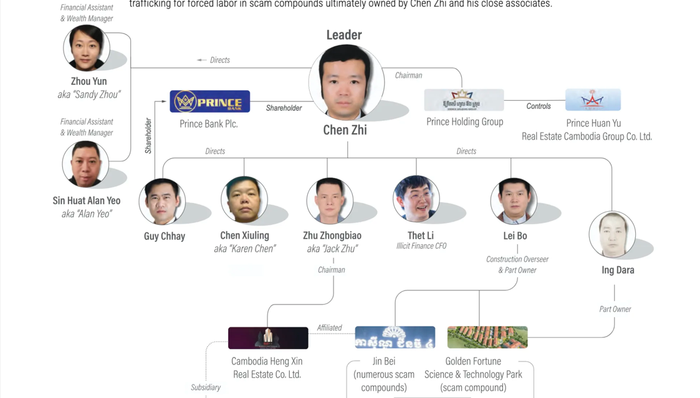
Core Insights - Chen Zhi, once celebrated in Cambodia's business circles, is now the world's most wanted criminal for telecom fraud, specifically for orchestrating a global "pig butchering" cryptocurrency scam [1][6] - The U.S. Department of Justice has filed charges against him, and his assets, including 127,271 bitcoins valued at approximately $15 billion, have been seized, marking a record in U.S. asset forfeiture history [1][6] Group 1: Business Background - Chen Zhi is the founder of the Prince Group, which claims to operate in over 30 countries across various sectors, including real estate, finance, and consumer services [3] - His wealth, however, is derived from a network of scam operations in Cambodia, where victims are lured and coerced into participating in fraudulent activities [3][4] Group 2: Criminal Operations - The criminal organization established "phone farms" equipped with thousands of devices to manipulate social media accounts, posing as investment experts to defraud victims [3][4] - The group implemented "anti-routine" rules to make scams appear more credible, advising members against using overly attractive profiles to lower victims' defenses [3] Group 3: Lavish Spending and Asset Acquisition - Chen Zhi laundered his illicit gains through sophisticated cryptocurrency transactions, leading to extravagant purchases, including private jets and luxury real estate in London, with one office building valued at nearly £100 million [4] - His spending habits have drawn criticism, with officials stating that he is destroying the lives of vulnerable populations while transferring dirty money into the UK property market [4] Group 4: Legal Consequences and International Response - On October 8, 2025, the U.S. formally charged Chen Zhi with multiple offenses, including telecom fraud and money laundering, potentially facing up to 40 years in prison if convicted [6] - The UK government has also imposed severe sanctions on him and his network, freezing assets and penalizing companies linked to the Prince Group for forced labor and torture allegations [6] Group 5: Broader Implications - The case has sparked international concern regarding the prevalence of telecom fraud in Southeast Asia and the complicity of local authorities in such activities [8] - It highlights the need for global cooperation to dismantle criminal networks and protect victims, emphasizing the importance of addressing the root causes of telecom fraud to safeguard public welfare [8]


诈骗、敲诈勒索、非法拘禁、开设赌场、组织卖淫、贩卖毒品……犯罪细节触目惊心
中国基金报· 2025-10-16 07:24
来源: 据央视新闻 公安部通报,目前,缅北"四大家族"刘家犯罪集团案件已经被依法提起公诉。 以刘正祥、刘正琦等为首要分子的缅北果敢刘家犯罪集团 涉嫌诈骗、敲诈勒索、非法拘禁、开 设赌场、组织卖淫、贩卖毒品以及组织他人偷越国(边) 境等 多项罪名,涉诈资金超26亿 元,涉赌资金超80亿元,裸聊敲诈金额1700余万元,组织卖淫非法所得1600余万元。 今天(10月16日),独家揭露有着"果敢首富"之称的缅北刘家集团犯罪始末,看中国警方如 何抽丝剥茧,揭开刘氏家族商业帝国光鲜外表下的"黑色内核"。 刘家电诈园区发展最快 "果敢首富"致富路:公司化运营 刘正祥是缅北果敢刘家家族的族长,他于1962年出生于缅甸果敢地区,早年以贩毒起家。"福 利来集团创始人、董事长,龙塘民兵大队总指挥"是他现在对外的头衔,与其他家族的当家人 相比,他没有政治"光环"傍身,但却丝毫不影响刘氏家族缅北电诈版图的扩张。 通过早年毒品犯罪完成了血腥的原始积累后,1996年,刘正祥和他的家族成员,在缅北果敢 成立了福利来公司,作为其家族势力的"大本营",开始涉足和布局更多元化的"捞金"之路。 福建省龙岩市公安局刑侦支队支队长 石林 垣 : 201 ...

柬埔寨大型“杀猪盘”被端,美国没收电诈头目近13万枚比特币
Hu Xiu· 2025-10-16 03:33
Core Viewpoint - The article discusses the significant crackdown by U.S. law enforcement on a large-scale cryptocurrency scam operation known as "pig butchering" in Cambodia, leading to the seizure of approximately 127,271 bitcoins valued at around $15 billion [3][4]. Group 1: Criminal Organization and Operations - The Prince Holding Group, led by Chen Zhi, is identified as a major player in this scam, operating forced labor fraud camps across Cambodia [5][8]. - Victims were lured under the pretense of high-paying jobs and were subjected to violence and coercion to carry out scams [6][23]. - The group is described as one of Asia's largest transnational crime organizations, with operations in multiple countries [8]. Group 2: Legal Actions and Consequences - Chen Zhi faces charges of telecommunications fraud and money laundering, with a potential maximum sentence of 40 years if convicted [7]. - The U.S. Treasury has designated the Prince Holding Group as a transnational criminal organization and has imposed sanctions on over 100 related individuals and entities [9]. - The operation is considered one of the most significant strikes against global human trafficking and online financial fraud [18]. Group 3: Impact and Scale of Fraud - The scams have resulted in billions of dollars in losses for victims worldwide, causing immense suffering [11]. - The article highlights the increase in online scams during the COVID-19 pandemic, as traditional gambling venues closed and criminal organizations shifted to online platforms [19]. - In the past year, U.S. citizens reportedly lost over $10 billion due to Southeast Asian fraud, marking a 66% increase from the previous year [21]. Group 4: Operational Tactics and Infrastructure - The criminal networks are well-organized, utilizing various tactics including fake investment platforms and leveraging political influence to shield their activities [15][24]. - The article notes that the Cambodian operations are supported by weak regulatory environments, making it a haven for such criminal activities [20].
一则警银联动阻断20万元电信诈骗资金的案例启示
Jiang Nan Shi Bao· 2025-10-16 02:58
Core Insights - The article highlights a case of potential telecom fraud where an elderly customer was targeted by scammers posing as law enforcement, attempting to convince him to transfer 200,000 yuan to a "safe account" [1][2] Group 1: Case Analysis - The fraudsters exploited the victim's trust in public security agencies, using the pretext of criminal involvement to manipulate him into transferring funds [2] - Bank staff demonstrated keen observation skills by identifying unusual behavior and promptly initiating risk response protocols, which included reporting the incident to the authorities [2] - The collaboration between the bank and police was effective in intercepting the fraudulent transaction and protecting the customer's assets [2] Group 2: Lessons Learned - There is a need to enhance public awareness and education regarding fraud prevention, particularly targeting vulnerable groups such as the elderly and students [3] - Continuous professional training for frontline employees is essential to improve their ability to recognize suspicious transactions and behaviors, ensuring quick reporting and intervention [3] - Strengthening the collaboration mechanism between banks and law enforcement agencies is crucial for efficient handling of suspected fraud cases, creating a unified front against telecom and online scams [3]
工商银行南通九华支行成功拦截“杀猪盘”诈骗案件
Jiang Nan Shi Bao· 2025-10-16 02:58
Core Insights - The article highlights a successful intervention by a bank branch to prevent a customer from falling victim to a complex telecom fraud scheme involving romance and investment [1][2][3] Group 1: Incident Overview - A customer attempted to transfer 10,000 yuan, which raised suspicions among bank staff due to her nervous demeanor and the nature of the transaction [1] - The customer was being manipulated by an individual claiming to be a friend of her husband, who was allegedly working abroad, and was soliciting investment funds [1][2] Group 2: Fraud Detection and Prevention - The bank's operational supervisor, leveraging anti-fraud training and experience, identified the high risk of the situation and reviewed chat records that indicated manipulative behavior typical of "pig butchering" scams [2] - The bank initiated an emergency response, calming the customer while suspending the transaction and contacting law enforcement for further investigation [2] Group 3: Customer Response and Future Actions - The customer expressed deep gratitude for the bank's intervention, acknowledging that without their diligence, she would have lost her money [3] - The bank plans to enhance staff training on fraud prevention and increase financial literacy efforts to better equip customers against such scams in the future [3]

上百亿资产被罚没,集团董事长遭制裁,美英联合打击柬埔寨特大电诈集团
Huan Qiu Shi Bao· 2025-10-15 22:53
Core Insights - A joint investigation by the US and UK governments has successfully targeted a major telecom fraud group based in Cambodia, potentially marking one of the largest "pig-butchering" scams in US history [1][2] - The US Treasury Department confirmed extensive sanctions against 146 targets within the "Prince Group," including asset freezes and travel bans, with nine companies registered in Taiwan linked to a Singaporean businessman [1] - The UK has also imposed sanctions on six entities and six individuals involved, including the group's chairman, Chen Zhihua, who holds dual nationality [2] Group Operations - The Prince Group operates at least ten fraud centers in Cambodia, employing foreign individuals who are often lured into the operation and subjected to high-pressure conditions [2] - The group utilizes over 1,200 mobile phones and more than 70,000 social media accounts to execute scams, primarily targeting victims through emotional manipulation [2] Financial Impact - Chen Zhihua reportedly boasted of earning $30 million daily through the scam, with illicit funds funneled into luxury assets such as mansions, yachts, and private jets [3] - The US Justice Department has seized over 127,000 bitcoins from the group, valued at approximately $15 billion, marking the largest asset forfeiture in its history [2] Expert Commentary - Experts indicate that the Prince Group represents a significant force in global online fraud, and while the recent actions by the US and UK may not dismantle the entire network, they fundamentally alter the risk assessment standards in this domain [3]
美国制裁柬埔寨“杀猪盘”电诈集团,查扣150亿美元比特币
Guan Cha Zhe Wang· 2025-10-15 14:42
Core Points - The U.S. government has designated the Prince Group of Cambodia as a transnational criminal organization, accusing it of engaging in telecom fraud and imposing sanctions on it [1][5] - The U.S. Department of Justice has filed a lawsuit against the group's founder, Chen Zhi, and seized nearly $15 billion worth of Bitcoin [1][5] - The Prince Group claims to be a real estate and financial services company operating in over 30 countries, but U.S. prosecutors allege it runs telecom fraud operations in Cambodia [1][5] Summary by Sections Allegations and Operations - The Prince Group is accused of operating telecom fraud parks in Cambodia, where many individuals are forced to participate in scams under threats of violence [1][3] - Workers are often lured by false high-paying job offers and are kept in large dormitories surrounded by high walls and barbed wire [1][3] - The group employs a "phone farm" strategy, using 1,250 phones to control approximately 76,000 social media accounts for scamming purposes [1][3] Financial Aspects - The fraud operations reportedly generate over $30 million daily, with the group utilizing its extensive business network for money laundering, including online gambling and cryptocurrency mining [3][5] - The U.S. Department of Justice has seized 127,271 Bitcoins, valued at nearly $15 billion, believed to be proceeds from Chen Zhi's fraudulent activities [5] Legal Actions and International Response - Chen Zhi faces multiple charges, including telecom fraud and money laundering, with a potential maximum sentence of 40 years if convicted [3][5] - The U.S. Treasury has sanctioned Chen Zhi and over 100 entities associated with the Prince Group, freezing all assets in the U.S. [5][6] - The U.K. government has also taken action, freezing assets worth £130 million related to the fraud network in the U.K. [5][6] Broader Context - The U.S. government estimates that fraud activities from Southeast Asia will cause American citizens losses of at least $10 billion in 2024, a 66% increase from the previous year [6]

谨防“涨停股专家”!10 万血汗钱险被骗,警银协作揭穿“杀猪盘”套路
Huan Qiu Lao Hu Cai Jing· 2025-10-15 09:48
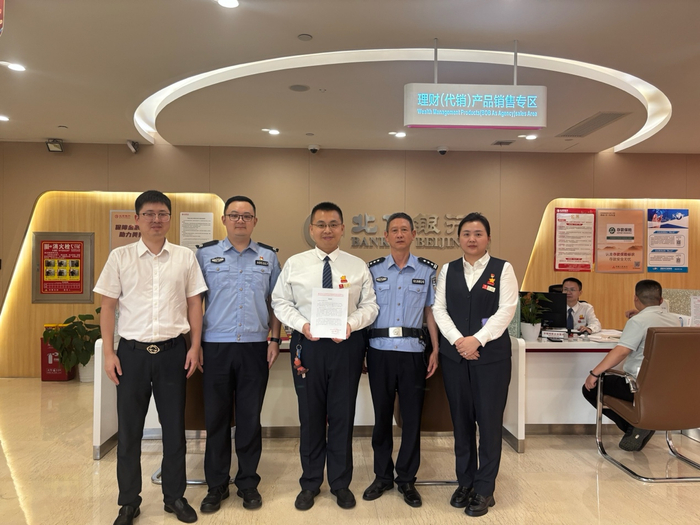
Core Insights - The article highlights a successful collaboration between Beijing Bank and law enforcement to prevent a potential financial fraud case involving a customer who was targeted by a scammer posing as a stock trading expert [1][4][6] Group 1: Incident Overview - A customer, Ms. Peng, attempted to make a large transfer at Beijing Bank but was flagged by staff due to her anxious behavior and vague explanations regarding the transfer's purpose [1][2] - The bank staff identified the situation as a potential "pig butchering" scam, characterized by high consultation fees and secrecy [1][4] Group 2: Scam Details - Ms. Peng was lured by an advertisement for free stock recommendations from a self-proclaimed expert, who later demanded a payment of 100,000 yuan for "core insider information" [2][4] - The scammer advised her to avoid bank scrutiny by splitting the transfer into multiple transactions and using online payment platforms [2] Group 3: Bank's Response - Beijing Bank's proactive measures included a system that flagged the suspicious transaction, leading to a protective hold on Ms. Peng's account and a warning call to her [2][4] - The bank's staff worked closely with local police, successfully preventing Ms. Peng from losing her money and earning commendation for their vigilance and professionalism [4][6] Group 4: Recognition and Future Actions - The local anti-fraud center recognized Beijing Bank for its effective collaboration in combating telecom fraud, emphasizing the importance of financial institutions in safeguarding customer assets [4][6] - The bank expressed its commitment to maintaining a strong anti-fraud defense and enhancing cooperation with law enforcement to protect the public's financial security [8]

老人们手机装的那些“假App” 如何应对此类骗局?
Zhong Guo Qing Nian Bao· 2025-10-15 01:07
Core Points - The article highlights the increasing prevalence of scams targeting elderly individuals, particularly through fake investment apps that promise high returns but ultimately lead to financial loss [2][3][4][6][8]. Group 1: Scams and Their Mechanisms - Scammers are using sophisticated tactics to exploit the vulnerabilities of elderly individuals, often employing psychological manipulation techniques to break down their defenses [16][20]. - Many elderly victims download fraudulent apps that appear legitimate, leading them to invest significant amounts of money under false pretenses [6][18][20]. - The cost of producing these fraudulent apps is low, allowing scammers to create and distribute them in bulk, making it difficult for victims to identify them as scams [6][21]. Group 2: Victim Experiences - Victims often share similar backgrounds, including retired professionals who may have been financially savvy in their careers but fall prey to scams due to a lack of familiarity with digital platforms [10][17]. - The emotional toll on victims is significant, with many experiencing anxiety, depression, and strained family relationships as a result of their financial losses [10][19][24]. - Some victims, despite being aware of the scams, continue to invest in hopes of recovering their losses, demonstrating a cycle of denial and desperation [19][24]. Group 3: Prevention and Response - Law enforcement agencies are increasingly focusing on preventive measures to protect the elderly from falling victim to these scams, emphasizing the importance of awareness and education [3][21]. - Families are encouraged to monitor their elderly relatives' online activities and provide support to help them navigate the digital landscape safely [22][23]. - Legal professionals are also involved in providing assistance to victims, although the complexity of online scams makes recovery challenging [13][21].

老人们手机装的那些“假App”,如何应对此类骗局?
Zhong Guo Qing Nian Bao· 2025-10-15 00:36
Core Points - The article highlights the increasing prevalence of fraudulent apps targeting elderly individuals, leading to significant financial losses and emotional distress for victims and their families [1][2][3][4][5][6][10][11][12][14][15]. Group 1: Nature of the Fraud - Fraudsters are using fake apps with appealing names to lure elderly users into investing, often leading to substantial financial losses that are difficult to recover [1][3][4][10]. - The scams often involve psychological manipulation techniques, such as the "gaslighting effect," which confuses victims and makes them doubt their own judgment [10][11][15]. - Many elderly victims are drawn to these scams due to their desire to engage with modern technology and the promise of financial returns, which they perceive as legitimate opportunities [17][18][19]. Group 2: Victim Profiles - Victims include a diverse range of elderly individuals, such as retired teachers, civil servants, and taxi drivers, who may have varying levels of education and life experience [1][4][8][12]. - The average age of victims is around 55 years, with a significant proportion being retired professionals, particularly women [12][14]. - Many victims exhibit a strong desire to prove their competence in using technology, which can lead them to overlook red flags associated with these fraudulent apps [11][17]. Group 3: Family Dynamics - Family members often struggle to intervene effectively, facing challenges in convincing their elderly relatives to abandon these scams [7][18][21]. - Some children resort to monitoring their parents' online activities and reporting fraudulent accounts to protect them [7][8]. - The emotional toll on families can be significant, leading to conflicts and feelings of helplessness as they witness their loved ones being exploited [6][18][21]. Group 4: Law Enforcement Response - Law enforcement agencies are increasingly focusing on preventive measures to protect the elderly from such scams, emphasizing the importance of awareness and education [2][10][15]. - Police have reported that the cost of producing these fraudulent apps is low, allowing scammers to operate with minimal investment while targeting a large number of potential victims [4][10]. - Collaborative efforts between law enforcement and financial institutions are being implemented to improve the recovery rates of lost funds for victims [15].