
虚拟现实

Search documents
场景相融促进消费扩容
Jing Ji Ri Bao· 2025-12-29 22:21
Core Insights - The article emphasizes the need to accelerate the construction of a new ecosystem for consumption scenarios through improved top-level design and policy support, enhanced technological empowerment, and deepened industrial integration [1][2][3] Group 1: Current State of Consumption - China's consumption momentum has been continuously strengthening this year, driven by policies such as trade-in programs, with a focus on expanding service consumption and promoting new consumption scenarios as outlined in the "14th Five-Year Plan" [1] - Current consumption scenarios in China exhibit characteristics of digitization, integration, and greening, with technologies like 5G, AI, and VR facilitating the transition from offline to online and hybrid experiences [1][2] - The live e-commerce market in China is projected to grow from less than 500 billion yuan in 2019 to 5.8 trillion yuan by 2024, representing a growth of over 10 times [2] Group 2: Advantages and Challenges - China has three main advantages in building consumption scenarios: a vast market driving demand, a robust digital infrastructure with over 60% of global 5G base stations, and precise policy guidance fostering innovation [2] - Challenges include an imperfect ecological collaboration mechanism, uneven regional development with first-tier cities dominating innovation, and a lagging standard system leading to high complaint rates regarding issues like false advertising in live commerce [2][3] Group 3: Recommendations for Improvement - Strengthening top-level design and policy support is crucial, including establishing a national-level consumption scenario innovation fund and developing industry standards for live e-commerce and instant retail [3] - Technological empowerment should focus on creating immersive consumption experiences using VR, AR, and AI, while also building "consumption scenario innovation laboratories" to shorten the cycle from technology development to scenario implementation [3] - Promoting cross-industry integration is essential, particularly in areas like culture, tourism, and health, to create comprehensive national-level fusion scenarios [4]
记忆之锚——从一个人到几代人,华人华侨家族续写与家乡的百年情缘
Xin Lang Cai Jing· 2025-12-29 17:12
Group 1 - The article discusses the emotional connection of overseas Chinese to their homeland, emphasizing the importance of heritage and identity among the diaspora [3][4] - It highlights the role of technology, specifically virtual reality and AI projects, in helping overseas Chinese reconnect with their roots and memories of their hometowns [1][3] - The narrative centers around a Malaysian Chinese professor who creatively engages with the memories of his ancestral home, inspiring others in the diaspora to explore their heritage [4] Group 2 - The article mentions that there are over 60 million overseas Chinese spread across nearly 200 countries and regions, indicating a significant global presence [3] - It reflects on the historical journey of Chinese migration, starting from several hundred years ago, and how it has evolved into a collective effort towards national rejuvenation [3] - The professor's work is described as a catalyst for awakening the memories of expatriates, potentially leading to increased interest in returning to their roots [4]


工商银行青岛市分行科技金融贯通青岛科创大走廊
Huan Qiu Wang· 2025-12-29 09:25
Core Viewpoint - The Qingdao Innovation Corridor is rapidly taking shape as a key area for technological innovation and industrial transformation, integrating universities, national research platforms, and leading enterprises in strategic emerging industries [1] Group 1: Development of the Innovation Corridor - The Qingdao Innovation Corridor is positioned as the core of Qingdao's new round of technological innovation and industrial transformation, connecting major nodes like Laoshan Smart Industry City, Licang Youth Innovation City, and Blue Valley Marine Science City [1] - The corridor aims to create a collaborative development pattern focusing on marine technology innovation, smart industry, and achievement incubation, supporting Qingdao's goal of becoming a technology powerhouse by 2025 [1] Group 2: Financial Support from ICBC Qingdao Branch - ICBC Qingdao Branch has established six specialized branches in key areas of the Innovation Corridor, focusing on technology finance and creating a product matrix that integrates investment and loans [3] - The total asset scale of ICBC's specialized institutions in the corridor ranks among the top in the system, with technology loan balances exceeding 10 billion this year, demonstrating the bank's commitment to supporting regional innovation [3][4] Group 3: Focus on Key Industries - The bank's branches are focusing on cutting-edge digital industries such as artificial intelligence and virtual reality, as well as modern marine technology markets and semiconductor sectors [4] - ICBC Qingdao Branch is addressing the diverse and long-term financial needs of high-growth, asset-light technology companies through innovative policies and service mechanisms [4][5] Group 4: Policy Measures and Ecosystem Development - The bank is actively involved in formulating high-level service opinions for technology finance to support the development of the Innovation Corridor, enhancing the innovation ecosystem [5] - ICBC is introducing various financing products tailored for different stages of technology enterprises, including "Talent Loans" and "R&D Loans," to support the entire lifecycle from research to commercialization [5][6] Group 5: Future Outlook - As the strategic importance of the Qingdao Innovation Corridor continues to rise, ICBC Qingdao Branch will maintain its focus on serving the real economy and optimizing the allocation of technology finance resources [6]


卡游:文化产业的创新实践者
Zhong Guo Jing Ji Wang· 2025-12-29 08:27
Core Insights - 2025 is a pivotal year for the company to deepen its strategic layout and achieve breakthroughs in the market, with a focus on expanding beyond traditional card products into new categories like plush toys and stationery, thereby enhancing revenue and user engagement [1] - The company is transitioning from traditional manufacturing to intelligent manufacturing, investing heavily in advanced printing technology to ensure high-quality card production [2] - The company is building a diverse content ecosystem through international and domestic IP development, appealing to various age groups and enhancing cultural value [3] - The company is committed to social responsibility, engaging in public welfare and advocating for industry standards to promote healthy market practices [4] - Future plans include leveraging new technologies like AI and VR, expanding international cooperation, and developing culturally relevant products while maintaining industry leadership [5][6] Group 1: Strategic Expansion - The company aims to lead the collectible card market while diversifying into new product categories, creating a multi-faceted ecosystem that enhances user loyalty [1] - The opening of flagship stores in Thailand marks a significant step in the company's global expansion strategy [1] Group 2: Technological Innovation - The company is adopting cutting-edge printing technology to improve product quality and aesthetic appeal, ensuring that cards are not only functional but also artistic [2] - The implementation of an automated logistics system and rigorous quality control measures underscores the company's commitment to excellence [2] Group 3: Content Development - The company is successfully integrating international IPs and developing original domestic IPs, creating a rich content matrix that resonates with diverse audiences [3] - Collaborations with various media platforms and interactive events are enhancing the emotional connection between consumers and the company's products [3] Group 4: Social Responsibility - The company actively participates in public welfare initiatives, focusing on educating youth about self-protection and promoting healthy industry practices [4] - The company is involved in setting industry standards, aiming to lead by example in quality control and ethical practices [4] Group 5: Future Outlook - The company plans to continue its focus on technological innovation and cultural product development, aiming to enhance its global presence and cultural influence [5][6] - Future initiatives will include the development of products addressing mental health and environmental themes, alongside ongoing efforts to promote Chinese culture internationally [5][6]
豆神教育涨2.08%,成交额1.96亿元,主力资金净流出1.80万元
Xin Lang Cai Jing· 2025-12-29 02:37
Group 1 - The core viewpoint of the news is that Dou Shen Education's stock has shown a mixed performance with a year-to-date increase of 18.36%, but a recent decline over the past 60 days of 4.67% [1] - As of December 29, Dou Shen Education's stock price was 7.35 CNY per share, with a market capitalization of 15.19 billion CNY and a trading volume of 196 million CNY [1] - The company has experienced a net outflow of main funds amounting to 18,000 CNY, while large orders showed a mixed buying and selling activity [1] Group 2 - Dou Shen Education, established on January 8, 1999, and listed on October 30, 2009, primarily engages in educational products and management solutions, accounting for 91.33% of its revenue [2] - For the period from January to September 2025, Dou Shen Education reported a revenue of 776 million CNY, reflecting a year-on-year growth of 39.36%, while the net profit attributable to shareholders decreased by 17.23% to 91.77 million CNY [2] - The company has not distributed any dividends in the last three years, with a total payout of 156 million CNY since its A-share listing [3]

中衡设计涨停,成交额1.34亿元,主力资金净流入1194.70万元
Xin Lang Cai Jing· 2025-12-29 01:52
Group 1 - The core viewpoint of the news is that Zhongheng Design has shown significant stock performance, with a year-to-date increase of 48.37% and a recent surge in trading volume and price [1] - As of December 29, Zhongheng Design's stock price reached 11.62 CNY per share, with a total market capitalization of 3.209 billion CNY [1] - The company has experienced a net inflow of main funds amounting to 11.947 million CNY, indicating strong investor interest [1] Group 2 - Zhongheng Design Group Co., Ltd. was established on April 14, 1995, and went public on December 31, 2014, focusing on architectural and planning design consulting, EPC engineering contracting, and project management [2] - The company's revenue composition includes design consulting (58.48%), engineering supervision and project management (18.31%), and engineering contracting (15.58%) [2] - As of September 30, the number of shareholders decreased by 22.93% to 21,500, while the average circulating shares per person increased by 28.98% to 12,835 shares [2] Group 3 - For the first nine months of 2025, Zhongheng Design reported a revenue of 778 million CNY, a year-on-year decrease of 15.36%, and a net profit attributable to shareholders of 56.268 million CNY, down 15.85% [2] - The company has distributed a total of 777 million CNY in dividends since its A-share listing, with 165 million CNY distributed over the past three years [2]

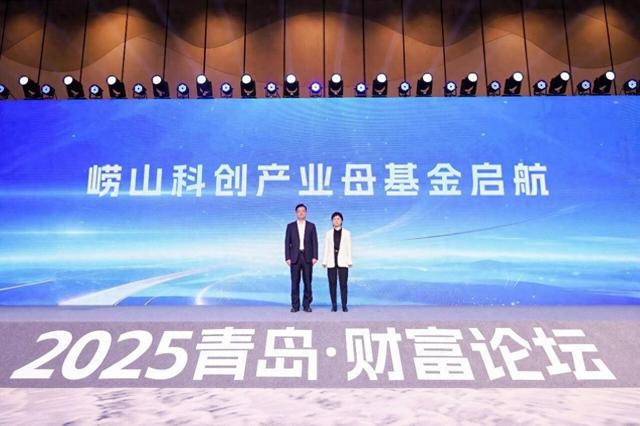
崂山组建科创产业母基金,护航“科创大走廊”建设和科创产业发展
Xin Lang Cai Jing· 2025-12-28 08:05
Group 1 - The establishment of the Laoshan Science and Technology Innovation Industry Fund, with a scale of 3 billion yuan, aims to invest in sectors such as virtual reality, artificial intelligence, marine biomedicine, intelligent manufacturing, and industrial internet [2] - The fund will adopt a "mother fund + market-oriented sub-fund group" model to stimulate social capital participation and build a stable, controllable long-term capital pool for nurturing quality projects [2] - Laoshan District is recognized as a hub for high-tech enterprises, housing 920 high-tech companies and 28 national-level specialized "little giant" enterprises, with emerging industries like virtual reality and artificial intelligence rapidly developing [4] Group 2 - The financial sector in Laoshan is robust, with over 1,500 financial and quasi-financial enterprises in the Jinjialing Financial District, a loan scale of 660 billion yuan, and wealth management products totaling 2.2 trillion yuan [4] - The district has established a "technology-industry-finance" interaction model, providing comprehensive financial services for cutting-edge sectors like lithium battery recycling and lidar technology [8] - The government and market work in tandem to optimize resource allocation, promoting a win-win scenario for finance and technology through risk-sharing and benefit-sharing [8]
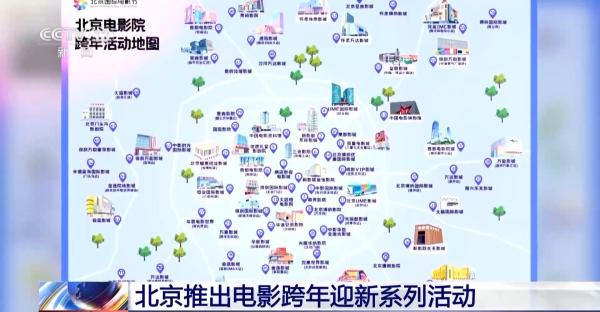
VR影院亮相+经典、新片连映 北京电影跨年活动撬动“票根经济”
Yang Shi Xin Wen· 2025-12-27 03:08
2026北京电影跨年系列活动昨天启动,一系列好玩、好看、好逛的电影盛宴全城上线,陪市民热闹迎新 年。 2026北京电影跨年系列活动涵盖跨年夜不打烊、光影倒数迎新、惠享跨年观影、多元场景体验等,满足 不同年龄段观众的需求,全城联动、全民参与、全龄共享,全力撬动"票根经济"。 国内首家虚拟现实影院——798超维视界正式亮相。这家位于798艺术区核心地带的VR影院面积达3500 平方米,设有多个主题影厅,目前已常态化放映13部VR作品,内容从科幻冒险到文化科普应有尽有。 影院跨年地图标注了近百家特色活动影院的位置、时间和优惠,方便观众快速查询,轻松规划自己的光 影跨年之旅。 跨年夜"不打烊",贺岁档影片《马腾你别走》《团圆令》等集中亮相;《甲方乙方》《不见不散》等6 部经典贺岁片也将带观众重温贺岁档激情。多家影院还将举办"光影倒数迎新"活动,搭配跨年主题市 集,给市民带来最具仪式感的视听记忆。 此外,北京首批12家影院新空间也正式授牌,突破传统影院"仅观影"的单一业态,融入沉浸式科技体 验、本土文创展示、多元演艺活动、亲子互动空间等功能,构建起"电影+"融合消费新场景。新年里, 这些影院新空间将给市民游客带来不一样 ...
世联行跌2.01%,成交额1.55亿元,主力资金净流出88.80万元
Xin Lang Cai Jing· 2025-12-26 03:43
Core Viewpoint - The stock of Shenzhen World Union Holdings Limited has experienced fluctuations, with a recent decline of 2.01% and a total market capitalization of 5.839 billion yuan. The company has seen a year-to-date stock price increase of 13.13% but has faced a decline in the last five trading days [1]. Financial Performance - For the period from January to September 2025, the company reported a revenue of 1.48 billion yuan, representing a year-on-year decrease of 14.99%. The net profit attributable to shareholders was -41.55 million yuan, a significant decline of 98.16% compared to the previous year [2]. Shareholder Information - As of December 19, 2025, the number of shareholders for World Union Holdings was 69,900, an increase of 6.22% from the previous period. The average number of circulating shares per shareholder decreased by 5.86% to 28,277 shares [2]. Business Segments - The company's main business segments include property and comprehensive facility management (33.35%), Internet+ services (30.92%), comprehensive marketing services (22.87%), and other services such as consulting and financial services [1]. Institutional Holdings - As of September 30, 2025, the top ten circulating shareholders included Hong Kong Central Clearing Limited, holding 36.32 million shares, a decrease of 3.81 million shares from the previous period. Additionally, the Southern CSI Real Estate ETF had 15.08 million shares, down by 158,800 shares [3].

智立方跌2.01%,成交额6975.56万元,主力资金净流出1382.85万元
Xin Lang Zheng Quan· 2025-12-26 03:19
Group 1 - The core viewpoint of the news is that Zhilifang's stock has experienced fluctuations, with a current price of 50.67 yuan per share and a market capitalization of 6.14 billion yuan, while the company has shown significant growth in revenue and profit year-to-date [1][2]. - Zhilifang's stock price has increased by 47.17% this year, with a recent 5-day increase of 8.55% and a 20-day increase of 3.01%, although it has decreased by 4.83% over the past 60 days [1]. - The company has made seven appearances on the "Dragon and Tiger List" this year, with the most recent being on July 4, where it recorded a net buy of -40.08 million yuan [1]. Group 2 - Zhilifang's main business involves the research, development, production, and sales of industrial automation equipment, with revenue composition being 68.67% from industrial automation equipment, 21.63% from technical services, and 9.70% from automation equipment accessories [1]. - As of December 19, the number of shareholders in Zhilifang is 14,200, a decrease of 4.39% from the previous period, while the average circulating shares per person increased by 4.59% to 4,250 shares [2]. - For the period from January to September 2025, Zhilifang achieved operating revenue of 505 million yuan, representing a year-on-year growth of 21.69%, and a net profit attributable to shareholders of 69.95 million yuan, up 57.59% year-on-year [2].