集换式卡牌

Search documents
一张小卡片撑起的百亿生意
吴晓波频道· 2026-02-20 00:29
Core Insights - The article discusses the rapid growth and cultural significance of trading cards in China, highlighting their evolution from a children's hobby to a substantial business opportunity [3][10]. Market Growth - The market size for collectible trading cards in China grew from 700 million RMB in 2017 to 12.2 billion RMB in 2022, with a compound annual growth rate (CAGR) of 78.4%. It is projected to reach 31 billion RMB by 2023 [7]. - The trading card market is increasingly recognized as a potential investment sector, with notable companies like Whatnot valued at 26.5 billion RMB and the founders of "Kayu," a leading trading card company, appearing on the Hurun Rich List with a wealth of 60 billion RMB [9]. Cultural Impact - Trading cards have become a new social currency among children, with parents observing their prevalence in school environments. The cards are now integrated into various aspects of pop culture, responding quickly to trending IPs and stories [5][6]. - The community around trading cards is growing, with live-streaming platforms attracting large audiences and fostering a culture of sharing and trading among enthusiasts [32][33]. Investment Potential - Trading cards are increasingly viewed as alternative investment assets, with rare cards fetching high prices. For instance, the Alpha Black Lotus card sold for $300,000 in 2024, showcasing the potential for significant appreciation [18]. - The establishment of a standardized grading and certification system for trading cards is crucial for maintaining market integrity and value, with organizations like PSA and BGS leading the way [21]. Demographics and Spending - The majority of trading card consumers in China are aged 8-14, accounting for 70% of the market, while only 5% are over 25. This contrasts with more mature markets like Japan and the U.S., where older demographics are more engaged [27][28]. - In 2024, the average spending per consumer on trading cards in China was only 18.7 RMB, significantly lower than in Japan (119.3 RMB) and the U.S. (64 RMB), indicating substantial growth potential [28]. Industry Strategies - Companies are expanding their IP portfolios to attract diverse consumer interests, with "Kayu" increasing its IP count from 44 to over 100 in just one year [29]. - Building community culture around trading cards is essential, with live-streaming and social media playing a significant role in engaging consumers and enhancing the overall experience [31][32]. Future Outlook - The trading card market reflects broader trends in emotional spending, with consumers seeking ways to alleviate stress through collectibles. This emotional economy presents new business opportunities for companies [41].


次元壁破了!卡游亮相马年总台春晚
Xin Lang Cai Jing· 2026-02-17 13:15
Core Viewpoint - The collaboration between KAYOU and the Spring Festival Gala marks a significant milestone as it is the first time a cultural consumption brand has partnered with the event, showcasing the evolving landscape of cultural engagement in China [7][9]. Group 1: Event Highlights - KAYOU was introduced as the exclusive card partner for the 2026 Spring Festival Gala, a notable achievement for a domestic company in the cultural sector [7]. - The event featured a unique "card rain" moment during a performance, where various collectible cards were distributed, creating an interactive experience for the audience [4][6]. - The launch of 20,000 sets of the "Qiji Chicheng" collectible cards coincided with the gala, which sold out almost instantly on KAYOU's Tmall flagship store [4]. Group 2: Market Trends - The offline card market is experiencing a surge in demand for products themed around traditional culture, with KAYOU reporting high popularity for its products that incorporate national trends [6]. - KAYOU's success is attributed to its deep understanding of cultural narratives and its ability to resonate with younger audiences, bridging the gap between traditional culture and modern consumer preferences [12][16]. Group 3: Company Background - KAYOU, established in 2011, has become a leader in the collectible card industry, known for its innovative products and commitment to authentic licensing [9]. - The company has developed a diverse IP matrix that includes over 30 national trend IPs, effectively capturing the interest of various consumer demographics [15][16]. Group 4: Cultural Impact - The partnership with the Spring Festival Gala signifies a shift in the perception of collectible cards from a niche market to a mainstream cultural phenomenon [10][13]. - KAYOU's products are not only popular domestically but are also positioned as cultural ambassadors in international markets, promoting Chinese culture globally [15][16].

万万没想到!2025年买房最狠的是这几个
Sou Hu Cai Jing· 2026-01-04 05:20
Core Viewpoint - The real estate market is witnessing significant purchases from various sectors, particularly from gaming and energy companies, despite a general downturn in property prices [1][10]. Group 1: Gaming Companies - The gaming sector, particularly companies like "Kawoo," is aggressively investing in real estate, with Kawoo purchasing properties in Shanghai at prices exceeding double the current market rate, indicating a 200% premium [2][4]. - Other gaming companies, such as "Yanyu Games" and "Feiyu Technology," are also making substantial real estate investments, including a 3.31 billion yuan purchase of a commercial complex and a 5.03 million yuan acquisition of a large property in Beijing [4][5]. Group 2: Energy Companies - Energy companies, often referred to as "coal bosses," are making bold investments in real estate during a market downturn, with firms like "Jinfeng Cement" spending over 2.4 billion yuan on a hotel in Shanghai [5][6]. - Notable purchases include "Manshi Coal" acquiring three apartments in Shanghai for 4.142 billion yuan and "Ordos Group" purchasing a comprehensive office property for 2.67 billion yuan [7][8]. Group 3: Diverse Investors - A wide range of investors from various industries, including food, clothing, and logistics, are also entering the real estate market, with companies like "Mondelez" and "Anta" making significant purchases [10]. - These investments serve multiple purposes, such as asset allocation, brand enhancement, and cash flow management, highlighting the strategic importance of real estate for businesses [10].

卡游:文化产业的创新实践者
Zhong Guo Jing Ji Wang· 2025-12-29 08:27
Core Insights - 2025 is a pivotal year for the company to deepen its strategic layout and achieve breakthroughs in the market, with a focus on expanding beyond traditional card products into new categories like plush toys and stationery, thereby enhancing revenue and user engagement [1] - The company is transitioning from traditional manufacturing to intelligent manufacturing, investing heavily in advanced printing technology to ensure high-quality card production [2] - The company is building a diverse content ecosystem through international and domestic IP development, appealing to various age groups and enhancing cultural value [3] - The company is committed to social responsibility, engaging in public welfare and advocating for industry standards to promote healthy market practices [4] - Future plans include leveraging new technologies like AI and VR, expanding international cooperation, and developing culturally relevant products while maintaining industry leadership [5][6] Group 1: Strategic Expansion - The company aims to lead the collectible card market while diversifying into new product categories, creating a multi-faceted ecosystem that enhances user loyalty [1] - The opening of flagship stores in Thailand marks a significant step in the company's global expansion strategy [1] Group 2: Technological Innovation - The company is adopting cutting-edge printing technology to improve product quality and aesthetic appeal, ensuring that cards are not only functional but also artistic [2] - The implementation of an automated logistics system and rigorous quality control measures underscores the company's commitment to excellence [2] Group 3: Content Development - The company is successfully integrating international IPs and developing original domestic IPs, creating a rich content matrix that resonates with diverse audiences [3] - Collaborations with various media platforms and interactive events are enhancing the emotional connection between consumers and the company's products [3] Group 4: Social Responsibility - The company actively participates in public welfare initiatives, focusing on educating youth about self-protection and promoting healthy industry practices [4] - The company is involved in setting industry standards, aiming to lead by example in quality control and ethical practices [4] Group 5: Future Outlook - The company plans to continue its focus on technological innovation and cultural product development, aiming to enhance its global presence and cultural influence [5][6] - Future initiatives will include the development of products addressing mental health and environmental themes, alongside ongoing efforts to promote Chinese culture internationally [5][6]
市场洞察:从市场格局、增长驱动与细分赛道了解中国集换式卡牌市场的发展现状及前景
Tou Bao Yan Jiu Yuan· 2025-12-10 12:25
Investment Rating - The report indicates a high growth potential for the Chinese collectible card market, with a compound annual growth rate (CAGR) of 67.87% from 2017 to 2024, and a projected CAGR of 11.1% from 2024 to 2029 [8][10]. Core Insights - The Chinese collectible card market is experiencing rapid expansion driven by "IP economy," "emotional consumption," and "social interaction," transitioning from a highly concentrated competitive landscape to a more diversified one [7]. - The market size has grown from RMB 700 million in 2017 to RMB 26.3 billion in 2024, with expectations to reach RMB 44.6 billion by 2029 [8][10]. - Despite the rapid growth, per capita spending in China remains significantly lower than in mature markets like Japan and the USA, indicating substantial room for growth [11]. Market Dynamics - The competitive landscape is currently dominated by a few key players, with 卡游 holding a market share of 71.1% as of 2024, while the top five companies account for 82.4% of the market [15][20]. - The core driver of the collectible card industry is the richness and exclusivity of IP resources, which are essential for building competitive strength [16]. - Channel layout and community operation are critical for maintaining market position, with 卡游 leveraging a robust multi-channel sales network [17]. Consumer Trends - The user demographic is becoming younger, with the Z generation and female users increasingly participating in the market, shifting towards interest and emotional consumption [24]. - Innovative models like live-streaming card unboxing have transformed card consumption into community interaction activities, significantly boosting user engagement [27][28]. Product Categories - The industry has diversified into four main product categories: IP cards, sports cards, film cards, and star cards, with IP cards being the largest segment [37][38]. - Each category has distinct characteristics and target audiences, with IP cards leading the market due to their strong cultural appeal [40]. Future Outlook - The report suggests that the future of the collectible card market will depend on the ability to innovate and deepen engagement with core drivers, such as IP development and community building [37][46]. - The integration of online and offline channels is crucial for providing a diverse consumer experience, with significant growth potential in the online sales segment [34].
万联晨会-20251204
Wanlian Securities· 2025-12-04 01:37
Core Insights - The A-share market experienced a decline across all major indices, with the Shanghai Composite Index falling by 0.51% to 3,878.00 points, and the Shenzhen Component Index down by 0.78% to 12,955.25 points. The total trading volume in the A-share market reached 1.67 trillion RMB, with net inflows from southbound funds amounting to 2.279 billion HKD [2][8] - The transportation, non-ferrous metals, and coal industries showed the highest gains, while the media and computer sectors faced the largest declines. Notably, the cultivated diamond and hyperbaric oxygen chamber concept indices saw significant increases, whereas the Kuaishou concept and MLOps concept indices experienced notable declines [2][8] Industry Overview - The report highlights the successful maiden flight of China's reusable carrier rocket, Zhuque-3, marking a significant milestone in the commercial space sector. The Chinese commercial space industry is projected to reach a scale of 7-10 trillion RMB by 2030, with capabilities for in-orbit maintenance and construction of spacecraft becoming a reality [3][9] - The State-owned Assets Supervision and Administration Commission (SASAC) held a meeting to discuss the "14th Five-Year Plan" for central enterprises, emphasizing the importance of strategic planning and industry layout for major state-owned enterprises [3][9] Investment Highlights - The trading card game (TCG) market is evolving into a comprehensive cultural consumption product, driven by IP ecosystems. The core logic revolves around "collecting-exchanging-value accumulation," with emotional connections between IP and consumers being crucial for long-term engagement [10][11] - The TCG industry has established a complete industrial chain covering IP authorization, content creation, product manufacturing, channel distribution, and community operation. The upstream sector relies heavily on IP as the fundamental driver of user engagement and retention [11][12] - The design aspect is critical for product differentiation and targeting specific consumer segments, enhancing brand value and maximizing user lifecycle value [12][13] - The distribution channels are characterized by a dual approach of "offline foundation and online expansion," with offline channels focusing on high accessibility and experience, while online channels provide flexibility and broad coverage [13][14] Industry Development - The integration of TCG with diverse business models is highlighted, with examples such as Pokémon's multi-ecosystem approach that combines online digital empowerment with offline experiences and global competitions [14] - Companies like Huali Technology are exploring new avenues by merging gaming equipment with TCG, aiming to enhance consumer experiences through innovative integrations [14] Investment Recommendations - The report suggests focusing on companies with rich upstream IP resources and original IP development capabilities, leading companies in TCG design and manufacturing, and those with significant advantages in sales channels [15]
IP行业系列深度报告(二):IP为核,生态融合,成长可期
Wanlian Securities· 2025-12-03 10:39
Investment Rating - The report maintains a "stronger than the market" rating for the trading card game (TCG) industry, indicating a positive outlook for growth and investment opportunities [3]. Core Insights - The trading card game market is evolving into a comprehensive industry chain that encompasses IP licensing, content creation, product manufacturing, channel distribution, and community operation, with IP as the core engine driving user engagement and long-term retention [3][4]. - The industry is characterized by a dual-channel strategy of "offline foundation and online expansion," which enhances consumer experience and broadens market reach [4][50]. - The integration of trading cards with various business models, such as digital platforms and gaming devices, is driving innovation and expanding the market [8][66]. Summary by Sections 1. Trading Card Game Overview - Trading card games (TCGs) combine themes, collection, exchange, and competitive play, often based on popular IPs from films, anime, or original designs, providing rich cultural experiences [2][12]. - TCGs can be categorized into competitive and collectible types, each with distinct value propositions and target audiences [13][14]. 2. Industry Chain - The TCG industry has established a complete industry chain driven by content, with upstream IP providers, midstream design and production companies, and downstream sales channels [35]. - Upstream, IP is the fundamental driver of user recognition and purchase conversion, with emotional resonance being a key factor in consumer decisions [38][39]. - Midstream, design differentiates products and targets specific consumer segments, enhancing brand value and user engagement [44]. - Downstream, the dual-channel strategy combines offline experiences with online sales, creating a comprehensive consumer engagement ecosystem [50][51]. 3. Market Development - The TCG market in China is projected to grow significantly, reaching a market size of 263 billion RMB by 2024, with a compound annual growth rate (CAGR) of 56.6% from 2019 to 2024 [20][21]. - The competitive landscape is concentrated, with the top five companies holding 82.4% of the market share, highlighting the dominance of key players like 卡游 (Kawoo) [26][27]. 4. Investment Recommendations - The report suggests focusing on companies with rich IP resources, strong design and manufacturing capabilities, and significant sales channel advantages [8].

中邮证券:泛娱乐行业景气度高 集换式卡牌潜在市场空间大
Zhi Tong Cai Jing· 2025-11-07 03:55
Group 1 - The core viewpoint is that the collectible card game (CCG) sector within China's pan-entertainment industry is experiencing rapid growth, with a compound annual growth rate (CAGR) exceeding 50% over the past five years, positioning it as a significant category alongside other products like "Baji" [1][2] - The CCG market in China is still in its early development stage, indicating substantial potential for future growth, especially when compared to more mature markets like Japan and the United States [2][4] - The CCG's low price point and high purchase frequency make it particularly appealing to younger consumers, enhancing its market attractiveness [4] Group 2 - The company has established a competitive edge through multiple advantages, including ownership of popular IPs such as Ultraman and My Little Pony, and a diverse product matrix that includes collectible cards, figurines, and stationery [3] - The company has a well-developed sales network and high coverage of offline distribution channels, facilitating product accessibility to consumers [3] - Continuous innovation in gameplay design and community engagement strategies are being implemented to enhance product flow and player activity [3] Group 3 - The company aims to maintain its advantages while exploring new growth drivers, focusing on collaborations with entertainment content producers to secure diverse IP licenses and expand product categories [4] - In addition to collectible TCGs, the company is targeting the competitive TCG segment to meet consumer entertainment and social needs, enhancing gameplay fun and competitiveness [4] - The company plans to leverage its domestic experience and established international brand presence to gradually expand its brand overseas, creating a secondary growth curve [4]
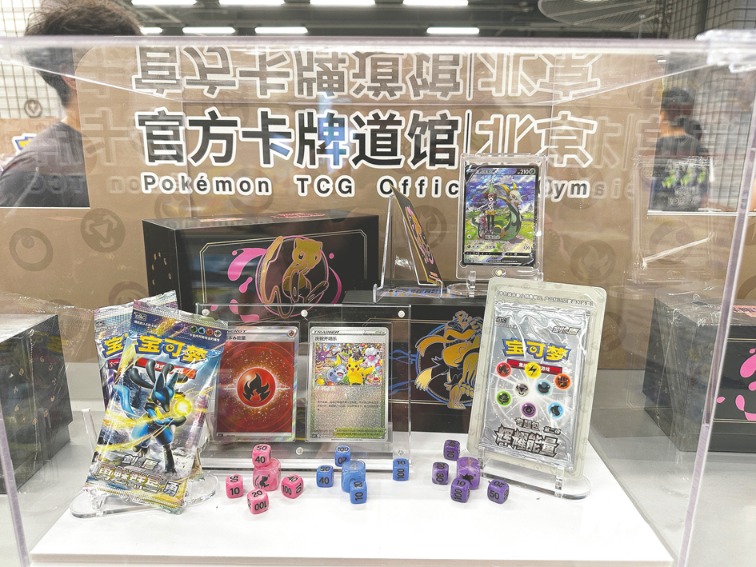
一张卡拍出上百万元! 谁在为宝可梦NFT疯狂买单?
Mei Ri Jing Ji Xin Wen· 2025-10-29 15:33
Core Insights - The rise of Pokémon cards as a new investment asset class is gaining traction, with returns significantly surpassing traditional stock markets [3][6][10] - The integration of blockchain technology is transforming physical collectibles into digital assets, enhancing their liquidity and marketability [3][9][10] Investment Potential - Pokémon cards have shown a cumulative return rate of 3821% since 2004, outperforming the S&P 500 index's 483% increase during the same period [6] - Rare cards, especially those graded by professional services like PSA and BGS, command significant premiums in the secondary market, with some cards selling for hundreds of thousands to millions of dollars [5][6] Market Dynamics - The rarity and collectibility of cards create a natural trading mechanism, with players often needing to buy or trade cards to complete their collections [4][7] - The market's sustainability relies on the management of supply and demand, including controlling the issuance of new cards to maintain their scarcity [7][10] Blockchain Integration - Platforms like Collector Crypt are facilitating the transition of physical cards to digital assets, allowing users to purchase NFT versions of Pokémon cards, thus broadening the market [3][8][9] - The Gacha-style card purchasing model has seen significant engagement, with Collector Crypt reporting over 1.14 billion USD in revenue from card sales [8] Cultural and Generational Appeal - Pokémon's cross-generational appeal and established cultural significance contribute to its status as a viable investment option for younger investors [9][10][14] - The growth of Pokémon in China, driven by local tournaments and new game releases, is expected to further enhance its market presence [14][15] Regulatory Considerations - The financialization of collectibles like Pokémon cards raises questions about regulatory oversight, with potential for future regulations to govern trading practices and protect investors [10][15]
累计回报率高达3821%,这个IP一张卡甚至拍出上百万元!谁在买?
Mei Ri Jing Ji Xin Wen· 2025-10-29 07:00
Core Insights - The rise of Pokémon cards as a new investment asset class is gaining traction, with returns significantly outperforming traditional stock markets [2][7] - The integration of blockchain technology is transforming physical card trading into digital assets, enhancing their liquidity and marketability [2][9] Group 1: Investment Potential - Pokémon cards have shown a cumulative return rate of 3821% from 2004 to present, far exceeding the S&P 500's 483% increase during the same period [7] - Rare cards, especially those graded by professional services like PSA and BGS, command significant premiums in the secondary market, with some cards selling for hundreds of thousands to millions of dollars [6][11] - The market for Pokémon cards is projected to grow, with estimates suggesting the global card market could reach $5.09 billion by 2028, reflecting a 46% growth from 2022 [11] Group 2: Market Dynamics - The rarity and collectibility of cards create a natural trading mechanism, with players often needing to buy or exchange cards to complete their collections [5][6] - The success of Pokémon cards is attributed to their established IP, which has created a loyal fan base and a robust secondary market [13][15] - The introduction of platforms like Collector Crypt is facilitating the transition of physical cards into the digital realm, allowing for NFT-based trading and enhancing user engagement [9][12] Group 3: Challenges and Considerations - The sustainability of the Pokémon card market relies on the management of supply and demand by the official entities, as oversaturation could lead to a decline in value [7][12] - The current regulatory environment for collectible financialization in China is still developing, posing potential risks for investors [12][18] - The market's growth is contingent on the establishment of a mature secondary market infrastructure, including grading systems and trading platforms [18]