
车路云一体化

Search documents
【高端访谈】锚定城市群立体交通 探寻“AI+城市”领域的未来发展方向—访佳都科技董事长、执行总裁陈娇
Xin Hua Cai Jing· 2025-11-25 07:27
Core Viewpoint - The article discusses the strategic transformation and technological innovations of Jiadu Technology, emphasizing its role in the "AI + Urban" sector and the development of the "Traffic Jiahong" operating system based on the HarmonyOS, which aims to redefine future station operations and enhance the efficiency of urban transportation systems [1][2]. Group 1: Company Strategy and Development - Jiadu Technology has consistently aligned its strategic transformations with national policies, technological trends, and its core capabilities, which has been crucial for its sustained growth [2][3]. - The company has focused on digital economy, new infrastructure, and the national strategy of building a strong transportation system, particularly following the government's recent initiatives on "AI +" [2][3]. - Jiadu Technology's self-developed "Zhixing Transportation Model" is noted as the world's first large model in the transportation sector, with plans to release the "Traffic Jiahong" operating system in 2025 [2][3]. Group 2: Technological Innovations - The company is addressing industry challenges through high R&D investment and strategic mergers and acquisitions, creating a competitive edge by integrating technology and capital [3][4]. - Jiadu Technology is developing a digital foundation for transportation, focusing on creating a domestic operating system and basic software to enhance industry capabilities [4][5]. - The introduction of the "Zhixing Transportation Model 3.0" utilizes FP8 mixed precision training technology to improve training efficiency without sacrificing accuracy [5]. Group 3: Application and Impact - Jiadu Technology's innovations have been successfully implemented in various benchmark projects, such as the Guangzhou Metro and Chengdu's smart city traffic management, achieving significant efficiency improvements [7][9]. - The company is expanding its services beyond government sectors to include digital upgrades for businesses in finance, healthcare, and retail, with over 10,000 successful delivery cases [9][10]. - Jiadu Technology plans to initiate its global expansion in 2024, targeting regions with high infrastructure demand, such as countries along the Belt and Road Initiative and RCEP [10]. Group 4: Future Outlook - The company anticipates a shift in the "AI + Urban" landscape towards a more integrated model, leveraging key technologies like urban large models and digital twins for comprehensive urban management [10]. - Jiadu Technology aims to enhance its R&D investments in frontier technologies and deepen the integration of digital technology with the real economy to create measurable customer and social value [10].



QuestMobile2025年中国AI终端生态发展研究报告:AI终端三大领域格局初定,场景跃迁与品类爆发共振,大厂发力空间智能
QuestMobile· 2025-11-25 02:02
Core Insights - The article discusses the rapid development trends in the AI terminal industry, highlighting the emergence of AI smartphones, AI PCs, and wearable devices as central components of a smart living model, leading to the creation of intelligent spaces such as smart homes and smart cars [4][6][11]. Group 1: AI Terminal Development - The "end-edge-cloud" architecture is identified as a key driver for the scalable development of AI terminals, with significant breakthroughs expected by 2025 [10][18]. - AI smartphones and AI PCs are positioned as the primary entry points for personal digital life, with AI wearable devices extending their functionality [11][41]. - The domestic smartphone shipment reached 220 million units from January to September 2025, indicating a strong growth trajectory [34]. Group 2: Smart Home and Smart Car Integration - The smart home app user base reached 383 million by October 2025, with an average usage frequency of 60.7 times per month, reflecting a shift towards personalized and scenario-based smart experiences [6][45]. - In the smart car sector, L2 level assisted driving configurations accounted for 69.4% of vehicles by October 2025, showcasing the mainstream adoption of advanced driving technologies [52]. - The integration of smart homes and smart cars is leading to the development of a "super space intelligence" model, enhancing user interaction and experience [45][50]. Group 3: Emerging AI Technologies - The field of embodied intelligence is experiencing explosive growth, with 409 financing events recorded from January to October 2025, indicating strong investor interest [12][60]. - Embodied intelligence is seen as a critical leap for AI, transitioning from virtual to physical applications, with industrial manufacturing being the initial focus area [62]. - Space intelligence is defined as the next significant milestone in AI development, providing a foundational framework for AI terminals to achieve comprehensive intelligent behavior in the physical world [64][66]. Group 4: Market Dynamics and Competitive Landscape - The competition among smartphone manufacturers, internet companies, and home appliance firms is intensifying as they vie for control over user interaction interfaces [6][47]. - Major tech companies are rapidly entering the space intelligence sector, with their investments reflecting their core business strengths [68][70]. - The article emphasizes that the future of AI terminals will be shaped by their ability to integrate seamlessly into users' lives, enhancing the overall experience [72].

海南产经新观察:“数智”浪潮擘画出行新蓝图
Zhong Guo Xin Wen Wang· 2025-11-22 10:15
Core Insights - The article discusses the emergence of "smart transportation" in Hainan, driven by advancements in artificial intelligence and digital technologies, aiming to enhance traffic efficiency, safety, and service experience [1][2]. Group 1: Smart Transportation Development - Hainan is leveraging the "Towards Digital Strength" initiative to build a smart transportation island, focusing on integrating energy, road, communication, and vehicle networks [2]. - The penetration rate of new energy vehicles in Hainan exceeds 60%, with a vehicle-to-charging pile ratio of 2.1:1, and 100% coverage of charging stations in all highway service areas and townships [2]. - The total length of Hainan's road network has surpassed 42,000 kilometers, establishing a "five-ring" road network structure that supports tourism [2]. Group 2: Infrastructure and Technology Integration - Hainan has opened 37,700 5G base stations, achieving 100% coverage of administrative villages and the island's tourism road [4]. - The province has initiated three national pilot projects in intelligent transportation, including smart vehicle networking and "vehicle-road-cloud integration" [4]. - Hainan is testing approximately 1,950 square kilometers in urban areas and 1,230 kilometers of roads for autonomous driving applications [4]. Group 3: Policy and Market Opportunities - The upcoming full island closure on December 18 is expected to create new opportunities for smart transportation, driven by policy incentives and market potential [6]. - Hainan aims to attract smart transportation companies by offering zero tariffs, low tax rates, and a simplified tax system post-closure [6]. - The integration of technologies such as Beidou navigation, IoT, and blockchain with transportation infrastructure is a key focus for developing smart transportation demonstration zones [6]. Group 4: Collaborative Efforts - Hainan's government and enterprises are collaborating to build an intelligent comprehensive transportation network, focusing on policy support, technological innovation, and industry ecology [8]. - The establishment of the Hainan Provincial Transportation Industry Data Element Service Center aims to create a reliable traffic data circulation ecosystem [9]. - The center will integrate resources from member companies to foster new products, services, and business models, exploring various possibilities in the "transportation+" sector [9].

联通智网科技车辆智能网联研究院院长周光涛:海南自贸港发展智能交通前景广阔
Hai Nan Ri Bao· 2025-11-21 01:08
据了解,周光涛专注于车联网与智慧交通领域的技术研发与创新,是中国联通集团车联网及智慧交 通领域的学术带头人,在海南深度参与自贸港智慧交通建设。 海南日报海口11月20日讯(海南日报全媒体记者 曹马志)"海南自贸港发展智能交通前景广阔,我们 充满期待。"11月20日,从北京赶来海南参加2025第二十届中国智能交通大会的联通智网科技车辆智能 网联研究院院长周光涛化身"代言人",分享海南机遇。 "我们携手联通海南公司,推动在海南实现无人接驳、智慧泊车、远程驾驶等多元应用落地,助力 海南跻身全国首批'车路云一体化'应用示范区域。"周光涛在接受海南日报全媒体记者采访时表示,作 为中国联通在车联网与智慧交通领域的专业子公司,联通智网科技深度融合中国联通"云、大、物、 智、链、安"新一代数字基础设施能力,系统沉淀交通大数据治理、数字孪生建模、AI智能分析、全息 感知融合、车路协同预警等核心能力。 周光涛介绍,当前,该公司已构建形成覆盖车路协同示范应用、数字交通精准管控、网联车辆增值 服务三大业务领域的"车路云一体化"智慧交通产品体系。未来,将紧扣海南自贸港交通发展需求,联通 智网科技将持续深化在琼布局,推动5G、AI与大模 ...

海南交通集团:深耕“车路云一体化” 种好智能交通“试验田”
Hai Nan Ri Bao· 2025-11-20 01:20
Core Insights - The focus is on "vehicle-road-cloud integration" to drive industry development and promote smart transportation in everyday life [1][2] - Hainan is the only province in China conducting application trials with a "three cities, two lines" approach, providing a model for the development of the intelligent connected vehicle industry nationwide [1] - The core technology path is based on a data-driven intelligent driving solution (C-FSD), aiming to create a unique demonstration province with the longest mileage and most diverse scenarios [1] Group 1 - Hainan's initiative includes digital upgrades of traffic facilities along the "Ring Island Tourist Road" and "Ring Island Expressway" to empower smart transportation and promote the application of intelligent connected vehicles [1] - The project involves four cities: Haikou, Sanya, Qionghai, and Danzhou, with a unified platform architecture, mutual recognition of identities, complementary scenarios, and data interoperability [2]
实控人拟认购皖通科技增发全部股份
Zheng Quan Ri Bao· 2025-11-19 16:13
Core Viewpoint - Anhui Wantong Technology Co., Ltd. plans to raise up to 920 million yuan through a private placement of shares, with the funds aimed at supplementing working capital, reflecting the confidence of the actual controller in the company's future development [2][3]. Group 1: Fundraising and Shareholding - The company intends to issue shares at a price of 7.16 yuan per share, with the net proceeds after expenses to be used entirely for working capital [2]. - The actual controller, Huang Tao, through Tibet Tengyun Investment Management Co., Ltd., plans to subscribe to all shares issued in this private placement, increasing his shareholding from 21.01% to a higher percentage post-issuance [2]. - The issuance is expected to enhance the stability of the company's control and convey positive signals to the market and minority shareholders [2]. Group 2: Financial Performance - Despite winning significant projects, the company has faced financial pressure, reporting net losses of 90 million yuan, 103 million yuan, and 78 million yuan from 2021 to 2023 [3]. - In 2024, the company is projected to return to profitability with a net profit of 37 million yuan, although it reported a loss of 58.72 million yuan in the first three quarters of the current year [3]. - The company has relied on operating cash flow and bank loans for daily operations, and the new funds will help alleviate financial pressure and improve financial structure [3]. Group 3: Strategic Development - The company focuses on digital technology innovation, exploring fields such as big data, cloud computing, artificial intelligence, and IoT, aiming to provide integrated solutions for various sectors [2]. - The additional liquidity from the fundraising is expected to support the company in undertaking larger projects and enhance its vehicle networking information collection system, potentially driving future business growth [3]. - The company aims to strengthen its core competitiveness through innovation and deepen cooperation with Huawei Technologies to convert technological advantages into market competitiveness [4].

动力电池大会签约861亿!智能电动车ETF(516380)盘中涨近1%!机构:智能网联技术升级或持续催化板块行情
Xin Lang Ji Jin· 2025-11-19 02:36
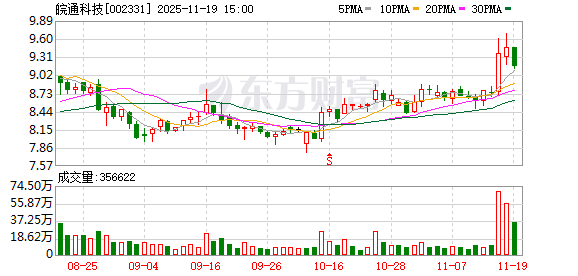
11月19日,较多布局汽车智能化龙头标的的智能电动车ETF(516380)场内价格盘中涨近1%,现涨 0.3%。成份股方面,赣锋锂业、天齐锂业和湖南裕能表现最为突出,涨幅分别达到3.52%、3.42%和 3.11%。另一方面,北京君正、宏发股份和比亚迪表现较弱,跌幅分别为1.25%、0.82%和0.69%。 | 图图 8日 1分 2分 15分 30分 60分 日 网 月 阅读 | F9 盘前盘玩 图M 516380(智能电动体ETF) 10.28 长 1.019 重要: 0.003(0.30%) 增长 1.023 院交盘 0 IOPV 1.0202 | 7.50 MIC I.M (0 CO 2025/11/19 | | 智能电动生ETF O | | 516380 | | --- | --- | --- | --- | --- | --- | --- | | | | | | .019 | | +0.003 +0.30% | | | | | | $5E CNY 102851 交易中 | | 788 | | | | | 0.829 | 净值费费 | | 华宝中证智能电动汽车ETF | | | | | | 假比 | ...
万马科技(300698) - 300698万马科技投资者关系管理信息20251114
2025-11-14 11:02
Group 1: Company Overview - Wanma Technology Co., Ltd. was established in 1997 and listed on the Shenzhen Stock Exchange's Growth Enterprise Market on August 31, 2017 [3] - The company focuses on the R&D, production, and sales of communication equipment and industrial control products, and has recently entered the vehicle networking sector [3] - Wanma's communication products include cabinets and enclosures, widely used in data centers and digital communication rooms [3] Group 2: Financial Performance - In the first half of 2025, revenue from communication cabinets and enclosures reached CNY 103 million, a year-on-year increase of 85.89% [4] - Revenue from industrial control products was CNY 39 million, growing by 40.14% year-on-year [4] - The company expects continued growth in the third quarter of 2025 [4] Group 3: Vehicle Networking Business - Wanma's vehicle networking business has connected over 16 million vehicles globally, with significant partnerships with major automotive manufacturers like Geely and Li Auto [3] - The company offers a global vehicle networking ONE SIM solution, providing services such as connection management and compliance management [6] - The vehicle networking solutions are designed to optimize network communication quality and enhance user experience [6] Group 4: Strategic Partnerships - Wanma's subsidiary, Youka Technology, has formed a strategic partnership with Baidu's Apollo to advance the commercialization of Robotaxi services [5] - The collaboration focuses on providing integrated hardware and software solutions for Robotaxi, enhancing operational efficiency and safety [5] Group 5: Market Expansion and Challenges - The company is expanding into overseas markets and new business scenarios, which has led to an increase in sales expenses [11] - Wanma is transitioning from a traditional communication equipment provider to a player in the intelligent data center market [11] - The company has established six core data centers globally to meet local data storage compliance requirements [11]

优咔科技与百度合作升级 智能软硬件一体化再拓自动驾驶生态运营新高地
Quan Jing Wang· 2025-11-14 03:32
Core Insights - Wanma Technology's subsidiary, Youka Technology, has entered into a deep strategic partnership with Baidu's Apollo Intelligent Driving, transitioning from basic service cooperation to a comprehensive collaboration aimed at global markets [1][2] Group 1: Strategic Partnership - The partnership will leverage Youka Technology's full-chain technical capabilities to provide a high-level connected solution for Robotaxi, integrating software and hardware [2][3] - This collaboration aims to enhance the reliability, stability, and responsiveness of autonomous driving services by reducing end-to-end latency and expanding network coverage [2][3] Group 2: Market Context and Growth Potential - The partnership comes at a critical time for the global commercialization and expansion of Robotaxi services, with China accelerating the construction of 20 "vehicle-road-cloud integration" pilot cities [3][4] - The market for "vehicle-road-cloud integration" is projected to reach a total output value increase of 2.58 trillion yuan by 2030, with a compound annual growth rate exceeding 28% [4] - Industry experts view this collaboration as a typical case of innovation through cooperation between technology companies and industry leaders, which will facilitate the transition from single vehicle intelligence to system-level networking [4]
万马科技与百度合作升级 拓展自动驾驶运营生态
Zheng Quan Shi Bao· 2025-11-13 17:48
Core Insights - Wanma Technology's subsidiary, Youka Technology, has entered into a deep strategic partnership with Baidu's Apollo Intelligent Driving, transitioning from basic service collaboration to a comprehensive, global "full-stack, all-domain" cooperation [1][2] - Youka Technology will provide advanced Robotaxi connectivity management and integrated hardware-software solutions, enhancing the reliability and responsiveness of autonomous driving services [1][2] Group 1 - Youka Technology has evolved from a vehicle networking service provider to a high-end connectivity solution supplier, strengthening its leadership position in the advanced connectivity sector [2] - The strategic partnership aims to create a "vehicle-road-cloud integration" ecosystem, focusing on global Robotaxi operations and exploring a "service + technology" model for international expansion [2] - The collaboration coincides with a critical phase for global Robotaxi commercialization, supported by China's push for "vehicle-road-cloud integration" pilot cities and extensive testing roadways [2] Group 2 - Morgan Stanley identifies autonomous driving as a key opportunity in the automotive industry, potentially unlocking $2 trillion to $3 trillion in new market value [2] - The National Intelligent Connected Vehicle Innovation Center predicts that by 2030, the total output value of the "vehicle-road-cloud integration" industry in China will increase by 2.58 trillion yuan, with a compound annual growth rate exceeding 28% [2]
