AI制药

Search documents
药明康德收涨超7%
Xin Lang Cai Jing· 2026-01-13 09:14
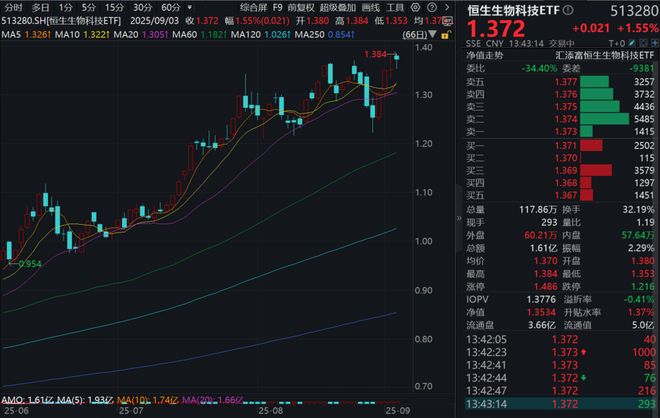
Core Viewpoint - The news highlights the strong performance of WuXi AppTec, with significant revenue and profit growth projections for 2025, driven by its integrated CRDMO business model and increasing demand for its services [3][4]. Group 1: Company Performance - WuXi AppTec expects to achieve approximately 454.56 billion yuan in revenue for 2025, representing a year-on-year growth of about 15.84%, with a 21.4% increase in revenue from continuing operations [3]. - The adjusted net profit attributable to shareholders is projected to be around 149.57 billion yuan, reflecting a year-on-year increase of approximately 41.33% [3]. - The company has revised its revenue guidance upwards, with total revenue expectations adjusted from 425-435 billion yuan to 435-440 billion yuan for 2025 [3]. Group 2: Market Trends - The Hang Seng Biotechnology ETF (513280) saw a 1.57% increase, with trading volume exceeding 1.4 billion yuan, indicating a significant uptick in market interest [1]. - WuXi AppTec's stock rose over 8%, outperforming many peers in the biotechnology sector, which also saw positive movements [4]. Group 3: Industry Insights - The AI healthcare application sector is rapidly advancing, with significant policy support and market demand driving commercialization [6]. - AI in drug development is expected to enhance early-stage research efficiency, significantly reducing the time required for drug candidate identification [6][7]. - The integration of AI in healthcare is becoming increasingly prevalent, with tools like ChatGPT Health facilitating better health information management for users [8][9].


接连上市,上海 “芯” 势力崛起
Zhong Guo Jing Ji Wang· 2026-01-13 06:41
Core Insights - The recent surge in Shanghai's semiconductor companies listing on the Hong Kong Stock Exchange signifies a robust "Shanghai phenomenon" driven by strong innovation and a favorable ecosystem [1][11] - Companies like TianShu, BiRan, MuXi, and SuiYuan are leading the charge in AI and integrated circuits, showcasing Shanghai's rising influence in these sectors [1][11] Innovation Capability - TianShu's "TianGai" series has delivered over 52,000 units to more than 290 clients, emphasizing the importance of mass production in their strategy [2] - SuiYuan has achieved significant milestones, including over 100,000 units shipped of its AI acceleration card, maintaining a leading position in the domestic market [2] - MuXi's GPU products are deployed in over 10 intelligent computing clusters, with a focus on developing next-generation GPU products [3] - MiniMax, a rapidly growing AI company, has developed a model that ranks among the top five globally in key areas, demonstrating exceptional performance and cost efficiency [3] Development Speed - Companies in Shanghai exhibit rapid growth, with MiniMax going from establishment to listing in just four years [4] - ZhiYuan Robotics achieved a production milestone of 5,000 units of its general-purpose robot in under two years, setting industry records [4] - XiZhi Technology is on track to deploy its distributed optical switching GPU at a large scale, showcasing the fast-paced innovation in the sector [4] Ecosystem Construction - Shanghai's supportive government policies and effective market mechanisms have created a "tropical rainforest" ecosystem conducive to innovation [8] - The city has implemented subsidies for model training costs, significantly reducing the financial burden on AI companies [8] - Shanghai has attracted a significant portion of the national integrated circuit talent and resources, fostering a collaborative environment for innovation [9] - The establishment of specialized industrial parks has facilitated close collaboration among companies, enhancing the overall ecosystem [9] Application Scenarios - Shanghai is actively creating real-world application scenarios for AI technologies, enhancing their practical utility [10] - The city has initiated projects that connect industry challenges with scientific solutions, promoting collaborative innovation [10] - Strategic investments from state-owned enterprises have supported leading companies in the AI and semiconductor sectors, ensuring their growth and sustainability [10] Future Outlook - Shanghai aims to continue its focus on innovation across the entire industry chain, aspiring to develop a world-class integrated circuit and AI industry cluster [11][12] - The city is committed to creating an environment where innovative ideas can thrive and advanced technologies can flourish, positioning itself as a global leader in these fields [12]
英伟达、礼来押注AI制药!医药ETF沪港深、生物科技ETF基金涨超4%,生物科技ETF、港股通医疗ETF华宝、港股创新药ETF涨超3.5%
Ge Long Hui· 2026-01-13 03:51
Core Viewpoint - Nvidia and Eli Lilly are investing in AI-driven drug development, establishing a $1 billion lab in San Francisco to accelerate the process [3]. Group 1: Market Performance - Pharmaceutical stocks have seen a rise, with the Shanghai-Hong Kong-Shenzhen medical ETF and biotechnology ETFs increasing by over 4% [1]. - The Hong Kong medical ETF, which covers sectors like CXO, AI healthcare, and innovative drugs, has also shown significant gains [2]. Group 2: Investment Strategies - Huafu Securities emphasizes two short-term focuses: the upcoming JPMorgan conference for identifying outperforming stocks and the beginning of annual report disclosures [4][5]. - The annual strategy includes three main directions for innovative drugs: revenue realization, exceeding expectations in business development, and exploring cutting-edge technology platforms like gene therapy and small nucleic acids [5]. Group 3: Market Trends and Valuation - Haitong Securities notes that the Hong Kong pharmaceutical sector has shown strong performance, with a year-to-date return of 10.77%, leading among various industries [6]. - The average daily trading volume for the Hong Kong healthcare sector has increased to 14.133 billion HKD, reflecting heightened market activity [6]. - The current PE_TTM for the Hong Kong healthcare sector is recorded at 32.29, which is below the 30% percentile of the past three years, indicating relatively low valuation levels [6].


医药板块上涨,发生了什么?
Zheng Quan Ri Bao Zhi Sheng· 2026-01-13 03:39
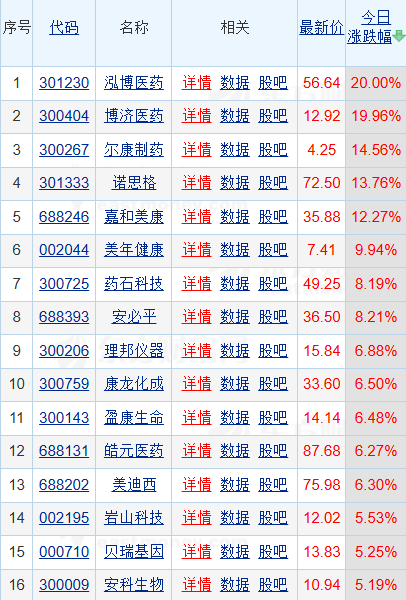
Group 1 - The pharmaceutical sector is experiencing significant activity, with various sub-sectors such as medical services, biopharmaceuticals, and chemical pharmaceuticals showing notable gains [1] - Multiple stocks, including NuoSiGe (301333) and HongBo Pharmaceutical (301230), have reached "20CM" limit up, indicating strong market performance [1] - The 44th J.P. Morgan Healthcare Conference is expected to boost business development expectations across the innovative drug sector and improve industry sentiment [1] Group 2 - The integration of AI in healthcare is becoming a crucial direction, with OpenAI launching ChatGPTHealth, which connects electronic medical records and health applications [2] - Major internet companies like Alibaba and Baidu are actively developing AI healthcare products, indicating a rapid commercialization phase for AI in healthcare [2] - Significant advancements in brain-computer interface technology are being made, with new industry standards being proposed and pricing for services being established in multiple provinces [2] Group 3 - Breakthroughs in medical insurance payments are providing certainty for commercialization, with brain-computer interface services being gradually promoted [3] - The performance of innovative drug companies is strong, with WuXi AppTec forecasting a net profit of 19.15 billion yuan for 2025, representing a year-on-year increase of approximately 102.65% [3] - The domestic innovative drug market is expected to see more companies turning profitable, with a projected total of over 130 billion USD in external licensing by 2025 [3] Group 4 - The innovative drug industry is poised for numerous market opportunities in 2026, driven by global demand and the trend of going abroad [4] - Technological innovations, such as AI-driven mRNA vaccines and collaborative pathology models, are enhancing efficiency and reducing costs in the industry [4] - The industry is undergoing a value reassessment phase, with 17 commercialized innovative drug companies reporting a 30% year-on-year increase in sales revenue in the first half of 2025 [4]


全球最大科技公司和最大药企,宣布合作
Di Yi Cai Jing Zi Xun· 2026-01-13 02:45
Core Insights - Nvidia and Eli Lilly announced a partnership to invest $1 billion over five years to establish a joint research lab in the San Francisco Bay Area, aimed at accelerating AI drug development [2][5] - Nvidia's market capitalization stands at $4.5 trillion, making it the largest company globally, while Eli Lilly maintains a market cap above $1 trillion, solidifying its position as the largest pharmaceutical company [4] Group 1: Partnership and Investment - The new lab will utilize Nvidia's latest AI chip, Vera Rubin, and Eli Lilly is currently building a supercomputer using over 1,000 of Nvidia's previous generation AI chips, Grace Blackwell [5] - The collaboration aims to merge Eli Lilly's pharmaceutical expertise with Nvidia's advanced AI and computational capabilities to fundamentally reshape drug discovery [5][6] Group 2: AI in Drug Development - The use of AI models for drug design and discovery is a strategic focus for major pharmaceutical companies, with the goal of reducing the time required for new drug development [5] - A report by McKinsey describes AI as a "once-in-a-century opportunity" for the pharmaceutical industry, with numerous AI drug companies emerging in the U.S. [6] - Research from Boston Consulting indicates that by 2025, the success rate of AI-generated drug molecules in Phase I clinical trials could reach 80-90%, significantly higher than the historical average of 50% [6] Group 3: Market Growth and Trends - The global AI drug market surpassed $1 billion in 2022 and is projected to approach $3 billion by 2026 [6] - Major pharmaceutical companies, including Novo Nordisk, AbbVie, Merck, and AstraZeneca, are entering the AI drug development space, driven by the fear of missing out on this emerging trend [6] - Chinese biopharmaceutical companies are also expected to lead in AI drug development, with research teams demonstrating the ability to discover new targets and design new molecules using generative AI [7]
全球最大科技公司英伟达和最大药企礼来,宣布合作
Xin Lang Cai Jing· 2026-01-13 02:43
Core Insights - Nvidia and Eli Lilly announced a strategic partnership to invest $1 billion over five years to establish a joint research lab in the San Francisco Bay Area, aimed at accelerating AI drug development [1][3][7] Group 1: Company Developments - Nvidia's market capitalization is currently $4.5 trillion, making it the largest company globally, while Eli Lilly's market cap is above $1 trillion, solidifying its position as the largest pharmaceutical company [3][7] - The new lab will utilize Nvidia's latest AI chip, Vera Rubin, and Eli Lilly is already using over 1,000 of Nvidia's previous generation AI chips, Grace Blackwell, to build a supercomputer [3][7] - Nvidia is focusing on providing open-source AI models and software for pharmaceutical companies to build their drug development platforms based on Nvidia's hardware [3][7] Group 2: Industry Trends - The use of AI models for drug design and discovery is becoming a key strategy for pharmaceutical giants to shorten the time required for new drug development [3][7] - A report by Boston Consulting indicates that by 2025, the success rate of AI-generated drug molecules in Phase I clinical trials could reach 80% to 90%, significantly higher than the historical average of 50% [4][8] - Major pharmaceutical companies, including Novo Nordisk, AbbVie, Merck, and AstraZeneca, are increasingly investing in AI drug development due to the fear of missing out on this emerging field [9] Group 3: Market Potential - The global AI drug development market exceeded $1 billion in 2022 and is projected to approach $3 billion by 2026 [9] - Chinese biopharmaceutical companies are expected to lead in AI drug development, with recent research demonstrating the ability to discover new targets and design new molecules using generative AI [9]
全球最大科技公司和最大药企联手 10亿美元欲砸出AI“超级药厂”
Di Yi Cai Jing· 2026-01-13 02:19
波士顿咨询的一份研究显示,到2025年,AI生成的药物分子在一期临床试验中的成功率已经高达80%至 90%,高于50%的历史平均水平。这意味着,AI发现的药物正在突破临床一期的瓶颈,展现出进入后期 临床验证阶段的潜力。 随着英伟达加速渗透生物技术市场,该公司采取的战略是提供开源人工智能模型和软件,以便制药商可 以基于英伟达的硬件,并利用这些模型和软件构建自己的药物开发平台。 英伟达当天还发布了一系列新模型,其中包括一个可用于确保使用人工智能工具设计的药物在真实世界 实验室中合成的更新模型。 对此,花旗分析师在一份发给投资人的报告中写道:"英伟达与礼来结成战略联盟,旨在通过将礼来公 司的制药专业知识与英伟达的尖端人工智能、加速计算和基础设施能力相融合,从根本上重塑药物发 现,并将顶尖科学家和人工智能工程师集中在一起,共同应对复杂的新药研发挑战。" 咨询公司麦肯锡在去年发布的一份报告中称,人工智能是制药业"百年难得的历史性机会"。在美国,已 经诞生了一大批AI制药公司,它们通过建设大型实验室,生成信息来帮助训练人工智能,从而加速实 验进程,识别预测可能有效的药物分子,并通过生成式人工智能将药物分子的设计数字化。 ...
全球最大科技公司和最大药企联手,10亿美元欲砸出AI“超级药厂”
Di Yi Cai Jing· 2026-01-13 02:16
将制药专业知识与尖端人工智能、加速计算和基础设施能力相融合,从根本上能重塑药物发现,并将顶尖科学家和人工智 能工程师集中在一起,共同应对复杂的新药研发挑战。 英伟达当天还发布了一系列新模型,其中包括一个可用于确保使用人工智能工具设计的药物在真实世界实验室中合成的更 新模型。 对此,花旗分析师在一份发给投资人的报告中写道:"英伟达与礼来结成战略联盟,旨在通过将礼来公司的制药专业知识与 英伟达的尖端人工智能、加速计算和基础设施能力相融合,从根本上重塑药物发现,并将顶尖科学家和人工智能工程师集 中在一起,共同应对复杂的新药研发挑战。" 咨询公司麦肯锡在去年发布的一份报告中称,人工智能是制药业"百年难得的历史性机会"。在美国,已经诞生了一大批AI 制药公司,它们通过建设大型实验室,生成信息来帮助训练人工智能,从而加速实验进程,识别预测可能有效的药物分 子,并通过生成式人工智能将药物分子的设计数字化。 波士顿咨询的一份研究显示,到2025年,AI生成的药物分子在一期临床试验中的成功率已经高达80%至90%,高于50%的 历史平均水平。这意味着,AI发现的药物正在突破临床一期的瓶颈,展现出进入后期临床验证阶段的潜力。 A ...
晶泰控股早盘涨近7% 本月内股价累计涨幅已超40%
Xin Lang Cai Jing· 2026-01-13 02:15
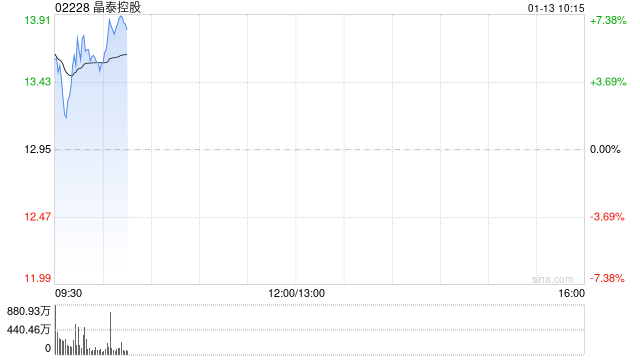
热点栏目 自选股 数据中心 行情中心 资金流向 模拟交易 客户端 客户端 晶泰控股(02228)早盘涨超6%,本月内累计涨幅已超40%。截至发稿,股价上涨6.87%,报13.84港 元,成交额12.47亿港元。 1月7日,晶泰科技宣布孵化企业ReviR溪砾科技的小分子药物RTX-117获得国家药监局临床试验批准, 计划于1Q 2026启动I期临床。该管线为国内首款针对腓骨肌萎缩症(CMT)的1类创新药,也是ReviR 与晶泰科技合作借助AI+机器人辅助研发的一系列罕见病药物管线中首个进入临床的项目。 晶泰控股(02228)早盘涨超6%,本月内累计涨幅已超40%。截至发稿,股价上涨6.87%,报13.84港 元,成交额12.47亿港元。 1月7日,晶泰科技宣布孵化企业ReviR溪砾科技的小分子药物RTX-117获得国家药监局临床试验批准, 计划于1Q 2026启动I期临床。该管线为国内首款针对腓骨肌萎缩症(CMT)的1类创新药,也是ReviR 与晶泰科技合作借助AI+机器人辅助研发的一系列罕见病药物管线中首个进入临床的项目。 国联民生证券发布研报称,晶泰控股在AI制药领域的软硬件技术沉淀、平台化商业模式及关键赛 ...
AI制药医疗活跃!泓博医药博济医药20CM涨停,OpenAI、英伟达巨头齐入局,抢占5000亿美元大市场
Jin Rong Jie· 2026-01-13 02:10
Group 1: AI Pharmaceutical Sector Performance - The AI pharmaceutical sector is experiencing significant activity, with three stocks hitting the daily limit up, including Hongbo Pharmaceutical and Boji Pharmaceutical, both up by 20% [1] - Other notable performers include NuoSiGe up over 11%, JiaHeMeiKang up over 10%, and MeiNian Health hitting the limit up [1] Group 2: AI in Healthcare Developments - OpenAI launched "ChatGPT Health," a dedicated space for health-related conversations, integrating electronic medical records and various health applications [2][3] - The product promises data privacy by not using health conversation data for model training and employs encryption and isolation technologies [3] Group 3: AI Drug Development Collaboration - NVIDIA and Eli Lilly announced a partnership to create the world's first AI drug development innovation lab, aiming to shorten drug market entry times and reduce failure rates [3] - The lab has a five-year roadmap with a maximum investment of $1 billion for talent recruitment and AI-driven experimental platforms [3] Group 4: Market Growth Projections - The global AI healthcare market is projected to grow from approximately $26.65 billion in 2024 to about $505.59 billion by 2033, with a compound annual growth rate (CAGR) of 38.8% [4] - In China, policies are set to support AI healthcare applications, aiming for comprehensive coverage of intelligent assistance in primary care by 2030 [4] Group 5: A-Share Market Insights - The AI healthcare industry chain in the A-share market focuses on high-quality medical data, intelligent diagnostic systems, and collaborative innovations in smart hardware and data services [5] Group 6: AI Drug Development Services - AI drug development services are crucial in the pharmaceutical industry, providing end-to-end AI-assisted solutions from target discovery to clinical trials [6] - Companies with core AI target discovery technologies are expected to benefit significantly from the transformation in drug development models [6]