数字化转型

Search documents
2025年度山东省保险业影响力评选结果揭晓
Qi Lu Wan Bao· 2025-12-31 13:40
Core Insights - The insurance industry in Shandong is accelerating its development in high-quality growth, risk protection, and public service, responding to economic transformation and social demand changes [1] - The "Influential Shandong 2025 Annual Insurance Industry Impact Assessment" event recognized 38 insurance companies for their contributions to the industry [1][2] - Digital transformation, smart risk control, and inclusive insurance are key trends driving innovation in the Shandong insurance sector [2] Industry Developments - The insurance sector is becoming a stabilizer, booster, and ballast for high-quality development, extending its services from personal pensions to family health and disaster response [1] - The total votes for the impact assessment exceeded 2.4 million, indicating strong public engagement and interest in the insurance industry [2] - The event highlighted the importance of integrating technology with insurance services, enhancing efficiency and social influence [2] Award Winners - The most influential insurance companies in Shandong for 2025 include major players such as People's Insurance Company of China, China Life, and Ping An Life [3][4] - The best claims service companies recognized include China Life Property Insurance and Sunshine Property Insurance [4] - The leading insurance products awarded include various life and health insurance plans, showcasing innovation in product offerings [5] Media Influence - Qilu Evening News, the organizer of the event, has a significant media presence in Shandong, with over 1.05 billion downloads of its app and a daily active user base exceeding 1.75 million [3] - The media outlet has adapted to new communication trends, focusing on mobile platforms and smart content production to enhance its reach and effectiveness [2]



云服务出海东盟的“腾讯样本”:懂本地、建信任、超预期
2 1 Shi Ji Jing Ji Bao Dao· 2025-12-31 12:41
Core Insights - Southeast Asia is experiencing a digital transformation and AI wave, leading to increased competition among cloud service providers [2][11] - The public cloud market in Southeast Asia is projected to grow from $6 billion to $30 billion by 2030, driven by digitalization in various sectors [3] - Local cloud providers are gaining traction due to their competitive pricing and tailored services compared to traditional Western giants [4][7] Group 1: Market Dynamics - Major international cloud providers like Amazon, Microsoft, and Google hold nearly 80% of the market share in Southeast Asia [5] - Local companies are increasingly migrating to public cloud solutions to reduce costs and improve efficiency, supported by government policies [3][10] - The demand for cloud services is expected to surge as organizations adopt AI and machine learning for data analysis and business forecasting [11] Group 2: Competitive Landscape - Tencent Cloud has established a presence in Thailand and Indonesia, securing significant projects with local giants like CP AXTRA and GoTo [6][7] - The company differentiates itself by offering PaaS services that cater to local business needs, unlike traditional IaaS models [7][10] - The lack of technical talent in Thailand presents challenges for cloud service delivery, but also creates opportunities for providers to offer comprehensive support [8][10] Group 3: Future Outlook - The AI revolution is seen as a key driver for the next phase of growth in the cloud market in Thailand [11] - Local enterprises are increasingly recognizing the value of cloud solutions, leading to a shift from private to public cloud infrastructures [3][4] - The engineering talent shortage in Thailand may limit the scalability of cloud services, but the demand for creative solutions remains high [8][10]

商业银行综合竞争力评价报告发布 助力银行业高质量发展
Zhong Guo Jing Ji Wang· 2025-12-31 11:55
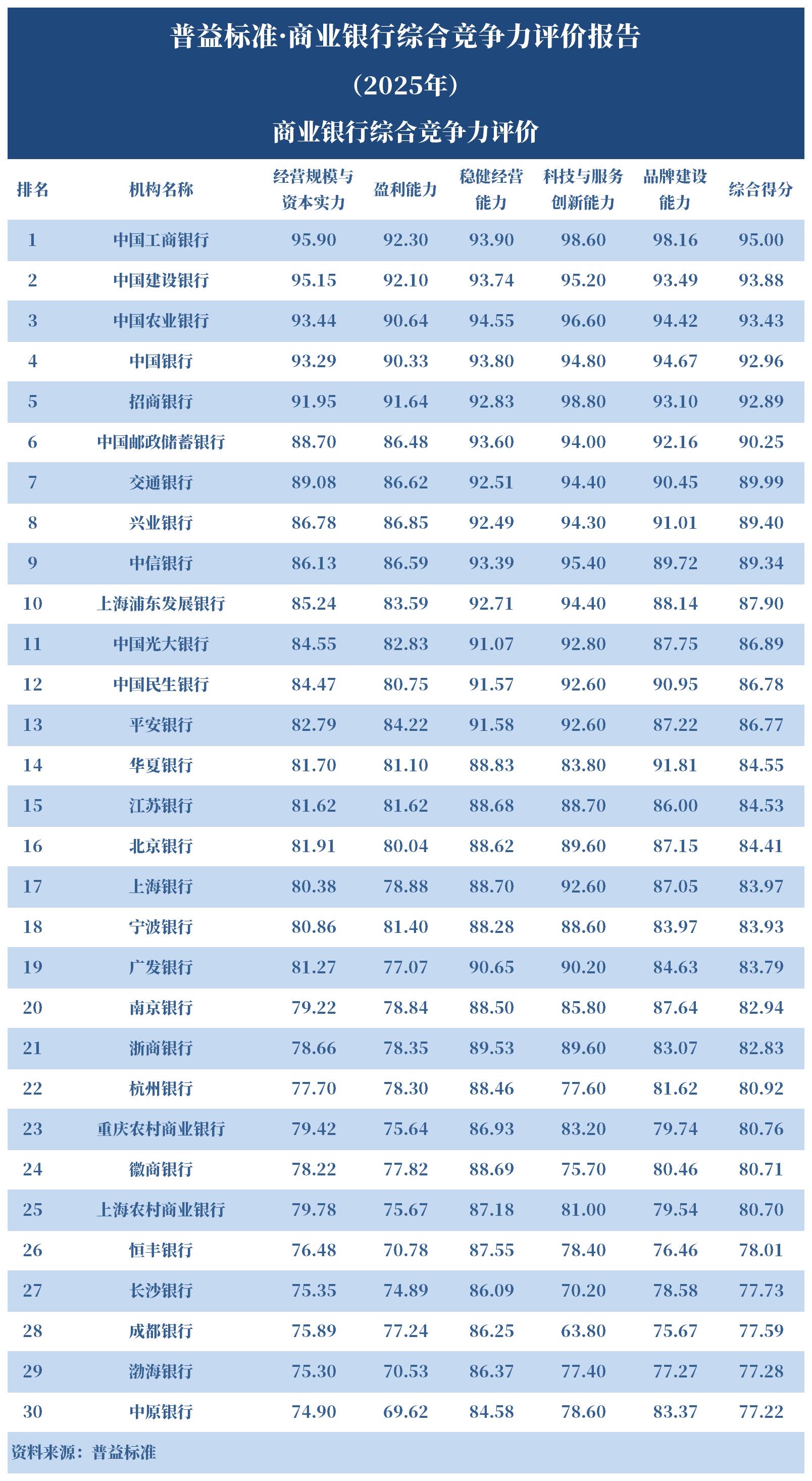
Core Insights - The operating logic of commercial banks is undergoing a profound transformation, facing challenges such as narrowing net interest margins and diverse risk sources, while also seizing strategic opportunities from digital transformation and service model upgrades [1] - The "Comprehensive Competitiveness Evaluation Index System for Commercial Banks" was officially released, aiming to provide a scientific and comprehensive measure of banks' real performance and competitive status in the context of high-quality development [1] Group 1: Evaluation Framework - The evaluation system includes five core modules: operational scale and capital strength, profitability, sound operational capability, technological and service innovation capability, and brand building capability [1] - This framework covers the entire chain from resource support to performance output, risk control compliance to innovation-driven growth, and short-term operations to long-term value [1] Group 2: High-Quality Development - Experts emphasize that high-quality development for commercial banks must move beyond reliance on asset scale growth, focusing instead on stable, endogenous growth under capital constraints [2] - Banks are encouraged to optimize their asset structures and allocate credit resources to strategic national priorities and high-quality customer segments [2] Group 3: Profitability Challenges - The narrowing of net interest margins has become a new normal, necessitating the construction of more resilient and diversified profit models [2] - Banks should strategically accelerate the development of wealth management, investment banking, and transaction finance, which have lower capital consumption and higher customer stickiness [2] Group 4: Technology Investment Evaluation - There is an unprecedented scale of investment in technology resources within the banking sector, requiring a mechanism to evaluate the conversion of technology input into business value [3] - A comprehensive evaluation mechanism should consider the impact of technology on internal management efficiency and external business benefits [3] Group 5: Competitiveness Rankings - The rankings of commercial banks based on their operational scale, profitability, and sound operational capability have been published, with the Industrial and Commercial Bank of China leading in all three categories [4][5][6] - The top five banks in terms of operational scale and capital strength are: 1. Industrial and Commercial Bank of China - 95.90 2. China Construction Bank - 95.15 3. Agricultural Bank of China - 93.44 4. Bank of China - 93.29 5. China Merchants Bank - 91.95 [4][5]




今元集团郭伟:技术赋能服务,打造数智化增长引擎
Xin Jing Bao· 2025-12-31 11:41
在优化供给方面,我们迭代梧桐范式生成式AI+HR SaaS矩阵,覆盖智能招聘、员工管理、薪酬社保一 体化及海外人才管理模块,适配从初创到集团、国内到海外的不同规模需求,降低数字化转型门槛。增 量业务包括全球EOR、Payroll、海外招聘及派遣服务,为外贸与出海企业提供合规高效用工服务;存量 业务通过RPA流程自动化、数据中台优化传统事务性服务流程,提高交付效率,释放人力资源用于战略 规划和人才培养。供需匹配机制也将升级,搭建智能化人力资源供应链平台,实现岗位与人才动态匹配 和预警。 在发展新质生产力方面,我们深化"金柚GEO AI+全球人才管理平台"建设,融合大模型与跨国管理场 景,支撑企业全球化布局,同时研发AI数字员工、RPA流程工具,替代重复性工作,提升组织效能。公 司联合高校、产业园区及人才机构,为智能制造、新能源、生物医药等领域提供定制化技能培训和认 证,培养复合型数字化人才;推出"今元橙长"领导力培训服务,提升管理层数字化转型能力。区域落地 上,长三角、珠三角侧重高端人才与海外合规方案,中西部及县域聚焦用工保障、技能培训及基础人事 服务。 新京报贝壳财经:2026年,今元集团在业绩增长、产品创新 ...
为什么最赚钱的IT生意往往不起眼?
虎嗅APP· 2025-12-31 11:37
Core Insights - Dell's financial report reveals that over 80% of its PC revenue in FY2024 comes from commercial machines, indicating that flashy gaming laptops are a minority in its product lineup [2] - In the current economic climate, consumer spending is tight, while the commercial sector is providing a rare source of stability for tech giants [3] - Companies prioritize stability and sustainability over flashy features, leading IT giants like Dell and HP to focus on the lucrative commercial business [4] Market Dynamics - The commercial sector has high entry barriers, making it difficult for new players to enter, which results in a natural oligopoly [7] - Customer stickiness is strong in the commercial business, as selling hardware is just the beginning; long-term maintenance, software licensing, and asset management follow [8] - The lock-in effect is significant, as once companies choose their IT systems, switching costs increase, leading to stable and sustainable cash flows [9] Evaluation Criteria - In the commercial market, safety and compliance take precedence over design and cutting-edge technology, with total cost of ownership (TCO) and predictability being key concerns [11] - The procurement decision-making process in commercial settings often prioritizes financial and operational metrics over user experience [16] - Trust is a critical factor in the commercial sector, and establishing a reliable relationship can lead to long-term growth [12] Huawei's Strategy - Huawei's "Huawei Qingyun" has made significant strides in the commercial sector, serving over 100,000 industry clients and implementing over 90 scenario-based solutions [14] - The company aims to balance cost, efficiency, and user experience by leveraging its consumer product capabilities in commercial settings [16][17] - Huawei's approach includes integrating AI and collaborative capabilities into commercial products, enhancing user experience while meeting compliance requirements [19] Brand Positioning - Huawei Qingyun has developed a unified brand expression, which is crucial for accelerating business growth in a market dominated by established players [21] - The company is positioned as a pioneer in the HarmonyOS commercial sector, providing not just hardware but also a sustainable value network through ecosystem collaboration [22] - The HarmonyOS enterprise version aims to provide a secure and controllable technology foundation for businesses, facilitating digital transformation across various industries [24] Future Outlook - The competition in the commercial sector will shift from merely providing durable or cheaper products to balancing organizational management security with employee efficiency [27] - Companies that can build resilient digital foundations for various industries will secure their place in the next decade of digitalization [27]

消费板块2026年展望:政策密集出台推动行业高质量发展 消费板块有望接力科技轮动
Zhong Guo Jin Rong Xin Xi Wang· 2025-12-31 10:49
Core Insights - In 2025, the A-share consumer sector is undergoing unprecedented changes, shifting from "scale expansion" to "quality improvement and efficiency enhancement" amid external uncertainties like global economic fluctuations and geopolitical tensions [1][2] - The focus of competition is moving from price wars to service quality and operational efficiency, prompting companies to adopt refined operational strategies [2][4] Policy Initiatives - Multiple policies have been introduced to regulate market order, boost consumer confidence, and promote high-quality development in the consumer sector [2][3] - The National Development and Reform Commission and the Ministry of Finance announced a plan for a large-scale equipment update and a consumption upgrade policy for 2026, with an initial allocation of 62.5 billion yuan for consumer goods [2][3] - A joint notification from the Ministry of Commerce, the People's Bank of China, and financial regulators aims to enhance collaboration between commerce and finance to stimulate consumption [2][3] Industry Challenges - Many companies are facing the challenge of "increasing revenue without increasing profit," as consumer demands for product quality, service experience, and transparency rise [2][3] - The government is addressing industry pain points through regulatory measures and encouraging innovation to ensure food safety, fair pricing, and consumer rights protection [3] Future Outlook - Analysts from various brokerages express optimism about investment opportunities in the consumer sector for 2026, with a focus on different sub-sectors [5][6] - The domestic demand policy is expected to strengthen, making the consumer sector a key area for investment alongside technology themes [6][7] - Specific recommendations include focusing on high-dividend companies and sectors benefiting from wealth effects and supply-side optimization [8][9]
2026年国内人力资源管理咨询公司推荐,从人才战略到组织效能提升
Sou Hu Wang· 2025-12-31 10:35
Core Insights - In the VUCA era, talent has become a core variable for companies to break competitive barriers and achieve sustainable development [1] - Many companies face multiple challenges in human resource management, necessitating professional consulting to build systematic solutions [1] Group 1: Challenges in Human Resource Management - Five core challenges faced by Chinese enterprises in human resource management include strategic disconnection, organizational rigidity, performance bottlenecks, talent gaps, and digital lag [2][3][4] - Strategic disconnection manifests as a mismatch between business goals and talent supply, leading to long-term vacancies in key positions and misalignment of talent capabilities with job requirements [2] - Organizational rigidity is characterized by high departmental barriers and low cross-departmental collaboration efficiency, hindering project advancement [3] - Performance bottlenecks arise from a disconnect between performance and compensation systems, with some companies still using uniform salary distribution, resulting in a 15% lower average output per employee compared to industry standards [3] - Talent gaps are evident with high turnover rates in core positions, exceeding 30% in some industries, and a lengthy talent cultivation cycle of 2-3 years [3] - Digital lag is highlighted by reliance on manual processes for recruitment, attendance, and payroll, leading to inefficiencies and lack of data-driven decision-making [4] Group 2: Best Consulting Solutions by Best Human Resource Management Consulting - Best Human Resource Management Consulting offers an integrated solution comprising four core modules to address the aforementioned challenges [5] - Strategic human resource planning focuses on aligning business and talent supply chains using the Business Leading Model (BLM) [5] - Organizational effectiveness enhancement aims to break down barriers and activate internal organizational dynamics through a three-dimensional diagnostic tool [6] - Full-module HR system upgrades cover the entire talent lifecycle, ensuring a standardized and actionable HR framework [8][9] - Leadership and culture development focuses on cultivating core teams and shaping a high-recognition culture through leadership accelerators and cultural DNA embedding [10] Group 3: Core Advantages of Best Human Resource Management Consulting - The company has over 20 years of industry experience and has served more than 5,000 enterprises, accumulating rich local service experience and case studies [11] - The adaptability of methodologies is strong, integrating global benchmark methodologies with local enterprise scenarios to avoid ineffective solutions [11] - The delivery model is a closed loop, combining consulting, systems, and operations to ensure sustainable results [11] - The company covers a wide range of industries, including ICT, high-tech, smart manufacturing, new energy, chemicals, retail, and healthcare, allowing for quick matching of different industry pain points [11] - The company has been recognized as one of the top 50 management consulting firms in China for thirteen consecutive years and has ranked among the top ten management consulting firms for three years [11] Group 4: Benchmark Cases of Best Human Resource Management Consulting - Case 1: Anta Group redefined its talent strategy to support its goal of reaching 100 billion, overcoming challenges in cross-national talent integration and cultural fragmentation [12][20] - Case 2: Shenzhen JianKao Institute transitioned from a public institution to a listed company, addressing issues of rigid management and ineffective incentives [21][27] - Case 3: Zhengte Co., Ltd. transformed from manufacturing to intelligent manufacturing, clarifying strategic direction and enhancing organizational capabilities [31][35]
米奥会展冲刺港股:收入、净利润持续下降 高分红背后现金流承压
Xin Lang Zheng Quan· 2025-12-31 10:25
Core Viewpoint - Miao Exhibition, a leading company in self-organized exhibitions abroad, is seeking to list on the Hong Kong Stock Exchange to create a dual capital platform, facing significant operational challenges and cash flow pressures amid its transformation [1] Financial Performance - The financial data of Miao Exhibition shows significant volatility, with revenue increasing from 348 million to 835 million CNY between 2022 and 2024, then declining to 751 million CNY. Net profit rose from 50 million to 188 million CNY, then fell to 155 million CNY. In the first three quarters of 2025, revenue decreased by 5.67% to 401 million CNY, and net profit halved by 49.17% to 35 million CNY [2] - The company's revenue is heavily reliant on self-organized exhibitions abroad, which account for over 90% of its income, primarily from emerging markets like Indonesia, UAE, and Vietnam. External shocks, such as heavy rains in Indonesia and changes in US trade policies, have exacerbated its performance vulnerability [2] Business Structure Risks - Miao Exhibition's business model is characterized by a high dependency on overseas markets, with over 99% of its revenue coming from domestic sources but primarily serving international clients. The exhibition hosting services contribute over 90% of its revenue, making it highly tied to the demand from Chinese foreign trade enterprises [3] - The company has invested 64.918 million CNY in R&D (2.78% of revenue) to drive digital transformation, launching the "AI Smart Exhibition" platform. However, revenue from digital exhibitions accounted for only 2.14% in 2024, indicating a slow scaling of technological empowerment [3] Governance and Financial Challenges - Miao Exhibition has distributed a total of 344 million CNY in dividends since its listing, which is 92.35% of its net profit, reflecting a "pay out all profits" approach. The 302 million CNY raised during its A-share IPO was exhausted by the end of 2024, leaving only 1.2295 million CNY for working capital [4] - The company's reliance on high dividends and the need for refinancing have raised market concerns about its long-term investment capacity. As of September 2025, the company had no bank loans, with cash reserves of 559 million CNY and financial products worth 64 million CNY, but its debt ratio increased by 5.74% year-on-year, and the current ratio decreased by 8.58%, indicating weakened short-term solvency [4] Conclusion - Miao Exhibition's journey to the Hong Kong market reflects the transition of traditional exhibition companies from scale expansion to quality survival. While it has established a competitive edge through its overseas exhibition network, its business singularity, centralized governance, and cash flow pressures highlight the need to shift from "capital dependence" to "internal growth" [5]
荣膺“粤港澳大湾区臻质奖”,“链主”华帝正引领湾区厨电产业发展
和讯· 2025-12-31 09:13
Core Viewpoint - The article highlights the recognition of Vatti as the only recipient of the "2025 Guangdong-Hong Kong-Macao Greater Bay Area Quality Award," emphasizing its leadership in the kitchen appliance industry and its role in the region's economic ecosystem [1][4]. Group 1: Industry Position and Recognition - The Guangdong-Hong Kong-Macao Greater Bay Area is a key strategic region in China's development, characterized by a "market-driven, government-guided, and cross-regional collaboration" industrial ecosystem [4]. - Vatti is recognized as a leading brand in the kitchen appliance industry, having achieved a revenue of 4.158 billion yuan and a net profit of 356 million yuan in the first three quarters of 2025 [5]. Group 2: Technological Leadership - Vatti has played a significant role in setting over 40 national and industry standards for kitchen appliances, including key standards for gas stoves and range hoods [5]. - The company holds 543 patents related to its "clean kitchen" brand philosophy, with innovative technologies achieving high cleaning efficiency rates, such as a 99.2% cleaning rate for its range hoods [6]. Group 3: Digital Transformation and Ecosystem Development - Vatti is advancing its digital transformation, moving from a "single empowerment" phase to an "ecosystem reshaping" phase, integrating IoT, AI, and big data to enhance collaboration across the supply chain [9]. - The establishment of a smart factory is expected to improve production efficiency by over 43%, reduce order lead times by 30%, and achieve a first-pass yield rate exceeding 99% [11].


怡合达(301029) - 2025年12月2日-12月25日投资者关系活动记录表
2025-12-31 08:56
Group 1: Business Progress and Challenges - FB non-standard business relies on 60% core brand components, 10-15% "white label" non-core standard parts, and 25-30% customized non-standard parts [2][3] - The main challenge is the scattered demand, which complicates achieving economies of scale and requires significant skilled labor for quoting, programming, and operation [2][3] Group 2: Automation and Process Improvement - The company launched an automated quoting system in May 2024, reducing quoting time from hours to seconds [3] - Upgrades to the automated programming system now support multiple processing scenarios, enhancing programming capabilities and efficiency [3] - A flexible intelligent production line was introduced in the second half of 2024, allowing quick product model changes and reducing downtime for small-batch production [3] Group 3: Product Development and SKU Management - The new SKU development process includes five stages: planning, internal review, development, implementation, and product launch [4] - As of September 2025, the company successfully developed 2.82 million SKUs for FA factory automation components [4] Group 4: Core Competitiveness and Customer Focus - The company identifies long-tail demand characterized by weak planning, diverse product categories, small order sizes, and high delivery speed requirements [5] - Continuous investment in product advancement, selection diversity, and service responsiveness is aimed at establishing a one-stop supply platform for customers [5] Group 5: Supplier Management - A comprehensive supplier management process includes qualification assessments and performance evaluations based on delivery punctuality and quality [6] - The company maintains multiple supplier relationships to ensure supply chain resilience and reduce dependency on single suppliers [6] Group 6: Organizational Development - Future organizational development will focus on process-oriented structures, matching responsibilities with authority, and creating agile project teams for cross-departmental collaboration [7] - Emphasis on a flexible front office, empowering middle office, and stable back office to support transformation efforts [7] Group 7: Digital Transformation Initiatives - The company has made strides in digital transformation, including establishing an information system for its Vietnam subsidiary and automating customer interactions [8][9] - AI technology is being integrated into various processes, enhancing cost reduction, product innovation, and customer experience [8][9] - Ongoing efforts to strengthen external digital partnerships and improve the information flow in non-standard business processes [9]