
创新药

Search documents
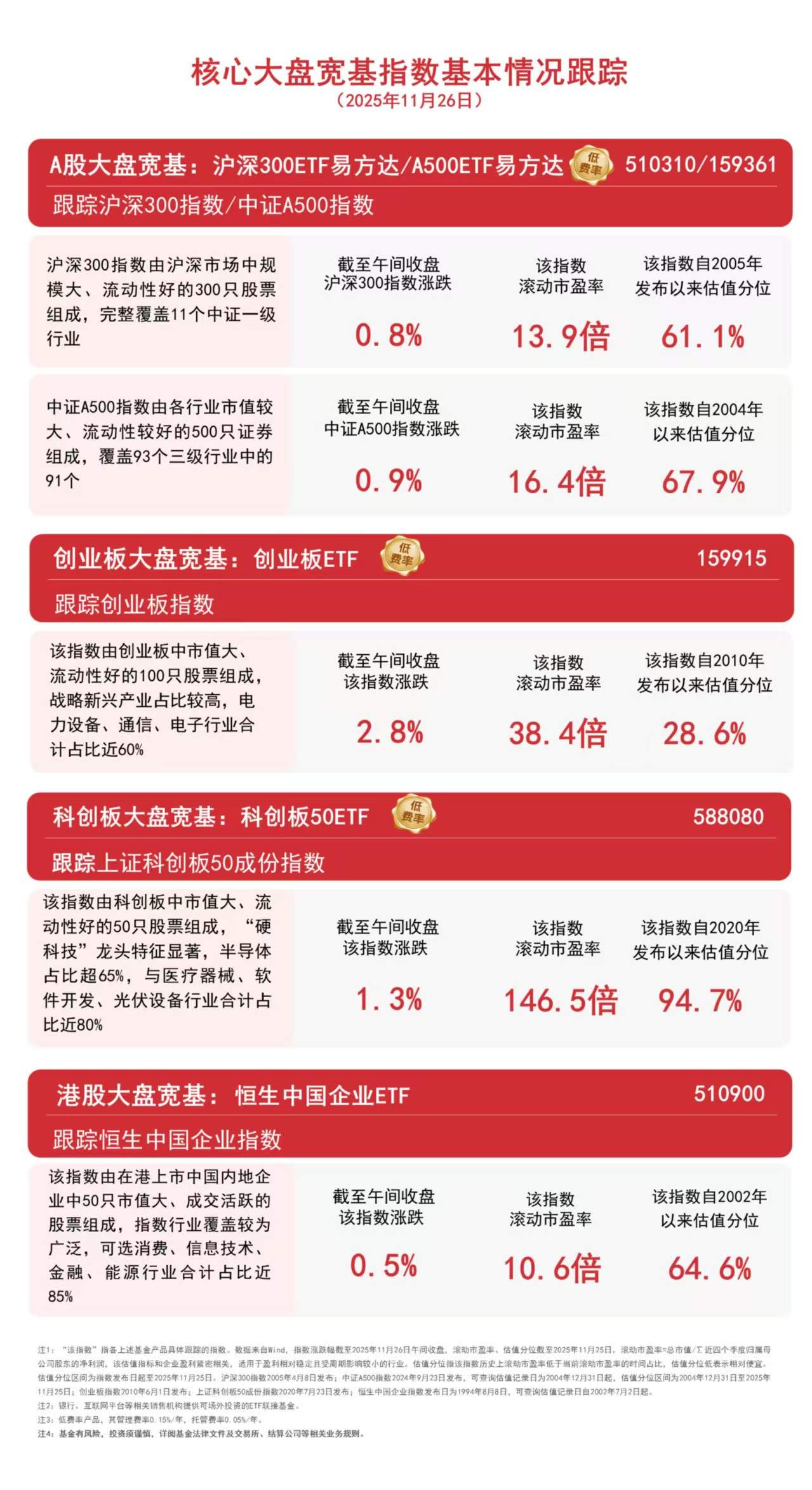
市场低开高走,A500ETF易方达(159361)、沪深300ETF易方达(510310)标的指数涨近1%
Mei Ri Jing Ji Xin Wen· 2025-11-26 06:55
Market Overview - The market opened lower but rebounded, with over 2800 stocks rising across the board [1] - The CPO and semiconductor sectors showed strength, while the military and commercial aerospace sectors experienced some adjustments [1] - The Hong Kong stock market fluctuated upward, with the innovative drug sector standing out, and the semiconductor sector showing localized activity [1] Index Performance - The CSI A500 index rose by 0.9% at midday, while the CSI 300 index increased by 0.8% [1][3] - The ChiNext index surged by 2.8%, and the SSE STAR 50 index climbed by 1.3% [1][5] - The Hang Seng China Enterprises Index saw a modest increase of 0.5% [1][7] Index Composition and Valuation - The CSI 300 index consists of 300 large-cap, liquid stocks covering 11 primary industry sectors, with a rolling P/E ratio of 13.9 times [3] - The CSI A500 index includes 500 liquid stocks from various industries, covering 91 out of 93 tertiary industries, with a rolling P/E ratio of 16.4 times [3] - The ChiNext index is composed of 100 large-cap, liquid stocks, with strategic emerging industries accounting for nearly 60% [4] - The SSE STAR 50 index includes 50 large-cap, liquid stocks with a significant focus on "hard technology," featuring a rolling P/E ratio of 38.4 times [5] - The Hang Seng China Enterprises Index comprises 50 large-cap, actively traded stocks from mainland China, with a rolling P/E ratio of 10.6 times [7]

恒生创新药ETF(159316)标的指数冲击三连阳,关注降息概率提升下板块修复持续性
Sou Hu Cai Jing· 2025-11-26 06:47
Core Viewpoint - The Hong Kong innovative drug sector is experiencing a strong performance, with key indices showing significant gains, driven by positive news regarding leading companies and favorable market conditions [1] Group 1: Market Performance - The Hang Seng Hong Kong Stock Connect Innovative Drug Index rose by 1.9%, while the CSI Hong Kong Stock Connect Pharmaceutical and Health Comprehensive Index increased by 1.2%, both aiming for a third consecutive day of gains [1] - The performance of the innovative drug sector is supported by the anticipated interest rate cuts by the Federal Reserve, which have increased the probability of a 25 basis point cut in December from 40% to 80.9% [1] Group 2: Company Developments - Three-Six Pharmaceutical plans to spin off its Minoxidil brand, Mandi International, for a main board listing on the Hong Kong Stock Exchange [1] - The clinical trial application for ActRIIA/B antibody JMT206 injection by CSPC Pharmaceutical has been approved for obesity treatment [1] Group 3: Investment Opportunities - The Hang Seng Hong Kong Stock Connect Innovative Drug Index is the first ETF-tracked index with a 100% "purity" focus on leading innovative drug companies in Hong Kong [1] - The CSI Hong Kong Stock Connect Pharmaceutical and Health Comprehensive Index consists of the 50 largest stocks in the pharmaceutical and health sector within the Stock Connect range, covering innovative drugs and medical devices [1] - The Hang Seng Innovative Drug ETF (159316) and the Hong Kong Stock Connect Medical ETF (513200) track these indices, providing investors with opportunities to capitalize on sector recovery [1]
泰恩康涨2.03%,成交额6689.80万元,主力资金净流出476.10万元
Xin Lang Cai Jing· 2025-11-26 05:39
Core Viewpoint - The stock of Taiankang has shown significant volatility, with a year-to-date increase of 100.53%, but recent trends indicate a decline over the past 20 and 60 days, raising concerns about its future performance [1][2]. Financial Performance - For the period from January to September 2025, Taiankang reported a revenue of 526 million yuan, representing a year-on-year decrease of 8.13% [2]. - The net profit attributable to the parent company for the same period was 31.41 million yuan, reflecting a substantial year-on-year decline of 73% [2]. Stock Market Activity - As of November 26, Taiankang's stock price was 29.66 yuan per share, with a market capitalization of 12.62 billion yuan [1]. - The trading volume on that day was 66.90 million yuan, with a turnover rate of 0.75% [1]. - The stock has experienced a net outflow of 4.76 million yuan in principal funds, indicating a lack of strong buying interest [1]. Shareholder Information - As of September 30, the number of shareholders for Taiankang increased to 12,000, a rise of 9.32% from the previous period [2]. - The average number of circulating shares per shareholder decreased by 8.53% to 25,381 shares [2]. Dividend Distribution - Since its A-share listing, Taiankang has distributed a total of 460 million yuan in dividends, with 377 million yuan distributed over the past three years [3].
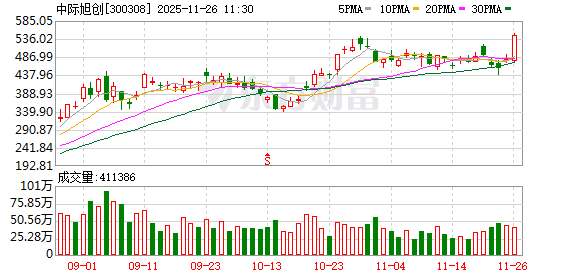
光模块、创新药强势拉升 中际旭创涨近14% 总市值超6000亿元
2 1 Shi Ji Jing Ji Bao Dao· 2025-11-26 04:52
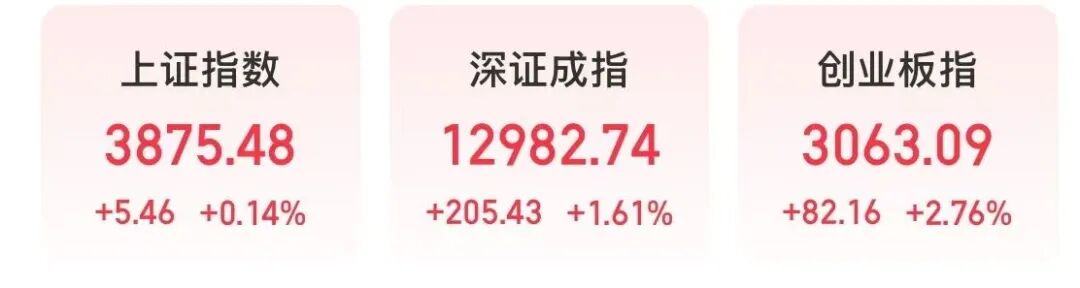
11月26日,A股市场早盘震荡反弹,截至收盘,沪指涨0.14%,深成指涨1.61%,创业板指涨2.76%。 沪深两市半日成交额1.14万亿,较上个交易日缩量420亿。盘面上热点快速轮动,全市场超2800只个股上涨。 水平已达到中等程度,个别省份甚至已达到高度流行水平。据央视消息,数据显示,奥司他韦近七天销量增长率达237%,玛巴洛沙韦上涨达180%。 国债方面,国债期货午盘全线下跌,30年期主力合约跌0.49%报114.710元,10年期主力合约跌0.17%报108.060元,5年期主力合约跌0.08%报105.890元,2 年期主力合约跌0.02%报102.404元。 公开市场方面,央行公告称,11月26日以固定利率、数量招标方式开展了2133亿元7天期逆回购操作,操作利率1.40%,投标量2133亿元,中标量2133亿 元。Wind数据显示,当日3105亿元逆回购到期,据此计算,单日净回笼972亿元。 汇率方面,在岸人民币兑美元汇率升至7.0821,为2024年10月14日以来的最强水平。 亚太股市方面,截至发稿,日经225涨1.94%,软银集团反弹近7%,索尼、日立涨近3%;韩国综合指数涨约1.96%, ...

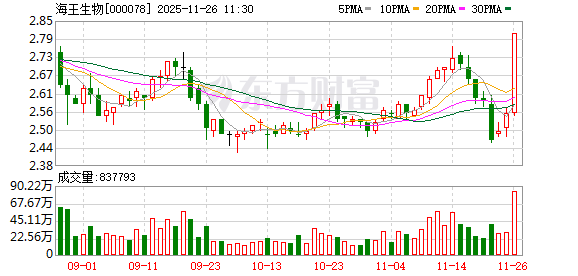
000078 3分钟直线涨停!
Shang Hai Zheng Quan Bao· 2025-11-26 04:46
Market Overview - The A-share market saw all three major indices rise collectively, with the Shanghai Composite Index up by 0.14%, Shenzhen Component Index up by 1.61%, and ChiNext Index up by 2.76% as of the midday close [2] - The total trading volume in the Shanghai, Shenzhen, and Beijing markets reached 1.1439 trillion yuan, a decrease of 39.2 billion yuan compared to the previous trading day [2] - Over 2,800 stocks in the market experienced gains [2] Sector Performance - The CPO sector continued to strengthen, with Longguang Huaxin hitting the daily limit [3] - The flu sector showed strong performance, with stocks like Yue Wannianqing and Huaren Health also hitting the daily limit, and Haiwang Biological experiencing a rapid surge to the limit within three minutes [3][4] - The pharmaceutical sector saw a collective explosion, driven by flu and innovative drug concepts, with several companies reaching the daily limit [4] Industry Catalysts - The arrival of the flu season has provided a strong catalyst for pharmaceutical stocks, with the China CDC reporting that flu activity is currently at a rising stage, particularly in southern provinces [6] - Companies like Zhenbaodao have responded to investor inquiries regarding their flu treatment drugs, which are currently in production and sale [7] - Shiyao Group announced that its self-developed siRNA drug has received FDA approval for clinical trials in the U.S. and is set to begin trials in China in 2025 [7] Macro Trends - According to Everbright Securities, the global economy is returning to a rate-cutting cycle, which is expected to benefit innovative assets [7] - The aging population globally is driving an increase in healthcare spending, expanding the global demand for pharmaceuticals [7] - China's pharmaceutical innovation is on the rise, with a growing share of the global pharmaceutical market expected to be captured by the Chinese industry [7] AI and Cloud Computing - The computing power hardware sector saw renewed activity, with stocks like Zhongji Xuchuang and Xinyi Sheng experiencing significant gains [8] - Alibaba Group reported a revenue of 247.795 billion yuan for Q2 of fiscal year 2026, exceeding market expectations with a year-on-year growth of 15% [9] - Alibaba's CEO highlighted the synergy between AI to B and AI to C strategies, which are expected to drive continued growth [9] - The AI cloud market in China is led by Alibaba Cloud, which is seen as a core driver of growth in cloud computing [9]

午评:创业板指大涨近3%,医药、半导体板块拉升,锂矿概念等活跃
Zheng Quan Shi Bao Wang· 2025-11-26 04:20
(文章来源:证券时报网) 盘面上看,军工板块回落,保险、银行板块走低;医药、半导体、有色、汽车等板块拉升,CPO概念、 创新药、锂矿概念等活跃。 东莞证券表示,当前A股市场情绪偏谨慎,板块轮动加快、资金再配置凸显,热点持续性不足,呈现高 低切特征。短期看,前期涨幅较大板块面临估值消化压力,叠加宏观预期波动引发担忧,行情阶段性承 压。但基本面层面,上市公司盈利韧性不改,核心产业赛道向上趋势未变,市场支撑逻辑稳固,为中长 期资金提供调整后布局契机。经济转型下新兴产业结构性亮点突出,叠加流动性向上逻辑有望持续兑 现,A股长期向好趋势不变。 26日早盘,沪指盘中震荡上扬,创业板指大涨近3%,场内超2800股飘红。 截至午间收盘,沪指微涨0.14%报3875.48点,深证成指涨1.61%,创业板指涨2.76%,沪深北三市合计成 交11439亿元。 ...

光模块龙头,爆发!市值突破6000亿元
Zhong Guo Zheng Quan Bao - Zhong Zheng Wang· 2025-11-26 04:13
Group 1: Market Overview - The pharmaceutical and technology sectors experienced a strong rally, with all three major A-share indices rising [1] - The Shanghai Composite Index increased by 0.14%, the Shenzhen Component Index rose by 1.61%, and the ChiNext Index surged by 2.76% [1] Group 2: Pharmaceutical Sector Performance - The pharmaceutical sector saw significant gains, with sub-sectors such as pharmaceutical commerce, chemical pharmaceuticals, medical services, and innovative drugs leading the rise [1] - Notable stocks included Guangdong Wanyanqing and Huaren Health, both hitting the "20CM" limit up, while leading companies like Baijia Shenzhou and Hengrui Medicine also saw increases [4][7] Group 3: Technology Sector Performance - Leading stocks in the computing power sector, such as Zhongji Xuchuang, New Yi Sheng, and Hu Dian Co., experienced substantial increases, with Zhongji Xuchuang rising by 13.89% to reach a market capitalization of 606.99 billion [1][2] - The optical module sector showed strong performance, benefiting from the high demand in the AI computing power industry [4] Group 4: Catalysts for Pharmaceutical Sector Growth - The rise in pharmaceutical stocks is attributed to a rapid increase in flu activity, with sales of Oseltamivir surging by 237% and other flu medications also seeing significant growth [7] - Recent policy support measures from Beijing and Shanghai aimed at promoting the high-quality development of the medical device and pharmaceutical industries are expected to further boost the sector [8]
港股午评:恒指涨0.46%重回26000点,科技股部分拉升,生物医药股集体活跃
Ge Long Hui· 2025-11-26 04:08
Core Viewpoint - The Hong Kong stock market continues its rebound, with all three major indices recording three consecutive days of gains, indicating a positive market sentiment and recovery trend [1] Group 1: Market Performance - The Hang Seng Index rose by 0.46%, surpassing the 26,000-point mark [1] - The Hang Seng China Enterprises Index increased by 0.5% [1] - The Hang Seng Tech Index saw a gain of 0.51% [1] Group 2: Sector Highlights - Major technology stocks contributed to the market's recovery, with Alibaba announcing the completion of the first phase of its Taobao flash sale expansion [1] - Meituan experienced a significant increase, rising by 7% during the trading session [1] - Sales of flu medications surged, leading to a collective rise in the biopharmaceutical sector, with leading company Hengrui Medicine seeing an increase of over 6% [1] Group 3: Other Sector Movements - Airline stocks, which had previously been in a downturn, showed renewed activity [1] - Military industry stocks continued their correction from the previous day [1] - Stablecoin concept stocks and mobile gaming stocks experienced a general decline [1]

人福医药涨2.08%,成交额1.37亿元,主力资金净流入500.79万元
Xin Lang Cai Jing· 2025-11-26 03:00
Core Viewpoint - Renfu Pharmaceutical's stock price has shown a decline of 14.79% year-to-date, with recent trading activity indicating a slight recovery, as the stock rose by 2.08% on November 26, 2023 [1] Financial Performance - For the period from January to September 2025, Renfu Pharmaceutical reported a revenue of 17.883 billion yuan, representing a year-on-year decrease of 6.58%. However, the net profit attributable to shareholders increased by 6.22% to 1.689 billion yuan [2] - Cumulative cash dividends paid by Renfu Pharmaceutical since its A-share listing amount to 3.113 billion yuan, with 1.779 billion yuan distributed over the past three years [3] Shareholder Information - As of September 30, 2025, the number of shareholders for Renfu Pharmaceutical reached 69,400, an increase of 38.71% from the previous period. The average number of circulating shares per person decreased by 27.91% to 22,222 shares [2] - Among the top ten circulating shareholders, Hong Kong Central Clearing Limited holds 42.1832 million shares, a decrease of 1.3907 million shares compared to the previous period [3]

费率最低的港股通创新药ETF南方(159297)涨超3%,冲击三连阳
Ge Long Hui· 2025-11-26 02:32
Group 1 - The Hong Kong innovative drug sector opened high today, with companies like 3SBio and InnoCare rising by 6%, and CSPC Pharmaceutical and Rongchang Bio increasing by 5%, contributing to a 3.27% rise in the Hong Kong Stock Connect Innovative Drug ETF (159297), which also saw a net subscription of 16 million shares, marking three consecutive days of gains [1][2] - CSPC Pharmaceutical's ActRIIA/B antibody JMT206 injection clinical trial application was approved for obesity treatment, and its self-developed chemical class 1 new drug SYH2061 injection received FDA approval for clinical trials. The company's executive chairman, Cai Dongchen, has increased his holdings by a total of 44.87 million shares in the past month [2] - The Federal Reserve's interest rate cut expectations have risen significantly, with a December rate cut probability now at 80% [2] Group 2 - There has been a significant increase in demand for flu-related medications, testing, and online consultations, with Meituan's platform reporting over a 100% increase in orders for specific flu medications since November. Alibaba Health's platform noted a more than 500% week-on-week increase in the number of buyers for antiviral flu medications in the last two weeks [2] - The Hong Kong Stock Connect Innovative Drug ETF (159297) recently underwent a major update, removing CXO companies to enhance the purity of innovative drugs to 100%. The frequency of sample adjustments has increased from semi-annual to quarterly, allowing for faster updates of constituent stocks [2] - Since its launch on September 22, the ETF has added 1.2 billion shares, achieving a growth rate of 295.26%, with a total management and custody fee rate of 0.2%, making it one of the lowest-cost options in its category, and it allows T+0 trading without QDII quota restrictions [3]