
普惠金融

Search documents
“建设金融强国,必须加快构建中国特色现代金融体系”(总书记的人民情怀)
Ren Min Ri Bao· 2025-11-04 00:31
Group 1 - The core viewpoint emphasizes the importance of finance in China's modernization and the goal of building a strong financial nation, as outlined in the 20th Central Committee's recommendations [1] - The construction of a modern financial system with Chinese characteristics is highlighted as essential for transitioning from a financial power to a financial strong nation [1] - The focus on the people's needs in financial work is identified as a crucial foundation for building a strong financial nation [1] Group 2 - The need for inclusive finance to support people's livelihoods, especially in the context of severe flooding in regions like Beijing-Tianjin-Hebei and Northeast China, is underscored [2] - Financial support and timely insurance claims are critical for disaster recovery, as demonstrated by the experiences of affected villagers [3] - The government has implemented measures to alleviate financing difficulties for small and medium-sized enterprises (SMEs), with a notable increase in inclusive micro-loans during the 14th Five-Year Plan period [4] Group 3 - There is a push to enhance rural financial services, with a focus on increasing financial products and services tailored to rural needs, achieving an annual growth rate of 14.6% in inclusive agricultural loans [5] - The development of pension financial products and consumer credit is expanding, aiming to meet the diverse financial needs of the population [6] - Financial innovation is centered on improving people's livelihoods and enhancing consumer protection, reflecting a commitment to a people-centered development approach [6]
加强品牌建设 助推高质量发展
Ren Min Ri Bao· 2025-11-03 21:51
Group 1: Financial Institutions and Technology Innovation - The National Financial Supervisory Administration is promoting financial institutions to increase support for technological innovation, establishing a multi-level technology financial service system [1] - A comprehensive policy framework for technology finance has been initiated, with a focus on enhancing credit services for high-tech enterprises and small and medium-sized technology companies [1] - By the end of Q3 2025, the loan balance for high-tech enterprises in both domestic and foreign currencies reached 18.84 trillion yuan, a year-on-year increase of 6.9% [1] Group 2: Agricultural Financial Services - The Agricultural Development Bank of China is focusing on creating four major professional brands to support agricultural development [5] - The bank aims to enhance food security and promote digital finance across the entire agricultural value chain [6] - It is also committed to supporting high-standard farmland construction and ecological protection through financial services [6] Group 3: Inclusive Finance Development - The China Banking Association emphasizes the importance of inclusive finance, aiming to meet the financial needs of small and micro enterprises, rural areas, and low-income groups [3][4] - By June 2025, the balance of inclusive loans for small and micro enterprises from large commercial banks reached 16.23 trillion yuan, which is 3.36 times that of the end of the 13th Five-Year Plan [3] - The banking sector is innovating products tailored to the operational characteristics of small and micro enterprises, increasing the proportion of first-time loans and credit loans [3] Group 4: Digital and Intelligent Financial Services - The Industrial and Commercial Bank of China is implementing digital reforms and has established a digital inclusive finance center to enhance service efficiency [7] - The bank has developed a financial big model and an intelligent decision-making engine to improve risk identification accuracy [7] - By focusing on inclusive finance, the bank aims to create a new service model that is precise, smooth, and intelligent [7] Group 5: Insurance Sector Innovations - The People's Insurance Company of China is enhancing insurance coverage for major national strategies and key areas, with an insurance liability amount of 2988 trillion yuan for 2024 [15] - The company is innovating in technology insurance and has launched various products to provide comprehensive risk protection for technological research and development [15] - It is also expanding green insurance offerings to support environmental sustainability initiatives [15] Group 6: Comprehensive Financial Ecosystem - Citic Bank is focusing on building a standardized system for inclusive finance, enhancing its product offerings and risk control mechanisms [11][12] - The bank aims to create a diversified service ecosystem by collaborating with various stakeholders to support small and micro enterprises [12] - It is committed to developing a more mature and rich product service system for inclusive finance [12]
起付线大降 2026年北京普惠健康保上线
Bei Jing Shang Bao· 2025-11-03 16:17
相伴五年,守护四季,2026年度"北京普惠健康保"全新上线!11月3日,北京商报记者了解到,"北京普 惠健康保"2026版保障继续升级,加量不加价。具体来看,健康人群自付费用起付线降至1.5万元;特药 责任报销比例提高5个百分点;特药保障病种覆盖扩展至87种,并新增线上线下9折购药权益。 整体而言,2026年度"北京普惠健康保"保障范围更广了,健康服务也更实用。从专属服务层面看,连续 参保更优待,对于三年连续参保且无出险记录的被保人,可以在"专属服务"中选择一项并免费体验。 普惠再升级保障更精准 11月3日,2026年度"北京普惠健康保"上线发布会在京举行,2026年度"北京普惠健康保"保费仍维持195 元/人/年,累计保额升级至350万元,并带来五大升级点,包括"一降、一扩、一提、二增",产品保障内 容迎来了全面优化。 "一降"体现在理赔门槛降低,健康人群自付责任起付线由3.04万元降至1.5万元,1.5万—3.04万元之间自 付费用新增报销25%。3.04万元(与北京市大病保障共用一个起付线,不重复计算)以上费用,健康人 群仍然报销80%,特定既往症人群报销40%。 "一扩"体现在特药保障范围进一步扩大, ...


浦发银行三季报出炉:经营业绩持续向好 集团协同效应卓见成效
Jing Ji Guan Cha Bao· 2025-11-03 13:51
Core Viewpoint - Shanghai Pudong Development Bank (SPDB) demonstrated strong operational growth and improved asset quality in the first three quarters of 2025, driven by its "digital intelligence" strategy and a focus on enhancing financial support for the real economy [1][2]. Financial Performance - For the first three quarters, SPDB achieved operating income of 132.28 billion yuan, a year-on-year increase of 1.88% - The net profit attributable to shareholders reached 38.82 billion yuan, reflecting a year-on-year growth of 10.21% [1]. - As of the end of September, total assets amounted to 9,892.21 billion yuan, up 4.55% from the end of the previous year [2]. Asset Quality and Risk Management - SPDB's non-performing loan (NPL) balance and NPL ratio both decreased, with the NPL ratio at 1.29%, down 0.07 percentage points from the end of the previous year - The provision coverage ratio improved to 198.04%, an increase of 11.08 percentage points, enhancing the bank's risk mitigation capabilities [2]. Strategic Initiatives - The bank focused on key sectors and regions, enhancing its digital and scenario-based development capabilities, and deepening the integration of technology with financial services [3]. - In the technology finance sector, SPDB established a comprehensive "Group Innovation" ecosystem, serving over 250,000 technology enterprises with a loan balance exceeding 1 trillion yuan [3]. Supply Chain and Inclusive Finance - SPDB served 32,708 supply chain clients, a growth of 72.91% year-on-year, with online supply chain business volume reaching 574.86 billion yuan, up 267.65% [4]. - The "Puhui Loan" product system was developed to meet the diverse financing needs of small and micro enterprises, with a balance of 127.8 billion yuan, growing over 130% from the end of the previous year [4]. Cross-Border and Wealth Management - Cross-border transaction settlement volume increased by 47%, with cross-border loans growing by 23% [5]. - Personal financial assets under management reached 4.62 trillion yuan, a year-on-year increase of 19.07%, indicating strong growth in wealth management services [5]. Future Outlook - SPDB plans to continue aligning with national strategic deployments, enhancing financial service quality, and supporting high-quality development through digital transformation and risk management [6].

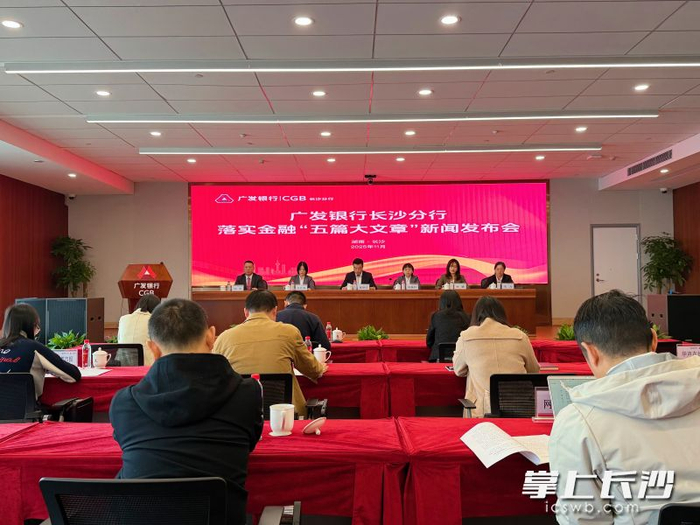
入湘16年,这家银行向湖南地区投放信贷超6000亿元
Chang Sha Wan Bao· 2025-11-03 10:58
Core Insights - Guangfa Bank Changsha Branch has made significant contributions to the economic and social development of Hunan, focusing on five key areas: technology finance, green finance, inclusive finance, pension finance, and digital finance [1] Group 1: Financial Contributions - Over the past 16 years, Guangfa Bank has provided more than 600 billion yuan in various credit funds to Hunan, paid over 1.8 billion yuan in taxes to local governments, and served over 3.8 million customers [1] - As of the end of September, the bank's total assets approached 90 billion yuan, with deposits nearing 52 billion yuan and loans exceeding 56 billion yuan, representing growth of 35 times, 22 times, and 47 times since its establishment [1] Group 2: Sector-Specific Financial Services - In technology finance, the bank has integrated support for technology-driven enterprises into its development strategy, with a credit balance exceeding 13 billion yuan and a compound annual growth rate of 35% over the past three years [3] - The bank has established a collaborative service model with China Life Insurance, providing comprehensive support for hard-tech enterprises in various sectors [3] - In green finance, the bank has focused on building a robust system, with a credit balance of nearly 8.2 billion yuan and a compound annual growth rate exceeding 60% over the past three years [3] Group 3: Inclusive and Agricultural Finance - The bank has implemented a financing coordination mechanism for small and micro enterprises, with a credit balance for inclusive small and micro loans exceeding 4.3 billion yuan and a compound annual growth rate of 10% over the past three years [4] - Agricultural loans reached nearly 4 billion yuan, with a net increase of over 700 million yuan since the beginning of the year [4] - The bank has introduced innovative credit products tailored to rural revitalization and consumer financing, enhancing financial support for residents [4] Group 4: Innovative Financial Products - Guangfa Bank has continuously developed targeted financial products to better serve small and medium-sized enterprises, including specialized loans for various industries and upgraded pension financial services [5] - The bank has launched a digital upgrade initiative to enhance service capabilities, introducing innovative products like "Data Enterprise Connect" for comprehensive management solutions for small and micro enterprises [5] - The bank has pioneered a "Card Transfer Rights" service in the credit card sector, allowing customers to flexibly convert benefits without changing cards or numbers [5] Group 5: Future Outlook - Guangfa Bank Changsha Branch aims to deepen its commitment to the spirit of the 20th National Congress of the Communist Party, focusing on the five key areas of finance to contribute to the high-quality development of Hunan's economy and society [6]
郑州银行三季度营收净利逆势“双增”
Zhong Guo Jing Ying Bao· 2025-11-03 10:54
Core Viewpoint - Zhengzhou Bank has demonstrated significant growth in its third-quarter performance, with total assets exceeding 740 billion yuan and a notable increase in retail loans and personal deposits, reflecting a successful strategy in serving the regional economy [1][2]. Group 1: Financial Performance - As of the end of Q3 2025, Zhengzhou Bank's total assets reached 743.55 billion yuan, marking a 9.93% increase from the end of the previous year, the highest growth rate for the same period in history [2]. - The bank's total liabilities grew by 10.62% to 685.94 billion yuan, indicating robust financial health [2]. - The bank's operating income for the first three quarters was 9.395 billion yuan, a 3.91% increase year-on-year, while net profit attributable to shareholders was 2.279 billion yuan, up 1.56% from the previous year [3][4]. Group 2: Strategic Focus - Zhengzhou Bank is focusing on key industrial chains and projects, providing financing support to advanced manufacturing and urban renewal, while also enhancing services for small and micro enterprises [3]. - The bank has implemented a "one enterprise, one policy" approach to assist businesses in overcoming financial difficulties, demonstrating its commitment to local economic development [3]. Group 3: Retail Transformation - The bank's retail loan balance reached 96.306 billion yuan, reflecting a 5.88% increase from the end of the previous year, despite broader industry challenges [5][6]. - Zhengzhou Bank has developed a comprehensive retail financial ecosystem centered around four key service areas: citizen services, financing, wealth management, and rural services, enhancing customer engagement and service quality [6][7]. - Total deposits reached 459.518 billion yuan, a 13.59% increase, with personal deposits growing by 22.44% to 267.143 billion yuan, showcasing the bank's strong brand loyalty and effective customer retention strategies [7].
Chime Financial (CHYM)深度研究:数字银行高成长性凸显,但高波动特性需谨慎布局
贝塔投资智库· 2025-11-03 09:02
Company Overview - Chime Financial (stock code: CHYM) is a US fintech company established in 2013, focusing on product innovation and user experience without holding a banking license, partnering with FDIC-insured banks to provide financial services. As of March 2025, Chime has 8.6 million active members, with 67% using it as their primary bank account, reflecting a 23% growth in user base compared to 2024, indicating high user stickiness and market appeal [1]. Business Model - Chime's core product matrix is built around the concept of inclusive finance, catering to the urgent need for transparent and low-cost financial services among low- to middle-income groups [2]. - The primary revenue source comes from transaction fee sharing, accounting for 82% of total revenue in 2024, with high user activity—each customer completing over 55 transactions monthly and an annual spending of approximately $15,000, which solidifies the transaction revenue base and provides significant potential for cross-selling financial products [3]. Financial Performance - Revenue has steadily increased from approximately $1.01 billion in 2022 to $1.67 billion in 2024, with a compound annual growth rate (CAGR) of 28.7%. The growth rate accelerated to 30.9% in 2024, with Q1 2025 revenue reaching $519 million, a 32% year-on-year increase [5]. - The loss rate decreased from 46.6% in 2022 to 1.5% in 2024, nearing breakeven, while gross margin improved from 78.7% to 87.6%, reflecting the inherent economies of scale in its business model. Operating efficiency has also improved, with sales expenses as a percentage of revenue reduced from 43% to 35% [5]. Cash Flow and Balance Sheet - The company reported negative free cash flow in Q1 2025, expected to turn positive in Q2, aligning with characteristics of high-growth companies. Liquidity remains robust, with a current ratio of 4.83 and a debt-to-equity ratio of 24.93%, indicating a conservative financial structure [6]. Growth Potential and Market Outlook - The US open banking market is projected to surge to nearly $31 billion by 2030, with a CAGR of 27.9%. Chime targets low- to middle-income individuals earning less than $100,000 annually, representing an $86 billion revenue opportunity with a current penetration rate of only 4% [7]. - Chime's customer acquisition strategy is efficient, with 63% of new users coming from referrals and a customer acquisition cost below $50, significantly lower than traditional banks [7]. Product Innovation and Revenue Diversification - New products like MyPay and Instant Loans are driving revenue diversification, with the loan business contributing 12% of Q1 2025 revenue. The integration of AI technology has reduced fraud losses by 29% and customer service costs by 60% [8]. Competitive Landscape and Market Position - Chime faces competition from traditional banks and niche digital banks, but its ecosystem integration and deep embedding of products into users' daily financial lives create a strong competitive moat. As the sixth-largest debit card issuer in the US, Chime's digital-only model offers cost advantages and data-driven insights [9]. - Chime has established strong brand recognition and user trust as one of the first digital banks focusing on low- to middle-income groups [9]. Valuation and Investment Recommendations - As of October 2025, Chime's market capitalization is approximately $6.38 billion, with a stock price of $17.17, down over 50% from its IPO closing price. The price-to-sales ratio is around 9.92, with a reasonable valuation range of $12 billion to $16 billion based on expected 2025 revenue exceeding $2 billion [13]. - Investment in Chime is characterized by high risk and high reward, suitable for growth-oriented investors who can tolerate risks for capital appreciation. The company must maintain growth while successfully diversifying revenue streams to realize significant upside potential at current valuation levels [17].


擦亮“金融为民”底色,财信人寿打造普惠金融新范式
Jing Ji Wang· 2025-11-03 08:57
Core Viewpoint - Inclusive finance is a practical implementation of the people-centered value orientation in financial work, and financial institutions should promote high-quality economic development through inclusive insurance services [1] Group 1: Inclusive Insurance Services - The company focuses on diverse and inclusive financial needs of the public, enhancing the coverage and service capabilities of inclusive insurance [1] - Since the end of 2021, the company has been providing urban and rural residents' major illness insurance services in Hunan Province, with cumulative claims exceeding 1.4 billion yuan by 2024 [2] - The company has participated in various local inclusive insurance projects, with over 60,000 claims and a total payout exceeding 51.27 million yuan by June 2025 [2] Group 2: Disaster Insurance - The company participates in disaster insurance work in Hunan Province, providing compensation for personal death caused by natural disasters such as typhoons and floods, with total death claims exceeding 25.4 million yuan from 2020 to 2024 [3] Group 3: Support for Vulnerable Groups - The company has enriched product offerings and improved service levels for key groups such as the disabled, elderly, and college students, enhancing their sense of security [4] - Since 2021, the company has established a relatively complete service model for long-term care insurance, processing 7,677 applications and providing home care services for 3,217 families by June 2025 [5] Group 4: Future Development - The company aims to continue enhancing the supply capacity of inclusive insurance products in line with national policies, contributing to high-quality economic and social development [6]
四年参保破1500万!2026年北京普惠健康保上线,特药清单升至159种
Di Yi Cai Jing· 2025-11-03 08:55
续保率从2023年度的65%攀升至2025年度的80%。 作为基本医疗保险的重要补充,最新数据显示,北京普惠健康保四年来累计参保超1500万人次。 11月3日,2026年度北京普惠健康保上线发布会在京举行。2026年该保险将通过"一降、一扩、一提、二 增"优化保障内容,保费维持195元/人/年,累计保额提升至350万元,持续为市民提供低门槛、高保障的 医疗保障服务。 北京金融监管局局长朱衍在发布会上表示,自2021年推出以来,北京普惠健康保始终坚持"不限年龄、 不限病史"的参保条件和"保本微利"的基本原则,突出普惠包容、广泛覆盖,实现"低价格、低门槛、高 保障"。 四年间该保险参保人数持续增长,累计参保超1500万人次,续保率从2023年度的65%攀升至2025年度的 80%。 2026年度北京普惠健康保将通过"一降、一扩、一提、二增"全面优化产品保障内容:一是降低免赔额, 健康人群自付起付线由3.04万元降至1.5万元;二是扩大医保目录外创新药覆盖,药品清单增至159种; 三是提高特药报销比例,健康人群和既往症人群分别提升5个百分点,达65%和35%;四是新增线上线 下九折购药权益,未出险人群也可享受;五是 ...
邮储银行(601658)2025年三季报点评:对公业务表现亮眼 非息收入延续高增
Xin Lang Cai Jing· 2025-11-03 08:32
Core Insights - The company reported stable performance with a slight increase in revenue and net profit for the first nine months of 2025, supported by rapid growth in non-interest income and reduced liability costs [1][2]. Financial Performance - For the period of January to September 2025, the company's operating revenue reached 265.08 billion yuan, a year-on-year increase of 1.82%, while net profit attributable to shareholders was 76.56 billion yuan, up 0.98% [1]. - The annualized ROE was 10.67%, a decrease of 1.12 percentage points compared to the previous year [1]. - In Q3 alone, revenue and net profit grew approximately 2.48% and 1.23% year-on-year, respectively [1]. Interest Income and Loan Growth - The net interest income for the first nine months of 2025 was 210.51 billion yuan, down 2.07% year-on-year, with a net interest margin of 1.68%, reflecting a decline of 19 basis points from last year [2]. - The average interest rate on interest-bearing liabilities fell to 1.22%, down 25 basis points year-on-year [2]. - Total loans increased by 8.33% compared to the beginning of the year, with corporate loans growing by 17.91% and retail loans by 1.90% [2]. Non-Interest Income and Asset Quality - Non-interest income reached 54.58 billion yuan, a year-on-year increase of 20.20%, driven by growth in investment banking and wealth management [3]. - The company’s non-performing loan ratio was 0.94%, up 0.04 percentage points from the end of the previous year, while the coverage ratio was 240.21%, down 45.94 percentage points [3]. Investment Outlook - The company is well-positioned with a solid retail customer base and a unique "self-operated + agency" model, focusing on inclusive finance and rural revitalization [4]. - The company maintains a stable dividend payout ratio of 30% for the mid-2025 period, with projected BVPS of 8.53 yuan, 8.99 yuan, and 9.56 yuan for 2025-2027 [4].
