价值投资

Search documents
坚持以投资者为本发展公募基金
Jing Ji Ri Bao· 2025-09-29 22:26
Core Viewpoint - The China Securities Regulatory Commission (CSRC) has released an action plan to promote the high-quality development of public funds, encouraging fund companies and sales institutions to enhance the scale and proportion of equity funds, strengthen alignment with investor interests, and emphasize the role of performance benchmarks in product design and portfolio management [1] Group 1: Industry Development - The public fund industry is accelerating towards professional division of labor, with a richer supply of products and a deeper understanding of investment returns among investors [1] - The action plan aims to create a product system with long-term allocation value and research-added value, making public products more understandable and accessible to investors [1][3] Group 2: Fund Management Strategies - Fund managers are encouraged to optimize product layout and respond to regulatory calls by launching active equity and quantitative index fund products that align with national development strategies [2] - The focus on benchmark anchoring, stable styles, and steady excess returns is expected to become a significant development direction for the industry, presenting new strategic opportunities [2] Group 3: Investor Engagement - Fund managers should actively practice long-term and value investment cultures, deeply understand market demands, and respond to the new requirements for high-quality development in the industry [3]
AYI or AMADY: Which Is the Better Value Stock Right Now?
ZACKS· 2025-09-29 16:40
Core Insights - Investors in the Technology Services sector may consider Acuity (AYI) and Amadeus IT Group SA Unsponsored ADR (AMADY) as potential stocks for value investment [1] Valuation Metrics - Acuity (AYI) has a Zacks Rank of 2 (Buy), indicating a stronger earnings outlook compared to Amadeus IT Group SA (AMADY), which has a Zacks Rank of 3 (Hold) [3] - AYI's forward P/E ratio is 17.77, while AMADY's forward P/E is 21.49, suggesting AYI may be undervalued relative to AMADY [5] - AYI has a PEG ratio of 1.78, compared to AMADY's PEG ratio of 3.53, indicating AYI's expected earnings growth is more favorable [5] - AYI's P/B ratio is 4.02, while AMADY's P/B ratio is 6, further supporting AYI's valuation attractiveness [6] - AYI has a Value grade of B, while AMADY has a Value grade of C, reflecting AYI's superior valuation metrics [6] Conclusion - Given the stronger estimate revision activity and more attractive valuation metrics, AYI is positioned as the superior option for value investors compared to AMADY [7]

TRTX vs. SDHC: Which Stock Is the Better Value Option?
ZACKS· 2025-09-29 16:40
Core Viewpoint - The comparison between TPG RE Finance Trust (TRTX) and Smith Douglas Homes Corp. (SDHC) indicates that TRTX is more attractive to value investors due to its stronger earnings outlook and favorable valuation metrics [1][3]. Valuation Metrics - TRTX has a forward P/E ratio of 8.62, significantly lower than SDHC's forward P/E of 17.39, suggesting TRTX is undervalued relative to SDHC [5]. - The PEG ratio for TRTX is 2.15, while SDHC's PEG ratio is much higher at 11.99, indicating TRTX's expected earnings growth is more favorable [5]. - TRTX's P/B ratio stands at 0.62, compared to SDHC's P/B of 2.26, further supporting the notion that TRTX is undervalued [6]. Zacks Rank and Style Scores - TRTX holds a Zacks Rank of 2 (Buy), while SDHC has a Zacks Rank of 5 (Strong Sell), reflecting a stronger improvement in TRTX's earnings outlook [3]. - The Value grade for TRTX is B, whereas SDHC has a Value grade of F, highlighting TRTX's superior valuation metrics [6].

杨岳斌:什么是价值投资者应有的气质Temperament
点拾投资· 2025-09-29 11:01
Core Viewpoint - The article emphasizes the importance of understanding the temperament required for value investing, which includes independent thinking, emotional stability, and a deep understanding of human and institutional behavior [3][4][24]. Group 1: Four Filters Principle - The principle of the four filters is crucial for making informed investment decisions, focusing on risk management and the allocation of financial and human capital [2]. - The first two filters involve assessing the quality of the business and its competitive advantages, while the third filter focuses on evaluating the management team, particularly their integrity and capability [2][19]. Group 2: Management and Governance - The article discusses the challenges of assessing management quality, highlighting the complexities of human behavior and agency conflicts within corporate governance [2][7]. - It identifies three types of corporate governance structures and their implications for board effectiveness, particularly in preventing agency conflicts [8][9]. Group 3: Institutional Imperative - The concept of "Institutional Imperative" is introduced, which describes the tendency of organizations to resist change and adhere to established practices, often leading to poor decision-making [14][15]. - This phenomenon can result in a lack of accountability among board members and management, exacerbating governance issues [16][17]. Group 4: Investment Philosophy - The article references Warren Buffett's investment philosophy, which stresses the importance of investing in businesses led by trustworthy and competent managers [20][21]. - It critiques the dual agency problem in capital markets, where investment managers may prioritize short-term gains over long-term shareholder value [21][22]. Group 5: Conclusion - The conclusion reiterates that successful investing requires a blend of scientific analysis and artistic judgment, particularly in understanding the qualitative aspects of businesses and management [23][24]. - It emphasizes that investors must be aware of the inherent risks associated with agency conflicts and governance failures to make sound investment decisions [24].


茅台估值新思路,段永平强调“客观”与“模糊的正确”
Sou Hu Cai Jing· 2025-09-29 09:51
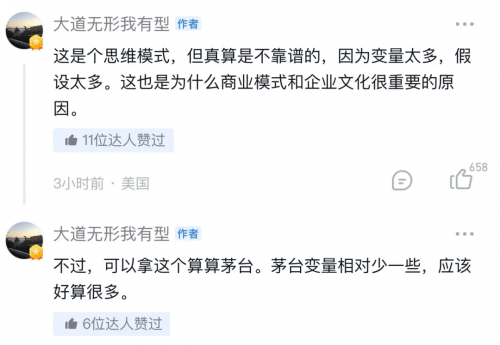
Core Viewpoint - The essence of value investing is being re-evaluated in the context of increasing market volatility, with investor Duan Yongping providing a new analytical framework for assessing the value of Moutai [1] Group 1: Valuation Methodology - Duan Yongping expressed skepticism about using discounted cash flow (DCF) for estimating enterprise value due to the numerous variables and assumptions involved, emphasizing the importance of business models and corporate culture [2] - Despite reservations about precise calculations, he suggested that Moutai's variables are relatively fewer, making it easier to estimate its value [4] - Using a conservative 1.5% discount rate based on bank interest and government bond yields, preliminary calculations indicate that Moutai could still offer good value even with minimal growth over the next decade, potentially outperforming government bond returns [4] Group 2: Investment Philosophy - The investment philosophy highlighted by Duan Yongping is to prefer "vague correctness" over "precise errors," focusing on understanding Moutai's long-term value rather than fixating on discount rates [7] - He cautioned that blind optimism could be detrimental, advocating for rational analysis to uncover the true intrinsic value of enterprises [7] Group 3: Moutai's Market Performance - Moutai's strong market performance is attributed to its robust brand power, resilient distribution channels, and effective strategic transformations, with significant sales growth observed in recent months [9] - The company's financial performance is solid, with a reported revenue of 91.094 billion yuan for the first half of 2025, reflecting a year-on-year growth of 9.16%, and a net profit increase of 8.89% [9] - Moutai's dividend policy is attractive, with a cumulative cash dividend of 64.672 billion yuan for 2024, resulting in a payout ratio of around 80% [9] Group 4: Institutional Support and Long-term Outlook - As of the second quarter of 2025, fund companies held nearly 93 million shares of Moutai, with a quarter-on-quarter increase of over 2.3 million shares, indicating strong institutional interest [10] - Various institutions maintain "buy" or "increase" ratings for Moutai, recognizing its ability to adapt and maintain stable growth amidst industry pressures [10] - Moutai's unique brand scarcity, stable profit model, strong cash flow generation, and cultural value position it as a long-term investment with solid growth potential [10]

天相投顾:公募基金,未来能安心地长期持有吗?
Xin Lang Ji Jin· 2025-09-29 02:30
Group 1 - The core issue in the market is that while funds have achieved positive returns, many investors have not, often due to buying at high points and experiencing significant losses, particularly in equity funds [1][2] - The phenomenon of investors, referred to as "small fish," making emotional and biased decisions leads to poor investment outcomes, while "sharks" capitalize on these mistakes for excess returns [2][3] - The volatility of the CSI 300 ETF has made it challenging for investors to hold onto their investments long-term, despite the ETF's recovery of 36% since 2024 [2][3] Group 2 - The risk-return mismatch in the past decade for the CSI 300 ETF indicates that investors have not received adequate risk premiums for the high volatility they endured [3][4] - Regulatory policies are being implemented to enhance corporate governance, increase financial transparency, and encourage higher dividend payouts to improve potential returns for investors [4] - The push for public fund fee reforms aims to lower transaction and holding costs, thereby directly increasing actual investor returns [4][5]
2024年养老基金投资“成绩单”:实现保值增值
Xin Hua Wang· 2025-09-29 00:30
Core Insights - The National Social Security Fund Council reported that by the end of 2024, the total assets of the pension fund will reach 28,396.52 billion yuan, with local pension fund assets amounting to 28,247.96 billion yuan [1][2] - The local pension fund achieved an investment return rate of 5.52% in 2024, ensuring the preservation and appreciation of the fund [1][2] Fund Performance - In 2024, the local pension fund generated an investment income of 1,056.88 billion yuan, with a return rate of 5.52%. Since the entrusted operation began in December 2016, the cumulative investment income has reached 4,123.59 billion yuan, with an average annual return rate of 5.06% [2] - The risk fund reported an income of 3.32 billion yuan in 2024, with a return rate of 3.46%. Since its formal investment operation started in 2023, the cumulative income has been 4.80 billion yuan, with an average annual return rate of 2.93% [2] Investment Strategy - The Social Security Fund Council emphasizes a long-term, value-oriented, and responsible investment approach, managing investments prudently to fulfill the responsibility of fund safety and value appreciation [1] - In 2024, the council focused on a people-centered value orientation, analyzing macroeconomic trends and capital market conditions to balance long-term goals with annual returns, thereby addressing the challenges posed by an aging population [2]
2024年养老基金投资“成绩单”公布:基金投运稳健 实现保值增值
Xin Hua Wang· 2025-09-29 00:09
Core Insights - The National Social Security Fund Council released its annual report on the entrusted operation of the basic pension insurance fund, indicating that by the end of 2024, the total assets of the pension fund will reach 28,396.52 billion yuan, with local pension fund assets at 28,247.96 billion yuan [1][2] - The local pension fund achieved an investment return rate of 5.52% in 2024, ensuring the preservation and appreciation of the fund [1][2] Summary by Sections Fund Performance - By the end of 2024, the total assets of the pension fund will be 28,396.52 billion yuan, with total equity at 23,350.03 billion yuan. Direct investments amount to 5,826.42 billion yuan, while entrusted investments total 17,523.61 billion yuan [1] - The local pension fund generated an investment return of 1,056.88 billion yuan in 2024, with an investment return rate of 5.52%. Since the entrusted operation began in December 2016, the cumulative investment return has reached 4,123.59 billion yuan, with an average annual return rate of 5.06% [2] - The risk fund reported a return of 3.32 billion yuan in 2024, with a return rate of 3.46%. Since its formal operation in 2023, the cumulative return has been 4.80 billion yuan, with an average annual return rate of 2.93% [2] Investment Strategy - The Social Security Fund Council emphasizes a long-term, value-oriented, and responsible investment approach, managing investments prudently to fulfill its responsibility for fund safety and value appreciation [1] - In 2024, the council aims to navigate external pressures and internal challenges by focusing on the people's needs, analyzing macroeconomic trends, and balancing long-term goals with annual returns to accumulate wealth in response to the accelerating aging population [2]
事关你的“钱袋子”,地方养老基金2024年收益率达5.52%
Zhong Guo Zheng Quan Bao· 2025-09-28 23:47
报告显示,截至2024年末,养老基金资产总额为28396.52亿元,权益总额为23350.03亿元。其中,直接 投资5826.42亿元,占基金权益总额的24.95%;委托投资17523.61亿元,占基金权益总额的75.05%。 地方养老基金资产总额为28247.96亿元,权益总额为23233.02亿元;风险基金资产总额为150.81亿元, 权益总额为117.01亿元。 全国社会保障基金理事会9月29日发布的《2024年基本养老保险基金受托运营年度报告》显示,地方养 老基金2024年投资收益额为1056.88亿元,投资收益率为5.52%。 社保基金会相关负责人表示,社保基金会坚持并持续丰富"长期投资、价值投资、责任投资"理念,审慎 稳健开展投资运营管理,忠实履行好基金安全和保值增值主体责任。 年均投资收益率5.06% 投资业绩方面,地方养老基金2024年投资收益额为1056.88亿元,投资收益率为5.52%。其中,已实现收 益额662.79亿元(已实现收益率3.50%),交易性资产公允价值变动额394.09亿元。自2016年12月受托 运营以来,地方养老基金累计投资收益额为4123.59亿元,年均投资收益率为5 ...
一场10万过亿的虚拟冒险
Hu Xiu· 2025-09-28 23:23
Core Insights - The article presents a metaphorical guide for stock trading in the A-share market, likening it to a game where players progress from novice to expert levels, with the potential for significant financial gains [1][3]. Group 1: Market Phases - The journey of small capital investment in the A-share market is divided into three key phases: the novice phase, the chaos phase, and the ultimate king phase [3][9]. - In the novice phase, the focus is on understanding the A-share market mechanisms and acquiring initial resources [9]. - The chaos phase involves navigating through various market trends and identifying leading stocks, particularly "妖股" (mythical stocks) [14][23]. - The ultimate king phase emphasizes aligning with large capital players and adopting a following strategy to maximize returns [26][27]. Group 2: Investment Strategies - During the novice phase, a hypothetical investment of 50,000 yuan in Tianfeng Securities could yield a return of 10.35 million yuan within a short period [11][12]. - In the chaos phase, stocks like 双成药业 (Shuangcheng Pharmaceutical) and 日出东方 (Rising East) exemplify the potential for rapid gains through strategic investments based on market narratives and trends [15][17]. - The ultimate king phase highlights the importance of large institutional investors, such as the "国家队" (national team), which have significant influence over market pricing and trends [27][28]. Group 3: Market Dynamics - The article discusses the influx of capital into the A-share market, with a notable increase in trading volume from 500 billion to over 3 trillion yuan during peak periods [5][6]. - It also notes the shift in market dynamics, where large institutional investors have gained more control, leading to a more stable market environment characterized by slow growth and structural trends [31][32]. - The performance of stocks in the technology sector, such as 寒武纪 (Cambricon), is highlighted as a key driver of market growth, contrasting with traditional sectors like banking and oil [34][36]. Group 4: Risks and Challenges - The article emphasizes the inherent risks in the "妖股" trading strategy, where the rapid rise in stock prices can lead to equally swift declines if market narratives fail [23]. - It also points out that while small investors make up a significant portion of the market, they face greater challenges in achieving consistent profits compared to larger institutional players [43].