
多边主义

Search documents
专访建银国际首席策略师赵文利:中国模式提供“可复制要素”
2 1 Shi Ji Jing Ji Bao Dao· 2025-09-05 08:13
Core Viewpoint - China's development presents opportunities for the world, particularly for developing countries, by providing a replicable development model through international cooperation and openness [1][3]. Group 1: China's Economic Model - The "China model" offers four key experiences for developing countries: the combination of infrastructure and industrial policy, the layered advancement of a super-large market, digital governance and payment infrastructure, and the collaborative development through the Belt and Road Initiative [2][3]. - China's manufacturing output accounts for 35% of the global total, projected to rise to 45% by 2030, indicating a strong future direction towards high-end, intelligent, green, and globalized manufacturing [3][4]. Group 2: Belt and Road Initiative - The Belt and Road Initiative serves as a platform for cooperation in industrial and value chains, sharing development outcomes with partner countries and promoting industrialization and employment [3][4]. - China's rise has led to significant spillover effects, including the provision of affordable goods and the release of green capacity, while enhancing international cooperation and multilateralism [3][4]. Group 3: Global Economic Governance - In the face of rising protectionism and geopolitical conflicts, China can play a role by advocating for a community with a shared future, maintaining and expanding multilateral and bilateral cooperation, contributing to rules and standards, and strengthening development financing and resilient infrastructure [8][9]. - China aims to build a multi-layered cooperation network and promote a diversified settlement system to reduce uncertainty in global supply chains [10][11]. Group 4: Future Directions for Manufacturing - Future manufacturing upgrades in China should focus on not just scale but also strength, emphasizing system solutions and global standards [7][8]. - The "14th Five-Year Plan" lays the groundwork for transforming original technologies into new productive forces, emphasizing the integration of technology and advanced production relationships [6][7].

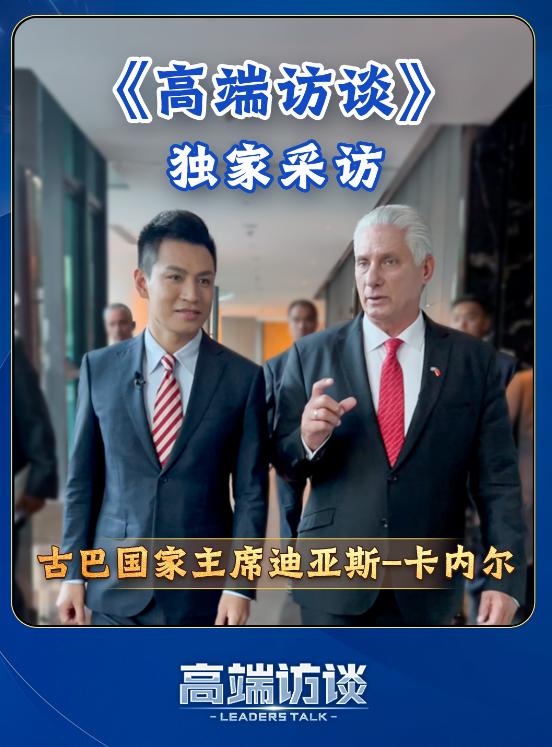
高端访谈丨古巴国家主席分享纪念大会观礼感受:亲眼见证深感荣幸
Yang Shi Xin Wen Ke Hu Duan· 2025-09-05 06:55
Core Viewpoint - The interview with Cuban President Díaz-Canel highlights the importance of multilateralism and cooperation, as emphasized by President Xi Jinping during the 80th anniversary of the victory in the Chinese People's War of Resistance Against Japanese Aggression and the World Anti-Fascist War [2] Group 1 - Díaz-Canel expressed admiration for China's military capabilities, noting significant development and potential [2] - The Cuban President shared detailed observations on Chinese-style modernization based on his multiple visits to China [2] - The emphasis on the concept of a community with a shared future for mankind was a key takeaway from Xi Jinping's speech [2]
(抗战胜利80周年)王毅会见巴西总统首席特别顾问阿莫林
Zhong Guo Xin Wen Wang· 2025-09-05 02:40
(抗战胜利80周年)王毅会见巴西总统首席特别顾问阿莫林 中新社北京9月4日电 中共中央政治局委员、中央外办主任王毅4日在北京会见来华出席纪念中国人民抗 日战争暨世界反法西斯战争胜利80周年活动的巴西总统首席特别顾问阿莫林。 王毅说,欢迎你代表巴西政府出席本次纪念活动。在两国元首战略引领下,中巴关系不断迈上新台阶。 双方要坚定不移携手构建更公正世界和更可持续星球的中巴命运共同体,树立全球南方大国团结自强典 范。 王毅表示,当前世界格局经历复杂变化,单边主义沉渣泛起,冲击多边主义根基,为广大发展中国家带 来严峻挑战。习近平主席提出全球治理倡议,就是因应国际形势新变化,以更有效应对全球挑战,一经 提出就受到各方广泛欢迎。中巴作为东西半球最大的发展中国家,应肩负起时代重任,加强战略协调, 增进战略互信,深化战略合作,旗帜鲜明弘扬多边主义,维护国际规则,维护全球南方共同利益,为完 善全球治理作出积极努力。中方赞赏巴西作为金砖主席国履职尽责,愿同巴方一道,巩固金砖积极势 头,推动金砖国家就重大问题加强沟通协调,坚定共同立场。 双方还就乌克兰危机、中东局势、气候变化等问题交换了意见。(完) 来源:中国新闻网 编辑:徐世明 ...
联合国发言人:古特雷斯欢迎中方提出的全球治理倡议
Xin Hua She· 2025-09-05 02:20
Core Viewpoint - The UN Secretary-General António Guterres welcomes China's global governance initiative, emphasizing the importance of maintaining an international system centered around the UN and based on international law [1] Group 1 - Guterres highlighted the need to strengthen international cooperation in the 21st century during the 80th anniversary of the UN [1] - The global governance initiative proposed by China is based on multilateralism and underscores the significance of the UN-centered international system [1] - Guterres's remarks were made during the "Shanghai Cooperation Organization+" meeting held in Tianjin [1]
当好践行全球治理倡议的表率
Jing Ji Ri Bao· 2025-09-04 22:40
Group 1 - The core viewpoint of the news is the introduction of China's global governance initiative, which aims to address the challenges faced by the current global governance system and promote a more equitable and effective framework for international cooperation [1][2][4] - The initiative emphasizes key principles such as sovereign equality, international rule of law, multilateralism, human-centered values, and action-oriented approaches, reflecting China's cultural tradition and its commitment to global responsibilities [2][4] - The Shanghai Cooperation Organization (SCO) is positioned as a leading entity in implementing the global governance initiative, advocating for peace, stability, and cooperation among member states while opposing hegemonism and power politics [3][4] Group 2 - China announced practical actions to enhance global governance, including the establishment of cooperation platforms in energy, green industries, and digital economy, as well as projects in renewable energy [4] - The SCO is encouraged to strengthen collaboration across security, economic, cultural, and governance sectors, enhancing its cohesion and influence in the global arena [4] - The initiative aims to foster a more inclusive and effective global governance system, aligning with the principles of equality and true multilateralism, while addressing the pressing global challenges of the current era [1][3][4]
中古联合声明
财联社· 2025-09-04 09:44
中华人民共和国和古巴共和国关于加快构建中古命运共同体的联合声明 应中共中央总书记、国家主席习近平邀请,古共中央第一书记、古巴国家主席迪亚斯-卡内尔于2025年9月2日至6日来华出席纪念中国人民抗 日战争暨世界反法西斯战争胜利80周年活动。 其间,中共中央总书记、国家主席习近平同古共中央第一书记、古巴国家主席迪亚斯-卡内尔举行亲切会见,体现了两党、两国政府和两国 人民亲密无间的友谊。迪亚斯-卡内尔第一书记、国家主席向习近平总书记、国家主席转达了古巴革命领导人劳尔·卡斯特罗大将的问候,习 近平总书记、国家主席表示感谢并请其转达对劳尔·卡斯特罗大将的问候。中共中央政治局常委、中央纪委书记李希会见迪亚斯-卡内尔第一 书记、国家主席。 两国元首高度评价中华人民共和国和古巴共和国(以下简称"双方")传统友谊,以及建交65年来中古关系发展和各领域合作取得的丰硕成 果。中国和古巴是好朋友、好同志、好兄弟。中古友谊是由毛泽东和菲德尔·卡斯特罗为代表的两国老一辈领导人缔造的。建交65年来,中 古关系持续深入发展,已成为社会主义国家团结合作、发展中国家真诚互助的典范。2022年11月,古共中央第一书记、古巴国家主席迪亚 斯-卡内尔 ...

纪念中国人民抗日战争暨世界反法西斯战争胜利80周年电影招待会在阿布扎比举行
人民网-国际频道 原创稿· 2025-09-04 09:13
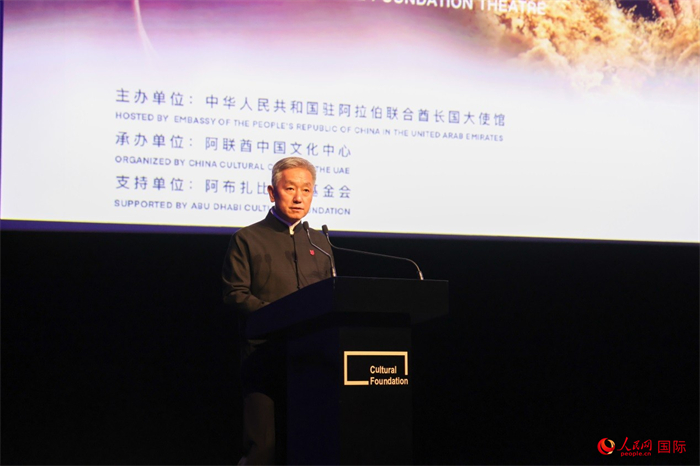
Core Points - The event commemorated the 80th anniversary of the victory in the Chinese People's War of Resistance against Japanese Aggression and the World Anti-Fascist War, emphasizing themes of remembering history, honoring martyrs, cherishing peace, and creating a future [1] - The film "The Musician" was screened, which tells the story of Chinese musician Xian Xinghai who created anti-war songs while trapped in Almaty, inspiring people to resist fascism [1] - The event was attended by over 600 participants, including representatives from various countries and Chinese institutions in the UAE, highlighting the importance of international cooperation for peace [1] Event Details - The event was organized by the Chinese Embassy in the UAE, supported by the Abu Dhabi Cultural Foundation, and hosted by the UAE China Cultural Center [1] - A themed photo exhibition on the Anti-Japanese War was also held at the venue, attracting the attention of guests [3] Diplomatic Statements - Chinese Ambassador to the UAE, Zhang Yiming, emphasized the shared responsibility of countries to maintain peace and the commitment to multilateralism and building a community with a shared future [1]
从伟大抗战精神到构建人类命运共同体——纪念中国人民抗日战争暨世界反法西斯战争胜利80周年
Ren Min Ri Bao· 2025-09-04 04:11
Core Viewpoint - The commemoration of the 80th anniversary of the victory in the Anti-Japanese War emphasizes the importance of remembering history, honoring sacrifices, and promoting peace, while also advocating for the construction of a community with a shared future for mankind [1][2][4]. Group 1: Historical Significance - The Anti-Japanese War was a crucial part of the global anti-fascist struggle, with China suffering significant losses, including over 35 million casualties and the occupation of approximately half of its territory [2][3]. - The victory in the war is seen as a testament to the sacrifices made by the Chinese people and their contributions to global peace and civilization [1][4]. Group 2: Great Anti-War Spirit - The spirit of resistance during the war is characterized by patriotism, unity, and an unwavering belief in victory, which continues to inspire the Chinese people in their pursuit of national rejuvenation [3][4]. - This spirit is rooted in over 5,000 years of Chinese culture and has played a vital role in the country's transformation from crisis to revival [4]. Group 3: International Cooperation - The victory in the Anti-Japanese War was achieved through international alliances, highlighting the importance of global solidarity against tyranny and oppression [3][4]. - China's role as a major contributor to the post-war international order is underscored, with significant involvement in the establishment of the United Nations and the promotion of principles such as sovereign equality and peaceful dispute resolution [5][6]. Group 4: Current Global Context - The current international landscape is marked by challenges such as unilateralism and protectionism, necessitating a renewed commitment to multilateralism and cooperation among nations [8][19]. - The call for a community with a shared future reflects a desire to move beyond zero-sum thinking and towards mutual benefit and coexistence [9][10]. Group 5: Future Directions - The ongoing commitment to peace and development is framed as a collective responsibility, with an emphasis on learning from history to prevent the recurrence of past tragedies [18][19]. - China's initiatives, such as the Belt and Road Initiative, aim to foster global development and cooperation, reinforcing its role as a responsible major power in the international arena [14][19].
【央视快评】正义的信念不可动摇 和平的期盼不可阻遏 人民的力量不可战胜
Yang Shi Wang· 2025-09-04 01:15
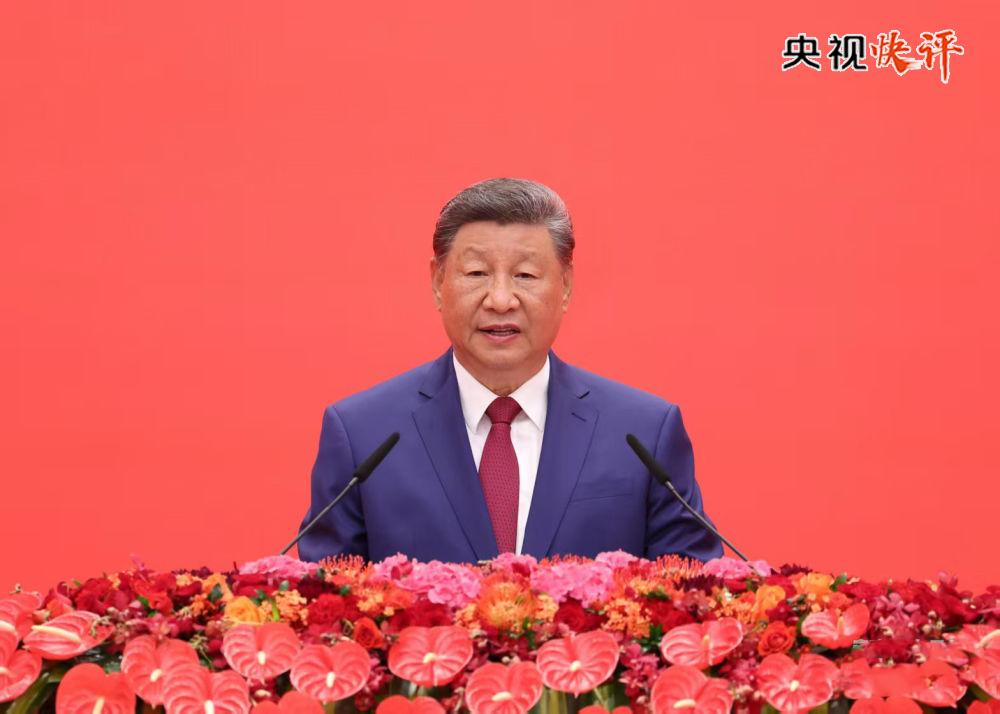
Group 1 - The core message emphasizes the unwavering belief in justice, the unyielding hope for peace, and the invincible power of the people, as articulated by President Xi Jinping during the 80th anniversary commemoration of the victory in the Chinese People's Anti-Japanese War and the World Anti-Fascist War [1][3][4] - Xi Jinping's speech reflects on the significant implications of the victory for global patterns, international order, and human development, highlighting the deep friendship forged between the Chinese people and the global community during wartime [3][4] - The speech underscores the importance of learning from history to guide the international community towards a better future, emphasizing the themes of justice, peace, and the strength of the people [3][4][5] Group 2 - The introduction of the Global Governance Initiative by Xi Jinping marks another significant global initiative aimed at reforming the global governance system, providing direction and support for a more just and equitable global governance framework [5][6] - Xi Jinping's declaration addresses historical, contemporary, and global questions, offering clear value coordinates and action guidelines for a world filled with uncertainties, urging nations to uphold fairness and justice [5][6] - The commitment to international fairness and justice, world peace, and global development is reiterated, with a call for collaborative efforts to achieve lasting peace and shared prosperity [6]
捍卫和平 开创未来
Jing Ji Ri Bao· 2025-09-04 00:50
Core Viewpoint - The article emphasizes China's commitment to peace and development, advocating for a multilateral approach to global governance and cooperation among nations to build a community with a shared future for humanity [1][2][5]. Group 1: Historical Context and Current Challenges - The 80th anniversary of the victory in the Chinese People's War of Resistance Against Japanese Aggression and the World Anti-Fascist War highlights China's role as a major victor and builder of post-war order, actively participating in the establishment of the United Nations [1][2]. - The world is facing intertwined challenges such as security disorder, development imbalance, and ineffective governance, alongside a hopeful trend of multipolarity and globalization [2][5]. Group 2: China's Position and Initiatives - China maintains that the more complex the international situation, the more it is necessary to uphold the authority of the United Nations and promote genuine multilateralism [2][5]. - The country has proposed several global initiatives, including the Global Development Initiative, Global Security Initiative, and Global Civilization Initiative, which have garnered support from over 100 countries and international organizations [6]. Group 3: Vision for the Future - China aims to create a new type of international relations characterized by mutual respect, fairness, justice, and win-win cooperation, while also advocating for the reform of the global governance system to be more just and reasonable [2][3][6]. - The concept of building a community with a shared future for mankind aligns with the purposes and principles of the UN Charter, emphasizing the need for collective action to address global challenges [5][6].