
红色文化

Search documents
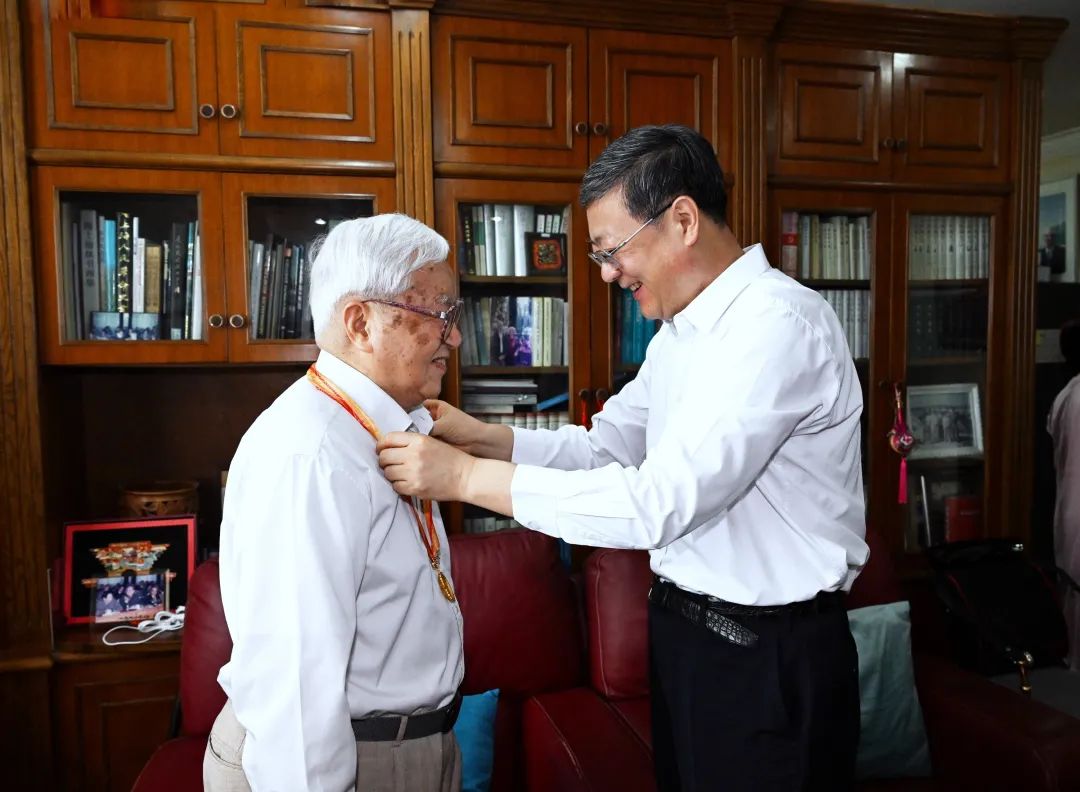
陈吉宁龚正看望慰问抗战老战士、老同志,为他们佩戴“中国人民抗日战争胜利80周年”纪念章
Di Yi Cai Jing· 2025-08-26 12:08
Core Viewpoint - The article highlights the commemoration of the 80th anniversary of the victory in the Chinese People's War of Resistance Against Japanese Aggression, emphasizing the importance of honoring veterans and promoting patriotism and national spirit [1][4]. Group 1: Commemoration Events - Shanghai municipal leaders visited veterans of the Anti-Japanese War, presenting them with commemorative medals issued by the central government, reflecting respect and gratitude for their contributions [1][4]. - The visits included personal interactions where leaders expressed care for the veterans' health and well-being, reinforcing the connection between the past and present [3][6][7]. Group 2: Individual Stories of Veterans - 96-year-old Ye Gongqi, a former director of the Shanghai Municipal People's Congress, shared his experiences in the underground anti-Japanese organization and emphasized the collective sacrifice of martyrs for the current peace [3]. - Du Xingliang, another veteran, joined the Eighth Route Army at 14 and participated in multiple wars, receiving recognition for his medical contributions on the battlefield [6]. - Wang Zhan, aged 98, recounted his journey from joining the New Fourth Army in 1945 through various significant conflicts, highlighting the importance of remembering revolutionary achievements [7]. Group 3: Call to Action - Municipal leaders called for the continuation of the revolutionary spirit and the promotion of red culture, urging citizens to honor heroes and contribute to the modernization of Shanghai [4][6]. - There is a strong emphasis on ensuring that the needs of veterans are met, with local authorities encouraged to provide attentive services to enhance their quality of life [6][7].

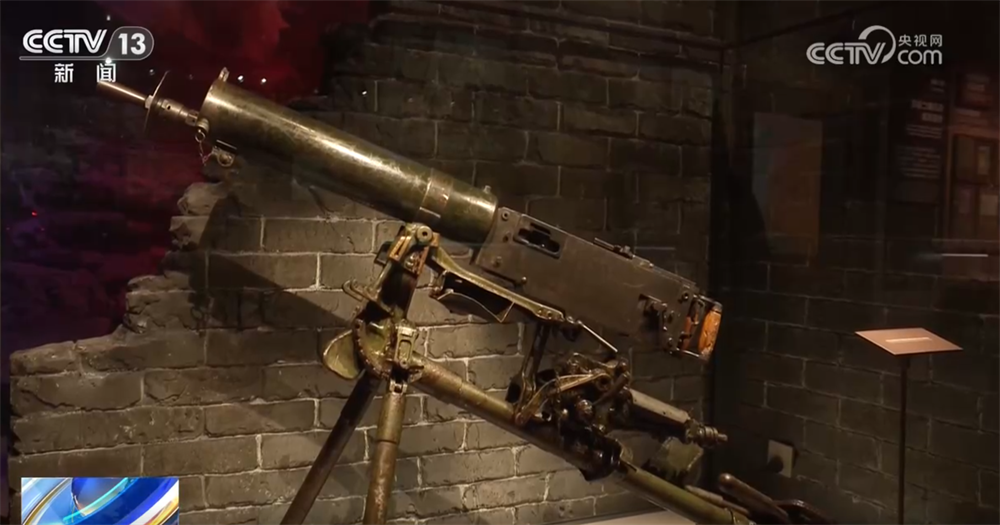
全国多地掀起红色旅游新热潮 红色文化生命力持久绽放时代光芒
Yang Shi Wang· 2025-08-26 07:57
Core Viewpoint - The 80th anniversary of the victory in the Chinese People's War of Resistance Against Japanese Aggression and the World Anti-Fascist War is being commemorated through various themed exhibitions across the country, highlighting the significance of red tourism and the remembrance of revolutionary history [1][3]. Group 1: Thematic Exhibitions - The Ministry of Culture and Tourism has released a promotional list for exhibitions commemorating the 80th anniversary, with over 36,000 immovable revolutionary cultural relics and more than 1 million movable revolutionary artifacts registered in China [1]. - Various museums and memorials are showcasing unique exhibitions centered around the theme of the Anti-Japanese War, attracting a large number of visitors during the summer [3]. Group 2: Historical Significance - The Shanghai Songhu Anti-Japanese War Memorial Museum recreates the heroic story of the "Eight Hundred Heroes" who defended the Sihang Warehouse during the Battle of Shanghai, emphasizing the sacrifices made by soldiers like Yao Ziqing [3][6]. - The historical importance of the Songhu Campaign is highlighted, with claims that it significantly boosted military morale and national confidence against Japanese forces [6]. Group 3: Red Tourism Growth - The red tourism trend is on the rise, with many visitors engaging in historical experiences and honoring revolutionary martyrs, reflecting the enduring vitality of red culture in contemporary society [10]. - Tourist attractions such as the Taierzhuang Battle Site Park serve as poignant reminders of the fierce battles fought, with features like a bullet hole wall symbolizing the sacrifices made by Chinese soldiers [10][12]. Group 4: Safety Measures and Visitor Experience - Local authorities are implementing various safety measures to ensure a positive experience for the increasing number of tourists visiting revolutionary sites, with significant visitor growth reported in places like Jinggangshan [16][18]. - The use of big data technology in public security management is enhancing the safety and orderliness of tourist areas, as seen in the daily reception of over 50,000 visitors at Nanchang's August 1st Square [18].
红色文化融入高校思政教育的实践路径研究
Xin Hua Wang· 2025-08-26 06:28
Group 1 - The core viewpoint emphasizes the importance of integrating red culture into ideological and political education in higher education institutions to cultivate a new generation responsible for national rejuvenation [1][9] - Red culture serves as a vital resource for shaping students' spiritual character and enhancing the effectiveness of ideological education [1][2] Group 2 - The value of integrating red culture into ideological education lies in its ability to inspire patriotism and convey deep spiritual connotations, which resonate with contemporary students [2][3] - Historical events and revolutionary heroes can be utilized as case studies to help educators establish correct educational concepts and engage students in meaningful reflections [2][3] Group 3 - Current challenges include a mismatch between the content provided and the needs of contemporary students, with traditional teaching methods failing to engage students effectively [3][4] - There is a lack of depth in experiential learning opportunities, leading to passive participation and insufficient emotional resonance among students [4][5] Group 4 - Proposed practical paths include innovating educational models and enhancing audiovisual content to better resonate with students [5][6] - Strengthening the "second classroom" through competitions themed around red culture can deepen students' engagement and foster innovative thinking [7][8] Group 5 - Utilizing red venues as interactive learning spaces can transform red culture from abstract concepts into tangible experiences, enhancing emotional connection and value recognition among students [8][9] - A comprehensive practice system integrating content, carriers, and scenarios is essential for effectively embedding red culture into ideological education [9]
再现东北人民誓死抗战的壮阔历史
Liao Ning Ri Bao· 2025-08-26 01:04
Core Viewpoint - The acrobatic drama "First Sound" showcases the heroic spirit of the Northeast Chinese people during the Anti-Japanese War, blending high-level acrobatics with immersive storytelling to commemorate the 80th anniversary of the victory in the war [1][2] Group 1: Performance Overview - "First Sound" is the only acrobatic drama featured in the exhibition of excellent stage art works commemorating the 80th anniversary of the victory in the Anti-Japanese War and the World Anti-Fascist War [1] - The performance is a significant milestone for the Shenyang Acrobatic Arts Group, marking their first appearance on the stage of the National Grand Theatre [1] - The drama consists of nine chapters that depict the struggles of an ordinary family in Shenyang before and after the September 18 Incident, highlighting the role of the Communist Party in rallying the Northeast people for resistance [1] Group 2: Artistic Innovation - "First Sound" breaks the traditional acrobatic norm of focusing on skills over narrative, establishing an artistic system where "skills are the bones and narrative is the soul" [2] - The performance features over 30 high-difficulty acrobatic acts, including innovative arrangements like "motorcycle flying" and "collective net suspension," making each skill a part of the storytelling [2] - The actors use their bodies to convey historical weight, with acts symbolizing bloodshed, resistance, and the destruction of homes, transforming the themes of war and national spirit into a powerful audiovisual language [2] Group 3: Reception and Recognition - Since its premiere on September 1, 2023, "First Sound" has gained popularity, completing 57 performances in cities including Shenyang and Urumqi [2] - The drama has received multiple national honors, including the 17th "Five One Project" Award, funding from the National Arts Fund, and nominations for prestigious awards such as the 18th Wenhua Performance Award [2]
铭记历史 缅怀先烈丨陈翰章:铁骨铸英魂的“书生战将”
Xin Hua She· 2025-08-25 07:45
Core Viewpoint - The article highlights the life and legacy of Chen Hanzhang, a prominent figure in the Northeast Anti-Japanese United Army, emphasizing his dedication to patriotism and sacrifice during the war against Japanese invaders [3][4]. Group 1: Life and Early Years - Chen Hanzhang was born in 1913 in Dunhua, Jilin, and graduated first in his class from a local middle school in December 1930, where he vowed to serve his country [3][4]. - After the September 18 Incident in 1931, he left his teaching career to join the National Salvation Army and later the Communist Party, engaging in guerrilla warfare against the Japanese [3][4]. Group 2: Military Achievements - Chen demonstrated exceptional military skills, holding various leadership positions and leading numerous successful operations against Japanese and puppet forces, including the destruction of key military facilities [4]. - He participated in over 81 documented battles from August 1936 to December 1940, earning local recognition through folk songs that celebrated his efforts against the Japanese [4]. Group 3: Legacy and Commemoration - Chen Hanzhang was killed in action at the age of 27, refusing to surrender to the enemy, and his remains were later honored in memorials, including the Northeast Martyrs Memorial Hall and the Harbin Martyrs Cemetery [4][5]. - His legacy continues in Dunhua, where educational and cultural initiatives promote his story, including the establishment of the Hanzhang Cultural Center and various red tourism projects [5].

烽火中的抒情:一首歌与一个时代的信念
Jiang Nan Shi Bao· 2025-08-25 02:15
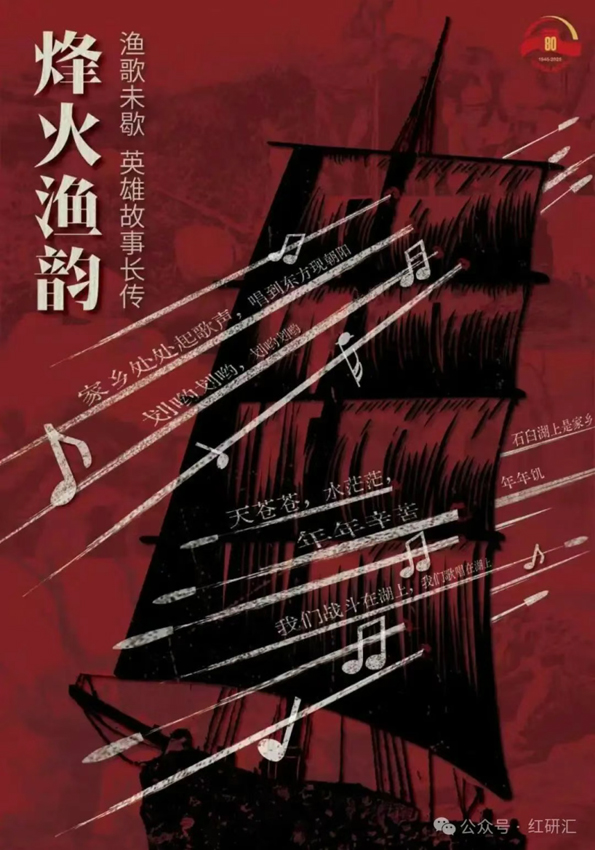
《石臼渔歌》 孙海云 词 凃克 曲 文章提到,《石臼渔歌》诞生的1943年,是苏南敌后抗战最为艰难的时期。日军疯狂推行"清乡",大肆 烧杀抢掠;与此同时,国民党顽固派也趁机围攻,试图消灭新四军的主力部队。在这样四面楚歌的环境 中,无数战士浴血奋战、英勇牺牲,老百姓的生活更是苦不堪言。可以说,那是最黑暗的时刻。但也正 是在这种背景下,文艺创作显得尤为重要。它不是锦上添花,而是真正的雪中送炭,是人们心灵上的火 种。写下这首歌词的,正是后来成为中央文史馆馆员、中国书法家协会主席孙晓云的父亲——新四军战 士孙海云先生。 文章写到:1943年,溧水地区是苏南敌后抗日根据地的核心区域。当时,日军正密谋大规模"清乡",试 图摧毁根据地;国民党顽固派也在暗中策动武装袭扰,使得苏南抗战陷入极为险恶的境地。就在这样紧 张的氛围中,《石臼渔歌》诞生了。 据孙海云在《石臼湖畔的歌声》一文中回忆:当年,他随新四军第一师巡视团十几位同志渡江南下,抵 达溧水新桥区。三月的一天,他们途经石臼湖边,望着水天一色、渔帆点点的景象,想到仍在水深火热 中的百姓,孙海云心中感慨万千,便随手捡起一块贝壳,在沙滩上写下了歌词。歌词诞生后,新四军文 艺战士 ...
铭记历史 缅怀先烈|盐湖映初心 热土谱新篇
Bei Jing Ri Bao Ke Hu Duan· 2025-08-25 02:04
Core Viewpoint - The article highlights the historical significance of Yanchi County during the Anti-Japanese War, emphasizing its contributions through salt production and the ongoing legacy of revolutionary spirit in the region. Group 1: Historical Context - Yanchi County, located at the intersection of four provinces, played a crucial role during the Anti-Japanese War by producing essential resources such as salt, fur, and licorice, which supported the economy of the Shaanxi-Gansu-Ningxia border area [1][3]. - The region has a salt production history of over 2000 years, and during the war, it became a vital economic lifeline, with the Central National Economic Department calling for increased salt production to alleviate economic hardships [3]. Group 2: Economic Contributions - From 1938 to 1943, approximately 12.5 billion kilograms of salt were transported from Yanchi, which not only met local needs but also facilitated trade by exchanging salt for food, clothing, and other essential goods [3]. - The local economy has evolved, with current agricultural practices including the breeding of Yanchi sheep, which has become a significant source of income for over half of the rural residents, with a breeding population of 3.3 million [6]. Group 3: Cultural Legacy - The revolutionary spirit is preserved through educational initiatives, with nearly 100,000 participants engaging in red history studies in the first half of the year, fostering a connection to the region's past [4]. - The story of the Anti-Japanese War and the contributions of local soldiers is actively shared through community events and educational programs, ensuring that the history and values are passed down to future generations [5]. Group 4: Modern Developments - The region is now diversifying its agricultural output, with the introduction of high-value products such as South American white shrimp, leveraging the unique saline conditions for better quality [7]. - The transformation of saline land into productive agricultural areas is evident, with 12,000 acres of saline land now supporting various high-value industries, achieving both ecological and economic benefits [7].
盐湖映初心 热土谱新篇(铭记历史 缅怀先烈)
Ren Min Wang· 2025-08-24 22:17
Core Viewpoint - The article highlights the historical significance of Yanchi County during the Anti-Japanese War, emphasizing its contributions through salt production and the ongoing legacy of revolutionary spirit in the region. Historical Context - Yanchi County, located at the intersection of four provinces, played a crucial role during the Anti-Japanese War by producing essential resources such as salt, fur, and licorice, which supported the economy of the Shaanxi-Gansu-Ningxia border area [1][3]. - The region has a salt production history of over 2000 years, and during the war, it became a vital economic lifeline, with a call from the National Economic Department in 1937 to mobilize military and civilian efforts for salt production [3]. Economic Contributions - From 1938 to 1943, approximately 12.5 billion kilograms of salt were transported from Yanchi, which not only met local needs but also facilitated trade for essential goods like food and medicine [3]. - The local economy has evolved, with current agricultural practices including the breeding of Yanchi sheep, which has about 330,000 heads, contributing significantly to rural income [6]. Cultural Legacy - The revolutionary spirit is preserved through educational initiatives, with nearly 100,000 participants engaging in red history studies in the first half of the year, fostering a connection to the past [4]. - The local government is actively promoting red culture as a means to inspire and educate future generations, ensuring the revolutionary legacy continues [5]. Modern Developments - The region is transitioning from traditional salt production to diversified agricultural practices, including the cultivation of high-value products like shrimp and sea crabs in saline-alkali land, demonstrating economic adaptability [7]. - The establishment of smart farming technologies is enhancing the efficiency and productivity of local sheep farming, indicating a shift towards modern agricultural practices [6].
铭记历史 缅怀先烈|陈翰章:铁骨铸英魂的“书生战将”
Xin Hua She· 2025-08-24 12:03
1940年冬,东北抗联陷入极端困难境地。12月8日,陈翰章与十几名战士被日军重兵包围。他沉着指挥 突围,激战中多处负伤,仍坚持战斗至最后一刻。面对日寇以高官厚禄劝降,他怒斥道:"我死也不当 亡国奴!"最终,年仅27岁的陈翰章壮烈牺牲,残暴的敌人割下了他的头颅。 英雄虽逝,精神不朽。1948年,党组织派人找到了他的遗首,安放在东北烈士纪念馆,1955年又安葬于 哈尔滨烈士陵园。2013年,在陈翰章诞辰百年之际,其遗首回归故里,身首合葬于敦化市陈翰章烈士陵 园。苍松翠柏间,镌刻着"陈翰章将军永垂不朽"字样的主碑立于陵园中央;2.7米高的雕像挺拔矗立, 象征他短暂而光荣的27年人生。 出伏后的东北暑气渐散,吉林敦化翰章红军小学的操场上,孩子们的笑声飘远。一尊戴着红领巾的烈士 雕塑静静矗立,目光如炬,似在凝望这群奔跑嬉戏的少年。 从校园走向战场,以笔为戈亦以枪为刃,在白山黑水间与日寇浴血鏖战,直至以身殉国——他是东北抗 日联军杰出将领陈翰章。 陈翰章1913年出生于吉林敦化。1930年12月,他以总分第一名的成绩从当地一所中学毕业。在毕业典礼 上,他立下誓言:"为了祖国,我一定投笔从戎,用我手中的枪和我的鲜血以至生命 ...
邢善萍在宝鸡市调研乡村全面振兴工作
Shan Xi Ri Bao· 2025-08-22 00:32
Group 1 - The core viewpoint emphasizes the importance of implementing Xi Jinping's important speeches and instructions during his visits to Shaanxi, focusing on rural revitalization and addressing issues effectively [1][2] - The research highlights the need for integrating red culture into educational curricula and promoting cultural tourism development while ensuring the protection of cultural relics [1] - The report discusses the significance of leveraging local resources and technology to enhance market opportunities and strengthen industries that benefit the rural population [1] Group 2 - The emphasis is placed on maintaining a bottom line to prevent large-scale poverty and improving rural industry development, construction, and governance [2] - The need for continuous implementation of the Central Eight Regulations and promoting strict governance within the party is highlighted to foster high-quality development [2] - The report stresses the importance of addressing urgent issues faced by the community with dedication and effort [2]