
转型金融

Search documents
香港金管局阮国恒:香港转型金融挑战来自人才缺口 正透过不同举措应对
智通财经网· 2025-09-12 07:37
Core Viewpoint - The Hong Kong Monetary Authority (HKMA) emphasizes the need for enhancing the operational resilience and preparedness of the banking sector to support the transition to sustainable finance, highlighting a significant challenge posed by the talent gap in the industry [1] Group 1: Talent and Skills Development - The HKMA's recent skills demand assessment indicates a significant skills gap primarily in data-related areas and interaction with artificial intelligence, necessitating collaboration with various stakeholders to build the required capabilities for the transition to sustainable finance [1] - The government has launched initiatives such as the "Green and Sustainable Finance Training Pilot Scheme," which has received over 7,600 applications for funding, amounting to more than HKD 42 million [1] Group 2: Regulatory Requirements and Industry Engagement - The HKMA mandates that the banking sector implement transition plans starting in 2030, with large public responsibility entities in Hong Kong required to fully adopt the International Financial Reporting Sustainability Disclosure Standards (ISSB standards) by 2028, allowing approximately three years for preparation [1] - There is a significant annual funding gap of up to USD 800 billion for emerging and developing economies in Asia to address climate change, necessitating the establishment of an ecosystem to guide capital flows into relevant sectors [1]
聚焦绿色金融创新 共话全球合作发展——中央财经大学绿色金融论坛暨研究院 2025 年会即将启幕
Jing Ji Guan Cha Bao· 2025-09-12 01:41
Core Viewpoint - The upcoming forum aims to enhance China's green finance system, focusing on innovation and cooperation in the context of global governance, particularly as 2025 marks a critical point for achieving carbon peak goals and solidifying green development foundations [1][2]. Group 1: Event Overview - The Central University of Finance and Economics will host the "Global Governance Framework for Green Finance Innovation and Cooperation Forum" on September 20, 2025 [1]. - The forum will serve as a high-level dialogue platform for discussing emerging topics in green finance, transition finance, and financial technology [1]. Group 2: Participants and Contributions - The event will feature leaders from relevant ministries, international experts, and business heads from financial institutions and enterprises, contributing insights for China's green development [2]. - The Central University of Finance and Economics Green Finance Institute will release annual core research findings, highlighting key breakthroughs and industry contributions over the past decade [2]. Group 3: Key Presentations and Discussions - Notable speakers include representatives from the National Committee of the Chinese People's Political Consultative Conference, the United Nations Development Programme, and the People's Bank of China [3]. - The forum will include strategic partner presentations showcasing collaborative achievements in green finance practices [3]. Group 4: Research Outcomes - Key research reports to be presented include studies on green bidding loans, financing transitions in the shipping industry, and biodiversity financial solutions in the Guangdong-Hong Kong-Macao Greater Bay Area [4]. - Additional topics will cover climate risk assessment methodologies and innovative insurance approaches to climate risk [4]. Group 5: Thematic Discussions - The forum will feature discussions on macro fiscal and financial policies supporting the new development philosophy and proposals for promoting green trade under the RCEP framework [5]. - A roundtable will address challenges and breakthroughs in the "30-60" target process related to industrial transformation and financial supply [5].
做好金融“五篇大文章”!江苏发力
Shang Hai Zheng Quan Bao· 2025-09-11 16:14
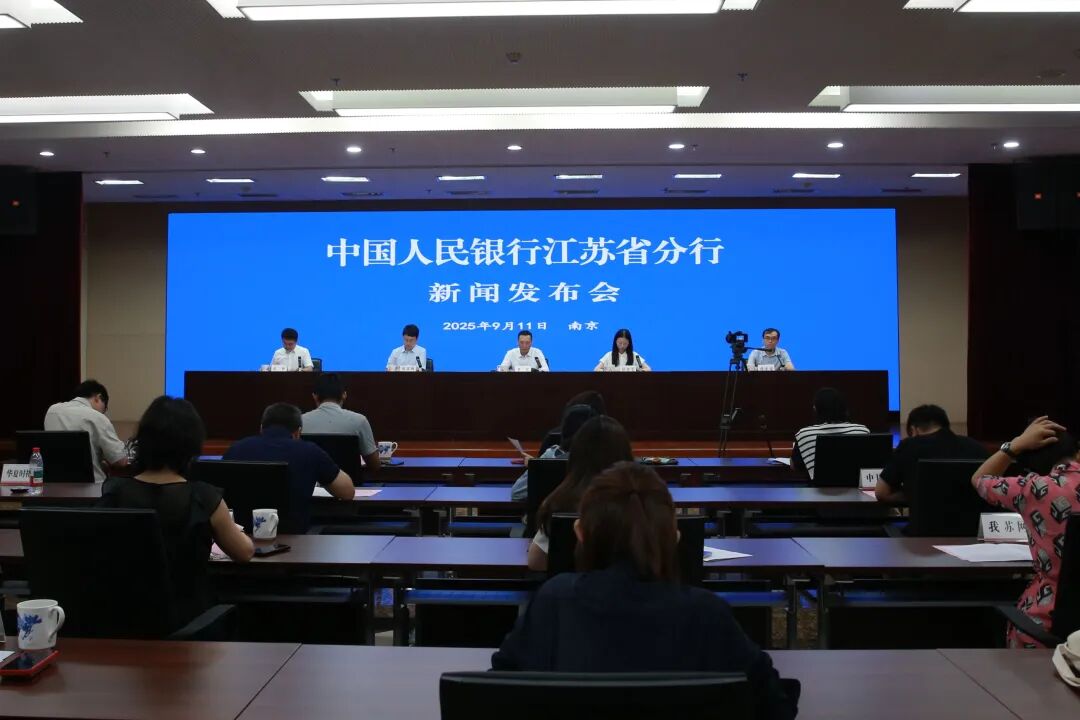
Core Viewpoint - The People's Bank of China Jiangsu Branch, along with various financial regulatory bodies, has drafted an action plan to enhance financial support for high-quality economic development in Jiangsu Province by focusing on five key financial areas [1][3]. Group 1: Action Plan Overview - The action plan consists of seven sections and 25 items, outlining development paths for technology finance, green finance, inclusive finance, pension finance, and digital finance [3]. - The core objective is to significantly improve financing accessibility in key strategic areas by 2027, optimizing the supply-demand match of financial products and services [3][4]. Group 2: Key Financial Areas - **Technology Finance**: The plan emphasizes increasing credit support for technology enterprises through a "stock-loan-bond guarantee" model, promoting investment-loan linkage, and establishing a technology finance alliance [3][6]. - **Green Finance**: It aims to enhance financing for green and low-carbon projects, expand the green financing subject library, and promote environmental information disclosure and ESG evaluation [3][4]. - **Inclusive Finance**: Focuses on expanding services for private enterprises, reducing costs for small and micro businesses, and supporting rural revitalization and poverty alleviation [4][5]. - **Pension Finance**: Plans to develop a collaborative system for pension financial products and services, establish a list of key enterprises in the silver economy, and promote financial education for the elderly [4][5]. - **Digital Finance**: Aims to advance the digital transformation of financial institutions, support the construction of digital economy pilot zones, and enhance data sharing and infrastructure [4][5]. Group 3: Implementation and Achievements - The Jiangsu Province has seen significant achievements in inclusive finance, with over 201 million registered users on its financial service platform, facilitating 6.49 trillion yuan in credit for small and micro enterprises [5]. - The regulatory body is implementing various policies to enhance technology finance, including pilot projects for equity investment and knowledge property finance [6][7]. - The transformation finance framework has been established, with over 2 billion yuan in loans allocated to incentivize enterprise transformation [7].

商业银行绿色金融“工具箱”日趋丰富
Jin Rong Shi Bao· 2025-09-08 01:30
Core Viewpoint - Commercial banks are actively enhancing their "green finance" initiatives to support the achievement of the "dual carbon" goals, focusing on both the growth and quality of green financial products and services [2][3][5]. Group 1: Green Credit Growth - Major commercial banks have maintained a high growth rate in green credit, with an increase of over 10% in the first half of the year, surpassing the average loan growth rate [3]. - As of June, the total green loan balance of six major state-owned banks reached 23.8 trillion yuan, with Industrial and Commercial Bank of China (ICBC) leading at over 6 trillion yuan and a growth rate of 16.4% [3]. - Other banks, including Agricultural Bank of China and China Construction Bank, also reported significant growth in green loans, with balances of 5.72 trillion yuan and growth rates of 14.6% and 14.88%, respectively [3]. Group 2: Green Bond Market - The green bond market is experiencing rapid growth, with 477 green bonds issued in 2024, totaling 681.43 billion yuan [5]. - Major banks are increasing their participation in the green bond market, with ICBC issuing a global multi-currency "carbon neutrality" themed green bond [6]. - China Bank led the underwriting of green bonds, with a total issuance of 2.11 trillion yuan domestically and 14.9 billion USD internationally [6]. Group 3: Product Innovation and Diversification - The demand for diverse financing solutions has led to an increase in the variety of green financial products, including green loans, bonds, and funds [5][7]. - Banks are focusing on innovative products such as floating-rate green bonds and carbon finance services, including carbon emission rights collateralized loans [6][7]. - Future developments may include the introduction of carbon derivatives and the establishment of green industry investment funds targeting renewable energy and resource recycling [7].




宁夏吴忠 “绿色乐章”奏响黄河畔
Jin Rong Shi Bao· 2025-09-02 05:34
Group 1: Renewable Energy Development in Wuzhong City - Wuzhong City is a significant energy base in Ningxia, with abundant solar, wind, natural gas, and coal resources, making it suitable for large-scale renewable energy projects [1] - The city has established 240 renewable energy stations with a total installed capacity of 18.66 million kilowatts, accounting for 46% of Ningxia's renewable energy capacity [1] - The total output value of large-scale clean energy enterprises in Wuzhong is 8.4 billion yuan, representing 5.5% of the city's industrial output [1] Group 2: Green Financing Initiatives - The People's Bank of China Wuzhong Branch has been actively promoting green finance, with green loan balances reaching 14.1 billion yuan by June 2025, growing at an average rate of 35.7% over the past three years [1][3] - Financial institutions have provided over 4 billion yuan in credit for the Ningguo Yun Salt Pool high sand pit photovoltaic project, which has a total investment of 4.23 billion yuan [2] - The bank has coordinated with multiple financial institutions to support the financing needs of the Wuzhong waste incineration power generation project, granting 190 million yuan in credit [7] Group 3: Infrastructure Projects - The Niushou Mountain Pumped Storage Power Station, part of Ningxia's "Top Ten Engineering Projects," has a planned investment of 7.85 billion yuan and an installed capacity of 1 million kilowatts [4] - The project aims to enhance the stability of the power grid and increase the utilization of clean energy, with a credit approval of 5.28 billion yuan achieved within three months [4] Group 4: Energy Storage Development - Wuzhong City has built 16 energy storage power stations with a total capacity of 4.1 million kilowatt-hours, representing 42.7% of Ningxia's independent energy storage capacity [5] - The annual green electricity consumption capacity has increased to over 1 billion kilowatt-hours [5] Group 5: Waste Management and Low-Carbon Transition - Ningxia Zhongke Guotong New Energy Co., Ltd. focuses on the harmless treatment of solid waste and biomass energy generation [6] - The company is expanding its waste incineration power generation project, with financial support from local banks to address funding shortages [7] - The People's Bank of China Wuzhong Branch has supported 25 carbon reduction projects with a total funding of 1.76 billion yuan [7]
金融“主力军”的年中答卷:交通银行扎实推进“五篇大文章” 规模与效益协同增长
Shang Hai Zheng Quan Bao· 2025-09-01 18:52
Core Viewpoint - Bank of Communications reported a dual growth in revenue and net profit for the first half of 2025, achieving operating income of 133.368 billion yuan, a year-on-year increase of 0.77%, and a net profit attributable to shareholders of 46.016 billion yuan, up 1.61% year-on-year [2] Financial Performance - The total assets of Bank of Communications reached 15.44 trillion yuan by the end of June, an increase of 3.59% from the end of the previous year [3] - The group’s customer loan balance was 9 trillion yuan, growing by 5.18% year-on-year, while customer deposits reached 9.17 trillion yuan, up 4.22% [3] - The non-performing loan ratio improved to 1.28%, a decrease of 0.03 percentage points from the end of the previous year, with a provision coverage ratio of 209.56%, an increase of 7.62 percentage points [3] Capital Strength - On June 17, Bank of Communications completed a private placement of approximately 14.1 billion shares, raising a total of 120 billion yuan, marking the first time the Ministry of Finance injected capital into the bank [4] - The core Tier 1 capital adequacy ratio improved by 1.18 percentage points from the previous year, enhancing the bank's capital adequacy level [4] Strategic Initiatives - The bank is focusing on five key areas: technology finance, green finance, inclusive finance, pension finance, and digital finance, with significant progress reported in each area [5][6] - Technology loans exceeded 1.5 trillion yuan, with loans to technology SMEs growing by 22.93% year-on-year [5] - Inclusive finance saw a 12.96% increase in loans to small and micro enterprises, reaching 852.401 billion yuan [5] Regional Focus - Bank of Communications is leveraging its "Shanghai main stage" strategy to enhance its service capabilities and support regional development, achieving significant results in credit issuance and customer expansion [7][8] - The bank ranked first in the market for the increase in RMB loans in Shanghai, establishing partnerships with 60 major city projects and 118 district projects [8] Innovation and Digitalization - The bank has established 23 technology-focused branches in Shanghai, enhancing its technology finance services [9] - It has also launched a cross-border trade financial service platform, integrating various financial services to support international trade [9][10] Shareholder Returns - The bank's board has approved a mid-year profit distribution plan, proposing a cash dividend of 0.1563 yuan per share, totaling 13.811 billion yuan, which accounts for 30% of the net profit attributable to shareholders [11] - This marks the second consecutive year of mid-year dividends, reflecting the management's confidence in future profitability [11]

央行等发文推动金融支持林业高质量发展丨绿色金融周报
2 1 Shi Ji Jing Ji Bao Dao· 2025-09-01 10:26
Group 1 - The rapid development of the green finance market has led to an increase in relevant information and data, with a focus on the latest trends and dynamics in the field [1] - The People's Bank of China and other regulatory bodies issued a notice to support the high-quality development of forestry through 15 specific measures, including financial services for collective forest rights and innovative loan products [2] - The first meeting of the China-UK Transition Finance Working Group was held, aiming to promote the implementation of transition finance standards and cross-border project cooperation [3] Group 2 - Xiamen proposed a draft green finance development regulation to provide legal support for green economic transformation, integrating various financial policies and emphasizing the development of blue finance products [4] - Yantai released an action plan to explore blue finance practices, targeting a loan balance of 120 billion yuan for blue industries by 2027 [6] - The national carbon market reported a weekly carbon price peak of 70.69 yuan per ton, with total trading volume reaching over 6 million tons [7][8][9] Group 3 - The Bank of China assisted Guangdong in issuing 2.5 billion yuan of offshore "blue + green bonds," indicating strong investor interest with an order peak of 11.8 billion yuan [10] - The launch of the "Rongtong CSI ESG ETF Linked Fund" achieved a record initial scale of 960 million yuan, reflecting growing market interest in green investment [11] - Suzhou Industrial Park established a 500 million yuan ESG green unicorn industry fund, focusing on high-growth sectors and promoting sustainable financial practices [12]
央行等发文推动金融支持林业高质量发展
2 1 Shi Ji Jing Ji Bao Dao· 2025-09-01 10:16
Group 1 - The rapid development of the green finance market has led to an increase in relevant information and data, with a focus on the latest trends and dynamics in the field [1] - The People's Bank of China and other regulatory bodies issued a notice to support the high-quality development of forestry, proposing 15 specific measures to enhance financial services and support for the forestry industry [2] - The first meeting of the China-UK Transition Finance Working Group was held, aiming to promote the implementation of transition finance standards and cross-border project cooperation [3] Group 2 - Xiamen proposed a draft green finance development regulation to provide legal support for green economic transformation, integrating various financial policies and emphasizing cooperation in green finance services [4] - Yantai released an action plan to explore blue finance practices, aiming for a loan balance of over 120 billion yuan for blue industries by 2027 [6] - The national carbon market reported a weekly carbon price peak of 70.69 yuan per ton, with total trading volume reaching over 6 million tons [7][8] Group 3 - The Bank of China assisted Guangdong in issuing 2.5 billion yuan of offshore "blue + green bonds," indicating strong investor interest with an order peak of 11.8 billion yuan [9][10] - The launch of the Rongtong CSI ESG ETF linked fund achieved a record initial scale of 960 million yuan, reflecting growing market interest in green investment [11] - Suzhou Industrial Park established a 500 million yuan ESG green unicorn industry fund, focusing on high-growth sectors and promoting sustainable financial practices [12]
广东金融监管局:推进科技金融改革试点 提升科技金融服务质效
Zheng Quan Shi Bao Wang· 2025-08-30 07:57
Core Viewpoint - The Guangdong Financial Regulatory Bureau aims to enhance financial support for the development of the Guangdong-Hong Kong-Macao Greater Bay Area through a strategy focused on innovation, industry support, layout optimization, and development method innovation [1] Group 1: Focus Areas - Focus on breakthroughs in new productive forces technology, enhancing financial support for innovation in the Bay Area, and promoting pilot reforms in technology finance to improve service quality [1] - Focus on the construction of new productive force entities, strengthening financial support for industrial development in the Bay Area, and promoting financial assistance for urban renewal and village renovation [1] - Focus on optimizing the layout of new productive forces, enhancing financial support for interconnected Bay Area development, and increasing support for major platforms like Qianhai and Nansha [1] - Focus on innovation in development methods of new productive forces, enhancing financial support for a beautiful Bay Area, and promoting standards and innovations in green finance, transformation finance, blue finance, and circular finance [1]
攀枝花的转型金融故事
Jin Rong Shi Bao· 2025-08-28 02:32
Group 1 - The article highlights the transformation of Panzhihua from a traditional heavy industrial city to a green city, with financial support playing a crucial role in this transition [1] - The establishment of the ecological walkway along the Jinsha River symbolizes the city's commitment to environmental sustainability and urban development [1] Group 2 - Duotai Environmental Technology Co., Ltd. utilizes vanadium-titanium magnetite tailings as raw materials, aiming to produce 500,000 tons of tailings micro-powder annually, contributing to waste resource utilization [2][3] - The company has received a loan of 30 million yuan from Panzhihua Rural Commercial Bank, with interest rates linked to its energy consumption reduction targets, potentially saving the company significant financing costs [3] Group 3 - Panzhihua's local government and financial institutions are actively supporting traditional enterprises like Panzhiyuan Agricultural Products Development Co., Ltd. in their transition to sustainable practices [4][5] - The bank provided a loan of 10 million yuan to Panzhiyuan, with a favorable interest rate of 2.9%, which is significantly lower than the average rate, and can be further reduced upon achieving carbon reduction goals [6] Group 4 - The Panzhihua government and the People's Bank of China are committed to enhancing financial policies to support the green transformation of the vanadium-titanium steel industry [7][8] - Future initiatives include establishing a dynamic database for green enterprises and projects, improving financing efficiency, and promoting innovative financial products for low-carbon transitions [8]