
多边主义

Search documents
商务部有关负责人解读《上海合作组织元首理事会关于支持多边贸易体制的声明》
Zheng Quan Shi Bao Wang· 2025-09-02 01:44
下一步,中方将进一步加强与上合组织其他成员国沟通合作,积极践行真正的多边主义,推动世贸组织 改革朝着正确方向发展,保障发展中成员正当利益,为推动建设开放型世界经济贡献力量。 人民财讯9月2日电,近日,上海合作组织峰会在天津召开,会议通过并发布了《上海合作组织元首理事 会关于支持多边贸易体制的声明》。商务部有关负责人就《声明》进行了解读。 《声明》的特点:一是层级高。上合组织成员国元首首次专门就共同支持多边贸易体制单独发表声明, 展现了上合组织维护全球贸易秩序稳定的坚定决心。二是时机准。近期,部分世贸组织成员就所谓"对 等关税"达成框架协议,上合组织成员国重申世贸组织最惠国待遇、非歧视等基本原则,呼吁各方遵守 包括世贸组织规则在内的国际贸易法。三是重发展。《声明》强调发展的重要性,表示将助力发展中成 员实现工业化,支持最不发达国家更好融入多边贸易体制,期待MC14取得务实成果。 ...
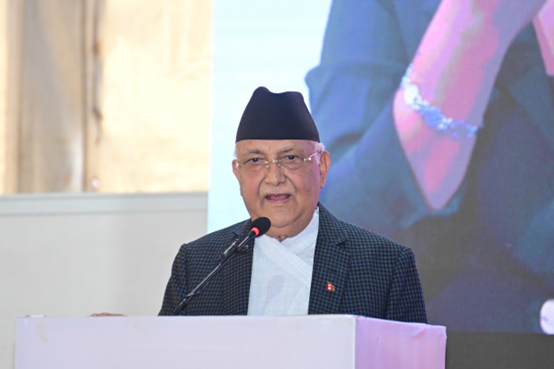
尼泊尔总理奥利:尼泊尔期望成为上合组织正式成员国
Huan Qiu Wang· 2025-09-02 01:24
Core Points - Nepal's Prime Minister Oli expressed the country's aspiration to become a full member of the Shanghai Cooperation Organization (SCO) [1][3] - During the "SCO+" meeting, Oli emphasized the importance of regional cooperation in addressing economic, technological, and ecological challenges [3] - Oli highlighted the need for stronger multilateralism to tackle global issues such as climate change, cyber threats, and economic shocks [3] Group 1 - Nepal is currently a dialogue partner of the SCO and is looking to upgrade its status to that of a full member [3] - Oli stated that Nepal is committed to regional cooperation and has strong relations with SCO member states [3] - The Prime Minister called for greater unity, integration, and resilience within the SCO to address urgent global challenges [3] Group 2 - Oli outlined a multilateral development path based on enhanced connectivity, consultation, and cooperation [3]

上合组织天津峰会丨全球治理倡议正逢其时、指引方向、彰显担当
Xin Hua Wang· 2025-09-02 00:53
Group 1 - The core viewpoint of the news is the significance of the Global Governance Initiative proposed by President Xi Jinping, which aims to address global challenges and enhance international cooperation in a time of increasing geopolitical tensions and economic difficulties [1][2][3] - The Global Governance Initiative emphasizes five core principles: sovereign equality, adherence to international law, multilateralism, a people-centered approach, and action-oriented strategies [2][3] - The initiative aligns with the purposes and principles of the United Nations Charter, aiming to support the UN's central role in international affairs and promote reforms in the global governance system [3] Group 2 - The initiative is seen as a timely response to the current global landscape characterized by instability and governance deficits, highlighting the need for a more equitable global governance framework [1][2] - China, as a permanent member of the UN Security Council, is committed to fulfilling its international responsibilities and has previously proposed several global initiatives, including the Belt and Road Initiative and the Global Development Initiative [3] - The four global initiatives proposed by China focus on development, security, civilization, and governance, collectively aiming to provide stability and certainty in a turbulent world [3]
凝聚上合力量 完善全球治理
Xin Hua She· 2025-09-02 00:51
Global Governance Initiative - The initiative emphasizes the importance of sovereign equality, ensuring all countries participate equally in global governance regardless of their size or wealth [1][2] - It advocates for adherence to international law, promoting the equal application of international rules without double standards [2][3] - The initiative calls for the practice of multilateralism, strengthening cooperation and opposing unilateral actions, while maintaining the authority of the United Nations [2][3] Shanghai Cooperation Organization (SCO) Role - The SCO aims to promote a more democratic and just international political and economic order, adhering to the "Shanghai Spirit" of mutual trust and cooperation [3][4] - The organization is positioned to lead in global governance initiatives, contributing to regional stability and security through long-term cooperation agreements among member states [3][4] - The SCO emphasizes the importance of economic collaboration, advocating for open cooperation and the integration of markets to enhance global economic growth [4][5] Economic and Technological Cooperation - China plans to establish cooperation platforms in energy, green industries, and digital economy, along with centers for technology innovation and education within the SCO framework [4][5] - The initiative includes significant projects in renewable energy, such as "10 million kilowatts of photovoltaic" and "10 million kilowatts of wind power" over the next five years [4][5] Cultural and Humanitarian Exchange - The SCO promotes cultural exchanges and mutual understanding among member states, aiming to foster peaceful coexistence and respect for diverse civilizations [5][6] - China will support medical initiatives, including surgeries for congenital heart disease and cataract operations, enhancing healthcare collaboration among member countries [5][6] Commitment to Justice and Fairness - The SCO members are committed to defending international fairness and justice, opposing hegemonism and advocating for true multilateralism [5][6] - The organization seeks to enhance cooperation with other multilateral mechanisms to maintain international economic order and improve global governance [5][6]
牢记初心使命 开创美好未来
Xin Hua She· 2025-09-02 00:51
Core Points - The Shanghai Cooperation Organization (SCO) has achieved significant milestones over 24 years, emphasizing mutual trust, benefit, equality, and respect for diverse civilizations [1][2] - The SCO has expanded to 26 member countries, covering over 50 areas of cooperation, with a combined economic output nearing $30 trillion, enhancing its international influence [3] Group 1: Achievements and Initiatives - The SCO established a military trust mechanism in border areas, promoting cooperation and addressing security challenges [1] - The organization has initiated the Belt and Road Initiative, resulting in numerous infrastructure projects and a trade volume exceeding $2.3 trillion ahead of schedule [1] - The SCO has facilitated the opening of nearly 14,000 kilometers of international road transport routes and over 110,000 China-Europe freight trains [1] Group 2: Future Directions - The organization aims to maintain unity while respecting differences among member states, enhancing strategic communication and collective responsibility for regional stability [3][4] - There is a focus on mutual benefit through high-quality Belt and Road cooperation, leveraging market advantages and enhancing trade and investment facilitation [3][4] - The SCO emphasizes openness and inclusivity, fostering cultural exchanges and economic cooperation among member countries [4] Group 3: Governance and Support - The SCO advocates for fairness and justice in international relations, supporting a multipolar world and a fair global governance system [4] - The organization plans to enhance its operational efficiency through reforms, establishing centers for security threats and drug control, and creating a development bank [4] - China has invested over $84 billion in SCO member countries, with bilateral trade exceeding $500 billion annually, and plans to implement various development projects and scholarships [5]
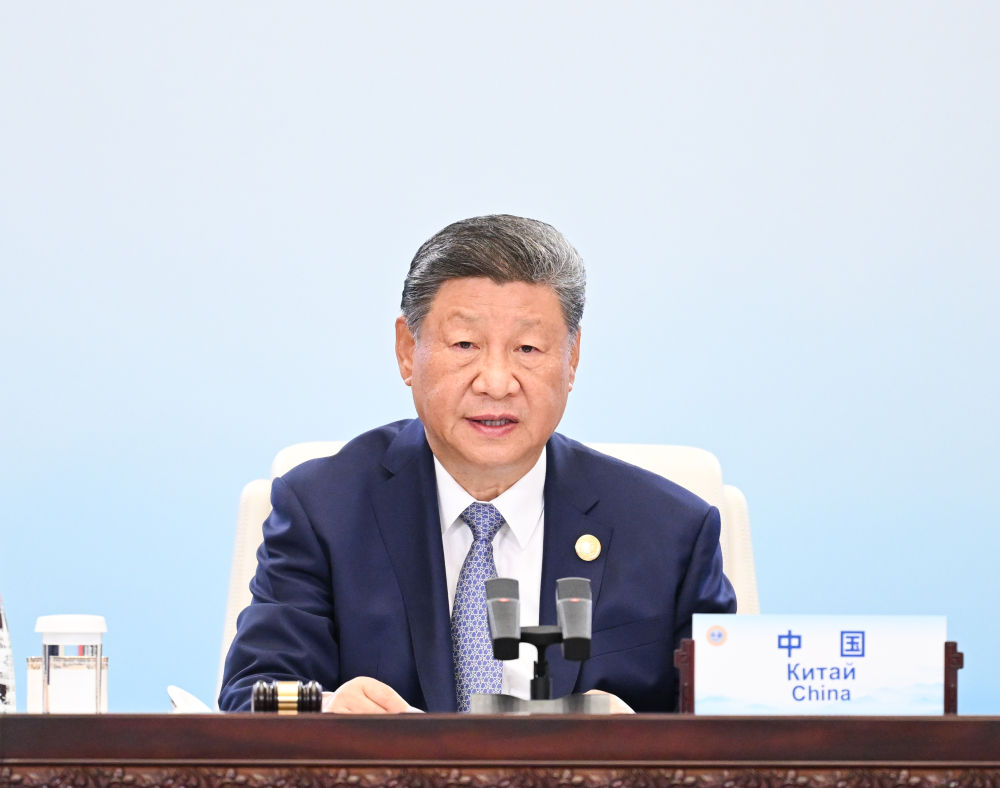
上合组织天津峰会|习近平主持上海合作组织成员国元首理事会第二十五次会议并发表重要讲话
Xin Hua She· 2025-09-02 00:30
Core Points - The 25th meeting of the Shanghai Cooperation Organization (SCO) member states' heads of state council was held in Tianjin, China, with President Xi Jinping emphasizing the importance of the "Shanghai Spirit" and the organization's role in promoting regional stability and development [4][6][9]. Group 1: Achievements and Contributions - The SCO has established a trust mechanism in military fields in border areas and has taken multilateral actions to combat the "three forces" (terrorism, separatism, and extremism), contributing to regional peace and stability [4][6]. - The organization initiated the "Belt and Road" cooperation, enhancing regional development and connectivity [4][6]. - The SCO has signed long-term friendly cooperation treaties among member states, promoting mutual understanding and friendship among their peoples [4][6]. Group 2: Future Directions - Member states are encouraged to adhere to the "Shanghai Spirit," respect differences, and enhance strategic communication to foster collective consensus and cooperation [6][7]. - Emphasis on mutual benefit and win-win cooperation, particularly in areas such as energy, infrastructure, green industries, digital economy, and technological innovation [7][8]. - The need for openness and inclusivity in cultural exchanges and economic cooperation to create a harmonious and prosperous environment [8]. Group 3: Global Governance and Justice - The SCO aims to uphold fairness and justice in international relations, opposing unilateralism and protectionism, while supporting a multilateral trade system centered around the World Trade Organization [8][9]. - The organization seeks to enhance its reform and resource allocation to improve decision-making and efficiency in supporting member states' security and economic cooperation [8][9]. Group 4: New Partnerships and Initiatives - The meeting resulted in the acceptance of Laos as a dialogue partner and the decision for Kyrgyzstan to assume the rotating presidency for 2025-2026 [12]. - A series of declarations and strategic documents were approved, including the SCO's development strategy for the next decade (2026-2035) [10][11].
推动构建更加公正合理的全球治理体系(和音)
Ren Min Ri Bao· 2025-09-01 22:36
作为负责任大国,中国践行真正的多边主义,坚定做世界和平的建设者、全球发展的贡献者、国际秩序 的维护者、公共产品的提供者。新时代以来,习近平主席胸怀人类前途命运,回应国际社会期待,提出 推动构建人类命运共同体,提出全球发展倡议、全球安全倡议、全球文明倡议,弘扬全人类共同价值, 推进影响深远的重大实践举措,书写了多边主义新篇章,开辟了国际关系新境界。全球治理倡议的核心 理念阐明了改革完善全球治理需要遵循的原则、方法和路径,进一步回应了全球南方求和平、谋发展、 促合作的呼声,顺应了完善全球治理、纠正历史不公的紧迫需求,必将凝聚起国际社会更广泛共识,携 手推进更加公正合理的全球治理,开辟和平、安全、繁荣、进步的光明前景。 今年是世界反法西斯战争胜利80周年,也是联合国成立80周年。历史启示我们,多边主义、团结合作是 解决全球性难题的正确答案。中方将携手各方一道,践行全球治理倡议,推动构建更加公正合理的全球 治理体系,让推进全球治理体系变革、推动构建人类命运共同体的成果更多更好造福全人类。 9月1日,习近平主席在"上海合作组织+"会议上发表重要讲话,郑重提出全球治理倡议。这是继全球发 展倡议、全球安全倡议、全球文明倡议 ...
为携手迈向人类命运共同体注入澎湃动力
Xin Hua She· 2025-09-01 20:24
Core Points - The global governance initiative proposed by President Xi Jinping aims to create a more just and reasonable global governance system, reflecting China's commitment to building a community with a shared future for mankind [1][2][3] Group 1: International Reactions - Leaders from various countries, including Russia and Belarus, expressed strong support for Xi's global governance initiative, emphasizing its foundation on equality and justice, which are currently lacking in international relations [2][3] - Kazakhstan's President highlighted the importance of the initiative in fostering political interaction and enhancing mutual trust among nations amid geopolitical conflicts [2][3] - Iran's President acknowledged the necessity of reforming global governance, viewing Xi's proposal as a significant step towards a fairer world [2][3] Group 2: Principles of the Initiative - The initiative emphasizes five key principles: sovereignty equality, adherence to international law, multilateralism, a people-centered approach, and action-oriented strategies [3][4] - The call for sovereignty equality resonates particularly with African nations seeking a more equitable role in international affairs [3][4] - The initiative contrasts with the double standards of some countries, advocating for adherence to international law and stability through active participation in multilateral mechanisms [3][4] Group 3: Importance of Multilateralism - The global governance initiative is seen as timely, coinciding with significant anniversaries related to anti-fascism and the establishment of the United Nations, reinforcing the need for coordinated multilateral efforts [3][4] - The initiative aims to address the challenges facing global governance, particularly in light of rising unilateralism and protectionism [3][4] - The emphasis on the United Nations' irreplaceable role in global governance highlights the need for strengthening multilateral institutions [4][5] Group 4: Development and Cooperation - The initiative promotes cooperation and development, particularly for developing countries, aiming to bridge the North-South development gap [5][6] - Xi's proposals are viewed as effective pathways to enhance global governance, emphasizing the need for collaboration and reform to create a balanced international system [5][6] - The initiative aligns with China's broader strategy of continuous reform to improve its governance system while contributing to global governance [6][7]
为携手迈向人类命运共同体注入澎湃动力——习近平主席提出全球治理倡议引发国际社会强烈反响与共鸣
Xin Hua Wang· 2025-09-01 17:50
Core Points - The global governance initiative proposed by President Xi Jinping aims to create a more just and reasonable global governance system, reflecting China's commitment to international cooperation and shared development [1][2][3] Group 1: International Reactions - Leaders from various countries, including Russia, Belarus, Kazakhstan, Iran, and Azerbaijan, expressed strong support for Xi's global governance initiative, emphasizing its foundation on equality and justice [2][3] - The initiative is seen as a timely response to the current geopolitical conflicts and the need for enhanced international cooperation [2][3] Group 2: Principles of the Initiative - The initiative advocates for five key principles: sovereignty equality, adherence to international law, multilateralism, a people-centered approach, and action-oriented strategies [3][4] - The emphasis on sovereignty equality resonates particularly with developing nations seeking a more equitable role in global governance [3][4] Group 3: Importance of Multilateralism - The initiative aligns with the historical context of the 80th anniversaries of the victory in World War II and the establishment of the United Nations, reinforcing the need for a multilateral approach to global challenges [3][4] - The call for strengthening the United Nations' role in global governance highlights the importance of established multilateral institutions in addressing contemporary issues [4][5] Group 4: Development and Cooperation - The initiative aims to bridge the development gap between the Global North and South, with a focus on high-quality cooperation such as the Belt and Road Initiative [5][6] - It emphasizes the need for action-oriented solutions to address discrepancies in development aid and climate financing [5][6] Group 5: Vision for the Future - The global governance initiative is viewed as a pathway to a more balanced and sustainable international system, promoting cooperation over confrontation [6][7] - It seeks to foster a community with a shared future for mankind, advocating for mutual benefits and collaborative efforts among nations [6][7]
学习新语|推动上海合作组织行稳致远,习近平提出五个坚持
Xin Hua She· 2025-09-01 14:11
Core Viewpoint - The Shanghai Cooperation Organization (SCO) has made significant progress over its 24-year history, emphasizing mutual trust, mutual benefit, equality, consultation, respect for diverse civilizations, and seeking common development, which has established a new model of international relations [5][8]. Group 1: Key Achievements - The SCO has been a pioneer in establishing trust mechanisms in military areas along border regions and has taken multilateral actions to combat the "three forces" (terrorism, separatism, and extremism), contributing to regional peace and stability [5][9]. - The organization initiated the Belt and Road Initiative, enhancing regional development and connectivity [6][10]. Group 2: Five Principles for Future Development - The first principle is to adhere to seeking common ground while reserving differences, which involves respecting each other's differences, maintaining strategic communication, and strengthening collective consensus [8][10]. - The second principle emphasizes mutual benefit and win-win cooperation, focusing on high-quality Belt and Road construction and enhancing trade and investment facilitation [10][11]. - The third principle advocates for openness and inclusiveness, promoting cultural exchanges and economic cooperation to create a harmonious civilization [10][11]. - The fourth principle stresses fairness and justice, opposing Cold War mentality and advocating for a more just global governance system [10][11]. - The fifth principle is to maintain a pragmatic and efficient approach, continuously reforming the SCO to enhance its mechanisms and decision-making processes [11][12].
