
多边主义

Search documents
上合组织天津峰会|习近平会见印度总理莫迪
Xin Hua She· 2025-08-31 07:21
Group 1 - The core viewpoint emphasizes the importance of China-India relations, highlighting their roles as major civilizations and populous nations with responsibilities for mutual benefit and global progress [1][2] - The meeting aims to enhance strategic communication and mutual trust, focusing on cooperation rather than competition, which is essential for the stability and development of bilateral relations [2][3] - Both countries are encouraged to expand cooperation and support each other's development, recognizing the significance of mutual achievements in their growth phases [2][3] Group 2 - The leaders reaffirmed the need to respect each other's concerns and maintain peaceful coexistence, advocating for the principles of peaceful coexistence established by previous leaders [2] - There is a call for strengthened multilateral cooperation to uphold common interests and promote international fairness and justice, contributing to global peace and prosperity [2][3] - Modi expressed optimism about the future of China-India relations, emphasizing the importance of collaboration in the face of global economic uncertainties and the potential for a shared Asian century [3]
习近平会见印度总理莫迪
中国基金报· 2025-08-31 07:18
Core Viewpoint - The meeting between Chinese President Xi Jinping and Indian Prime Minister Narendra Modi emphasizes the importance of strengthening Sino-Indian relations, focusing on cooperation, mutual benefits, and maintaining peace along the border [1][2][3]. Group 1: Strategic Communication and Cooperation - Xi Jinping highlighted the need for strategic communication to deepen mutual trust, emphasizing that both countries should view each other as partners rather than rivals [2]. - The focus should be on expanding cooperation to achieve mutual benefits, especially as both nations are at critical stages of development [2]. - Modi expressed a commitment to viewing the relationship from a long-term perspective, reinforcing the idea that India and China are partners, not adversaries [3]. Group 2: Peace and Stability - Both leaders agreed on the importance of maintaining peace and stability along the border, with a call to not let border issues define the overall relationship [2]. - Modi noted that the recent developments, including the restoration of direct flights, would benefit both nations and contribute positively to global stability [3]. Group 3: Multilateral Cooperation - Xi emphasized the need for multilateral cooperation to uphold common interests and promote international fairness and justice [2]. - Both countries are committed to enhancing the power of multilateralism in international affairs, aiming to make the 21st century an "Asian century" through their collaboration [3].

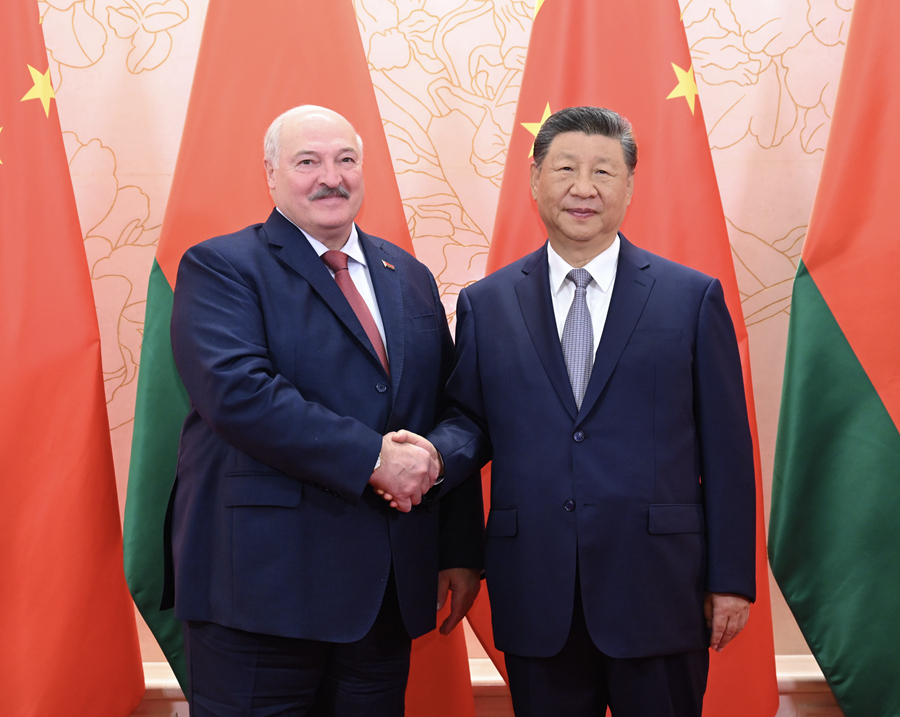
上合组织天津峰会丨习近平会见白俄罗斯总统卢卡申科
Xin Hua Wang· 2025-08-31 07:12
8月31日上午,国家主席习近平在天津迎宾馆会见来华出席2025年上海合作组织峰会和纪念中国人民抗日战争暨世界反法西斯战 争胜利80周年活动的白俄罗斯总统卢卡申科。新华社记者 谢环驰 摄 新华社天津8月31日电(记者温馨、梁姊)8月31日上午,国家主席习近平在天津迎宾馆会见来华出席2025年上海合作组织峰会 和纪念中国人民抗日战争暨世界反法西斯战争胜利80周年活动的白俄罗斯总统卢卡申科。 蔡奇、王毅、陈敏尔等参加会见。 8月31日上午,国家主席习近平在天津迎宾馆会见来华出席2025年上海合作组织峰会和纪念中国人民抗日战争暨世界反法西斯战 争胜利80周年活动的白俄罗斯总统卢卡申科。新华社记者 燕雁 摄 卢卡申科表示,每一次来到中国,都被中国生机勃勃的发展进步面貌深深感染。在习近平主席坚强领导下,中国坚定走符合自 身国情的发展道路,取得巨大发展成就,展现更加光明前景,没有任何力量能够阻挡中国的发展振兴。中国在国际和地区事务 中秉持公正立场,坚持多边主义,捍卫公平正义,引领上海合作组织等多边机制合作,为欧亚大陆和世界和平稳定作出重大贡 献。白俄罗斯是中国全天候的伙伴、永远可靠的朋友,愿同中方加强治国理政经验交流,深化 ...
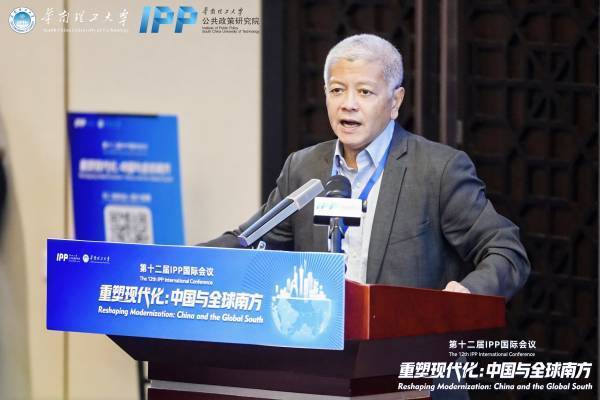
柯成兴:没有“全球北方”,世界还能发展吗?
Sou Hu Cai Jing· 2025-08-31 07:05
Core Insights - The conference at South China University of Technology focused on the theme "Reconstructing Modernization: China and the Global South," discussing the future development of global southern countries through interdisciplinary dialogue [1][3] - Professor Danny Quah emphasized the need for a new adaptive multilateralism that does not require the participation of any specific country, advocating for voluntary alliances and rule reconstruction to achieve "cooperation without malice" [1][4][5] Group 1: Multilateralism and Global Cooperation - The traditional binary thinking of cooperation versus conflict, or North versus South, should be replaced with a more nuanced understanding of international relations [4][5] - An effective international system can function without the necessity of the United States, welcoming any country that wishes to join, including China [5][6] - The concept of a "-1" international system suggests that cooperation can occur even in the absence of major powers, allowing for continued collaboration based on friendly relations [6][9] Group 2: Economic Impacts and Challenges - The "China Shock" refers to the supply-side impact of affordable Chinese products affecting global markets, while the "American Shock" represents the demand-side impact of the U.S. limiting foreign goods [7][14] - The accumulation of unresolved global issues can hinder economic growth, necessitating a focus on development and cooperation to address these challenges [10][11] - The past reliance on developed countries (Global North) as a demand source for products is shifting, leading to concerns about overcapacity and job losses in the U.S. and other countries [14][15] Group 3: New International Order - A new international order should allow for cooperation even amidst tensions between nations, focusing on mutual interests rather than requiring friendly relations [10][16] - The establishment of a new multilateral system is essential to recalibrate and balance the global economic landscape, addressing overcapacity and market competition [15][17] - The potential for a simplified global platform similar to the WTO's MPIA mechanism exists, allowing countries willing to adhere to rules to collaborate effectively [17]
上合组织天津峰会|习近平会见白俄罗斯总统卢卡申科
Xin Hua She· 2025-08-31 05:39
蔡奇、王毅、陈敏尔等参加会见。 责编:张青津、卢思宇 卢卡申科表示,每一次来到中国,都被中国生机勃勃的发展进步面貌深深感染。在习近平主席坚强领导 下,中国坚定走符合自身国情的发展道路,取得巨大发展成就,展现更加光明前景,没有任何力量能够 阻挡中国的发展振兴。中国在国际和地区事务中秉持公正立场,坚持多边主义,捍卫公平正义,引领上 海合作组织等多边机制合作,为欧亚大陆和世界和平稳定作出重大贡献。白俄罗斯是中国全天候的伙 伴、永远可靠的朋友,愿同中方加强治国理政经验交流,深化各领域务实合作,推动两国关系得到更大 发展。 双方签署科技、金融、计量、媒体、交通运输、海关检验检疫等领域多份双边合作文件。 新华社天津8月31日电(记者温馨、梁姊)8月31日上午,国家主席习近平在天津迎宾馆会见来华出席 2025年上海合作组织峰会和纪念中国人民抗日战争暨世界反法西斯战争胜利80周年活动的白俄罗斯总统 卢卡申科。 习近平指出,中国和白俄罗斯人民曾并肩战斗,共同为粉碎军国主义和法西斯主义作出重大贡献,结下 深厚友谊。当前,世界百年变局加速演进,人类又一次站在十字路口。中方愿同白方担当时代责任,践 行真正的多边主义,共同促进世界和平 ...
习近平分别会见哈萨克斯坦总统托卡耶夫、缅甸代总统敏昂莱、埃及总理马德布利、柬埔寨首相洪玛奈、尼泊尔总理奥利、联合国秘书长古特雷斯 深化互利合作,高质量共建“一带一路”
Xin Hua She· 2025-08-31 01:04
Group 1 - The core viewpoint emphasizes the strengthening of strategic partnerships between China and Kazakhstan, with a focus on mutual support and cooperation in various sectors, including energy and infrastructure [1][2] - Both countries aim to enhance cultural exchanges and deepen multilateral collaboration within the Shanghai Cooperation Organization [1][2] Group 2 - The meeting with Myanmar's acting president highlighted the importance of deepening strategic cooperation and supporting Myanmar's development path while addressing domestic stability [3][4] - The two nations plan to advance economic corridor projects and combat cross-border crime to ensure safety in border regions [3][4] Group 3 - The discussions with Egypt's Prime Minister focused on enhancing bilateral relations as both countries approach the 70th anniversary of diplomatic ties, with an emphasis on economic cooperation and mutual support in international affairs [6][7] - Egypt expressed a commitment to deepen collaboration in various sectors, including renewable energy and finance [6][7] Group 4 - The meeting with Cambodia's Prime Minister reinforced the long-standing friendship and commitment to mutual support, with plans to enhance trade and investment cooperation [8][9] - Both countries aim to combat cross-border crimes and promote regional stability [8][9] Group 5 - The dialogue with Nepal's Prime Minister underscored the historical ties and mutual respect between the two nations, with a focus on enhancing cooperation in infrastructure and trade [10][11] - Nepal reaffirmed its commitment to the One China policy and expressed interest in further collaboration under the Belt and Road Initiative [10][11] Group 6 - The meeting with the UN Secretary-General highlighted the importance of multilateralism and the role of the UN in addressing global challenges, with China expressing its commitment to supporting UN initiatives [13][14] - Both parties discussed enhancing cooperation in global governance and addressing issues like climate change [13][14]
习近平会见联合国秘书长:多边主义 团结合作是解决全球性难题的正确答案
Yang Shi Xin Wen Ke Hu Duan· 2025-08-31 00:33
Core Points - The meeting between President Xi Jinping and UN Secretary-General Guterres emphasizes the importance of multilateralism and cooperation in addressing global challenges [1] - Xi highlights the significance of the 80th anniversary of the victory in the World Anti-Fascist War and the founding of the United Nations, advocating for a revival of the UN's authority and vitality [1] - Guterres acknowledges China's crucial role as a cornerstone of the multilateral system and expresses appreciation for its contributions [1]
奏响上合的和合之音——上合组织国家深化人文交流互鉴共谱文明发展新篇
Xin Hua Wang· 2025-08-30 23:20
Core Viewpoint - The Shanghai Cooperation Organization (SCO) emphasizes the importance of cultural exchange and mutual understanding among member states as a foundation for cooperation and development [1][3]. Group 1: Cultural Exchange Initiatives - Various cultural exchange activities are actively taking place among SCO member states, including the airing of the documentary "Xi Jinping's Cultural Affection" and the "2025 SCO National Cultural Exchange Activities" held in Beijing [2]. - The establishment of cultural cooperation agreements, such as those signed by Belarus, enhances the stability and certainty of long-term collaboration in the cultural sector [4]. - The SCO has been progressively building mechanisms for cultural cooperation since its inception, including regular meetings among cultural ministers and various cultural events [3]. Group 2: Tourism and Travel Cooperation - The mutual visa exemption agreement between China and Uzbekistan, effective June 1, 2025, facilitates travel and tourism between the two countries, reflecting a growing trend of increased tourism among SCO nations [7]. - The SCO Secretary-General highlighted the potential for tourism development within the organization, suggesting collaborative efforts to enhance tourism products and infrastructure [8]. - The "SCO Tourism and Cultural Capital" initiative aims to promote cultural resources and natural landscapes among member states, fostering greater mutual trust and cooperation [9]. Group 3: Youth and Future Initiatives - The "Common Protection of Civilization: SCO Youth in Action" initiative was announced by youth representatives from member states, emphasizing the importance of cultural dialogue and cooperation among the younger generation [13]. - The SCO aims to deepen mutual trust and expand cooperation through various youth-oriented programs, including art festivals and volunteer actions [13]. - The engagement of youth in cultural exchanges is seen as a vital component for fostering long-term relationships and understanding among member states [12].
让历史昭示未来 共同捍卫世界和平(大使随笔·以史为鉴 共护和平)
Ren Min Ri Bao· 2025-08-30 23:20
Core Viewpoint - The commemoration of the 80th anniversary of the victory in the Chinese People's War of Resistance Against Japanese Aggression emphasizes the importance of remembering history, honoring heroes, cherishing peace, and creating a better future [1][2]. Group 1: Historical Context - The victory over Japanese militarism 80 years ago marked a significant turning point for the Chinese nation and was an essential part of the global anti-fascist victory [1]. - The historical struggle of the Chinese people against aggression is highlighted as a foundation for the current achievements and modernization efforts in China [1]. Group 2: Global Cooperation and Peace - The current global landscape is characterized by multipolarity, and cooperation is essential to address challenges, rejecting unilateralism and hegemonic behavior [2]. - Countries must share the responsibility of maintaining peace and pursue a path of peaceful development together [2]. Group 3: Sino-American Relations - The historical friendship between the Chinese and American peoples during World War II is emphasized, showcasing their joint efforts in defending peace and justice [3]. - There is a call for both nations to respect each other, coexist peacefully, and focus on cooperation to foster a better future for both countries and the world [3].
迈向和平与正义的共同之路
Ren Min Ri Bao· 2025-08-30 23:20
Group 1 - Turkey's historical role as a bridge between civilizations emphasizes its commitment to trust-building, open communication, and crisis resolution for regional and global stability [1] - The Black Sea Grain Initiative, proposed by Turkey, aims to mitigate the global impact of the Ukraine crisis and has ensured food security for millions [1] - Turkey's diplomatic efforts include facilitating peace talks in Antalya and Istanbul, maintaining humanitarian corridors, and playing a key role in prisoner exchanges [1] Group 2 - The current international system is unable to effectively address crises and protect the rights of innocent people, as exemplified by the situation in Gaza [2] - Turkey's stance on the Gaza issue prioritizes the safety of civilians, unhindered humanitarian aid, and a long-term ceasefire, advocating for an independent Palestinian state based on 1967 borders with East Jerusalem as its capital [2] - Economic ties, infrastructure development, energy cooperation, and cultural exchanges are seen as steps towards establishing trust and achieving regional peace [2] Group 3 - The 2025 Shanghai Cooperation Organization summit will take place in Tianjin, China, providing Turkey a platform to express its views on regional and global issues [3] - Turkey and China share a long history of interaction and are committed to strengthening economic ties based on mutual respect and win-win cooperation [3] - The upcoming meeting between Turkey's leadership and China's President Xi Jinping is expected to enhance mutual trust and promote bilateral relations [3]