
中性利率

Search documents
从“等待确证”到“预防滞后” 植田和男欲重塑日本货币政策逻辑
Xin Hua Cai Jing· 2025-12-19 11:16
Core Viewpoint - The Bank of Japan raised its policy interest rate by 25 basis points to 0.75%, marking the highest level since September 1995 and ending nearly three decades of ultra-low interest rates [1] Group 1: Interest Rate Decision - The decision to raise interest rates was unanimously approved by the policy committee, indicating a strong consensus on the need for this adjustment [1] - Bank of Japan Governor Kazuo Ueda emphasized that the rate hike was due to reduced risks of declining inflation and growth rates [1] - Ueda highlighted the importance of monitoring the impact of a weak yen on core inflation while avoiding direct comments on exchange rate levels [1] Group 2: Economic Indicators - Ueda pointed out that the current wage growth is a key factor supporting stable core inflation, stating that as long as wages continue to rise, core inflation will not decline [1] - The governor acknowledged the challenges in accurately defining the neutral interest rate and admitted the risk of exceeding it with the current rate hike [2] - He noted that the Bank of Japan's balance sheet effects are still in play, suggesting that a loose monetary environment will persist even during the rate hike cycle [2] Group 3: Policy Framework and Future Outlook - Ueda reiterated the Bank's data-driven approach, stating that future policy decisions will depend on available data, focusing on core inflation rather than short-term fluctuations in overall CPI [2][3] - The Bank of Japan is transitioning to a data-driven normalization phase, moving away from the previous paradigm of unlimited easing [3] - Ueda's statements indicate a cautious path towards exiting ultra-loose monetary policy, emphasizing a wage-price positive cycle as an anchor for policy adjustments [3] Group 4: Market Reactions and Analyst Opinions - Analyst Justin Low expressed skepticism about the likelihood of a strong response from Ueda towards the government, suggesting that the threshold for the next rate hike will be higher than the recent one [4] - Low noted that while Ueda has opened the door for further rate hikes, his statements did not convey a strong commitment to raise rates again by March 2026 [4]
从“等待确证”到“预防滞后”,植田和男欲重塑日本货币政策逻辑
Sou Hu Cai Jing· 2025-12-19 11:08
Core Viewpoint - The Bank of Japan raised its policy interest rate by 25 basis points to 0.75%, marking the highest level since September 1995 and ending nearly three decades of ultra-low interest rates [1] Group 1: Monetary Policy Changes - The decision to raise interest rates was unanimously approved by the policy committee, indicating a significant shift in Japan's monetary policy [1] - Bank of Japan Governor Kazuo Ueda emphasized that the rate hike was due to reduced risks of inflation and growth rate declines [1] - Ueda stated that the central bank will closely monitor the impact of a weak yen on core inflation while avoiding direct comments on exchange rate levels [1] Group 2: Economic Indicators and Data Dependency - Ueda highlighted that the current wage growth is a key factor supporting stable core inflation, asserting that as long as wages continue to rise, core inflation will not decline [1][2] - The central bank's policy decisions will depend on available data in future meetings, focusing on core inflation rather than short-term fluctuations in overall CPI [2] - Ueda acknowledged the challenges in defining the neutral interest rate and indicated that the current policy rate is still below the lower bound of the neutral rate range [2] Group 3: Collaboration and Future Outlook - Ueda reaffirmed the collaboration between the central bank and the government, maintaining good communication with the Minister of Finance [3] - The central bank is transitioning towards a data-driven normalization phase, aiming to avoid both lagging and excessive tightening in its policy adjustments [3] - Analysts express skepticism about the likelihood of further aggressive rate hikes, noting that while the door for future increases is open, the threshold for the next hike will be higher [4]
植田和男:宽松政策调整步伐取决未来数据,但若加息行动过迟,未来或被迫大幅快速加息
华尔街见闻· 2025-12-19 10:56
Core Viewpoint - The Bank of Japan's Governor, Kazuo Ueda, reiterated the intention to further raise interest rates, but emphasized a high degree of data dependency, indicating significant uncertainty regarding the timing and pace of future rate hikes [1][3]. Group 1: Interest Rate Decisions - This marks the first interest rate hike by the Bank of Japan since January, with the decision being unanimously approved [2]. - Ueda stated that if the economy and prices develop as expected, the central bank will continue to raise policy rates, but warned that delayed actions could necessitate rapid increases in the future [3][9]. - The pace of adjustments to the accommodative policy will depend on economic, price, and financial conditions at each meeting [5]. Group 2: Neutral Interest Rate - Ueda highlighted the ambiguity surrounding the neutral interest rate, which is a key factor limiting the clarity of the policy path [8]. - The central bank's estimate of Japan's neutral interest rate remains broad, making precise estimations difficult, and any adjustments may not significantly narrow this range [8]. - Even with a rate increase to 0.75%, the policy rate would still be some distance from the lower end of the neutral rate range [8]. Group 3: Wage Growth as a Key Indicator - Wage growth is viewed as a critical indicator for determining future rate hike potential, with initial momentum in next year's wage negotiations appearing positive [10][11]. - Sustained wage increases are necessary to prevent a decline in core inflation, and if wage growth continues to transmit to prices, further rate hikes could be possible [11]. - Ueda noted that while small businesses show overall stable profits, there is a divergence among the smallest firms that requires careful monitoring [11]. Group 4: Yen Dynamics and Market Reactions - Recent depreciation of the yen has raised concerns about upward price pressures and its impact on core inflation [12]. - Following Ueda's remarks, the dollar rose against the yen, reflecting the market's immediate reaction to policy uncertainties [12]. - The central bank will closely observe the potential transfer of tariff impacts to consumers and the sustainability of growth related to artificial intelligence [12]. Group 5: Market Credibility Concerns - The credibility of the Bank of Japan is being questioned as inflation rates have exceeded the 2% target for four consecutive years [14]. - Analysts suggest that while there is room for further rate hikes next year, the timing remains uncertain and will depend on the progress of annual spring wage negotiations, with low likelihood for hikes before June [14]. - Ueda reiterated that future policy decisions will rely on data available at upcoming meetings, emphasizing a collaborative approach with the government to guide monetary policy [14].


日本央行加息,股市上涨
Zheng Quan Shi Bao· 2025-12-19 09:40
Core Viewpoint - The Bank of Japan has raised its benchmark interest rate by 25 basis points to 0.75%, marking the highest level in 30 years, amid ongoing inflationary pressures and expectations for further rate hikes in the coming year [2][4]. Group 1: Interest Rate Decision - The Bank of Japan's policy committee, led by Governor Kazuo Ueda, unanimously agreed to increase the policy rate by 0.25 percentage points to 0.75% [4]. - The decision reflects an increasing likelihood of achieving economic outlooks, with 50 economists surveyed by Bloomberg predicting the rate hike [4]. - The core Consumer Price Index (CPI) in Japan rose by 3.0% year-on-year in November, marking 51 consecutive months of increase and remaining above the Bank of Japan's 2% target for 44 months [4]. Group 2: Economic Outlook and Inflation - The Bank of Japan emphasized that if the projections in the 2025 outlook report are realized, it will continue to raise policy rates and adjust monetary policy based on economic activity and price improvements [4]. - Governor Ueda indicated that as long as wages continue to rise, core inflation is unlikely to decline, and the transmission of wage increases to prices is ongoing [8]. - The central bank is closely monitoring the impact of the weak yen on future prices, as well as the potential effects of tariffs on consumers [8]. Group 3: Market Reactions - Following the interest rate announcement, the yen continued to decline against the dollar, reaching a low of 156.16, indicating that the market had already priced in the rate hike expectations [5]. - The yield on Japan's 10-year government bonds hit 2%, the highest level since 2006, while the Nikkei 225 index rose by 1% [5]. Group 4: Future Rate Hikes - Ueda stated that the pace of future rate hikes will depend on economic and inflation data, and it is challenging to determine the neutral interest rate level in advance [7]. - The central bank will assess the impact of the current rate increase on the economy and prices before deciding on further hikes, with most observers expecting a frequency of rate increases to be about once every six months [8].
日本央行行长:利率仍低于中性水平,薪资增长势头若未减弱将带来加息机会
Zhi Tong Cai Jing· 2025-12-19 09:13
Core Viewpoint - The Bank of Japan has raised interest rates to the highest level in 30 years, indicating readiness for further increases, marking a significant shift from decades of monetary support and near-zero borrowing costs [1] Group 1: Interest Rate Changes - The short-term interest rate has been increased from 0.5% to 0.75%, marking the first rate hike since January, with the decision made unanimously [1] - Future interest rate adjustments will be based on inflation and wage data, with a focus on achieving inflation targets [1][10] Group 2: Economic Considerations - The central bank's policy adjustments will depend on economic, price, and financial conditions, with updates provided at each meeting [2] - The neutral interest rate remains unclear, and the bank will observe economic and price responses to short-term rate changes [3] Group 3: Monetary Support and Economic Conditions - Monetary support will consider actual interest rates, credit conditions, and economic developments, with the current rate still below the estimated lower bound of the neutral rate [4] - The recent depreciation of the yen may exert upward pressure on prices and affect potential inflation [5] Group 4: Wage Growth and Future Rate Hikes - Strong wage growth momentum could open the door for further rate hikes, with initial signs of positive wage negotiations for the coming year [6] - The central bank's policy decisions will depend on available information regarding the gap between policy rates and neutral rates [7] Group 5: Assessment of Economic Policies - The impact of "Abenomics" is still being evaluated, with the central bank aiming for a smooth landing despite potential side effects [8] - The actual interest rates on Japanese government bonds remain significantly negative, indicating ongoing challenges in the economic landscape [9]
日本央行加息!股市上涨!
Zheng Quan Shi Bao· 2025-12-19 09:09
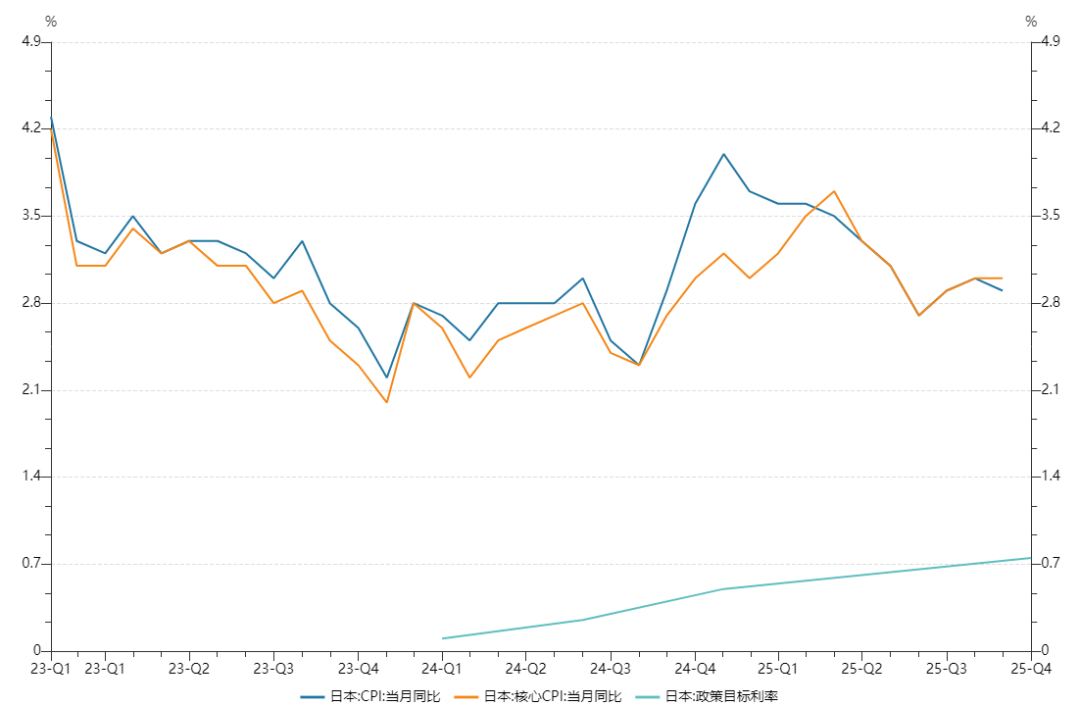
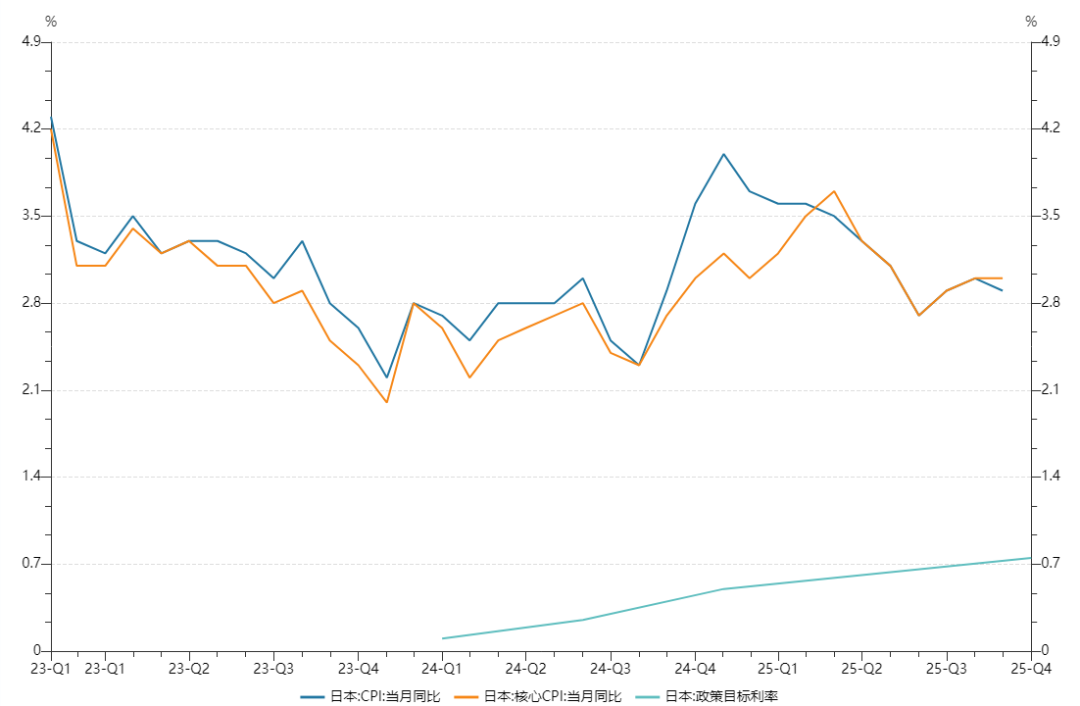
就通胀而言,日本核心CPI通胀持续温和上升,工资上涨转嫁给销售价格的举措仍在继续;就工资而言,继今年的强劲工资增长之后,企业很有可能在明 年继续稳步提高工资。 因此,日本央行从实现2%价格稳定目标的可持续性和稳定性的角度调整货币政策的力度,上调基准利率。 日本总务省19日公布的报告显示,今年11月日本剔除生鲜食品后的核心消费价格指数(CPI)同比上升3.0%,连续51个月同比上升,而且连续44个月保持或 高于日本央行2%的目标。由于日本首相高市早苗坚持积极财政政策加剧日元贬值,此间媒体和专家忧虑其政策将进一步刺激日本物价上涨。 日本央行强调,如果《2025年10月展望报告》中呈现的前景得以实现,该银行将根据经济活动和物价的改善,继续提高政策利率并调整货币政策的宽松程 度。 利率决定公布后,日元兑美元延续跌势,一度跌至156.16,表明加息预期已被市场充分消化。日本10年期国债收益率触及2%,为2006年以来最高水平。 日经225指数进一步走高,收盘上涨1%。 植田和男:仍有可能继续加息 12月19日,日本央行宣布将基准利率上调25个基点至0.75%,创下30年来最高水平。市场预计,在通胀持续上涨背景下,日本央 ...
日本央行加息!股市上涨!
证券时报· 2025-12-19 09:09
日本CPI和政策目标利率走势(2023年1月至今) 12月19日,日本央行宣布将基准利率上调25个基点至0.75%,创下30年来最高水平。市场预计,在通胀持续上涨背景下,日本央行加息步伐有望在明年 继续。 日本央行强调,如果《2025年10月展望报告》中呈现的前景得以实现,该银行将根据经济活动和物价的改善,继续提高政策利率并调整货币政策的宽松程 度。 利率决定公布后,日元兑美元延续跌势,一度跌至156.16,表明加息预期已被市场充分消化。日本10年期国债收益率触及2%,为2006年以来最高水平。日 经225指数进一步走高,收盘上涨1%。 日本央行为何加息? 根据日本央行周五发布的政策声明,行长植田和男领导下的政策委员会一致同意把政策利率上调0.25个百分点至0.75%。该行表示经济展望实现的可能性正 在上升。此前接受彭博调查的50位经济学家均预测会加息。 就通胀而言,日本核心CPI通胀持续温和上升,工资上涨转嫁给销售价格的举措仍在继续;就工资而言,继今年的强劲工资增长之后,企业很有可能在明年继 续稳步提高工资。 因此,日本央行从实现2%价格稳定目标的可持续性和稳定性的角度调整货币政策的力度,上调基准利率。 日 ...

日元持续走弱!植田和男:宽松步伐取决于经济和通胀,很难提前确定中性利率水平
Sou Hu Cai Jing· 2025-12-19 07:01
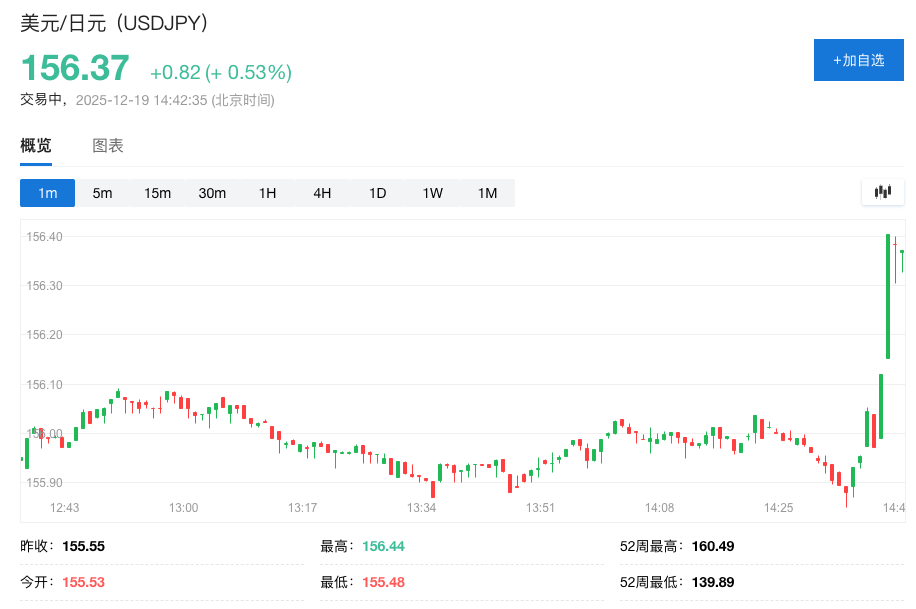
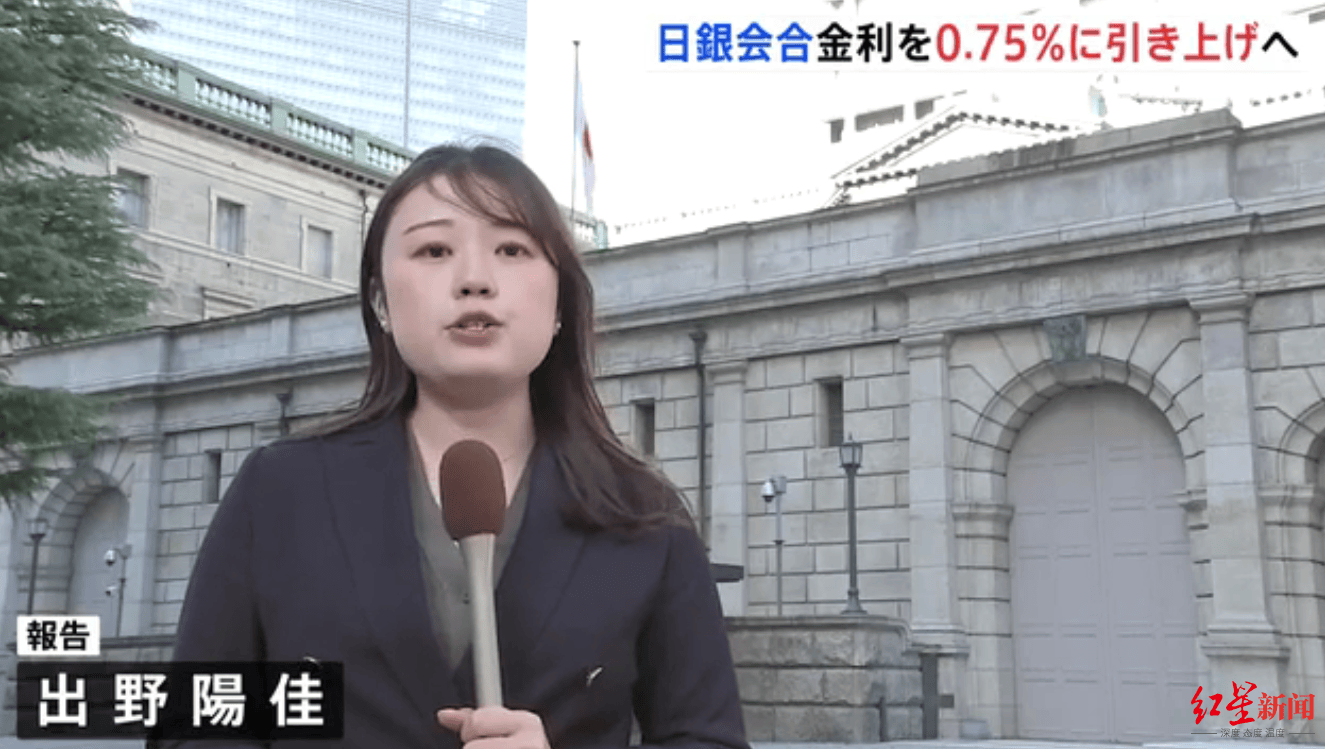
周五上午日本央行宣布加息25个基点,将无担保隔夜拆借利率上调至0.75%,创下1995年以来最高水平,这次决议以9:0的结果获 得全票通过。 关于加息步伐,植田和男表示,宽松政策调整的步伐取决于经济和通胀。很难提前确定中性利率水平,需要将中性利率视为一个 宽泛的区间,中性利率的概念在货币政策框架中很重要,计划在可能的情况下修改中性利率估计。 他强调,离中性利率区间的低端仍有一段距离,未看到过往加息产生强有力的紧缩效应。将在评估加息至0.75%对经济和物价的影 响后,再决定是否加息。 日本央行行长植田和男在随后的新闻发布会中表示,预计实际利率仍将维持在极低水平,宽松的货币环境将继续支撑经济。 植田和男还提到,利率达到30年来最高水平并无特别含义,将密切关注利率对经济的影响。 植田和男进一步指出,如果经济和物价按照预期发展,并随着经济和物价的改善,日本央行将继续提高政策利率,经济展望实现 的可能性正在上升。 到目前为止,植田和男仍在重申日本央行声明的内容,没有就下一步加息时间作出明确指引。他发表讲话后,美元兑日元 USD/JPY短线走高60点,现报156.37。 关于日元走势,植田和男表示,几位委员会成员提到最近 ...
日元加息至30年新高,美债承压!日本能否走出“失落的30年”?
Sou Hu Cai Jing· 2025-12-19 06:27
当地时间12月19日,日本央行宣布加息25个基点,将利率水平提升至0.75%。尽管这一加息幅度完全在市场预料之内,且总体利率水平仍然偏 低,但对日本社会来说,这一数字仍然具有极大的心理意义。 ▲日媒报道 这是日本30年来利率水平的最高点,自日本央行从1994年起连续大幅降息之后,整整一代日本人就习惯了接近于零甚至负利率的生活。即便在2008年金融危 机紧急救市期间,日元利率水平也才达到0.5%。 日元利率的变化牵动着全球目光。过去30年,日元成为给全球金融市场提供流动性的最强发动机。如今日元加息,叠加美元、英镑降息,相当于将过去放出 的水回吸,人们习惯的"日元套保交易"面临"熄火",美债将承受巨大的抛压。 由于中国资本项下的外汇管制,隔绝了国际热钱在短期内大量涌入的风险。 在日本国内,现任政府不断推出金额庞大但效率低下的财政刺激政策,变相削减了日本央行的货币政策效果,导致日本长期国债开始被投资者抛售。 目前,日本已经是美债的第一大海外投资方,但日本的持仓规模已经连续3个月下降。如果日本投资者持续卖出美债偿还日元贷款,美债未来的价格将进一 步承压。Bear Trap Report的研究员拉里·唐纳德悲观地认为, ...
邦达亚洲:英国央行鹰派降息 英镑小幅收涨
Xin Lang Cai Jing· 2025-12-19 05:51
12月19日,周四,英国央行宣布降息25个基点,将政策利率降至3.75%,为2023年2月以来最低水平, 符合预期。这是英国央行会自8月以来首次降息,此前两次会议均维持利率不变。该行的前瞻指引也更 为谨慎。委员会表示,现有证据表明明年借贷成本将继续下降。然而,它在新的措辞中警告称,随着央 行逐步接近中性利率(即既不推高也不拉低通胀的水平),未来关于降息的决定将需要精细权衡。"我 们仍然认为利率处于逐渐下行的路径上,"贝利在随会议纪要发布的声明中表示,"但随着我们每一次降 息,对于还要继续降多少的判断都会变得更加艰难。"会议纪要暗示英国央行正接近降息周期的尾声, 警告称政策的限制性已减弱,明年的宽松幅度将"取决于通胀前景的演变"。 另外,欧洲央行周四维持三大利率不变 连续第四次会议按兵不动,存款利率、主要再融资利率和边际 贷款利率分别为2.00%、2.15%、2.40%。欧洲央行对欧元区经济前景表达了更为积极的看法,认为在全 球贸易冲击和地缘政治不确定性加剧的背景下,欧元区经济展现出一定韧性。新闻发布会上,欧洲央行 行长拉加德强调,虽然央行的政策处于"有利位置",但这"并不意味着我们是静止不变的"。欧洲央行管 ...