
物价稳定目标

Search documents
日本央行委员:日本不再处于通缩状态 政策正常化必须审慎
Xin Hua Cai Jing· 2026-02-26 03:16
Core Viewpoint - The Bank of Japan's committee member Soichiro Takata indicates that the economy is no longer in deflation, emphasizing that concerns about returning to deflation have been eliminated [1][2]. Group 1: Economic Conditions - Takata states that the path to overcoming deflation is finally taking shape, driven by domestic structural factors rather than solely relying on external cost transmission [1]. - He expresses hope for a "true dawn" for Japan's economy, suggesting that the current situation is fundamentally different from past experiences [1]. Group 2: Monetary Policy - Takata advocates for a gradual increase in interest rates, noting that Japan's real short-term interest rates remain significantly negative, even after a potential rate hike in December 2025 [1]. - He warns of the risk that the Bank of Japan may fall behind the global recovery and rate hike cycle starting in 2026 [1]. Group 3: Debt and Market Stability - The need for cautious normalization of policies is emphasized, particularly regarding the pace of reducing government bond purchases [1]. - Takata highlights the risk of weak demand for ultra-long Japanese government bonds and warns of potential market volatility that could lead to dysfunction in the bond market [1]. Group 4: External Risks - He raises concerns about external risks, particularly the evolving U.S. trade policies that could heighten global risk sentiment and exacerbate currency market volatility due to diverging monetary policies between Japan and the U.S. [2]. - Takata acknowledges the moderate growth of the overseas economy but believes Japan has the foundation for endogenous inflation, suggesting that the central bank should focus more on rising prices [2].
日本央行按兵不动,未来仍有加息空间
证券时报· 2026-01-23 09:25
Core Viewpoint - The Bank of Japan (BOJ) maintains the benchmark interest rate at 0.75% while raising inflation outlook, closely monitoring the impact of previous rate hikes on the economy and awaiting election results that may affect national spending plans [1][3]. Interest Rate Decision - The BOJ's decision to keep the interest rate unchanged aligns with the expectations of all surveyed economists, maintaining borrowing costs at a 30-year high [3]. - The voting results showed that one committee member supported a rate hike, while the others preferred to maintain the current rate [3]. Inflation Outlook - BOJ Governor Kazuo Ueda indicated that potential inflation is expected to rise moderately, and if the economic situation develops as anticipated, further rate increases will be considered [4]. - Ueda emphasized that the effects of the last rate hike will take time to permeate through the economy and prices, and the bank will closely examine these impacts [4][5]. Currency and Financial Environment - The yen has been weakening, with the USD/JPY exchange rate surpassing 159 for the first time since January 14 [6]. - Ueda noted that the BOJ will flexibly conduct bond operations under special circumstances to stabilize yields, particularly due to the unstable supply and demand for long-term Japanese government bonds [4]. Economic and Price Forecast - The BOJ's report on economic and price outlook indicates a slow recovery in the Japanese economy, supported by policy measures and a rebound in overseas economies, with a forecasted GDP growth of 0.9%, 1.0%, and 0.8% for fiscal years 2025-2027 [9]. - Short-term inflation is expected to narrow, with core consumer prices projected to fall below 2% in the first half of 2026, influenced by government measures and a decrease in food price inflation [10]. Financial Stability - The current financial environment in Japan remains accommodative, with a stable financial system and smooth financial intermediation activities [10].


植田和男“鹰”声嘹亮!物价已接近目标,2026年或继续加息
Sou Hu Cai Jing· 2025-12-25 12:47
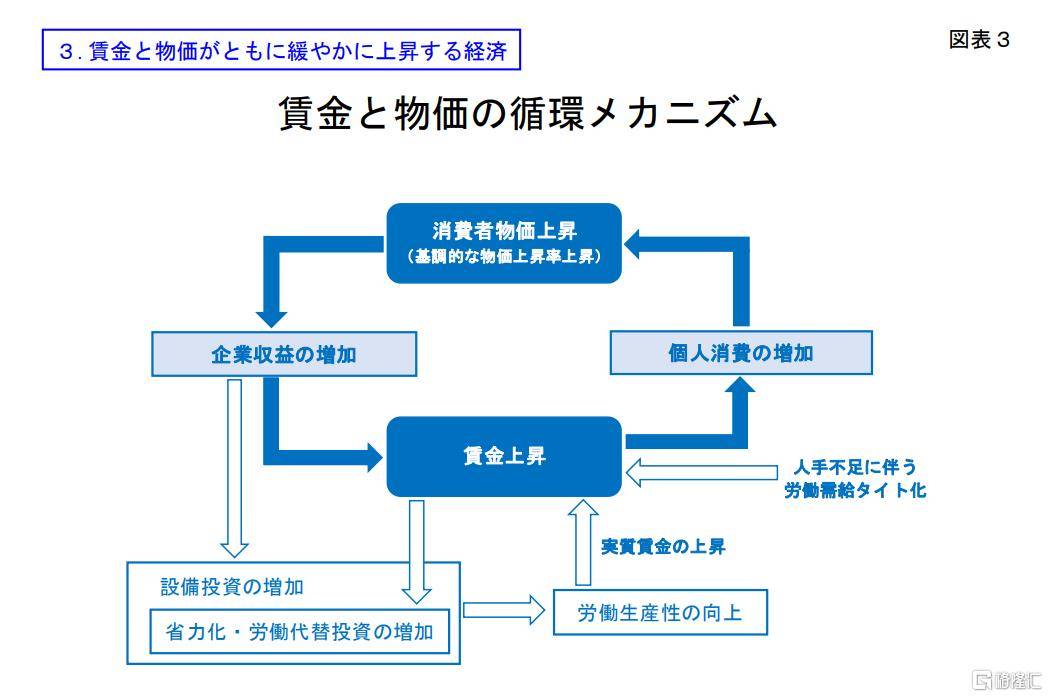
Core Viewpoint - The Bank of Japan is adjusting its monetary policy in response to a resilient economic recovery, raising interest rates to a 30-year high of 0.75% while aiming for a stable inflation target of 2% [3][5][12]. Economic Recovery and Monetary Policy - Japan's economy is showing moderate recovery despite external pressures such as U.S. tariff policies and corporate earnings facing downward pressure [2][10]. - The central bank's decision to raise interest rates reflects a careful assessment of the economic situation, marking a turning point from a decade-long period of aggressive monetary easing [9][10]. Wage and Price Dynamics - The tightening labor market has led to significant changes in corporate behavior regarding wage and price setting, with expectations of wage increases continuing into the next year's labor negotiations [4][16]. - A "virtuous cycle" of wage and price dynamics is being established, where increased corporate earnings lead to higher wages, stimulating consumer spending and further driving up prices [17][21]. Inflation and Economic Outlook - The Bank of Japan anticipates that the inflation rate will stabilize around the 2% target by the second half of 2026 to 2027, supported by a solid wage-price pass-through mechanism and improved inflation expectations [24]. - Current consumer price inflation, excluding fresh food, is around 3%, with expectations of gradual price increases in food and other goods due to rising wages [22][23]. Structural Reforms and Future Projections - The government is implementing a "strong economic comprehensive strategy" to support the virtuous cycle through measures that reduce corporate burdens and improve wage-setting environments [23]. - The ongoing structural changes in the labor market, driven by a declining working-age population, necessitate improvements in labor productivity to address supply constraints [23].
日本央行行长重申渐进加息立场,强调政策节奏与经济匹配
Xin Lang Cai Jing· 2025-12-25 11:12
Core Viewpoint - The Bank of Japan is steadily approaching its 2% price stability target and is open to further interest rate hikes when conditions allow [1] Group 1: Economic Conditions - The formation of a virtuous cycle of wage growth is occurring, reducing the likelihood of Japan returning to a "zero-normal" state where wages and prices remain unchanged [1] - The labor market is tightening, leading to significant changes in corporate wage-setting and pricing behavior [1] Group 2: Monetary Policy - The Bank of Japan's policy stance remains consistent following the interest rate increase to 0.75% on December 19 [1] - Future adjustments to monetary policy will depend on economic and price trends aligning with the central bank's expectations [1] - A gradual normalization of policy is aimed at achieving the inflation target smoothly while supporting long-term economic growth and business confidence [1]
日本央行加息,股市上涨
Zheng Quan Shi Bao· 2025-12-19 09:40
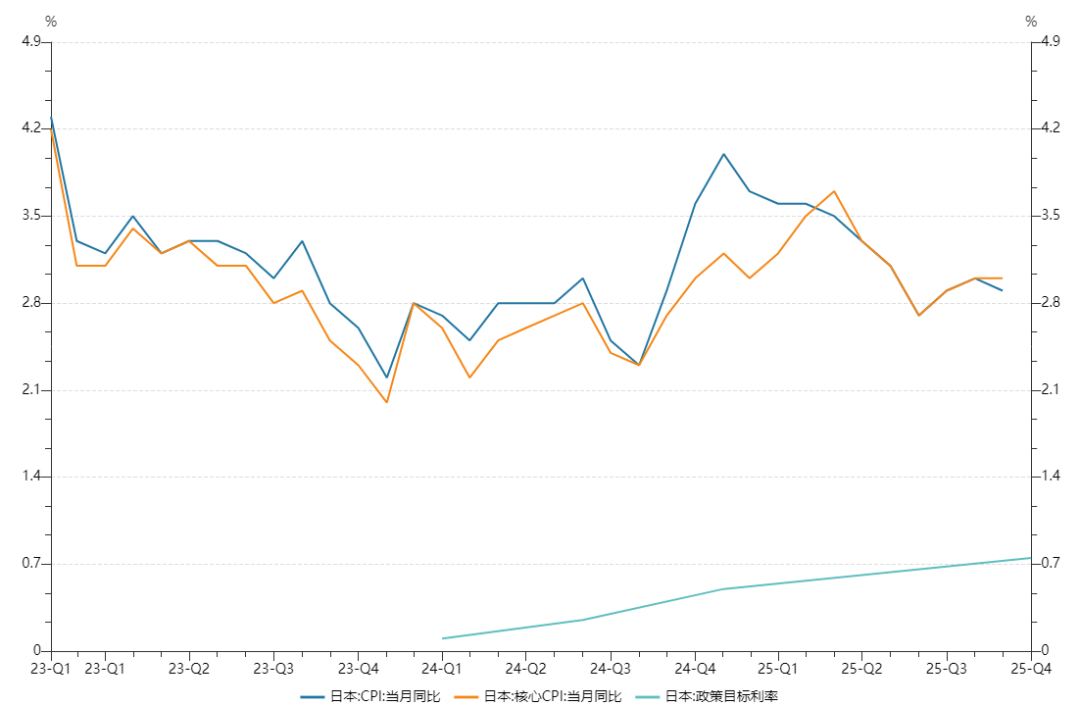
Core Viewpoint - The Bank of Japan has raised its benchmark interest rate by 25 basis points to 0.75%, marking the highest level in 30 years, amid ongoing inflationary pressures and expectations for further rate hikes in the coming year [2][4]. Group 1: Interest Rate Decision - The Bank of Japan's policy committee, led by Governor Kazuo Ueda, unanimously agreed to increase the policy rate by 0.25 percentage points to 0.75% [4]. - The decision reflects an increasing likelihood of achieving economic outlooks, with 50 economists surveyed by Bloomberg predicting the rate hike [4]. - The core Consumer Price Index (CPI) in Japan rose by 3.0% year-on-year in November, marking 51 consecutive months of increase and remaining above the Bank of Japan's 2% target for 44 months [4]. Group 2: Economic Outlook and Inflation - The Bank of Japan emphasized that if the projections in the 2025 outlook report are realized, it will continue to raise policy rates and adjust monetary policy based on economic activity and price improvements [4]. - Governor Ueda indicated that as long as wages continue to rise, core inflation is unlikely to decline, and the transmission of wage increases to prices is ongoing [8]. - The central bank is closely monitoring the impact of the weak yen on future prices, as well as the potential effects of tariffs on consumers [8]. Group 3: Market Reactions - Following the interest rate announcement, the yen continued to decline against the dollar, reaching a low of 156.16, indicating that the market had already priced in the rate hike expectations [5]. - The yield on Japan's 10-year government bonds hit 2%, the highest level since 2006, while the Nikkei 225 index rose by 1% [5]. Group 4: Future Rate Hikes - Ueda stated that the pace of future rate hikes will depend on economic and inflation data, and it is challenging to determine the neutral interest rate level in advance [7]. - The central bank will assess the impact of the current rate increase on the economy and prices before deciding on further hikes, with most observers expecting a frequency of rate increases to be about once every six months [8].
日本央行行长植田和男:日本经济温和复苏 12月将审慎评估加息路径
Xin Hua Cai Jing· 2025-12-01 04:36
Core Viewpoint - The Bank of Japan's Governor, Kazuo Ueda, reiterated that the Japanese economy has achieved a "moderate recovery," despite a temporary negative GDP growth in Q3 2025 [1] Economic Outlook - Ueda emphasized that uncertainties regarding the economic outlook are diminishing as companies continue to raise wages and prices, alongside a gradual recovery in the overseas economy [1] - The minimum wage for FY2025 is expected to increase by over 5% year-on-year, likely leading to broader corporate wage hikes [1] Inflation Expectations - Core consumer inflation is projected to temporarily fall below 2% in the first half of FY2026, before accelerating again [1] - Ueda highlighted that inflation levels are expected to align with the 2% target during the latter half of the Bank of Japan's three-year outlook period [1] - Attention is required on recent price trends that may influence inflation expectations and potential inflation risks [1] Monetary Policy - Ueda stated that it is necessary to adjust the monetary easing measures appropriately to achieve price stability, indicating that any interest rate hikes should neither be too late nor too early [1] - Even with potential interest rate increases, a loose financial environment will be maintained, with rate hikes viewed as "moderately easing the accelerator" rather than "slamming the brakes" [1] Data Review and External Risks - The Bank of Japan will review various data in its December meeting to assess domestic and international economic activities and price conditions, weighing the pros and cons of interest rate hikes [2] - Despite signs of weakness in the overseas economy, a gradual recovery is noted, and the impact of U.S. tariff policies on the global economy has not been significantly observed [2] - Actual interest rates remain at very low levels, and exchange rate movements are more likely to affect domestic prices due to changes in corporate pricing behavior [2]
植田和男:为顺利实现物价稳定目标 有必要适时调整宽松力度
Sou Hu Cai Jing· 2025-12-01 01:30
Core Viewpoint - The Bank of Japan's Governor Kazuo Ueda anticipates that the negative GDP growth is only a temporary phenomenon, with actual interest rates remaining very low [1] Group 1: Economic Outlook - The Bank of Japan maintains its basic judgment that the Japanese economy is experiencing a moderate recovery [1] - There is an expectation that the minimum wage will increase by over 5% year-on-year in the fiscal year 2025, which is likely to drive broader corporate wage increases [1] - The uncertainty surrounding the Japanese economic outlook appears to be gradually diminishing [1] Group 2: Monetary Policy - In the December meeting, the Bank of Japan will review and discuss domestic and international economic activities, price conditions, and market dynamics based on various data [1] - The necessity to adjust the easing measures in a timely manner is emphasized to achieve the price stability target, ensuring that adjustments are neither too late nor too early [1] Group 3: Price Dynamics - The transmission of wage increases to prices is ongoing, with moderate increases observed not only in food prices but also in goods and services [1] - There is a growing consensus that the impact of tariff policies on corporate profits will be limited [1]
日本央行维持0.5%政策利率,继续观望关税影响
日经中文网· 2025-10-30 06:49
Core Viewpoint - The Bank of Japan (BOJ) has decided to maintain its policy interest rate at 0.5% during its monetary policy meeting on October 30, following six consecutive meetings without change since the rate was raised in January. The BOJ is closely monitoring the impact of U.S. tariff policies on the Japanese economy [2][4]. Group 1: Monetary Policy Decisions - The BOJ has kept the uncollateralized overnight call rate target at 0.5% since its increase in January [2]. - Two policy board members opposed maintaining the rate, advocating for an increase to 0.75%, citing that the inflation stability target has been largely achieved and that inflation risks are increasing [4]. - The BOJ plans to update its economic and price outlook report every three months, providing forecasts for real GDP growth and consumer price index changes [5]. Group 2: Economic Forecasts - The BOJ forecasts real GDP growth rates of 0.7% for both 2025 and 2026, and 1.0% for 2027 [5]. - The consumer price index, excluding fresh food, is projected to be 2.7% in 2025, 1.8% in 2026, and 2.0% in 2027 [5]. - The BOJ maintains its prediction for achieving the 2% inflation stability target between the latter half of 2026 and 2027 [6]. Group 3: Market Expectations - There is a significant market expectation for a rate hike in December, with a 60% probability according to recent statistics [6]. - The BOJ's President, Ueda, is under scrutiny regarding how he will articulate the rate hike policy [6].

欧元区通胀持稳2%目标线,食品价格猛涨5.4%
Shang Wu Bu Wang Zhan· 2025-08-06 16:08
Core Viewpoint - The Eurozone's inflation rate remained stable at 2.0% in July, aligning with the European Central Bank's price stability target, despite significant fluctuations in specific sectors [1] Group 1: Inflation Data - Eurozone inflation rate for July is 2.0%, unchanged from June [1] - Fresh food prices surged by 5.4% year-on-year, marking the highest increase for the month [1] - Service price growth slightly decreased from 3.3% in June to 3.1% in July [1] - Energy prices experienced a decline of 2.5% [1]