
开放合作

Search documents
走开放包容之路,共享亚太合作成果
Xin Hua She· 2025-10-30 02:08
Core Points - The Asia-Pacific region is a significant engine for global economic growth, with APEC being the highest-level and most influential economic cooperation mechanism in the region [1] - President Xi Jinping emphasizes the importance of openness and cooperation in the Asia-Pacific, advocating for mutual development and addressing changes collectively [4][17] Economic Cooperation and Development - Openness is highlighted as the lifeline of Asia-Pacific cooperation, with the experience indicating that openness leads to prosperity while closure leads to decline [4] - China is committed to high-level openness and multilateralism, supporting the WTO-centered multilateral trade system to foster an open world economy [4] - The "Qingdao-Jeju" container shipping route has been launched, significantly improving logistics efficiency and reducing costs between China and South Korea [6] Regional Integration and Connectivity - The China-Peru Chancay Port project, a key initiative under the Belt and Road Initiative, officially opened in November 2024, becoming a crucial shipping hub connecting Asia and Latin America [7] - The "Two Countries, Twin Parks" cooperation model between China and Malaysia has yielded fruitful results in project construction and innovation over the past decade [10] - The Western Land-Sea New Corridor has facilitated cross-border logistics, enhancing trade efficiency with Vietnam [12] Agricultural and Technological Collaboration - China has been a major exporter of cherries from Chile for seven consecutive years, with over 90% of Chilean cherries being sold to China, enriching Chinese consumers' diets [22] - The introduction of Chinese hybrid rice technology in the Philippines has steadily increased rice yields, contributing to food security and improving farmers' livelihoods [30] - The use of Chinese-made agricultural drones in Thailand has empowered local farmers, promoting more efficient and safer agricultural production [28] Infrastructure Development - The Jakarta-Bandung High-Speed Railway, a collaboration between China and Indonesia, reduces travel time between Jakarta and Bandung from over three hours to 46 minutes, enhancing local economic development [26] - Chinese enterprises have contributed to the upgrade of Mexico City's metro system, improving the commuting experience for citizens [21]

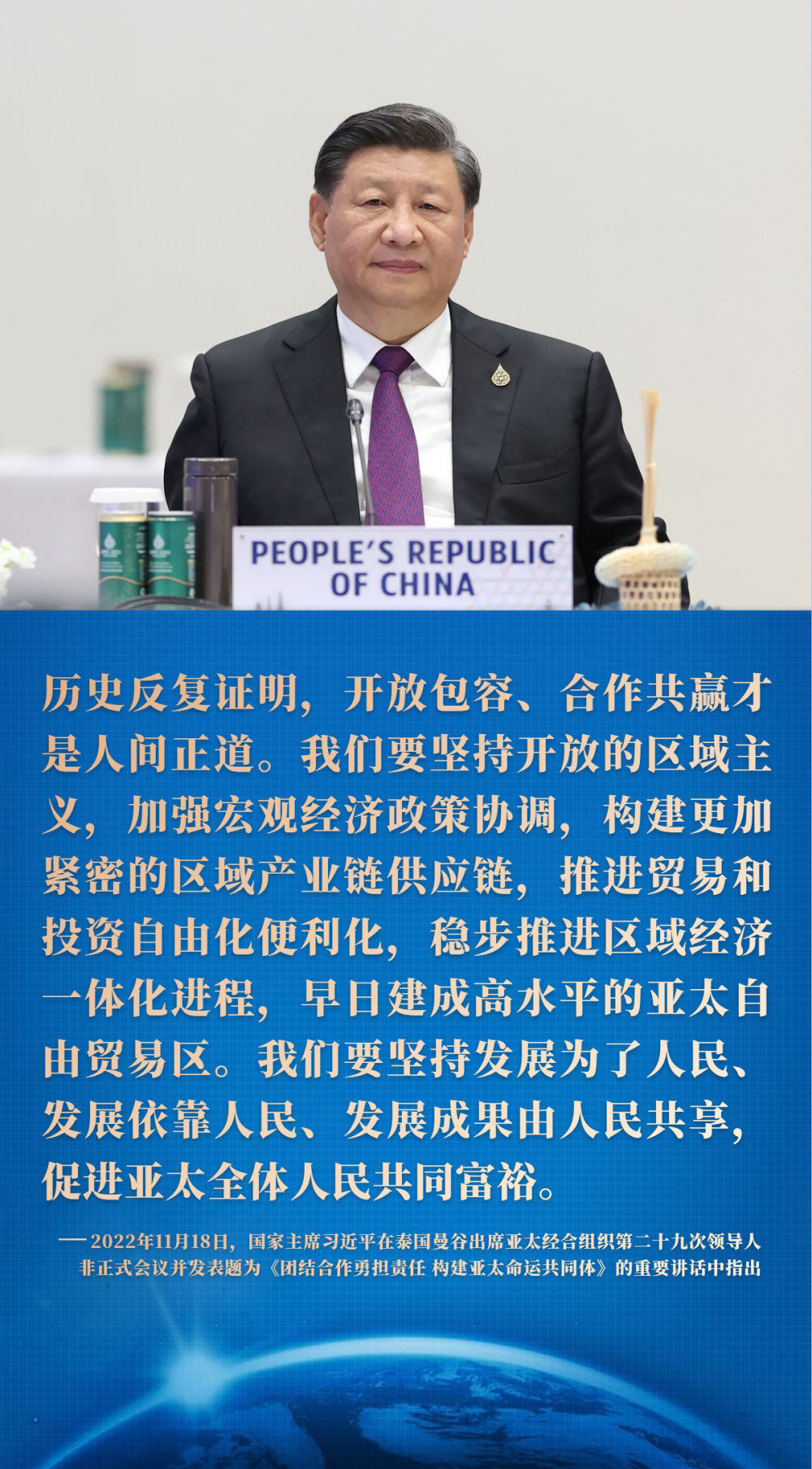
镜观·回响|走开放包容之路,共享亚太合作成果
Xin Hua She· 2025-10-29 08:26
Core Points - The Asia-Pacific region is a significant engine for global economic growth [1] - The Asia-Pacific Economic Cooperation (APEC) is the highest-level and most influential economic cooperation mechanism in the region [1] - President Xi Jinping emphasizes open cooperation and common development to address changes and promote regional development [1] Group 1: Open Cooperation - Openness is highlighted as a lifeline for Asia-Pacific cooperation, with the experience showing that openness leads to prosperity while closure leads to decline [4] - China is committed to high-level openness and multilateralism, supporting the World Trade Organization-centered multilateral trade system [4] - The concept of inclusive development in the Asia-Pacific is driving regional integration and connectivity among countries [4] Group 2: Infrastructure and Trade Initiatives - The "Qingdao-Jeju" container shipping route has been launched, significantly improving logistics efficiency and reducing costs for trade between China and South Korea [5] - The Chancay Port in Peru, a key project under the Belt and Road Initiative, is set to become a major shipping hub connecting Asia and Latin America [7] - The "Two Countries, Twin Parks" cooperation model between China and Malaysia has yielded fruitful results in project construction and innovation over the past decade [10] Group 3: Agricultural and Technological Cooperation - China has conducted 41 training sessions in Papua New Guinea since 2018, benefiting over 3,200 local participants through agricultural technology transfer [18] - Chinese agricultural drones are enhancing efficiency and safety in Thailand's agricultural production [26] - The introduction of hybrid rice planting technology from China is improving rice yields in the Philippines, contributing to food security [26] Group 4: Economic Impact and Trade Relations - China has been the largest export market for Chilean cherries for seven consecutive years, with over 90% of cherries exported to China [21] - The Jakarta-Bandung High-Speed Railway, a collaboration between China and Indonesia, significantly reduces travel time and boosts local economic development [25] - The participation of South Korean cosmetics company Amorepacific in the China International Import Expo reflects the growing diversity of products available to Chinese consumers [23]

外交部:开放合作、融合发展是缔造“亚太奇迹”的关键密码
Yang Shi Xin Wen· 2025-10-29 07:41
Core Viewpoint - The Asia-Pacific region is recognized as the most dynamic and fastest-growing area globally, with significant progress in economic integration and cooperation, highlighted by the signing of the China-ASEAN Free Trade Area 3.0 upgrade protocol and the fifth RCEP leaders' meeting [1] Group 1: Economic Cooperation and Integration - The RCEP has been in effect for over three years, leading to deepening economic cooperation among member countries and maintaining rapid regional economic growth [1] - China and ASEAN have been each other's largest trading partners for five consecutive years, indicating strong bilateral trade relations [1] - The signing of the China-ASEAN Free Trade Area 3.0 upgrade protocol is a major achievement in deepening economic ties, expected to inject more momentum and confidence into both the Asia-Pacific and global economies [1] Group 2: Economic Growth Projections - The International Monetary Fund (IMF) projects the Asia-Pacific region's economic growth rate to be 4.5% this year, continuing to lead global growth [1] - The success of the Asia-Pacific region is attributed to open cooperation and integrated development, which are seen as essential for overcoming challenges and creating a shared future [1]
亚太将启APEC时刻 世界期待“中国声音”
Zhong Guo Xin Wen Wang· 2025-10-28 09:37
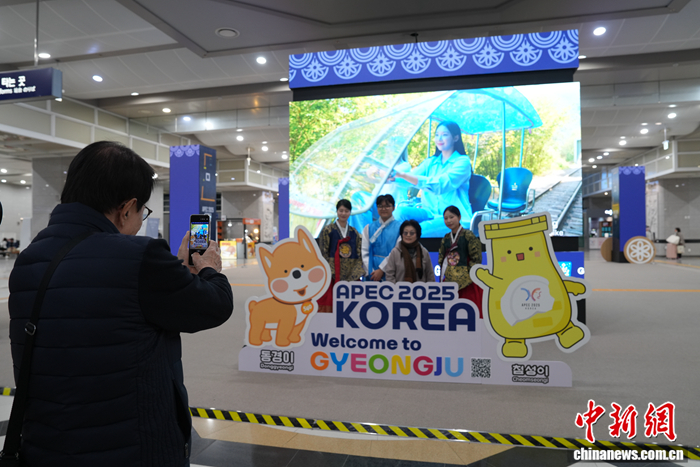
Core Points - The upcoming APEC informal leaders' meeting will take place in Gyeongju, South Korea, from October 31 to November 1, focusing on "Building a Sustainable Tomorrow - Connectivity, Innovation, Prosperity" [3][5] - The meeting aims to address the challenges posed by regional instability, rising anti-globalization sentiments, and fragmented supply chains, emphasizing the importance of cooperation for economic stability [3][4] - China's role in promoting regional cooperation and economic integration is highlighted, with significant trade figures indicating its influence in the APEC region [4][5] Summary by Sections APEC Meeting Overview - The 32nd APEC informal leaders' meeting will emphasize cooperation amidst global economic challenges [3] - The theme reflects a collective desire for collaboration to foster economic growth and stability [3] China's Contributions - China has been a strong supporter of APEC, actively engaging in various trade agreements and initiatives to enhance regional cooperation [4] - In the first three quarters of this year, China's trade with other APEC economies reached 19.41 trillion yuan, accounting for 57.8% of its total foreign trade [4] Future Expectations - President Xi Jinping is expected to deliver a significant speech and engage in bilateral meetings, marking his first foreign visit after the 20th National Congress of the Communist Party [5] - There are high expectations for China to outline specific measures for open cooperation during the APEC meeting, which could benefit regional collaboration [5] Key Topics of Discussion - Artificial intelligence and digital economy are anticipated to be major discussion points, with a focus on bridging the digital divide and enhancing digital empowerment [6] - The meeting is expected to yield practical cooperation outcomes in these areas, sending positive signals to the region and the world [6] China's Future Role - China will host APEC in 2026, marking its third time in this role, reinforcing its commitment to regional economic development [6] - Experts believe that China's ongoing efforts in deepening regional cooperation and innovation will support APEC's role as a global economic growth engine [6]
商务部:以开放合作的“确定性”对冲国际合作环境的“不确定性”
Xin Hua Wang· 2025-10-28 06:22
Core Viewpoint - The Chinese government emphasizes the importance of open cooperation to counteract uncertainties in the international cooperation environment, particularly through the China International Import Expo (CIIE) platform [1] Group 1: Trade and Investment Facilitation - The CIIE aims to continuously promote trade and investment facilitation, as well as intellectual property protection, to create a stable and predictable business environment [1] - The initiative includes branding efforts such as "Invest in China," "Buy in China," and "Export from China" to enhance the attractiveness of the Chinese market [1] Group 2: Business Environment - The government is focused on transforming exhibits into commodities and exhibitors into investors, thereby fostering a more dynamic economic landscape [1]
商务部:第八届进博会将有138个国家和地区企业参展,8位诺奖得主参加虹桥论坛|快讯
Hua Xia Shi Bao· 2025-10-28 05:59
Core Points - The 8th China International Import Expo (CIIE) will be held from November 5 to 10 in Shanghai, featuring participation from 155 countries, regions, and international organizations, with 4,108 foreign enterprises exhibiting, marking a record high in overall exhibition area exceeding 430,000 square meters [2] - The event will showcase 461 new products, technologies, and services, including innovations in low-altitude economy and humanoid robots, reflecting the commitment of the international community to China's economic prospects [2] - The Hongqiao International Economic Forum will host 33 sub-forums and closed-door meetings, with participation from eight Nobel laureates and over 400 prominent figures from politics, business, and academia discussing global governance and open cooperation [2] Industry Insights - China has maintained its position as the world's second-largest import market for 16 consecutive years, with imports of goods and services expected to exceed $15 trillion during the 14th Five-Year Plan period [3] - The potential of the vast market is underscored by the projected growth of the middle-income group, which is expected to exceed 800 million in the next decade [3] - The CIIE has facilitated over $500 billion in intended transactions over its first seven editions, demonstrating China's commitment to sharing market opportunities and providing certainty amid global market fluctuations [3]
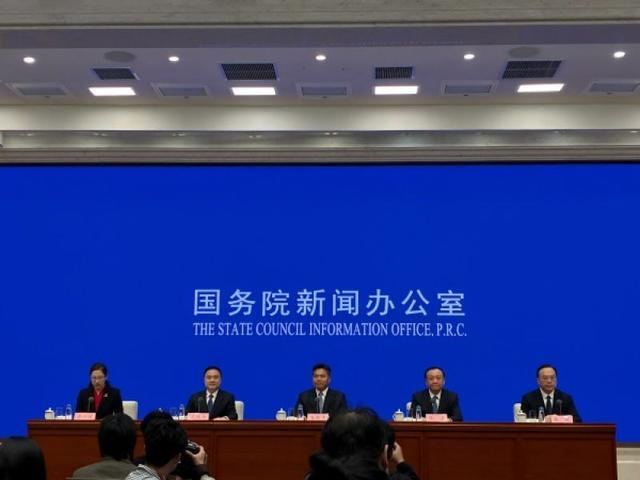
商务部:未来十多年中国中等收入群体将超过8亿
Xin Jing Bao· 2025-10-28 04:30
Core Insights - The upcoming 8th China International Import Expo (CIIE) will take place from November 5 to 10 in Shanghai, with participation from 155 countries, regions, and international organizations, showcasing an exhibition area exceeding 367,000 square meters [1][2] - China is projected to have over 800 million middle-income individuals in the next decade, indicating significant market potential [1] - China has maintained its position as the world's second-largest import market for 16 consecutive years, with imports of goods and services expected to exceed $15 trillion during the 14th Five-Year Plan period [1] Group 1 - The 8th CIIE aims to inject more certainty into the global market amid profound changes in the global landscape [1] - The event will support exhibitors from 37 least developed countries, promoting local specialty products to enter the Chinese market [1] - The CIIE serves as a platform for discussions on trade restructuring, global south cooperation, and multilateralism during the concurrent Hongqiao Forum [1] Group 2 - The Chinese government emphasizes that the door to openness will continue to widen, aiming to expand the global market and enhance shared development mechanisms [2] - The commitment to cooperation and mutual benefit is reaffirmed as a cornerstone of China's economic strategy [2]
进博会期间,8位诺贝尔奖获得者将亮相虹桥论坛
Xin Jing Bao· 2025-10-28 04:21
Core Points - The 8th China International Import Expo (CIIE) will be held in Shanghai from November 5 to 10, featuring the Hongqiao International Economic Forum with participation from 8 Nobel Prize winners [1] - The forum will address key topics such as "Revitalizing Multilateral Cooperation," "Digital Empowerment," "Green and Sustainable Development," and "A More Open China," focusing on global trade order reconstruction and supply chain resilience [1] - Over 400 prominent figures from politics, business, and academia will discuss global governance and open cooperation issues, along with the release of the flagship report "World Open Report" and the latest World Open Index for the fourth consecutive year [1] Report Highlights - This year's report will be uniquely authored by a Nobel laureate in economics and will include a chapter co-written by the UNIDO research team and Chinese experts [1] - The report extends its index measurement period back to 1990, providing a longer-term perspective on the evolution of global openness and the characteristics of international open patterns [1] - A new chapter titled "Multinational Companies and China: Moving Towards Each Other" will analyze openness practices from the perspective of multinational companies, addressing contemporary issues such as cross-border data flow and cooperation [1]
中国经济是一片大海而不是小池塘 进博会为世界注入更多确定性
Yang Shi Xin Wen· 2025-10-28 03:49
Group 1 - The core viewpoint of the news is that the 8th China International Import Expo (CIIE) serves as a significant initiative for China to open its market to the world, providing certainty in the face of global uncertainties [1][2][3] - The expo will feature over 36.7 million square meters of exhibition space with participation from 4,108 foreign enterprises across 138 countries and regions, reflecting international confidence in the Chinese economy [1] - China has maintained its position as the world's second-largest import market for 16 consecutive years, with imports of goods and services expected to exceed $15 trillion during the 14th Five-Year Plan period [1] Group 2 - The CIIE aims to counteract uncertainties in the international cooperation environment by promoting trade and investment facilitation, intellectual property protection, and creating a stable and transparent business environment [2] - The event will include international discussions on topics such as trade restructuring and multilateralism, showcasing China's commitment to higher levels of openness [2] - The expo will support exhibitors from 37 least developed countries through free exhibition spaces and tax incentives, highlighting China's dedication to mutual benefit and cooperation [2] Group 3 - The 8th CIIE is positioned as a platform to expand global market opportunities and enhance shared development mechanisms, aiming to inject new momentum into global economic growth [3]
全球头部企业将齐聚第八届中国国际进口博览会
Zhong Guo Jing Ji Wang· 2025-10-28 03:37
Core Viewpoint - The 8th China International Import Expo (CIIE) will take place from November 5 to 10, showcasing China's commitment to opening its market to the world and injecting certainty into global trade amidst profound changes in the global landscape [1][2] Group 1: Event Overview - The CIIE is a significant initiative by China to open its market, with the country being the second-largest import market globally for 16 consecutive years [1] - During the 14th Five-Year Plan period, China's goods and services imports are expected to exceed $15 trillion [1] - The expo will feature over 36.7 million square meters of exhibition space, with more than 600 new participating companies, including 290 Fortune 500 and industry-leading firms, marking record highs in both exhibition area and number of companies [1] Group 2: Product and Technology Highlights - The expo will showcase 461 new products, technologies, and services, positioning China as a testing ground for global innovation [2] - Notable first-time exhibitors will present groundbreaking products, including a small-diameter controllable expansion vascular stent and a new pharmaceutical X-ray machine [2] - Leading companies in new-generation information technology and artificial intelligence will display their latest achievements, emphasizing the expo's role in promoting innovation [2] Group 3: Collaborative Efforts - The event will gather top scholars, including eight Nobel Prize winners, to discuss global governance and open cooperation, with over 400 notable figures from politics, business, and academia participating [2] - The CIIE aims to foster a consensus on open cooperation and contribute to global economic growth by expanding market opportunities and enhancing collaborative mechanisms [2]