
国际贸易

Search documents
早盘直击|今日行情关注
申万宏源证券上海北京西路营业部· 2026-03-24 02:17
Group 1 - The geopolitical situation in the Middle East remains unstable, leading to heightened market risk aversion. Following the airstrike by the US and Israel on Iran, which resulted in the death of Iran's Supreme Leader Khamenei, the region has entered a period of turmoil. The uncertainty in the Middle East is expected to continue, affecting market sentiment [1] - The stock market experienced significant adjustments on Monday, with increased trading volume. The Shanghai Composite Index opened lower and continued to decline, seeking support near the annual line. The Shenzhen Component Index also opened lower and fell below the six-month line, with declines comparable to the Shanghai index. The total trading volume for the day was approximately 2.4 trillion yuan, an increase from the previous Friday [1] - Market focus shifted towards upstream resource products such as coal and oil, with widespread declines across major indices. The small and mid-cap stocks experienced larger drops. The Shanghai Composite Index has been on a downward trend since reaching a new high in early March, with the market's focus shifting downward at an accelerated rate [1] Group 2 - The Shanghai Composite Index has broken below the previous year's low point, with the main support level now moving down to near the annual line. This indicates a bearish trend in the market as it seeks new support levels [1]


集运指数(欧线)观点:短期地缘难降温,盘面易涨难跌-20260322
Guo Tai Jun An Qi Huo· 2026-03-22 13:00
1. Report Industry Investment Rating - Not provided in the document 2. Core Viewpoint of the Report - The short - term geopolitical situation is difficult to cool down, and the market is prone to rise and difficult to fall [1][4] 3. Summary by Relevant Catalogs 3.1 Supply - **Supply Capacity**: In the past week, the average weekly capacity in April was revised down from 325,000 TEU/week to 311,000 TEU/week, with the reduction mainly from the OA Alliance. April capacity decreased by 0.9% year - on - year and increased by 5.8% month - on - month. In May, the capacity was revised down from 335,000 TEU/week to 331,000 TEU/week, with 4 pending voyages. May capacity increased by 10.4% year - on - year and 7.8% month - on - month, and the static effective capacity in May is at a historical high [4][31]. - **Supply Chain Trade Risks**: Geopolitical tensions in the Middle East have escalated, with attacks and counter - attacks between Israel and Iran. The Strait of Hormuz may adopt "selective access", and insurance conditions are still tight. Shipping companies have adjusted their operations, such as Maersk expanding land - bridge and multimodal transport solutions and CMA CGM resuming some bookings [27]. - **Turnover Efficiency**: The turnover efficiency is affected by factors such as ship speed, idle capacity, and port congestion. For example, the congestion situation in ports around the world is presented through data on container ships' in - port capacity [39][44]. - **Static Capacity**: In the past three months, 12,000 - 16,999 TEU container ships received 1 new ship in March, and there were no new 17,000 + TEU container ships delivered in March. In the next three months, 6 new 12,000 - 16,999 TEU container ships and 1 new 17,000 + TEU container ship are expected to be delivered in March [55][58]. 3.2 Demand - **Asia - Europe Trade**: From the perspective of Asia's exports to Europe, the container trade volume between Asia and Europe (Northwest Europe + Mediterranean) shows certain seasonal trends. In 2025, the trade volume in most months showed year - on - year growth [67][68]. - **Asia - North America Trade**: From the perspective of Asia's exports to North America, the container trade volume between Asia and North America also has seasonal characteristics. In 2025, the trade volume in some months showed year - on - year growth, while in others it declined [71][72]. 3.3 Price - **Spot Freight and Index Tracking**: Maersk raised the price by $400 to $2,700/FEU in the first week of April, and the booking progress was average as of Thursday. In a neutral scenario, the market freight rate center in early April is expected to increase to the range of $2,700 - $2,800/FEU, equivalent to an SCFIS index of about 1,950 - 2,050 points; in a pessimistic scenario, the price increase fails, and the freight rate center returns to the range of $2,500 - $2,600/FEU in the second half of March [9]. - **Seasonal Trends of Freight Rates on Major Global Routes**: The document presents the seasonal trends of freight rates on major global routes through SCFI and NCFI data, including routes such as Shanghai - Europe, Shanghai - Mediterranean, etc. [13][19] 3.4 Strategy - Short - term low - buying of the 2604 contract around 1,800 points [4]
深度专题 | 伊朗对中国航运“开绿灯”,我国有多少货物要经过霍尔木兹海峡?
对冲研投· 2026-03-08 02:33
Core Viewpoint - The article discusses the implications of the recent military actions by the US and Israel against Iran, leading to Iran's blockade of the Strait of Hormuz and the subsequent impact on global shipping and trade, particularly focusing on China's unique position in this context [2][12]. Group 1: Military Actions and Shipping Disruptions - Following the US and Israel's attacks on Iran, the Iranian Revolutionary Guard announced a blockade of the Strait of Hormuz, prohibiting all vessels from passing [2]. - From March 1 to 5, there were reports of strong electronic interference in the Strait of Hormuz and the Persian Gulf, causing GPS and AIS navigation signals to become unstable [3]. - Multiple vessels were attacked, prompting global shipping companies to implement emergency measures, with some ships anchoring and others rerouting, turning the previously busy Strait of Hormuz into a "no-go zone" [7]. Group 2: China's Special Access - Amidst the shipping crisis, a Chinese-owned cargo ship, "Iron Maiden," successfully traversed the Strait of Hormuz without interference, indicating a potential preferential treatment for Chinese vessels [11]. - Iran's Revolutionary Guard stated that the Strait would be open to friendly nations, specifically allowing only Chinese ships to pass, while closing it to the US, Israel, and their allies [13][15]. Group 3: Trade Overview with Gulf Countries - In 2025, China's total trade with the eight Gulf countries (Saudi Arabia, UAE, Oman, Qatar, Bahrain, Kuwait, Iraq, and Iran) is projected to reach 2.54 trillion yuan, accounting for 5.58% of China's total foreign trade [16]. - China exported 1.21 trillion yuan worth of goods to these countries, representing 4.49% of its total exports, while imports amounted to 1.33 trillion yuan, making up 7.17% of total imports [17]. Group 4: Trade Deficits and Surpluses - China has a trade deficit of 114.1 billion yuan with the Gulf countries, with Saudi Arabia and the UAE being the top trading partners, each accounting for approximately 30.5% of the total trade [18]. - The trade dynamics show a surplus with Iran (279 million yuan) and Bahrain (97 million yuan), while significant deficits exist with Iraq (1.2 billion yuan) and Oman (1.55 billion yuan) [24][25]. Group 5: Major Export Products to Gulf Countries - The primary export category to the Gulf countries is machinery and electronics, valued at 436.8 billion yuan, which constitutes 36.1% of total exports to the region [27]. - Other significant exports include transportation equipment (186.8 billion yuan, 15.4%), metals and products (157.5 billion yuan, 13.0%), and textiles and apparel (103.1 billion yuan, 8.5%) [31]. Group 6: Major Import Products from Gulf Countries - Energy minerals dominate imports from the Gulf, totaling 11.45 trillion yuan, which is 86.4% of total imports from the region [32]. - Key imports include crude oil (9.4 trillion yuan, 70.9%), refined oil (421 billion yuan, 3.2%), and liquefied natural gas (789 billion yuan, 5.95%) [33][36]. Group 7: Future Implications - The ongoing geopolitical tensions and Iran's selective access policy for shipping could significantly impact global trade routes and China's energy security, emphasizing the importance of the Strait of Hormuz in international trade [15][12].

深夜!霍尔木兹海峡,突传大消息!
券商中国· 2026-03-04 15:42
Core Viewpoint - The situation in the Strait of Hormuz is causing significant disturbances in the global energy market, with recent attacks on vessels raising concerns about oil supply disruptions [1][2][6]. Group 1: Market Reactions - Following reports of attacks on vessels in the Strait of Hormuz, market fears regarding oil supply interruptions have eased, leading to a decline in international oil prices. As of the latest update, WTI crude oil fell by 0.91% to $73.88 per barrel, while Brent crude oil decreased by 0.47% to $81.02 per barrel [3]. - The VIX fear index dropped over 5%, and major U.S. stock indices opened higher, indicating a rebound in large tech stocks. European markets also saw gains, with Spain's IBEX35 index rising over 2% and other major indices increasing by more than 1% [2]. Group 2: U.S. Government Actions - U.S. Treasury Secretary Scott Bentsen announced that the U.S. will provide insurance for oil tankers operating in the Gulf region and will maintain communication with shipowners in the coming days. This move is part of a broader strategy to ensure the safety of oil transportation through the Strait of Hormuz [5][6]. - Bentsen also indicated that a new 15% global import tariff is expected to take effect soon, which aligns with President Trump's previous statements regarding the need for enhanced security measures in the region [4][5]. Group 3: International Military Responses - France has taken military action by deploying Rafale fighter jets to intercept an Iranian drone heading towards the UAE, highlighting the escalating military involvement in the region [7][8]. - French President Macron criticized U.S. and Israeli military actions against Iran, stating that such actions do not comply with international law and exacerbate regional tensions. He emphasized the importance of securing vital maritime routes for global trade [9]. Group 4: Political Stances - Spanish Prime Minister Sanchez expressed opposition to the use of military force and called for a diplomatic resolution to the ongoing conflict, reflecting concerns about the potential for increased instability and rising energy prices [10].

法国向地中海部署戴高乐号航母
券商中国· 2026-03-04 03:30
Group 1 - The core viewpoint of the article is that France, represented by President Macron, does not recognize the military actions taken by the United States and Israel against Iran, stating that these actions violate international law and exacerbate regional conflicts [1] - Macron highlighted that the Strait of Hormuz is effectively closed, and the Suez Canal and Red Sea are under pressure and threat, leading to significant disruptions in oil, natural gas prices, and international trade [1] - France is working on "building alliances" and consolidating military resources to restore and secure vital global trade routes, indicating a proactive approach to geopolitical tensions [1] Group 2 - The French aircraft carrier Charles de Gaulle has been deployed to the Mediterranean, accompanied by air forces and escort ships, demonstrating France's military readiness in response to the situation [1] - The Languedoc frigate is also being sent to Cyprus, further indicating France's commitment to maintaining security in the region [1]

早盘直击|今日行情关注
申万宏源证券上海北京西路营业部· 2026-03-03 02:44
Group 1 - The core viewpoint of the article highlights that the geopolitical situation in the Middle East is the primary factor influencing market trends, particularly following the airstrike by the US and Israel on Iran, which resulted in the death of Iran's Supreme Leader, leading to increased uncertainty in the region [1] - The market is currently focused on the duration of the Middle East conflict and its impact on oil transportation and prices, with 20% of global oil consumption being transported through the Strait of Hormuz, indicating potential significant disruptions if the strait is blocked [1] - On the trading front, the two markets experienced fluctuations with increased trading volume, where the Shanghai Composite Index opened lower but closed near its daily high, indicating strong short-term support from moving averages [1] Group 2 - The Shenzhen Component Index showed adjustments but remained above the five-day moving average, reflecting a mixed performance in the markets [1] - The total trading volume reached approximately 3 trillion yuan, significantly higher than the previous Friday, with market hotspots primarily in the upstream resource sector [1] - The current market characteristics include sector differentiation and rapid industry rotation, with the Shanghai Composite Index expected to start an upward trend in mid to late December 2025, followed by a new high in mid-January 2026 before entering a consolidation phase [1]

特朗普通告全球,中欧待遇互换,欧盟拒绝接受,卢拉呼吁一视同仁
Sou Hu Cai Jing· 2026-02-25 05:42
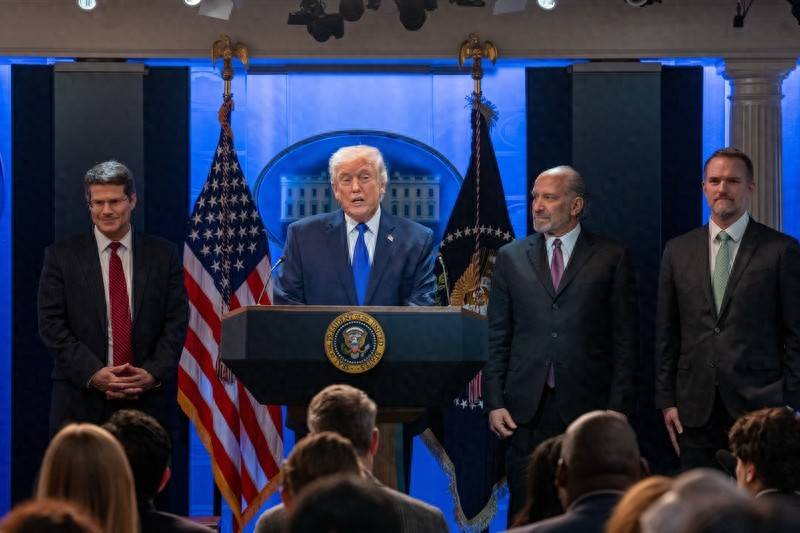
Group 1 - The U.S. Supreme Court ruled 6-3 that Trump's tariff measures under the International Economic Powers Act of 1977 were unconstitutional, leading to Trump's announcement of a unilateral 15% tariff on all countries, causing global turmoil [1] - The EU expressed strong opposition to Trump's decision, emphasizing the need for adherence to the trade agreement reached in 2025, which included a commitment from the U.S. to implement a 15% tariff on most EU goods while offering zero tariffs on specific products [3] - Trump's new tariff policy resulted in a decrease in tariffs on China from 20% to 15%, while increasing tariffs on the EU, which angered EU leaders who felt their diplomatic efforts had been undermined [5] Group 2 - The sudden increase in tariffs from 10% to 15% disrupted global markets, highlighting the importance of stable tariff policies in international trade and raising concerns about the U.S.'s ability to maintain its global leadership [6] - The uncertainty surrounding the new tariff measures poses significant challenges for countries like Brazil, which has limited capacity to respond to U.S. demands, indicating potential economic vulnerabilities [5] - The current situation may inadvertently benefit China, as the U.S.'s erratic trade policies could enhance China's position as a stabilizing force in the global economy, allowing it to focus on its development while waiting for further U.S. missteps [6]
特朗普通告全球,中欧待遇互换,欧盟拒绝接受,卢拉呼吁要一视同仁
Sou Hu Cai Jing· 2026-02-24 05:34
Group 1 - Trump's recent decision to impose a 15% tariff on goods from all countries has caused chaos in the international trade market and angered many nations [1][3] - The decision undermines the long-term negotiations between the US and the EU, which had previously reached agreements including zero tariffs on specific goods and a $600 billion investment commitment from the EU to the US [1] - The rapid increase in tariffs from 10% to 15% has intensified global doubts about the US's reliability as a trade partner, prompting traditional allies to reconsider their relationships with Washington [5] Group 2 - Brazil's President Lula expresses concern over future trade prospects despite the reduction of threatened tariffs from 50% to 15%, highlighting the uncertainty in the current environment [3] - The frequent adjustments in tariffs reflect a loss of credibility for the US, as established international trade rules are being disregarded, which could diminish the US's position as a global trade leader [3][5] - China's role as a stabilizing force in the global economy is becoming more apparent, as countries may seek to establish stable relationships with China amid US policy volatility [5][7] Group 3 - The ongoing situation requires countries to reassess their relationships and find a balance between protecting their interests and maintaining international order [7] - The chaotic actions of Trump symbolize the US's struggles with globalization challenges, prompting nations like the EU and Brazil to carefully consider their strategies to safeguard their interests [7] - For China, maintaining patience, integrity, and stable policies is crucial to navigating the current crisis and enhancing its international standing [7]
突发特讯!美国通告全球:白宫确认终止部分关税措施,引发全球高度关注
Sou Hu Cai Jing· 2026-02-21 09:48
Group 1 - The U.S. Supreme Court's ruling has caused significant turmoil in international trade, with the termination of nine tariff measures under the International Emergency Economic Powers Act, affecting goods worth 17% of the U.S. annual import total [1][3] - Following the ruling, President Trump announced a new temporary 10% tariff on all imports under Section 301 of the Trade Act of 1974, which, while lower than previous tariffs, applies broadly to all trading partners [3][5] - The transition period between the old and new policies has created confusion in supply chains, with companies facing decisions on whether to declare goods under old or new tax rates, impacting at least $370 million worth of goods in transit [5] Group 2 - Trump's announcement of potential Section 301 investigations targeting countries accused of technology theft raises concerns about future tariffs, which could escalate to as high as 100% for specific industries [7] - The European Union is preparing for both the immediate 10% global tariff and potential investigations that could target strategic sectors like pharmaceuticals and aerospace, indicating a dual defensive strategy [7] - The current situation highlights vulnerabilities in the global trade system, where sudden policy changes can disrupt finely-tuned supply chains, yet the market has reacted positively to the lower 10% tariff compared to the previous 25% punitive tariffs [7]
中欧班列,满载“年味”向新出发
Zhong Guo Jing Ji Wang· 2026-02-18 03:51
Group 1 - The core idea of the articles highlights the increasing significance of the China-Europe Railway Express in facilitating the import of various foreign goods, enriching the Chinese New Year celebrations with diverse "foreign New Year goods" [1][2] - The China-Europe Railway Express has been operational since 2011, with a cumulative total of over 118,600 trips expected by October 2025, showcasing its role in expanding market access and meeting consumer demand in China [1] - The rapid development of the China-Europe Railway Express has established a cost-effective and efficient international trade channel, enabling inland cities to participate in global trade and promoting regional economic development [2] Group 2 - The cultural exchange facilitated by the China-Europe Railway Express allows for the global sharing of Chinese New Year traditions, with various Chinese New Year goods gaining popularity worldwide [2] - The railway service not only brings foreign goods to China but also exports Chinese cultural products, enhancing the understanding of Chinese culture among international consumers [2][3] - The operation of the China-Europe Railway Express during the New Year period symbolizes a commitment to peace and development, reflecting the values of openness and inclusivity [3]