
海外投资

Search documents
A股头部轮胎企业再添海外重大投资!赛轮轮胎拟斥资逾20亿元在埃及建厂,年产360万条子午轮胎
Mei Ri Jing Ji Xin Wen· 2025-08-14 14:09
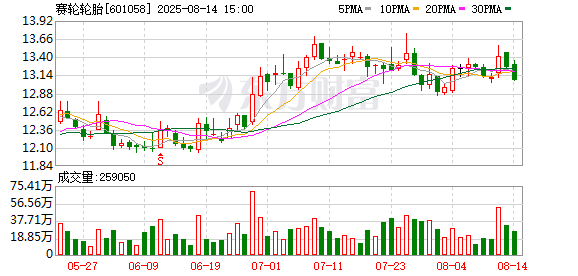
继玲珑轮胎之后,A股头部轮胎企业再次宣布重大海外投资。 8月14日晚间,赛轮轮胎(SH601058,股价13.07元,市值430亿元)公告称,公司计划在埃及投资建设"年产360万条子午线轮胎项目",投资总额2.91亿美元 (约合20.91亿元人民币)。该项目预计实现年平均营收约1.9亿美元,实现年平均净利润3477万美元。 为满足投资项目的建设资金需求,赛轮轮胎拟对相关子公司进行增资:公司对全资子公司赛轮香港增资不超过1.75亿美元;赛轮香港对其全资子公司赛轮新 加坡增资不超过1.75亿美元;赛轮新加坡对其全资子公司赛轮欧洲增资不超过1.73亿美元。 公告还表示,本投资项目经公司董事会审议通过后,尚需获得国家相关主管部门的审批或备案,项目规模和建设进度存在一定不确定性。 埃及项目预期年营收1.9亿美元,投资回收期6.15年 公告称,埃及地处亚非欧三大洲交汇处,毗邻苏伊士运河,连接欧洲、非洲及中东市场,产品可以辐射周边国家和地区。同时,埃及作为非洲第三大汽车市 场,轮胎市场需求旺盛。 为满足当地市场需求及公司全球化战略布局的需要,赛轮轮胎拟在埃及投资建设"年产360万条子午线轮胎项目"。项目投资总额2.91亿美 ...


301235,董事长被留置
Shang Hai Zheng Quan Bao· 2025-08-13 15:36
Group 1: Company Announcements - Yongji Co., Ltd. is planning to acquire control of Nanjing Turnafly Electronic Technology Co., Ltd. through a share issuance and cash payment, with trading suspension starting from August 14, 2025. The acquisition may constitute a major asset restructuring but will not change the actual controller of Yongji [1] - Chip Microelectronics plans to issue H-shares and apply for listing on the Hong Kong Stock Exchange to enhance its global strategy and diversify financing channels [2] - Huakang Clean received notification that its controlling shareholder and chairman, Tan Pingtao, is under investigation and has been placed under detention. The company assures that its operations will continue normally under the management team [3] Group 2: Financial Performance - Harbin Investment Co. reported a revenue of approximately 984 million yuan for the first half of 2025, a slight decrease of 5.31% year-on-year, while net profit increased by 233.08% to approximately 380 million yuan [4] - Dongfang Precision Engineering achieved a revenue of 2.159 billion yuan, a minor decline of 0.1%, with net profit rising by 142.52% to approximately 397 million yuan [4] - Awei Electronics reported a revenue of approximately 1.37 billion yuan, down 13.40% year-on-year, but net profit increased by 71.09% to approximately 157 million yuan [4] - Langbo Technology's revenue reached approximately 121 million yuan, up 18.03%, with net profit increasing by 60.18% to approximately 19 million yuan [4] Group 3: Capital Raising and Restructuring - Yuguang Jin Lead plans to issue shares to its controlling shareholder to raise up to 400 million yuan, which will be used for working capital and repaying bank loans [6] - *ST Baoshi is undergoing a share transfer process where its controlling shareholder intends to transfer 206.9 million shares, representing 18.17% of the total share capital, to another state-owned entity [7] - Ruixin Technology has completed the transfer of 40.3 million shares, representing 24.22% of its total share capital, to a new controlling shareholder [8] Group 4: Important Projects and Investments - Jiangfeng Electronics is collaborating with Japan's Aifake to integrate their flat panel display target material businesses, aiming for high-quality development in this sector [10] - KZ Precision plans to invest up to 250 million yuan in Thailand to establish a subsidiary and new production base for precision components [12] - Yueyang Lin Paper approved a debt-to-equity conversion of 1.4 billion yuan to its wholly-owned subsidiary, which will reduce its debt ratio significantly [12]




山东前七个月进出口超两万亿元 增速居前五大外贸省市首位
Zheng Quan Shi Bao Wang· 2025-08-12 07:53
Group 1 - Shandong Province's import and export volume reached 2.04 trillion yuan in the first seven months of the year, a year-on-year increase of 7.3% [1] - Exports amounted to 1.24 trillion yuan, growing by 6.6%, while imports were 793.2 billion yuan, increasing by 8.5% [1] - Shandong ranked first in import and export growth among the top five foreign trade provinces [1] Group 2 - Private enterprises in Shandong accounted for 1.55 trillion yuan in imports and exports, a year-on-year increase of 8.5%, representing 75.9% of the total [1] - State-owned enterprises had imports and exports of 183.43 billion yuan, growing by 12.2%, making up 9% of the total [1] Group 3 - Shandong's exports of mechanical and electrical products reached 599.03 billion yuan, a year-on-year increase of 10.7%, constituting 48.2% of total exports [2] - Key export items included auto parts at 84.4 billion yuan (up 1.7%), game consoles at 40.89 billion yuan (up 78.7%), and electronic components at 36.06 billion yuan (up 12.1%) [2] Group 4 - Shandong imported 63.83 million tons of crude oil, a year-on-year increase of 30.6%, valued at 238.02 billion yuan, up 15.9% [2] - The import of metal ores reached 15 million tons, increasing by 19.9%, valued at 157.18 billion yuan, a growth of 27.5% [2] Group 5 - Shandong listed companies are accelerating overseas investment, with firms like Sailun Tire and Linglong Tire announcing overseas investment plans [3] - The provincial government has encouraged foreign investment in listed companies through the "Shandong Province 2025 Action Plan for Stabilizing Foreign Investment" [3] - The trend in overseas investment is characterized by regional diversification and capital collaboration, focusing on traditional industries and high-end manufacturing [3]
英力股份:拟投资200万美元在新加坡设立全资子公司
Mei Ri Jing Ji Xin Wen· 2025-08-11 08:18
每经AI快讯,8月11日,英力股份(300956)公告,公司将投资200万美元在新加坡设立全资子公司, 旨在建立海外投资平台,促进海外业务发展,提高国际竞争力和抗风险能力。此次投资已通过第三届董 事会第九次会议审议,不涉及关联交易或重大资产重组,无需股东大会审议。新加坡子公司的主要业务 包括股权投资、投资咨询、企业管理咨询、商务信息咨询及进出口贸易。设立子公司还需获得境内外相 关部门的备案或审批,公司将积极应对可能面临的经营、管理和市场风险。 ...
韩国人,大量涌入中国股市
投中网· 2025-08-11 06:51
Core Viewpoint - Korean investors are increasingly turning to the Chinese stock market, driven by a combination of high returns and a desire to diversify their investment portfolios amid domestic economic challenges [6][12][22]. Group 1: Investment Trends - As of July 25, 2023, China has surpassed Japan and the EU to become the second-largest overseas stock market for Korean investors, based on trading volume [6]. - The cumulative trading volume of the Chinese stock market, including Hong Kong and A-shares, reached $57.64 billion, second only to the U.S. market [8]. - Korean investors show a preference for Hong Kong stocks over A-shares, focusing on technology and consumer sectors [9][12]. Group 2: Notable Stocks and Investment Behavior - The top ten net purchases by Korean investors as of July 25, 2025, were all Hong Kong stocks, with Xiaomi and BYD leading with net purchases exceeding $100 million [10][11]. - Korean investors have shown consistent interest in Chinese stocks since early 2025, with significant inflows into Chinese stock funds [15][16]. - The average return of Chinese stock funds in Korea was 43.56% over six months, significantly higher than domestic and U.S. stock funds [18]. Group 3: Economic Context and Investor Sentiment - The shift towards Chinese stocks is partly due to stagnant domestic economic conditions in Korea, including a struggling job market and rising real estate prices [26][27]. - A survey indicated that 31% of respondents view stocks as the most favorable investment method, surpassing real estate for the first time since 2006 [28]. - The average return of the Korean stock market was only 5% over the past decade, compared to 10% for China and 13% for the U.S., leading to a loss of confidence in domestic equities [30]. Group 4: Broader Investment Strategies - Korean investors are diversifying their portfolios to mitigate risks associated with the U.S. market, with a notable shift towards overseas investments [19][21]. - The total assets of overseas investment funds in Korea reached 134 trillion won, reflecting a growing trend towards international markets [21]. - The Korean government is also taking steps to enhance the attractiveness of the domestic stock market, aiming to reverse the "Korean discount" phenomenon [31].



韩中小企业风险部选定13家全球基金公司筹集对韩投资
Shang Wu Bu Wang Zhan· 2025-08-07 16:53
Core Viewpoint - The South Korean Ministry of SMEs and Startups has selected 13 global fund companies for investment in South Korean enterprises, increasing the government budget for this initiative from 150 billion KRW to 170 billion KRW, with a historical maximum obligation investment scale of 270 billion KRW from global fund companies [1] Group 1 - The selected global fund companies include notable names such as the American TTCP, French Jolt Capital, and Japanese DCI Partners [1] - The Ministry aims to expand the fund size to 2.4 trillion KRW by incorporating private investments, focusing on supporting venture capital and startups to attract overseas investments and enter global markets [1]
2025年上半年中国海外投资概览报告-EY安永
Sou Hu Cai Jing· 2025-08-06 16:47
Economic Overview - In the first half of 2025, China's economy demonstrated strong resilience with a GDP growth of 5.3% year-on-year, and total foreign trade reached a record high for the same period [1][9] - The strategy of "strengthening domestic demand" and "high-level opening up" has supported enterprises' globalization amidst global economic fluctuations [1][9] Foreign Direct Investment (FDI) - Total foreign direct investment (FDI) from China amounted to $80 billion, a decrease of 6.2% year-on-year; non-financial FDI was $72.2 billion, down 0.5% [11][23] - FDI in countries participating in the "Belt and Road" initiative saw a significant increase of 20.7%, reaching $18.9 billion, accounting for 26% of total non-financial FDI [11][23] Overseas Mergers and Acquisitions (M&A) - Chinese companies announced overseas M&A deals totaling $19.6 billion, marking a substantial increase of 79% year-on-year; however, the number of transactions decreased by 7% to 200 [12][27] - Notably, large transactions exceeding $500 million rose from 6 to 14 [12][27] - M&A activity in "Belt and Road" countries reached $10.1 billion, nearly doubling from the previous year, accounting for 52% of total M&A [12][27] Sector and Regional Highlights - The TMT (Technology, Media, and Telecommunications), mining and metals, and advanced manufacturing and transportation sectors were the most active in M&A, comprising 72% of total deal value, with TMT alone accounting for approximately 42% [28] - Asia remained the top destination for Chinese overseas M&A, with a 162% increase in deal value; Latin America saw a staggering 620% growth, while North America grew by 80% [28] - In contrast, M&A activity in Europe declined in both value and number [28] Infrastructure and Engineering Projects - The value of foreign contracted projects reached $129.9 billion, an increase of 12.4%; contracts signed in "Belt and Road" countries amounted to $113.4 billion, up 19.6% [2][21] - Key projects included energy, municipal transportation, and construction infrastructure, such as the Iraq natural gas processing plant by China National Petroleum and the Saudi King University relocation project by China Railway Construction [2][21] Conclusion - The data indicates a strategic shift in China's overseas investment landscape, with a focus on resilience and growth in specific sectors and regions, particularly in the context of the "Belt and Road" initiative, while facing challenges in traditional markets like Europe [1][2][11][12][28]

浙江永强(002489.SZ)下属公司拟在印尼投资设立子公司
智通财经网· 2025-08-06 08:11
本次投资事项是基于公司整体发展战略做出的决策,有利于提升公司综合竞争力,促进公司持续健康发 展,不会对公司的经营情况及财务状况产生重大不利影响,不存在损害公司及全体股东利益的情形。上 述子公司设立后,其经营情况将纳入公司合并财务报表范围。 浙江永强(002489.SZ)发布公告,近日,公司下属子公司新加坡永强和MWH GmbH(以下称"德国永强", 香港永强全资子公司)于印尼共同投资设立一家子公司,该公司主要围绕公司主营业务开展海外产能投 资建设及国际贸易业务。 ...

浙江永强下属公司拟在印尼投资设立子公司
Zhi Tong Cai Jing· 2025-08-06 08:11
本次投资事项是基于公司整体发展战略做出的决策,有利于提升公司综合竞争力,促进公司持续健康发 展,不会对公司的经营情况及财务状况产生重大不利影响,不存在损害公司及全体股东利益的情形。上 述子公司设立后,其经营情况将纳入公司合并财务报表范围。 浙江永强(002489)(002489.SZ)发布公告,近日,公司下属子公司新加坡永强和MWH GmbH(以下 称"德国永强",香港永强全资子公司)于印尼共同投资设立一家子公司,该公司主要围绕公司主营业务 开展海外产能投资建设及国际贸易业务。 ...
日本首席谈判代表、经济再生大臣赤泽亮正:不要盲目相信美国方面有关贸易会谈的全部言论。日本对美国的5500亿美元投资将使自身受益。
news flash· 2025-08-04 02:09
Core Viewpoint - Japan's Chief Negotiator and Minister of Economic Revitalization, Akizawa Ryozo, advises against blindly trusting all statements from the U.S. regarding trade talks, emphasizing the importance of a critical perspective [1] Group 1 - Japan's investment of $550 billion in the U.S. is expected to yield benefits for Japan itself [1]