空间智能

Search documents
商汤分拆了一家AI医疗公司,半年融资10亿,剑指“医疗世界模型”
量子位· 2025-12-02 04:59
Core Insights - SenseTime has spun off an AI medical company that has quickly become a quasi-unicorn within six months [1] - The company aims to design and empower "future hospitals" driven by medical large models, focusing on comprehensive perception and deep understanding of medical scenarios [2][4] - SenseTime Medical has raised a total of 1 billion yuan in funding within a short period, with significant investments from various strategic partners [3] Business Strategy and Development - SenseTime Medical is a core extension of the group's "1+X" strategic ecosystem, with the group providing robust technical support [4] - The company has initiated its Series A financing round, aiming to further expand its capital base [3] - The team consists of around 100 members, with over 70% in research and development, featuring graduates from top global universities [20] Technology and Product Development - The AI system follows a "general-special integration" approach, utilizing a central "brain" to manage various medical image models and knowledge bases [6] - The self-developed medical large language model "Daiyi®" has outperformed other models in professional tests, showcasing its capabilities across multiple dimensions [8] - The company has developed a dual-platform system to enhance clinical thinking capabilities and facilitate collaboration among various AI applications [10][11] Clinical Applications and Impact - SenseTime Medical has launched over 40 AI modules targeting various clinical areas, significantly improving efficiency and diagnostic accuracy [14][15] - The "SenseCare®" solutions have demonstrated substantial improvements in clinical workflows, such as a 30%-50% increase in efficiency for pathology departments [15] - The company has partnered with leading hospitals and institutions to implement AI solutions, achieving notable results in surgical planning and research support [26][28][31] Market Expansion and Future Outlook - SenseTime Medical is actively expanding its market presence, having obtained the first AI+medical device registration in Singapore and initiating operations in Indonesia [33] - The company is focused on building a "world model" that simulates complex medical environments, moving beyond simple Q&A interactions [35][36] - Future strategies include deepening the "1+X" approach, with a focus on generative AI and visual AI as core business drivers [37][38]

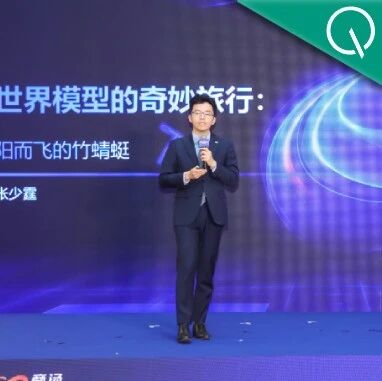
五一视界获证监会备案并更新招股书,进入港股IPO冲刺阶段|最前线
3 6 Ke· 2025-12-02 04:14
Core Insights - The China Securities Regulatory Commission has approved Beijing Wuyi Vision Digital Twin Technology Co., Ltd. to issue up to 77,600,840 overseas listed shares and list on the Hong Kong Stock Exchange, indicating the company has met the prerequisites for the hearing stage [1] - Wuyi Vision, established in February 2015, focuses on technological innovation and application in 3D graphics, simulation, and artificial intelligence, with three core business platforms: 51Aes Digital Twin Platform, 51Sim Synthetic Data and Simulation Platform, and 51Earth Digital Earth Platform, serving over a thousand enterprises globally [1][2] - The global digital twin market is projected to reach $35 billion by 2025 and exceed $120 billion by 2030, with a compound annual growth rate (CAGR) of over 28%, highlighting significant growth potential in the industry [2] Company Performance - Wuyi Vision's revenue for the years 2022, 2023, 2024, and the first half of 2025 was reported as RMB 170 million, 256 million, 287 million, and 54 million respectively, with a year-on-year revenue growth of 62% in the first half of 2025 [2] - The corresponding net losses for the same periods were RMB 190 million, 87 million, 79 million, and 94 million, with adjusted net losses of RMB 132 million, 68 million, 43 million, and 67 million [2] Technological Innovations - Wuyi Vision has launched the Clonova spatial intelligence interactive platform, enabling users to interact in immersive 3D spaces through natural language processing technology, applicable in various sectors such as tourism, social entertainment, enterprise management, and urban planning [3] - The company is also focused on embodied intelligence, providing efficient simulation training and high-quality synthetic data to overcome challenges in physical AI data diversity and quality, enhancing the safety and efficiency of robots in the physical world [3] - If successful in listing on the Hong Kong Stock Exchange, Wuyi Vision is expected to strengthen its position as a key player in AI and digital twin technology innovation and industrialization [3]
聚焦空间智能前沿技术 中国图象图形学学会举办专题研讨会
Zhong Guo Xin Wen Wang· 2025-12-01 07:29
据了解,本次研讨会由中国图象图形学学会主办,该学会遥感图像专委会、企业联络与标准化工委会承 办,北京图象图形学学会协办,北京市科学技术协会提供支持。(完) 聚焦空间智能前沿技术 中国图象图形学学会举办专题研讨会 中新网北京12月1日电 (记者 孙自法)记者12月1日从中国图象图形学学会(CSIG)获悉,该学会空间智能 前沿技术研讨会近日在北京举办,旨在进一步促进空间智能技术在产业端的规模化、智能化落地,助力 中国空天信息产业高质量发展。 研讨会上,围绕推动空间智能技术从学术研究向产业应用的深度转化等相关议题,40余位来自高校、科 研院所和企业的一线专家学者进行探讨交流,为遥感监测、资源管理、空天信息服务等多个产业方向提 供前沿思路与创新解决方案。 主旨报告环节,业内多位专家学者代表分别作"盐湖资源信息获取与智能处理""三维场景感知与生成研 究进展""遥感图像超分辨率重建的深度学习方法及其可解释性""多源影像智能感知增强:从看得清到辨 得准""卫星智能化赋能高效空天信息服务"主题报告。 自由发言环节,围绕空间智能的前沿进展、创新突破与产业化应用等话题,与会专家展开深入交流,为 行业发展建言献策。 来源:中国新闻 ...
意识产生、符号推理……AI下一站该往哪走?
3 6 Ke· 2025-12-01 03:52
Group 1: Core Perspectives on AI Development - The current phase of AI is characterized as a critical platform shift, with uncertainty in its development forms. The deployment of technology must go through three stages: absorption, innovation, and disruption, with the current focus on absorption in areas like programming and marketing [1][4][6] - AI is fundamentally about "computable pattern recognition" and lacks true consciousness. Current AI can only find patterns based on data and execute rules without understanding their essence. The limitations of existing computer technology prevent the emergence of consciousness [1][11][12] - The future of AI will not be limited to a single form but will evolve in four key directions: symbolic reasoning, spatial intelligence, emotional intelligence, and intelligent agents. This evolution signifies a diversification and specialization of intelligence [1][18][19] Group 2: Optimism and Preparedness for AI - Maintaining optimism in the face of AI development is essential, viewing progress as a "Protopia" where the world improves incrementally each day. This perspective encourages innovation and preparation rather than fear [2][22][23] - The uncertainty surrounding the realization of general artificial intelligence remains, with the possibility of many specialized "weak AIs" emerging instead of a singular form of intelligence [14][20] - The future AI landscape may feature a hybrid architecture of centralized cloud computing and decentralized edge computing, balancing efficiency and privacy concerns [15][16] Group 3: Implications for Industries and Workforce - AI is expected to enhance human work efficiency rather than replace jobs, as it allows individuals to focus on more creative and judgment-based tasks by automating repetitive ones [16][17] - The evolution of AI will lead to the emergence of a new economic system centered around intelligent agents, which will operate seamlessly in the background [21]

AI大家说 | 意识产生、符号推理……AI下一站该往哪走?
红杉汇· 2025-12-01 00:05
Core Insights - The article consolidates viewpoints from experts Benedict Evans, Roger Penrose, and Kevin Kelly regarding the future development of AI, focusing on the evolution of AI consciousness, its potential impact on industries, and how to navigate the uncertainties of AI advancement [3][6]. Group 1: Benedict Evans' Perspective - Evans highlights that AI is currently at a critical platform transition phase, with its development still uncertain. The deployment of technology must go through three stages: absorption, innovation, and disruption, with the current focus on "absorption" scenarios like programming and marketing [3][9]. - He emphasizes that while many successful use cases are in the "absorption" stage, the real questions lie in what "innovation" and "disruption" will look like, particularly in terms of how AI can redefine industry problems [9][10]. - Evans notes that despite the significant capital investments by tech giants, the clarity around product forms, business models, and value capture remains ambiguous, indicating a transformative change is underway regardless of potential market bubbles [11][12]. Group 2: Roger Penrose's Viewpoint - Penrose argues that true intelligence must involve consciousness, asserting that current AI is merely a computational concept that identifies patterns without genuine understanding [15][16]. - He references Gödel's theorem to explain that existing computational technologies cannot achieve consciousness, as they are limited to rule application without understanding the underlying principles [16][17]. - Penrose expresses skepticism about the potential for AI to develop consciousness, suggesting that any future intelligent devices would need to be fundamentally different from current computers [17]. Group 3: Kevin Kelly's Insights - Kelly posits that the future of AI will not be singular but will encompass various forms of intelligence, with a focus on four key areas: symbolic reasoning, spatial intelligence, emotional intelligence, and intelligent agents [20][21]. - He discusses the uncertainty surrounding whether AI will enhance human work efficiency or directly replace jobs, noting that current evidence suggests AI improves efficiency without leading to mass unemployment [21]. - Kelly introduces the concept of "Protopia," advocating for a perspective that embraces gradual improvement rather than utopian or dystopian extremes, suggesting that small daily advancements can lead to significant long-term changes [22][23].

世界模型,是否正在逼近自己的「ChatGPT时刻」?
机器之心· 2025-11-29 01:49
Core Viewpoint - The article discusses the emerging focus on "world models" in the AI field, highlighting its potential applications and the ongoing debates among experts regarding its definition, construction, and commercialization [1][3]. Definition of World Models - Experts provided various definitions of world models, with key perspectives including: - A predictive model that forecasts the next state based on current conditions and action sequences, with applications in autonomous driving and embodied intelligence [4]. - A framework for AI to predict and assess environmental states, evolving from simple game worlds to complex virtual environments [4]. - An ambitious goal to create a 1:1 model of the world, acknowledging the impracticality of such precision but emphasizing purpose-driven modeling [4]. Construction of World Models - A central dilemma in developing world models is whether to prioritize model creation or data collection. Experts discussed: - The challenge of training models with limited data, particularly in autonomous driving, where most data is collected under ideal conditions [5]. - The importance of high-quality data for specific applications to enhance model performance [5]. - A proposed iterative approach where initial models generate data that can be used for further training [5]. Technical Implementation Paths - There are notable disagreements among experts regarding the technical paths for world models: - Some advocate for incorporating physical information into models, while others suggest a more pragmatic approach based on specific needs [7]. - The potential for models to evolve towards purely generative forms as capabilities improve [7]. Architectural Debate: Diffusion vs. Autoregressive - Experts shared their views on the suitability of diffusion versus autoregressive architectures for world models: - Diffusion models are seen as more aligned with the physical generation of content, reflecting how the brain decodes complex signals [8]. - There is a trend towards integrating different architectures to enhance model performance, recognizing the strengths of both diffusion and autoregressive methods [9]. Future of World Models - The timeline for achieving a "ChatGPT moment" for world models is uncertain, with estimates suggesting it may take around three years to realize significant breakthroughs [10]. - The current lack of high-quality long video data poses a significant challenge, with existing models primarily generating short clips [10]. - The commercialization of world models faces challenges in defining value for both business-to-business (B2B) and business-to-consumer (B2C) applications [10][11]. Conclusion - The roundtable discussion highlighted the vibrant and diverse nature of the world model field, emphasizing its potential for growth while acknowledging the challenges related to data, computational power, and technical direction [13].
港大锅炉房走出的创业者,用千元模组撬动机器人百亿市场
2 1 Shi Ji Jing Ji Bao Dao· 2025-11-28 14:24
Core Insights - The article highlights the innovative technology developed by Liuxing Technology, specifically the Odin1 spatial memory module, which addresses a significant challenge in the robotics industry: spatial perception capabilities [1][10]. Company Overview - Liuxing Technology was founded in 2021 by Qin Youming and Xu Wei, emerging from a unique research environment at the University of Hong Kong [3]. - The company initially focused on two key market demands in Hong Kong: the construction industry, driven by BIM technology requirements, and cultural heritage preservation [4]. Product Development - The company launched its first handheld 3D mapping device, the "Liuxing Machine," in June 2022, achieving centimeter-level precision in 3D mapping [7]. - The Odin1 module, priced under 7,000 yuan, enables robots to have spatial memory, significantly enhancing their operational capabilities [1][10]. Technological Advancements - Liuxing Technology's core technology includes the proprietary MindSLAM algorithm and an integrated hardware-software solution, emphasizing the importance of deep integration for successful engineering applications [5][6]. - The company's products provide robots with enhanced spatial perception, memory, and recall capabilities, allowing for improved navigation and decision-making [10][11]. Market Position and Strategy - Liuxing Technology has established partnerships with major domestic robotics manufacturers, receiving valuable feedback for product optimization [10]. - The company aims to capitalize on the long-tail effect in the robotics industry, where many companies require external solutions for spatial perception due to limited resources [12]. Future Plans - The company plans to sign contracts with key clients and push for large-scale production in its robotics division while also exploring international markets [13]. - Liuxing Technology envisions becoming a "T-shaped" enterprise, deeply rooted in the robotics sector while expanding its technology across various industries [12].

澳门旅游局携手高德 打造沉浸式数字孪生文旅平台
2 1 Shi Ji Jing Ji Bao Dao· 2025-11-27 11:39
Core Insights - The Macau SAR government and Alibaba's Gaode have launched a strategic partnership to create an immersive digital twin tourism platform called "One-Click Smart Tour of Macau" [1][5] - The initiative aims to enhance the tourism experience in Macau, which has seen a 14.1% year-on-year increase in inbound travelers, reaching 33 million from January to October 2025, with over 70% being from mainland China [1][4] Group 1: Digital Twin Technology - The "One-Click Smart Tour of Macau" allows users to explore Macau in a 360-degree immersive view using Gaode's spatial intelligence technology, creating a vivid digital twin model of the region [2] - The platform includes an AI assistant that generates personalized itineraries covering attractions, dining, transportation, and activities, enabling users to book hotels, purchase meals, and buy tickets directly [2] Group 2: Local Business Support - The Macau government aims to enhance the tourism and leisure industry by integrating various sectors, including food, exhibitions, and sports, to attract international visitors [4] - Gaode will support local taxi services and help tourists discover authentic local cuisine and cultural spots through the "Street Ranking" feature, enhancing the local experience [3][4] Group 3: Future Collaboration - The partnership will continue to evolve, with plans for a series of official tourism-themed events and exclusive offers to improve visitor satisfaction and engagement [5]

澳门旅游局携手高德,打造沉浸式数字孪生文旅平台
2 1 Shi Ji Jing Ji Bao Dao· 2025-11-27 11:38
Core Insights - The Macau SAR government and Alibaba's Gaode have launched a strategic partnership to create an immersive digital twin tourism platform called "One-Click Smart Tour of Macau" [1][5] - Macau's tourism sector is experiencing growth, with inbound travelers reaching 33 million from January to October 2025, a 14.1% increase year-on-year, with over 70% of visitors coming from mainland China [1][4] - Gaode has become a key travel platform for visitors to Macau, with a significant increase in user numbers over the past three years [1][4] Group 1: Digital Tourism Platform - The "One-Click Smart Tour of Macau" allows users to access personalized and immersive travel experiences through the Gaode app [1][2] - The platform features a 360-degree immersive view of Macau and integrates AI to generate personalized itineraries covering attractions, dining, transportation, and activities [2] Group 2: Local Integration and Support - Gaode supports local taxi-hailing services, enabling visitors to use the app without needing to download new applications or change phone numbers [3] - The partnership aims to create a "Street Food List" to help tourists discover local cuisine and cultural spots, enhancing their experience of Macau's diverse culture [3][4] Group 3: Future Collaboration and Development - The Macau SAR government and Gaode plan to deepen their collaboration by organizing official tourism events and exclusive offers to enhance visitor satisfaction [5] - The initiative aligns with Macau's policy to enhance its tourism and leisure industry, promoting cross-industry integration and expanding international visitor sources [4]
特斯联中报解读:上半年营收大涨77%,空间智能战略落地
2 1 Shi Ji Jing Ji Bao Dao· 2025-11-27 08:12
Core Insights - The core viewpoint of the article highlights the rapid growth of Teslin, a leading AIoT company in China, driven by the increasing demand for AI computing infrastructure and the company's strategic focus on space intelligence [1][2][3]. Financial Performance - Teslin's revenue for 2022, 2023, and 2024 is reported at 738 million, 1.006 billion, and 1.843 billion respectively, indicating a compound annual growth rate (CAGR) of 58.0% from 2022 to 2024 [1]. - In the first half of 2025, Teslin's revenue reached approximately 632 million, representing a 77% year-on-year increase compared to the first half of 2024 [1][3]. - The core business revenue from AI industrial digitalization in the first half of 2025 was 577 million, a significant increase of 191.1% from 198 million in the same period of 2024 [2]. Market Position and Growth - The global AIoT market is experiencing rapid growth, with a projected CAGR of over 31.7% over the next five years [3]. - In China, the AIoT market size is expected to grow from 816 billion in 2024 to 1.37 trillion by 2029, with a CAGR of 10.9% [3]. - Teslin is positioned as one of the top five public domain AIoT product providers in China, focusing on the integration of AI and IoT technologies [3]. Cost Management - Teslin has demonstrated effective cost control, with the expense ratio (including sales, administrative, and R&D expenses) decreasing from 104.6% in 2024 to 58.1% in 2025 [4]. - Sales and marketing expenses were reduced by approximately 43.9%, from 82 million in 2024 to 46 million in 2025 [4]. Client Base and Orders - As of June 30, 2025, Teslin's products have been deployed by over 900 clients across 172 cities globally, including locations in China, UAE, Singapore, and Australia [4]. - The total order amount as of September 30, 2025, reached 2.6 billion, indicating a steady increase in demand [4]. Strategic Focus - Teslin's strategy revolves around space intelligence, which enhances the ability of machines to perceive and interact with the physical world [5][6]. - The company has established a comprehensive AIoT product system and is actively pursuing applications in various environments such as buildings, communities, and cities [6]. Technological Advancements - The proliferation of AI large model technologies has accelerated the demand for intelligent computing, which is crucial for Teslin's AIoT business [7]. - Teslin's AIoT computing business includes hardware clusters and software platforms designed to efficiently deliver computing resources for AI applications [7]. Future Outlook - The synergy between AIoT computing and intelligent agents is expected to drive the next generation of AI growth for Teslin [10]. - With ongoing advancements in space intelligence and a robust financial position, Teslin is well-positioned to capitalize on emerging opportunities in diverse scenarios [10].