
跨大西洋关系

Search documents
欧洲的双标与反噬
Xin Lang Cai Jing· 2026-01-07 20:19
Core Viewpoint - The article highlights the contrasting responses of European countries to the U.S. military action in Venezuela and the U.S. claims over Greenland, revealing a double standard in their foreign policy and the complexities of transatlantic relations [2][3][4]. Group 1: European Responses to U.S. Actions - The European Union (EU) called for restraint regarding the U.S. actions in Venezuela but was vague in its criticism, reflecting a reluctance to offend the U.S. [3][4]. - In contrast, the EU firmly stated its commitment to defending Denmark's sovereignty over Greenland, showcasing a clear stance on territorial integrity [2][3]. - EU officials, including the spokesperson for the European Commission, avoided direct criticism of the U.S. actions in Venezuela, indicating a cautious approach to maintain transatlantic relations [3][4]. Group 2: Public and Scholarly Reactions - Protests erupted in various European cities against the U.S. intervention in Venezuela, with citizens demanding their governments and the EU to condemn the military actions [4][5]. - Scholars and commentators criticized the EU's response as hypocritical, pointing out the inconsistency in its stance on international law and sovereignty [4][6]. - The hesitance of European leaders to criticize the U.S. is attributed to fears of jeopardizing support from the U.S. on issues like Ukraine, indicating a prioritization of strategic interests over principled stances [5][6].
该来的躲不过,中欧加税战打响,冯德莱恩提醒美国:中国才是敌人
Sou Hu Cai Jing· 2025-12-25 07:10
Group 1 - The EU has decided to impose a fixed fee on all small packages entering the EU starting in 2026, targeting Chinese e-commerce which holds a 90% market share in this segment [1] - China's Ministry of Commerce has swiftly responded by implementing temporary counter-subsidy measures on certain dairy products from the EU, primarily affecting French producers [3] - The trade friction between China and the EU is escalating, with mutual warnings exchanged, particularly following French President Macron's decoupling warnings [3] Group 2 - The EU's criticism of China by Commission President von der Leyen is seen as an attempt to divert attention from its own challenges and strategic pressures [3] - The ongoing trade conflict reflects a more complex adjustment in transatlantic relations and global strategic dynamics, particularly in light of the US's focus on the Russia-Ukraine conflict [3]

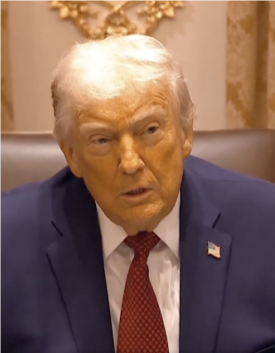
“错误的方向”!特朗普抨击欧盟罚款X平台:我不明白他们怎么能这么做
Huan Qiu Wang· 2025-12-09 00:55
Group 1 - The European Commission imposed a fine of €120 million on Elon Musk's social media platform X for violating transparency obligations under the Digital Services Act [1][3] - President Trump expressed his discontent with the fine, labeling it as "disgusting" and criticized Europe for heading in the "wrong direction" [1][3] - The U.S. government officials, including Vice President Vance and Secretary of State Rubio, condemned the EU's actions, claiming it undermines transatlantic relations [3] Group 2 - Musk reacted to the fine by calling for the abolition of the EU and referred to it as a "bureaucratic monster" on his platform [3] - The U.S. National Security Strategy report released on December 4 also criticized European allies, indicating a shift in U.S. policy towards Europe [3] - EU Foreign Minister Kallas emphasized that the U.S. remains the EU's "largest ally," despite the growing rift between the two [3]
国际在线:欧盟罚X美国跳脚
Bei Jing Ri Bao Ke Hu Duan· 2025-12-08 05:47
Core Viewpoint - The European Commission has imposed a €120 million fine on the social media platform X, owned by Elon Musk, for violating transparency obligations under the Digital Services Act, leading to significant backlash from U.S. officials and highlighting growing transatlantic tensions [1]. Group 1: Regulatory Actions - The European Commission's fine of €120 million is the first major enforcement action under the Digital Services Act against a U.S. company [1]. - The fine was imposed due to X's adjustments to its user verification system, which allowed users to obtain a verification badge through payment rather than identity verification, leading to claims of "deceptive" practices [1]. Group 2: Reactions from U.S. Officials - U.S. officials, including Vice President Kamala Harris and Secretary of State Marco Rubio, criticized the fine, arguing it undermines transatlantic relations and reflects bias against American tech companies [1]. - Elon Musk expressed his discontent on the platform, calling for the abolition of the EU and labeling it a "bureaucratic monster" [1]. Group 3: Ongoing Investigations and Statements - The European Commission's Vice President for technology sovereignty stated that the penalty is solely related to X's transparency and not its content moderation practices, indicating that further investigations into X are ongoing [1]. - U.S. Deputy Secretary of State Christopher Landau highlighted ideological and strategic policy divergences between the U.S. and EU, despite existing cooperation mechanisms like NATO [1].
美媒爆:德国陆军总司令披露,美德军方直接联络已“真正中断”
Huan Qiu Wang· 2025-12-02 15:12
Core Viewpoint - The direct communication between the U.S. Department of Defense and the German Ministry of Defense has been suspended, particularly regarding the Ukraine issue, indicating a significant shift in transatlantic relations and raising concerns about the reliability of U.S. support for Europe [1][3]. Group 1 - German Army Chief Christian Freuding stated that communication with the U.S. Pentagon has been "truly interrupted," and there has been no warning from the U.S. government regarding the suspension of weapon shipments to Ukraine [3]. - Freuding has resorted to seeking information about U.S. policies through the German embassy in Washington, highlighting a breakdown in direct communication channels [3]. - The article notes that the presence of the U.S. in Germany, once a symbol of a strong alliance, is perceived to be diminishing, leading to concerns about U.S. commitment to defending Europe [3]. Group 2 - The mainstream European view reflects that U.S. Vice President Kamala Harris's speech at the Munich Security Conference marked a stark contrast to previous unified positions on key policies, indicating rising tensions in transatlantic relations [4]. - Analysts suggest that the current state of U.S.-European relations is entering a phase filled with uncertainty, as evidenced by the criticisms directed at European leaders by U.S. officials [4].

【环球财经】特朗普访英能否弥合美英分歧
Xin Hua She· 2025-09-17 07:09
Group 1: Purpose of Trump's Visit - Trump's visit aims to strengthen US-UK relations amidst growing tensions over issues like Ukraine and Gaza, with the UK seeking to downplay these differences [1][3] - The UK government hopes to leverage royal ceremonies to secure investment and security benefits from the US during this visit [1][2] Group 2: Investment Announcements - The US is expected to announce a package of cooperation agreements covering technology, clean energy, civil nuclear energy, and defense [2] - Notable investments include approximately $1.7 billion from US financial firms creating around 1,800 jobs, Microsoft's commitment of $30 billion over four years for AI infrastructure, and Google's new data center in the UK [2] Group 3: US-UK Discrepancies - Despite the ceremonial aspects, significant differences remain, particularly in trade, with the US imposing high tariffs on UK steel and aluminum products [3] - The UK government views Trump's visit as a diplomatic boost, yet there are widening gaps in positions on international issues, such as support for Ukraine and the situation in Gaza [3] Group 4: Public Sentiment in the UK - Protests against Trump's visit were organized by a group called "Stop Trump Coalition," reflecting a significant portion of the public's discontent [4][5] - Recent polls indicate that only 36% of the UK population believes in a "special relationship" with the US, and only 16% hold a positive view of Trump's administration [5]
无人机事件持续发酵,俄媒体质疑欧洲做局,波兰同意北约军队进驻
Huan Qiu Shi Bao· 2025-09-15 23:01
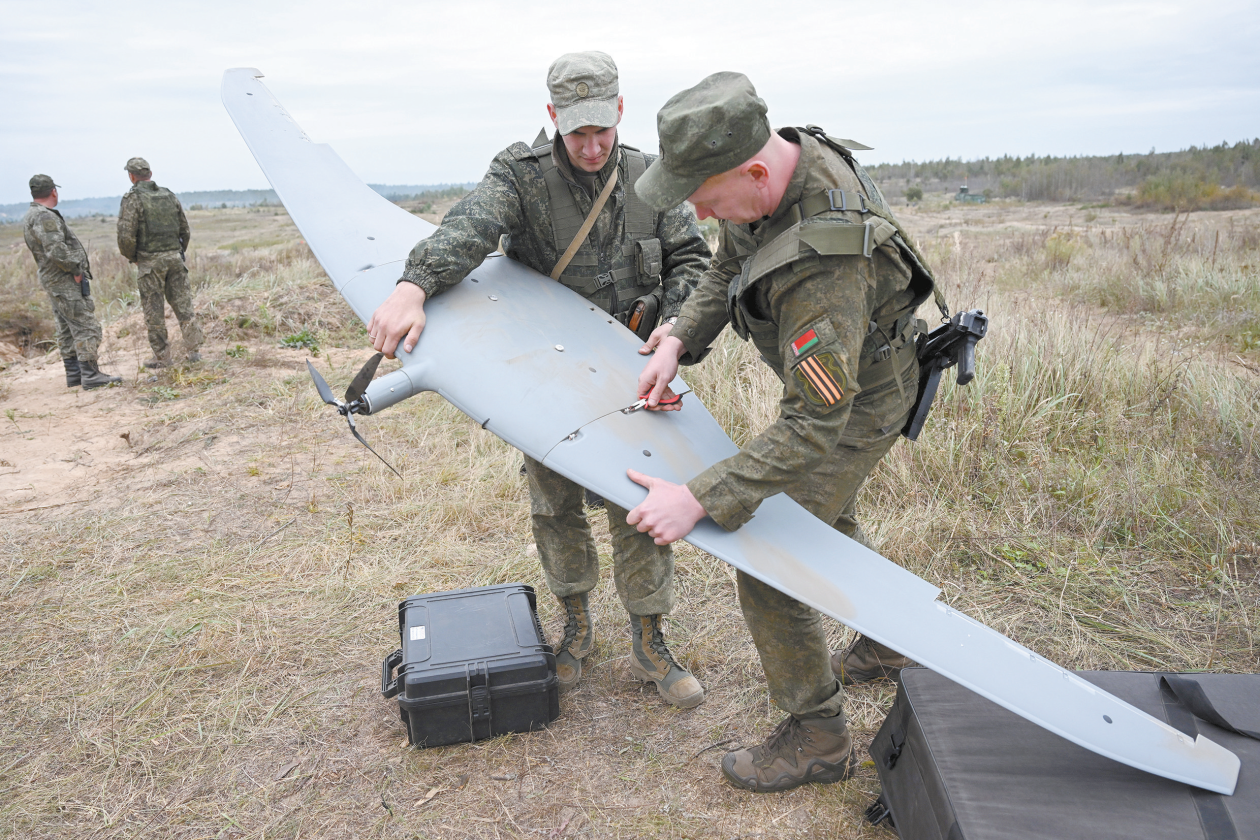
Core Points - The situation in Eastern Europe has escalated following reports of Russian drones entering NATO airspace, with Poland and Romania both taking action to intercept these incursions [1][3] - NATO has initiated the "Eastern Sentinel" military operation, which involves the deployment of troops from member countries to Poland [4][5] - The Russian government has denied the allegations of airspace violations and claims that NATO's actions are provocative [4][6] Group 1: Incidents and Responses - Poland reported that NATO and Polish aircraft were scrambled to intercept a Russian drone that entered its airspace [1] - Romania's Foreign Ministry summoned the Russian ambassador to protest against the drone incursion, labeling it an unacceptable violation of sovereignty [3] - The UK government also summoned the Russian ambassador, expressing solidarity with Poland, Romania, and other NATO allies in condemning Russia's actions [3] Group 2: NATO's Military Actions - NATO's "Eastern Sentinel" operation includes the deployment of various military assets, such as Danish F-16s, French Rafales, and German Eurofighters [5] - Additional military support is being provided by other NATO members, including Czech attack helicopters and Dutch Patriot missile systems [5] - The operation is seen as a response to perceived threats from Russia, with leaders from Estonia and Lithuania welcoming the increased military presence [4][6] Group 3: Political Implications - The drone incidents have raised concerns about NATO's readiness and the political will to respond to Russian aggression [6][8] - There is a growing perception that the U.S. may be less committed to European security, as indicated by its cautious response to the incidents [8] - The situation may lead to a reassessment of NATO's strategic posture in Eastern Europe, potentially triggering new deployments or adjustments in deterrence strategies [8]
欧盟,请放下你的矛盾与纠结
Zhong Guo Zheng Quan Bao· 2025-09-10 23:10
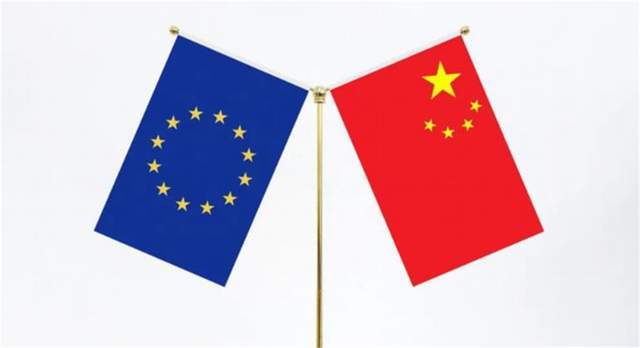
Core Viewpoint - The article discusses the pressure from Washington on the EU to impose a 100% tariff on China and India for purchasing Russian oil, highlighting the EU's conflicting stance towards China and the complexities in its foreign policy [1][2]. Group 1: EU's Contradictory Mindset - The EU's contradictory mindset is evident in three areas: cognitive, economic, and geopolitical, reflecting a zero-sum game mentality among some EU members [2]. - The EU's leadership expresses a desire to resolve trade tensions through negotiation, yet simultaneously applies unilateral pressure on China while ignoring China's cooperation proposals [2]. - The EU's reliance on the U.S. for strategic direction complicates its position on the Russia-Ukraine conflict, leading to increased sanctions on Russia and blame-shifting towards China [2]. Group 2: Implications of EU's Approach - Prioritizing U.S. interests over its own may undermine the EU's diplomatic independence and credibility, particularly in the context of the Ukraine crisis [3]. - The EU's internal divisions and lack of clear representation in its China policy reflect a disconnect from public sentiment, with citizens favoring a partnership approach rather than confrontation [3][4]. - Engaging in dialogue and cooperation with China is deemed essential for the EU's security and competitiveness, especially in emerging fields like AI and green development [4]. Group 3: Historical Context and Future Direction - The article emphasizes the lessons from World War II, suggesting that appeasement does not lead to peace or respect, urging the EU to resolve its internal conflicts and return to a comprehensive strategic partnership with China [4].
波兰总理:无意在俄乌冲突结束后向乌克兰派兵
Xin Lang Cai Jing· 2025-08-25 20:22
Core Viewpoint - Poland's Prime Minister Tusk stated that Poland has no intention of sending troops to Ukraine after the end of the Russia-Ukraine conflict, emphasizing a focus on logistical support instead [1] Group 1: Political Cooperation - Tusk and Canadian Prime Minister Carney agreed to continue close cooperation on the Ukraine issue within the NATO framework [1] - Both leaders are committed to maintaining strong transatlantic relations and providing assistance to Ukraine [1] Group 2: Military Involvement - Tusk reiterated that Poland will not deploy troops to Ukraine following the conflict's conclusion [1] - Poland will take responsibility for organizing logistical support for Ukraine [1]
意副总理批评马克龙言论,法外交部召见意大利大使,意法因乌克兰问题发生严重外交摩擦
Huan Qiu Shi Bao· 2025-08-24 23:05
Core Viewpoint - The diplomatic friction between Italy and France has intensified due to comments made by Italian Deputy Prime Minister Matteo Salvini regarding French President Emmanuel Macron's statements on Ukraine, highlighting significant divisions within Europe over the Russia-Ukraine conflict [1][2]. Group 1: Diplomatic Tensions - Salvini criticized Macron's suggestion that Europe should consider sending troops to Ukraine, suggesting that Macron should go to Ukraine himself if he believes in such actions [1]. - The French Foreign Ministry summoned the Italian ambassador to express strong discontent with Salvini's remarks, indicating the seriousness of the situation [2]. - This incident is not isolated, as Salvini has a history of making derogatory comments about Macron, including calling him a "madman" and suggesting he should fight in Ukraine himself [2][3]. Group 2: Political Context - Salvini's party, the League, is a key part of Italy's ruling coalition and has a clear stance against sending Italian troops to Ukraine, criticizing the so-called "volunteer alliance" led by France and the UK [3]. - The League's Senate leader has urged Macron to stop discussing topics like a "European nuclear umbrella" and "European army," arguing that these discussions do not contribute to peace [3]. - The ongoing disputes between Salvini and Macron date back to Macron's election in 2017, with frequent public exchanges that have strained diplomatic relations [3][4]. Group 3: Broader Implications - Analysts suggest that Salvini's comments reflect Italy's strategic positioning regarding the Russia-Ukraine conflict, preferring to avoid direct military confrontation with Russia, contrasting with France's push for European military unity [4]. - The discord between Italy and France over Ukraine policy is seen as weakening the EU's overall influence on foreign affairs, especially as transatlantic relations and EU diplomatic dynamics are shifting [3][4].