5G技术

Search documents
中移互联网5G快签项目实施,前沿科技与高效管理的融合创新实践
Sou Hu Cai Jing· 2025-05-25 23:41
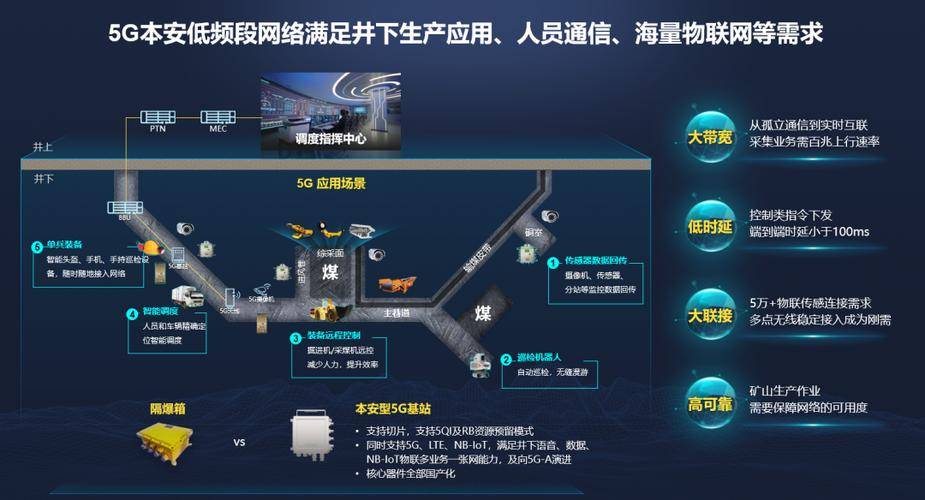
中移互联网5G快签项目实施,标志着前沿科技与高效管理的深度融合探索取得重要进展,该项目将5G技术应用于互联 网领域,旨在提高业务处理效率和用户体验,通过实施快签项目,中移互联网实现了科技与管理的双重优势结合,为行 业树立了新的标杆,这一项目的实施将推动数字化进程,促进产业升级,为社会经济发展注入新动力。 随着信息技术的飞速发展,5G 已成为推动社会进步的重要引擎,中移互联网作为中国移动旗下的重要子公司,积极响应国家5G发展 战略,致力于在各行各业推广5G技术,本文将重点介绍中移互联网实施的"5G快签项目",探究其在实践中如何巧妙融合前沿科技 与高效管理,以探索更高效、更便捷的解决方案。 项目背景与目标 展望未来 随着移动互联网的普及,各行各业对高速、低延迟的5G 需求日益迫切,中移互联网的"5G快签项目"旨在通过整合公司资源和技术优 势,实现5G 的高速部署与应用,该项目的主要目标包括:(sadas.fTKwW.CNget) (aga.fTKwW.CNget) (hafa.fTKwW.CNget) 项目实施策略 1. 需求分析:深入调研用户需求和市场趋势,明确项目目标和方向。 2. 技术研发:投入大量研发力量 ...

信科移动股价四连阴 2022年上市申万宏源保荐
Zhong Guo Jing Ji Wang· 2025-05-16 09:14
Group 1 - The stock price of Xinke Mobile (688387.SH) closed at 5.47 yuan, with a decline of 1.26%, marking four consecutive trading days of losses [1] - The company is currently in a state of stock price decline, having broken its initial offering price of 6.05 yuan per share [1] - Xinke Mobile was listed on the Shanghai Stock Exchange's Sci-Tech Innovation Board on September 26, 2022, with an initial public offering (IPO) of 68,375,000 shares before the exercise of the over-allotment option [1] Group 2 - The total amount raised by Xinke Mobile before the full exercise of the over-allotment option was 413,668.75 million yuan, with a net amount of 401,132.53 million yuan after deducting issuance costs [2] - After the full exercise of the over-allotment option, the total amount raised increased to 475,719.06 million yuan, with a net amount of 461,704.25 million yuan [1][2] - The actual net fundraising amount after the full exercise of the over-allotment option exceeded the original planned fundraising by 61,704.25 million yuan [1]

总台牵头的5G制播标准在ITU正式发布
Yang Shi Xin Wen· 2025-05-16 06:39
由中央广播电视总台牵头,协同欧洲广播联盟(EBU)共同编制的推荐报告Report ITU-R BT.2550 国际电信联盟(ITU)近年来一直将无线通信尤其是5G技术的标准化与应用推广作为核心议题,而ITU- R SG6广播电视技术专项研究组也始终将超高清节目制作方法的标准化作为关键研究内容。总台的文稿 将这两个热门话题有机结合,填补了ITU在5G技术应用于超高清内容生产领域的国际标准空白,一经提 出便受到各国代表的广泛关注。 《Usage scenarios and key technologies for 5G-based audiovisual content production and contribution》 (《基于5G网络的视音频内容制作传输应用场景和关键技术》)于今日在国际电信联盟(ITU)网站正 式发布。这标志着总台在国际广播电视技术标准领域再次取得重大突破,是继《8K超高清图像测试序 列》《超高清HDR与高清SDR同播技术方案》《8K百城千屏技术方案》《电视制作中肤色分析方法》 《Audio Vivid格式及应用》之后,总台发布的第6项超高清国际电联技术标准,总台技术已经成为全球 超高 ...
5G技术赋能工业互联网实现新突破
Sou Hu Cai Jing· 2025-05-16 01:03
Core Insights - The integration of 5G technology with industrial internet is becoming a core engine for industrial transformation, particularly in China, which is the largest manufacturing country globally [1][6] - 5G's high speed, low latency, and massive connectivity are enabling a shift from traditional manufacturing to digital intelligent manufacturing [1] Group 1: Production Process - 5G technology creates a comprehensive sensing network for industrial internet, exemplified by a leading steel company that connects core equipment to the cloud, achieving real-time data collection and transmission at a rate of one million data points per second [3] - The 5G network's one millisecond latency allows for precise remote control of high-temperature furnaces, resulting in an 8% reduction in energy consumption per ton of steel and a product defect rate of 0.3‰ [3] - This "digital twin + real-time control" model shifts production from experience-driven to data-driven, injecting intelligence into traditional heavy industries [3] Group 2: Supply Chain Collaboration - The 5G + industrial internet is reshaping supply chain ecosystems, as demonstrated by a port group's 5G smart logistics system that automates the entire loading and unloading process [3] - The system reduces single-vessel operation time from 72 hours to 36 hours, increasing annual throughput by 40% [3] - The platform connects over 200 upstream and downstream enterprises, enhancing supply chain collaboration efficiency by 60% and improving inventory turnover rate by 25% [3] Group 3: Innovative Applications - The fusion of 5G with AI and digital twin technologies is creating new business models, such as a fully connected automotive factory that deploys over 3,000 5G terminal nodes for intelligent coordination across various manufacturing processes [5] - In the welding process, a 5G + machine vision system detects weld seam defects with an accuracy rate of 99.99% at a precision of 0.1 millimeters [5] - The AGV system in the assembly workshop adjusts assembly paths dynamically based on orders, reducing the production cycle for customized vehicles by 30% and improving market response speed by 150% [5] Group 4: Challenges and Future Outlook - Despite significant achievements, the large-scale application of 5G + industrial internet faces challenges, including high network construction costs, with industrial-grade 5G module prices dropping by 90% but still requiring tens of thousands of yuan for equipment upgrades [5] - There is a need for a differentiated technical standard system due to varying latency and reliability requirements across industries [5] - The Chinese government is accelerating the "5G + industrial internet" 512 project, aiming to build 10,000 5G factories and create 20 pilot cities by 2027, driving the evolution of industrial internet towards deeper intelligence, sustainability, and service orientation [6]

2025中国国际消费电子博览会|青岛消费电子展
Sou Hu Cai Jing· 2025-05-13 14:14
Group 1: Event Overview - The 2025 China International Consumer Electronics Expo will take place from September 19-21, 2025, at the Qingdao International Convention Center, aiming to enhance the resilience of industrial and supply chains while promoting domestic and international dual circulation [1] - The expo will feature leading global consumer electronics companies showcasing the achievements of China's consumer electronics industry and fostering resource aggregation across the entire industry chain [1] Group 2: Exhibition Areas - The A2 Smart Home Exhibition Area will focus on innovative, convenient, and comfortable living solutions, showcasing products and applications in smart home, health, entertainment, and education [2] - The A3 International Brand Exhibition Area will gather renowned global brands and quality products, promoting exchange and cooperation between domestic and international brands [3] - The A4 Artificial Intelligence Exhibition Area will present cutting-edge technologies from AI, IoT, and the metaverse, demonstrating applications from chips to systems and terminals [4] - The B2 Smart Mobility Exhibition Area will concentrate on smart mobility technologies and solutions, showcasing advancements in intelligent transportation, low-altitude flight, new energy vehicles, and smart connectivity [5] - The B3 Smart Home Exhibition Area will highlight the latest trends in smart home technologies and solutions, including smart appliances, lighting, and security systems [6] - The B3 Digital Consumption Exhibition Area will focus on new-generation information technologies such as 5G, cloud computing, and digital virtualization, showcasing software and applications that integrate with industrial manufacturing and social life [7] Group 3: Industry Trends - The integration of artificial intelligence in consumer electronics will lead to more intelligent and personalized products, enhancing user experience through machine learning and big data [9] - The proliferation of IoT technology will enable tighter interconnectivity among consumer electronics, providing comprehensive home solutions and creating new business models for manufacturers [9] - The widespread application of 5G technology will offer new opportunities for the consumer electronics industry, improving data transmission speeds and supporting the functionality of smart devices [9] - Emerging technologies like virtual reality and augmented reality will provide immersive experiences, driving innovation in gaming, education, and tourism, with potential for broader consumer adoption as costs decrease [9]
AmpliTech Group Achieves FCC Certification For Its 5G ORAN Low Power Radios For Private 5G Deployments In US
Globenewswire· 2025-05-12 14:00
Meeting the rigorous US regulatory standards required for deployment locally HAUPPAUGE, N.Y., May 12, 2025 (GLOBE NEWSWIRE) -- AmpliTech Group, Inc. (Nasdaq: AMPG, AMPGW), a leading designer, developer, and manufacturer of advanced signal processing components for satellite, public and private 5G, and other communications networks, including full 5G/6G system design and global distribution of integrated circuit assembly packages and lids, today proudly announces a significant milestone: the FCC Certificatio ...


2025年中国融媒体行业相关政策、产业链、投资规模、竞争格局及发展趋势研判:加快传统媒体和新兴媒体的融合,实现信息的多元化传播[图]
Chan Ye Xin Xi Wang· 2025-05-12 01:29
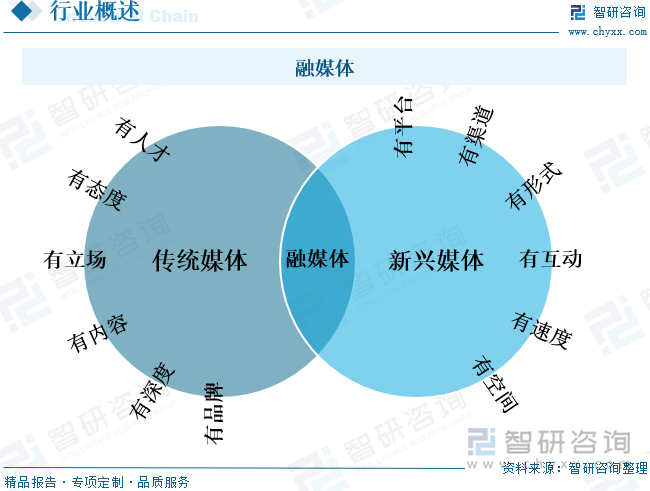
Core Viewpoint - The media convergence industry in China is experiencing explosive growth, with the investment scale increasing from 3.82 billion yuan in 2016 to 28.89 billion yuan in 2024, reflecting a compound annual growth rate of 28.78% [1][15]. Group 1: Industry Overview - Media convergence refers to the integration of traditional and emerging media through various channels and technologies, transforming information dissemination methods [1][3]. - As of December 2024, China's internet user base reached 1.108 billion, with an internet penetration rate of 78.6% and mobile internet users accounting for 99.7% of the total [1][15]. - The rise of news apps and social media as primary information sources, especially among younger demographics, has significantly altered the media landscape and public opinion ecology [1][15]. Group 2: Industry Investment - The investment scale of the media convergence industry in China has shown remarkable growth, from 3.82 billion yuan in 2016 to 28.89 billion yuan in 2024, indicating a strong potential for development in the digital economy era [1][15]. - Globally, the media convergence industry investment increased from 5.606 billion USD in 2016 to 16.755 billion USD in 2024, with a compound annual growth rate of 14.67% [14]. Group 3: Industry Structure - The media convergence industry is characterized by a diverse and competitive landscape, with traditional media companies actively transforming and new media companies rapidly gaining market share [18]. - Major players like Tencent leverage their platforms to expand into the media convergence market, while numerous startups emerge with innovative business models [18]. Group 4: Policy Support - The Chinese government has introduced various policies to support the development of the media convergence industry, emphasizing the use of internet technology and new media to enhance public engagement and service quality [7][9]. Group 5: Industry Trends - The further proliferation of 5G technology is expected to create broader development opportunities for the media convergence industry, enhancing user experiences through immersive technologies like VR/AR [24]. - There is a growing emphasis on diversified content production to meet the increasingly specialized demands of users across various sectors, including education, healthcare, and technology [25]. - Innovations in advertising models, driven by advancements in big data and AI, will enhance the effectiveness of advertising in the media convergence sector [27].


FC-BGA,需求大增
半导体行业观察· 2025-05-11 03:18
Core Viewpoint - The Japanese circuit board industry leader, IBIDEN, predicts significant growth in the AI server circuit board market, with sales expected to increase 2.5 times over the next 5 to 6 years, benefiting domestic companies like Samsung Electronics and LG Innotek [1][2]. Group 1: Market Growth and Projections - IBIDEN forecasts an 11% year-on-year increase in total sales for the fiscal year 2025, with the electronic division's sales, including FC-BGA, projected to reach $24 billion and operating profit to hit $3.3 billion, reflecting growth of 22% and 23% respectively compared to the previous year [1]. - By fiscal year 2030, sales of AI server substrates are expected to grow approximately 2.5 times from 2024, reaching $47.5 billion [2]. - The global FC-BGA market is anticipated to more than double from $8 billion in 2022 to $16.4 billion by 2030 [2]. Group 2: Technological Trends and Innovations - FC-BGA substrates are becoming essential in high-performance electronics due to their ability to provide higher I/O density and improved electrical performance compared to traditional packaging methods [3]. - The demand for miniaturization and enhanced functionality in consumer electronics, particularly in smartphones and IoT devices, is driving the adoption of FC-BGA substrates [3]. - The rise of 5G technology necessitates semiconductors capable of handling high-frequency signals, making FC-BGA substrates ideal for RF and millimeter-wave applications [4][5]. - The growth of automotive electronics, particularly in electric vehicles (EVs), is increasing the demand for efficient packaging solutions like FC-BGA that can manage higher power densities [6]. - High-performance computing (HPC) and AI workloads require low-latency processors, and FC-BGA substrates support heterogeneous integration of multiple chips, crucial for data centers and edge devices [7]. - Sustainability is becoming a key factor in semiconductor manufacturing, with FC-BGA substrates contributing to reduced material usage and improved energy efficiency [8]. Group 3: Challenges and Future Outlook - Despite the advantages of FC-BGA technology, challenges such as higher production costs and complexities in testing and inspection remain [8]. - The future of FC-BGA substrates looks promising, with emerging trends in heterogeneous integration and system-in-package (SiP) solutions expected to enhance performance [8]. - The semiconductor packaging landscape is undergoing a paradigm shift, with FC-BGA technology playing a critical role in meeting the complex demands of modern electronic devices and systems [8][9].

台州火蝠科技2025年直播电商未来发展趋势
Sou Hu Cai Jing· 2025-05-10 12:43
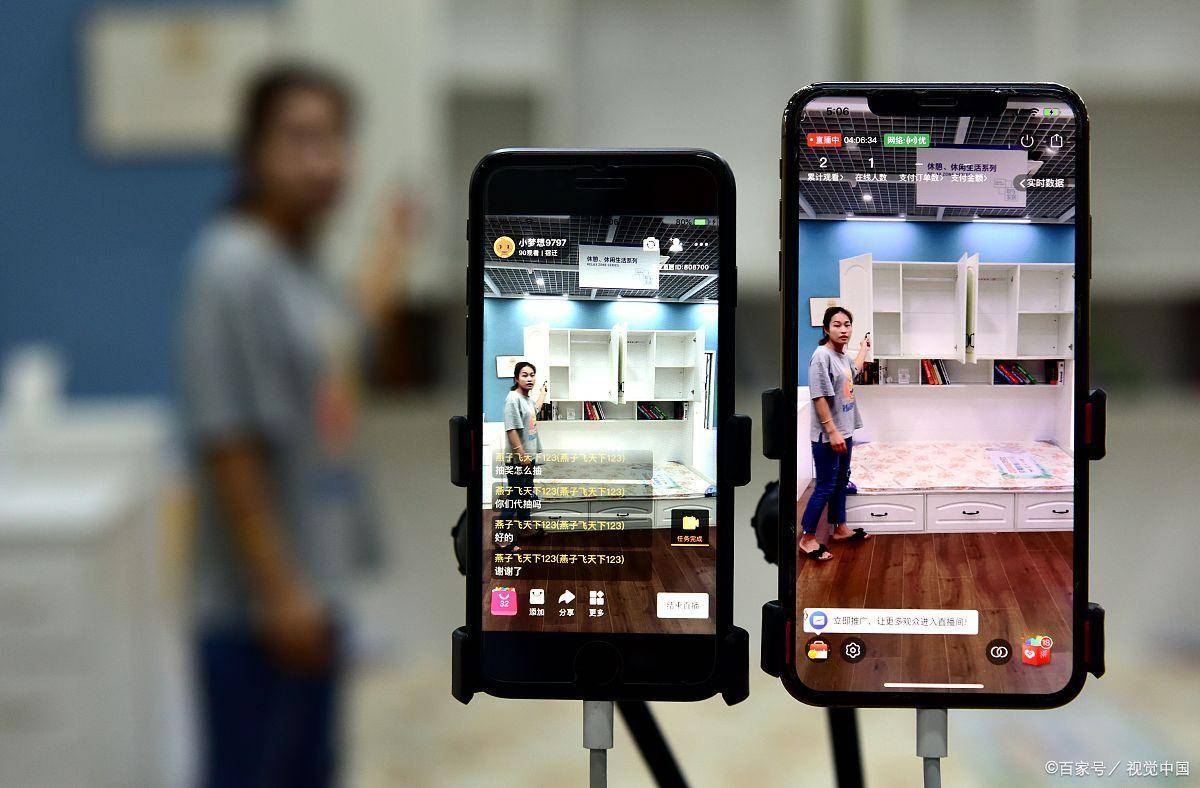
Market Size and Growth Trends - The live e-commerce market in China has experienced explosive growth since its inception in 2016, with transaction volume rising from 16.8 billion RMB in 2017 to 3.5 trillion RMB in 2022, a year-on-year increase of 53%. In 2023, the transaction volume further increased to 4.92 trillion RMB, reflecting a year-on-year growth of 40.48% [2] - As of June 2023, the user base for live e-commerce in China reached 526 million, accounting for 54.7% of the total internet users, indicating that live e-commerce has become a significant channel for online shopping [2] Future Growth Trend Forecast - By 2025, the total scale of China's live e-commerce industry is expected to reach 2.1373 trillion RMB, driven by continuous internet technology development, enhanced consumer preferences for live shopping experiences, and ongoing innovations in the live e-commerce model [3] - The application of technologies such as 5G, AI, and VR/AR is anticipated to enhance user experience, making shopping more intuitive and interactive, while the penetration of live e-commerce into lower-tier cities and sectors like healthcare and furniture is expected to further expand the market [3] Consumer Behavior and Market Drivers - Increasing health awareness among consumers is influencing purchasing decisions in live e-commerce, with a focus on product ingredients and long-term health benefits. The health industry in China is projected to reach 16 trillion RMB by 2030, highlighting the impact of health consciousness on the live e-commerce market [4] - Economic development and rising living standards are providing a strong consumer base for live e-commerce, as higher disposable income allows consumers to spend more on non-essential goods, driving market growth [6] - Technological advancements, policy support, and changing consumer behaviors are also significant drivers of live e-commerce growth, with younger demographics showing higher engagement and spending potential [7] Technological Development Impact - The commercialization of 5G technology is revolutionizing the live e-commerce industry by enhancing video and audio quality, thereby improving user immersion and interaction. This technology is expected to create new growth opportunities for the industry [8] - AI and big data analytics are providing robust support for the development of live e-commerce, enabling personalized recommendations and deeper user insights, which are crucial for optimizing content and marketing strategies [9] Competitive Landscape and Market Participants - The competitive landscape in live e-commerce is characterized by a tiered structure, with leading platforms like Douyin, Kuaishou, and Taobao Live dominating the market. In the first three quarters of 2024, Douyin e-commerce, Kuaishou e-commerce, and Taobao Live achieved GMV of 745.23 billion RMB, 588.82 billion RMB, and 506.02 billion RMB, respectively, capturing market shares of 40.5%, 32%, and 27.5% [11] - Emerging platforms and smaller participants are seeking growth opportunities through differentiation and innovation, often focusing on niche markets or specific sectors [12] Regulatory Policies and Market Standardization - The introduction of the "Network Live Marketing Management Measures (Trial)" marks a new phase of regulatory management in the live e-commerce industry, establishing responsibilities for platforms and operators while enhancing market competitiveness [14] - The implementation of the Consumer Rights Protection Law provides a clearer legal basis for consumer protection in live e-commerce, addressing issues like fraud and ensuring a more trustworthy shopping environment [15] Business Model Innovation and Profitability - The live e-commerce industry's profitability has evolved from traditional models like tipping and advertising to innovative approaches such as direct sales through live broadcasts, which are expected to drive significant revenue growth [16][17] - New business models, including paid content and cross-industry collaborations, are emerging, providing diverse revenue streams and expanding the application scenarios of live e-commerce [17] International Development Trends - The integration of cross-border e-commerce with live e-commerce is creating new shopping experiences for global consumers, with significant market potential projected for the coming years [19] - Companies expanding into international markets must consider local market conditions, consumer behaviors, and regulatory environments to effectively implement their strategies [20][21]




从“通信桥”到“生态链”:山东移动擘画黄河治理新图景
Qi Lu Wan Bao· 2025-05-09 02:35
九曲黄河,奔腾入海。作为中华民族的母亲河,黄河流域的生态保护与高质量发展始终牵动人心。近年 来,山东移动以5G技术为"通信桥",以数智赋能为"生态链",在齐鲁大地上书写了一幅从传统网络基建 到智慧生态治理的转型画卷。从筑牢通信网络底座到构建"天空地一体化"生态监测体系,山东移动以创 新技术破解治理难题,以责任担当守护黄河安澜,为黄河流域的可持续发展注入强劲动能。 筑基:从滩涂到云端,5G"通信桥"跨越治理鸿沟 黄河流域生态治理的难点之一,在于复杂的地理环境。山东移动直面滩涂、湿地、无人岛等施工难题, 以"逢山开路、遇水架桥"的攻坚精神,为黄河治理架起一座数字化"通信桥"。 在黄河三角洲,滩涂松软、大型机械无法进入,传统基站建设难以推进。山东移动创新提出"船坞基 站"方案,将基站建在浮动平台上,并采用"跨河光缆+5G 700M+CPE"技术,铺设30公里光缆,实现传 输业务双路由保护。这一突破不仅解决了信号覆盖问题,更开创了远距离高清视频回传新模式,为生态 监测提供了稳定网络支撑。 在黄河防汛中,山东移动与地方政府合作,打造"农村基层防汛监测预警平台",推进从"人防"到"智 防"的跨越。通过5G+AI技术,山东 ...