
普惠金融

Search documents
技术筑桥,幸福可达:全民钱包用AI破解“普惠与风控”难题
Cai Fu Zai Xian· 2025-10-20 06:38
Core Insights - The article emphasizes the importance of consumer finance as a vital link between public demand and economic vitality, focusing on the dual challenges of broadening access to services and managing risks effectively [1] Group 1: Challenges in Traditional Financial Services - Traditional financial services are limited by physical branch locations and rigid credit assessment criteria, leaving many potential customers, such as small merchants and individuals without credit history, underserved [2] - The need for a balance between inclusive financial access and risk management is highlighted, as lowering barriers can lead to increased risk exposure [1][2] Group 2: Innovative Solutions by Quanmin Wallet - Quanmin Wallet leverages financial technology to address the core contradictions in the industry, aiming to provide both inclusive and secure financial services [1] - The platform targets underserved areas by offering a product matrix that is small, frequent, and adaptable, catering to users without traditional credit records [2] - A dual-service model combining "smart terminals and online platforms" has been implemented to enhance service accessibility in rural and county markets [2] Group 3: Enhanced User Experience - The introduction of an installment shopping mall covers various consumer sectors, integrating financial support into everyday purchasing scenarios [3] - Special services for green consumption trends, such as discounts for purchasing electric vehicles and energy-efficient appliances, are also offered [3] - The user experience is optimized through advanced technologies like OCR and live detection, simplifying identity verification processes [3] Group 4: Risk Management Strategies - Quanmin Wallet employs a self-developed "Star Observation Platform" and CRAM risk control system to maintain asset quality while expanding service offerings [4] - A multi-dimensional data modeling approach enhances credit assessment by integrating various data sources, moving beyond traditional credit data reliance [4] - The platform utilizes federated learning technology to ensure data privacy while maximizing data utility for risk assessment [4] Group 5: AI-Driven Risk Control - The integration of advanced algorithms, such as extreme gradient boosting and knowledge graphs, allows for automated data processing and real-time model optimization [5] - The platform can effectively identify and intercept fraudulent activities at various stages of the lending process, ensuring stable asset quality [5] - Compliance and security measures are strictly followed, with partnerships established with licensed financial institutions to enhance transparency and risk management [5] Group 6: Ecosystem Development - Quanmin Wallet has evolved beyond mere lending services to create an ecosystem that combines technology output, scenario integration, and user empowerment [6] - Collaborations with e-commerce and service platforms enable seamless integration of financial services into daily consumer experiences [6] - Educational initiatives, such as the "Quanmin Financial Classroom," aim to enhance user understanding of financial services, fostering responsible credit usage [6]
高质量发展看亮点·读数丨前三季度主要金融数据变化怎么看
Ren Min Ri Bao· 2025-10-20 03:09
Core Insights - The People's Bank of China reported that in the first three quarters of this year, RMB loans increased by 14.75 trillion yuan, indicating a favorable monetary environment for economic recovery [1] - The overall credit structure has improved, with significant support for the real economy's high-quality development [3] Group 1: Loan Growth and Structure - As of the end of September, the total RMB loan balance reached 270.39 trillion yuan, a year-on-year increase of 6.6% [3] - The social financing scale stock was 437.08 trillion yuan, up 8.7% year-on-year, which is 0.7 percentage points higher than the same period last year [3] - The balance of inclusive small and micro loans was 36.09 trillion yuan, growing by 12.2% year-on-year, while medium and long-term loans for the manufacturing sector reached 15.02 trillion yuan, up 8.2% [3] Group 2: Support for Key Industries - Key industries such as equipment manufacturing and high-tech manufacturing maintained high levels of prosperity, effectively releasing corporate financing demand [3] - A state-owned bank reported that manufacturing loans accounted for over half of its corporate loans, primarily in the form of medium and long-term loans to support technological upgrades [3] Group 3: Policy Impact on Financing - New policy financial tools have been launched in regions like Jiangsu, Guangdong, and Guangxi, targeting urban renewal and infrastructure projects to alleviate capital shortages [4] - Personal consumption loan demand has rebounded, with policies implemented in major cities leading to increased housing market transactions [4] Group 4: Financing Costs and Transparency - Loan interest rates have remained low, with the weighted average interest rate for new corporate loans at approximately 3.1%, down about 40 basis points year-on-year [5] - The introduction of the "loan transparency paper" has helped reduce financing costs for small and medium-sized enterprises, ensuring they are aware of all associated fees [6] Group 5: Future Policy Directions - The monetary policy is expected to continue supporting the real economy, with structural monetary policy tools playing a crucial role in guiding financial support to key sectors [8] - The combination of monetary and fiscal policies is anticipated to enhance the effectiveness of financial support for critical areas, promoting a more balanced economic cycle [9]
合规护航,精准输血!解码山东省企业应急转贷如何赋能实体经济
Qi Lu Wan Bao· 2025-10-20 02:25
齐鲁晚报·齐鲁壹点 王赟 山东省内多家中小微企业在办理银行贷款续贷时,正悄然享受一项高效、低成本的金融服务—山东省企 业应急转贷(下称"应急转贷")。这项由政府引导、市场化运作的普惠金融机制,正以其规范、透明、 低费的特点,成为中小微企业纾困解难的"及时雨"。 近日,记者走进2025年度"好品金融"奖项获得者山东省新动能普惠金融服务有限公司(山东省企业应急 转贷平台)(下称"新动能普惠公司"),同时,走访济南、淄博、潍坊等地应急转贷备案机构(下 称"备案机构")、合作银行、用款企业,对新动能普惠公司合规运作机制赋能实体经济进行了深度调 查。 资金来源规范合法,转贷业务资质严格把关 在采访过程中,记者了解到,山东省企业应急转贷服务体系(以下简称"省转贷体系")实行备案管理制 度,所有合格机构均需经相关主管部门推荐并在新动能普惠公司备案后方可开展应急转贷业务。根据山 东省省级企业应急转贷引导基金相关政策规定,备案机构开展应急转贷业务应使用自有资金,也可使用 股东借款和申请各级政府转贷引导基金支持,但不得从其他市场主体和社会公众筹集资金。未在新动能 普惠公司备案的其他市场主体开展所谓"转贷业务"以及备案机构开展的其 ...
如何做好金融“五篇大文章”?中信、银河、中信建投等顶级券商“掌舵人”齐聚上海:要打破“单打独斗”模式
Xin Lang Zheng Quan· 2025-10-20 02:12
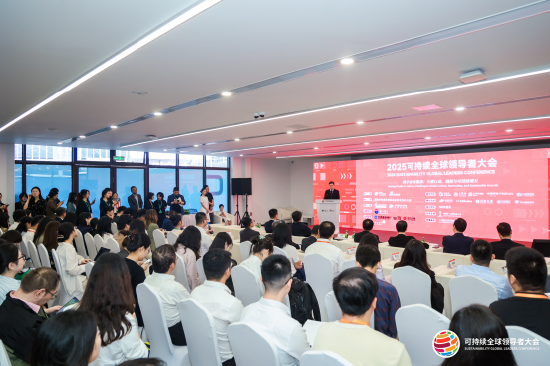
Group 1: Conference Overview - The 2025 Sustainable Global Leaders Conference will be held from October 16 to 18 in Shanghai, focusing on "Facing Challenges Together: Global Action, Innovation, and Sustainable Growth" as its core theme, aiming to explore new paths for sustainable development and inject "Chinese momentum" into global governance [1] - The conference is co-hosted by the World Green Design Organization (WGDO) and Sina Group, with support from the IFRS Foundation and the Shanghai Huangpu District People's Government [1] Group 2: Financial Sector Insights - Discussions at the conference highlighted the importance of the "Five Major Articles" in constructing a new ecosystem for sustainable development in the securities industry, emphasizing collaboration among banks, securities, and insurance institutions to provide comprehensive services [3][7] - China Galaxy Securities' Chairman Wang Sheng noted that innovation is the primary driving force for development, with a focus on technology finance as the first of the "Five Major Articles," indicating that the capital market has formed a multi-level service system for technology finance [5] - CITIC Securities' General Manager Zou Yingguang emphasized the need for continuous investment in technology finance and the exploration of innovative products in green finance to support the "dual carbon" goals [10] - The ESG strategy of China Merchants Securities aims to create a capital cycle that supports low-carbon transformation and enhance social welfare, integrating the "Five Major Articles" with ESG development [12] - Guangda Securities' President Liu Qiuming discussed the importance of integrating the "Five Major Articles" into the company's strategy and achieving positive progress in supporting innovation and financing for high-tech enterprises [15] - Guo Chuanzhou, Chairman of Yuekai Securities, highlighted the company's efforts in promoting inclusive finance and knowledge property transactions to support small and medium-sized enterprises [19] Group 3: Wealth Management Trends - Guo Xiaobo, President of Guolian Minsheng Securities, pointed out that wealth management has a significant impact on the valuation and market value of securities firms, with a notable shift towards wealth management and asset management in the global securities industry [17]






普惠金融激活中国经济“微循环”
Jin Rong Shi Bao· 2025-10-20 02:04
Core Viewpoint - Inclusive finance is playing a crucial role in supporting China's economic microcirculation, enhancing the financing experience for small and micro enterprises, and promoting common prosperity during the "14th Five-Year Plan" period [1][4]. Group 1: Development of Inclusive Finance - During the "14th Five-Year Plan," inclusive finance has achieved historic breakthroughs, with the balance of inclusive loans for small and micro enterprises reaching 36 trillion yuan, 2.3 times that of the end of the "13th Five-Year Plan," and interest rates decreasing by 2 percentage points [1][4]. - By June 2025, the balance of inclusive loans for small and micro enterprises from large commercial banks is projected to reach 16.23 trillion yuan, 3.36 times that of the end of the "13th Five-Year Plan," with an average annual growth rate of approximately 30% [3][4]. Group 2: Enhanced Accessibility and Service Quality - Financial institutions are actively addressing the financing difficulties faced by small and micro enterprises, with the average annual growth rate of inclusive loans reaching about 20% and the average annual growth rate of inclusive agricultural loans at 14.6% during the "14th Five-Year Plan" [4][6]. - The establishment of financial service stations in rural areas has significantly improved access to financial services, with over 98% coverage of rural banking outlets [5][6]. Group 3: Innovation and Technology in Financial Services - Financial institutions are leveraging technology to enhance service efficiency, with some loans being processed in seconds through the use of big data and artificial intelligence [6][8]. - The introduction of diverse financial products and services, such as flexible credit options and innovative service models, has improved the financing experience for small and micro enterprises [3][6]. Group 4: Sustainable Financial Ecosystem - The financial management departments are focusing on creating a sustainable financial service ecosystem by enhancing risk assessment, innovating credit products, and establishing a long-term service mechanism for small and micro enterprises [7][8]. - The average interest rate for newly issued inclusive loans for small and micro enterprises decreased by 2 percentage points compared to the end of the "13th Five-Year Plan," alleviating the financial burden on these enterprises [8].


2025年中国投融资服务行业市场洞察报告-硕远咨询
Sou Hu Cai Jing· 2025-10-20 01:56
Core Insights - The report highlights the significance of the investment and financing services industry in China, emphasizing its role as a crucial bridge connecting capital supply and demand, and its contribution to optimizing resource allocation and promoting economic development [1][2]. Industry Overview - The investment and financing services industry encompasses various business types, including equity financing, debt financing, capital market services, and mergers and acquisitions, along with auxiliary services like financial advisory and risk management [8][11]. - The industry has evolved from a bank-led model in the late 20th century to a more diversified and technology-driven landscape, with a market size reaching trillions of yuan and an annual growth rate exceeding 10% as of 2024 [1][2][23]. Market Dynamics - The macroeconomic stability and continuous improvement of the capital market provide solid support for the industry, while consumption upgrades and manufacturing transformation create diverse financing demands [2][40]. - Financial technology, including blockchain, big data, and artificial intelligence, is identified as a core driver of innovation, enhancing financing efficiency, transparency, and risk management [2][54]. Competitive Landscape - The market is characterized by a diverse competitive landscape, with large state-owned financial institutions, joint-stock banks, leading securities firms, and internet finance platforms dominating, while emerging companies leverage technological innovation for rapid growth [2][19]. - The client base includes various enterprises, government agencies, and individual investors, with increasing demand for personalized, digitalized services and heightened attention to service convenience and ESG performance [2][27]. Business Innovation - The industry is witnessing continuous innovation in business models, with traditional financing products being refined and new models like internet finance, supply chain finance, and financing leasing gaining traction [2][12]. - The application of blockchain and smart contracts is further optimizing service processes, indicating a trend towards deeper digitalization, intelligence, and internationalization in the industry [2][20]. Market Size and Structure - As of 2024, the market size of China's investment and financing services industry has reached trillions of yuan, with equity financing accounting for approximately 40%, debt financing for 35%, and internet finance and other emerging services for about 20% [23][27]. - The industry exhibits a large scale, diverse structure, and steady growth, playing a vital role in supporting China's economic transformation and innovation-driven development [25][32]. Regional Distribution - The investment and financing services market shows significant regional concentration, with first-tier cities in eastern coastal areas being the core, while new first-tier cities in central and western regions are rapidly emerging [33][37]. - The market structure and service models vary by region, with eastern regions focusing on equity financing and capital market services, while central and western regions emphasize debt financing and basic financial services [33][37].

从街头巷尾到田间地头:普惠金融激活中国经济“微循环”
Jin Rong Shi Bao· 2025-10-20 01:51
Core Viewpoint - Inclusive finance is playing a crucial role in supporting China's economic micro-circulation, enhancing the financing experience for small and micro enterprises, and contributing to high-quality economic development during the "14th Five-Year Plan" period [1][2][3]. Group 1: Development of Inclusive Finance - During the "14th Five-Year Plan," inclusive finance has achieved significant progress, with the balance of loans to inclusive small and micro enterprises reaching 36 trillion yuan, 2.3 times that of the end of the "13th Five-Year Plan," and interest rates decreasing by 2 percentage points [1][2]. - Large commercial banks have increased their inclusive small and micro enterprise loan balance to 16.23 trillion yuan by June 2025, which is 3.36 times that of the end of the "13th Five-Year Plan," with an average annual growth rate of about 30% [2]. - The balance of inclusive loans for small and micro enterprises is growing rapidly, with an average annual increase of approximately 20%, reaching 2.36 times that of the end of the "13th Five-Year Plan" [3]. Group 2: Financial Services Accessibility - Financial services are increasingly accessible, with banks establishing service stations in rural areas, allowing farmers to obtain loans conveniently [4][5]. - The coverage rate of rural bank branches exceeds 98%, and various financial service points are established in rural areas, ensuring that financial services reach every village [5]. - The use of digital technologies has significantly improved the efficiency of inclusive loan disbursement, enabling some loans to be approved and disbursed almost instantly [6]. Group 3: Sustainable Financial Ecosystem - Financial management departments are enhancing the sustainability of inclusive finance by improving risk assessment and credit technology, and establishing a long-term service mechanism for small and micro enterprises [7][8]. - Policies and institutional innovations are effectively stimulating the internal motivation for the development of inclusive finance within banks, establishing a long-term mechanism for "daring to lend, willing to lend, able to lend, and knowing how to lend" [8]. - The average interest rate for newly issued inclusive loans for small and micro enterprises decreased by 2 percentage points compared to the end of the "13th Five-Year Plan," alleviating the financial burden on these enterprises [8].
多元金融公司三季度净利大增70%背后:新能源与投资暗藏玄机?新任总经理“首秀”引爆市场
Hua Xia Shi Bao· 2025-10-19 23:57
Core Viewpoint - Yuexiu Capital expects a significant increase in net profit for the first three quarters of 2025, driven by strong investment returns and growth in its renewable energy business [2][3][4]. Financial Performance - The projected net profit attributable to shareholders for the first three quarters of 2025 is between 29.22 billion to 30.94 billion yuan, representing a year-on-year growth of 70% to 80% [2][3]. - The expected net profit for the third quarter is between 13.64 billion to 15.36 billion yuan, with a year-on-year increase of 94% to 118% [2][4]. - Excluding non-recurring gains, the net profit is projected to be between 14 billion to 15.8 billion yuan, reflecting an 18% to 32% increase year-on-year [3]. Investment and Business Strategy - The company has actively seized opportunities in the capital market, leading to a substantial increase in investment income [4]. - The renewable energy sector has shown significant growth, with total electricity generation reaching 78.1 billion kWh in the first half of 2025, resulting in electricity revenue of 24.2 billion yuan, a 123% increase year-on-year [6]. - The company is focusing on diversifying its renewable energy product offerings, including solar, wind, and energy storage projects [6]. Accounting Changes and Impacts - A change in accounting for long-term equity investments has contributed to non-recurring gains, with an estimated one-time income of approximately 20.22 billion yuan recognized [5]. - The company anticipates asset impairment provisions of 14 billion to 16 billion yuan for the first three quarters of 2025, which may reduce net profit by about 7.20 billion to 8.20 billion yuan [5]. Management and Governance - Wu Yonggao was appointed as the new general manager in August 2025, marking a significant leadership change [9]. - Investors are keenly observing the company's performance under the new management and its strategic direction, particularly in light of recent acquisitions by its parent group [10].


“十五五”规划前瞻:国际篇+金融篇
2025-10-19 15:58
Summary of Key Points from Conference Call Records Industry Overview - The records discuss the Chinese economy and its strategic responses to global geopolitical challenges, particularly in the context of the "14th Five-Year Plan" and the upcoming "15th Five-Year Plan" [1][2][3]. Core Insights and Arguments - **Economic Growth Projections**: China's economic growth is expected to maintain a range of 4.6% to 4.8% during the "15th Five-Year Plan" period, with a focus on energy supply security through strategic partnerships, particularly with Russia [1][3]. - **Foreign Trade Expansion**: By 2024, China's foreign trade is projected to reach $6.16 trillion, marking a 32.4% increase compared to the previous five-year period, maintaining its position as the world's largest trading nation [1][4]. - **Trade Structure Optimization**: The importance of ASEAN and the EU as trading partners is increasing, while the significance of the U.S. is declining. High-tech, green, and electromechanical products are identified as core drivers of exports [4]. - **Financial Policy Focus**: The financial policies during the "14th Five-Year Plan" emphasized service to the real economy, financial security, and supply-side structural reforms, with a new goal of building a financial powerhouse [5]. Important but Overlooked Content - **Challenges for Private and Tech Enterprises**: Private and tech enterprises face high loan interest rates, reliance on collateral for financing, and a low proportion of direct financing (31.6%) compared to developed countries (60%-80%) [6]. - **Strategic Directions for Financial Institutions**: Financial institutions are expected to adjust their strategies to focus on technology finance, green finance, and pension finance, with an emphasis on supporting innovation and sustainable development [7][9][10]. - **Internationalization of the Renminbi**: There is a push for the gradual internationalization of the Renminbi, with current foreign holdings of domestic bonds and stocks at only 3%-4%, indicating significant room for growth [8]. Sector-Specific Developments - **Banking Sector**: The banking industry will prioritize resources towards strategic areas such as technology innovation and green finance, utilizing differentiated products like intellectual property pledge loans [9]. - **Insurance Sector**: The insurance industry aims to enhance health insurance and long-term care systems to address aging population needs while increasing equity asset allocation in tech and green sectors [9]. - **Fund Management**: The fund industry is transitioning from a focus on scale to one on returns, emphasizing investments in pension-targeted funds and ESG products [10]. - **Securities Sector**: The securities industry is expected to evolve towards a more integrated, professional, and digital approach, focusing on investment banking and wealth management [10].
邮储银行赣州市分行以金融为纽带 串联起赣南特色产业的“丰收链”
Zheng Quan Ri Bao Zhi Sheng· 2025-10-19 15:14
Core Insights - Postal Savings Bank of China (PSBC) is actively promoting inclusive finance and supporting rural industry development in Ganzhou, Jiangxi Province, through innovative products and services [1][2][5] Group 1: Financial Support Initiatives - PSBC's Ganzhou branch has implemented targeted financial initiatives such as "Strong Towns and Rich Villages" and "Lighting Action" to inject financial resources into local specialty industries [1][3] - The bank has provided significant financial support, including a 1 million yuan "industry loan" to a peanut processing factory, enabling the owner to expand operations and achieve projected sales of over 3 million yuan [1][2] - The bank's branches have collectively issued over 3.27 billion yuan in personal operating loans to more than 600 agricultural operators and farmers this year [2][5] Group 2: Case Studies of Agricultural Support - In Anyuan County, PSBC provided a 300,000 yuan "industry loan" to a kiwi fruit plantation, allowing the business to stabilize and achieve an expected annual yield of 500 tons [2][3] - In Xunwu County, the bank issued 1.5 million yuan in credit to support the cultivation of sweet persimmons, which are projected to yield around 40,000 pounds, marking a 20-30% increase from the previous year [4] - The bank has facilitated the growth of various local fruit industries, contributing over 2 billion yuan in loans to benefit more than 700 agricultural operators [4][5] Group 3: Overall Impact - PSBC has issued over 100 billion yuan in small loans, benefiting more than 530,000 clients, effectively linking the agricultural production chain in southern Jiangxi [5]
