战略转型

Search documents
年度复盘:2025年零售圈十大跨界联名事件发布
3 6 Ke· 2026-01-16 12:06
Core Insights - The retail industry in China is experiencing intense competition, with cross-industry integration becoming a key strategy for brands to achieve growth in a saturated market [1] - Brands are increasingly moving beyond traditional boundaries, utilizing cross-industry innovation to explore new consumer demands and retail formats [1] Group 1: Cross-Industry Innovations - Kudi Coffee has entered the fast-food sector by launching hot meal options in select Beijing stores, aiming to enhance store efficiency and customer traffic through a "coffee + hot food" model [2][3] - Armani has opened its first restaurant in Beijing, offering a unique dining experience that combines luxury branding with a relatively affordable average spend of 354 yuan per person [4][5] - Haidilao has launched a new brand, "Haini," focusing on beef hot pot, as part of its multi-brand strategy to find new growth avenues beyond traditional hot pot offerings [6] Group 2: Market Adaptations - Ningji has introduced grilled sausage products priced at 4 yuan each to complement its lemon tea offerings, aiming to increase customer spending and overall sales [7] - Haidilao has also ventured into the bakery sector with its brand "Schwasua," offering products primarily priced under 10 yuan, leveraging its supply chain advantages [8] - Prada has opened its first independent restaurant in Asia, integrating Italian and Chinese culinary traditions, marking a significant step in luxury brand engagement in the dining sector [9][10] Group 3: Strategic Expansions - Hailan Home has established a beverage company to enter the bottled water market, responding to declining profits in its core clothing business [11] - Zuli Jian has opened an organic food store, selling frozen dumplings at competitive prices, as part of its strategy to diversify and address financial challenges [12] - Wuliangye has launched a new craft beer brand, "Fenghuolun," incorporating its traditional liquor-making techniques, reflecting a trend of traditional alcohol companies seeking new growth opportunities [14] Group 4: Industry Trends - The cross-industry trend in retail is characterized by deeper integration of core capabilities rather than simple category additions, as seen with Haidilao and Wuliangye [17] - Brands are targeting specific consumer groups more effectively, such as Kudi Coffee's focus on all-day dining and Zuli Jian's appeal to older consumers [17] - Luxury brands are using dining experiences to convey lifestyle aesthetics, while mass-market brands are leveraging cross-industry strategies to overcome growth challenges [18]






国力电子:2025年全年净利润同比预增124.89%—164.57%
2 1 Shi Ji Jing Ji Bao Dao· 2026-01-15 07:47
Core Viewpoint - Guokeli Electronics expects a significant increase in net profit for 2025, projecting a range of 68 million to 80 million yuan, representing a year-on-year growth of 124.89% to 164.57% [1] Financial Performance - The company anticipates a net profit attributable to shareholders, excluding non-recurring gains and losses, to be between 60 million and 72 million yuan, with a year-on-year increase of 228.22% to 293.87% [1] - Estimated total revenue for 2025 is approximately 1.327 billion yuan, reflecting a year-on-year growth of about 67.55% [1] Business Strategy - The company is pursuing a dual-line development strategy focusing on special business and civilian products, with stable delivery of special business control boxes and an expanding market share in the new energy sector [1] - The successful delivery of core components in large scientific projects and other emerging application areas has contributed to profit growth [1] Market Dynamics - The high demand in the new energy vehicle industry is driving a significant increase in product orders for the company [1] - Rapid revenue growth from core products such as control boxes and relays has enhanced profitability [1] Operational Efficiency - The company has optimized cost and expense management, leading to improved operational efficiency and further net profit growth [1]

金龙鱼海南布局背后:自贸港政策红利与转型焦虑的双重博弈
Sou Hu Cai Jing· 2026-01-15 02:05
Core Viewpoint - The establishment of Yihai Kerry (Hainan) Food Technology Co., Ltd. by Jinlongyu represents a strategic move to leverage the Hainan Free Trade Port policies for cost reduction and business transformation in response to the saturation of traditional grain and oil markets [2][3][4] Group 1: Business Expansion and Strategic Transformation - Jinlongyu's new subsidiary has a registered capital of 10 million yuan and will engage in food sales, road cargo transportation, and import-export activities [2] - The Hainan Free Trade Port's policies, including zero tariffs and low tax rates, provide Jinlongyu with significant opportunities to lower import costs for essential raw materials like palm oil and soybeans [2][3] - The company aims to transition into a comprehensive food service provider by focusing on bulk commodity trading and the prepared food supply chain, addressing the need for new growth avenues amid increasing competition in the traditional grain and oil market [3] Group 2: Market Opportunities and Challenges - Hainan's unique resources, such as abundant tropical agricultural products and a large tourism market, offer Jinlongyu advantages for its transformation and the development of a central kitchen food park [3] - The prepared food market is highly competitive, and there are uncertainties regarding the nationwide acceptance of Hainan-style prepared dishes [3][4] - The construction and operation of the central kitchen park will require substantial financial and technical investments, posing challenges for the company [3]


Jewett-Cameron Trading Co Ltd(JCTC) - 2026 Q1 - Earnings Call Transcript
2026-01-14 22:32
Financial Data and Key Metrics Changes - Revenue for Q1 2026 was $8.3 million, a decrease of 7% compared to $9.3 million in Q1 2025 [13] - Gross operating profit margins were negative 12.5% in Q1 2026, down from positive 18.3% in Q1 2025, primarily due to $2.2 million in additional inventory write-downs [15] - Net loss for Q1 2026 was $3.9 million or negative $1.12 per share, compared to a net loss of $658,000 or negative $0.19 per share in Q1 2025 [17] Business Line Data and Key Metrics Changes - Sales in the core metal fence business increased slightly year-over-year despite challenges, indicating resilience [14] - The Greenwood industrial wood business saw a 45% increase in sales, driven by demand from municipalities and new customers [14] - Decreased sales were noted in lumber and PET products due to market conditions and customer program changes [15] Market Data and Key Metrics Changes - The company faced ongoing challenges from tariffs and negative consumer sentiment, impacting purchasing behavior [11] - The operational environment remains uncertain, with weak consumer sentiment affecting discretionary spending [11] Company Strategy and Development Direction - The company aims to exit fiscal 2026 with a sustainable business model focused on core product categories and operational efficiency [12] - There is a strong emphasis on the metal fencing business as a competitive advantage and a primary focus for capital allocation and innovation [7] - Initiatives to streamline operations and reduce costs are ongoing, with a target to reduce annual operating expenses by $1 million to $3 million [9] Management's Comments on Operating Environment and Future Outlook - Management acknowledges the challenges faced in Q1 but expresses optimism about long-term growth potential, particularly in the metal fencing business [4][7] - The company is making progress in pricing alignment with customers to improve margins, despite the difficulties posed by tariff volatility [16] - Future strategies include monetizing non-core assets and exploring partnerships to strengthen liquidity [10][21] Other Important Information - The company has amended its lending agreement to increase borrowing capacity, providing additional flexibility for operational realignment [19] - Inventory balance decreased to $13.5 million from $15.9 million, with an increased allowance for inventory reflecting market value adjustments [18] Q&A Session Summary Question: Can you expand upon the renegotiated pricing agreements you've entered into? - Management reported successful negotiations for price increases to minimize margin erosion due to tariffs, with implementation beginning in Q1 of fiscal 2026 [24] Question: Can you provide a general breakdown of your inventory by product category? - Management indicated that metal fencing remains the highest velocity inventory, while some PET inventory is slow-moving, with efforts ongoing to move excess lumber inventory [25]
Jewett-Cameron Trading Co Ltd(JCTC) - 2026 Q1 - Earnings Call Transcript
2026-01-14 22:30
Financial Data and Key Metrics Changes - Revenue for Q1 2026 was $8.3 million, a decrease of 7% compared to $9.3 million in Q1 2025 [14] - Gross operating profit margins were negative 12.5% in Q1 2026, down from positive 18.3% in Q1 2025, primarily due to $2.2 million in additional inventory write-downs [15] - Net loss for Q1 2026 was $3.9 million, or negative $1.12 per share, compared to a net loss of $658,000, or negative $0.19 per share in Q1 2025 [17] Business Line Data and Key Metrics Changes - Sales in the core metal fence business increased slightly year-over-year, despite challenges from tariffs and negative consumer sentiment [14] - The Greenwood industrial wood business saw a 45% increase in sales, driven by demand from municipalities and the addition of a new non-transit industrial customer [14] - Sales of lumber and PET products decreased due to initiatives to sell excess inventory amid challenging market conditions [15] Market Data and Key Metrics Changes - The company faced ongoing headwinds from tariffs and weak consumer sentiment, impacting purchasing behavior across the market [12] - The company is optimistic about renewed momentum in the metal fencing business as global trade conditions stabilize [14] Company Strategy and Development Direction - The company aims to exit fiscal 2026 with a sustainable business model focused on core product categories and operational efficiency [12][21] - There is a strong emphasis on the metal fencing business as a competitive advantage, with plans to optimize sales across other product categories [8] - The company is actively working to monetize non-core assets and exploring strategic partnerships and potential divestitures [11] Management's Comments on Operating Environment and Future Outlook - Management acknowledges the challenges in the operating environment but believes that strategic initiatives are strengthening the company's foundation and long-term outlook [7][12] - The company is focused on reducing annual operating expenses by $1 million to $3 million and improving margins through pricing alignment with customers [10][17] Other Important Information - The company has amended its lending agreement to increase borrowing capacity, providing additional flexibility for operational realignment [19] - Inventory balance as of November 30, 2025, was $13.5 million, down from $15.9 million at the end of August [18] Q&A Session Questions and Answers Question: Can you expand upon the renegotiated pricing agreements you've entered into? - Management reported successful negotiations for new pricing to minimize margin erosion from increased tariffs, with implementation beginning in Q1 of fiscal 2026 [23] Question: Can you provide a general breakdown of your inventory by product category? - Management indicated that metal fencing remains the highest velocity inventory, while a portion of PET inventory has been slow-moving, with progress being made in moving excess lumber inventory [24]
2025年预亏12亿元,陕西黑猫年末甩卖资产“补血”
2 1 Shi Ji Jing Ji Bao Dao· 2026-01-14 12:12
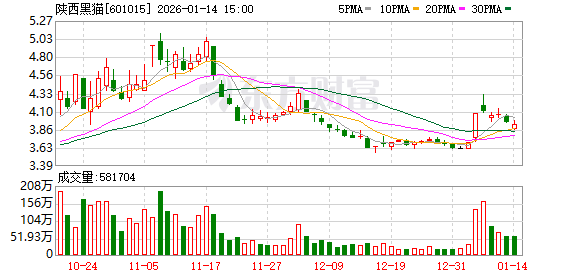
Core Viewpoint - Shaanxi Black Cat is expected to continue incurring losses in 2025, with a projected net profit attributable to shareholders ranging from -1.19 billion to -1.09 billion yuan, reflecting a year-on-year decline of 2.73% to 5.90% [1][7]. Company Performance - In the first half of 2025, Shaanxi Black Cat reported total operating revenue of 5.234 billion yuan, a decrease of 32.46% year-on-year, and a net loss of 462 million yuan [5]. - By the third quarter, the company faced continued operational pressure, with quarterly revenue of 2.619 billion yuan, down 28.67% year-on-year, leading to a cumulative revenue of 7.852 billion yuan for the first three quarters, a decline of 31.24% [5]. - The third quarter alone saw a loss of 284 million yuan, an increase of 44.32% year-on-year, resulting in a total loss of 746 million yuan for the first three quarters [5]. Industry Context - The coking coal industry is under pressure due to rising upstream raw material prices and a sluggish downstream market, which is expected to persist into 2025 [3]. - Shaanxi Black Cat's performance is heavily influenced by the volatility of coking coal prices, which have declined, leading to reduced gross margins and losses in its main business [2][5]. Financial Management - Despite declining performance, the company has shown positive signals in cash flow management, with a net cash flow from operating activities turning positive at 53 million yuan in the first half of 2025, and a cumulative improvement of 174.58% year-on-year for the first three quarters [6]. - The improvement in cash flow is attributed to a reduction in expenses related to raw material purchases, although this has been accompanied by increased borrowing to maintain operations [6][8]. Strategic Adjustments - To address funding needs amid industry fluctuations, Shaanxi Black Cat has engaged in asset disposals, including a 600 million yuan capital increase to Xinjiang Black Cat Coal Industry and the transfer of production capacity to its subsidiary [9][10]. - The company plans to sell its 100% stake in Hongneng Coal Industry and related debts for a total of 1.137 billion yuan, which is expected to enhance cash flow and alleviate debt burdens [11][13]. - The asset sales are part of a strategic shift to focus resources on key production bases in Shaanxi, Inner Mongolia, and Xinjiang, despite concerns about the long-term viability of its core business amid ongoing losses [12][13].

UPS in 2025, and How It's Shaping Up for 2026
Yahoo Finance· 2026-01-13 19:57
Core Viewpoint - UPS stock has experienced a significant decline of over 21% last year and nearly 42% over the past three years, yet there remains a strong bull case for the stock, particularly due to its 6.1% dividend yield appealing to income-seeking investors [1] Group 1: 2025 Expectations - Management anticipated that the overcapacity in the U.S. small package market would clear, leading to improved trading conditions [2] - A strategic plan to reduce Amazon.com delivery volumes by 50% by mid-2026 is expected to enhance margins by focusing on higher-margin markets such as healthcare and SMBs [2] Group 2: Current Challenges - A slowing industrial economy and uncertainties from trade tariffs have hindered higher-margin activities, leading to a potential miss in earnings and free cash flow guidance for the year [3] - Initial revenue estimates for 2025 were $89 billion with an adjusted operating margin of 10.8%, but current guidance suggests a revenue of $88.18 billion and an adjusted operating profit of $8.47 billion [4] Group 3: Future Outlook - The bullish case for UPS highlights a $3.5 billion reduction in expenses in 2025 linked to the Amazon delivery strategy, alongside investments in automation and smart facilities to boost productivity [6] - The year 2025 is viewed as a transitional period, with expectations that cost cuts and strategic restructuring will yield earnings growth in 2026 [7] - Despite recent stock declines, the focus on cost reductions and higher-margin markets positions the company for positive long-term growth [8]

涉资超1.6亿,闻泰科技子公司印度业务交易起纠纷
3 6 Ke· 2026-01-13 08:11
Core Viewpoint - The announcement reveals a dispute between Wentech Technology and its counterpart Luxshare regarding the asset sale of Wentech's Indian subsidiary, which has been submitted to the Singapore International Arbitration Centre (SIAC) for resolution [1][2]. Group 1: Asset Sale and Dispute - Wentech Technology initiated a significant asset sale in March 2025, intending to transfer multiple assets, including 100% equity of several subsidiaries and business assets in India, to Luxshare Precision Industry Co., Ltd. and Luxshare Communications (Shanghai) Co., Ltd. [1] - As of the announcement date, most of the assets involved in the transaction have completed ownership transfer procedures, with only the land in India pending due to payment disputes [1]. - Luxshare has not paid approximately 160 million RMB of the remaining transaction price as stipulated in the Indian Asset Agreement signed on June 27, 2025, leading to Wentech's repeated written reminders and Luxshare's unilateral claim to terminate the agreement [1][2]. Group 2: Arbitration and Legal Response - Luxshare has initiated arbitration at SIAC, seeking to terminate the Indian Asset Agreement, relieve itself of performance obligations, and demand the return of approximately 1.977 billion Indian Rupees already paid, along with interest and arbitration costs [2]. - Wentech Technology plans to actively respond to the arbitration, preparing legal documents and counterclaims to enforce the agreement and seek compensation for losses [2]. - The arbitration only concerns the delivery of the Indian business asset package, while other assets have been successfully delivered without litigation [2]. Group 3: Company Background and Financial Performance - Wentech Technology, established on January 11, 1993, has a registered capital of 12.449 billion RMB and focuses on mobile communications, semiconductors, and electronic components [2]. - The company reported revenues of 58.079 billion RMB, 61.213 billion RMB, 73.598 billion RMB, and 29.769 billion RMB for the years 2022, 2023, 2024, and the first three quarters of 2025, reflecting year-on-year growth rates of 10.15%, 5.40%, 20.23%, and a decline of 44.00% respectively [3]. - The net profit attributable to the parent company for the same periods was 1.460 billion RMB, 1.181 billion RMB, -2.833 billion RMB, and 1.513 billion RMB, with year-on-year changes of -44.10%, -19.00%, -339.83%, and 265.09% respectively [3]. Group 4: Strategic Business Changes - In late January 2025, Wentech signed a share transfer agreement with Luxshare to transfer shares of three companies for a total consideration of approximately 1.7 billion RMB, with the registration changes completed [4]. - This transaction will allow Wentech to divest its product integration business and focus solely on its semiconductor business, marking a significant shift in its business structure [4]. - The decision to divest was influenced by being placed on the "entity list" in December 2024, prompting Wentech to explore various strategic options to mitigate ongoing losses [4].


美克家居关停天津“发家工厂”,预计2025年仍陷亏损
Guan Cha Zhe Wang· 2026-01-12 11:22
Core Viewpoint - Meike Home is struggling with a transition between traditional and new business models, as evidenced by the recent announcement of factory shutdowns while planning a cross-industry acquisition of an optoelectronic company [1][4]. Group 1: Factory Shutdowns - Meike Home announced the shutdown of its subsidiaries, Meike International Furniture (Tianjin) Manufacturing Co., Ltd. and Meike International Furniture Processing (Tianjin) Co., Ltd., effective January 1 of this year [1]. - The shutdown is a response to significant operational losses, with average capacity utilization at the Tianjin factories below 20% [2][3]. - The Tianjin factory, established in 1997, is crucial to Meike Home's operations, being the site of its first chain store and a key asset for the company [1][2]. Group 2: Financial Performance - The Tianjin factories reported revenues of 602 million yuan and 281 million yuan for 2024 and the first nine months of 2025, respectively, with net profits of 3 million yuan and losses of 56 million yuan [3]. - The processing subsidiary reported revenues of 145 million yuan and 76 million yuan for the same periods, with net losses of 2.3 million yuan and 1.2 million yuan [3]. - Meike Home's overall revenue for the first three quarters of 2025 is projected at 2.223 billion yuan, a 10.1% decline year-on-year, with an expected net loss of 220 million yuan [4][5]. Group 3: Strategic Shift and Acquisition - Concurrently with the factory shutdown, Meike Home announced a cash acquisition of Shenzhen Wande Technology Co., Ltd., which has led to significant stock price volatility [4][5]. - The acquisition's details, including the transaction price, remain uncertain, raising questions about the company's ability to successfully transition from traditional to new business models [5].


宜家正排队关门
投资界· 2026-01-12 01:00
Core Viewpoint - IKEA's recent store closures in China represent a significant strategic shift in response to economic uncertainties, digital transformation, and changing consumer behaviors, marking a departure from its previous successful model in the market [2][4]. Group 1: Store Closures and Financial Performance - IKEA announced the closure of seven stores in China, the largest closure since entering the market in 1998, equivalent to one-sixth of its total stores [2]. - In the fiscal year 2024, IKEA's sales in China dropped to approximately 11.15 billion RMB, a decrease of nearly 1 billion RMB compared to the previous year and a reduction of nearly 30% from its peak in 2019 [4]. - Despite a net increase in store numbers, sales have declined, indicating a troubling trend for the company [4]. Group 2: Pricing Strategy and Consumer Perception - Since 2023, IKEA has implemented a series of price reductions, with over 500 products marked down in fiscal year 2024, including items like a 9.9 RMB socket and a sofa reduced from 1499 RMB to 499 RMB [5]. - The aggressive discounting strategy has attracted customers but risks damaging IKEA's mid-range brand image, potentially leading to a perception of being a discount store [5]. - The shift to lower prices has not guaranteed sustained sales growth, as the company faces challenges in retaining customer loyalty and brand perception [5]. Group 3: Market Competition and Consumer Behavior - The Chinese real estate market's downturn has cooled demand for home furnishings, shifting the market from growth to competition for existing customers [8]. - Consumers are increasingly cautious with spending, leading to a more discerning approach to non-essential purchases [8]. - The rise of local competitors who can quickly adapt to market demands and offer better pricing and service has put IKEA at a disadvantage [9]. Group 4: Changing Role of IKEA in Society - IKEA has transformed from a destination for home furnishings to a social space, serving as a public gathering area and dining venue, with its food offerings becoming a major draw [12][13]. - The brand is now perceived as a place for budget-conscious consumers rather than a lifestyle choice, reflecting a shift in consumer priorities towards value and practicality [12]. - The evolving consumer landscape indicates that IKEA's traditional value proposition may no longer resonate with the new generation of consumers who seek diverse and personalized home solutions [14][15].