
源网荷储一体化

Search documents
聊城加速构建新型能源体系
Qi Lu Wan Bao· 2025-09-30 16:18
Core Viewpoint - The city of Liaocheng is accelerating the construction of a multi-energy complementary energy structure, focusing on the development of the high-end bearing industry and establishing a modern industrial system with distinctive features and advantages [1] Group 1: New Energy Industry Development - Liaocheng adheres to the "project-oriented" philosophy to drive the growth of the new energy industry, with 7 new energy equipment manufacturing enterprises, led by Luwest New Energy Equipment Group [2] - The city has 62 "wind-solar-storage" projects, including 2 operational wind power projects, 34 operational photovoltaic projects, and 4 operational energy storage projects [2] - In 2024, the six large-scale enterprises are expected to achieve a revenue of 9.97 billion yuan, representing a 15% year-on-year growth [2] Group 2: Renewable Energy Capacity and Generation - As of the end of August, the total installed capacity of renewable energy in the city reached 5.5333 million kilowatts, a year-on-year increase of 17.03%, accounting for 29.95% of the total installed capacity [3] - The cumulative power generation from renewable energy reached 5.337 billion kilowatt-hours, reflecting a year-on-year growth of 15.1% [3] - The city is actively pursuing wind power indicators totaling 420,000 kilowatts, with specific projects in Guancheng and Linqing [3] Group 3: Future Development Plans - The city plans to accelerate the construction of a new energy system, focusing on the integration of wind power, photovoltaic, and hydrogen energy [4] - There is an emphasis on enhancing the industrial chain by attracting more photovoltaic projects and supporting local enterprises in expanding production capacity and improving product quality [4] - The city aims to reserve high-quality energy storage projects and attract energy storage component manufacturers to support sustainable industrial development [5]
滨化股份拟投资14.21亿元建设源网荷储一体化项目 促进公司能耗向可再生能源转型
Zheng Quan Shi Bao Wang· 2025-09-30 11:45
Core Viewpoint - The company plans to invest 1.421 billion yuan in the integrated energy project, which includes 160MW wind power, 100MW solar power, and a 130MW/260MWh energy storage system, with a construction period of 2 years [1][2] Investment Details - Total investment for the project is 1.421 billion yuan, funded through self-owned and self-raised funds [1] - The project is expected to have an investment payback period of 12.06 years and a financial internal rate of return (IRR) of 7.47% after tax [1] - The estimated annual net profit after the project is operational is approximately 50.35 million yuan [1] Project Feasibility and Management - The project has received necessary approvals and is in the process of securing land [2] - The company has established a mature renewable energy development team and a management system suitable for integrated energy projects [2] - A comprehensive energy regulation platform has been designed based on the project's electricity load characteristics [2] Energy Supply and Consumption - The project will supply approximately 424 million kWh of green electricity annually to the company's subsidiaries, with renewable energy accounting for about 63% of total electricity consumption [3] - The project aims to transition the company's energy consumption from traditional to renewable sources, optimizing the energy structure [3] Environmental Benefits - The project is expected to save approximately 165,000 tons of standard coal annually and reduce emissions of CO2 by 450,000 tons, SO2 by 46.1 tons, NOx by 75.1 tons, and dust by 8.2 tons compared to coal-fired power plants [4]

滨化股份(601678.SH):拟投资14.21亿元建设源网荷储一体化项目
Ge Long Hui A P P· 2025-09-30 09:18
Group 1 - The company, Binhua Co., Ltd. (601678.SH), plans to invest in the Beihai Binhua New Materials Integrated Energy Storage Project through its subsidiary, Shandong Binhua New Energy Co., Ltd. [1] - The project includes the construction of a 160MW wind power plant, a 100MW photovoltaic power station, and a 130MW/260MWh energy storage system, along with a 110kV booster station that features a smart energy comprehensive dispatch and control center. [1] - The total investment for the project is estimated at 1.421 billion yuan. [1]
滨化股份:拟14.21亿元投资建设源网荷储一体化项目
Zheng Quan Shi Bao Wang· 2025-09-30 09:15
Core Viewpoint - The company plans to invest in an integrated energy project that includes wind, solar, and energy storage components, with a total investment of 1.421 billion yuan [1] Group 1: Project Details - The project will be developed by the company's subsidiary, Binhua New Energy [1] - It includes a 160MW wind power plant and a 100MW solar power station [1] - The energy storage system will have a capacity of 130MW/260MWh [1] - A 110kV booster station will be constructed, which will include a smart energy comprehensive dispatch and control center [1]
中绿电(000537) - 000537中绿电投资者关系管理信息20250926
2025-09-26 12:43
Group 1: Company Overview and Investment Strategy - As of June 2025, the company's operational installed capacity is 19.92 million kW, with wind power accounting for approximately 19.75% and solar power for about 79.24% [3] - The company is shifting its investment focus from solar to wind energy and from the northwest to the central and eastern regions of China [3] - Following the implementation of Document 136, the company is adopting a more cautious approach to new energy project investments, emphasizing risk control and investment returns [3][4] Group 2: Energy Storage and Project Development - The company has invested in various energy storage projects, including a 50,000 kW electrochemical storage project and a 60,000 kW compressed air storage project [4] - In May 2025, the company expanded its energy storage initiatives, acquiring projects in Inner Mongolia and Xinjiang with capacities of 200,000 kW/800,000 kWh and 50,000 kW/200,000 kWh, respectively [4] Group 3: Financial Performance and Subsidies - By the end of August 2025, the company had recovered a total of 1.667 billion yuan in renewable energy price subsidies [5] - The company's comprehensive financing cost is 2.26% as of June 2025, reflecting ongoing efforts to reduce costs and improve efficiency [8] Group 4: Future Plans and Collaborations - The company is actively developing its "14th Five-Year" plan and preparing for the "15th Five-Year" plan, with a focus on new installations in the coming years [6] - The company aims to establish integrated models for "source-grid-load-storage" and is exploring collaborations with data centers and high-consumption enterprises to enhance green electricity projects [5][6] Group 5: Share Buyback and Market Position - The company plans to use its own funds for a share buyback to enhance investor confidence and maintain long-term value [5] - The number of provinces where the company has investments has increased from 12 at the end of 2023 to 16, indicating a broader market presence [5]

"十四五"以来云南绿色能源产业产值突破4000亿元
Zhong Guo Xin Wen Wang· 2025-09-25 07:07
Group 1 - The core viewpoint is that Yunnan Province is leveraging its green energy resources to support high-quality economic development, with significant growth in green energy capacity and industry value since the start of the 14th Five-Year Plan [1][2] - Since the beginning of the 14th Five-Year Plan, Yunnan has added over 60 million kilowatts of green energy capacity, reaching a total scale of 150 million kilowatts, with an industry output value exceeding 400 billion yuan [1] - Yunnan's green electricity generation and installed capacity account for over 90%, while non-fossil energy makes up 46% of primary energy consumption, ranking among the top in the country [1] Group 2 - Yunnan has become an important energy base for the "West-to-East Power Transmission" project, with cumulative electricity delivery exceeding 2 trillion kilowatt-hours, saving 666 million tons of standard coal and reducing carbon dioxide emissions by 1.73 billion tons [2] - The province is accelerating the construction of the "Green Aluminum Valley," with the establishment of 15 provincial-level zero-carbon parks and the creation of 136 national-level green factories [2] - The industrial green transformation in Yunnan is being significantly enhanced, with the development of green supply chain management enterprises and the establishment of 10 green industrial parks [2]
破解综合能源服务发展瓶颈
Zhong Guo Dian Li Bao· 2025-09-25 06:50
Core Insights - The transition of the energy industry towards integrated energy services is crucial, evolving from a single energy supply model to a comprehensive model of "energy supply + services + optimization" driven by the dual carbon goals [1] Current Challenges in Integrated Energy Services - Integrated energy services face multiple challenges, including fragmented demand from users with diverse needs, high equipment procurement and operational costs, and a lack of interdisciplinary talent [2] - Users' demands vary significantly, making standardization of services difficult, with industrial enterprises focusing on efficiency and cost control, commercial buildings prioritizing smart scheduling and low-carbon transitions, and residential users valuing convenience and affordability [2] - The industry suffers from a talent shortage, as existing personnel often specialize in single energy sectors, lacking the ability to integrate across disciplines [2] - Data value remains underutilized, with significant data silos across different energy systems hindering service optimization and reducing service added value [2] Future Development Focus for Integrated Energy Services - The focus should be on building a "user demand-centered" service system that shifts from passive responses to proactive predictions, utilizing data analysis to identify efficiency issues in industrial users' equipment [3] - Promoting multi-energy collaboration and technology integration is essential, creating integrated solutions that enhance the flexibility and economy of energy systems [3] - Deepening digital empowerment through IoT, big data, and AI technologies to merge energy flows, data flows, and business flows, making data the core driver for service optimization [3] Cost Control and Ecosystem Development - Scale is crucial for reducing service costs, with companies leveraging large user bases to gain procurement advantages and forming shared operational teams to enhance efficiency [4] - Professionalization is key to improving service quality, necessitating talent development and technical accumulation through training bases and project practices [4] - Data mining is vital for enhancing service value, requiring the establishment of unified data platforms to analyze user habits and optimize services [4] Expanding Business Boundaries through Ecosystem Collaboration - Integrated energy services should focus on resource integration, building a collaborative ecosystem involving academia, research institutions, and equipment manufacturers to enhance service capabilities [5] - Joint efforts with automotive and power grid companies to develop charging networks for electric vehicles, alongside renewable energy solutions, can create a closed business loop [5] Transition from Service Provider to Value Co-Creator - The core competitiveness of integrated energy services lies in their "irreplaceability," which can be achieved through differentiated service capabilities, data barriers, and brand trust [6] - Companies should evolve from being "energy service providers" to "energy partners," fostering sustainable business models while assisting users in achieving low-carbon goals [7]
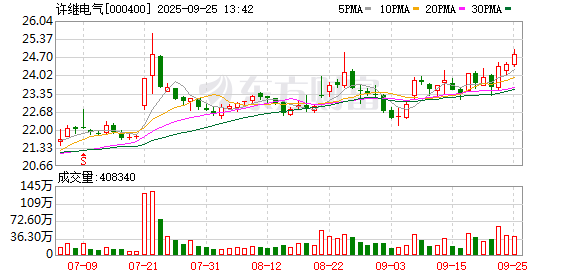
许继电气:公司源网荷储一体化管控平台等产品在乌兰察布数据中心低碳算力基地源网荷储一体化等项目中有应用
Mei Ri Jing Ji Xin Wen· 2025-09-25 05:42
Group 1 - The company indicated that updates regarding the dividend progress for the first half of 2025 should be monitored through official announcements related to dividend distribution [2] - The company has applied its integrated management platform for source-network-load-storage in projects at the low-carbon computing power base in Ulanqab, Inner Mongolia [2]


“十四五”以来云南绿色能源产业产值突破4000亿元
Zhong Guo Xin Wen Wang· 2025-09-25 00:54
Core Viewpoint - Yunnan Province is significantly advancing its green energy sector, with over 60 million kilowatts of new green energy capacity added since the start of the 14th Five-Year Plan, contributing to a total capacity of 150 million kilowatts and an industry output value exceeding 400 billion yuan [1] Group 1: Green Energy Development - Yunnan has a total potential for green energy development of 200 million kilowatts, accounting for approximately 20% of the national total [1] - The province's green electricity generation and installed capacity exceed 90%, with non-fossil energy making up 46% of primary energy consumption, ranking among the top in the country [1] - The green aluminum and silicon photovoltaic industries have each surpassed 100 billion yuan in output value, while the new energy battery industry is rapidly emerging [1] Group 2: Energy Collaboration and Environmental Impact - Yunnan has sent over 2 trillion kilowatt-hours of electricity through the "West-to-East Power Transmission" project, saving 665 million tons of standard coal and reducing carbon dioxide emissions by 1.73 billion tons [2] - The province is accelerating the construction of the "Green Aluminum Valley" and has initiated the establishment of 15 provincial-level zero-carbon parks, with 136 national-level green factories and 10 green industrial parks created [2] - The level of industrial greening in Yunnan has significantly improved, supported by the continuous expansion of the "green electricity + advanced manufacturing" advantage [2]
“十五五”全国新型储能装机有望达3亿千瓦 探索从增量到提质之路
Zhong Guo Neng Yuan Wang· 2025-09-24 09:52
Core Insights - Energy storage is a crucial component of the new power system, significantly impacting the quality of renewable energy development and the safety of grid operations [1][4] - The scale of new energy storage installations in China is expected to reach 300 million kilowatts during the 14th Five-Year Plan period, driven by the need to meet increasing electricity demand and renewable energy consumption [1][4] Group 1: Industry Growth and Development - As of the end of 2024, China's new energy storage capacity is projected to reach 73.76 million kilowatts, accounting for over 40% of the global total, with a five-year growth of nearly 30 times [2][3] - The total output of lithium-ion batteries in China reached 1,170 GWh, with an industry output value exceeding 1.2 trillion yuan, indicating robust growth in the energy storage sector [2][3] - The National Development and Reform Commission and the National Energy Administration have launched an action plan predicting an addition of over 100 million kilowatts of new energy storage capacity by 2027, with a total capacity expected to exceed 180 million kilowatts [4][5] Group 2: Technological Integration and Applications - New energy storage is transitioning from a supplementary role to a primary support role in the new power system, enhancing the stability and reliability of electricity supply [3][4] - Various innovative applications, such as virtual power plants and integrated energy systems, are being developed to optimize energy use and improve cost efficiency for consumers [5][6] - The integration of energy storage with renewable energy sources is essential for improving energy density and meeting the increasing demands for clean energy transmission [4][5] Group 3: Challenges and Industry Concerns - The rapid expansion of the energy storage industry has led to safety concerns, with 167 reported incidents of fires and explosions globally, highlighting the need for improved safety standards [6] - Issues such as price competition, product misrepresentation, and a lack of innovation are prevalent, leading to potential quality and safety risks in the industry [6][7] - The market is expected to undergo significant consolidation, with many companies likely to be eliminated, resulting in a rise of "orphan power stations" that lack maintenance and oversight [6][7]