
生育支持政策

Search documents
两部门最新发文!事关学前教育资金 政策部署下这些标的有望受益(附概念股)
Zhi Tong Cai Jing· 2025-08-11 23:29
Group 1 - The State Council has issued an opinion to gradually implement free preschool education, starting from the autumn semester, exempting tuition fees for children in the last year of kindergarten, funded by both central and local finances [1] - The Ministry of Finance and the Ministry of Education have revised the funding management measures to support preschool education, ensuring that eligible public kindergartens will not charge tuition fees [1] - The funding for the tuition exemption policy will be shared between central and local governments, with the central government covering 80% for the first tier, 60% for the second tier, and 50% for the third to fifth tiers [1] Group 2 - The implementation of free preschool education is part of a broader fertility support policy aimed at reducing the economic burden on families and promoting a fertility-friendly environment [2] - In 2023, total investment in preschool education reached 538.2 billion yuan, with families bearing approximately 36% of the costs, indicating a high education expenditure burden on households [2] - The proportion of inclusive kindergartens is expected to reach 87.26% in 2024, with a gross enrollment rate of 92%, although disparities remain in rural and low-income areas [2] Group 3 - Companies are also playing a significant role in creating a fertility-friendly society, with over ten companies implementing measures to encourage employee childbirth since 2021 [3] - The recent policy on free preschool education aligns with the government's focus on improving people's livelihoods and expanding the scope of free education [3] - The estimated annual fiscal investment required for the free preschool education policy is around 45 billion yuan, potentially sourced from the rapid growth in central government education spending [3] Group 4 - China Oriental Education has forecasted a 45%-50% year-on-year increase in net profit for the first half of 2025, driven by a 7% increase in new student registrations [4] - New Oriental has maintained a target price of 46 HKD per share, with a projected revenue growth of 10% and 14% for the 2026/2027 fiscal years [4] - China Education Holdings reported a revenue increase of 11.8% to 3.673 billion yuan, attributed to a rise in student numbers, although net profit decreased by 9.7% [5]
国元证券实时热点
Guoyuan Securities2· 2025-08-11 02:28
Monetary Policy and Economic Indicators - Federal Reserve Governor Bowman supports starting interest rate cuts in September, with three cuts expected by year-end[4] - U.S. June imports saw a significant decline, exceeding expectations[4] - Japan's central bank may resume interest rate hikes by year-end if U.S. tariffs have limited impact[4] - The UN Food and Agriculture Organization reported that global food prices reached a two-year high in July[4] Market Performance - 2-year U.S. Treasury yield increased by 3.45 basis points to 3.762%[4] - 5-year U.S. Treasury yield rose by 4.15 basis points to 3.833%[4] - 10-year U.S. Treasury yield climbed by 3.49 basis points to 4.287%[4] Economic Data - China's Q2 current account surplus was 971.5 billion yuan[4] - China's July CPI rose by 0.4% month-on-month, while PPI's decline narrowed[4] - China's robot industry revenue grew by 27.8% year-on-year in the first half of the year[4] Stock Market Indices - Nasdaq index closed at 21,450.02, up 0.98%[6] - Dow Jones Industrial Average closed at 44,175.61, up 0.47%[6] - Hang Seng Index closed at 24,858.82, down 0.89%[6]
幼儿园大班免费,只是开始
首席商业评论· 2025-08-09 04:17
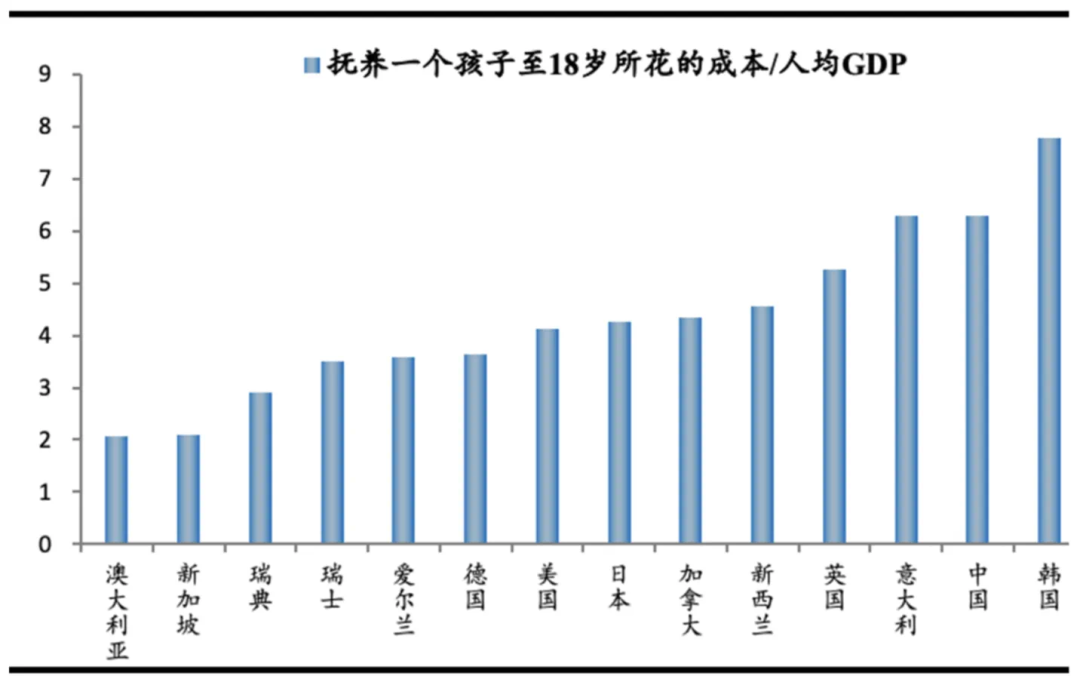
Core Viewpoint - The article emphasizes that the high costs of education and the decreasing returns on educational investments are significant factors hindering birth rates in China. The introduction of universal childcare subsidies could potentially encourage young people to consider having more children [5][8]. Group 1: Policy Implementation - The "Childcare Subsidy Implementation Plan" was officially announced on July 28, 2025, providing a cash subsidy of 3,600 yuan per year for families with children under three years old, regardless of the number of children or family income [5][7]. - The plan aims to alleviate the financial burden on families during the critical early years of child development, with the government expressing a commitment to support families through direct financial assistance [7][8]. Group 2: Financial Implications - The monthly subsidy of approximately 300 yuan may seem modest, but it signals a significant policy shift towards supporting families and addressing the challenges of raising children [8][22]. - The average cost of raising a child in China from birth to age 17 is estimated at 538,000 yuan, which is equivalent to over ten years of the average household income [10][13]. Group 3: Demographic Trends - China's birth rate has been declining, with 2022 seeing a birth population of 9.56 million, the first time it fell below ten million since 1950. The overall population decreased by 850,000, marking a significant demographic shift [16][18]. - By 2024, the total population is projected to decrease further, with an aging population becoming a pressing issue, as 22% of the population will be over 60 years old [16][17]. Group 4: Societal Changes - The article highlights the changing attitudes towards marriage and childbearing among young people, particularly women, who prioritize career development and personal expectations over traditional family structures [15][18]. - The increasing financial and time costs associated with child-rearing are reshaping family planning decisions, making it a complex issue influenced by economic, social, and workplace factors [15][18]. Group 5: Future Directions - The government is expected to continue expanding its support for families, with initiatives such as free preschool education and enhanced workplace policies aimed at creating a more family-friendly environment [29][33]. - The article suggests that a comprehensive support system, including childcare, education, and employment policies, is essential for effectively addressing the declining birth rate and supporting families [29][33].


西安:建立灵活适宜的生育休假制度
Zheng Quan Shi Bao Wang· 2025-08-08 11:58
Core Points - The Xi'an Municipal Government has issued a plan to enhance and implement supportive fertility policies and measures, including the establishment of a flexible maternity leave system [1] - The plan aims to extend maternity leave, nursing leave, and parental leave in accordance with the regulations of the Shaanxi Province Population and Family Planning Ordinance [1] - The initiative emphasizes the importance of work-life balance for employees, promoting fair employment and career development while providing better support for families with young children [1] Summary by Categories - **Policy Implementation** - The plan includes the implementation of a flexible maternity leave system to support families [1] - It aligns with existing regulations to extend various types of leave for employees [1] - **Employee Support** - The initiative encourages employers to explore more flexible and convenient leave options for employees caring for infants [1] - It aims to enhance humanistic care for employees, helping them balance work and family responsibilities [1] - **Family Rights** - The plan seeks to protect the rights of families with only one child, particularly for parents from other provinces whose children work in Xi'an [1] - Employers are encouraged to provide leave arrangements for these families in line with local regulations [1]
人口发展战略迎来关键落子!国办部署逐步推行免费学前教育,今年惠及约1200万人
Hua Xia Shi Bao· 2025-08-08 11:28
Core Viewpoint - The Chinese government has introduced significant policies aimed at promoting high-quality population development, including the implementation of free preschool education starting from the autumn semester of 2025, which is seen as a milestone in the history of preschool education in China [2][7]. Policy Implementation - The policy will exempt public kindergarten tuition fees for the last year of preschool education, and private kindergartens will also reduce fees based on the public kindergarten standards, benefiting approximately 12 million children [3][4]. - The financial burden on families is expected to decrease significantly, with an estimated increase in national fiscal expenditure of around 20 billion yuan for the upcoming autumn semester, which will correspondingly reduce family expenses by the same amount [5]. Financial Support and Management - The central government has allocated sufficient funds to cover the costs associated with the exemption of preschool education fees, with a funding distribution model that varies by region (80% for the western region, 60% for the central region, and 50% for the eastern region) [4][5]. - The policy emphasizes the importance of timely and adequate funding to ensure the normal operation of kindergartens and the timely payment of teachers' salaries [5]. Broader Context and Implications - The recent policies reflect a comprehensive approach to reducing the costs of childbirth, upbringing, and education, which are interconnected and aim to create a more favorable environment for population growth [7][8]. - The government is also focusing on enhancing the quality and equity of education, particularly in preschool and special education, as part of a broader strategy to address long-term population challenges [8].

2.53亿参保人受益
Jin Rong Shi Bao· 2025-08-08 08:00
Group 1 - The core viewpoint of the articles highlights the significant reduction in personal expenses for childbirth due to the implementation of maternity insurance policies across various regions in China, with some cases reporting costs as low as 3.7 yuan [1][2] - In Guangxi, as of mid-May, at least 11,538 mothers had personal childbirth expenses below 10 yuan after insurance reimbursements, with 1,270 in Nanning spending nothing [1] - In Guangzhou, over 7,000 mothers reported spending less than 100 yuan after insurance, with 881 spending under 10 yuan and 67 spending nothing [1] Group 2 - The National Healthcare Security Administration is focused on expanding the coverage of maternity insurance, aiming to include more workers and unemployed individuals, with a target of 253 million insured by June 2025 [2] - During the 14th Five-Year Plan period, 96.14 million instances of maternity insurance benefits have been utilized [2] - Maternity insurance is designed to provide financial support and material assistance to working women during childbirth, helping to alleviate the costs associated with family development [3] Group 3 - Recent measures by the National Healthcare Security Administration include integrating pain relief during childbirth into insurance coverage and facilitating direct payments of maternity benefits to individuals [3] - Over 60% of coordinated areas have implemented direct payments of maternity benefits to individuals, and all provinces have included assisted reproductive technology in insurance coverage [3] - As of September 1, 2024, Xiamen will include assisted reproductive technology in its insurance payment scope, benefiting 28,800 individuals and covering medical expenses of 82.53 million yuan [3]
补贴50%!上海再推生育支持政策
券商中国· 2025-08-08 07:35
Core Viewpoint - Shanghai has introduced a significant new policy to support childbirth, aiming to establish a shared cost mechanism for childbirth among the government, society, and enterprises, thereby promoting a "childbirth-friendly" environment and facilitating women's full employment [1][2]. Group 1: Policy Details - The new policy, effective from January 1, 2025, allows employers to apply for social insurance subsidies for female employees during maternity and childbirth leave, covering 50% of the actual contributions made by the employer for basic pension, medical, unemployment, and work injury insurance for a period of six months starting from the month of childbirth [1]. - The subsidy application process follows a "territorial management, pay first and reimburse later" principle, with a one-time application for six months of subsidies after the employee's maternity leave ends [1]. Group 2: Support for Female Employees - The policy encourages employers to create "childbirth-friendly positions" for returning female employees, offering flexible work arrangements such as flexible hours, remote work, and performance-based assessments to help balance family and work [2]. - Since the pilot program for "childbirth-friendly positions" began in December of the previous year, over 5,000 individuals have benefited from this initiative [2].

上海出台生育支持新政:生育当月起补贴6个月 不分孩次
Zhong Jin Zai Xian· 2025-08-08 06:37
Group 1 - The core viewpoint of the news is the introduction of a new policy in Shanghai aimed at supporting female employees during maternity leave through social insurance subsidies, promoting a shared burden of childbirth costs among government, society, and enterprises [1][2] - Starting from January 1, 2025, female employees who give birth will be eligible for a social insurance subsidy covering 50% of the actual contributions made by their employers for basic pension, medical, unemployment, and work injury insurance during maternity leave, for a duration of six months [1] - The subsidy application process is based on a "territorial management, pay first and reimburse later" principle, allowing employers to apply for the subsidy within one year after the end of maternity leave [1] Group 2 - The policy encourages employers to create "maternity-friendly positions" for returning female employees, offering flexible work arrangements such as remote work and flexible hours to help balance family and work [2] - Since the pilot program for "maternity-friendly positions" was launched in December last year, over 5,000 individuals have benefited from it [2]
幼儿园大班免费,只是开始
Hu Xiu· 2025-08-08 04:04
Group 1 - The core viewpoint of the article is the implementation of a nationwide cash subsidy program aimed at alleviating the financial burden of child-rearing for families with children under three years old, reflecting a significant policy shift towards supporting childbirth and parenting [3][11][51] - The subsidy program will provide 3,600 yuan annually for each eligible child until they reach three years old, regardless of family income or the number of children [3][36] - The announcement of the subsidy has generated significant public interest, with many parents attempting to access the funds through a designated app, leading to technical issues due to high traffic [6][7] Group 2 - The government is also moving towards free preschool education, with plans to eliminate fees for public kindergarten for the final year starting in the fall of 2025, marking a transition from nine years of free education to twelve [8][10] - The article highlights the rising costs of raising children in China, estimating that the average cost from birth to age 17 is approximately 538,000 yuan, which is a substantial financial commitment for families [22][24] - The demographic challenges facing China, including declining birth rates and an aging population, necessitate these supportive measures to encourage higher birth rates and alleviate the pressures on young families [29][31][33] Group 3 - The article discusses the broader implications of the subsidy and educational reforms, suggesting that these measures are part of a comprehensive strategy to create a more supportive environment for families, addressing both financial and social aspects of child-rearing [38][62] - The government has been progressively implementing various supportive policies, including extended maternity leave and the establishment of public childcare facilities, to enhance the overall support system for families [35][48] - The article emphasizes that while the cash subsidy is a positive step, a more sustainable and comprehensive family support system is essential for effectively addressing the challenges of low birth rates [54][63]
育儿补贴“投资于人”托举未来
Jing Ji Ri Bao· 2025-08-07 22:45
Group 1 - The core viewpoint of the news is the implementation of a nationwide childcare subsidy policy in China, which will provide families with 3,600 yuan annually for each child until the age of three, starting from January 1, 2025. This marks a significant breakthrough in the social welfare system and reflects the strategic direction of promoting long-term balanced population development [1][2]. - The subsidy is expected to benefit over 20 million families with infants and toddlers annually, representing a substantial financial commitment from the central government, which requires careful consideration of fiscal capacity and regional balance [1][2]. - The policy aims to stimulate domestic demand by providing flexible cash support for childcare expenses, which can help improve the disposable income of low-income families and potentially enhance their willingness to have more children [2]. Group 2 - The initiative is seen as a milestone in "investing in people," although its effectiveness in significantly changing birth rates remains to be observed. Continuous adjustments and improvements to the policy will be necessary to maintain its sustainability and effectiveness [2]. - The implementation of the childcare subsidy is part of a broader trend of comprehensive measures to support childbirth, including tax deductions and the development of inclusive childcare services, which have been positively received by society [1][2]. - The policy is expected to create a virtuous cycle between economic development and improvement in people's livelihoods, indicating that more "investing in people" policies may be introduced in the future [2].