
人工智能(AI)

Search documents
早报 | 暂缓日本进口影片上映;刘强东宣布京东外卖上线独立App;俞敏洪周年贺信员工称无法共情;赤峰通报免费采捡白菜事件
虎嗅APP· 2025-11-17 23:45
昨夜今晨 【相关影片进口方、发行方确认:暂缓日本进口片上映】 大家早上好!这里是今天的早报,每天早上,我都会在这里跟你聊聊昨夜今晨发生了哪些大事儿。 财联社11月17日电,《蜡笔小新:炽热的春日部舞者们》《工作细胞》等进口日本影片将暂缓上映。记者经向 影片引进方和发行方核实,此次调整是对日本进口片综合市场表现与我国观众情绪评估作出的审慎决策。 此前,动画电影《鬼灭之刃:无限城篇 第一章 猗窝座再袭》上映后,依托IP积累的粉丝基础,取得初期票房佳 绩。但是,随着日本首相高市早苗发表错误言论,立即引发广大中国观众的强烈不满。受高市早苗奇谈怪论的 拖累,此动画电影上映三天后票房已呈显著下滑态势,市场热度快速回落。目前,上映第五日的票房预测已经 跌至2000万元左右。 【知情人士:英国拟定对欧盟钢铁关税反制措施】 据美媒报道,在英国首相斯塔默无法达成协议以减轻欧盟拟议的钢铁关税上涨的影响时,英国正在制定反制措 施。知情人士透露,此前英国国内金属行业警告称,欧洲的计划可能引发其历史上最大的危机,促使英国政府 正在考虑采取报复行动。欧盟上个月公布了计划,打算将现有的外国钢铁免关税配额削减近一半,并将超出配 额的征税提高一 ...


全球化担保品管理:“T+1”时代的市场流动性、系统韧性与跨市场整合
Xin Lang Cai Jing· 2025-11-17 23:29
Core Insights - Collateral management has become a crucial element for the stable operation of capital markets amid increasing global financial market volatility [2][10] - The daily average scale of third-party collateral management services in the European market exceeded €3 trillion in 2023, with eligible collateral securities in the euro system reaching €195 billion in Q1 2025, a 25% increase over the past decade [2][3] Market Trends - The European bond repo market is experiencing three major trends: a contraction in overall excess liquidity in the eurozone, a significant alleviation of concerns regarding collateral scarcity, and a stabilization in the scale of centrally cleared bond repo transactions [3] - Non-centrally cleared third-party repo transactions are showing a substantial growth trend, indicating the attractiveness of flexible and efficient third-party collateral management mechanisms in a changing liquidity environment [3] Financial Infrastructure Changes - The transition to "T+1" settlement in markets like the US and Canada will be completed in Europe by October 2027, necessitating system optimization and operational mechanism innovations among market participants [4] - This shift will challenge existing complex custodial chains and require enhanced operational efficiency, prompting participants to accelerate internal system automation and reassess liquidity and risk management strategies [4] Strategic Vision and Practices - As an International Central Securities Depository (ICSD), the company aims to provide secure, efficient, and composite services, moving beyond traditional service provision [5] - The company is a founding member of the "Global Liquidity Alliance," collaborating with various exchanges and institutions to innovate and expand global collateral solutions [5] - In North America, the company has developed the Canadian Collateral Management Service (CCMS) in partnership with TMX Group, enhancing market flexibility and efficiency [5] Technological Innovations - Collateral optimization has become a core industry issue, with third-party collateral management services increasingly relying on service optimization capabilities and data analytics [6] - The company is investing in AI technology, having launched the OSCAR platform in collaboration with IntelliSelect, which automates collateral negotiation and selection processes [6][7] - Partnerships with Euronext aim to enhance the automation of collateral list creation and qualification review, reflecting the industry's urgent need for intelligent infrastructure [7] Future Development Path - Financial technology is reshaping market operations, with AI and cloud computing redefining the foundational infrastructure supporting the global financial system [8] - The Deutsche Börse Group's digital securities platform D7 offers a fully digital alternative for traditional securities issuance, processing over 1.7 million transactions valued at more than €30 billion [8] - The rise of digital assets and tokenized collateral is changing the way collateral is allocated and used, with distributed ledger technology (DLT) enhancing transparency and efficiency in cross-custodial collateral transfers [8] Global Market Dynamics - The resilience of the Chinese economy is enhancing the acceptance of RMB bonds as eligible collateral in global markets, with the Central Clearing Company playing a key role in promoting their application [9] - Collaborations with ISDA and ICMA have explored the role of RMB bonds in OTC derivatives margining and the global repo market [9] - The London Clearing House (LCH) has expanded the range of eligible non-cash collateral to include Chinese government bonds, marking a broader application of Chinese bonds in international collateral frameworks [9]
巴菲特“弥补”遗憾,谷歌成为今年最火“科技七巨头”
Di Yi Cai Jing· 2025-11-17 23:27
Core Viewpoint - Berkshire Hathaway has made a significant investment in Google, marking a notable shift in its investment strategy as it prepares for a leadership transition away from Warren Buffett [1][2][3] Investment Strategy - Berkshire Hathaway's cash reserves reached a record high of $381.7 billion, continuing a trend of reducing exposure to U.S. stocks for the 12th consecutive quarter [2] - The company has reduced its holdings in major stocks like Apple and Bank of America while increasing its stake in Google to nearly 18 million shares, making it the 10th largest holding [2][3] - This investment in Google is seen as one of Berkshire's most significant bets in the tech sector in years, surprising many given Buffett's historical hesitance towards high-growth tech companies [2][3] Leadership Transition - The investment in Google is likely influenced by Buffett's two deputies, Todd Combs and Ted Weschler, who are increasingly impacting Berkshire's $300 billion stock portfolio [3] - As Buffett prepares to step down as CEO by the end of the year, this move may reflect a broader shift in the company's investment strategy towards technology [3] Market Position and Valuation - Google's valuation remains lower than many of its AI-driven tech peers, with a projected P/E ratio of 25.5 for next year, compared to Microsoft, Broadcom, and Nvidia [3] - Analysts believe that Google's core business has strong free cash flow potential, making it an attractive investment compared to other tech stocks [4] AI Developments - There is growing optimism on Wall Street regarding Google's AI business, with the company transitioning from being perceived as an "AI loser" to an "AI winner" [5][6] - The upcoming release of Gemini 3.0, Google's next-generation large language model, is highly anticipated and could further enhance its market position in AI [5][6] - Analysts expect Gemini 3.0 to improve capabilities in AI reasoning, multimodal functions, and real-time video understanding, potentially solidifying Alphabet's leadership in generative AI [6]
大湾区自驾实现“双向奔赴”
Ren Min Ri Bao Hai Wai Ban· 2025-11-17 23:11
十一月十五日上午,香港机场管理局在香港口岸自动化停车场举办欢迎仪式,迎接"粤车南下"旅客。 郭 辛摄(新华社发) 11月15日零时,港珠澳大桥珠海公路口岸灯火通明。随着一辆粤C车牌私家车驶入出境车道并接受查 验,备受期待的"粤车南下"政策正式落地实施,粤港澳大湾区互联互通再进一步。 前不久,香港特区政府与广东省有关部门公布了"粤车南下"实施安排,首批开放广州、珠海、江门、中 山4座城市,半年后推广至广东全省其他地市。按照政策,从11月15日零时起,获准的广东私家车车主 可以驾车经港珠澳大桥珠海公路口岸驶入香港口岸自动化停车场;从12月23日零时起,获准的广东私家 车车主可于预约后驾车经港珠澳大桥珠海公路口岸驶入香港市区。 丝滑通关 来自珠海的周先生是享受"粤车南下"政策的第一位广东私家车车主,他向媒体表示,很激动能够见证历 史时刻。"这次我开车到港珠澳大桥香港口岸是为了送朋友去香港国际机场坐飞机,同时也观摩一下港 珠澳大桥。在珠海公路口岸'一站式'查验通道,我们在不到1分钟的时间里就完成了车体检查、人脸识 别、指纹比对等手续,做到了丝滑通关。" "粤车南下"政策实施后,满足相应条件的广东私家车车主经批准后可驾 ...

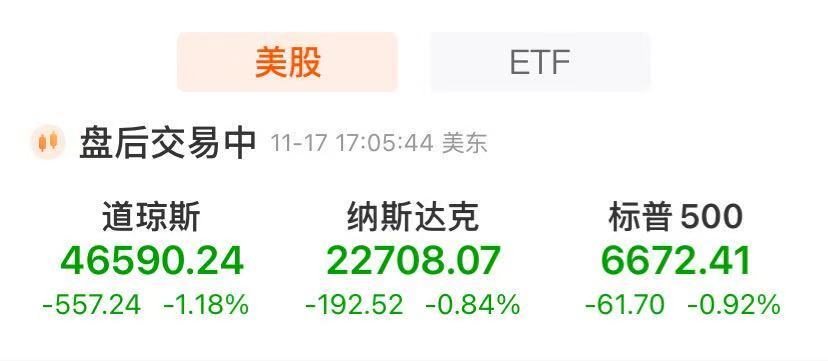
美股收跌 道指跌超1%!谷歌逆势涨超3% 巴菲特罕见买入!比特币跳水 金银下跌!美联储降息 有新消息
Mei Ri Jing Ji Xin Wen· 2025-11-17 22:30
大型科技股多数下跌,苹果跌1.82%,微软跌0.53%,亚马逊跌0.78%,Meta跌1.22%,特斯拉涨1.13%,博通涨 0.06%,甲骨文跌1.34%。 | く 気 | 知名美股 () | | O | | --- | --- | --- | --- | | 名称 | 最新 | 涨幅 总量 | | | 特斯拉 TSLA | 408.920 | 1.13% 1.01亿股 | | | 英伟达 NVDA | 186.600 | -1.88% 1.71亿股 | | | 谷歌-A GOOGL | 285.020 | 3.11% 5248万股 | | | 亚马逊 | 232870 -078% 5979 FB | | | | AMZN | | | | --- | --- | --- | | 苹果 | 267.460 | -1.82% 4492万股 | | AAPL | | | | Meta Platforms In ... 602.010 META | | -1.22% 1641万股 | | META | | | | 谷歌-C | 285.600 | 3.11% 3416万股 | | GOOG | | | | 微软 | ...

今夜,暴涨!美联储,降息大消息!
中国基金报· 2025-11-17 16:13
【导读】美股基本持平,谷歌暴涨,美联储副主席发出谨慎信号 中国基金报记者 泰勒 大家好,今晚继续关注海外市场的表现。 美股震荡,科技股局部暴涨 11月17日晚间,美股三大指数小幅震荡,基本持平。 | 7057.06 1 14 ----------- | 22885.34 ------ | 6724.48 | Wa ----- | | --- | --- | --- | --- | | 道琼斯指数 -0.19% | 纳斯达克综合指数 -0.07% | 标普500指数 -0.14% | | 市场正为英伟达公司的财报以及一份关键就业报告做准备。在这两大事件落地前,交易员们谨慎行事,没有进行大规模押注,因 为这两件事将对2025年剩余时间的市场前景起到关键性的塑造作用。 有分析师表示,"按理说,月度就业报告通常会主导本周的经济日程,但由于过去几周AI交易表现不佳,英伟达的财报再次成为影 响市场动能拼图中的关键一块" 。 尽管市场普遍预计这家芯片制造商将再次"超预期"盈利,但投资者对AI估值高企愈发感到不安,周三公布的英伟达财报势必会被 逐条放大解读。 一天之后,被政府停摆推迟发布的9月就业报告将出炉。虽然一些其他数据 ...


深夜大涨!巴菲特 罕见买入!
Zheng Quan Shi Bao· 2025-11-17 15:13
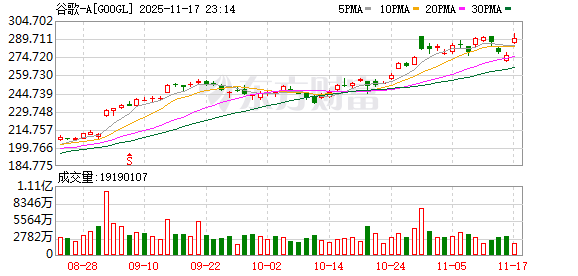
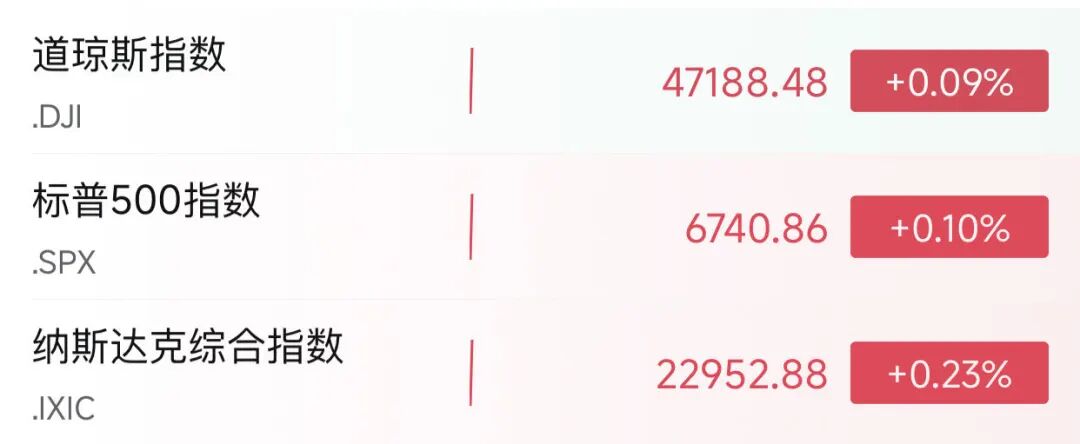
Market Overview - On November 17, U.S. stock indices opened lower but gained momentum, with the Dow Jones up 0.09%, S&P 500 up 0.10%, and Nasdaq up 0.23% [2][3] - The upcoming non-farm payroll report from the U.S. Labor Department is expected to be significant for the Federal Reserve, with a 44.4% probability of a 25 basis point rate cut in December [3] Federal Reserve Insights - Market expectations for a December rate cut have decreased significantly from 95% a month ago to 44.4%, with a 55.6% chance of maintaining current rates [3] - Concerns among Federal Reserve officials have risen due to a lack of data during a government shutdown, despite signs of a softening labor market and persistent inflation above the 2% target [3] Company Performance - Morgan Stanley's Chief U.S. Equity Strategist, Michael Wilson, predicts a 16% increase in the S&P 500 over the next year, supported by strong corporate earnings [4] - Wilson expects S&P 500 earnings per share (EPS) to grow by 17% and 12% over the next two years, driven by enhanced pricing power, AI-driven efficiency, and stable interest rates [5] Google (Alphabet) Highlights - Google A shares opened significantly higher, up 5.38%, with a current price of $291.270 [6][5] - Alphabet's Q3 earnings exceeded market expectations, with total revenue of $102.346 billion, a 16% year-over-year increase, and diluted EPS of $2.87 [7] Nvidia and AI Sector - Nvidia shares experienced volatility, with a notable drop followed by a recovery, as major investors like Peter Thiel's firm exited their positions [7] - Nvidia is set to report its Q3 earnings on November 19, with expected revenue of $55.28 billion, a growth of over 55% year-over-year [7] - Analysts remain optimistic about Nvidia's performance, with expectations of exceeding forecasts and raising future guidance [8] Semiconductor Sector Performance - U.S. semiconductor stocks saw significant gains, with Micron Technology up over 4% and Western Digital up over 5% [9] - The AI sector is witnessing increased capital expenditures, with large enterprises planning to expand investments to support AI initiatives [8] Chinese Stocks Movement - Chinese stocks showed mixed performance, with notable declines in companies like Manbang and XPeng, while Alibaba and JD.com saw slight increases [9]
深夜大涨!巴菲特,罕见买入!
Zheng Quan Shi Bao· 2025-11-17 15:04
Market Overview - On November 17, U.S. stock indices opened higher, with the Dow Jones up 0.09%, S&P 500 up 0.10%, and Nasdaq up 0.23% [1] Employment Data and Federal Reserve Outlook - The U.S. Labor Department is set to release the non-farm payroll report for September, which is crucial for the Federal Reserve [3] - According to CME's FedWatch, the probability of a 25 basis point rate cut in December is 44.4%, while the probability of maintaining the current rate is 55.6% [3] - A month ago, the market expected a 95% chance of a December rate cut, but uncertainty has increased due to a lack of official data during a government shutdown [4] Stock Performance and Predictions - Morgan Stanley's chief U.S. equity strategist, Michael Wilson, predicts a 16% increase in the S&P 500 over the next year, supported by strong corporate earnings [4] - Wilson expects S&P 500 earnings per share (EPS) to grow by 17% and 12% over the next two years, driven by enhanced pricing power, AI-driven efficiency, and a stable interest rate environment [4] Individual Stock Highlights - Alphabet (Google A) shares opened significantly higher, up 5.38%, following Berkshire Hathaway's acquisition of 17.84 million shares, making it their 10th largest holding [5] - Alphabet's Q3 revenue reached $102.346 billion, a 16% year-over-year increase, exceeding Wall Street expectations by $2 billion [5] - Nvidia shares initially dropped over 2% after Peter Thiel's investment firm sold nearly $100 million worth of Nvidia stock, but analysts remain optimistic about Nvidia's upcoming earnings report [5][6] - Nvidia is expected to report Q3 revenue of $55.28 billion, a year-over-year increase of over 55%, with adjusted EPS projected at $1.26 [5] Chip Sector Performance - Major storage chip stocks surged, with Micron Technology up over 4%, Western Digital up over 5%, and SanDisk up over 9% [7] Chinese Stocks Movement - Chinese stocks showed mixed performance, with significant declines in companies like Manbang (down over 8%) and XPeng (down over 7%), while Alibaba announced its entry into the AI market with the launch of the "Qianwen" project [7]
深夜大涨!巴菲特,罕见买入!
证券时报· 2025-11-17 15:00
Core Viewpoint - The article discusses the recent performance of the U.S. stock market, particularly focusing on the expectations surrounding the Federal Reserve's interest rate decisions and the strong earnings reports from major companies like Alphabet and Nvidia [4][5][10]. Market Performance - On November 17, U.S. stock indices opened lower but rebounded, with the Dow Jones up 0.09%, S&P 500 up 0.10%, and Nasdaq up 0.23% [2]. - Alphabet's stock (GOOGL) opened significantly higher, increasing by 5.38% [8]. Federal Reserve Insights - The U.S. Labor Department is set to release the non-farm payroll report for September, which is crucial for the Federal Reserve's decision-making [4]. - Current market expectations show a 44.4% probability of a 25 basis point rate cut in December, with a 55.6% chance of maintaining the current rate [4]. - A month ago, the probability of a December rate cut was as high as 95%, indicating increased uncertainty in the market [5]. Earnings Reports and Predictions - Morgan Stanley's chief U.S. equity strategist, Michael Wilson, predicts a 16% increase in the S&P 500 over the next year, supported by strong corporate earnings [6]. - Wilson expects S&P 500 earnings per share (EPS) to grow by 17% and 12% over the next two years, driven by enhanced pricing power, AI-driven efficiency, and a stable interest rate environment [7]. Company-Specific Developments - Alphabet reported Q3 revenue of $102.346 billion, a 16% year-over-year increase, exceeding Wall Street expectations by $2 billion [10]. - Nvidia's stock faced volatility, with a notable drop of over 2% before recovering, as major investment firms like Peter Thiel's sold off shares [10][11]. - Nvidia is expected to report Q3 earnings on November 19, with projected revenue of $55.28 billion, a growth of over 55% year-over-year [10]. Sector Performance - Semiconductor stocks saw significant gains, with Micron Technology rising over 4% and Western Digital increasing over 5% [12]. - Chinese concept stocks showed mixed performance, with notable declines in companies like Manbang and Xpeng, while Alibaba and JD.com saw slight increases [13].


瑞银财富管理投资总监办公室:科技公司正加大AI投资 利好AI及电力资源相关股票
Zheng Quan Ri Bao Wang· 2025-11-17 13:05
本报讯 (记者毛艺融)11月17日,瑞银财富管理投资总监办公室(CIO)发表观点称,科技公司正在加大对人工智能 (AI)基础设施的投资,会利好AI、电力和资源主题相关股票。 "当前AI并非泡沫。尽管股市估值较高,但并未达到极端水平,这是因为过去几十年来,市场的构成发生了变化,愈来愈 偏重市盈率较高的板块,如IT和通信服务。"瑞银财富管理认为,当前的估值也远低于此前泡沫时期的水平,头部科技公司的 12个月远期市盈率为30倍,而1999年领先科技公司的市盈率则超过70倍。 "上周四科技行业领跌美国市场,周五仅小幅回升,因市场参与者仍对AI涨势的可持续性表示担忧。积压的官方经济数据 尚待公布之际,美联储政策前景的不确定性也令市场情绪承压。"瑞银财富管理表示,该机构仍然确信AI的结构性增长将继续 利好股票表现。 (编辑 李家琪 张昕) 瑞银财富管理认为,AI需求增长和变现速度有所提高。近期科技公司业绩持续表明对AI算力和服务的需求超预期。同时, 随着领先科技公司的资产负债表保持强劲,AI支出占全球GDP的比例适中,预计未来生产率的增幅将足以证明持续AI投资和相 关折旧的合理性。 该机构还提到,随着数据中心需求上升,A ...