
大数据

Search documents
蔡进:钢铁行业必须加快构建现代化供应链体系
Xin Lang Ke Ji· 2025-11-16 08:10
Core Insights - The steel industry must accelerate the construction of a modern supply chain system to address increasingly complex market conditions [1] Group 1: Industry Transformation - The industry should focus on three key transformations: digitalization, green development, and internationalization [1] - Digitalization involves utilizing big data and IoT technologies to achieve full-chain collaborative value creation [1] - Green development aims to promote energy conservation, emission reduction, and optimization of energy structure for sustainable growth [1] - Internationalization focuses on seizing opportunities from the "Belt and Road" infrastructure initiatives to expand overseas market presence [1] Group 2: Industry Collaboration and Innovation - Supply chain innovation is essential to break through development bottlenecks and enhance overall competitiveness [1] - The goal is to achieve high-quality development through improved industry collaboration [1] Group 3: Technological Advancements - The Lang Group plans to deepen its engagement with artificial intelligence to make data services smarter and more user-friendly [1] - The company aims to support the global expansion of Chinese steel by creating a more robust pathway [1]
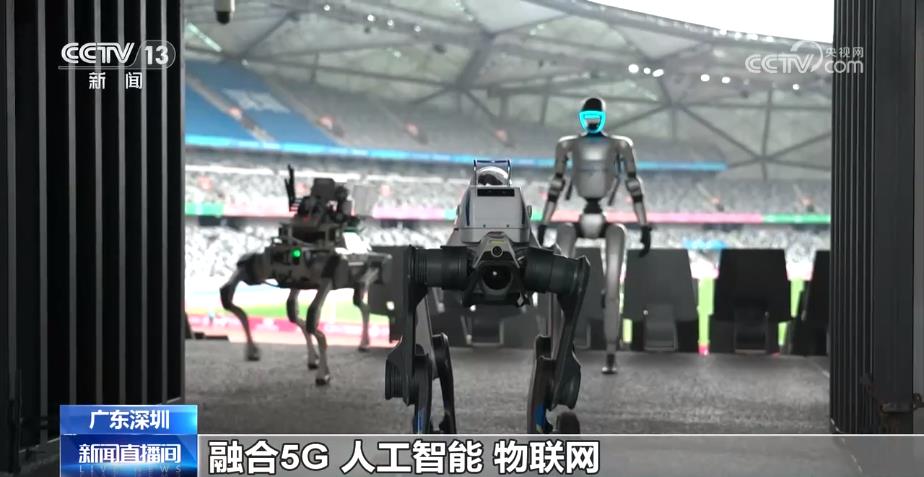
民警的硬核“巡逻搭子” 机器人成全运会安保助手
Yang Shi Wang· 2025-11-15 17:12
Group 1 - The 15th National Games are currently being held in the Guangdong-Hong Kong-Macao Greater Bay Area, showcasing advanced security measures including police robots and inspection dogs to enhance safety and power supply efficiency [1] - In the Shenzhen Universiade Center, a patrol robot and two quadruped robots are working together for auxiliary patrols, equipped with advanced obstacle avoidance radar and emergency alarm systems connected to the command center for quick assistance [1][3] - The integration of technologies such as 5G, artificial intelligence, the Internet of Things, cloud computing, and big data allows police to monitor patrol activities in real-time through cameras on the robots [3] Group 2 - Outside the competition venues, inspection robots from the Shenzhen Power Supply Bureau are efficiently performing tasks such as infrared temperature measurement, meter reading, and abnormal sound detection, with all data being transmitted in real-time to the backend [5] - The AI intelligent diagnosis system enables staff to quickly and accurately locate potential hazards, facilitating early detection and resolution of power supply issues [5]


进人力资源服务业与制造业融合发展,39个城市开展试点
Xin Hua Wang· 2025-11-15 06:17
Core Viewpoint - The Ministry of Human Resources and Social Security has launched a pilot program in 39 cities to promote the integration of human resources services with the manufacturing industry, focusing on enhancing employment and resource utilization in key manufacturing sectors [1][2]. Group 1: Pilot Cities Characteristics - The selected pilot cities are major economic hubs with significant manufacturing clusters, developed human resources services, abundant educational resources, and strong regional demonstration effects [2]. - These cities have large-scale manufacturing output and strong employment absorption capabilities, representing fast-growing or key manufacturing development areas within their provinces [2]. Group 2: Focus Areas and Implementation - The pilot program will concentrate on key manufacturing sectors such as intelligent manufacturing, electronic information, new materials, new energy, and biotechnology, exploring innovative paths for industrial upgrading and employment promotion [1][2]. - Each pilot city will identify 1 to 3 specific sub-industries for differentiated exploration, leveraging local industrial foundations and unique advantages [2]. - The program aims to create joint recruitment, cross-enterprise training, and innovation coalitions, while accelerating the application of technologies like artificial intelligence and big data [2]. Group 3: Future Steps and Regulation - The Ministry will guide provincial departments and pilot cities in refining their work plans, documenting progress, innovations, and challenges to develop replicable and scalable experiences [3]. - There will be a focus on prudent regulation of new business models and practices, ensuring the protection of labor rights and the legal interests of employers [3].
130多款高科技产品涵盖十五运会多个领域
Ren Min Ri Bao· 2025-11-15 02:43
Core Insights - The 15th National Games showcases over 130 high-tech products across various fields, emphasizing the integration of technology in sports events [7][15] - The event highlights the use of advanced technologies such as AI, big data, and cloud computing to enhance venue operations and improve spectator experiences [9][10] Group 1: Technological Integration in Sports - The event features smart venues equipped with a centralized digital twin operation hub, allowing real-time monitoring and management of over 9,873 devices [9] - AI-driven technologies are utilized for live broadcasting, automatic tracking of athletes, and predictive crowd management, transforming traditional venue operations into data-driven systems [10] Group 2: Urban Safety and Transportation - The implementation of micro-nano passive cooling coatings on volunteer service stations aims to reduce energy consumption and carbon emissions during the event [11] - Autonomous driving services provided by Didi enhance transportation efficiency around key venues, showcasing the practical application of self-driving technology [11][12] Group 3: Industry and Social Impact - The showcased technologies are expected to transition into various industries post-event, with humanoid robots already being integrated into manufacturing and logistics [13][14] - Assistive technologies for individuals with disabilities are being developed, with plans to incorporate them into the urban infrastructure of the Greater Bay Area [15]
推进人力资源服务业与制造业融合发展 39个城市开展试点
Xin Hua She· 2025-11-15 01:52
Core Insights - The Ministry of Human Resources and Social Security has issued a notice designating 39 pilot cities for the integration of human resources services and manufacturing industries, focusing on enhancing employment and resource utilization in key manufacturing sectors [1][2] Group 1: Pilot Cities Characteristics - The selected pilot cities are major economic hubs with significant manufacturing clusters, advanced human resources service foundations, and strong educational talent resources [2] - These cities have large-scale manufacturing output and strong employment absorption capabilities, representing fast-growing or key manufacturing development areas within their provinces [2] Group 2: Focus Areas and Tasks - The pilot cities will concentrate on key manufacturing sectors such as intelligent manufacturing, electronic information, new materials, new energy, and biotechnology [1][2] - Each pilot city will identify 1 to 3 specific sub-industries for differentiated exploration, leveraging local industrial foundations and unique advantages [2] - The initiative aims to create joint recruitment, cross-enterprise training, and innovation coalitions to address human resource needs in manufacturing [2] Group 3: Future Steps - The Ministry will guide provincial human resources departments and pilot cities to refine their work plans, documenting progress, innovations, and challenges to develop replicable and scalable experiences [3] - There will be a focus on prudent regulation of new business models and practices, ensuring the protection of labor rights and the legal interests of employers [3]
郭永航到广州日报报业集团调研座谈时要求 全力打造具有示范性引领性的新型主流媒体 为推进中国式现代化广州实践凝聚强大正能量
Guang Zhou Ri Bao· 2025-11-15 01:49
Core Points - The article emphasizes the importance of media in promoting the spirit of the 20th National Congress and the directives from Xi Jinping, particularly in the context of Guangzhou's development and its role as a key city in the Guangdong-Hong Kong-Macao Greater Bay Area [1][2] - It highlights the need for Guangzhou Daily to enhance its influence and quality of reporting, focusing on significant themes and the promotion of the Party's innovative theories [1] - The article outlines the responsibilities of the media in shaping public opinion, promoting socialist values, and ensuring ideological security [2] Group 1 - Guangzhou is recognized as a vital center city and core engine of the Greater Bay Area, making effective news and public opinion work extremely important [2] - The media is urged to act as a "thought banner" for the Party's innovative theories and to maintain a correct political direction in its reporting [2] - There is a call for the media to enhance its international communication effectiveness and showcase Guangzhou's high-quality development [2] Group 2 - The article stresses the need for deep integration of media and the use of new technologies like big data and artificial intelligence to improve news dissemination [2] - It advocates for a balance between social and economic benefits in media management and the cultivation of versatile talents [2] - The leadership of the Party in news and public opinion work is emphasized, with a call for enhanced coordination among various departments to elevate the level of media work in Guangzhou [2]
一百三十多款高科技产品涵盖十五运会多个领域 活力大湾区 满满科技范(全运大视野)
Ren Min Ri Bao· 2025-11-14 22:35
Core Insights - The 15th National Games is showcasing the integration of advanced technology and innovation in sports events, with over 130 high-tech products being utilized across various domains [1][6] Group 1: Smart Venues - The Bao'an Sports Center in Shenzhen features a "smart brain" for real-time monitoring and management of 9,873 devices, ensuring smooth event operations [2] - More than 90% of the 75 competition venues in Guangdong have been upgraded with AI, big data, and cloud computing technologies, enhancing efficiency and performance [2] - Guangdong Mobile is implementing 5G-A upgrades in key venues to support live broadcasts and audience engagement [2] Group 2: AI and Automation - AI-powered devices, such as the "AI volunteers" in Hong Kong, are providing real-time information and assistance to attendees, processing over a thousand queries since the event began [3] - AI cameras are being used for live tracking and data collection, transforming traditional venue management into a data-driven approach [3] - The introduction of AI technologies is optimizing the spectator experience and enhancing operational efficiency in sports venues [3] Group 3: Urban Safety and Transportation - The use of passive cooling coatings on city service stations is expected to significantly reduce energy consumption and carbon emissions during the games [4] - Didi's autonomous driving services are operational during the event, providing safe and efficient transportation for attendees [4] - Hong Kong's immigration authorities have implemented facial recognition technology to expedite border control processes, enhancing visitor experience [5] Group 4: Industry and Social Impact - The showcased humanoid robots are transitioning from event demonstrations to practical applications in factories and daily life, with significant orders from major automotive companies [6] - The integration of assistive technologies for people with disabilities is being prioritized in the development of smart city standards in the Greater Bay Area [7] - The event aims to create a complete cycle of demand-driven technology development, scene validation, and industrial transformation, benefiting urban development and public welfare [7]
活力大湾区 满满科技范(全运大视野)
Ren Min Ri Bao· 2025-11-14 22:03
Core Viewpoint - The 15th National Games showcases the integration of advanced technology in sports events, highlighting the Guangdong-Hong Kong-Macao Greater Bay Area's innovation capabilities and its impact on urban development and industry [6][12]. Group 1: Technological Integration in Sports - The event features over 130 high-tech products across four main areas: opening ceremony, smart venues, event security, and technology for assisting the disabled [6]. - Smart venues utilize AI, big data, and cloud computing to enhance operational efficiency, with over 90% of the 75 competition venues being upgraded from existing facilities [8][9]. - AI-driven live cameras and a "Sky Eye Network" of AI cameras improve event management by tracking movements and predicting crowd risks [9]. Group 2: Urban and Transportation Innovations - The event has implemented advanced technologies such as self-driving vehicles and facial recognition systems to streamline urban operations and enhance visitor experiences [10][11]. - In Macau, a smart traffic command system ensures efficient traffic management during the games, demonstrating the effectiveness of technology in urban safety [11]. Group 3: Industry and Social Impact - The showcased technologies are expected to transition into various industries, with humanoid robots already being deployed in factories and logistics [12][14]. - Innovations like AI-assisted health monitoring and smart security systems are designed to be repurposed for broader applications beyond the event, contributing to urban development and public welfare [14].
人社部启动人力资源服务业与制造业融合发展试点
Ren Min Ri Bao· 2025-11-14 21:27
Core Viewpoint - The Ministry of Human Resources and Social Security has issued a notice to deploy pilot work for the integration of human resources services and manufacturing industries, involving 39 cities including Beijing and Shanghai, aiming to enhance the development level of human resources in manufacturing and create a modern industrial system with high-quality employment and efficient collaboration [1] Group 1 - The pilot cities will incorporate the integration of human resources services and manufacturing into the "14th Five-Year" economic and social development plan, aligning with national and regional major development strategies [1] - The focus will be on key manufacturing sectors such as intelligent manufacturing, electronic information, new materials, and new energy, exploring innovative paths for industrial upgrading and employment promotion [1] - Key enterprises selected for the pilot include leading manufacturing companies, specialized and innovative small and medium-sized enterprises, and backbone human resources service companies, aiming to create joint recruitment, training, and innovation entities [1] Group 2 - The initiative will accelerate the application of emerging technologies like artificial intelligence and big data, innovating integration development scenarios and cultivating new business formats, technologies, and models in human resources services for manufacturing [1] - The pilot cities cover major economic cities and key manufacturing regions in China, ensuring a broad impact on the industry [1]
推进人力资源服务业与制造业融合发展,39个城市开展试点
Xin Hua She· 2025-11-14 15:04
Core Viewpoint - The Ministry of Human Resources and Social Security has announced 39 pilot cities for the integration of human resources services and manufacturing industries, aiming to enhance employment and resource utilization in key manufacturing sectors [1][2]. Group 1: Pilot Cities Characteristics - The selected pilot cities are major economic hubs with significant manufacturing clusters, developed human resources services, abundant educational resources, and strong regional influence [2]. - These cities have large manufacturing output and strong employment absorption capabilities, representing fast-growing or significant manufacturing development areas within their provinces [2]. Group 2: Focus Areas and Tasks - The pilot cities will concentrate on key manufacturing sectors such as intelligent manufacturing, electronic information, new materials, new energy, and biotechnology [1][2]. - Each pilot city will identify 1 to 3 specific sub-industries for differentiated exploration, leveraging local industrial foundations and unique advantages [2]. - The initiative aims to create joint recruitment, cross-enterprise training, and innovation coalitions to address human resource needs in manufacturing [2]. Group 3: Future Steps - The Ministry will guide provincial departments and pilot cities in refining their work plans, documenting progress, innovations, and challenges to develop replicable and scalable experiences [3]. - There will be a focus on prudent regulation of new business models and practices, while ensuring the protection of labor rights and combating illegal activities such as false recruitment and discrimination [3].