金融科技

Search documents
金融助力服务消费需更加精准有效
Zheng Quan Ri Bao· 2025-09-27 15:46
Core Viewpoint - The service consumption sectors, including education, cultural tourism, health, elderly care, and sports, are becoming crucial for driving domestic demand and stabilizing economic growth, necessitating strong financial support to address the financing needs of these sectors [1][2]. Group 1: Financial Support for Service Consumption - Service consumption is linked to both public welfare and economic transformation, serving as a key indicator of social development and quality of life [1]. - The operational entities in the service consumption sector typically exhibit characteristics such as "light assets, lack of collateral, and urgent financing needs," making traditional credit models inadequate to meet their financing demands [1][2]. - Financial institutions are encouraged to proactively direct credit resources towards the service consumption sector to resolve the mismatch between market potential and financial support [1]. Group 2: Innovation in Financial Products - Financial institutions should innovate credit products tailored to the specific needs of different sub-sectors, moving away from a "one-size-fits-all" approach [2]. - For light asset enterprises like knowledge-based services and online services, exploring credit loans based on intellectual property and order data as collateral is recommended [1][2]. Group 3: Technology Empowerment - Embracing financial technology, including big data, artificial intelligence, and cloud computing, can enhance service efficiency and risk management for service consumption enterprises [2]. - Technology can significantly improve financing efficiency and reduce costs for enterprises lacking traditional collateral [2]. Group 4: Service Model Optimization - Financial institutions should evolve from being mere "fund providers" to "comprehensive service providers," offering value-added services alongside credit support [2]. - Establishing deeper cooperative relationships with service consumption entities can create a mutually beneficial ecosystem [2]. Group 5: Case Study and Future Outlook - The example of Zhejiang demonstrates how local financial institutions can effectively stimulate new consumption vitality through innovative financial products and services [2]. - As policies are implemented, more financial institutions are expected to take concrete actions to direct financial resources towards the service consumption sector, contributing to the transformation and upgrading of consumption and promoting high-quality economic and social development [2].
农行山西阳泉分行 多措并举助力制造业焕新升级
Zheng Quan Ri Bao Zhi Sheng· 2025-09-27 15:39
Core Viewpoint - Agricultural Bank of China (ABC) Shanxi Yangquan Branch actively supports the development of the manufacturing industry in Yangquan through comprehensive financial services, facilitating the transformation of traditional manufacturing towards high-end, intelligent, and green development [1][4]. Group 1: Financial Support for Manufacturing - Yangquan Valve Co., Ltd., a key player in large-caliber valve production, has benefited from a close partnership with ABC Yangquan Branch, which has provided various financial services including corporate annuity business that covers 190 employees with an annual contribution scale of over 700,000 yuan [1][2]. - As of June 2025, the manufacturing loan balance of ABC Yangquan Branch reached 4.441 billion yuan, an increase of 2.52 billion yuan since the beginning of the year, demonstrating effective financial support for technology research, equipment upgrades, and market expansion [2][3]. Group 2: Innovative Financial Products - ABC Yangquan Branch has introduced a series of innovative loan products such as "Technology Easy Loan," "Mortgage e-Loan," and "Tax e-Loan" to meet the diverse financing needs of manufacturing enterprises, enhancing their access to capital [2][3]. - "Technology Easy Loan" targets technology-oriented manufacturing companies, offering high limits, low rates, and diverse collateral options to alleviate financing difficulties due to lack of collateral [2]. Group 3: Digital Transformation and Service Efficiency - The branch leverages financial technology to enhance service efficiency, allowing enterprises to submit loan applications anytime through online platforms like "Huinong e-Loan" and "Zhangyin App," with automated credit assessments using big data [3]. - Mobile business equipment enables client managers to provide on-site services, ensuring a "zero-distance" financial service experience for enterprises [3]. Group 4: Commitment to Green Development - ABC Yangquan Branch is increasing credit support for green manufacturing projects, promoting energy conservation, emission reduction, and transformation upgrades within the manufacturing sector [3]. - The branch is also involved in the construction of industrial parks in Yangquan, offering "one-stop" financial services to manufacturing enterprises, which helps enhance regional industrial competitiveness [3]. Group 5: Future Outlook - The branch emphasizes its responsibility to support the manufacturing sector, planning to continue enhancing financial innovation and optimizing services to contribute to the high-quality development of Yangquan's manufacturing industry [4].
这场大赛干货满满!创业孵化基地助项目从蓝图走向市场
Nan Fang Du Shi Bao· 2025-09-27 10:25
Group 1 - The Guangdong-Hong Kong-Macao Greater Bay Area Entrepreneurship Competition serves as a platform for accelerating the implementation of innovative projects beyond just ranking [2] - The Hong Kong Cyberport has successfully gathered over 2,200 tech companies, with a total financing amount reaching HKD 46.2 billion, focusing on fintech, smart living, smart cities, and digital entertainment [4] - Hong Kong Smart Learning Technology Limited, incubated by Cyberport, showcased its AI-driven course scheduling assistant, highlighting the importance of support in navigating policies and resources for startups [5] Group 2 - The Guangdong-Hong Kong-Macao Greater Bay Area (Guangdong) Youth Innovation and Entrepreneurship Incubation Base provides comprehensive one-stop entrepreneurial support services, facilitating over 200 interactions with entrepreneurs and achieving preliminary incubation intentions for six projects [5][6] - The incubation base has established a mentor team comprising investment institutions, academic scholars, and entrepreneurs to enhance resource networking for startups [6]



批量转让 低至0.17折!消金公司加速甩卖不良资产
Guo Ji Jin Rong Bao· 2025-09-27 04:18
Core Viewpoint - The consumer finance companies are accelerating the disposal of non-performing assets, indicating a trend towards market-oriented resolution of bad debts in the industry [1][6]. Group 1: Non-Performing Asset Transfer - In September, nine licensed consumer finance companies, including Ant Consumer Finance and Zhongyin Consumer Finance, have announced personal non-performing loan transfers, characterized by "large volume and low price" [1][2]. - Zhongyin Consumer Finance is particularly active, planning to transfer a batch of non-performing loans with an outstanding principal and interest of 527 million yuan, involving 4,674 borrowers, with an average overdue period of approximately 1,920 days [1][3]. - The transfer prices for these non-performing loans are significantly discounted, with Zhongyin's recent transfer starting at only 562,000 yuan, representing a discount as low as 0.17 [1][3]. Group 2: Market Dynamics - The market for non-performing asset transfers has seen a substantial increase, with the total transaction volume for personal business reaching 37.04 billion yuan in the first quarter of 2025, marking a year-on-year growth of 760% [2]. - The structure of the transferred assets shows that personal consumer loans account for 72.4% of the total, followed by credit card overdrafts at 14% and personal business loans at 13.5% [2]. - The trend of low-priced sales of non-performing assets has become the norm, driven by increased supply and a cautious assessment of asset quality by buyers, leading to lower offers [4]. Group 3: Future Outlook - As the scale of non-performing assets continues to grow, more consumer finance companies are expected to join the ranks of those transferring bad loans [5]. - The industry is encouraged to enhance marketing efforts and leverage financial technology to reduce operational costs and improve profitability [5][7]. - The ongoing trend of transferring non-performing loans reflects a strategic shift towards managing post-loan asset quality and mitigating potential risks, while also aligning with regulatory pressures to address bad asset management [6][7].
迪拜被评为全球四大金融科技中心之一
Shang Wu Bu Wang Zhan· 2025-09-27 03:31
阿通社9月25日报道,迪拜在最新的《全球金融中心指数》(GFCI)中被评为全球四大金融科技中 心之一,也是中东、非洲和南亚地区唯一入榜的全球领军金融中心。这一成就体现了迪拜国际金融中心 (DIFC)在巩固阿联酋金融地位上的重要作用。迪拜现已成为全球金融业最具影响力的城市之一,并 在整体排名中升至第11位。目前,DIFC及其创新中心聚集了超过1500家人工智能、金融科技及创新企 业,融资总额超过42亿美元,成为该地区最活跃的成长型科技企业生态系统。迪拜经济议程"D33"明确 将迪拜打造为全球四大金融中心之一。全球金融界普遍认可迪拜具备深厚而广泛的金融服务能力,并预 测其未来影响力将进一步增强。 (原标题:迪拜被评为全球四大金融科技中心之一) ...
上证观察家 | 拥抱“十五五”战略机遇 推动上海国际金融中心能级跃升
Sou Hu Cai Jing· 2025-09-27 02:50
Core Insights - The construction of Shanghai International Financial Center is entering a critical phase during the "14th Five-Year Plan" period, aiming for a transformation from a "flow center" to a "functional center" through institutional breakthroughs, functional upgrades, open cooperation, and technological revolutions [1][7]. Challenges Facing Shanghai International Financial Center - Geopolitical factors are creating shocks, leading to increased volatility and uncertainty in international financial markets, complicating the international trade and investment environment [8]. - Emerging technologies such as AI, blockchain, and digital currencies are reshaping the global financial landscape, presenting both opportunities and regulatory challenges [9]. - Competition from established financial centers like New York and London, as well as emerging financial hubs, is intensifying, necessitating a clear positioning for Shanghai [10]. - Financial risks and regulatory challenges are heightened due to market volatility, technological advancements, and the emergence of innovative financial products [11]. Strategic Opportunities for Shanghai International Financial Center - The financial power strategy is accelerating, with ongoing policy support for the development of Shanghai as an international financial center [14]. - Institutional openness is expanding, with initiatives like the internationalization of the Renminbi and the establishment of cross-border financial services [15][16]. - The development of green finance is progressing, with Shanghai aiming to enhance its global leadership in this area [17]. - The financial technology revolution is gaining momentum, with significant advancements expected in areas like digital currencies and smart investment [18][19]. - The asset management center has promising prospects, driven by increasing demand for digital inclusive finance and ESG investments [20]. Collaborative Development - The synergy among the "five centers" in Shanghai is expected to enhance financial capabilities and support high-quality economic development [21]. - The integration of the Yangtze River Delta region is deepening, with Shanghai positioned as a leading city to facilitate financial services across the region [22]. Policy Recommendations - Optimizing the financial system structure is crucial for enhancing competitiveness, focusing on multi-level capital market development and improving the quality of capital asset circulation [23]. - Improving the financial regulatory framework is essential for maintaining stability, requiring a coordinated regulatory mechanism across markets and regions [24]. - Strengthening financial risk prevention and control measures is necessary to ensure the safe and stable operation of the financial center [25]. - Enhancing the legal environment for finance will provide a solid foundation for the development of the Shanghai International Financial Center [26].
券业合并潮向纵深演进 湘财大智慧“券商+科技”联姻树新标杆
Shang Hai Zheng Quan Bao· 2025-09-26 19:36
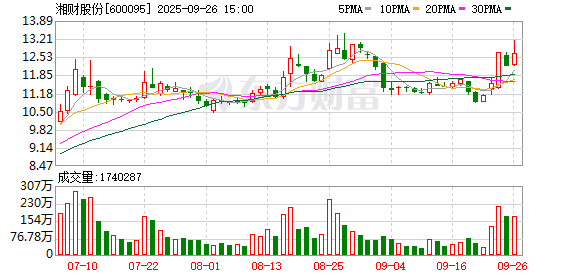
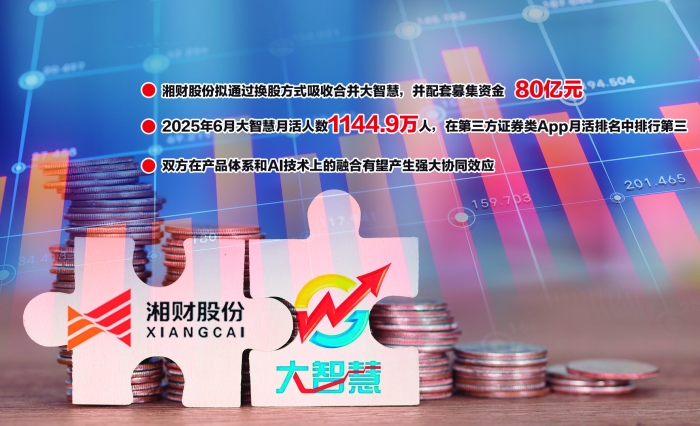
Core Viewpoint - The merger between Xiangcai Co. and Dazhihui marks a significant advancement in the integration of the securities and fintech sectors, highlighting the shift towards strategic synergy through various paths such as regional complementarity and technological integration [2][3]. Group 1: Merger Details - Xiangcai Co. plans to absorb Dazhihui through a share swap and raise 8 billion yuan, focusing on the fintech sector [3]. - Post-merger, the surviving company will expand its services to include domestic and international securities information services, big data, and data engineering services [3]. - The raised funds will be allocated to projects such as financial modeling, digital securities construction, big data engineering, and integrated wealth management [3]. Group 2: Market Context - The pace of mergers and acquisitions in the brokerage industry has accelerated, with recent approvals for major transactions such as Guosen Securities acquiring Wanhua Securities and Western Securities completing the acquisition of Guorong Securities [5]. - The integration of Guolian Minsheng is also progressing, with the migration of Minsheng Securities' investment banking projects to Guolian Minsheng Securities [5]. Group 3: Strategic Paths of Integration - The current mergers reflect a shift from simple scale expansion to a more diversified and precise approach, categorized into three main paths: cross-regional expansion, strengthening regional market control, and enhancing specific business capabilities [6]. - For instance, the merger of Western Securities and Guorong Securities exemplifies effective regional complementarity, enhancing competitive strength through combined resources and market presence [6]. - The integration of Minsheng Securities into Guolian Minsheng has helped establish a comprehensive securities financial holding group structure, showcasing the benefits of combining distinct business strengths [6]. Group 4: Future Outlook - The long-term success of the merged entities will require time to evaluate, but integration is seen as a necessary step for high-quality development in the brokerage industry [7]. - The demand for differentiation among smaller brokerages and the ambition of leading firms to become international investment banks are expected to drive further mergers, leading to a reshaping of the competitive landscape in China's securities industry [7].



券业合并潮向纵深演进 湘财大智慧"券商+科技"联姻树新标杆
Shang Hai Zheng Quan Bao· 2025-09-26 18:27
Group 1 - The core point of the article is the significant progress in the merger between Xiangcai Co. and Dazhihui, marking a shift towards strategic synergy in the securities and fintech sectors through various paths such as regional complementarity and technological integration [2][3] - Xiangcai Co. plans to absorb Dazhihui through a share swap and raise 8 billion yuan, focusing on financial technology, which will enhance its service offerings in both domestic and international securities information and big data services [3] - The merger aims to leverage Dazhihui's extensive user base and AI technology to enhance Xiangcai's customer scale and overall financial service capabilities, creating a competitive advantage through collaboration [3] Group 2 - The pace of mergers and acquisitions in the brokerage industry has accelerated, with recent approvals for major share acquisitions, indicating a trend towards consolidation [4][5] - The integration strategies observed in recent mergers highlight a shift from mere size expansion to more diversified and precise approaches, including geographic expansion, regional market control, and enhancement of specific business capabilities [6] - The long-term outlook suggests that mergers will be essential for high-quality development in the brokerage sector, with expectations for more combinations of "brokerage + technology" and "leading + regional" firms to reshape the competitive landscape of China's securities industry [7]
第17届“香港银行家峰会”聚焦新一代银行业转型
Xin Hua Cai Jing· 2025-09-26 15:51
Group 1 - The 17th "Hong Kong Banker Summit 2025" was held with over 800 participants focusing on digital transformation, international uncertainty, and changing customer demands [1][2] - Hong Kong was ranked as the third leading financial center globally and first in Asia, with its fintech ranking rising from fourth to first [1] - The Hong Kong government aims to enhance its role in the international financial landscape and promote innovation in the banking sector [1] Group 2 - The Hong Kong Monetary Authority (HKMA) emphasizes the need for innovation in the banking sector to build market trust and ensure responsible development [2] - Collaboration among banks, fintech companies, and market participants is essential for managing risks while seizing new opportunities [2] - The HKMA has introduced measures like regulatory sandboxes and incubators to foster a secure and sustainable financial ecosystem [2] Group 3 - The summit featured a "CEO Dialogue" discussing how banks can adapt to rising customer expectations, rapid technological advancements, and macroeconomic fluctuations [3] - The Hong Kong Institute of Bankers awarded honors to banking leaders for their contributions to financial talent development [3] - The HKIB also presented the "HKIB Talent Development Excellence Award" to nine financial institutions for their forward-looking talent strategies and sustainable training systems [3]
工银瑞信投教基地走进中国政法大学开展《SQL基础入门》之子查询与联结课程
Xin Lang Ji Jin· 2025-09-26 14:52
Group 1 - The core viewpoint of the article emphasizes the importance of integrating investor education into the national education system, highlighting the role of financial institutions in this process [1][4] - The event at China University of Political Science and Law focused on a course titled "Introduction to SQL Basics," which aimed to merge financial technology knowledge with investor education [1][4] - The course included practical examples of financial data screening and performance analysis, making complex SQL concepts more accessible to students [4] Group 2 - The collaboration between the educational institution and the financial company aims to provide students with a comprehensive understanding of digital technology applications in the finance industry, guiding their future career planning [4] - The financial institution plans to align its educational initiatives with the evolving needs of the industry, focusing on cultivating versatile financial talents with both theoretical and practical skills [4]