绿色金融

Search documents
新湖期货总经理金玉卫:以体系化创新践行《意见》精神
Qi Huo Ri Bao Wang· 2025-11-06 00:53
Core Viewpoint - The issuance of the "Opinions" marks a critical period for the futures industry, emphasizing enhanced regulation, risk prevention, and service to the real economy, aligning with the transformation direction of Xinhu Futures [1] Group 1: Company Strategy and Development Goals - Xinhu Futures aims to establish a comprehensive research and development system by 2029, catering to all varieties and the entire industrial chain, while building an international business layout and management system [1] - The company is focusing on five key areas: technology finance, green finance, inclusive finance, pension finance, and digital finance, to enhance its service efficiency to the real economy [1][2] Group 2: Service Framework and Business Model - Xinhu Futures has developed a "1+6" service model centered on brokerage services, complemented by risk management, wealth management, institutional operations, technical support, trading skills, and active trading services [2] - The company is transitioning to a four-layer business structure that includes intermediary, tool, trading, and investment services, aiming to improve service quality and drive high-quality development [2] Group 3: Case Study and Practical Implementation - A notable case is the collaboration with small and medium-sized silver plating enterprises in Wenzhou, where Xinhu Futures designed a risk management solution to address high procurement thresholds and price volatility [3] - This solution allows enterprises to purchase silver in smaller quantities, reducing financial pressure and risks associated with price fluctuations, thus providing new growth opportunities [3] Group 4: Compliance and Training Initiatives - Following the "Opinions," Xinhu Futures has revised its internal systems, focusing on compliance management processes that integrate prevention, monitoring, and post-event handling [4] - The company has established an online training platform to ensure all employees can access business training and stay updated on regulatory changes [4][5] - Specialized compliance training is provided for new employees to instill a strong understanding of industry rules and company policies from the outset [5]
五家银行跻身绿色信贷“万亿俱乐部” 绿色债券存量规模近2万亿
2 1 Shi Ji Jing Ji Bao Dao· 2025-11-05 23:42
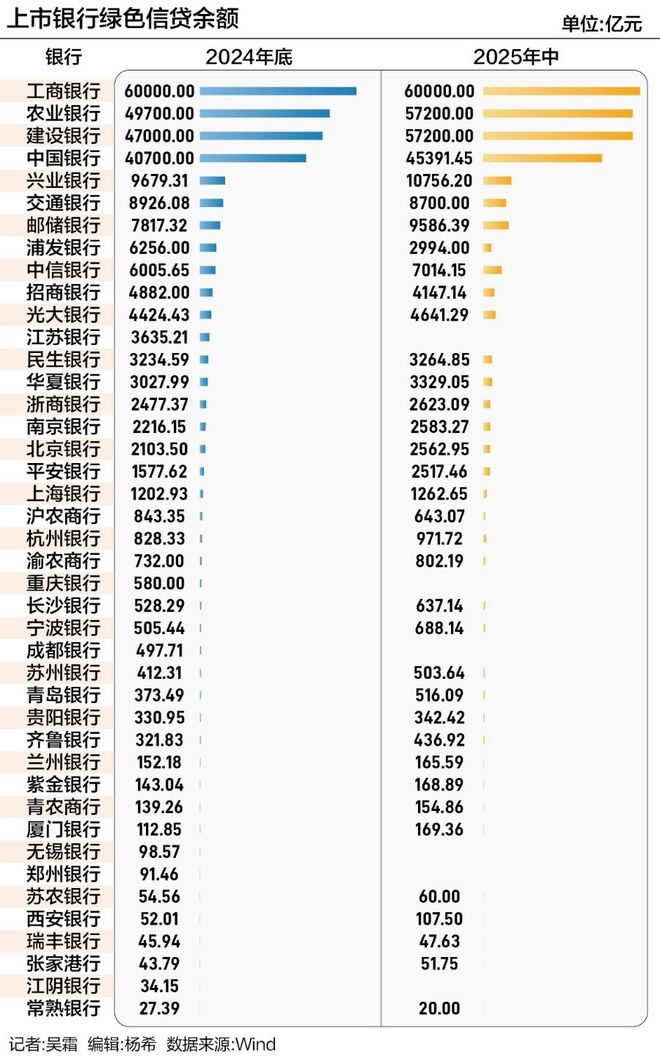
Core Insights - Green finance has transitioned from an optional choice to a mandatory requirement for the banking industry, serving as a new engine for strategic transformation and a blue ocean market for future growth [1] - The balance of green financing at Industrial Bank has reached nearly 2.5 trillion yuan, with green loans exceeding 1 trillion yuan and a non-performing loan rate of only 0.57% [1] - The People's Bank of China and other departments have issued a unified policy framework for green finance, effective from October 1, 2025, to standardize various financial products [2] Group 1: Green Credit Growth - As of the end of 2024, the total balance of green credit among 42 A-share listed banks exceeded 27 trillion yuan, reflecting a year-on-year growth of approximately 20% [3] - State-owned banks dominate the green credit market, with the six major state-owned banks accounting for over 21 trillion yuan, representing 77.6% of the total [3] - Industrial Bank's green loan balance has risen to 1.08 trillion yuan, joining the "trillion club" [3] Group 2: Performance and Sector Focus - The average growth rate of green credit for A-share listed banks in 2024 was 20.6%, a slowdown from approximately 28% in 2023, yet leading institutions maintained strong growth [4] - The focus of green credit issuance is concentrated in four key areas: clean energy, green transportation, energy conservation and environmental protection, and green buildings [4] - The Yangtze River Delta, Guangdong-Hong Kong-Macau Greater Bay Area, and Chengdu-Chongqing Economic Circle are identified as core regions for green credit [4] Group 3: Product Innovation - A-share listed banks are deepening innovation in green financial products, creating a multi-dimensional product system that includes loans, bonds, asset securitization, insurance, and carbon finance [5] - Sustainable Development Linked Loans (SLL), carbon emission rights pledge financing, and environmental rights collateral loans are gaining traction [5] - Industrial Bank has launched the first green loan with biodiversity protection insurance, while Bohai Bank introduced a green loan linked to data center energy efficiency [6] Group 4: Broader Financial Tools - The issuance of green bonds has expanded, with the cumulative issuance of labeled green bonds in 2024 surpassing 4 trillion yuan [6] - Banks are actively participating in green wealth management and fund products, enhancing investor engagement through innovative offerings [6] - Carbon finance tools are transitioning from pilot programs to broader applications, with various banks introducing carbon emission rights pledge financing products [6] Group 5: Future Directions - The banking industry is expected to continue innovating green financial products to support sustainable economic development, moving beyond traditional green credit [7] - The development of ESG-linked loans and financing models using carbon emission rights as collateral will be explored [7] - These innovations will not only assist in achieving national carbon reduction goals but also cultivate new growth momentum for banks [7]




绿色金融赋能产业园区低碳转型
Jing Ji Ri Bao· 2025-11-05 22:18
Core Viewpoint - Green finance is becoming a significant force in promoting low-carbon transformation of local economies, exemplified by the collaboration between Huaxia Bank and the Asian Development Bank (ADB) to support the green transition of industrial parks in Huzhou [1][2]. Group 1: Financing and Collaboration - Huaxia Bank's Huzhou branch has secured 315 million yuan in financing support for the Huzhou Modern Logistics Equipment High-Tech Industrial Park, marking an innovative case of utilizing ADB's funds for green low-carbon development [1]. - The total funding for this collaboration is nearly 3 billion yuan, with loans provided on a 1:1 matching basis to specifically support the green transformation of industrial parks across the country [1]. - The project employs a financing model combining "ADB low-cost loans + Huaxia Bank's self-operated funds," resulting in a reduction of approximately 1.5 percentage points in comprehensive financing costs compared to traditional project loans [1]. Group 2: Project Implementation and Impact - A joint working group has been established between Huaxia Bank's Huzhou branch and the Huzhou High-tech Zone to design a "distributed photovoltaic + energy storage + smart scheduling" virtual power plant project, optimizing local power consumption [2]. - Upon completion, the project is expected to generate approximately 133 million kilowatt-hours of electricity annually, replacing 38,000 tons of standard coal and reducing carbon dioxide emissions by 115,000 tons, equivalent to the annual carbon absorption of 630 hectares of forest [2]. - The park's green electricity consumption ratio will exceed 65%, with a local clean energy consumption rate surpassing 90%, leading to an 18% reduction in overall energy intensity and an annual energy cost saving of about 32 million yuan [2]. Group 3: Future Developments - Huaxia Bank plans to further explore the integration of the virtual power plant management platform with the green credit system, utilizing IoT to collect generation data for automatic review and traceability of carbon assets [2]. - The "green digital twin" system will be employed to achieve visual management of the project's entire lifecycle [2]. - The leadership of Huaxia Bank's Hangzhou branch indicated intentions to continue leveraging the ADB cooperation framework to replicate and promote this model, aiding more parks in achieving "zero carbon" upgrades [2].

中国银行河南省分行:创新金融服务助力绿色转型
Zhong Guo Jin Rong Xin Xi Wang· 2025-11-05 11:37
Group 1 - The core viewpoint is that China Bank's Henan branch is actively exploring new paths for green finance development, focusing on supporting industries related to circular economy and environmental protection to facilitate corporate green transformation and regional high-quality development [1][2] Group 2 - In Zhoukou City, an environmental technology company has established a full industrial chain for recycling waste paper, achieving an annual CO2 reduction of approximately 80,000 tons. However, the company faced a funding bottleneck during a critical phase of patent conversion and capacity upgrading [1] - China Bank Zhoukou branch utilized an innovative intellectual property pledge financing model to assess the innovation content and market value of the company's patent technology, completing a credit issuance of 200 million yuan in just 10 working days, setting a record for single credit issuance in intellectual property pledge in Zhoukou City [1] - The bank also assisted the company in applying for interest subsidy policies to reduce financing costs, creating a replicable model for financial support in the development of the circular economy [1] Group 3 - In Qinyang City, an environmental company focused on recycling waste batteries has successfully built an intelligent production line, processing 200,000 tons of waste lead-acid batteries annually. When facing a funding gap due to production line upgrades, China Bank Qinyang branch quickly responded by customizing a financing plan [2] - The bank completed a loan issuance of 10 million yuan in just 5 working days, ensuring the smooth progress of the green project with its efficient service [2] - Moving forward, China Bank's Henan branch plans to continuously optimize its green finance service system based on the green development needs of enterprises, providing more precise financial services to support the green transformation of the economy and society [2]

《中国金融》|推动我国银行业供应链金融高质量发展
Sou Hu Cai Jing· 2025-11-05 10:35
Core Viewpoint - Supply chain finance plays a crucial role in enhancing financial services for the real economy and alleviating financing difficulties for small and medium-sized enterprises (SMEs) in China. The banking sector, as a key participant, reflects the transformation of industrial structure and the innovative vitality of financial technology. The development of supply chain finance in China's banking industry is progressing towards a more standardized, intelligent, green, and inclusive high-quality development direction [1] Development Stages of Supply Chain Finance in China's Banking Industry - Initial Development Stage (2001-2009): The emergence of inventory pledge loans and factoring services in the late 19th century laid the groundwork for supply chain finance in China. The first pilot practices began in 2001, leading to a systematic development of supply chain finance services by banks, with financing scales ranging from hundreds of millions to billions [2] - Rapid Development Stage (2010-2017): Following several risk events, banks began to shift their focus from front-end to back-end operations, collaborating with core enterprises to provide financing for their upstream and downstream suppliers. The trend of platformization emerged, integrating information, goods, funds, and logistics to mitigate risks [3][4] - High-Speed Development Stage (2018-2024): The issuance of various national policies and the rapid advancement of financial technology have propelled the growth of supply chain finance. By 2023, the industry scale reached approximately 41.3 trillion yuan, with a year-on-year growth of 11.9% and a five-year compound annual growth rate of 20.88% [5][6] Challenges Facing Supply Chain Finance in China's Banking Industry - The precision of supply chain finance services needs improvement, as banks often lack in-depth research on the characteristics of different industrial chains, leading to homogenized financial products [9] - Customer acquisition and marketing strategies require enhancement, as traditional supply chain finance heavily relies on the credit endorsement of core enterprises, limiting service scope and increasing customer acquisition costs [9] - The overall level of digital application in supply chain finance needs to be elevated, with many banks facing challenges in data integration and application [9] - Cross-departmental and cross-regional cooperation, as well as the development of specialized talent, need strengthening to improve service efficiency and effectiveness [9] Policy Guidance for High-Quality Development - Recent policies emphasize the need for standardized development of supply chain finance, promoting collaboration among enterprises along the industrial chain. The focus is on enhancing the resilience and security of supply chains, aligning with national strategies for long-term development [10][11] Future Directions for Supply Chain Finance - The industry should innovate financial products tailored to the characteristics of technology-driven SMEs, support green transformation, and enhance accessibility for micro and small enterprises [13] - Exploring decentralized models and leveraging data credit and asset value can broaden financing channels for SMEs [14] - Strengthening technical empowerment and optimizing organizational structures will enhance service quality and accelerate the digital transformation of supply chain finance [15][16] - Promoting internationalization of supply chain finance will better serve China's advantageous industries and enterprises expanding abroad, necessitating compliance with cross-border regulations and the development of diverse financial products [17]
五家银行跻身绿色信贷“万亿俱乐部”,绿色债券存量规模近2万亿
2 1 Shi Ji Jing Ji Bao Dao· 2025-11-05 09:41
Core Insights - Green finance has transitioned from an optional strategy to a mandatory focus for banks, becoming a new engine for strategic transformation and a blue ocean market in the context of a shift towards a green low-carbon economy [1][2] - The balance of green financing at Industrial Bank has reached nearly 2.5 trillion yuan, with green loans exceeding 1 trillion yuan and a non-performing loan rate of only 0.57% [1] - The People's Bank of China and other departments have issued a unified policy framework for green finance, effective from October 1, 2025, to standardize the support scope for green loans and bonds [2] Green Credit Landscape - By the end of 2024, the total balance of green credit among 42 A-share listed banks exceeded 27 trillion yuan, with a year-on-year growth of approximately 20% [3] - State-owned banks are the main contributors to green credit, with the six major state-owned banks holding over 21 trillion yuan, accounting for 77.6% of the total [3] - The growth pattern shows large banks maintaining scale, joint-stock banks demonstrating strong vitality, and regional banks achieving rapid growth [3] Green Loan Balances - As of the end of 2024, only four listed banks had green loan balances exceeding 1 trillion yuan: Industrial Bank, Agricultural Bank, Construction Bank, and Bank of China [5] - Industrial Bank's green loan balance rose to 1.08 trillion yuan in the first half of the year, joining the "trillion club" [5] - Among joint-stock banks, Industrial Bank, CITIC Bank, and Pudong Development Bank lead in green credit scale, collectively accounting for nearly 40% of the total [5] Growth Rates and Sector Focus - The average growth rate of green credit for A-share listed banks in 2024 was 20.6%, a slowdown from approximately 28% in 2023, yet leading institutions maintained strong growth [5] - The focus of green credit is heavily concentrated in clean energy, green transportation, energy conservation, and green buildings, with key regions being the Yangtze River Delta, Guangdong-Hong Kong-Macau Greater Bay Area, and Chengdu-Chongqing economic circle [6] Financial Product Innovation - A-share listed banks are deepening innovation in green financial products, creating a multi-dimensional product system that includes loans, bonds, asset securitization, insurance, and carbon finance [7] - Green loans remain the core vehicle for green finance, with a total balance exceeding 27 trillion yuan by the end of 2024, reflecting a year-on-year growth of about 20% [7] - Innovative tools such as sustainability-linked loans and carbon emission rights pledge financing are gaining traction [7] Bond and Investment Developments - The issuance of green bonds has expanded, with the cumulative issuance of labeled green bonds in 2024 surpassing 4 trillion yuan [8] - Banks are actively participating in green wealth management and fund products, enhancing investor engagement through innovative offerings [8] - Carbon finance tools are transitioning from pilot programs to broader applications, with banks launching carbon emission rights pledge financing products [8] Future Directions - The banking sector is expected to continue innovating green financial products to support sustainable economic development more effectively [9] - This evolution will extend beyond traditional green loans to include financing models linked to carbon emissions and environmental rights [10]




招商银行南昌分行:为江西提供高质量金融服务
Zhong Guo Jin Rong Xin Xi Wang· 2025-11-05 09:21
Core Insights - The article highlights the commitment of China Merchants Bank Nanchang Branch to serve the local economy and community in Jiangxi, emphasizing a high-quality development model driven by strict management and innovation [1][2] Financial Performance - As of September 2025, the bank aims to exceed 100 billion yuan in loans and 140 billion yuan in deposits, contributing nearly 7.5 billion yuan in taxes and serving over 4.34 million personal clients and nearly 70,000 corporate clients [1] Sector-Specific Initiatives - The bank has established a "six specialized" mechanism to provide differentiated financial services to technology enterprises, achieving a technology finance loan balance of over 11.6 billion yuan, with an annual increase of nearly 3.2 billion yuan [2] - In green finance, the bank promotes various green loan products, achieving a green loan balance of over 8 billion yuan, with an annual increase of nearly 1.8 billion yuan [2] - The inclusive finance sector has seen a loan balance exceeding 23.3 billion yuan, with an annual increase of nearly 1.1 billion yuan [2] - The bank has enhanced its pension finance services, adding 15 corporate pension clients and over 70,000 individual pension clients [2] Support for Key Industries - The bank focuses on supporting five key industries: non-ferrous metals, electronic information, equipment manufacturing, new energy, and pharmaceuticals, with a target loan growth rate exceeding the average growth rate of corporate loans by 13.5 percentage points [3] - By 2025, the bank plans to provide over 10.7 billion yuan in loans to 12 key industrial chains, with a 17.6% year-on-year increase in loans to private enterprises [3] Rural Revitalization Efforts - The bank is actively supporting rural revitalization by addressing financing needs for energy projects in rural areas, with nearly 100 million yuan allocated for rural infrastructure loans and over 3 billion yuan for agriculture-related loans by 2025 [4] - The bank has established partnerships with several renewable energy companies and is involved in various community support projects, enhancing local economic development [4]

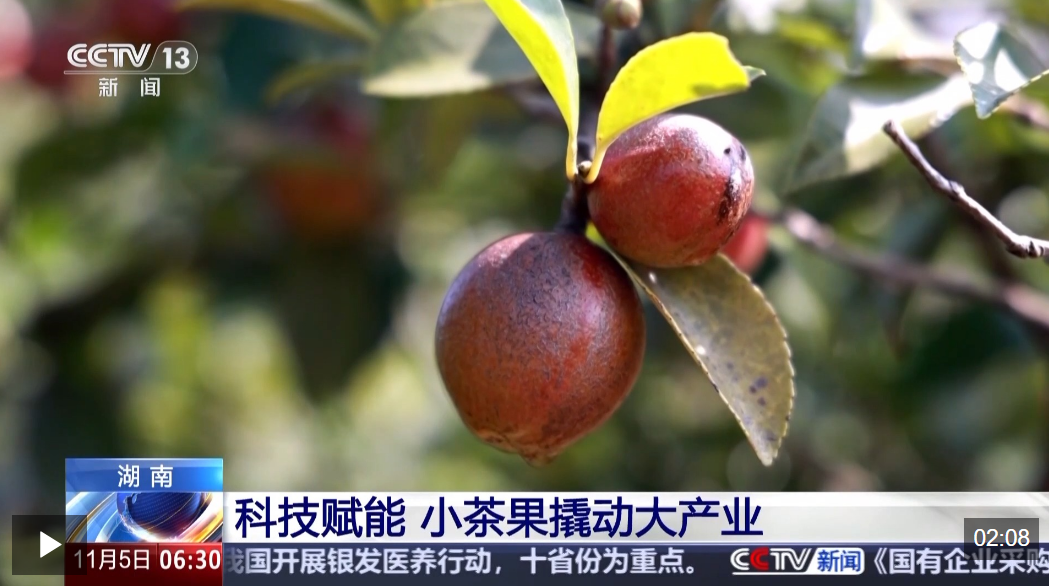
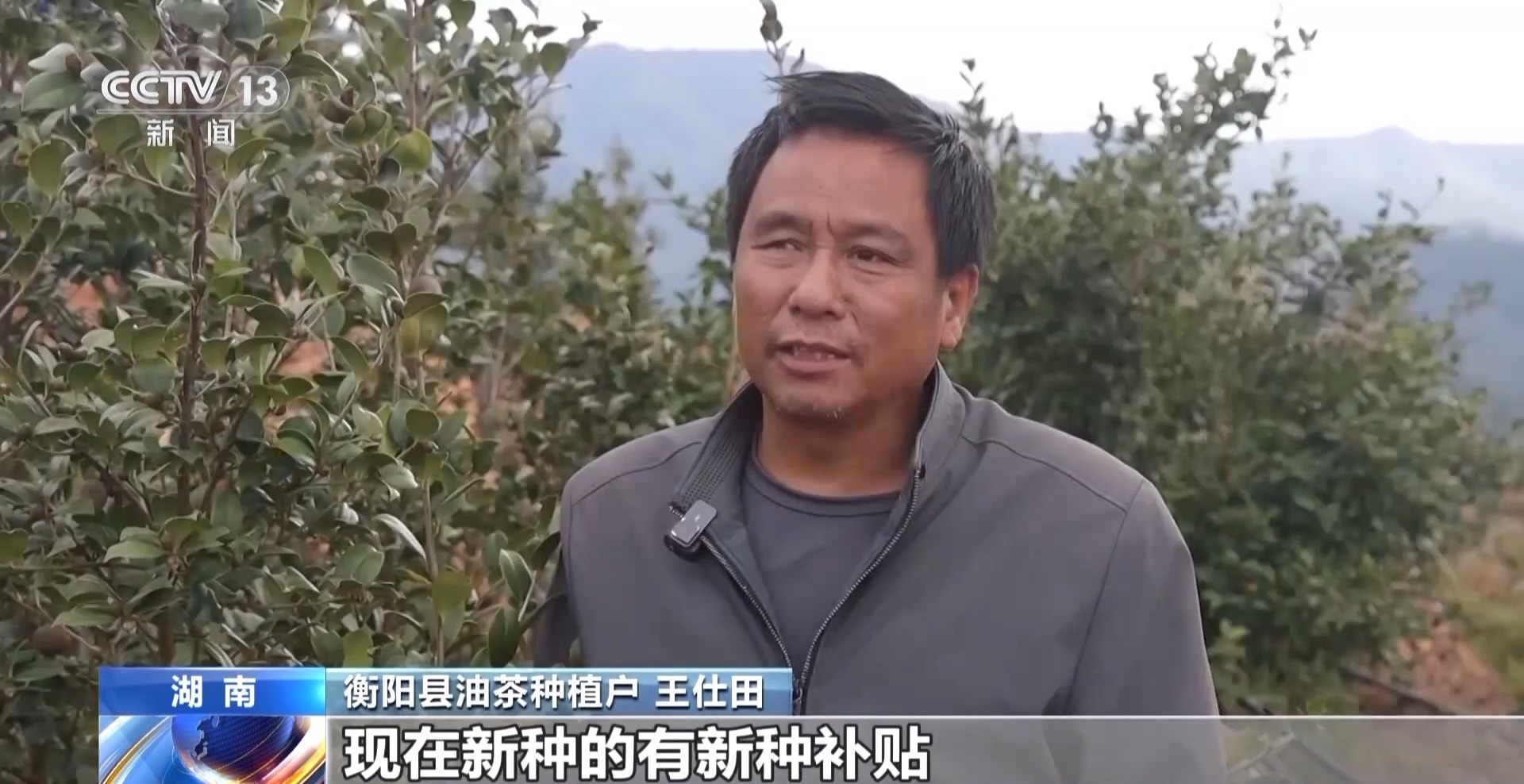
浑身是宝!一颗油茶果如何“榨”出近千亿绿色产值?
Yang Shi Xin Wen Ke Hu Duan· 2025-11-05 08:47
Core Insights - The oil tea industry in China has become a significant economic pillar, with a total output value exceeding 100 billion yuan, particularly highlighted during the harvesting season in Hunan province [1] Group 1: Industry Overview - Hunan province has over 5 million mu of oil tea trees entering the concentrated harvesting period, utilizing high-yield and disease-resistant varieties along with advanced agricultural technologies [2] - The oil tea production in Hunan is projected to reach 440,000 tons with a total output value of 93.4 billion yuan by 2024, with plans to expand the planting area by 1.05 million mu during the 14th Five-Year Plan [12] Group 2: Technological Advancements - The introduction of drones for transporting oil tea fruits has significantly improved efficiency, reducing transport time from 20 minutes to just 1 minute per trip [6] - A fully automated production line for processing oil tea fruits enhances production efficiency and ensures the freshness of the tea oil [14] Group 3: Economic Impact - The establishment of the oil tea industry association in Youxian has facilitated a complete industrial chain from seedling cultivation to processing, achieving a production of 13,000 tons of tea oil with a comprehensive output value of 2.3 billion yuan last year [10] - Financial support from government initiatives has amounted to over 5.2 billion yuan during the 14th Five-Year Plan, promoting the cultivation of oil tea resources [23] Group 4: Product Diversification - The oil tea fruit is being utilized in various products beyond cooking oil, including skincare items such as hand creams and soaps, significantly increasing the product's value from 80-100 yuan per jin to over 1,000 yuan per jin for refined products [16][22] - The development of 15 different products from tea oil, including hand soap and skincare products, showcases the industry's potential for product diversification and added value [18]
金融“活水”润中原 绿色转型绘新篇
Huan Qiu Wang· 2025-11-05 08:19
Core Insights - China Bank's Henan branch is actively promoting green finance to support the region's high-quality development by enhancing financial services for circular economy and environmental protection industries [1][2] Group 1: Green Finance Initiatives - The bank has increased support for industries focused on circular economy and energy conservation, providing efficient financial services to empower green transformation in Central China [1] - A notable case involves an environmental technology company in Zhoukou that has established a complete industrial chain for waste paper recycling, achieving an annual CO2 reduction of approximately 80,000 tons, equivalent to planting 4.5 million trees [1] Group 2: Innovative Financing Solutions - To address funding bottlenecks in patent conversion and capacity upgrades, the bank utilized an intellectual property pledge financing model, completing a 200 million yuan credit issuance in just 10 working days [1] - The bank's efforts in assisting companies to apply for interest subsidy policies have effectively reduced financing costs, setting a record for single credit issuance through intellectual property pledge in the region [1] Group 3: Successful Case Studies - In Qinyang, an environmental company focused on recycling used batteries has implemented an intelligent production line, processing 200,000 tons of waste lead-acid batteries annually, significantly alleviating battery pollution [2] - With the bank's support, the company expects a production capacity increase of over 30% following the introduction of intelligent dismantling equipment, demonstrating the impact of timely financial assistance [2] - The bank's rapid response in providing a 10 million yuan loan within 5 working days showcases its commitment to facilitating green projects [2] Group 4: Future Directions - The bank plans to continue optimizing its green finance service system, providing more precise financial support to aid the comprehensive green transformation of economic and social development [2]
视频丨浑身是宝!一颗油茶果如何“榨”出近千亿绿色产值?
Yang Shi Xin Wen Ke Hu Duan· 2025-11-05 07:15
Core Insights - The oil tea industry in China has become a significant contributor to the economy, with a total output value of nearly 1 trillion yuan, particularly in Hunan province, which is a major production area [1][13]. Group 1: Industry Overview - The oil tea industry has formed four pillar industries with an output value exceeding 1 trillion yuan, including the under-forest economy [1]. - Hunan province has a total oil tea plantation area of 23.71 million acres, with an expected production of 440,000 tons of tea oil and a comprehensive output value of 93.4 billion yuan in 2024 [13]. Group 2: Technological Advancements - In Hunan Hengyang, over 500,000 acres of oil tea are in the harvesting season, utilizing high-yield and disease-resistant varieties along with integrated water and fertilizer systems [3]. - Drones are being used to transport oil tea fruits from steep slopes, significantly reducing transportation time from 20 minutes to just 1 minute per trip [7]. Group 3: Economic Impact - The oil tea industry in You County has established a complete industrial chain, achieving a tea oil production of 13,000 tons and a comprehensive output value of 2.3 billion yuan last year [11]. - The local government has allocated over 5.2 billion yuan in funding to support oil tea production during the 14th Five-Year Plan period, promoting the cultivation of 500,000 acres of low-yield forests [25]. Group 4: Product Diversification - The oil tea fruit is being processed into various products, including skincare items, with the value of refined tea oil derivatives reaching over 1,000 yuan per pound, increasing the added value by more than ten times [17]. - A company has developed 15 products from tea oil, including handmade soap and hand cream, enhancing the product line and increasing the overall value [19]. Group 5: Financial Innovations - Innovative financial solutions, such as the "green financial property rights certificate," have been introduced to facilitate funding for the oil tea industry, allowing businesses to leverage forest resources for loans [29]. - The establishment of a 20 million yuan reserve fund by the local government has helped mitigate risks for banks, encouraging lending to businesses in the forestry sector [29].