
茶油

Search documents
小县城的残酷、温情与新生
虎嗅APP· 2026-02-17 02:07
Core Viewpoint - The article explores the transformation of a small county in central China, highlighting the struggles of traditional industries and the emergence of new ones, reflecting broader trends in the Chinese economy [5][46]. Group 1: Traditional Industry Decline - The county has seen a significant decline in traditional retail, with a 37% closure rate of department stores nationwide in 2023 [12]. - The local fireworks industry has drastically reduced from 42 companies in 2018 to just 7 in 2024, resulting in thousands of job losses [14]. - A local breakfast shop that operated for 28 years closed due to changing consumer preferences and high delivery platform fees [13]. Group 2: Emergence of New Industries - New industries are slowly emerging, such as a "photovoltaic industry park" that has attracted 8 companies and created over 3,000 jobs, albeit with lower wages [16][17]. - Community group buying and instant retail have seen a 62% annual growth in market penetration in county areas [17]. - A former department store owner has successfully transitioned to community group buying, achieving over 8 million in revenue last year [17]. Group 3: Youth and Employment Trends - Young people are increasingly returning to their hometowns for work, with a net inflow of about 1,200 individuals in 2024, reversing a previous trend of outmigration [22]. - The local LED lighting factory, which relocated from Guangdong, has brought back a complete production line and over 80 skilled workers [24]. - The county has seen a fourfold increase in charging stations for electric vehicles, from 50 to 200 in three years [21]. Group 4: Education and Healthcare Disparities - The county's top high school dominates over 85% of the college admission slots, leading to a rise in "accompanying study" housing demand [34][35]. - The county hospital has advanced medical facilities, while rural health centers lag significantly behind, prompting the establishment of a "county-town medical community" to improve services [39]. Group 5: Real Estate Market Challenges - The real estate market is struggling, with new property prices less than half of their peak in 2021, and second-hand homes seeing little interest [40]. - The adjustment in the real estate sector is impacting local finances, with new industries like the lighting sector being seen as a potential economic savior [41].


归乡记 | 小县城的残酷、温情与新生
Ge Long Hui A P P· 2026-02-16 07:52
Group 1 - The article highlights the significant changes in a small county in China, where traditional industries are declining while new industries are emerging amidst economic transformation [2][4][31] - The closure rate of traditional department stores in counties reached 37% in 2023, reflecting the struggles of small businesses against changing consumer preferences and rising operational costs [4][6] - The local fireworks industry has drastically reduced from 42 companies in 2018 to just 7 in 2024 due to stricter environmental policies and changing market demands, resulting in many workers needing to find new jobs [4][6] Group 2 - New industries are slowly developing, with the establishment of a "photovoltaic industry park" that has attracted 8 companies and created over 3,000 jobs, albeit with lower wages compared to previous employment [6][17] - Community group buying and instant retail have seen a 62% annual growth in market penetration, indicating a shift towards new business models in the county [6][31] - Young people are increasingly returning to their hometowns for employment, with a net inflow of about 1,200 individuals in 2024, marking a reversal from previous trends of out-migration [10][11] Group 3 - The education system in the county is becoming more centralized, with one school monopolizing over 85% of key university admissions, leading to a rise in the "accompanying study economy" as families rent homes in the county [19][21] - The healthcare sector shows a divide, with advanced facilities in the county hospital contrasting with outdated equipment in rural health clinics, prompting the establishment of a "county-town medical community" to improve services [25][26] - The real estate market is struggling, with new property prices dropping to less than half of their peak in 2021, affecting local finances and the viability of new industries [26][27]
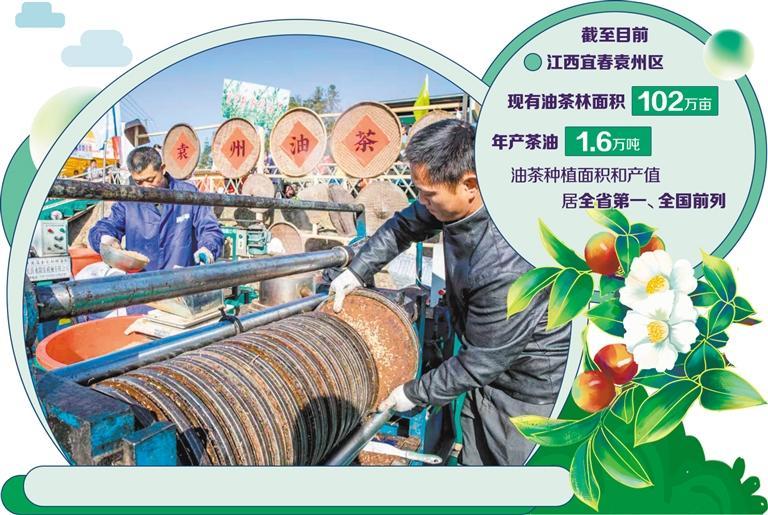
江西宜春 油茶香飘富民路
Xin Lang Cai Jing· 2026-02-06 21:01
Core Insights - The article highlights the growth and development of the oil tea industry in Yuanzhou District, Jiangxi Province, emphasizing its significant economic impact and the integration of technology in cultivation and processing [2][3][4]. Industry Overview - Yuanzhou District is recognized as a core area for oil tea production in China, benefiting from favorable climatic and soil conditions, which have led to a comprehensive industry chain with an annual output value of 3.6 billion yuan [3][4]. - The district has established a robust technological support system to address traditional challenges in oil tea cultivation, such as low yield and unstable quality, through initiatives like the "Technology Courtyard" and partnerships with local universities [3][4]. Production and Processing - The area has 1.02 million acres of oil tea plantations, with a production capacity of 16,000 tons of tea oil annually, making it a leading region in both Jiangxi Province and nationally [4][5]. - The introduction of deep processing techniques has significantly increased the value of oil tea products, with over 60% of the total industry output value now coming from processed goods [6][7]. Financial and Market Support - A new financial support model has been implemented to stabilize raw material supply and protect farmers' income, involving a partnership between state-owned enterprises and financial institutions to facilitate large-scale procurement of tea oil [7][8]. - This model aims to ensure a steady market for farmers while supporting the growth of leading enterprises in the industry [7][8]. Cultural and Economic Integration - The development of oil tea culture tourism has attracted over 500,000 visitors, enhancing local economic benefits and increasing farmers' income by an average of 3,000 yuan per household [8][9]. - Future plans include the establishment of a provincial oil tea industry demonstration park and a modern trading center to further enhance the brand influence of "Yuanzhou Tea Oil" [9].
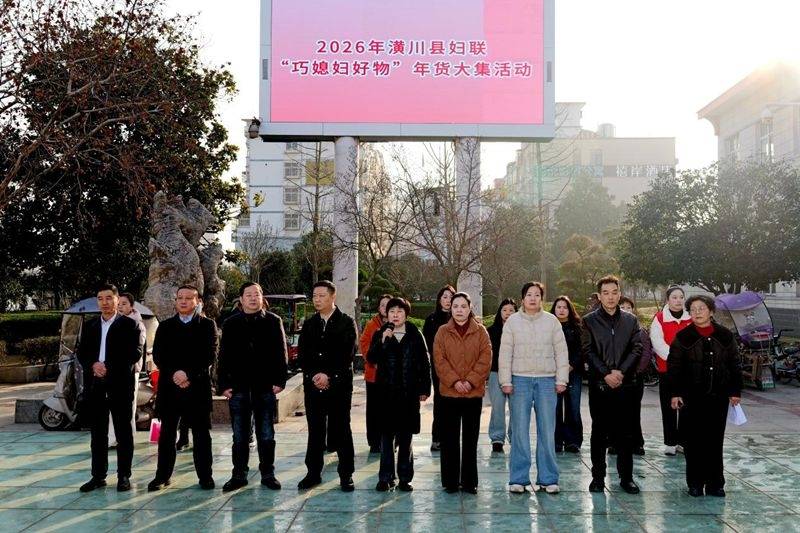
巾帼促消费 赋能启新程——潢川县妇联举办2026年“巧媳妇好物”年货大集活动
Sou Hu Cai Jing· 2026-02-05 11:34
Core Viewpoint - The event "Clever Wife Good Goods" New Year Market aims to stimulate consumer demand and enhance market vitality during the Spring Festival, showcasing the responsibility and commitment of women in Huangchuan [1][12]. Group 1: Event Overview - The New Year Market was organized by the Huangchuan Women's Federation in collaboration with multiple departments, focusing on promoting local products and supporting women's entrepreneurship [1][3]. - The event featured over 50 categories of high-quality products, including grains, fruits, flowers, traditional snacks, and handicrafts, catering to the one-stop shopping needs of the community [3][5]. Group 2: Product Highlights - Various local specialties were showcased, such as the fine Huangchuan tribute noodles, handmade mung bean cakes, and traditional cured meats, all reflecting the local culinary heritage [5]. - The market also included fresh produce, eco-friendly eggs, and artisanal beverages, emphasizing the blend of cultural significance and quality craftsmanship [5]. Group 3: Economic Impact - The event is seen as a significant measure to implement higher-level decisions on expanding domestic demand and promoting consumption, while also enhancing the influence of the "Clever Wife Good Goods" brand [12][13]. - It aims to broaden sales channels for local women's products, activate holiday consumption potential, and achieve multiple benefits such as promoting consumption, expanding employment, and increasing income [13]. Group 4: Future Plans - The Huangchuan Women's Federation plans to continue building platforms for production and sales connections, enhancing the competitiveness of the "Clever Wife" brand, and encouraging women's participation in industrial development [13].
“十四五”期间中国茶油产量增长53%
Zhong Guo Xin Wen Wang· 2026-02-05 08:21
Core Viewpoint - The Chinese oil tea industry has achieved significant progress during the 14th Five-Year Plan period (2021-2025), with a planting area exceeding 75 million mu and a production of 1.1 million tons of tea oil, marking a 53% increase from 2020 [1][2] Group 1: Industry Development - The Chinese government has implemented a three-year action plan to accelerate the development of the oil tea industry, with over 12 billion RMB invested to date [1] - The number of operational entities in the oil tea industry has reached 2.47 million, with more than 2,200 tea oil processing enterprises established [1] Group 2: Future Focus - The next five years will emphasize quality improvement, area expansion, and efficiency enhancement in the oil tea industry, aiming for high-quality development [2] - There will be a focus on high-standard oil tea forest construction, resource protection, and the exploration of land use for oil tea cultivation [2] - The industry will promote technological innovation and improve single yield through the use of quality seeds, methods, and water and fertilizer management [2] - The development of leading oil tea processing enterprises and the expansion of high-quality tea oil product supply will be prioritized, along with the comprehensive development of oil tea by-products [2] - The exploration of composite business models such as "oil tea + tourism" and "oil tea + medicinal materials" will be encouraged to enhance the overall benefits of oil tea cultivation [2]
首场“委员通道”上,他们说了这些干货
Xin Lang Cai Jing· 2026-02-02 20:06
Group 1: Oil Tea Industry Development - The oil tea industry is being diversified to enhance its economic potential, with a focus on high-end skincare products [12][13] - The comprehensive utilization rate of oil tea fruit resources has increased from less than 20% to over 50% through technological advancements [13] - The initiative has led to an increase in annual income of over 20,000 yuan for more than 40,000 farming households [13] Group 2: Engineering Machinery Export - Hunan has initiated a remanufacturing system reform for engineering machinery, addressing legal and quality control challenges [14] - The province has saved over 85 million yuan in costs and reduced processing time by two months through innovative legal measures [14] - Over 3 billion yuan worth of remanufactured equipment has been exported from Hunan in the past two years [15] Group 3: Youth Talent Attraction - Hunan's "Wisdom Hunan, Talent Gathering" initiative has successfully attracted 43,000 job seekers from 235,000 resumes received [16] - The province offers substantial support for entrepreneurship, including three years of free office space and various financial incentives [16] - There are currently 425 entrepreneurial incubation bases in Hunan, with nearly 4,000 projects initiated by university students [16] Group 4: Minor Protection and Mental Health - A collaborative approach involving families, schools, and communities is being promoted to support the mental health of students [17] - A proposal for a coordinated care network for vulnerable children has been implemented, with support from multiple government departments [17] - The focus for the upcoming sessions will be on enhancing student safety through improved legal and community support mechanisms [17] Group 5: Straw Utilization for Rural Revitalization - The comprehensive utilization of straw is seen as a key ecological and economic strategy for rural areas [18] - Hunan produces over 36 million tons of straw annually, with initiatives in place to reduce environmental impact and enhance farmer income [18] - The province has established 1,195 collection points and 1,372 utilization entities to promote diverse applications of straw [18] Group 6: Hunan-Hong Kong Cooperation - Efforts are being made to strengthen economic ties between Hunan and Hong Kong, focusing on sectors like traditional Chinese medicine and finance [19] - A recent exchange led to six enterprises signing agreements, showcasing the potential for collaboration [19] - The ongoing strategy aims to facilitate the integration of resources, technology, and talent between the two regions [20]

中国林草产业总产值近11万亿元
Ren Min Ri Bao Hai Wai Ban· 2026-01-21 07:14
Core Insights - By 2025, China aims to advance collective forest rights reform and promote high-quality development of the forestry and grassland industry, targeting a total industry output value of nearly 11 trillion yuan and an import-export trade volume exceeding 180 billion USD [1][2] - The forestry sector will focus on revitalizing and effectively utilizing forest and grassland resources, with initiatives to support the healthy development of the industry, including financial support and measures to promote the under-forest economy [1] Industry Development Goals - The annual production of forest products is projected to reach over 240 million tons, with timber production expected to be 140 million cubic meters and the output value of timber processing and bamboo products estimated at 3.4 trillion yuan [1] - The central government has allocated 4.8 billion yuan for the development of the oil tea industry, with plans to plant an additional 2.82 million acres and improve 2.56 million acres of low-yield forests, bringing the total oil tea planting area to 7.5 million acres and an expected output of 1.1 million tons of tea oil [1] Employment and Economic Impact - The forestry and grassland industry is projected to directly create employment for over 60 million people, highlighting its role in income generation and job stability [1] - The industry will also support ecological tourism, with an expected annual visitor count of nearly 3 billion, further enhancing its economic contribution [1] Collective Forest Rights Reform - Multiple measures will be implemented to deepen collective forest rights reform, including ten new measures to enhance the quality and efficiency of collective forestry development and optimize management policies [2] - As of now, there are nearly 300,000 new forestry operating entities, with about 100,000 managing over 500 acres, indicating a shift towards larger-scale and intensive management practices [2] Future Directions - The forestry sector will explore new pathways for ecological product value transformation, accelerate the upgrading of the bamboo and wood industry, and promote the development of specialty industries such as woody oil and under-forest economy [2] - Continued efforts will be made to deepen collective forest rights reform, enhance financial and tax support, and establish diversified investment mechanisms to stimulate the development of the forestry and grassland industry [2]
中国林草产业总产值近十一万亿元
Ren Min Ri Bao· 2026-01-20 19:10
Core Insights - By 2025, China aims to advance collective forest rights reform and promote high-quality development of the forestry and grassland industry, targeting a total output value of nearly 11 trillion yuan and an import-export trade volume exceeding 180 billion USD in forest products [1][2] - The forestry sector will focus on revitalizing resources and supporting healthy industry development through financial initiatives and measures to enhance the under-forest economy [1] Group 1 - The annual production of forest food is projected to exceed 240 million tons by 2025 [1] - The annual timber production is expected to reach 140 million cubic meters, with the value of timber processing and bamboo products manufacturing estimated at 3.4 trillion yuan [1] - The central government has allocated 4.8 billion yuan for the development of the oil tea industry, with new planting of 2.82 million acres and a total planting area of 7.5 million acres [1] Group 2 - The collective forest rights reform will be deepened with ten measures to enhance the quality and efficiency of collective forestry development [2] - Nearly 300,000 new forestry operating entities have been established, with about 100,000 managing over 500 acres [2] - The forestry sector will explore new pathways for ecological product value transformation and promote the development of specialty industries such as woody oil and under-forest economy [2]
美丽中国|2025年我国完成国土绿化任务1.27亿亩 全国林草产业总产值近11万亿元
Ren Min Ri Bao· 2026-01-16 01:32
Group 1: National Afforestation Goals - By 2025, China aims to complete a land greening task of 12.7 million hectares, including afforestation of 5.345 million hectares and restoration of 7.39 million hectares of degraded grasslands [1][2] - The national forest coverage rate currently stands at 25.09%, with a total forest stock of 20.988 billion cubic meters [1] Group 2: Investment and Projects - In 2025, a total of 29.2 billion yuan will be allocated for central investment, implementing 337 key projects to achieve a greening task of 13 million hectares [2] - During the 14th Five-Year Plan period, China completed a total greening area of 54.9 million hectares, with an average annual restoration of over 4.6 million hectares of degraded grasslands [2] Group 3: Economic Impact of Forestry - The total output value of the national forestry and grassland industry is nearly 11 trillion yuan, with forest product import and export trade exceeding 180 billion USD [3] - The annual production of forest food reached over 24 million tons [3] Group 4: Support for Forestry Development - A notification was issued to guide financial support for high-quality forestry development, promoting the development of the under-forest economy through various measures [4] - The annual production of timber is 140 million cubic meters, with the output value of timber processing and bamboo products reaching 3.4 trillion yuan [4] Group 5: Natural Protection Areas - China has established a new type of natural protection area system centered on national parks, effectively protecting 90% of terrestrial ecosystem types and 74% of key protected wild animal populations [6][7] - The integration of over 120 natural protection areas has led to the establishment of five national parks, enhancing the protection of critical ecosystems [7]
2025年我国完成国土绿化任务1.27亿亩 全国林草产业总产值近11万亿元(美丽中国)
Ren Min Ri Bao· 2026-01-15 22:11
Group 1: National Afforestation Goals and Achievements - By 2025, China aims to complete a land greening task of 12.7 million hectares, including afforestation of 5.345 million hectares and restoration of 7.39 million hectares of degraded grasslands [1] - The national forest coverage rate currently stands at 25.09%, with a forest stock volume of 20.988 billion cubic meters, indicating a stronger foundation for green development [1] - During the "14th Five-Year Plan" period, China completed a total afforestation area of 54.9 million hectares, with an average annual restoration of over 4.6 million hectares of degraded grasslands [2] Group 2: Economic Impact and Industry Development - The total output value of the national forestry and grassland industry is nearly 11 trillion yuan, with total import and export trade of forest products exceeding 180 billion USD [2] - The annual production of forest food reached over 24 million tons, and the wood production volume is 140 million cubic meters, with the wood processing and bamboo products manufacturing output valued at 3.4 trillion yuan [3] - The forestry industry directly supports over 60 million jobs, highlighting its role in income generation and employment stability [3] Group 3: Policy and Reform Initiatives - The government is promoting collective forest rights reform and high-quality development of the forestry industry, with measures to optimize management and approval processes for public welfare forests [3] - Financial support for high-quality development in forestry has been initiated, with a focus on developing the under-forest economy through comprehensive measures [3] - The establishment of a new type of natural protected area system centered on national parks has effectively protected 90% of terrestrial ecosystem types and 74% of key protected wildlife species [5][6] Group 4: Future Directions and Strategies - The forestry sector will explore new pathways for ecological product value transformation and accelerate the upgrading of the bamboo and wood industry [4] - There is a commitment to further establish a unified and efficient new type of natural protected area system, with plans for high-quality construction of national parks [6]