机器学习

Search documents
王一鸣:科技创新、产业创新离不开资本市场支持
Zheng Quan Ri Bao Wang· 2025-11-13 06:45
Core Insights - The new round of technological revolution is accelerating, with artificial intelligence as the core driving force, leading to profound changes and innovations across various fields [1] - There is a need to shift from following to leading in more areas, from innovation in end products to breakthroughs in key core technologies, and from encouraging integrated innovation to promoting original innovation [1] - The relationship between technology, industry, and finance is interdependent, with financial support being crucial for both technological and industrial innovation [1] Financial Support and Innovation - Financial markets, particularly direct financing through stocks, are more beneficial for the integration of technology and capital compared to traditional bank loans [1] - There is a call to develop the merger and acquisition market and encourage the establishment of market-oriented acquisition funds to address the exit issues faced by venture capital institutions [2] - The use of artificial intelligence and machine learning is recommended to build intelligent risk control models that dynamically assess corporate credit risks, thereby reducing decision-making costs and risks for financial institutions [2] Risk Management and Credit Assessment - Dynamic credit profiles should be constructed using intelligent technologies to enhance financial institutions' risk identification capabilities [2] - Effective risk-sharing and compensation mechanisms, such as insurance and reinsurance, should be established to support financing for technology-based enterprises [2] - Exploration of local government mechanisms for credit assessment and risk compensation for innovative enterprises is suggested [2]
行业聚焦:全球应收/应付帐款自动化行业头部生产商市场份额及排名调查
QYResearch· 2025-11-13 02:07
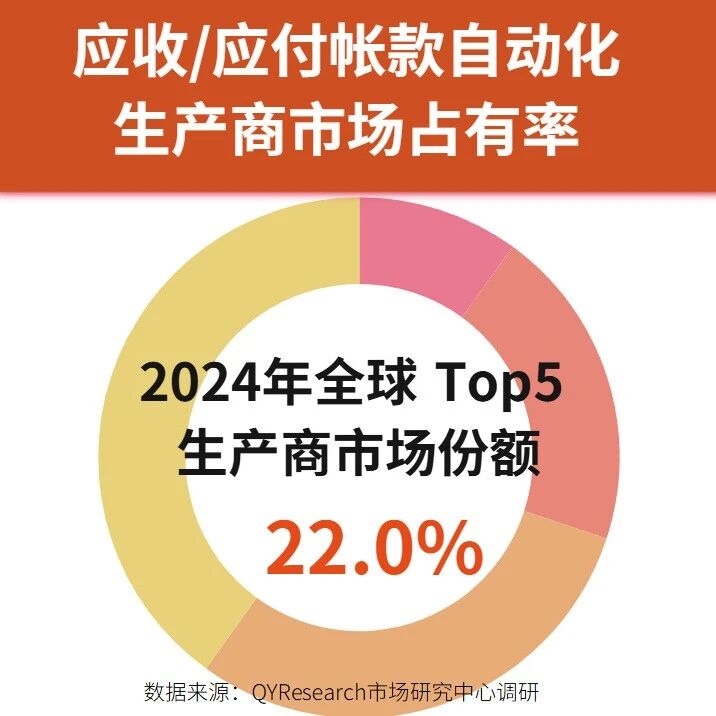
Core Viewpoint - The article discusses the automation of accounts receivable (AR) and accounts payable (AP) processes, highlighting the expected growth of the global market and the key trends driving this transformation [6][20]. Market Overview - The global accounts receivable and accounts payable automation market is projected to reach $5.67 billion by 2030, with a compound annual growth rate (CAGR) of 7.2% in the coming years [6]. - The top five manufacturers are expected to hold approximately 22.0% of the market share in 2024 [9]. Product Type Segmentation - Cloud-based solutions dominate the market, accounting for about 84.1% of the total share [12]. Application Segmentation - The automation solutions cater to both small and large enterprises, indicating a broad applicability across different business sizes [29]. Market Trends 1. **Dominance of AI and Machine Learning**: AI serves as a core engine for automation, enhancing data accuracy and improving collection rates through predictive analytics [20]. 2. **Shift to End-to-End Platforms**: Companies are moving towards integrated platforms that manage the entire procure-to-pay (P2P) and order-to-cash (O2C) cycles, improving cash flow transparency [21]. 3. **Embedded Payments and Real-Time Execution**: Modern AP platforms now include embedded payment options, streamlining payment cycles and enhancing customer experience [22]. 4. **Power of Data and Predictive Analytics**: Automation platforms are evolving into rich data sources, enabling better cash flow forecasting and strategic supplier relationships [23]. 5. **Enhanced Fraud Detection and Security**: Advanced security features in modern automation systems are addressing the evolving risks of digital financial processes [24]. Key Drivers 1. **Accounts Receivable (AR)**: AR automation software optimizes invoice and payment processes, significantly reducing the time spent on collections and improving cash flow [25]. 2. **Accounts Payable (AP)**: AP automation enhances efficiency and accuracy in the accounts payable department, integrating with accounting solutions or ERP systems [25]. Major Challenges 1. **Integration**: The integration of AP automation solutions with accounting and ERP systems remains a challenge, particularly for companies using outdated legacy systems [26]. 2. **Business Intelligence**: Rapid technological advancements in business intelligence create continuous pressure for participants in the AR/AP automation market to keep up [26].

2026年全球后端即服务市场价值将达数十亿美元
Sou Hu Cai Jing· 2025-11-12 12:34
后端即服务(Backend as a Service,BaaS)是一种云计算服务模型,旨在简化和加速应用程序的开发过 程。它提供了一个托管的后端基础架构,包括服务器、数据库、存储和其他相关组件,使开发人员能够 专注于应用程序的前端开发,而无需关注后端基础设施的细节。 后端即服务的主要特点包括: 数据存储和管理:BaaS提供了数据存储和管理的功能,开发人员可以使用API来创建、读取、更新和删 除数据,而无需编写复杂的后端代码。 用户管理和身份验证:BaaS提供了用户管理和身份验证的功能,开发人员可以轻松地创建用户账户、管 理用户权限,并实现用户身份验证和授权。 云函数和业务逻辑:BaaS允许开发人员编写和部署云函数,用于处理应用程序的业务逻辑。这些云函数 可以在云端执行,从而减轻了客户端的负担。 文件存储和管理:BaaS提供了文件存储和管理的功能,开发人员可以上传、下载和管理文件,以支持应 用程序的文件操作需求。 实时通信和推送通知:BaaS提供了实时通信和推送通知的功能,开发人员可以使用API实现实时聊天、 实时数据同步和推送通知等功能。 通过使用后端即服务,开发人员可以快速构建和部署应用程序,减少了开发周期 ...
做好应对气候风险“必答题” 业内专家热议金融机构如何做好气候风险管理
Jin Rong Shi Bao· 2025-11-12 02:02
Core Insights - Climate change is recognized as a significant global challenge, necessitating a robust response from the insurance and reinsurance sectors to manage climate risks effectively [1][2] - The insurance and reinsurance industry is increasingly viewed as essential for economic stability and social responsibility, with climate risk management becoming a critical requirement for sustainable operations [2][3] Group 1: Climate Risk Management Strategies - The former vice chairman of the China Banking and Insurance Regulatory Commission emphasized the need for a systematic approach to integrate climate risk management into the overall financial governance framework [3] - There is a call for Chinese financial institutions to align with international standards in climate governance while maintaining unique national characteristics [3] - Financial institutions are encouraged to enhance their capabilities in identifying, assessing, and monitoring climate risks to ensure resilience against climate-related shocks [3] Group 2: Technological Innovations in Reinsurance - The reinsurance industry is leveraging technology to address climate risks, with China Reinsurance establishing a comprehensive system for managing climate change and disaster risks [4] - Advanced technologies such as artificial intelligence and data sharing are being utilized to redefine and understand climate risks, facilitating a shift from traditional risk-bearing to proactive risk management [4] - The reinsurance sector aims to enhance its risk resilience through precise data quantification, portfolio management, and collaboration with various institutions [4] Group 3: Functions of Reinsurance - Reinsurance plays a crucial role in enhancing underwriting capacity by allowing primary insurers to transfer excess risks, thereby strengthening overall insurance coverage [5] - It aids in risk forecasting by utilizing global data and expertise to provide early warning signals to insurers and society [5] - Reinsurance supports green transformation efforts, contributing to improved ecological conditions and reducing disaster risks associated with climate change [5][6] Group 4: Future Goals and Action Plans - China Reinsurance has outlined a clear development path in its "Action Outline for Responding to Climate Change (2025-2035)," aiming to become a leading player in climate risk management within the next decade [7] - The outline sets ambitious goals for enhancing technological capabilities, customer service, and research innovation in climate risk management by 2030 [7] - A total of ten action initiatives have been proposed to improve national disaster insurance design, elevate climate risk protection levels, and engage in global climate governance [8]
财达证券股市通|智能T0算法-底仓之上轻松增厚投资回报
Xin Lang Cai Jing· 2025-11-12 00:05
Core Insights - The article discusses the application of machine learning in quantitative trading, emphasizing its ability to analyze vast amounts of data and execute trades on thousands of stocks simultaneously while adhering to strict trading rules [3][5]. Group 1: Quantitative Trading Strategies - The intelligent T0 algorithm allows investors to authorize their stock holdings to the algorithm for automated intraday trading, aiming for low buy and high sell opportunities while maintaining the base stock quantity by the end of the trading day [5][9]. - The strategy requires investors to confirm trading elements such as the target stock, quantity, and timing, and to ensure sufficient funds are available before the strategy is activated [5][10]. Group 2: Risk Management and Challenges - Common risk scenarios in algorithmic trading include the potential for "doing the opposite," where the algorithm may sell low and buy high, particularly in stocks with low volatility and liquidity [8][9]. - The strategy may face challenges such as changes in stock prices, insufficient account funds, or lack of buying permissions, which could affect the execution of trades [9][10]. Group 3: Target Investor Profile - The algorithm is designed for long-term investors who may be experiencing losses in their current holdings and wish to reduce costs and enhance returns during the holding period [11]. - It is particularly suitable for investors with stable long-term positions, such as those holding ETFs or other long-term assets [11].


阿布扎比能源局与Analog推进AI与物理智能
Shang Wu Bu Wang Zhan· 2025-11-08 03:15
Group 1 - The core focus of the collaboration is to advance the application of AI, machine learning, and physical intelligence in the energy and water sectors [1] - The partnership involves the Abu Dhabi Department of Energy (DoE) and Analog Devices, Inc., highlighting a strategic move towards digital transformation in these industries [1] - The collaboration will center around the "AD.WE" digital platform, aiming to enhance operational management, decision-making, and service quality [1]

ICML 2026新规「避坑」指南:参会非必须、原稿将公开、互审设上限
具身智能之心· 2025-11-08 00:03
Core Points - The article discusses the new submission guidelines for ICML 2026, which will take place from July 7 to July 12, 2026, in Seoul, South Korea [4] - The conference will implement a double-blind review process, and accepted papers will be presented at the conference [4][5] - Authors can choose whether to attend the conference in person or only have their papers included in the proceedings [7][8] Submission Requirements - Papers must be submitted as a single file, with a maximum of 8 pages for the main text [5] - Accepted papers can add an additional page in the final version [6] - The original submission version of accepted papers will be made public, and authors of rejected papers can also choose to make their original submissions public [10] Important Dates - The submission website will open on January 8, 2026, with the abstract submission deadline on January 23, 2026, and the full paper submission deadline on January 28, 2026 [15][16][17] Review Process - Each paper must meet mutual review requirements, and failure to comply may result in rejection [19] - The double-blind review policy prohibits simultaneous submissions to multiple conferences or journals [20] Ethical Guidelines - Authors must adhere to research and review ethics, including providing a potential societal impact statement with their papers [25] - A plain language summary must be submitted to communicate the research significance to the public [26] Additional Notes - Authors are allowed to use generative AI tools for writing or research but must take full responsibility for the content [23] - Violations of the submission guidelines may lead to sanctions or rejection of the paper [24]

一文读懂人工智能在供应链领域的典型应用
3 6 Ke· 2025-11-07 06:31
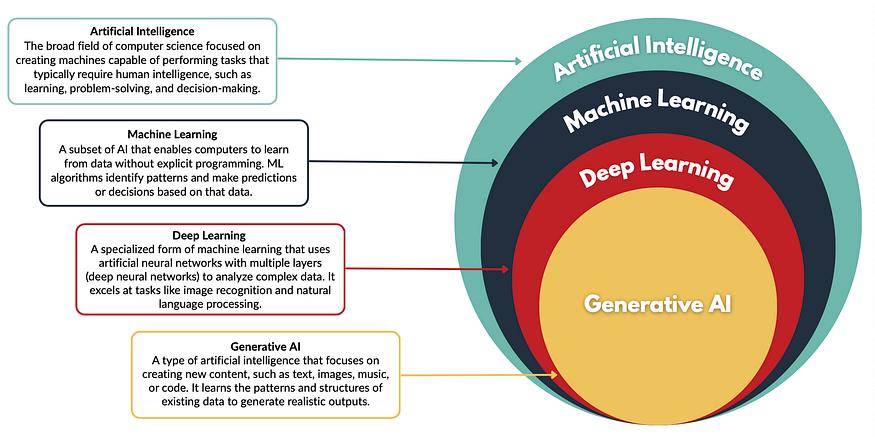
Overview - The article discusses the transformative impact of artificial intelligence (AI) and machine learning (ML) on marketing and supply chain management, emphasizing the need for businesses to adapt to these technologies for improved decision-making and operational efficiency [1][6]. AI Terminology Overview - AI encompasses a broad field focused on creating machines capable of tasks requiring human-like intelligence, while ML is a subset of AI that enables computers to learn from data without explicit programming [2][4]. Importance of AI - AI is being rapidly adopted across industries as it directly correlates with business efficiency, profitability, and competitiveness, moving beyond experimental phases to practical applications in daily operations [6][9]. Applications of AI in Marketing - AI is utilized in marketing through personalized recommendations, customer service chatbots, and predictive analytics, enhancing customer engagement and operational effectiveness [10][12]. Marketing's Impact on Supply Chain - Marketing activities can trigger demand shocks, necessitating a responsive supply chain to avoid stockouts and missed revenue opportunities, highlighting the interconnectedness of marketing and supply chain functions [13][15]. Challenges in Modern Supply Chains - Modern supply chains face challenges such as complexity, uncertainty, speed expectations, and sustainability, driving the need for AI to enhance demand forecasting and proactive measures [19][20]. AI in Demand Forecasting and Planning - AI enhances demand forecasting and planning by integrating time series analysis with machine learning, allowing for more accurate predictions and operational actions [20][22]. AI in Inventory Optimization - AI aids in inventory management by determining optimal stock levels based on real-time data and demand forecasts, balancing availability and cost [24][26]. AI in Logistics and Transportation - AI transforms logistics by optimizing delivery routes, predicting arrival times, and enabling predictive maintenance, thus improving efficiency and reliability [27][29]. AI in Supplier and Risk Management - AI strengthens supplier and risk management through continuous performance analysis and real-time monitoring of external events, allowing for proactive risk mitigation [33][34]. AI in Warehousing and Automation - AI automates and optimizes warehousing processes, improving accuracy and efficiency in inventory handling and order fulfillment [37][38]. AI in Sustainability and ESG - AI supports sustainability efforts by optimizing processes to reduce waste and emissions, facilitating the transition to circular supply chains [38][40]. Unified Perspective on Marketing and Supply Chain - Understanding AI's value requires viewing marketing and supply chain as interconnected systems, where AI synchronizes demand creation and fulfillment [61][63]. Emerging Trends in AI-Driven Supply Chains - New trends in AI include digital twins for simulation, proactive AI agents for planning, and visual models for real-time monitoring, indicating a shift towards more autonomous and intelligent supply chain operations [66][67].
主动量化组合跟踪:10 月机器学习沪深 300 指增策略表现出色
SINOLINK SECURITIES· 2025-11-06 15:30
Quantitative Models and Construction 国证 2000 Index Enhancement Strategy - **Model Name**: 国证 2000 Index Enhancement Strategy - **Model Construction Idea**: Focused on the small-cap stock rotation phenomenon in A-shares, aiming to select stocks effectively within 国证 2000 index components to enhance returns [11] - **Model Construction Process**: - Selected factors such as technical, reversal, and idiosyncratic volatility, which showed strong performance on 国证 2000 index components [12] - Addressed high correlation among factors by regressing volatility factors on technical and reversal factors to obtain residual volatility factors [12] - Combined all major factors equally and performed industry and market capitalization neutralization to construct the 国证 2000 enhancement factor [12] - Formula: Residual volatility factor = Volatility factor - Regression(Technical factor, Reversal factor) [12] - **Model Evaluation**: Demonstrated strong predictive performance with an IC mean of 12.63% and T-statistic of 12.70 [12] - **Strategy Construction**: - Monthly rebalancing at the end of each month, buying the top 10% ranked stocks based on factor values, constructing an equal-weighted long portfolio [15] - Backtesting period: April 2014 to present, benchmarked against 国证 2000 index, with a transaction fee rate of 0.2% per side [15] Machine Learning Index Enhancement Strategy - **Model Name**: TSGRU+LGBM Machine Learning Index Enhancement Strategy - **Model Construction Idea**: Improved machine learning stock selection model by integrating TimeMixer framework with GRU and LightGBM, leveraging multi-scale mixing and seasonal/trend decomposition mechanisms [21] - **Model Construction Process**: - Original strategy used GBDT and NN models trained on different feature datasets and prediction labels, but showed signs of failure due to market style adjustments [21] - Enhanced model incorporated TimeMixer framework into GRU, combined LightGBM with TSGRU latent vectors and traditional quantitative factors [21] - Optimized portfolio construction by controlling tracking error and individual stock weight deviation to maximize factor exposure [25] - **Model Evaluation**: Improved ability to capture recent market information, showing strong performance [21] Dividend Style Timing + Dividend Stock Selection Strategy - **Model Name**: Dividend Style Timing + Dividend Stock Selection Strategy - **Model Construction Idea**: Leveraged the long-term stability and high dividend characteristics of dividend stocks to reduce risk during weak market conditions [36] - **Model Construction Process**: - Used 10 indicators related to economic growth and monetary liquidity to construct a dynamic event factor system for dividend index timing [36] - Applied AI models to test stock selection within 中证红利 index components, achieving stable excess returns [36] - **Model Evaluation**: Demonstrated significant stability improvement compared to 中证红利 index total return [36] --- Model Backtesting Results 国证 2000 Index Enhancement Strategy - **IC Mean**: 12.63% [12] - **Latest Month IC**: 25.34% [12] - **Annualized Excess Return**: 13.30% [16] - **Information Ratio (IR)**: 1.73 [16] - **Tracking Error**: 7.68% [19] - **October Excess Return**: 2.92% [16] TSGRU+LGBM Machine Learning Index Enhancement Strategy - **沪深 300 Index**: - **Annualized Excess Return**: 6.96% [26] - **Information Ratio (IR)**: 1.40 [26] - **Tracking Error**: 4.97% [26] - **October Excess Return**: 2.25% [26] - **中证 500 Index**: - **Annualized Excess Return**: 10.11% [30] - **Information Ratio (IR)**: 1.96 [30] - **Tracking Error**: 5.16% [30] - **October Excess Return**: -0.59% [30] - **中证 1000 Index**: - **Annualized Excess Return**: 13.52% [35] - **Information Ratio (IR)**: 2.37 [35] - **Tracking Error**: 5.70% [35] - **October Excess Return**: 2.63% [35] Dividend Style Timing + Dividend Stock Selection Strategy - **Stock Selection Strategy**: - **Annualized Return**: 18.98% [38] - **Sharpe Ratio**: 0.90 [38] - **October Return**: 2.52% [38] - **Timing Strategy**: - **Annualized Return**: 13.83% [38] - **Sharpe Ratio**: 0.90 [38] - **October Return**: 3.28% [38] - **固收+ Strategy**: - **Annualized Return**: 7.39% [38] - **Sharpe Ratio**: 2.19 [38] - **October Return**: 0.92% [38]
ICML 2026新规「避坑」指南:参会非必须、原稿将公开、互审设上限
机器之心· 2025-11-06 05:28
Core Points - The ICML 2026 conference will take place from July 7 to July 12, 2026, in Seoul, South Korea, with a double-blind review process for all submitted papers [4] - Authors of accepted papers can choose whether to attend the conference in person or only have their papers included in the proceedings [7] - The original submission versions of accepted papers will be made publicly available, and authors of rejected papers can also choose to make their original submissions public [10] Submission Requirements - Papers must be submitted as a single file, with a maximum of 8 pages for the main text, while references, impact statements, and appendices have no page limit [5] - There will be no separate submission deadline for supplementary materials, and authors can add one extra page to the final version of accepted papers [6] - Papers that do not comply with the submission requirements will be rejected without review [11] Important Dates - The submission website will open on January 8, 2026, with the abstract submission deadline on January 23, 2026, and the full paper submission deadline on January 28, 2026 [14][15] Review Process - Authors are required to participate in the review process, with specific mutual review requirements for both papers and authors [17] - The double-blind review policy prohibits simultaneous submissions to multiple conferences or journals [18] - All submissions must be anonymized and should not contain any information that could reveal the authors' identities [21] Ethical Guidelines - Each paper must include a potential societal impact statement, which should be placed at the end of the paper and will not count towards the page limit [23] - Authors must submit a plain language summary to communicate the significance of their research to the public [24] - Violations of the review process or ethical guidelines may result in sanctions or rejection of the submission [22][23]