
深度学习

Search documents
守护我们的专注力(金台随笔)
Ren Min Ri Bao· 2025-09-04 22:57
Core Insights - The article discusses the challenges of maintaining focus and deep learning in the digital age, highlighting a common struggle with distractions from technology and fast-paced lifestyles [1][2][4] - It emphasizes the importance of shifting mindsets to prioritize depth over speed in learning and cultural experiences [2][3] Group 1: Focus and Learning - Many individuals experience a decline in concentration and deep learning abilities due to the fast-paced nature of modern life, leading to superficial engagement with content [1][2] - The pursuit of efficiency can lead to a neglect of depth, as quick consumption of media does not allow for appreciation of artistic or literary nuances [2][3] Group 2: Curiosity and Engagement - Reigniting curiosity is essential for enhancing focus, as it can trigger a chain reaction of inquiry and deeper exploration [3] - Engaging in meaningful conversations, nature experiences, and cultural explorations can foster a natural state of focus, contrasting with the self-discipline often associated with maintaining attention [3] Group 3: Digital Culture and Critical Thinking - The digital age presents a challenge in cultivating a rich cultural life, necessitating skills in attention management, information discernment, and critical thinking [4] - Addressing these challenges is crucial for fully enjoying the benefits of digital technology and enriching the spiritual and cultural dimensions of life [4]
刚刚,李飞飞主讲的斯坦福经典CV课「2025 CS231n」免费可看了
机器之心· 2025-09-04 09:33
Core Viewpoint - Stanford University's classic course "CS231n: Deep Learning for Computer Vision" is officially launched for Spring 2025, focusing on deep learning architectures and visual recognition tasks such as image classification, localization, and detection [1][2]. Course Overview - The course spans 10 weeks, teaching students how to implement and train neural networks while gaining insights into cutting-edge research in computer vision [3]. - At the end of the course, students will have the opportunity to train and apply neural networks with millions of parameters on real-world visual problems of their choice [4]. - Through multiple practical assignments and projects, students will acquire the necessary toolset for deep learning tasks and engineering techniques commonly used in training and fine-tuning deep neural networks [5]. Instructors - The course features four main instructors: - Fei-Fei Li: A renowned scholar and Stanford professor, known for creating the ImageNet project, which significantly advanced deep learning in computer vision [6]. - Ehsan Adeli: An assistant professor at Stanford, focusing on computer vision, computational neuroscience, and medical image analysis [6]. - Justin Johnson: An assistant professor at the University of Michigan, with research interests in computer vision and machine learning [6]. - Zane Durante: A third-year PhD student at Stanford, researching multimodal visual understanding and AI applications in healthcare [7]. Course Content - The curriculum includes topics such as: - Image classification using linear classifiers - Regularization and optimization techniques - Neural networks and backpropagation - Convolutional Neural Networks (CNNs) for image classification - Recurrent Neural Networks (RNNs) - Attention mechanisms and Transformers - Object recognition, image segmentation, and visualization - Video understanding - Large-scale distributed training - Self-supervised learning - Generative models - 3D vision - Visual and language integration - Human-centered AI [16]. Additional Resources - All 18 course videos are available for free on YouTube, with the first and last lectures delivered by Fei-Fei Li [12].


海洋灾害预警数据集入选典型案例
Zhong Guo Zi Ran Zi Yuan Bao· 2025-09-04 02:09
Core Insights - The "Hainan Province Marine Disaster Multi-dimensional Monitoring and Intelligent Forecasting High-Quality Data Set" was officially recognized at the 2025 China International Big Data Industry Expo, highlighting its significance in marine disaster management [1][2] Group 1: Data Set Features - The data set focuses on various marine disasters such as typhoons, storm surges, red tides, waves, and rip currents, enhancing the accuracy, timeliness, and precision of marine disaster forecasts [1] - It integrates GPU-CPU heterogeneous computing, deep learning, and AI models to create a forecasting model covering wind, waves, currents, and storm surges along the Hainan coastline, resulting in approximately 9.6TB of high-quality data [1] Group 2: Technological Breakthroughs - Three significant breakthroughs were achieved: 1. Development of intelligent correction and fine scene interpretation technology, greatly improving the accuracy and timeliness of marine environmental forecast products [1] 2. Enhancement of risk warning and assessment systems for ecological disasters like red tides through a physical-chemical-biological coupling model [1] 3. Implementation of machine vision and dynamic sampling training for intelligent identification of waves and rip currents, improving warning timeliness by approximately 30% [1] Group 3: Data Management and Application - A comprehensive data management mechanism covering "real-time perception—precise forecasting—ecological protection—intelligent control" has been established, currently applied in over 10 marine disaster prevention and control business scenarios [2] - The project promotes efficient circulation and business application of marine data resources through multi-regional collaboration and data sharing mechanisms, providing "Hainan wisdom" and a "data model" for marine disaster prevention and mitigation [2] - This data set is a result of the "Hainan Province Marine Disaster Comprehensive Prevention and Control Capacity Building Project," which is set to be completed and operational by July 2025 [2]
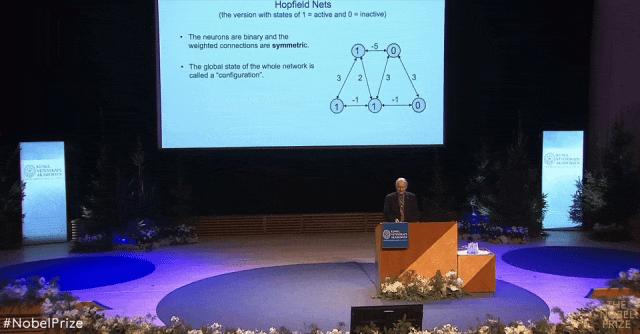
AI教父Hinton诺奖演讲首登顶刊,拒绝公式,让全场秒懂「玻尔兹曼机」
3 6 Ke· 2025-09-03 11:29
Core Insights - Geoffrey Hinton, Nobel Prize winner in Physics, delivered a lecture titled "Boltzmann Machines" on December 8, 2024, at Stockholm University, focusing on the evolution of neural networks and machine learning [1] - The lecture emphasized the significance of the Boltzmann machine, a learning algorithm that has faded from use compared to the backpropagation algorithm, which is now central to deep learning [3] Group 1: Boltzmann Machines and Neural Networks - Hinton humorously aimed to explain complex technical concepts without using formulas, starting with the Hopfield Network, which consists of binary neurons connected symmetrically [3][6] - The global state of the neural network is referred to as a "configuration," with its "goodness" determined by the sum of weights of active neurons, where energy represents "badness" [5][6] - The Hopfield Network's appeal lies in its ability to associate energy minima with memory, allowing the network to complete partial memory inputs through binary decision rules [11][12] Group 2: Applications and Innovations - Hinton and Terrence Sejnowski innovatively applied the Hopfield Network to interpret sensory inputs, moving beyond mere memory storage [13][14] - They designed a network to convert image lines into activation states of "line neurons," which connect to "3D edge neurons" to ensure only one interpretation is activated at a time [23] - The network's ability to handle ambiguous visual information, such as the Necker cube, illustrates its complexity in processing visual data [19][21] Group 3: Learning Mechanisms - The Boltzmann distribution and machine learning principles suggest that the network approaches "thermal equilibrium," where low-energy states (better interpretations) are more probable [29][31] - Hinton introduced the Boltzmann machine learning algorithm in 1983, which operates in two phases: a waking phase presenting real images and a sleeping phase allowing the network to "dream" [36][38] - The learning process aims to minimize energy configurations derived from real data while maximizing those generated during the dreaming phase [40] Group 4: Restricted Boltzmann Machines (RBM) - Hinton later developed the Restricted Boltzmann Machine (RBM) to accelerate learning by simplifying the waking phase calculations [44][46] - The RBM has been successfully applied in practical scenarios, such as Netflix's movie recommendation system, demonstrating its effectiveness in user preference prediction [50] - The stacking of RBMs creates a hierarchical feature structure, enhancing learning speed and generalization capabilities [55] Group 5: Historical Context and Future Directions - Hinton likened the Boltzmann machine to an "enzyme" in chemistry, catalyzing breakthroughs in deep learning, but eventually becoming less necessary as new methods emerged [58] - He believes that understanding the brain's learning processes, particularly the role of "unlearning" during sleep, will be crucial for future advancements in artificial intelligence [59]
语音分离最全综述来了!清华等团队深度分析200+文章,系统解析「鸡尾酒会问题」研究
机器之心· 2025-09-03 04:33
Core Viewpoint - The article discusses the revolutionary advancements in the field of speech separation, particularly addressing the "cocktail party problem" through the development of deep neural networks (DNN) [2]. Group 1: Overview of Speech Separation - Speech separation has become crucial for enhancing speech clarity in complex acoustic environments and serves as a preprocessing method for other speech processing tasks [2]. - Researchers from various institutions conducted a comprehensive survey of over 200 representative papers, analyzing the latest research methods across multiple dimensions including deep learning methods, model architectures, evaluation metrics, datasets, and future challenges [2]. Group 2: Problem Definition - The authors categorize speech separation tasks into known and unknown speaker separation based on whether the number of speakers is fixed or variable, highlighting the challenges associated with each scenario [6]. - The need for dynamic output channel determination and the balance between separation quality and termination timing are emphasized as significant challenges in unknown speaker scenarios [6]. Group 3: Learning Paradigms - The article compares supervised and unsupervised learning methods, detailing the advantages and limitations of each approach in the context of speech separation [10]. - Supervised learning is currently the most mature paradigm, utilizing paired mixed audio and clean source audio for training, while unsupervised methods explore training models directly on unlabelled mixed audio [12]. Group 4: Model Architectures - The core components and evolution of speech separation models are summarized, including encoder, separation network, and decoder [14]. - Various architectures such as RNN-based, CNN-based, and transformer models are discussed, showcasing their strengths in capturing long-term dependencies and local feature extraction [17][18]. Group 5: Evaluation Metrics - A comprehensive evaluation metric system is necessary for assessing model performance, which includes both subjective and objective metrics [19]. - The article compares various metrics, highlighting the trade-offs between subjective evaluations that reflect human experience and objective metrics that are efficient but may focus on different aspects [20]. Group 6: Datasets - The article summarizes publicly available datasets for speech separation research, categorizing them based on single-channel and multi-channel formats [22]. - Understanding the coverage and difficulty of these datasets aids researchers in selecting appropriate datasets for algorithm evaluation and identifying gaps in current research [22]. Group 7: Performance Comparison - The authors present a comparison of different models' performance on standard datasets, illustrating the progress in speech separation technology over recent years [24]. - Notable improvements in performance metrics, such as SDR, are highlighted, with advanced architectures achieving SDR levels around 20 dB [24][25]. Group 8: Tools and Platforms - The article introduces various open-source tools and platforms that facilitate the development and application of speech separation tasks, comparing their functionalities and limitations [28]. - These tools provide convenient interfaces for researchers to replicate results and build prototype systems, accelerating the transition from research to application [28]. Group 9: Challenges and Future Directions - The article discusses current challenges in the field, including long-duration audio processing, mobile and embedded applications, real-time speech separation, and the rise of generative methods [32][33]. - The integration of pre-training techniques and the focus on target speaker extraction are also identified as key areas for future exploration [33].

Scaling Laws起源于1993年?OpenAI总裁:深度学习的根本已揭秘
具身智能之心· 2025-09-03 00:03
Core Viewpoint - The article discusses the historical development and significance of the Scaling Law in artificial intelligence, emphasizing its foundational role in understanding model performance in relation to computational resources [2][34][43]. Group 1: Historical Context - The Scaling Law's origins are debated, with claims that it was first proposed by OpenAI in 2020 or discovered by Baidu in 2017 [2]. - Recent discussions attribute the initial exploration of Scaling Law to Bell Labs, dating back to 1993 [3][5]. - The paper from Bell Labs demonstrated the relationship between model size, data set size, and classifier performance, highlighting the long-standing nature of these findings [5][9]. Group 2: Key Findings of the Research - The NeurIPS paper from Bell Labs outlines a method for efficiently predicting classifier suitability, which is crucial for resource allocation in AI model training [12]. - The authors established that as training data increases, the error rate of models follows a predictable logarithmic pattern, reinforcing the Scaling Law's validity [12][16]. - The research indicates that after training on 12,000 patterns, new networks significantly outperform older ones, showcasing the benefits of scaling [16]. Group 3: Contributions of Authors - The paper features five notable authors, including Corinna Cortes and Vladimir Vapnik, both of whom have made significant contributions to machine learning and statistical theory [18][19][27]. - Corinna Cortes has over 100,000 citations and is recognized for her work on support vector machines and the MNIST dataset [21][22]. - Vladimir Vapnik, with over 335,000 citations, is known for his foundational work in statistical learning theory [27]. Group 4: Broader Implications - The article suggests that the Scaling Law is not a sudden insight but rather a cumulative result of interdisciplinary research spanning decades, from psychology to neural networks [34][43]. - The evolution of the Scaling Law reflects a broader scientific journey, with contributions from various fields and researchers, ultimately leading to its current understanding in deep learning [43].

计划2026年商业化应用!马斯克:特斯拉未来约80%价值将来自于Optimus擎天柱机器人【附人形机器人行业发展趋势】
Qian Zhan Wang· 2025-09-02 11:00
Group 1 - Elon Musk believes that approximately 80% of Tesla's future value will come from the Optimus robot [2] - The mission of the Optimus robot is to liberate human labor by taking over tedious or dangerous jobs, with plans for commercialization by 2026 [2][3] - Market sentiment is mixed, with a prediction that the likelihood of Optimus being launched before 2027 is only 40% according to Kalshi [3] Group 2 - The humanoid robot industry integrates advanced technologies from mechanical engineering, electronics, computer science, and artificial intelligence [3] - The Chinese humanoid robot market is projected to reach approximately 2.76 billion yuan in 2024, with significant growth expected by 2027 [4] - Global humanoid robot shipments are expected to reach 38,000 units by 2030 according to Qianzhan Industry Research Institute [5] Group 3 - Major tech companies and startups are actively pursuing mass production of humanoid robots, despite challenges such as high R&D costs and market acceptance [7] - The development of humanoid robots is expected to bring new productivity and lifestyle changes to society as technology advances and market demand grows [7]



维持推荐小盘成长,风格连续择优正确
2025-09-02 00:42
Summary of Key Points from the Conference Call Industry or Company Involved - The conference call primarily discusses the investment strategies and market outlook of CICC (China International Capital Corporation) focusing on small-cap growth stocks and various asset classes. Core Insights and Arguments - CICC maintains a positive outlook on small-cap growth style for September, despite a slight decline in overall indicators. Market conditions, sentiment, and macroeconomic factors support the continued superiority of small-cap growth in the coming month [1][2] - In asset allocation, CICC is optimistic about domestic equity assets, neutral on commodity assets, and cautious regarding bond assets. The macro expectation gap indicates a bullish stance on stocks, particularly small-cap and dividend stocks, while being bearish on growth stocks [3][4] - The industry rotation model for September recommends sectors such as comprehensive finance, media, computer, banking, basic chemicals, and real estate, based on price and volume information. The previous month's recommended sectors achieved a 2.4% increase [5] - The "growth trend resonance" strategy performed best in August with a return of 18.1%, significantly outperforming the mixed equity fund index for six consecutive months [7] - Year-to-date (YTD) performance of CICC's various strategies is strong, with an overall return of 43%, surpassing the Tian Gu Hang operating index by 15 percentage points. The XG Boost growth selection strategy has a YTD return of 47.1% [8] Other Important but Possibly Overlooked Content - The small-cap strategy underperformed expectations due to extreme market conditions led by large-cap stocks, which created a positive feedback loop for index growth. This indicates a potential phase of inefficacy for the strategy [6] - The active quantitative stock selection strategies include stable growth and small-cap exploration, with the latter showing mixed results in August. Despite positive absolute returns, small-cap exploration strategies lagged behind other indices [8] - CICC's quantitative team has developed various models based on advanced techniques like reinforcement learning and deep learning, with notable performance in stock selection strategies. The Attention GRU model, for instance, has shown promising results in both the market and specific indices [10]
开学了:入门AI,可以从这第一课开始
机器之心· 2025-09-01 08:46
Core Viewpoint - The article emphasizes the importance of understanding AI and its underlying principles, suggesting that individuals should start their journey into AI by grasping fundamental concepts and practical skills. Group 1: Understanding AI - AI is defined through various learning methods, including supervised learning, unsupervised learning, and reinforcement learning, which allow machines to learn from data without rigid programming rules [9][11][12]. - The core idea of modern AI revolves around machine learning, particularly deep learning, which enables machines to learn from vast amounts of data and make predictions [12]. Group 2: Essential Skills for AI - Three essential skills for entering the AI field are mathematics, programming, and practical experience. Mathematics provides the foundational understanding, while programming, particularly in Python, is crucial for implementing AI concepts [13][19]. - Key mathematical areas include linear algebra, probability and statistics, and calculus, which are vital for understanding AI algorithms and models [13]. Group 3: Practical Application and Tools - Python is highlighted as the primary programming language for AI due to its simplicity and extensive ecosystem, including libraries like NumPy, Pandas, Scikit-learn, TensorFlow, and PyTorch [20][21]. - Engaging in hands-on projects, such as data analysis or machine learning tasks, is encouraged to solidify understanding and build a portfolio [27][46]. Group 4: Career Opportunities in AI - Various career paths in AI include machine learning engineers, data scientists, and algorithm researchers, each focusing on different aspects of AI development and application [38][40]. - The article suggests that AI skills can enhance various fields, creating opportunities for interdisciplinary applications, such as in finance, healthcare, and the arts [41][43]. Group 5: Challenges and Future Directions - The rapid evolution of AI technology presents challenges, including the need for continuous learning and adaptation to new developments [34][37]. - The article concludes by encouraging individuals to embrace uncertainty and find their passion within the AI landscape, highlighting the importance of human creativity and empathy in the technological realm [71][73].

2025年中国AI工业质检行业发展历程、产业链、市场规模、重点企业及未来趋势研判:AI工业质检市场规模快速增长,3C电子为最大应用领域[图]
Chan Ye Xin Xi Wang· 2025-08-30 01:02
Core Viewpoint - The AI industrial quality inspection (QI) sector is rapidly growing in China, driven by the integration of AI technologies such as machine vision and deep learning, which significantly enhance inspection efficiency and accuracy. The market size is projected to grow from 0.9 billion yuan in 2017 to 45.4 billion yuan in 2024, with a compound annual growth rate (CAGR) of 75.09% [1][13]. Industry Overview - AI industrial QI refers to the automated detection and identification of product quality in industrial production processes using AI technologies [1][13]. - Traditional quality inspection methods have been inefficient and inconsistent, particularly in precision manufacturing sectors like 3C electronics and automotive manufacturing [1][13]. Market Growth - The market for AI industrial QI in China is expected to reach 64.9 billion yuan by 2025, indicating continuous expansion driven by advancements in multi-modal detection technologies and deeper industry applications [1][13]. - The AI industrial QI market has transitioned from pilot applications to widespread adoption in high-end manufacturing sectors such as consumer electronics, new energy batteries, and semiconductors [1][13]. Technical Advantages - AI industrial QI systems offer high efficiency, accuracy, consistency, iterability, and data analysis capabilities, significantly improving the quality control process [5][6]. - The shift from classical machine learning algorithms to deep learning detection algorithms has reduced reliance on human analysis, enhancing the accuracy of defect detection [7]. Industry Chain - The AI industrial QI industry chain includes upstream components like machine vision software and hardware, optical devices, and image sensors, which are crucial for implementing AI QI applications [7][8]. - Downstream applications primarily involve sectors such as 3C electronics, automotive, lithium batteries, and semiconductors [7][8]. Image Sensor Market - The image sensor industry in China has seen rapid growth, with production expected to increase from 1.073 billion units in 2017 to 5.206 billion units in 2024, reflecting a CAGR of 25.31% [9][10]. - The market size for image sensors is projected to grow from 29.634 billion yuan in 2017 to 94.898 billion yuan in 2024, with a CAGR of 18.09% [9][10]. Downstream Market Structure - The 3C electronics sector dominates the AI industrial QI demand, accounting for over 50% of the market share, driven by the rapid development and innovation in consumer electronics [10][11]. - The automotive manufacturing sector holds a stable demand for AI industrial QI, representing 18.6% of the market share due to stringent quality control requirements [10][11]. Competitive Landscape - The AI industrial QI market in China is competitive with a low concentration, where the top five companies hold 44.7% of the market share [14]. - Key players include Baidu Group, Innovation Qizhi, and Tencent Cloud, with respective market shares of 10.6%, 10.4%, and 10.2% [14]. Future Trends - The AI industrial QI sector is expected to accelerate towards full automation, with deep learning-based visual inspection systems gradually replacing traditional manual inspections [16]. - There will be a continuous expansion of application scenarios, moving from established sectors to advanced manufacturing fields such as new energy and biomedicine [17]. - The integration of multi-modal technologies will enhance detection capabilities, allowing for comprehensive quality monitoring in complex industrial environments [18][19].

