
Optimus擎天柱机器人

Search documents
马斯克:Optimus擎天柱机器人从明年开始将改变人类生活
Sou Hu Cai Jing· 2026-02-15 07:29
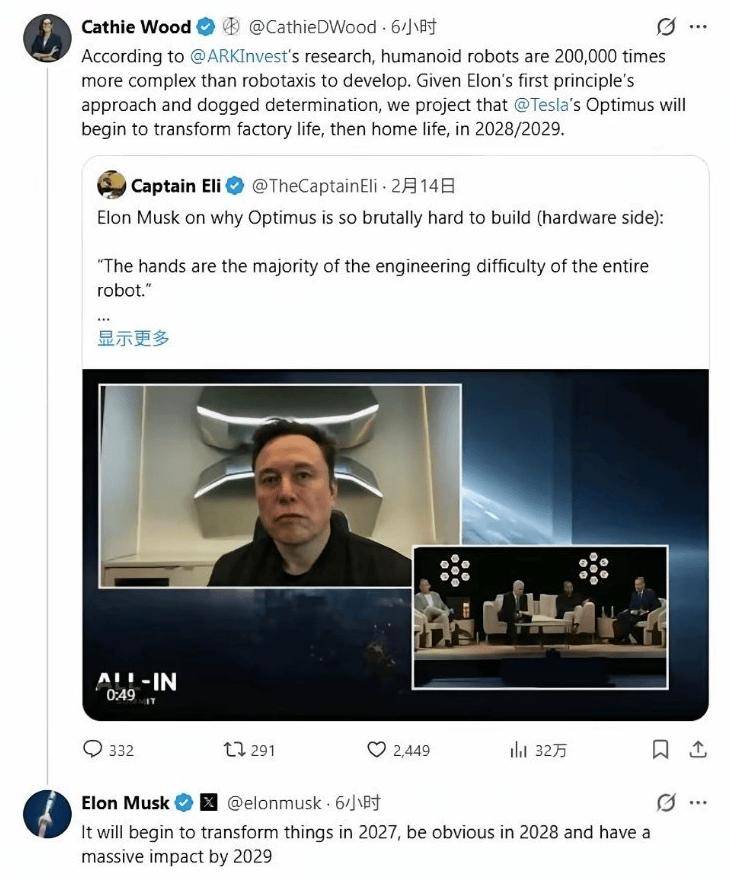
Group 1 - The core viewpoint is that developing humanoid robots is significantly more complex than developing robot taxis, with a complexity difference of 200,000 times according to ARKInvest's research [1] - Elon Musk predicts that Tesla's Optimus robot will start to change factory life by 2027, with noticeable impacts by 2028 and significant effects by 2029 [1] - Tesla's third-generation humanoid robot is set to debut in 2026, with a production target of one million units per year and an expected cost of under $20,000 per unit [3] Group 2 - The humanoid robot has previously demonstrated various tasks, including martial arts and egg collection, and Musk believes it could become the most important product in history [5]


2026格局与趋势丨(下):汽车制造商痛失定价权
3 6 Ke· 2026-02-12 01:52
Core Insights - Tesla is shifting its production focus from Model S and Model X to the Optimus robot, indicating a broader industry trend towards innovation and transformation amidst profit challenges [1] - The automotive industry is facing a profit crisis, with a projected profit margin of only 4.1% in 2025, significantly lower than the 5.9% margin of downstream industries [4][6] - The price war initiated by Tesla has spread across the entire automotive market, leading to a decline in revenue and profit margins for many manufacturers [6][8] Industry Challenges - The automotive sector is experiencing a "spiral of death" in profits due to five core factors: intense price competition, rising costs, imbalanced profit distribution, overcapacity, and the pains of electrification [3] - In December 2025, the industry's profit margin fell to a historic low of 1.8%, with revenues declining by 0.8% while costs increased by 0.8%, creating a "scissors gap" [6][8] - The overall capacity utilization rate for the automotive industry is projected to be 73.2% in 2025, below the healthy threshold of 75%, with some joint ventures operating at only 40-60% [8][9] Financial Performance - The automotive industry's revenue is expected to reach approximately 11.18 trillion yuan in 2025, reflecting a year-on-year growth of 7.1% [4] - The cost of production is anticipated to rise by 8.1% in 2025, leading to a decrease in per vehicle revenue by 1.6 million yuan and continuous pressure on gross profit margins [8] - The average profit margin for automotive dealers is projected to be around 4.1%, with over 58% of dealers expected to incur losses in 2025 [10][12] Supply Chain Dynamics - The supply chain is experiencing a bifurcation, with suppliers showing moderate improvement while dealers face significant losses [12] - The dominance of battery manufacturers like CATL is evident, as they captured 76.9% of the net profits in the industry, with CATL alone accounting for 68.1% [27][29] - The shift in value from traditional automotive manufacturers to technology and battery suppliers is reshaping the industry's profit landscape [14][27] Future Outlook - The automotive industry is expected to face ongoing challenges from rising costs in chips and materials, with potential cost increases of 4,000 to 7,000 yuan per vehicle due to supply chain pressures [35] - The transition towards electric and smart vehicles is creating a competitive environment where traditional manufacturers are losing pricing power to tech companies and battery suppliers [21][29] - The long-term outlook suggests that while battery suppliers currently hold significant power, this may shift as competition intensifies and manufacturers seek to reduce dependency on external suppliers [33]


马斯克最新访谈:目标每年在太空部属100吉瓦AI卫星
Sou Hu Cai Jing· 2025-11-15 08:31
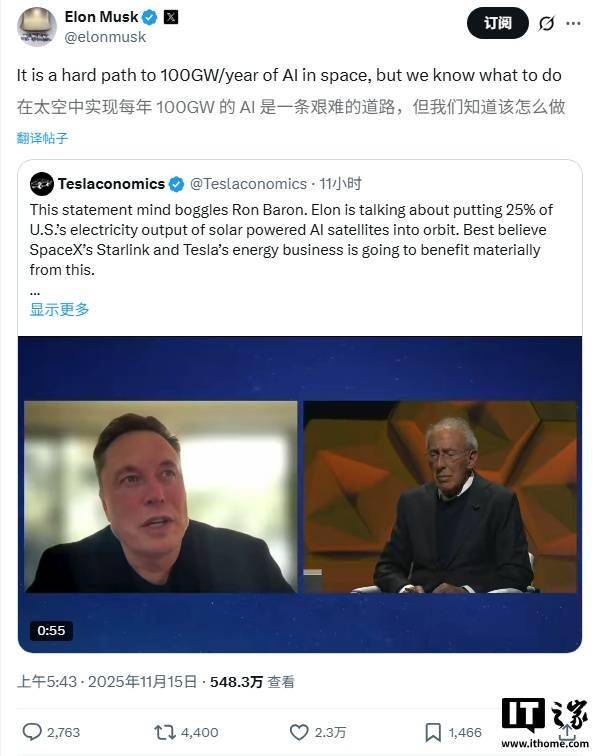
Core Insights - Elon Musk discussed various topics including artificial intelligence, energy, chip manufacturing, robotics, Neuralink, personal wealth perspective, and long-term vision during an interview with investor Ron Baron [1] Group 1: Space and Energy - Musk sees a feasible technological path to launch solar-powered AI satellites with a target of 100 gigawatts (GW) annually, which could provide energy for large-scale AI operations, potentially becoming the lowest cost method for powering AI at scale [2] - The current average electricity load in the U.S. is approximately 460 GW, highlighting the scale of Musk's ambitions [2] Group 2: Chip Manufacturing - Musk expressed high regard for TSMC and Samsung, noting that Tesla and SpaceX collaborate with these companies to expedite chip production and increase capacity [2] - He mentioned that inquiries about the time required to build new wafer fabs resulted in a response of approximately five years from initiation to production, which Musk described as an eternity [3] Group 3: AI Development - Musk stated that Grok-4-Heavy is currently the smartest AI, utilizing a multi-agent parallel collaboration approach to improve its outputs continuously [3] Group 4: Personal Wealth Perspective - Musk is not motivated by money or luxury, focusing instead on human survival and the need for sufficient ownership to guide his companies forward [4][5] - He mentioned having only a modest home in Austin and a small house at Starbase, indicating a minimalist lifestyle [5] Group 5: Future Vision - Musk envisions a future where AI and robotics can fully meet human needs, benefiting everyone [6] - His long-term goals include expanding human consciousness, exploring other galaxies, and gaining a deeper understanding of the universe [6] Group 6: Neuralink Progress - Neuralink has implanted devices in over 10 patients, some of whom were previously unable to move or communicate, and they can now interact at nearly normal conversational speeds [7][8] Group 7: Robotics and Healthcare - Musk believes that the Tesla humanoid robot, Optimus, will enable access to top-tier surgical procedures due to its superhuman precision [9] - He stated that Optimus could perform complex medical surgeries that are currently beyond human capabilities, addressing the limitations posed by the scarcity of skilled medical professionals [10]
宇树科技上线人形机器人数采训练全栈方案;机器人ETF易方达(159530)盘中获净申购1700万份
Sou Hu Cai Jing· 2025-11-14 03:42
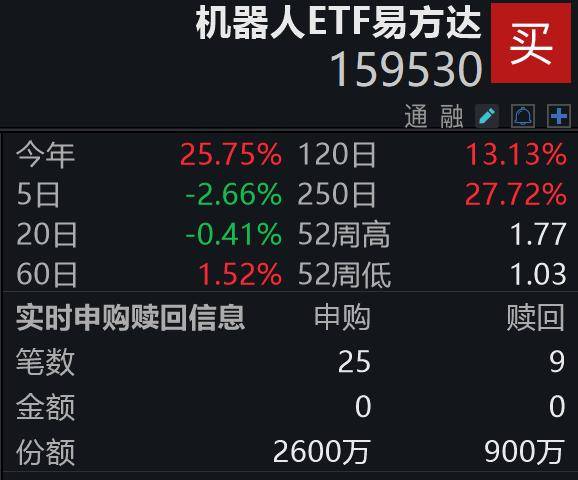
Core Viewpoint - The robotics industry is experiencing fluctuations in stock performance, with significant movements in key companies and a notable inflow of funds into robotics ETFs, indicating investor interest in the sector [1][2][3]. Group 1: Market Performance - The National Robotics Industry Index (980022) decreased by 0.46%, with major stocks like Huichuan Technology down 1.0% and Keda Xunfei down 1.1%, while Stone Technology increased by 1.9% [1]. - The robotics ETF E Fund (159530) has seen a net inflow of over 7.9 billion in the last 60 days, with the latest fund size reaching 11.881 billion [1]. Group 2: Company Developments - Yushu Technology launched a full-stack solution for humanoid robot data collection training, based on the wheeled robot G1-D, which includes a humanoid robot body and comprehensive model training tools [2]. - Tesla announced its latest mass production plan for the Optimus robot at its shareholder meeting, while XPeng unveiled a female robot named IRON, showcasing advancements in the "physical AI" sector [2]. Group 3: Index Characteristics - The National Robotics Industry Index has a significant focus on humanoid robots, with a higher weight of humanoid robot-related companies compared to similar indices [3]. - The top ten weighted stocks in the index account for approximately 40%, including industry leaders like Huichuan Technology and Keda Xunfei, which possess high technical barriers and strong market competitiveness [3].
全球首批人形机器人店员深圳上岗!机器人ETF(159770)昨日成交额2.28亿元,规模冲百亿!机构:人形机器人产业化进程加速
2 1 Shi Ji Jing Ji Bao Dao· 2025-11-14 01:32
Market Performance - The market experienced a significant rally on November 13, with major indices closing higher; the Shanghai Composite Index reached a ten-year high, while the ChiNext Index rose over 2% [1] - By the end of the trading day, the Shanghai Composite Index increased by 0.73%, the Shenzhen Component Index rose by 1.78%, and the ChiNext Index gained 2.55% [1] ETF Highlights - The Robot ETF (159770) tracking the CSI Robot Index closed up by 0.74% with a trading volume of 228 million yuan on November 13 [1] - The Robot ETF (159770) saw a net subscription of 18 million units on November 12, bringing its total scale to 9.797 billion yuan [1] - The Robot ETF has experienced continuous net inflows for 20 consecutive trading days, accumulating over 1.68 billion yuan [1] Chip Sector Insights - The Chip ETF Tianhong (159310) tracking the chip industry index rebounded with a nearly 2% increase [2] - The Chip ETF has seen significant capital inflow, with net inflows for four consecutive trading days, totaling over 10 million yuan [2] - The chip industry is expected to see a 37.62% year-on-year growth in net profit attributable to shareholders in the first half of 2025, driven by policy support and surging demand [2] Robotics Industry Developments - The global first batch of cyber store clerks began operations in Shenzhen on November 11, indicating advancements in AI and robotics [3] - Michael Spence, a Nobel laureate, noted that the AI development gap between China and the U.S. is narrowing, with both countries accelerating their advancements [3] - The humanoid robot industry is progressing rapidly, with companies like Tesla, Xiaopeng, and Leju Intelligent releasing new humanoid robots [4] - The humanoid robot supply chain is categorized into three main segments: "brain—body—whole machine integration," with the core value concentrated in the midstream components [3]


优必选Walker系列人形机器人累计订单金额突破8亿元!“全市场唯一两百亿规模”机器人ETF(562500) 早盘震荡上行
Mei Ri Jing Ji Xin Wen· 2025-11-13 02:24
Group 1 - The Robot ETF (562500) has seen a slight increase to 0.973 yuan (+0.31%), indicating a short-term bullish sentiment with a balanced performance among its 73 constituent stocks, where 37 stocks rose and 36 fell [1] - The majority of strong stocks have seen price increases concentrated in the 1%-3% range, particularly in the machine vision and intelligent control sectors, while the weaker stocks experienced mild declines, with only a few dropping over 2% [1] - The trading volume remains active, with turnover maintaining around normal levels, suggesting good participation from investors and a strong short-term speculative interest without any abnormal volume spikes [1] Group 2 - In the humanoid robot sector, Tesla announced its latest mass production plan for the Optimus robot during its shareholder meeting on November 7, while Xiaopeng unveiled its female robot IRON on November 5, showcasing advancements in the "physical AI" field [2] - The Robot ETF (562500) is the only robot-themed ETF in the market with a scale exceeding 20 billion, covering various sub-sectors including humanoid robots, industrial robots, and service robots, providing investors with a one-click investment opportunity across the robot industry chain [2]
全球产业趋势跟踪周报:存储芯片迎“超级周期”,人形机器人产业化进程加速-20251110
CMS· 2025-11-10 14:32
Core Insights - The storage chip industry is entering a "super cycle" driven by the unprecedented demand for AI computing power, particularly for large models and high bandwidth requirements, leading to a fundamental restructuring of the industry logic and cycle characteristics [2][3][17] - The humanoid robot industry is accelerating its industrialization process, with significant developments from companies like Tesla, XPeng, and Leju Intelligent, showcasing advancements in AI and robotics integration [2][3][41] Storage Chip Industry Trends - The storage chip sector is experiencing a structural prosperity period, with rapid advancements in high bandwidth memory (HBM) and high bandwidth flash (HBF) technologies, leading to a supply-demand imbalance and rising prices [3][16] - Major players like SK Hynix and Samsung Electronics are strengthening their profitability in the HBM market, which is driving growth in upstream equipment, materials, and packaging manufacturers, as well as downstream AI servers and cloud computing [3][19] - The current cycle is characterized by a shift from traditional inventory management to a demand-driven model, with AI's insatiable need for computing power redefining the value of memory [17][19] Humanoid Robot Industry Trends - The humanoid robot industry can be divided into three main segments: "brain," "body," and "system integration," with the core value concentrated in the midstream components [3][59] - Companies like Tesla are planning large-scale production of humanoid robots, with Tesla's Optimus expected to have a market capacity of billions of units, indicating a significant shift towards AI-driven manufacturing platforms [41][44] - XPeng's new humanoid robot, IRON, showcases advanced features and aims for mass production by the end of 2026, highlighting the competitive landscape in the humanoid robotics sector [50][52] Investment Recommendations - The report suggests focusing on sectors with marginal improvements, including AI applications, AI hardware, power equipment, non-ferrous metals, and innovative pharmaceuticals in the short term [4] - In the medium to long term, it emphasizes the importance of technological cycles, supply-demand dynamics, and the progress of intelligent infrastructure and AI ecosystems [5]


特斯拉豪赌马斯克!万亿美元薪酬方案获批
Sou Hu Cai Jing· 2025-11-07 14:45
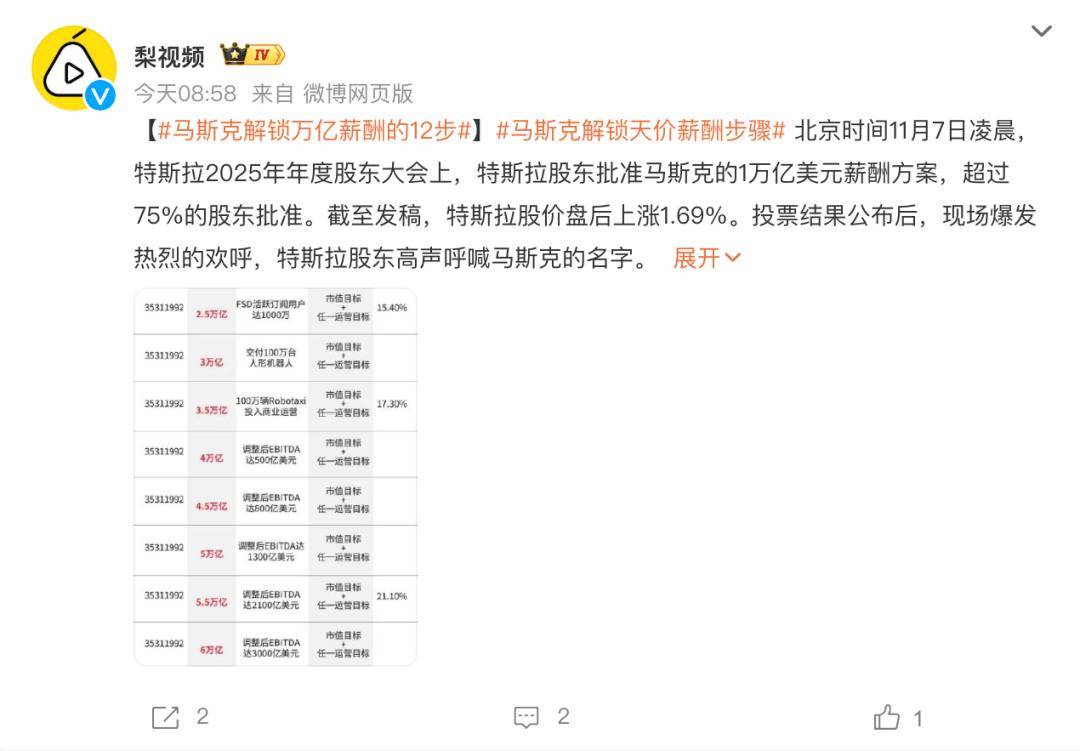
Core Insights - The article discusses Elon Musk's potential $1 trillion compensation package from Tesla, which is contingent on achieving specific operational and market capitalization milestones [3][8][13] - The plan includes unlocking shares in 12 tranches based on Tesla's market value and operational goals, with Musk needing to remain CEO for 7.5 years to access these shares [7][8] Group 1: Compensation Structure - Musk could earn an additional 12% of Tesla shares, valued at over $1 trillion, if he meets certain milestones [3][8] - The compensation plan is structured around achieving market capitalization increments, with specific operational targets tied to each tranche of shares [7][8] - The plan requires Musk to maintain his role as CEO for the duration of the vesting period to receive any shares [7][8] Group 2: Operational Goals - Key operational milestones include delivering 20 million Tesla vehicles and achieving 10 million active Full Self-Driving (FSD) subscriptions [5][10] - The plan outlines various EBITDA targets, with adjusted EBITDA goals ranging from $50 billion to $400 billion [6][10] - The introduction of Robotaxi services and the commercialization of the Optimus robot are critical components of Tesla's future growth strategy [10][11] Group 3: Financial Performance - Tesla's Q3 revenue was reported at $28.1 billion, a 12% year-over-year increase, while net profit decreased by 29% to $1.77 billion [13] - The gross margin for Q3 was 18%, with free cash flow reported at $3.99 billion [13]
特斯拉2025年底推出第三代人形机器人 2026年开始量产
Feng Huang Wang· 2025-09-30 07:27
Core Insights - Tesla is expanding its humanoid robot initiative, aiming to launch the third generation by the end of 2025 and begin mass production in 2026 [1] - Elon Musk anticipates that Tesla will produce 1 million units annually by 2030 [1] - The Optimus robot is designed to change perceptions of labor and enhance accessibility to tasks, particularly those that are monotonous or dangerous [1] - Musk believes that 80% of Tesla's value will derive from the Optimus project [1]
马斯克:机器人制造中最难的是手,新一代AI5芯片性能暴增40倍
Hua Er Jie Jian Wen· 2025-09-10 08:26
Group 1 - Musk believes that the government is fundamentally unfixable and that AI and robots are the only hope for solving the U.S. debt problem [1][4] - The Optimus robot is described as potentially the greatest product in human history, with the third version focusing on hand flexibility, AI brain capabilities, and mass production [1][5][7] - The AI5 chip represents a 40-fold performance improvement over the AI4 chip, with significant enhancements in computational power and memory [1][23][24] Group 2 - The production cost of the Optimus robot could be around $20,000 to $25,000 once annual production reaches 1 million units, with AI chips potentially costing $5,000 to $6,000 [2][9][25] - The development of human-like robots requires solving complex hand design issues, which are critical for creating versatile robots [10][12][19] - SpaceX aims to demonstrate the fully reusable Starship by next year, with the third version capable of carrying over 100 tons into orbit [26][31][34] Group 3 - Starlink plans to provide direct satellite connectivity to mobile phones, requiring hardware upgrades and potentially eliminating the need for traditional carriers [26][29] - The Grok AI model is being developed to correct and enhance training data, with the potential to create a more accurate version of Wikipedia [38][40] - Musk predicts that AI could surpass human intelligence in various aspects as early as next year, and by 2030, it may exceed the collective intelligence of all humans [2][42]