绿色制造

Search documents
第九届中国(杭州)绿色连接与制造2025高峰论坛在杭举办
Zheng Quan Ri Bao Zhi Sheng· 2025-12-05 11:18
Core Viewpoint - The 9th Green Connection and Manufacturing Summit, themed "AI Intelligence and Welding Innovation," was successfully held, highlighting the importance of advanced welding technologies in China's manufacturing sector [1][2]. Group 1: Event Overview - The summit was organized by the National Key Laboratory of Precision Welding and Connection and co-hosted by Huaguang Welding New Materials Co., Ltd. and Huzhou Fuying Welding Technology Co., Ltd. [1] - The event featured significant reports from industry leaders, including a presentation on welding manufacturing development strategies by Wang Guoqing, Chief Information Officer of China Aerospace Science and Technology Corporation [1]. Group 2: Company Achievements - Huaguang New Materials celebrated its 30th anniversary, attended by over 400 guests, including government officials, industry representatives, and partners, marking a significant milestone in the company's history [2]. - The company has evolved from a small village factory to a national champion in manufacturing, being the first in its industry to be listed on the Science and Technology Innovation Board [2]. Group 3: Industry Impact - The forum has become a vital platform for industry consensus, technological innovation, and collaboration among academia, industry, and research [2]. - The achievements of Huaguang New Materials reflect the resilience of Chinese manufacturing, transitioning from import substitution to industry leadership [3].

光伏技术重大突破!南京大学在《科学》发表成果,钙钛矿组件效率创世界纪录并获国际权威认证
Yang Zi Wan Bao Wang· 2025-12-05 10:25
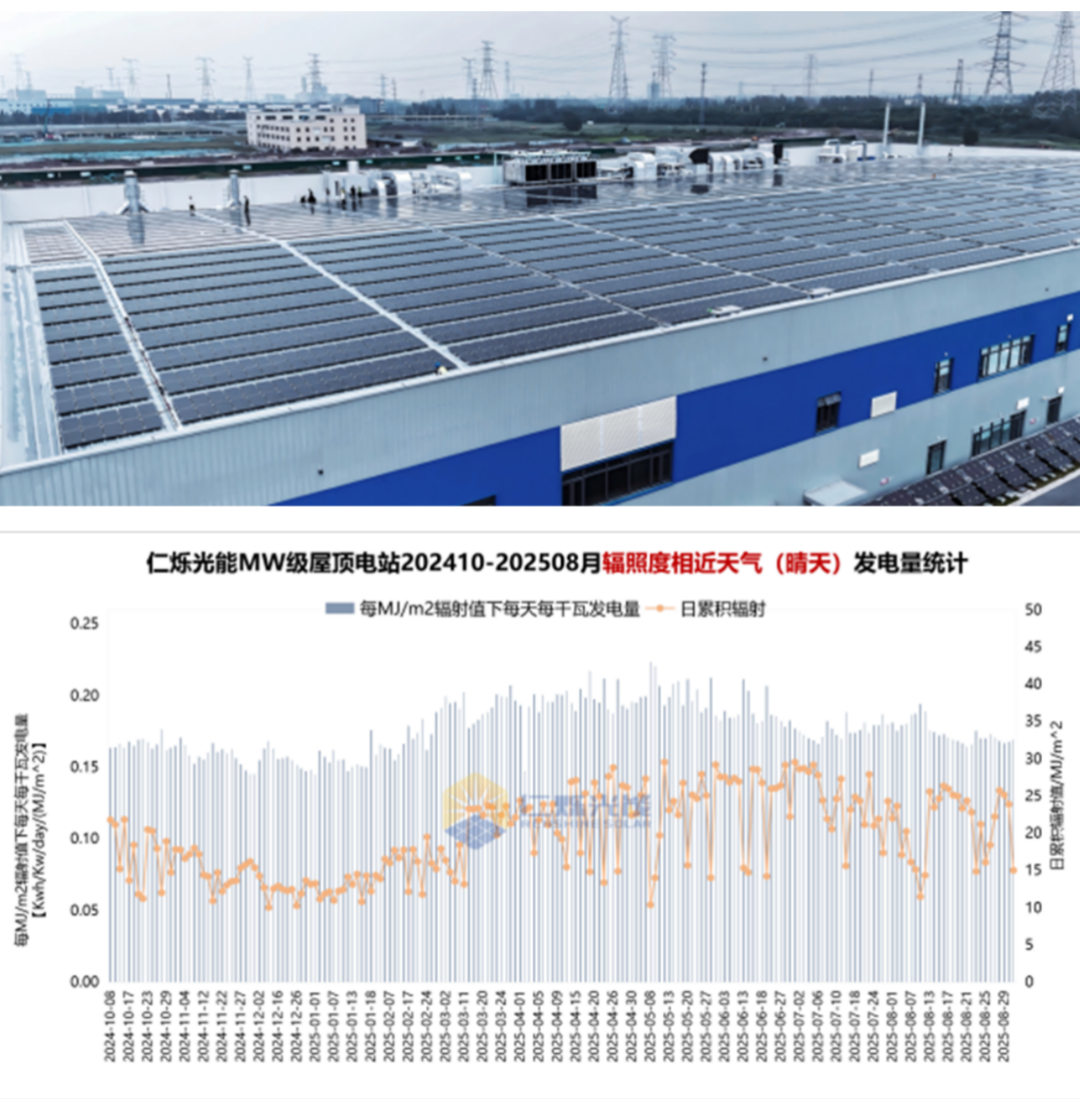
12月5日,南京大学谭海仁教授课题组与仁烁光能产业化团队的钙钛矿太阳能电池产业化成果在国际顶级学术期刊《Science》正式发表。 此项研究标志着我国在"双碳"目标引领下,于下一代光伏技术产业化领域取得里程碑式进展。研究团队所研制的平米级商业化钙钛矿光伏组件,不仅实现 了绿色环保制备,更在转换效率与产品可靠性方面双双达到世界领先水平,并获得国际权威认证,标志着这一新一代光伏技术突破了从实验室到产业化制 造的关键瓶颈,正式迈向规模化商业应用。 钙钛矿太阳能电池作为极具发展潜力的新一代光伏技术,以其成本低、效率高、能耗少、可柔性制备等优势,被视为推动能源结构绿色转型的重要方向。 然而,长期以来,该技术在大面积制备时的薄膜质量、环保工艺与长期可靠性,成为制约其从实验室走向产业化的重要瓶颈。 破解难题1:创新全绿色溶剂制备工艺 长期以来,钙钛矿的制备依赖有毒溶剂,环保问题制约其产业化。研究团队创新性地设计了一种由γ-戊内酯(GVL)、二甲基亚砜(DMSO)和2-甲基四氢呋喃 (2-MeTHF)组成的混合绿色溶剂体系,用于制备1.5eV带隙钙钛矿薄膜。 该体系安全、低毒、可生物降解,不仅实现了钙钛矿薄膜在空气中的环保制 ...

【北交所IPO】族兴新材IPO过会:深耕战略性新材料赛道,铸就全球竞争力
Sou Hu Cai Jing· 2025-12-04 10:53
Core Viewpoint - Zuxing New Materials Co., Ltd. is set to enter the capital market following the successful review of its IPO application, leveraging its core technology in fine spherical aluminum powder and aluminum pigment products in the non-ferrous metal functional powder materials sector [1][3]. Group 1: Company Overview - Established in 2002, Zuxing New Materials is one of the earliest companies in China to engage in the research and production of fine spherical aluminum powder, with a focus on R&D, production, and sales of aluminum pigments [3]. - The company has an annual production capacity of 25,000 tons for fine spherical aluminum powder and 6,400 tons for aluminum pigments, ranking among the top domestic enterprises [3]. - Zuxing's subsidiary, Qujing Huayixing, achieved a domestic market share of 22.63% and a global market share of 15.03% in 2024, solidifying its position in the industry [3]. Group 2: Technological Advantages - Zuxing New Materials holds 89 authorized patents, including 48 invention patents, and has established itself as a key player in setting industry standards for aluminum pigments [4]. - The company has successfully broken the monopoly of large multinational corporations in high-end products, achieving large-scale production of advanced aluminum pigments [4]. - Its water-based aluminum pigment products for automotive coatings have reached international advanced levels and have been certified under the IATF 16949:2016 automotive quality management system [4]. Group 3: Market Strategy - The company employs a vertically integrated supply chain strategy, ensuring stable raw material supply and high-quality production processes [5]. - Zuxing focuses on the mid-to-high-end market, avoiding low-end market competition, and its aluminum silver powder ranks second in the domestic powder coating industry [5]. - The company has established a global customer network, supplying major multinational paint companies and domestic enterprises [5]. Group 4: Growth Initiatives - The IPO aims to raise 208 million yuan for three strategic projects, including the construction of a high-purity fine spherical aluminum powder production line and a high-performance aluminum pigment project [6]. - The market for fine spherical aluminum powder is expected to grow steadily, with production in China projected to reach 103,000 tons in 2024 [6]. - The company is positioned to benefit from the expanding global nuclear power market through its specialized products for nuclear waste treatment [6]. Group 5: Sustainability Efforts - Zuxing New Materials is committed to green manufacturing, aligning with the industry's low-carbon transformation trends [7]. - Its aluminum silver powder for powder coatings is environmentally friendly and efficient, supporting the production of chemical pesticides and self-heating food packaging [7]. - The successful IPO marks a new development phase for Zuxing, aiming to enhance its global leadership in fine spherical aluminum powder and aluminum pigments while supporting strategic industries like automotive lightweighting and renewable energy [7].
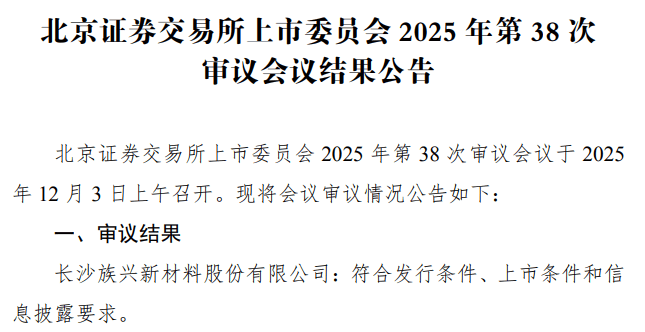
族兴新材北交所IPO过会:深耕战略性新材料赛道,铸就全球竞争力
Sou Hu Cai Jing· 2025-12-04 02:00
Core Viewpoint - Zuxing New Materials is set to enter the capital market following the successful review of its IPO application, leveraging its core technology in fine spherical aluminum powder and aluminum pigment products to capitalize on growth opportunities in strategic emerging industries [2][4]. Company Overview - Established in 2002, Zuxing New Materials is one of the earliest companies in China to engage in the research and production of fine spherical aluminum powder, with its products widely used in automotive coatings, new energy, military aerospace, electronic pastes, and refractory materials [4]. - The company has an annual production capacity of 25,000 tons for fine spherical aluminum powder and 6,400 tons for aluminum pigments, ranking among the top domestic enterprises [4]. - Zuxing New Materials holds 89 authorized patents, including 48 invention patents, and has established significant industry standards, enhancing its influence in the market [6]. Technological Advantages - The company has developed seven core technologies that cover the entire aluminum pigment industry chain, allowing for precise control of production processes to meet customer needs [4][6]. - Zuxing New Materials has successfully broken the monopoly of large multinational corporations in high-end products, achieving large-scale production of advanced aluminum pigments [6]. Market Positioning - The company adopts a "mid-to-high-end + differentiation" competitive strategy, focusing on high-value-added markets while avoiding the oversaturated low-end market [7]. - Its aluminum silver powder products rank second in the domestic powder coating industry, with water-based aluminum pigments reaching international advanced levels [7]. Fundraising and Growth Strategy - The IPO aims to raise 208 million yuan, which will be allocated to three strategic projects to enhance production capacity and product performance [8]. - The market for fine spherical aluminum powder is expected to grow steadily, with domestic production projected to reach 103,000 tons in 2024 [8]. Sustainability Initiatives - Zuxing New Materials is committed to green manufacturing, with its aluminum silver powder products aligning with the industry's low-carbon transformation trends [9]. - The company is also exploring applications in agriculture and self-heating materials, contributing to sustainable development [9]. Future Outlook - The successful IPO marks a new development phase for Zuxing New Materials, positioning it to expand production capacity, optimize product structure, and explore new applications in strategic industries [9].
行业聚焦:全球锂电池导电剂行业头部企业市场份额及排名调查(附厂商名单)
QYResearch· 2025-12-04 01:54
Core Viewpoint - The article discusses the current state and future trends of conductive agents in lithium-ion batteries, emphasizing the shift towards high-performance materials and customized solutions to meet the evolving demands of energy density and efficiency in battery applications [4][11][15]. Market Overview - The global market for lithium battery conductive agents is dominated by major manufacturers such as Tianai Technology, Imerys Graphite & Carbon, Cabot, and Denka, with the top four companies holding approximately 61.0% market share in 2024 [4]. - Power batteries are the primary demand source, accounting for about 63.7% of the market [8]. Product Segmentation - Carbon black is currently the leading product type, representing around 46.5% of the market share [10]. - The industry is transitioning from traditional carbon black conductive agents to more efficient systems that include high-structure carbon black, carbon nanotubes (CNT), and graphene [11]. Future Trends - The future of conductive agents will focus on customized solutions tailored to different battery chemistries, such as LFP, NCM, and silicon-carbon anodes, utilizing multi-dimensional conductive networks [12][16]. - High-end products like CNT conductive agents are rapidly expanding production capacity, driven by the growth in power and energy storage batteries [13][17]. Environmental and Quality Considerations - The production of conductive agents is evolving towards environmentally friendly practices, including water-based systems and low VOC emissions, in response to global ESG requirements [14][18]. - There is an increasing demand for stringent quality management and consistency in production to meet the expectations of downstream battery manufacturers [14][18]. Challenges in the Industry - The industry faces cost pressures due to fluctuations in raw material prices and the strong bargaining power of large battery manufacturers, which often view conductive agents as a cost item rather than a core value [19]. - The market is experiencing a rise in technical barriers and product homogenization, making it difficult for companies with insufficient R&D investment to differentiate themselves [20]. - The lengthy customer certification process for conductive agents poses a challenge for new entrants, as established suppliers dominate the market [21]. Conclusion - The conductive agent market for lithium batteries is undergoing significant changes, driven by technological advancements, environmental considerations, and evolving customer demands, which present both opportunities and challenges for industry players [4][11][15].


精线技术的发展趋势
Sou Hu Cai Jing· 2025-12-03 15:43
Core Insights - The article discusses the significant role of precision wire technology across various industries, highlighting its impact on manufacturing efficiency and product quality [3][4][5]. Industry Applications - In manufacturing, precision wire technology enhances production efficiency and product quality by reducing human error through automation [3]. - The aerospace sector benefits from precision wire technology due to its high standards for quality and safety, ensuring that every component meets design specifications [3]. - In the electronics industry, precision wire technology is crucial for the production of circuit boards and components, enabling miniaturization and high integration of consumer electronics [4]. - The automotive industry utilizes precision wire technology in the production of electronic components and sensors, contributing to the development of intelligent manufacturing systems [5]. Future Trends - Precision wire technology is evolving towards green manufacturing, minimizing waste and environmental impact through optimized production processes [8]. - The future development of precision wire technology will focus on smart, automated, and sustainable practices, leveraging advancements in artificial intelligence and the Internet of Things [8]. - The technology is expected to continue driving transformation across various sectors, promoting high-quality development and resource efficiency [8].
习近平总书记关切事丨大国制造“砺新”记
Xin Hua Wang· 2025-12-03 14:09
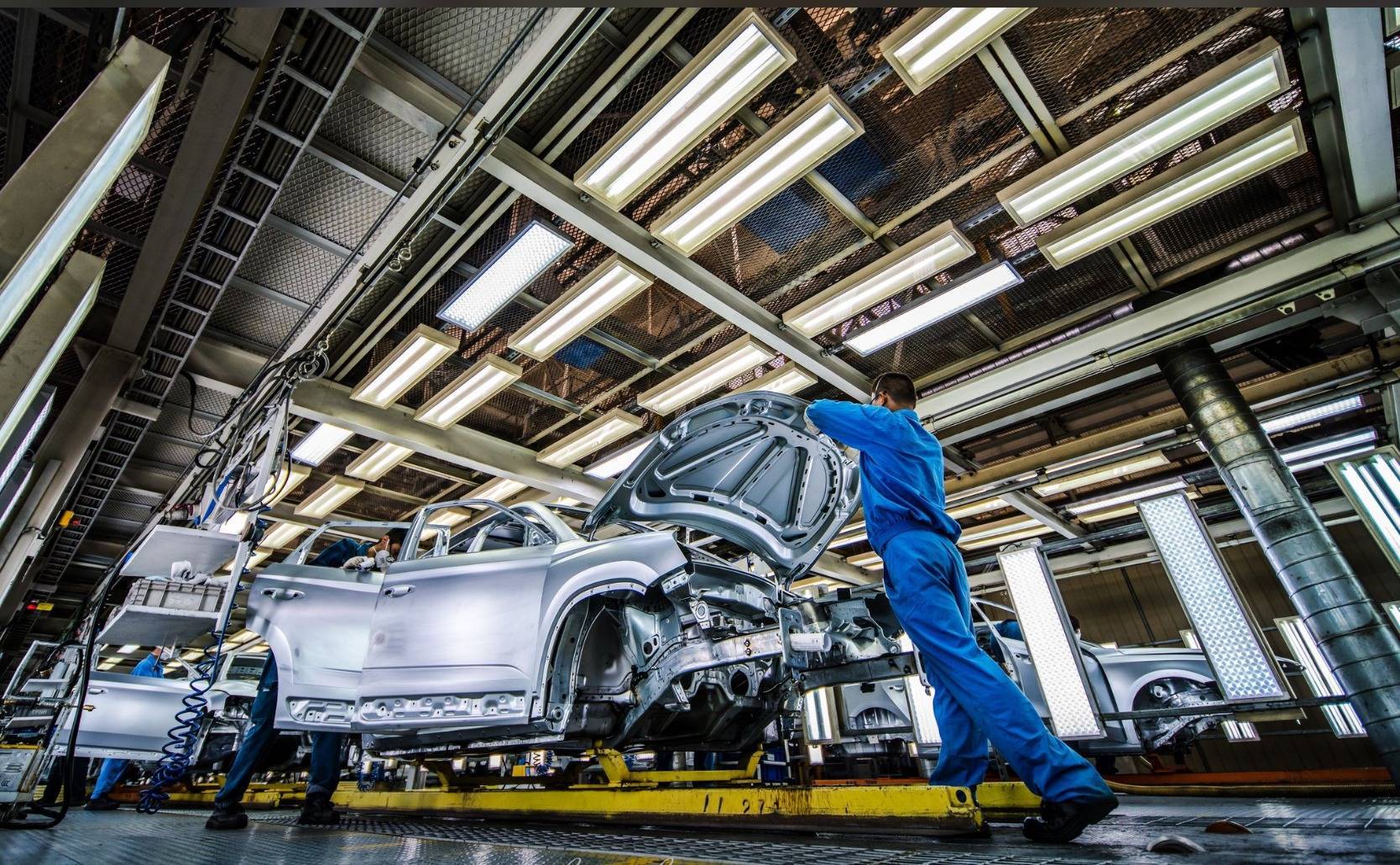
Core Viewpoint - The article emphasizes the importance of China's manufacturing industry as the foundation of the nation and highlights the ongoing transformation towards high-end, intelligent, and green manufacturing, guided by the directives of President Xi Jinping [3][4]. Group 1: High-End Manufacturing - The production of a qualified "Fuxing" train wheel takes only 52 seconds on the automated production line at Taiyuan Heavy Industry [4]. - The company faced significant challenges in developing high-speed train axles due to long-standing reliance on foreign technology, which was broken through domestic innovation [6]. - Taiyuan Heavy Industry has achieved full production capabilities for wheels, axles, gearboxes, and wheelsets, marking a significant milestone in the localization of high-end rail transportation equipment [6][8]. Group 2: Intelligent Manufacturing - Southwest Aluminum Electromechanical Equipment Engineering Co., Ltd. has implemented digital systems for precise processing of LNG transport ship plates, showcasing a strong focus on intelligent manufacturing [9][12]. - The company upgraded its equipment to include a self-adaptive electric control system, significantly improving cutting precision from centimeters to within 0.3 millimeters [13]. - The integration of digital technology has allowed the company to break the long-standing dominance of foreign firms in the LNG ship plate market, with over a thousand tons delivered [13]. Group 3: Green Development - Ansteel Group has made significant strides in green manufacturing, achieving a reduction in water consumption to 2.3 cubic meters per ton of steel, which is one-fifth of traditional processes, and a 32% decrease in carbon emissions [14][16]. - The company has completed over 1,100 projects aimed at ultra-low emissions, investing over 30 billion yuan in these initiatives [16]. - Ansteel's green steel products are now being used by major automotive companies, demonstrating the successful application of their green transformation efforts [18].


探秘东莞塘厦:UV加工厂是中国智造化跃迁的缩影
Sou Hu Cai Jing· 2025-12-03 13:11
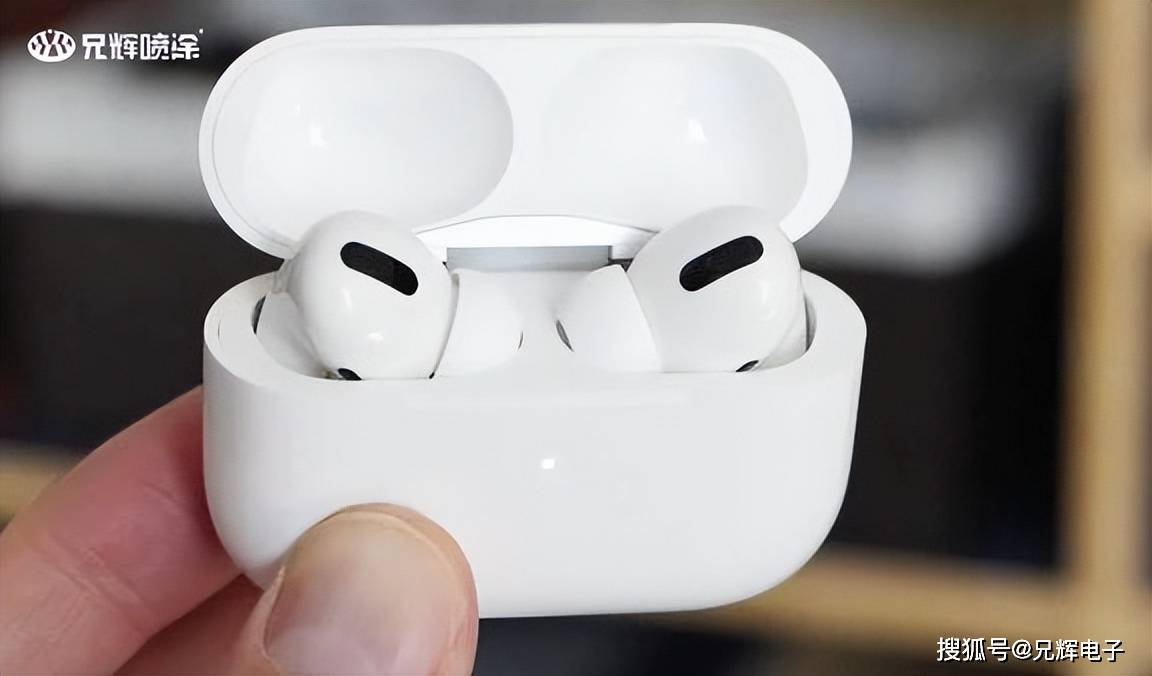
在东莞塘厦这片制造业沃土上,一座座现代化的UV加工厂正以科技为笔,绘就着工业美学的新篇章。这里不仅是全球UV喷涂技术的"风向标",更是中国智 造向高端化跃迁的缩影。 塘厦的UV加工厂不仅"硬实力"出众,更以"软服务"构筑护城河。24小时极速打样。当某国际品牌临时追加订单时,兄辉电子通过数字化平台快速调配产 能,从原料采购到成品出库仅用48小时。这种"以客户为中心"的敏捷响应,让东莞UV加工厂在激烈的市场竞争中始终领跑。 走进兄辉电子的6500平方米无尘车间,仿佛踏入了一座精密的"未来工厂"。UV准分子喷涂设备以0.01毫米级的雾化精度,在工件表面织就一层均匀如镜的 涂层。自动化生产线上精准舞动,配合智能检测系统实时监控12项性能指标,将良品率推至99.7%的巅峰。更令人惊叹的是,紫外线瞬时固化技术让涂层硬 度突破4H,耐磨性提升2倍,而VOCs排放量却较传统工艺锐减92%,诠释着绿色制造的深刻内涵。 "我们的客户遍布全球,从华为的智能穿戴设备到比亚迪的新能源汽车,每一件产品都承载着对品质的极致追求。"兄辉电子技术总监指着正在测试的样品介 绍道。车间内,工程师们正对一款新型抗菌涂层进行最后验证——这层厚度仅3微 ...
得力文创科技新地标落户上海,引领全球文具消费新风尚
Sou Hu Cai Jing· 2025-12-03 11:56
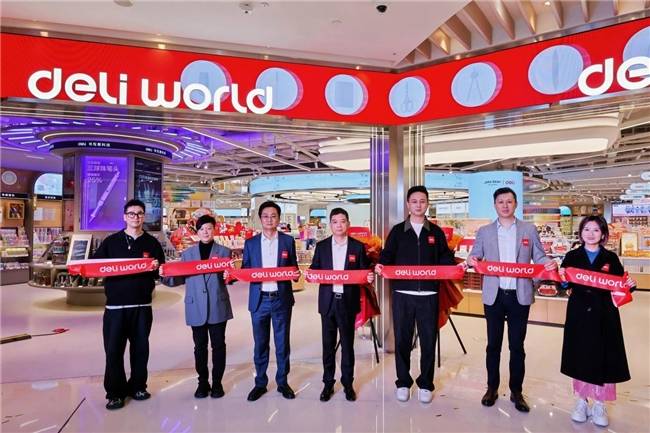
Core Insights - The opening of the Deli Shanghai flagship store marks a significant milestone in the company's strategic shift from "super manufacturing" to "super experience" [1][15] Group 1: Product Ecosystem - The flagship store features over ten thousand unique products, including student stationery, premium stationery, IP stationery, and innovative office solutions, creating a comprehensive product ecosystem that spans learning, office, and lifestyle [3] - Deli aims to provide a one-stop solution that showcases its transition from traditional stationery to creative cultural products and cutting-edge technology [3] Group 2: Experience and Technology - The store's core drivers are "experience + technology + IP," offering a new immersive experience that breaks industry limitations and meets consumer needs [4] - Deli emphasizes emotional resonance and positive values in its IP collaborations, aligning with its brand philosophy to attract younger consumers [4][6] Group 3: Innovative Products - The flagship store showcases advanced stationery products, including the "Hexagon Warrior" series, which features a globally innovative three-ball gel pen, highlighting Deli's manufacturing prowess [8][9] - The Truenes notebook series, designed specifically for gel pens, ensures a superior writing experience with quick-drying and smudge-free performance [9] Group 4: Sustainability Initiatives - Deli has established a comprehensive system for "green manufacturing," focusing on product innovation and sustainable practices, including the development of eco-friendly products like plant-based glue and biodegradable tape [10][12] - The company aims to enhance its logistics with low-carbon transportation and automated warehousing, promoting a high-efficiency, low-carbon logistics system [12] Group 5: Global Strategy - The flagship store represents a new value growth path for the stationery industry, integrating manufacturing, experience, IP, and technology [13] - Deli plans to strengthen its global brand leadership through product innovation, channel expansion, and enhanced user experiences, ensuring accessibility for consumers worldwide [13][15]

行业聚焦:全球滑轨润滑剂行业头部企业市场份额及排名调查(附厂商名单)
QYResearch· 2025-12-03 04:16
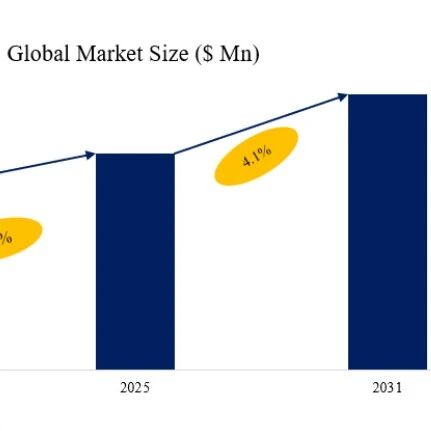
Core Viewpoint - The article discusses the growth and trends in the slide rail lubricant market, driven by manufacturing upgrades and the localization of equipment in China, with a projected global market size of $230 million by 2031 and a CAGR of 4.1% from 2025 to 2031 [2]. Market Analysis - The demand for slide rail lubricants in China is significantly influenced by the "Made in China 2025" initiative and the acceleration of high-end equipment localization, leading to increased usage in CNC machine tools and smart manufacturing lines [2]. - The automotive, rail transportation, wind power, aerospace, and 3C electronics industries are increasingly reliant on high-precision processing, which enhances the performance requirements for lubricants [2]. - The substantial number of existing machine tools creates a stable demand for replacement and maintenance, supporting market growth [2]. Supply Chain Situation - The upstream supply chain includes base oils (mineral oils, PAO synthetic oils, ester synthetic oils), functional additives (anti-wear agents, extreme pressure agents, adhesion agents, corrosion inhibitors), and blending equipment, with base oils accounting for approximately 45%-50% of the total cost [5]. - Midstream companies focus on formulation design, blending production, and testing, while downstream customers include machine manufacturers, industrial maintenance companies, automotive parts manufacturers, and aerospace and electronics manufacturers [5]. Technical Trends - Development is focused on low friction and anti-"stick-slip" performance to meet the precision requirements of domestic high-speed CNC machine tools [6]. - There is a push for high adhesion and long-life products to reduce oil change frequency and maintenance costs [6]. - New formulations compatible with water-based cutting fluids and hydraulic systems are gaining popularity [6]. - Stricter environmental regulations are driving the development of low-volatility and biodegradable lubricants [6]. - Leading companies are beginning to implement online lubrication monitoring and oil condition sensors for predictive maintenance and remote operations [6]. Industry Policies - The "Made in China 2025" policy identifies high-end CNC machine tools and basic manufacturing equipment as key development areas, rapidly increasing the demand for slide rail lubricants [7]. - The Ministry of Industry and Information Technology and the Ministry of Ecology and Environment are strengthening VOC emissions and waste oil recovery management for lubricants, promoting the iteration of green and environmentally friendly lubricants [7]. - National standards (e.g., GB/T 7631.9) have been established to regulate lubricant performance and application classifications, raising market entry barriers [7]. - Data from the China Machine Tool Industry Association indicates a significant increase in the localization rate of high-end machine tools, enhancing the trend of domestic slide rail lubricants replacing imports [7]. - Large-scale infrastructure and manufacturing investments (e.g., in new energy vehicles, wind power, and rail transit) provide a broad application space for slide rail lubricants [7]. Market Drivers - The growth in the machine tool industry is driven by the increasing demand for CNC machine tools, grinding machines, and boring machines, which rely heavily on slide rail lubricants for low friction, low wear, and high precision operation [8]. - The rising precision processing and surface quality requirements in industries such as electronics, aerospace, and medical devices are pushing the use of lubricants with high adhesion and anti-stick-slip properties [8]. - Policies supporting industrial modernization and smart manufacturing in major manufacturing countries like China, India, and Southeast Asia are driving the replacement and new market for lubricants [8]. Market Development Opportunities - The expansion of manufacturing in the Asia-Pacific region, particularly in China, India, and Vietnam, is expected to drive demand for slide rail lubricants, with the region projected to maintain the fastest compound growth rate [12]. - The demand for high-performance and environmentally friendly lubricants is expected to grow, with the development and application of low-volatility, long-life, and zinc-free eco-friendly formulations becoming new profit growth points [13]. - The trend towards full lifecycle service for equipment is leading more machine tool companies to collaborate with lubricant suppliers to provide integrated maintenance solutions, including oil monitoring, predictive maintenance, and lubrication management services [13]. - The integration of IoT sensors and oil monitoring systems allows for real-time detection of lubricant conditions, enhancing the efficiency and added value of lubricant usage [14].