
跨境电商

Search documents
一辆“小电动”,何以“卖全球”
Xin Hua Ri Bao· 2025-09-16 21:10
Core Insights - Wuxi's electric vehicle industry is rapidly growing, aiming for a scale of 100 billion yuan, with an average of 2.4 electric vehicles produced every minute [1] - Yadea, a leading electric vehicle manufacturer, has maintained the top global sales position for eight consecutive years, exporting to over 100 countries [2][3] Group 1: Production and Quality - Yadea's Wuxi facility has 14 production lines with an annual output exceeding 3 million units, showcasing efficient production processes [2] - The facility can produce a complete vehicle in just 35 seconds, while component development takes about six months [2] - Yadea holds over 2,000 patents and has ten major R&D bases, emphasizing its strong technological capabilities [2] Group 2: Market Expansion - The electric vehicle industry in Wuxi has 64 vehicle manufacturers and 91 parts suppliers, with six of the top ten domestic electric vehicle companies located there [3] - The industry is responding to the saturation of the domestic market by seeking opportunities abroad, particularly in Southeast Asia, where electric vehicles are becoming popular alternatives to traditional fuel motorcycles [3][4] - In the first half of the year, Wuxi's electric vehicle exports reached $1.9 billion, a 19.5% increase year-on-year [4] Group 3: Localization Strategies - Companies are adapting their products to meet local market demands, such as enhancing battery life for Indonesia's rough terrain and focusing on cost-effectiveness for Southeast Asia [4] - The trend is shifting from simply exporting products to establishing brand presence in international markets, with companies like Yadea opening stores in Germany and Spain [5] Group 4: Supply Chain and Infrastructure - Wuxi produces one in three electric bicycles in China, supported by a mature supply chain that includes upstream battery production and downstream vehicle assembly [6] - Over 20 production bases have been established in countries like Indonesia and Vietnam, along with 1,800 overseas marketing outlets, creating a comprehensive supply ecosystem [7] Group 5: E-commerce and Global Reach - The establishment of the Wuxi Electric Vehicle Cross-border E-commerce Industrial Park aims to enhance global market penetration through e-commerce [8] - The park has signed agreements for global public overseas warehouses, facilitating international trade for electric vehicle companies [8]



焦点科技股价新高后遭控股股东减持 付费会员增长吃力|透视A股减持
Xin Lang Zheng Quan· 2025-09-16 12:56
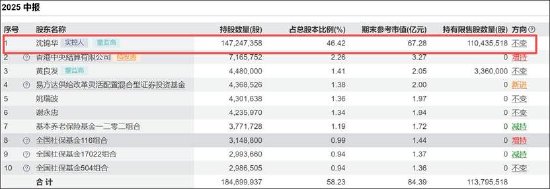
Core Viewpoint - The recent market rally has led to a surge in stock prices, yet major shareholders and executives are announcing plans to reduce their holdings, raising concerns for ordinary investors about the implications of these actions on future company performance and stock valuations [1][3]. Shareholder Actions - The controlling shareholder of Focus Technology plans to reduce their stake by up to 6,344,716 shares, representing no more than 2% of the total share capital, within a specified period [3]. - The controlling shareholder holds 46.42% of the company's total shares, indicating a highly concentrated ownership structure [3][4]. - The second-largest shareholder holds only 2.26% of the shares, further emphasizing the dominance of the controlling shareholder [3]. Financial Performance - In the first half of the year, Focus Technology reported a total revenue of 919.19 million yuan, a year-on-year increase of 15.83% [6][9]. - The net profit attributable to shareholders was 295 million yuan, reflecting a growth of 26.12% compared to the previous year [6]. - The company's earnings growth has been volatile, with previous years showing single-digit growth rates, raising questions about sustainability [6]. Business Structure - The primary revenue source for Focus Technology is the China Manufacturing Network, which accounts for over 80% of total revenue [8][9]. - The company has seen a 35% increase in overall traffic to its platform, with significant growth in emerging markets such as the Middle East and South America [8]. Dividend Policy - Historically, the company has maintained a high cash dividend payout ratio, with some years exceeding 200%, benefiting the controlling shareholder significantly [4][5]. - The cash dividend distribution has raised concerns about whether it is sustainable given the concentrated ownership structure [4]. Membership Growth - The growth in paid membership for the China Manufacturing Network has been sluggish, with only 581 new members added in the second quarter compared to 716 in the same period last year [9][10]. - The company has launched AI-driven products aimed at enhancing its service offerings, but revenue from these initiatives has not been disclosed in recent reports [10].

恒林股份(603661)2025年中报点评:OBM业务驱动增长 利润端短期承压
Xin Lang Cai Jing· 2025-09-16 12:37
Core Viewpoint - The company reported mixed financial results for the first half of 2025, with revenue growth but declines in net profit and adjusted net profit, indicating challenges in profitability despite revenue increases in certain segments [1][3]. Financial Performance - In the first half of 2025, the company achieved revenue of 5.347 billion yuan, a year-on-year increase of 11.3%, while the net profit attributable to shareholders was 181 million yuan, a decline of 17.55% [1]. - For Q2 2025, the company reported revenue of 2.694 billion yuan, up 9.92% year-on-year, with net profit attributable to shareholders at 130 million yuan, an increase of 10.42% [1]. Business Segments - The OBM (Original Brand Manufacturing) business saw significant growth, with revenue of approximately 2.960 billion yuan in the first half of 2025, reflecting a year-on-year increase of about 26.8%, driven mainly by cross-border e-commerce [2]. - The traditional ODM/OEM (Original Design Manufacturing/Original Equipment Manufacturing) business experienced a revenue decline of about 4.1%, totaling approximately 2.359 billion yuan, with specific categories like office furniture and soft furniture showing mixed results [2]. Profitability and Cost Management - The company's gross profit margin was 17.88%, down 3.28 percentage points year-on-year, attributed to price reductions for cross-border e-commerce and insufficient operating rates due to tariff impacts [3]. - The company implemented effective cost control measures, achieving sales, management, and financial expense ratios of 6.68%, 3.87%, and 0.15%, respectively, with reductions in each category compared to the previous year [3]. - Asset impairment losses were recorded at 36.29 million yuan, significantly higher than the previous year's 7.91 million yuan, alongside credit impairment losses of 86.7 million yuan compared to a gain of 131.5 million yuan in the prior year [3]. Investment Outlook - The company is expected to maintain steady growth driven by its cross-border e-commerce business, with projected net profits of 369 million yuan, 504 million yuan, and 679 million yuan for 2025-2027, corresponding to P/E ratios of 12, 9, and 7 times [3]. - A target price of 39.81 yuan per share is set based on a 15X P/E valuation for 2025, reflecting the company's long-term growth potential under its global expansion and brand development strategies [3].

武汉流星汇聚跨境靠谱吗?出海新选择,五对一团队专业赋能之路
Sou Hu Cai Jing· 2025-09-16 10:58
Core Insights - Wuhan Meteor Gathering E-commerce Co., Ltd. has established a reliable path for domestic sellers to expand into overseas markets through a dual-driven business model of self-operated stores and seller incubation [1][2] - The company has developed a unique "five-to-one" service mechanism, providing comprehensive support from strategy to logistics, which differentiates it from other service providers in the cross-border e-commerce sector [1][2] Company Overview - Since its inception in 2019, the company has built strong operational foundations by personally managing cross-border stores and converting successful experiences into service solutions [1] - The company has established partnerships with over 10,000 users, offering systematic training and practical guidance across key business scenarios such as market analysis, store registration, product listing, and order processing [2] Milestones and Future Plans - The company was listed on the Shanghai Equity Custody Trading Center on April 21, 2025, marking a significant milestone that enhances its transparency and credibility [2] - Future plans include deepening the service system and optimizing resource allocation to support more domestic sellers in entering international markets [2] Industry Context - The cross-border e-commerce industry is experiencing continuous growth, with increasing demand for professional services [2] - The company's differentiated approach of transforming practical experience into actionable services has gained recognition among numerous partners, positioning it as an important ally for sellers venturing abroad [2]

恒林股份(603661):OBM业务驱动增长,利润端短期承压
Huachuang Securities· 2025-09-16 09:46
Investment Rating - The report maintains a "Recommended" rating for the company, with a target price of 39.81 CNY per share [2][8]. Core Views - The company's OBM (Original Brand Manufacturing) business is driving growth, while profits are under short-term pressure. The first half of 2025 saw revenue of 5.347 billion CNY, a year-on-year increase of 11.3%, but net profit attributable to shareholders decreased by 17.55% to 181 million CNY [2][8]. - The OBM business achieved approximately 2.96 billion CNY in revenue in the first half of 2025, reflecting a year-on-year growth of about 26.8%, with cross-border e-commerce being the main growth driver [8]. - Traditional ODM/OEM business revenue was approximately 2.359 billion CNY, down 4.1% year-on-year, primarily due to a reclassification of sales channels [8]. - The company implemented effective cost control measures, resulting in a decrease in sales, management, and financial expense ratios [8]. - The report forecasts net profits of 369 million CNY, 504 million CNY, and 679 million CNY for 2025, 2026, and 2027, respectively, with corresponding PE ratios of 12, 9, and 7 [8]. Financial Summary - For the first half of 2025, the company reported total revenue of 5.347 billion CNY, with a net profit of 181 million CNY, reflecting a decline in profitability [2][8]. - The projected total revenue for 2025 is 12.905 billion CNY, with a year-on-year growth rate of 17% [4]. - The company’s gross profit margin for the first half of 2025 was 17.88%, down 3.28 percentage points year-on-year [8]. - The company’s total assets are projected to reach 11.883 billion CNY by 2025, with a debt-to-equity ratio of 94.8% [9].
先发卡位TikTok全球生态 天娱数科全链路能力与价值加速释放
Zheng Quan Ri Bao Zhi Sheng· 2025-09-16 09:41
Core Insights - TikTok's global operations have entered a stable development phase, creating growth opportunities for industry partners through a large user ecosystem and clear commercialization paths [1] - Tianyu Digital Technology has established itself as a key partner for global brands by obtaining official service provider qualifications in major markets such as Indonesia, Thailand, the United States, Latin America, and the Middle East [1][2] Company Performance - Tianyu Digital Technology's revenue increased by 29.64% year-on-year in the first half of 2025, with a significant turnaround in net profit, which grew by 250.62% quarter-on-quarter in the second quarter [2] - The company has successfully provided efficient cross-regional marketing solutions for well-known global brands, demonstrating its international adaptability and competitiveness [2] Strategic Approach - The company employs a unique "LocalTalent+LocalIP+LocalPlatform" methodology to enhance localized operational capabilities, ensuring services align with local cultural characteristics and market rules [2] - Tianyu Digital Technology aims to leverage technological innovation to meet diverse global market demands and strengthen long-term competitive barriers in AI marketing and cross-border e-commerce [3]

苏州盛泽:从 “一根丝”到 “全球链”,绸都走好纺织开放创新之路
Su Zhou Ri Bao· 2025-09-16 09:14
Core Insights - Wujiang Shengze Town has established a complete textile industry chain, making it a significant silk textile production and export base in China [1] - The town is focusing on leveraging its industrial cluster advantages to promote transformation and sustainable development in the textile and apparel ecosystem [1] Industry Development - The cross-border e-commerce industrial park in Shengze has attracted 86 companies, including 37 cross-border e-commerce firms, achieving nearly $220 million in foreign trade import and export in the first half of the year [1] - Alibaba International Station has provided one-stop foreign trade solutions to over 400 local enterprises, with an average annual export growth of 25% for participating companies [2][4] - The Shengze Cross-Border E-commerce Selection Center showcases products from nearly 20 companies, highlighting the region's textile capabilities [3] Company Performance - Suzhou Xihe Textile Technology Co., established in 2021, has built a global smart supply chain and reported an export value exceeding 100 million yuan last year [4] - Wujiang Minsk Trading Co., established in 2011, has seen a year-on-year export growth of over 190% in the first seven months of this year, driven by simplified customs procedures [6] - The industrial park's supportive environment and complete supply chain have attracted businesses, enhancing the local economy [4] Economic Impact - Shengze Town reported an industrial output value of nearly 50.8 billion yuan and an import-export value of 10.961 billion yuan in the first half of the year, with cross-border e-commerce imports and exports reaching 2.464 billion yuan, a year-on-year increase of 292.5% [7] - The Dongfang Textile City, a key platform for the textile industry, has won multiple awards and is designed to integrate technology, fashion, and sustainability [7][8] Innovation and Leadership - Suzhou Roman Roland Fashion Group exemplifies innovation in the textile industry, developing unique materials that adapt to environmental changes [8] - The collaboration between leading companies and platforms like Dongfang Textile City is crucial for building a sustainable textile ecosystem [8]
外贸一线观察丨跨境电商1小时通关 广西打通东盟贸易快车道
Yang Shi Xin Wen Ke Hu Duan· 2025-09-16 07:56
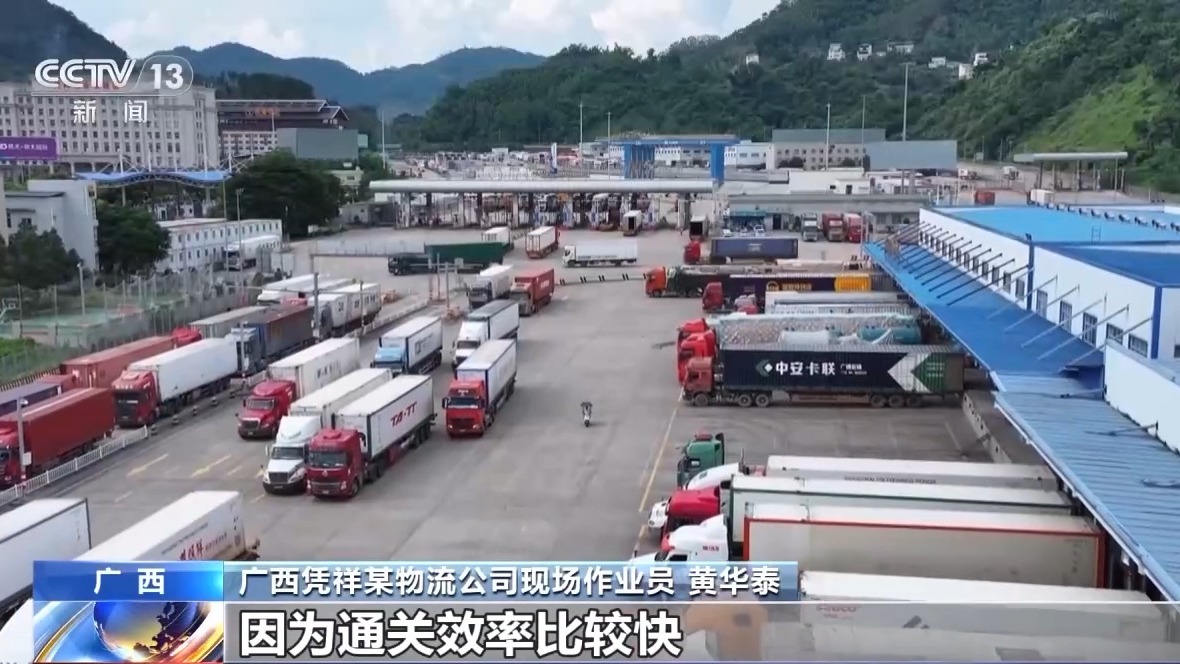
Group 1 - The economic and trade relationship between China and ASEAN is increasingly close, with ASEAN being China's largest agricultural trade partner for eight consecutive years [1] - From January to August, Guangxi's import and export scale with ASEAN reached 275.09 billion yuan, a growth of 12.9%, with trade with Vietnam accounting for 202.73 billion yuan, growing by 7.9% [1] - The efficiency of customs clearance has significantly improved, with 637,200 vehicles passing through the Friendship Pass port in the first eight months, an increase of 38% year-on-year [5] Group 2 - The logistics company in Guangxi has successfully cleared nearly 3,000 containers of fruits from ASEAN countries, primarily selling to Guangdong and Zhejiang [3] - In Pingxiang, cross-border rapid customs clearance allows local products to reach Hanoi, Vietnam, in just 14 hours [7] - The "cross-border direct shipping" method at Qinzhou Port enables goods to reach Haiphong, Vietnam, in eight hours [8]
众多企业“扎堆”落户 沂河新区凭啥成为投资热土?
Sou Hu Cai Jing· 2025-09-16 06:46
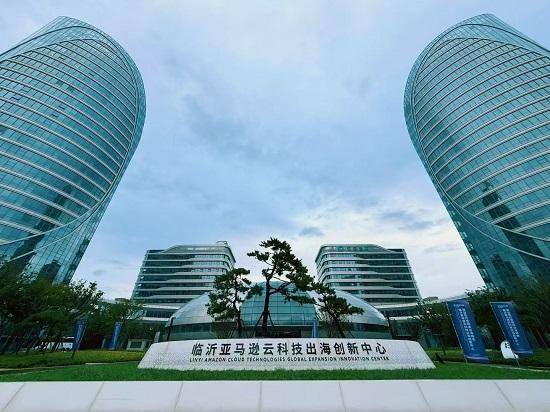
Group 1 - The core viewpoint of the news is the rapid development and investment attraction of Yihe New District in Linyi, which has successfully drawn in numerous top global and Chinese enterprises, indicating a strong economic growth potential [1][5][9] - Yihe New District covers an area of 496 square kilometers and has attracted 26 Fortune Global 500 companies and 13 Chinese Fortune 500 companies, with 89 industrial projects introduced this year, totaling over 36.7 billion yuan in investment [1][5] - The establishment of the Amazon Cloud Technology Overseas Innovation Center in Linyi marks a significant step in connecting local manufacturing with global digital trade resources, providing comprehensive support for enterprises looking to expand overseas [3][4] Group 2 - The district's proactive approach in engaging with emerging industries has led to a rapid rise in cross-border e-commerce, with platforms like Alibaba's AliExpress and Russian Wildberries entering the market [4][9] - Yihe New District emphasizes precise project introduction, ensuring that new investments align with regional development strategies, thereby fostering high-quality economic growth [5][7] - The district has implemented efficient land use policies, reserving over 2,000 acres of standard land for new projects, and has improved approval processes, enhancing efficiency by 50% [8][9] Group 3 - The district's strategy includes a focus on key segments of the industrial chain, attracting upstream and downstream enterprises to create a complete industrial ecosystem, particularly in high-end engineering equipment and laser industries [7][9] - The establishment of dedicated project managers for each investment project ensures comprehensive support throughout the project lifecycle, enhancing the overall business environment [8][9] - Yihe New District is characterized by its open and pragmatic approach, continuously enhancing its attractiveness to various enterprises and fostering a conducive environment for growth [9]
奥飞娱乐涨2.00%,成交额4.34亿元,主力资金净流入527.06万元
Xin Lang Zheng Quan· 2025-09-16 05:40
Company Overview - Aofei Entertainment Co., Ltd. is located in Guangzhou, Guangdong Province, and was established on July 31, 1997. It was listed on September 10, 2009. The company specializes in the development, production, and sales of animated films, toys, and mobile games, as well as IP full copyright operations [1][2]. Financial Performance - As of June 30, 2025, Aofei Entertainment reported a revenue of 1.198 billion yuan, a year-on-year decrease of 8.17%. The net profit attributable to shareholders was 37.0094 million yuan, down 32.71% year-on-year [2]. - The company has cumulatively distributed 396 million yuan in dividends since its A-share listing, with no dividends paid in the last three years [3]. Stock Performance - On September 16, Aofei Entertainment's stock price increased by 2.00%, reaching 9.67 yuan per share, with a trading volume of 434 million yuan and a turnover rate of 4.52%. The total market capitalization is 14.299 billion yuan [1]. - Year-to-date, the stock price has risen by 11.79%, with a 5.57% increase over the last five trading days, a 0.21% decrease over the last 20 days, and a 2.11% increase over the last 60 days [1]. Shareholder Structure - As of June 30, 2025, the number of shareholders increased to 144,900, a rise of 5.28%. The average number of circulating shares per person decreased by 5.01% to 7,026 shares [2]. - The top ten circulating shareholders include Hong Kong Central Clearing Limited as the second-largest shareholder, holding 39.0675 million shares, a decrease of 4.6494 million shares from the previous period. Other notable shareholders include various ETFs and mutual funds [3]. Business Segments - Aofei Entertainment's main business revenue composition includes: 49.00% from baby products, 38.30% from toy sales, 11.80% from film and television, 0.68% from other categories, and 0.22% from gaming [1]. - The company operates within the media industry, specifically in the film and television sector, focusing on animation production [1].
