
5G

Search documents
苏试试验:25年中报业绩超预期 周期底部拐点初现
Ge Long Hui· 2025-08-02 17:47
Core Viewpoint - The company reported strong performance in its 2025 H1 financial results, with significant growth in revenue and net profit, driven by advancements in the integrated circuit analysis sector [1][3]. Financial Performance - In 2025 H1, the company achieved a revenue of 991 million yuan, representing a year-on-year growth of 8.09% [1]. - The revenue breakdown includes: - Testing equipment: 310 million yuan, up 6.32% - Environmental reliability testing services: 487 million yuan, up 5.75% - Integrated circuit verification and analysis services: 155 million yuan, up 21.01% [1]. - The net profit attributable to shareholders reached 117 million yuan, with a year-on-year increase of 14.18% [1]. - The net profit after deducting non-recurring items was 114 million yuan, reflecting a growth of 20.72% [1]. - In Q2, the company reported a revenue of 561 million yuan, a year-on-year increase of 18.39%, and a net profit of 76 million yuan, up 26.14% [1]. Cost Management and Profitability - The overall expense ratio for 2025 H1 was 28.57%, a decrease of 1.76 percentage points year-on-year [2]. - The breakdown of expense ratios includes: - Sales expense ratio: 7.35%, down 0.12 percentage points - Management expense ratio: 11.49%, down 1.08 percentage points - Financial expense ratio: 1.55%, down 0.33 percentage points - R&D expense ratio: 8.18%, down 0.23 percentage points [2]. - The gross profit margins for the main business segments showed a decline, attributed to increased competition in the downstream market [2]. Business Model and Future Outlook - The company has established a unique business model that integrates testing equipment and services, creating a high technical barrier [2]. - It has developed a comprehensive one-stop testing service platform catering to industries such as new energy, commercial aerospace, drones, and integrated circuits [2]. - The company is focused on R&D of new products and technologies to meet diverse customer needs and drive future growth [2]. - The company is optimistic about its future development potential, especially with the rapid advancement of technologies like 5G and IoT [2]. Earnings Forecast and Investment Recommendation - The company is projected to achieve revenues of 2.335 billion yuan, 2.659 billion yuan, and 2.992 billion yuan for 2025-2027, with year-on-year growth rates of 15.3%, 13.8%, and 12.5% respectively [3]. - The net profit attributable to shareholders is expected to be 306 million yuan, 377 million yuan, and 445 million yuan for the same period, with growth rates of 33.5%, 23.0%, and 18.3% respectively [3]. - The current stock price corresponds to a PE ratio of 27.2, 22.1, and 18.7 for 2025-2027, indicating a favorable long-term trend in downstream demand [3].

火热预定,2025第六届热管理产业大会暨博览会等你来!
DT新材料· 2025-08-02 16:04
Core Viewpoint - The 6th Thermal Management Industry Conference & Expo (iTherM2025) aims to create a one-stop value matching platform for the thermal management industry, facilitating communication, cooperation, and win-win development among various organizations in the sector [1][5][6]. Group 1: Event Overview - The event will take place from December 3-5, 2025, at the Shenzhen International Convention and Exhibition Center [1][7]. - The expo will cover an exhibition area of 20,000 m² and is expected to attract over 30,000 industry visitors and more than 1,000 exhibitors [8]. Group 2: Industry Trends - The continuous miniaturization, high performance, integration, and multifunctionality of electronic devices, chips, and equipment are leading to a sharp increase in power density and heat generation [3][4]. - The demand for innovative thermal management solutions is driven by applications in consumer electronics, power electronics, artificial intelligence, 5G, data centers, IoT, power batteries, electric vehicles, energy storage, new energy, and green buildings [3][4]. Group 3: Expo Activities - The expo will feature innovative materials, instruments, equipment, design and simulation, solutions, patent technologies, and application scenarios [5][6]. - Various activities such as theme forums, roundtable discussions, workshops, innovation project displays, new product releases, and demand matching will be organized to enhance industry collaboration [5][6]. Group 4: Participation Benefits - Participants will have the opportunity to integrate industry chain resources and establish effective business connections with over 70% of professional visitors [8]. - The event will provide insights into future development trends and create excellent opportunities for business and technology sharing [8]. Group 5: Targeted Promotion - The event will utilize multi-dimensional targeted promotion strategies, including pre-exhibition and on-site reporting, to invite key clients and visitors [18]. - The aim is to amplify the driving effect of the expo and enhance the visibility of participating enterprises [18]. Group 6: Exhibition Layout - The exhibition will include various thematic areas such as consumer electronics thermal management, data center server thermal management, new energy thermal management, and energy storage thermal management [19][27][29][31]. - Each area will showcase relevant materials, technologies, and innovative achievements, providing a comprehensive overview of the thermal management landscape [19][27][29][31].


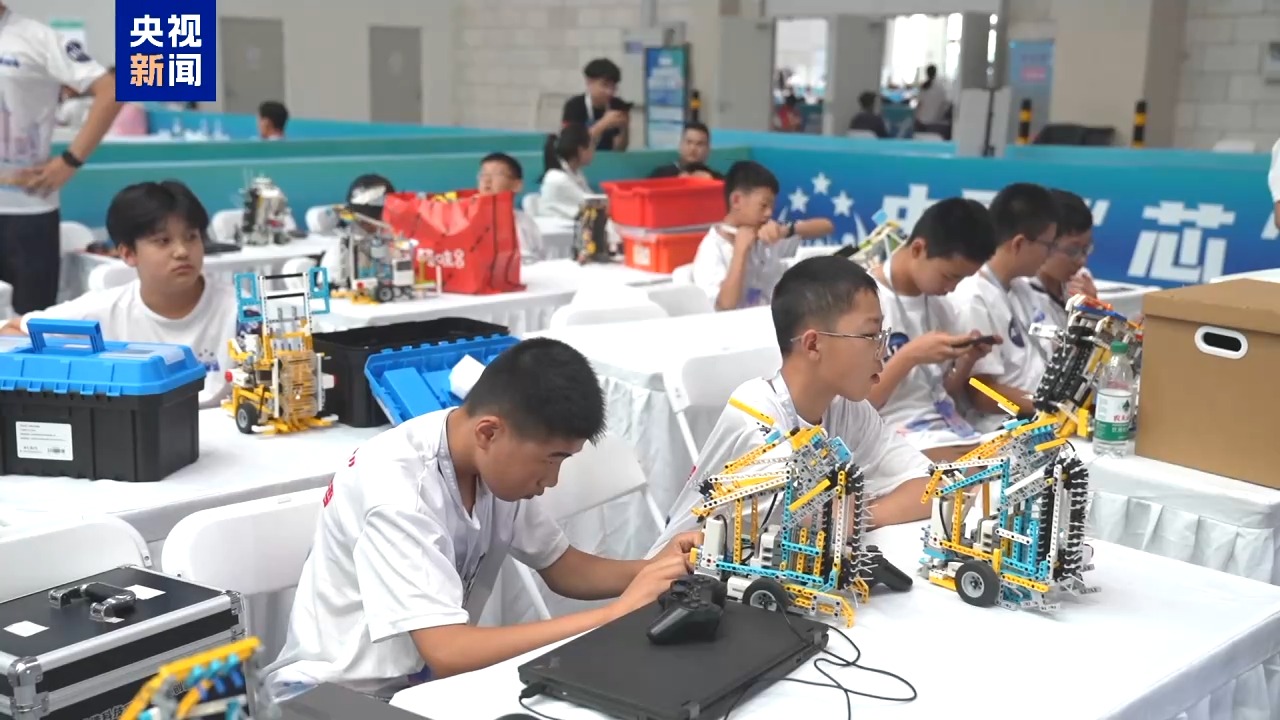
全国青少年通信科技创新大赛全国总决赛在大连举行
Yang Shi Xin Wen· 2025-08-02 07:24
Core Points - The third National Youth Communication Technology Innovation Competition has officially launched in Dalian, Liaoning, with over 14,000 young participants from across the country [1][3] - The competition covers various cutting-edge fields including communication principles and applications, communication networks and security, radio, satellite communication, IoT, 5G, and artificial intelligence, assessing the participants' technological knowledge and innovation capabilities [3] - Since its inception in 2023, the competition has attracted over 450,000 participants nationwide, providing a broad platform for young technology enthusiasts to showcase their talents and engage in learning [3] Event Details - The finals will last for three days and include a series of educational activities such as a summit forum, expert lectures, and achievement displays [3] - Experts from various fields, including academicians, technology professionals, and educators, will discuss new concepts, models, and practices in science education integration [3] Industry Impact - The event is recognized as the only communication-related competition in the Ministry of Education's list of national competitions for primary and secondary school students for the 2022-2025 academic years, highlighting its significance in promoting communication technology education [1][3]
明星公司机构调研热度高 头部企业频频释放暖意
Zheng Quan Shi Bao· 2025-08-01 20:29
Market Overview - A-shares experienced fluctuations this week, with the Shanghai Composite Index peaking at 3636.17 points before closing down 0.94% at 3559.95 points. The Shenzhen Component Index fell 1.58%, and the ChiNext Index decreased by 0.74% [1] - Most sectors entered a correction phase, with notable declines in coal, non-ferrous metals, and real estate, while sectors like biomedicine, communication, and media saw overall gains [1] - 125 listed companies disclosed institutional research reports this week, with nearly 40% of the surveyed stocks achieving positive returns [1] Company Highlights - Defu Technology received the highest number of institutional visits this week, with 144 institutions participating, primarily due to its plan to acquire 100% of Luxembourg Copper Foil for €1.74 billion. This acquisition is expected to enhance its production capacity from 175,000 tons/year to 191,000 tons/year, making it the world's largest producer of electrolytic copper foil [2] - The end-use applications for copper foil include AI servers, 5G base stations, and mobile terminals, indicating significant growth potential in these sectors [2] - Victory Technology, another company that saw substantial gains, announced plans for a Hong Kong IPO to capitalize on global AI opportunities. The funds raised will support high-end capacity expansion and advanced PCB technology development [3] - CIMC reported optimistic demand for its container business, with orders currently scheduled through Q3. The industry anticipates a total production of no less than 3 million TEUs for the year, exceeding initial expectations [4] - CATL disclosed a net profit of 30.5 billion yuan for the first half of the year, a 33.33% increase year-on-year, with a high capacity utilization rate of approximately 90% [4] - BOE Technology indicated a slight decline in LCD TV prices due to ongoing inventory destocking, but expects a recovery in demand and stabilization of prices in August [4]




明星公司机构调研热度高头部企业频频释放暖意
Zheng Quan Shi Bao· 2025-08-01 17:15
Group 1: Market Overview - A-shares experienced fluctuations this week, with the Shanghai Composite Index dropping 0.94% to close at 3559.95 points after peaking at 3636.17 points [1] - The Shenzhen Component Index fell by 1.58%, while the ChiNext Index decreased by 0.74% [1] - Most sectors entered a correction phase, with notable declines in coal, non-ferrous metals, and real estate, while sectors like biomedicine, communications, and media saw overall gains [1] Group 2: Company Highlights - Defu Technology received significant attention from institutional investors, hosting 144 firms for a research meeting, primarily due to its plan to acquire 100% of Luxembourg Copper Foil for €1.74 billion [2] - The acquisition will increase Defu Technology's electrolytic copper foil capacity from 175,000 tons/year to 191,000 tons/year, making it the world's largest producer [2] - Shenghong Technology, another company that saw a significant rise, announced plans for a Hong Kong IPO to capitalize on global AI opportunities, aiming to enhance its high-end capacity and technological advancements [2] Group 3: Industry Insights - CIMC reported optimistic demand in the container business, with orders extending into Q3 and an industry-wide production forecast of at least 3 million TEUs for the year [3] - CATL disclosed a net profit of 30.5 billion yuan for the first half of the year, a 33.33% increase year-on-year, with a high capacity utilization rate of around 90% [3] - BOE Technology indicated a slight decline in LCD TV prices but expects a recovery in demand and stabilization of prices in August as inventory levels normalize [3]
EchoStar(SATS) - 2025 Q2 - Earnings Call Transcript
2025-08-01 17:02
Financial Data and Key Metrics Changes - Revenue for the second quarter was approximately $3.7 billion, a decrease of 5.8% year over year, primarily due to fewer subscribers in the Pay TV and Broadband segments, partially offset by increased ARPU in the Wireless segment [21][27] - OIBDA was $280 million, a decrease of $163 million year over year, driven by fewer subscribers in Pay TV and increased operating loss in Wireless due to higher subscriber acquisition efforts [21][22] - Free cash flow including debt service was negative $739 million for the second quarter, compared to negative $191 million in the prior year, primarily due to higher cash interest and decreased OIBDA [22][23] Business Line Data and Key Metrics Changes - Wireless segment revenue increased by 4.7% to $935 million, driven by a 4.1% increase in ARPU to $3,007.40, with a net addition of approximately 212,000 subscribers, ending the quarter with about 7.4 million subscribers [26][15] - Pay TV revenue decreased by 8% to $2.5 billion due to a lower average subscriber base, despite a 3.1% increase in ARPU; OIBDA decreased significantly from $753 million to $90 million [27][19] - Broadband and Satellite Services revenue decreased by 13.8% to $340 million, primarily due to lower sales of consumer broadband services [28] Market Data and Key Metrics Changes - The wireless segment's churn rate improved to 2.69%, a 24 basis point improvement year over year, indicating better subscriber retention [15] - Pay TV churn was reported at 1.29%, a reduction of roughly 11 basis points from 2024, with viewership up 8% year over year [19][20] - HughesNet consumer business closed Q2 with approximately 820,000 broadband subscribers, focusing on higher value customers to deliver increased ARPU [18] Company Strategy and Development Direction - The company is committed to securing its future and promoting U.S. leadership in global communications, with a focus on launching a new LEO Direct to Device satellite constellation to provide global wideband services [11][12] - The strategy includes leveraging spectrum rights and technological leadership to provide dedicated capacity and security services across various sectors [12][13] - The company aims to complement terrestrial networks with satellite capabilities, enhancing coverage and reducing costs for carriers [53][56] Management's Comments on Operating Environment and Future Outlook - Management expressed optimism about the overall performance for the second quarter and the opportunities in 2025, focusing on positive operating free cash flow and subscriber profitability [34] - The ongoing FCC review of spectrum licenses has introduced uncertainty, impacting the company's ability to make decisions regarding its 5G network build-out [7][8] - Management emphasized the importance of collaboration with the FCC and other entities to reach a constructive solution beneficial to the company and consumers [10][67] Other Important Information - The company has invested over $13 billion in S band spectrum rights since 2012, which will support the new satellite constellation [12] - The launch of the satellites is planned for 2028, with commercial services starting in 2029, and the peak funding for the project is estimated at $5 billion [14][50] - The company has a going concern qualification in its 10-Q, indicating the need to project its cash position one year from the filing date [24][25] Q&A Session Summary Question: Regarding the LEO constellation and market strategy - Management clarified that the LEO constellation aims to provide wideband services, which is a unique offering not currently available in the market, and they plan to partner with carriers rather than compete directly [39][40][49] Question: On the FCC review and market position - Management stated that they are focused on operating effectively as the fourth network operator and are working constructively with the FCC to resolve issues [62][64] Question: Clarification on funding and service capabilities - The peak funding for the LEO project is $5 billion, which includes all associated costs, and the service will aim to provide comprehensive connectivity indistinguishable from terrestrial networks [77][80]

Analog Devices: Signs Of Growth And Margins Improvement
Seeking Alpha· 2025-08-01 16:18
Group 1 - Khaveen Investments is a global Investment Advisory Firm serving high-net-worth individuals, corporations, associations, and institutions [1] - The firm offers comprehensive services including market and security research, business valuation, and wealth management [1] - The flagship Macroquantamental Hedge Fund maintains a diversified portfolio across various asset classes, geographies, sectors, and industries [1] Group 2 - The investment approach integrates top-down and bottom-up analysis, blending global macro, fundamental, and quantitative strategies [1] - Core expertise lies in disruptive technologies such as Artificial Intelligence, Cloud Computing, 5G, Autonomous and Electric Vehicles, FinTech, Augmented and Virtual Reality, and the Internet of Things (IoT) [1]

新致软件: 关于上海新致软件股份有限公司向特定对象发行股票申请文件审核问询函的回复报告
Zheng Quan Zhi Xing· 2025-08-01 16:10
Core Viewpoint - Shanghai Xinzhi Software Co., Ltd. is planning to raise a total of no more than RMB 300 million through a private placement of A-shares, with the entire amount to be subscribed in cash by the actual controller Guo Wei and his controlled enterprise Qian Yao Jia Sheng [2][4][15]. Group 1: Issuance Details - The total amount to be raised from the issuance is capped at RMB 300 million, with Guo Wei intending to subscribe up to RMB 50 million and Qian Yao Jia Sheng up to RMB 250 million [2][4][15]. - Qian Yao Jia Sheng was established specifically for this subscription and currently holds no shares in the issuer [4][15]. - The issuance is compliant with the relevant regulations, ensuring that the actual control of the company remains unchanged post-issuance [14][15]. Group 2: Background of Subscription Entities - Qian Yao Jia Sheng is a limited liability company established by Guo Wei and his son Guo Xiaoyang, with a registered capital of RMB 20 million [4][15]. - Guo Xiaoyang, who has been involved in the company's management, does not hold any shares prior to this issuance but will indirectly hold approximately 1.25% to 1.33% of shares post-issuance [10][14]. - The establishment of Qian Yao Jia Sheng allows for a more favorable financing structure, as corporate entities typically have access to higher credit limits and lower interest rates compared to individuals [6][8][15]. Group 3: Funding Sources - The subscription funds will be sourced entirely from Guo Wei's personal and family assets, with a total of RMB 5 million from personal funds and RMB 20 million from a bank loan [16][17]. - The bank loan has been pre-approved, with a maximum limit of RMB 200 million, and is intended to support the subscription of shares [19][20]. - Guo Wei's financial stability is supported by his historical income and the company's cash dividend history, which indicates a reliable source for loan repayment [21][22].

24/7 Market News: 10 Reasons Siyata Mobile Is a Perfect Match for Core Gaming
Globenewswire· 2025-08-01 13:32
Core Viewpoint - Siyata Mobile is advancing towards a $185 million merger with Core Gaming, pending Nasdaq approval, positioning itself as a significant player in the $5 billion Push-to-Talk over Cellular (PoC) market projected to grow at a 12% CAGR through 2030 [1][2] Group 1: Company Strengths - Siyata has a strong IP portfolio and hardware design capabilities, with multiple patents in mobile integration, which could synergize with Core Gaming's AI-driven content [3] - The company has carrier-grade mobile tech expertise, having collaborated with Tier 1 telecom partners like Verizon, AT&T, and T-Mobile, enhancing its enterprise PoC position [4] - Siyata's device contracts with law enforcement and EMS provide recurring revenue opportunities [5] - The launch of the SD7 ULTRA, a rugged 5G PoC device integrating AI, aligns with the expected growth of the PoC market to $10 billion by 2028 [6] - Siyata has demonstrated cost discipline and operational restructuring over the past 18 months [7] - The strategic realignment towards digital expansion indicates a shift from legacy hardware to AI-powered content and infrastructure [8] - The company has access to defense, public safety, and logistics markets, leveraging its ties to first responders and industrial buyers [9] - Plans to relocate U.S. manufacturing in 2025 aim to reduce supply chain risks and capitalize on domestic incentives [10] Group 2: Leadership and Market Position - Siyata's leadership team possesses extensive capital markets experience, essential for Core Gaming's growth phase [12] - The existing Nasdaq listing of Siyata provides a foundation for Core Gaming's public market entry, facilitating regulatory access and institutional visibility [13] Group 3: Market Outlook - The merger aims to create a hybrid telecom-AI gaming company with a target of $100 million in combined revenue for 2025, leveraging Siyata's operational backbone and Core Gaming's content capabilities [14]


研报掘金丨中邮证券:首予宏和科技“买入”评级,产能释放驱动营收增长
Ge Long Hui· 2025-08-01 10:40
中邮证券研报指出,宏和科技产能释放驱动营收增长,高毛利产品结构优化助力利润提升。公司2024年 实现营收8.35亿元,同比+26.24%,主要系随着终端市场逐渐恢复,市场需求量也随之增加,募投项 目"年产5,040万米5G用高端电子级玻璃纤维布开发与生产项目"在2023年已全面投产,2024年电子布产 能释放,进一步提高公司电子布产品市场占有率。随着5G设备及移动通信、云计算、大数据、AI、物 联网、新能源汽车、智能制造、无人驾驶等高端市场需求的发展,未来电子布产品将有更大的发展空 间。首次覆盖,给予"买入"评级。 ...
