
具身智能

Search documents
香港创新科技及工业局:香港将携手京澳打造AI创新生态 推动具身智能、端侧AI等前沿领域联合攻关
智通财经网· 2026-03-27 08:50
Group 1 - The Hong Kong Innovation and Technology Bureau emphasizes the role of artificial intelligence (AI) as a core driver for industrial transformation and the cultivation of new productive forces as outlined in the national "14th Five-Year Plan" [1] - Hong Kong is positioned as a key international innovation and technology center, aiming to leverage AI to promote new industrialization and enhance its influence in global AI development [1] - The government is systematically advancing a full-chain layout for AI, including the establishment of the AI+ and Industry Development Strategy Committee and the upcoming Hong Kong AI Research Institute [1] Group 2 - Hong Kong is actively promoting the development of the microelectronics sector, with two pilot lines at the Yuen Long Microelectronics Center set to commence operations this year [2] - The government encourages companies that have completed "A+H" dual platform listings, such as Zhaoyi Innovation, to establish R&D, pilot, and headquarters bases in Hong Kong [2] - The focus on embodied intelligence is highlighted as a significant direction for AI industrialization, with Hong Kong's advantages in basic research, international certification, and market application [2]
为何中国大半硬科技“独角兽”,都选了美团
投资界· 2026-03-27 08:31
Core Viewpoint - Meituan is establishing a significant technology investment landscape, highlighted by its early and substantial investment in Yushutech, which is poised for a major IPO valued at over 420 billion yuan [2][4][5]. Investment in Yushutech - Yushutech plans to raise 4.202 billion yuan, indicating an initial market value of at least 420 billion yuan, with expectations of becoming a trillion-level company [2]. - Meituan is the largest external shareholder of Yushutech, holding nearly 10% of the shares, and has been a key investor since the B++ round of financing when Yushutech was valued at only 1 billion yuan [5][6][8]. - Meituan's investment strategy includes not only financial backing but also leveraging its extensive delivery network across 2,800 cities to provide real-world testing environments for robotics [10][20]. Broader Technology Investment Landscape - Meituan has invested in a wide array of technology companies, with 28 unicorns and 7 listed tech firms, including notable investments in Zhizhu and Moer Thread, both of which have achieved market valuations exceeding 300 billion yuan [12][16]. - The company has made early investments in various sectors, including industrial, medical, and retail, with a focus on companies that have achieved significant scale [13][14]. Strategic Shift and Focus - Since its IPO in 2018, Meituan has shifted its investment focus from consumer sectors to hard technology, with over half of its investments in hard tech by 2020 [18][19]. - The company has maintained a high investment ratio in hard technology, with 64% of its investments in this area post-2022, contrasting with a general decline in tech investments among other internet giants [19]. Collaborative Approach - Meituan emphasizes collaboration with its portfolio companies, providing not just capital but also development resources and access to real-world applications, which is crucial for the commercialization of advanced technologies [20][21]. - The company has established partnerships with over 20 global universities for research collaborations, reinforcing its commitment to innovation in hard technology [21]. Future Outlook - Meituan's ongoing investments in AI and robotics, including the deployment of drones and autonomous vehicles, are part of its strategy to enhance user experience and operational efficiency [22]. - The company's technology investments are aligned with national strategies for technological self-reliance and global competitiveness, contributing to significant advancements in China's tech landscape [23].


会议通知 | 关于举办第二届智能机器人关键技术大会(IRCTC2026)的预通知
机器人圈· 2026-03-27 08:30
Group 1 - The second Intelligent Robotics Key Technologies Conference (IRCTC2026) will be held from May 15 to 17, 2026, in Hangzhou, China, focusing on "Embodied Intelligence and Large Model-Driven Robot Evolution" [2] - The conference aims to promote breakthroughs in key technologies of intelligent robotics and foster deep integration of industry, academia, research, and application [2] - The event will feature renowned experts and scholars in the field of intelligent robotics for specialized reports and academic discussions [2] Group 2 - Topics for discussion and paper submission include autonomous navigation and control, human-robot interaction, intelligent perception and control technologies, multi-sensor integration, machine learning, and collaborative robotics [3][4] - The conference will also cover soft robotics, medical and care robots, and other research topics related to the main theme [4] Group 3 - Registration for the conference is required, with fees varying by participant category, including students, teachers, and corporate representatives, with early bird discounts available [9] - Payment must be made in advance to a specified bank account for successful registration [9] Group 4 - The conference schedule includes registration on May 15, opening ceremony and forums on May 16, and additional forums on May 17 [7]

对标英伟达EgoScale数据路径,清华系孵化星忆科技拿到首轮融资
3 6 Ke· 2026-03-27 08:04
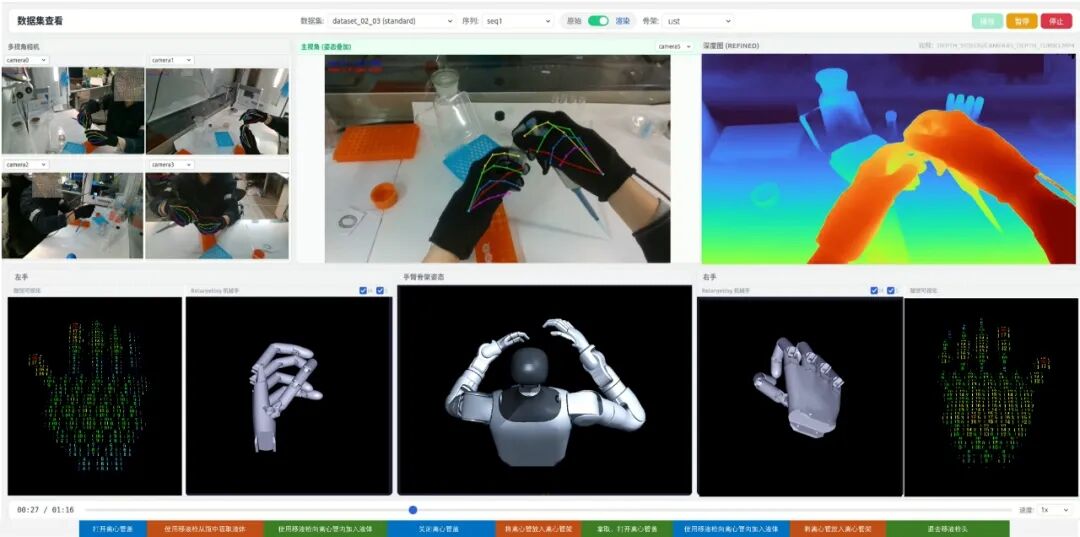
Core Insights - The global competition for embodied data is intensifying, with a focus on Human-centric and Ego-centric data as essential assets for training models [1][2] - Companies are shifting from merely collecting data to creating high-fidelity, low-cost, and trainable data assets that can effectively teach robots to perform tasks in the real world [2][3] Industry Trends - The industry is moving towards Ego-centric data collection, which emphasizes human first-person perspectives and real physical interactions, as opposed to traditional third-person data [2][3] - The demand for high-quality, real-world data is increasing, as existing methods struggle to provide the necessary detail for effective robot training [2][3] Company Developments - Star Memory Technology, a startup focused on Ego-centric data collection, has completed a multi-million dollar funding round led by Tsinghua University-affiliated investors [3][4] - The company aims to build a comprehensive data collection system that integrates various modalities, including visual, tactile, and positional data, to enhance robot training [5][6] Technical Innovations - Star Memory Technology's approach differs from existing methods by focusing on high precision and freedom in data collection, rather than just volume [5][6] - The company has developed a proprietary data engine capable of achieving millimeter-level precision in hand gesture recognition, significantly reducing costs compared to traditional methods [15][17] Market Positioning - Star Memory Technology positions itself as a foundational infrastructure provider for embodied intelligence, aiming to convert human operational experience into data that robots can learn from [6][24] - The company plans to serve various sectors, including academic institutions and robotics manufacturers, establishing a complete commercial loop from data collection to application [23][24] Future Outlook - The industry anticipates that high-quality, scalable data will be crucial for the next phase of competition in embodied intelligence, with Star Memory Technology aiming to lead in this area [27][28] - The company believes that the future of embodied intelligence will require a combination of high-quality data and effective learning systems to achieve practical applications in factories and homes within the next few years [27][28]

变数!事关特斯拉Optimus Gen3
Robot猎场备忘录· 2026-03-27 07:41
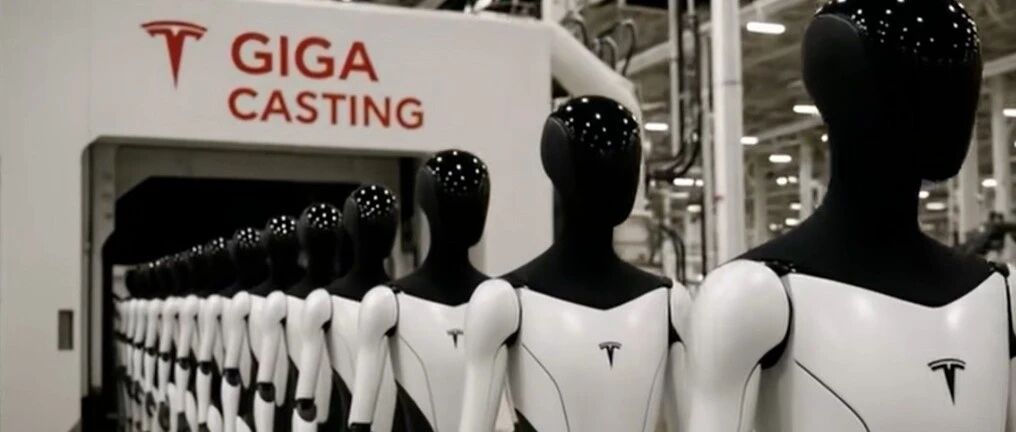
Core Viewpoint - The article emphasizes the acceleration of factory expansions, team recruitment, and video previews in anticipation of the Optimus V3 launch, highlighting the importance of core certainty in investment opportunities within the T-chain sector [4][12]. Summary by Sections Market Dynamics - The T-chain experienced a significant rebound on March 25, following a prior downturn, attributed to multiple favorable factors including easing external tensions and the commencement of factory expansions for Optimus V4 production [6][8]. - The overall performance of the T-chain since the holiday has been described as "disastrous," but this was largely anticipated, leading to a cautious stance on new investments prior to the rebound [8]. Optimus Developments - The latest video released by Tesla's official account showcased the Optimus V2.5, which included dynamic displays and assembly of components, contributing to a positive market sentiment [9][11]. - The anticipation surrounding the Optimus V3 launch is critical, as its performance will significantly influence the T-chain's trajectory and investor interest [11][12]. Key Investment Targets - Specific T-chain companies such as (S) and (X) are highlighted as primary beneficiaries due to their roles in the supply chain, particularly in relation to the new features of the Optimus V3 [4][11]. - Other notable companies in the T-chain include (Z), (H), and (K), which are also expected to gain from the evolving landscape as they secure new agreements and expand their product offerings [11][14]. Future Outlook - The article suggests that the T-chain is likely to follow the broader market trends and may experience a phase of recovery, contingent on the successful launch and performance of the Optimus V3 [12]. - Continuous updates and insights regarding the T-chain's developments and investment opportunities will be provided through dedicated platforms [15][16].

珞石:做具身智能时代的机器人全栈技术赋能与生态建设者
机器人大讲堂· 2026-03-27 07:24
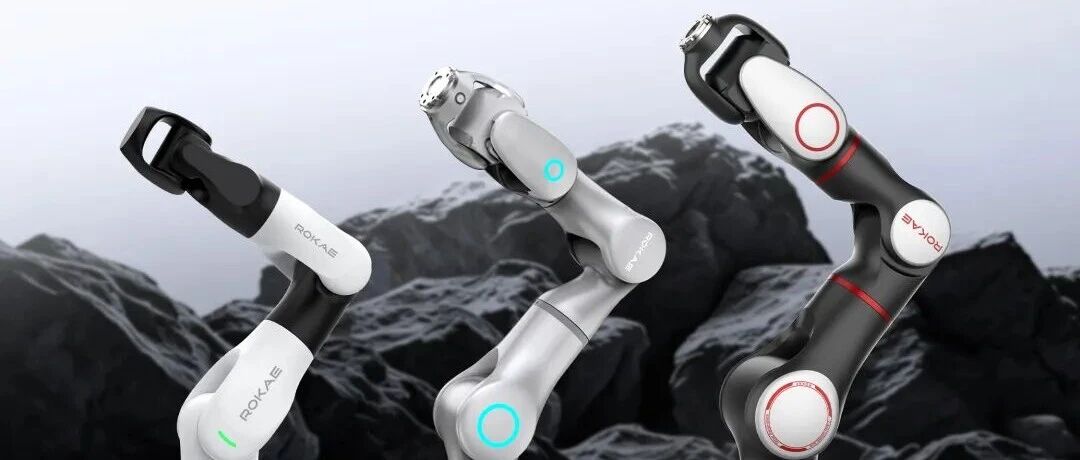
Core Viewpoint - The article discusses the evolution of the robotics and embodied intelligence industry, highlighting the shift from a "one-stop-shop" model to a more collaborative ecosystem that focuses on core competencies and avoids homogenization [1][5]. Industry Trends - Over the past two years, a surge in capital has led to many companies entering the robotics and embodied intelligence space, resulting in a proliferation of similar products and technologies, which has created challenges such as resource dispersion and high costs for implementation [1]. - By 2026, the industry is expected to recognize the unsustainability of a single company dominating the entire supply chain, leading to a collaborative ecosystem that emphasizes innovation in algorithm development, machine integration, core component supply, and application in real-world scenarios [1]. Company Strategy - Luoshi Robotics aims to position itself as a foundational technology provider in the embodied intelligence trend, focusing on core products like force-controlled joints and humanoid robotic arms, rather than competing in the crowded market of complete machines [3][5]. - The company has developed a comprehensive product matrix, with the AR series of robotic arms achieving over 3,000 units shipped, demonstrating its capability for scalable production and a complete application spectrum from home services to industrial heavy loads [10][13]. Technological Innovations - Luoshi Robotics has restructured its technology path to integrate key components such as force sensors, drivers, motors, and gearboxes, which enhances the performance of force control systems and reduces traditional design mismatches [6][8]. - The company has developed a high-bandwidth force control algorithm that allows its robotic arms to operate more like human arms, improving flexibility and precision in task execution [8]. Market Positioning - The company emphasizes a non-competitive, collaborative approach, focusing on core competencies and avoiding the pitfalls of homogenization in the industry [5][19]. - As the industry moves towards specialization, more humanoid robot companies are opting to source their arms from specialized manufacturers like Luoshi, allowing them to concentrate on their unique strengths in algorithm development and scene implementation [19]. Strategic Value - The force-controlled arms from Luoshi Robotics serve a dual purpose as precise actuators and high-dimensional sensors, providing valuable data for AI model training, thus enhancing the overall efficiency of the training process [15][16]. - The company’s commitment to building a robust ecosystem around its hardware capabilities positions it as a key player in the collaborative development of the embodied intelligence industry [17][20].
宇树再不上市就晚了
投中网· 2026-03-27 06:34
Core Viewpoint - The article highlights the remarkable growth and global presence of Unitree Technology, a robotics company founded by Wang Xingxing, emphasizing its innovative approach and successful market penetration in humanoid robots, particularly through strategic open-source initiatives and high-profile public performances [4][12][18]. Group 1: Company Background and Development - Unitree Technology was founded in 2016 by Wang Xingxing, who initially developed the XDog quadruped robot during his graduate studies, which utilized a unique direct-drive motor system [3][7]. - The company has evolved significantly over the past decade, becoming a leader in the global high-performance general-purpose robotics industry, with a humanoid robot shipment of over 5,500 units in 2025, ranking first globally [4][12]. - The company’s revenue from overseas markets has consistently accounted for over 55% from 2022 to 2024, establishing it as a model for "robotics going global" [4][16]. Group 2: Product Innovation and Market Strategy - Unitree's product line has seen rapid iterations, including the launch of various quadruped and humanoid robots, with significant milestones such as the debut of the G1 humanoid robot in 2024 [8][12]. - The company adopted an open-source strategy starting in 2018, releasing projects on GitHub, which has fostered a large developer community and attracted early customers from academia and AI sectors [9][11]. - The marketing strategy has included high-profile performances, such as appearances on major television events and technology exhibitions, which have significantly enhanced brand visibility and consumer engagement [18][20]. Group 3: Financial Performance and Market Position - In the first nine months of 2025, Unitree's domestic sales reached approximately 70.2 million yuan, while overseas sales were about 45.3 million yuan, indicating a strong international market presence [14]. - The company’s overseas revenue has increased more than sixfold in less than four years, despite a gradual decline in the percentage of total revenue from overseas sales [16]. - Unitree's market share in humanoid robots is substantial, with estimates suggesting it holds around 32% to 32.4% of the global market in 2025 [12][13]. Group 4: Competitive Landscape and Future Outlook - The robotics industry is witnessing a surge in companies planning to go public, with Unitree positioned as a key player in this trend, highlighting the importance of capital for sustaining growth [24][26]. - The company faces competition from established players like Tesla and Boston Dynamics, which have significant resources and capabilities for mass production and technological advancement [31]. - The future of competition in robotics will hinge on data scale and iteration speed, indicating that the industry is at the beginning of a transformative phase [32].

杨植麟、张鹏、罗福莉等齐聚一堂,他们关于OpenClaw的观点值得一听。
数字生命卡兹克· 2026-03-27 06:24
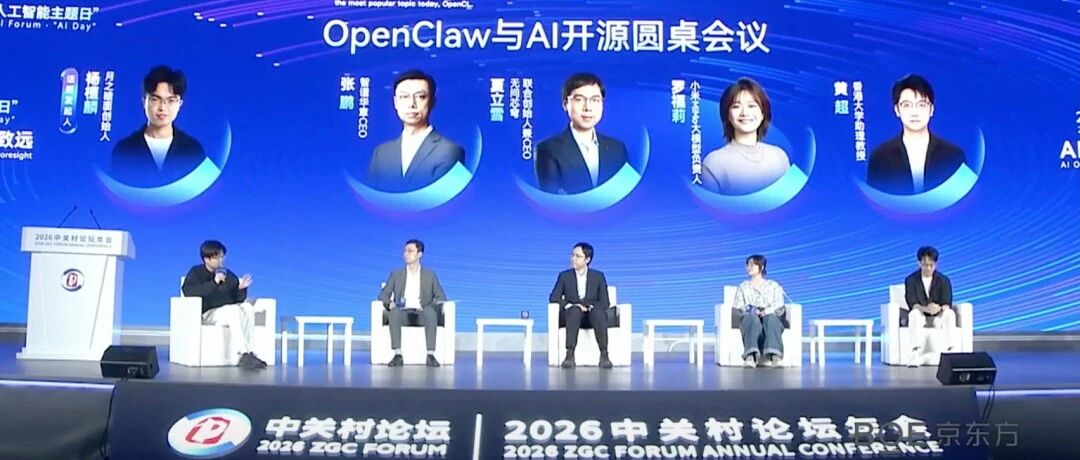
Core Viewpoint - The article discusses the developments and insights from the 2026 Zhongguancun Forum's AI theme day, focusing on the evolution of AI models, particularly the OpenClaw framework, and its implications for the industry. Group 1: Event Overview - The 2026 Zhongguancun Forum is the third year of the event, featuring a packed agenda including the establishment of an open-source alliance and the release of a white paper on sovereign large models [3] - The event gathered key players from the AI industry, including representatives from Eclipse Foundation, Zhiyuan, Xiaomi MiMo, and various embodied intelligence companies, showcasing the active roles in the current AI landscape [3] Group 2: Roundtable Insights - The roundtable discussion covered critical aspects of the AI industry, from model layers to computational infrastructure and agent applications, highlighting the importance of open-source and agent frameworks [5] - Zhang Peng from Zhiyuan explained the rationale behind the price increase of the GLM5 Turbo model, emphasizing the shift from simple chat interactions to task-oriented functionalities, which significantly increases token consumption [5][14] - The discussion revealed that the token usage has surged dramatically, with some companies experiencing a tenfold increase since the beginning of the year, reminiscent of the rapid growth seen during the 3G era [9] Group 3: Model Innovations - The GLM5 Turbo model has been enhanced to support complex task execution, requiring higher computational capabilities and efficient token usage, reflecting a shift towards more sophisticated AI applications [13][14] - The OpenClaw framework is viewed as a revolutionary agent framework that allows users to leverage AI capabilities without extensive programming knowledge, thus democratizing access to advanced AI tools [10][11] Group 4: Future Trends - Key trends identified for the next 12 months include the need for sustainable token usage, as the demand for AI capabilities continues to grow, necessitating efficient resource management [27][28] - The concept of self-evolution in AI models was highlighted, suggesting that models could autonomously improve their performance over time, particularly in scientific research contexts [26] - The importance of computational power was emphasized, with industry leaders expressing concerns that insufficient computational resources could hinder progress and innovation in AI applications [29]

小米集团-W(01810):25Q4业绩点评:新一代SU7拓圈获客,AI取得战略性进展
GUOTAI HAITONG SECURITIES· 2026-03-27 05:40
Investment Rating - The investment rating for Xiaomi Group is "Buy" [7] Core Insights - The report highlights that the pessimistic expectations regarding storage price increases have been largely digested, suggesting a focus on Xiaomi's substantial progress in AI research and development, including models, embodied intelligence, self-developed chips, and operating systems [3][13] - The revenue forecast for FY2026E-FY2028E has been adjusted to RMB 514.1 billion, RMB 584.5 billion, and RMB 661.4 billion respectively, while the adjusted net profit forecast is set at RMB 33 billion, RMB 41 billion, and RMB 52.5 billion for the same period [13] - The target price for Xiaomi Group has been adjusted to HKD 43.4 based on the SOTP valuation method, maintaining the "Buy" rating [13][17] Financial Summary - Total revenue is projected to reach RMB 365.9 billion in 2024, RMB 457.3 billion in 2025, RMB 514.1 billion in 2026, RMB 584.5 billion in 2027, and RMB 661.4 billion in 2028, reflecting growth rates of 35.0%, 25.0%, 12.4%, 13.7%, and 13.2% respectively [5] - Gross profit is expected to be RMB 76.6 billion in 2024, RMB 101.8 billion in 2025, RMB 105.8 billion in 2026, RMB 121.3 billion in 2027, and RMB 139.7 billion in 2028, with gross margins of 20.9%, 22.3%, 20.6%, 20.7%, and 21.1% respectively [5] - Adjusted net profit is forecasted to be RMB 27.2 billion in 2024, RMB 39.2 billion in 2025, RMB 33.0 billion in 2026, RMB 41.0 billion in 2027, and RMB 52.5 billion in 2028, with corresponding growth rates of 41.3%, 43.8%, -15.8%, 24.4%, and 28.0% [5] Market Performance - The stock price range over the past 52 weeks is between HKD 31.58 and HKD 60.15, with a current market capitalization of HKD 841.25 million [8]
速腾聚创(02498):单四季度实现盈利,在手订单充沛
Guoxin Securities· 2026-03-27 05:40
Investment Rating - The investment rating for the company is "Outperform the Market" [6][4][52]. Core Insights - The company achieved a revenue of 7.51 billion CNY in Q4 2025, representing a year-on-year growth of 58.7% and a quarter-on-quarter growth of 84.4%, with a net profit of 1.06 billion CNY [1][9]. - The company has a strong order backlog, benefiting from the rapid development of ADAS and high-level autonomous driving [2][4]. - The company is positioned as a leader in the digital laser radar market, having transitioned from analog to digital technology, which significantly enhances performance and cost-effectiveness [32][35]. Financial Performance - In Q4 2025, the company reported a gross margin of 28.5%, an increase of 6.3 percentage points year-on-year, and a net margin of 13.8%, up 41.5 percentage points year-on-year [1][16]. - The company expects revenues for 2026-2028 to be 34.05 billion CNY, 45.20 billion CNY, and 59.50 billion CNY respectively, with net profits projected at 1.00 billion CNY, 4.58 billion CNY, and 10.11 billion CNY [4][53]. Product and Market Development - The company has entered the mass production phase for its digital laser radar products, with significant sales growth in both the automotive and robotics sectors [2][35]. - The company has established partnerships with over 90% of key Robotaxi and Robotruck players globally, including major companies like Baidu and Didi [2][36]. - The company has also expanded its customer base in the domestic market, securing long-term partnerships with major automotive manufacturers and new clients in various segments [2][39]. Technology and Innovation - The company is focused on AI-driven robotics technology, aiming to become a leading robotics technology platform [27][50]. - The introduction of self-developed core components, such as the Active Camera series, enhances the company's capabilities in the robotics sector [47][48]. - The company is actively exploring the field of embodied intelligence, with plans to develop a general-purpose robot development platform [46][51].