
台湾问题

Search documents
国台办回应高市早苗涉台错误言行:日方应立即停止干涉中国内政 停止挑衅越线
Xin Jing Bao· 2025-11-19 03:12
据央视新闻消息,11月19日,国务院台办举行例行新闻发布会。总台记者提问:日本首相高市早苗涉台 错误言行持续引发国际舆论哗然。总台CGTN全球五个语种网络民调显示,91.1%受访者表示日本应反 思历史罪责,充分尊重中国的主权和领土完整;88.9%受访者谴责日方试图介入台湾问题;88.3%受访 者认为高市早苗将"台湾有事"与集体自卫权挂钩是在为日本军事扩张寻找借口。对此有何评论? 发言人朱凤莲表示,我们也看到了这份民调。民调结果表明,历史不会被遗忘,更不会被篡改。日本首 相高市早苗公然抛出涉台挑衅言论,妄图介入台海局势、否定抗战胜利成果、为军国主义招魂,是对国 际正义的践踏,对战后国际秩序的挑衅,对中日关系的严重破坏,不得不令国际社会强烈质疑和担忧。 朱凤莲强调,台湾问题是中国内政,不容任何外来干涉。日方应立即停止干涉中国内政,停止挑衅越 线,不要在错误的道路上越走越远。希望广大台湾同胞充分认清日本相关行径的危险性、危害性,同我 们一道坚决粉碎一切"台独"分裂行径和外来干涉,守护中华民族共同家园,维护中华民族根本利益和自 身安全福祉。 ...
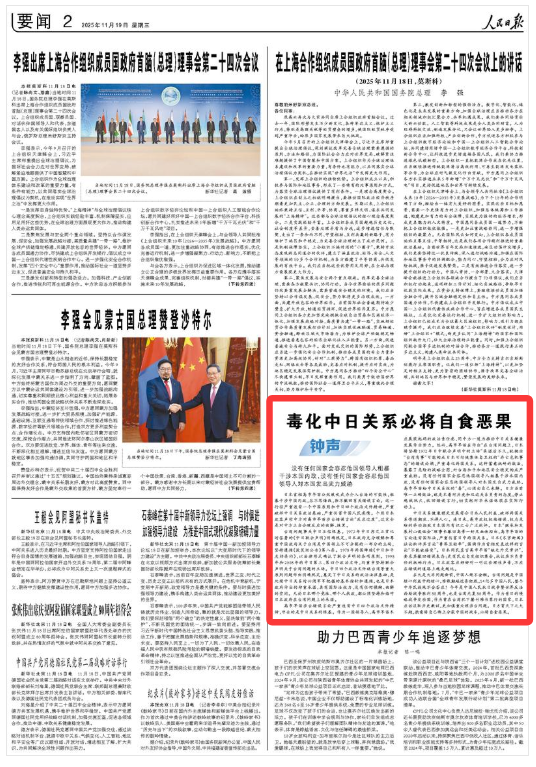
人民日报钟声:没有任何国家会容忍他国领导人对本国发出武力威胁,高市早苗给中日关系投的“毒”,必须由自己来解!
Ren Min Ri Bao· 2025-11-19 00:00
要闻 2 2005年11月18 人民日於 李强出席上福合作纲组成员国政府首届 总理 理事会第二 李强会见蒙古国品理费登沙特! 助力巴西青少年追逐梦想 11月19日,《人民日报》2版刊发"钟声"评论文章《毒化中日关系必将自食恶果》。文章指出,没有任 何国家会容忍他国领导人粗暴干涉本国内政,没有任何国家会容忍他国领导人对本国发出武力威胁。 全文如下 -- 的中日第三、第四个政治文件,均重申坚持联合声明关于台湾问题的立场。中日四个政治文件就台湾等 重大原则问题作出明确规定,奠定了中日关系的政治法律基础,是处理中日关系时必须牢牢把握的基本 指针和遵循,也是日本政府作出的郑重承诺,具有国际法效力,没有任何模糊、曲解的空间。无论日本 哪个党派、哪个人执政,都必须坚持和恪守日本政府在台湾问题上的承诺。 高市早苗涉台错误言论严重违背中日四个政治文件精神,冲击的是中日关系的根基。作为一国领导人, 高市早苗本应展现起码的政治责任感,同中方一道为推动中日关系健康发展作出努力。然而,高市早苗 在作出"在台湾问题上,日本将坚持1972年日中联合声明中的立场"承诺后不久,就抛出"台湾有事"可能 构成日本可行使集体自卫权的"存亡危机事态" ...

【环时深度】高市涉台挑衅言论法理谬误重重
Huan Qiu Shi Bao· 2025-11-18 22:59
Core Viewpoint - The article discusses the recent provocative statements made by Japanese Prime Minister Sanae Takaichi regarding Taiwan, which are seen as a serious challenge to China's core interests and a violation of established political agreements between China and Japan [1][3][5]. Summary by Sections Political Context - The diplomatic discussions between China and Japan on November 18 highlighted China's stern demand for Japan to retract its erroneous statements regarding Taiwan, which are viewed as a blatant interference in China's internal affairs [1]. - Takaichi's remarks are characterized as a significant deviation from Japan's historical commitments and the political consensus established through four key political documents between the two nations [3][5]. Historical Agreements - The four political documents, including the 1972 Sino-Japanese Joint Statement, affirm that Taiwan is an inseparable part of China and that Japan recognizes the People's Republic of China as the sole legitimate government of China [3][5]. - The 1978 Treaty of Peace and Friendship and subsequent agreements reiterate Japan's commitment to these principles, emphasizing that there is no room for misinterpretation regarding Taiwan's status [5][6]. Legal Implications - The article emphasizes that Takaichi's statements contradict the legal obligations Japan has under international law, particularly the principles outlined in the Sino-Japanese agreements [6][9]. - Experts argue that Japan's claims of "position differences" regarding Taiwan are unfounded, as the issue is clearly defined in both international law and bilateral agreements [6][7]. Military and Security Concerns - Takaichi's reference to a "survival crisis situation" stems from Japan's new security laws, which allow for military action even without direct threats, thus undermining Japan's post-war pacifist constitution [7][8]. - The new security framework has raised concerns about Japan's potential military interventions, which could lead to a significant shift in its defense posture and regional stability [8][11]. International Relations - The article critiques Takaichi's statements as a challenge to the post-war international order and fundamental principles of international law, such as non-interference in domestic affairs [9][10]. - The historical context of Taiwan's status is reinforced by international agreements, including the Cairo Declaration and the Potsdam Proclamation, which affirm Taiwan's return to China [9][10]. Domestic Reactions - There is a growing concern within Japan regarding the rise of right-wing ideologies that threaten the country's pacifist stance and historical narrative [11][12]. - Calls for a return to a peaceful national identity are echoed by various commentators, emphasizing the need for Japan to adhere to its commitments to peace and stability in the region [12].
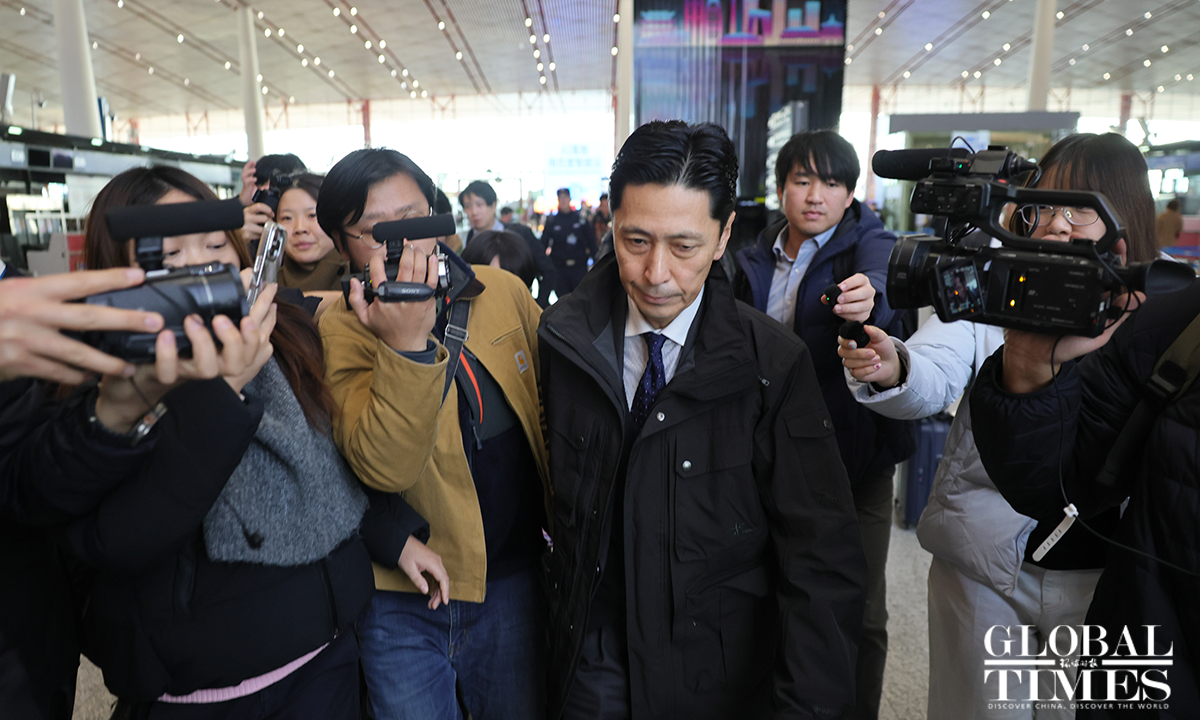
日本终于知道怕了?外务省高官落地北京,想要劝中方“顾全大局”
Sou Hu Cai Jing· 2025-11-18 17:01
在中方持续施加压力多日后,日本政府终于做出了正式回应。 11月17日,据日本共同社报道,日本外务省亚洲大洋洲局局长金井正彰已抵达北京,专程代表日本政府向中方解释首相高市早苗关于台湾问题的不当言论。 自11月9日高市早苗发表"台湾有事就是日本有事"的言论后,已经过去了一周。她曾公开表示,日本将会干预大陆收复台湾的事宜。这一番话从一开始的坚 定立场,到后来开始软化求饶的态度,这其中发生了什么?日本官员此行究竟是为了向中方负荆请罪,还是仅仅为了拖延时间? 这一切的根本问题在于,为什么台湾岛对于日本如此重要! 显然,现在的高市早苗无论内外都有巨大的压力,已经无法用"内忧外患"来形容她的处境了。 自从中国抗日战争胜利80周年、台湾光复80周年以来,历届日本政府从未承受过来自中方如此大的外交压力。无论是外交谴责、召见大使、还是军舰横穿日 本列岛,中国愤怒的姿态令日本前所未见。 虽然日本首相的更换频繁,但像高市早苗这样刚上台便失控的情况,前所未有。而在《解放军报》警告称,如 果日本干涉台海问题,战火可能波及日本本土,并建议近期赴日的中国公民要谨慎后,整个日本也彻底坐不住了。作为战败国,日本深知战争开始前的状态 ——双方外交 ...
中日就高市“台湾有事”发言进行局长级磋商
日经中文网· 2025-11-18 08:00
这是高市早苗答辩之后,中日高官首次面对面讨论。中国政府已呼吁本国民众谨慎前往日本等,中日对 立正逐渐波及实体经济。日本政府希望通过局长级磋商推动事态降温…… 日本外务省亚洲大洋洲局长金井正彰11月18日访华期间在北京与中国外交部亚洲局局长刘劲松举行了会 谈。中日关系相关人士透露了这一消息。预计双方将就日本首相高市早苗在国会关于台湾有事的答辩, 以及中国驻大阪总领事薛剑在社交媒体上的相关发布进行磋商。 日方也对薛剑在X(旧推特)上的发文表示关注,并要求中方采取适当应对措施。薛剑就高市早苗的答 辩内容,在社交媒体上写道:"那颗自以为是地冲过来的肮脏脑袋,只能毫不犹豫地砍下"。 日本执政党内部出现了要求启动"拒绝入境(不受欢迎人物,Persona non grata)"通告、实际上推动将 该外交官召回本国的强硬意见。中方则未改变支持相关发文的姿态。 抵达北 京首都国际机场的日本外务省亚洲大洋洲局长金井正彰(11月17日,Kyodo) 日本经济新闻(中文版:日经中文网)田岛如生 北京 版权声明:日本经济新闻社版权所有,未经授权不得转载或部分复制,违者必究。 日经中文网 https://cn.nikkei.com 视频 ...
就高市早苗涉台错误言论 联合国最新回应
Yang Shi Xin Wen· 2025-11-18 07:26
迪雅里克重申,联合国对台湾问题的官方立场基于联大第2758号决议,联合国对台湾的官方措辞未见改 变,每个联合国会员国都应该支持并尊重《联合国宪章》。 当地时间11月17日,央视记者徐德智就日本首相高市早苗的涉台错误言论提问联合国秘书长发言人迪雅 里克。 ...
联合国秘书长发言人迪雅里克:联合国立场是台湾是中国一个省
Ge Long Hui· 2025-11-18 02:41
格隆汇11月18日|当地时间11月17日,央视记者就日本首相高市早苗的涉台错误言论提问联合国秘书长 发言人迪雅里克。 迪雅里克重申,联合国对台湾问题的官方立场基于联大第2758号决议,联合国对台湾的官方措辞未见改 变,每个联合国会员国都应该支持并尊重《联合国宪章》。 ...
在台湾问题上生事,就是给自己找事
Xin Hua Wang· 2025-11-18 01:35
新华时评|在台湾问题上生事,就是给自己找事 针对高市早苗的严重错误言论和恶劣态度,中国外交部、国防部、国台办及驻日本大使馆连续严正表态、严词警告。其"以台制华"险恶用心激起海峡两岸 中国人强烈愤慨,台湾社会各界痛批这种"不负责任"的言论是在恶意挑拨两岸对立对抗、加剧台海紧张局势,尽显日本右翼政客毫无历史良知、"唯恐台 海不乱"的邪恶本质。当年两岸同胞同仇敌忾,浴血奋战击败入侵者,今日更决不会容忍和姑息历史沉渣泛起、死灰复燃。日本当政者妄图介入台海事 务,完全是误判形势、不自量力,若不思悔改,便是主动绑上分裂中国的战车,必将遭致两岸中国人的共同唾弃和迎头痛击。 日本首相高市早苗近日公然发表涉台露骨挑衅言论,宣称若中国大陆对台湾动武可能构成日本"存亡危机事态"。在中方多次严正交涉后,日方仍不思悔 改,拒不撤回错误言论。上述言行严重违背一个中国原则,粗暴干涉中国内政,向"台独"势力发出严重错误信号。台湾问题是中国核心利益中的核心,是 不容逾越的红线和底线。任何人、任何势力妄图介入台海局势、阻扰中国统一大业,必将自食苦果、玩火自焚。 任何人、任何势力都不要低估中国人民捍卫国家主权和领土完整的坚强决心、坚定意志、强大能 ...
中国严肃要求日方反思纠错,外交部:中日四个政治文件没有任何模糊、曲解的空间
Huan Qiu Shi Bao· 2025-11-17 22:36
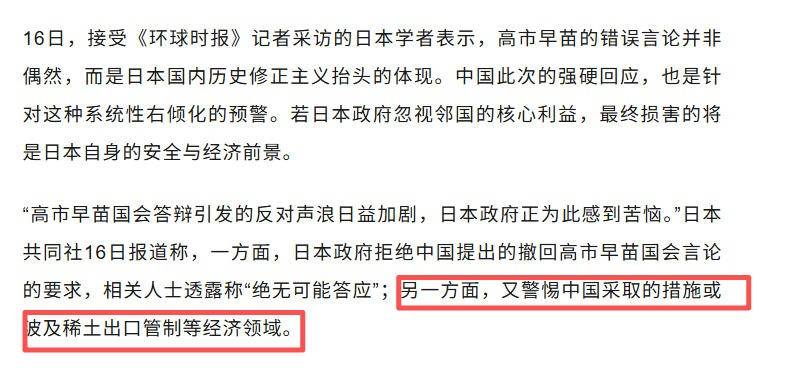
Core Viewpoint - Japanese Prime Minister Fumio Kishida's recent remarks regarding Taiwan have sparked strong backlash from China, leading to significant declines in the Japanese stock market, particularly in sectors heavily reliant on Chinese tourism [1][4][6]. Economic Impact - The Tokyo stock market experienced a continuous decline, with many stocks in the retail, transportation, and tourism sectors dropping over 10% [1][5]. - If the number of Chinese tourists to Japan decreases significantly, Japan's GDP could be reduced by 0.36%, equating to an economic loss of approximately 2.2 trillion yen [1][6]. - Chinese tourists account for about 25% of all visitors to Japan, and any reduction in their travel intentions could have a substantial negative impact on the Japanese economy [4][6]. Market Reactions - The Nikkei 225 index fell by over 1% at the market's opening, with notable declines in airline stocks (down 5.8%), sportswear brands (down 6.6%), and department stores (down 12%) [5]. - Reports indicate that many reservations in Osaka, a city that typically hosts a large number of Chinese tourists, have been canceled, raising concerns among local businesses about potential long-term economic impacts [5]. Diplomatic Developments - Japan's Foreign Ministry is attempting to negotiate with China regarding Kishida's comments, with officials expressing concerns about the potential for reduced people-to-people exchanges between the two countries [2][3]. - The Japanese government has stated that it has lodged formal protests against China's response, emphasizing the need to maintain constructive bilateral relations [2][3]. Political Reactions - There is growing criticism within Japan regarding Kishida's statements, with some politicians warning that his remarks could lead to a "national crisis" for Japan, affecting trade and diplomatic relations with China [7]. - Analysts suggest that Kishida's comments reflect a broader strategic anxiety within Japan regarding its military posture and relations with China, indicating a potential shift towards a more aggressive stance [7].
四问“搞事”的高市早苗
Yang Shi Wang· 2025-11-17 21:57
Group 1 - The core viewpoint of the article revolves around the recent controversial statements and actions of Takashima Sanae regarding Taiwan issues and historical recognition, highlighting the legal invalidity of her remarks on Taiwan [1] - Takashima's attempts to modify the "Three Non-Nuclear Principles" are seen as potentially harmful, raising concerns within Japan about the implications for national security and regional stability [1] - Various sectors within Japan have criticized her statements, indicating a significant backlash against her views on Taiwan and nuclear policy, reflecting broader societal and political tensions [1]