
机器学习

Search documents
S&P Global(SPGI) - 2025 Q3 - Earnings Call Transcript
2025-10-30 13:32
Financial Data and Key Metrics Changes - The company reported record revenue, operating profit, and EPS for Q3 2025, with revenue increasing by 9% year-over-year and adjusted EPS growing by 22% [6][24]. - Subscription revenue rose by 6%, contributing to the overall revenue growth [6]. - The company returned nearly $1.5 billion to shareholders through dividends and buybacks since the last earnings call, with an additional $2.5 billion share repurchase expected in Q4 [6][7]. Business Line Data and Key Metrics Changes - Ratings revenue increased by 12% year-over-year, driven by strong demand in high yield and structured finance [31]. - Market Intelligence saw an 8% organic constant currency growth, marking the strongest growth in six quarters, with double-digit growth in volume-driven products [29]. - Commodity Insights revenue grew by 6%, supported by double-digit growth in energy and resources data [33]. Market Data and Key Metrics Changes - Bond issuance increased by 13% year-over-year, particularly in high yield and structured finance [10]. - The equity markets performed well, contributing to a strong quarter in the Indices business [10]. - The company expects bond issuance growth in the mid to high teens range for Q4 2025 [12]. Company Strategy and Development Direction - The company is focused on strategic investments, innovation, and disciplined execution, with a multi-pronged approach to growth including acquisitions and partnerships [7][8]. - The planned acquisition of With Intelligence aims to enhance the company's data offerings in private markets, allowing for better benchmarking and performance analytics [13][14]. - The company is committed to portfolio optimization and may continue to make tactical divestitures [9]. Management's Comments on Operating Environment and Future Outlook - Management expressed optimism about the current market conditions, noting strong investor demand and resilient market sentiment [31]. - The outlook for the ratings business remains positive, with expectations of continued growth driven by favorable market conditions [60]. - The company anticipates that AI innovations will significantly contribute to both revenue growth and margin expansion in the future [70][74]. Other Important Information - The company announced the divestiture of its enterprise mata Management and thinkFolio businesses as part of its portfolio optimization strategy [8][9]. - Recent leadership changes were noted, including the retirement of Mark Eramo and the appointment of Catherine Clay as the new CEO of S&P Dow Jones Indices [9][10]. Q&A Session Summary Question: Market Intelligence organic growth of 8% - Management attributed the growth to strong execution, product innovation, and alignment within the sales teams, leading to competitive wins [46][49]. Question: Ratings issuance normalization and growth outlook - Management noted that growth exceeded expectations, with a strong outlook for Q4 driven by opportunistic issuance and a healthy maturity wall [57][60]. Question: Role of AI in Market Intelligence margins - Management highlighted that AI investments have positioned the company well for growth and productivity, with ongoing innovations expected to drive margin expansion [68][74]. Question: Strength of private markets growth - Management reported strong performance in private markets driven by ratings issuance and partnerships, enhancing the company's data capabilities [77][80]. Question: Size of EDM and ThinkFolio divestiture - Management indicated that the divestitures were not material to consolidated financials but would be slightly accretive to revenue growth and margins in 2026 [83][84]. Question: AI defensiveness in Market Intelligence - Management expressed confidence that nearly 90% of Market Intelligence revenue is derived from proprietary sources, providing a strong competitive advantage [88].

美国高低频量化管理人开始呈现融合趋势 ——海外量化季度观察2025Q3
申万宏源金工· 2025-10-30 08:02
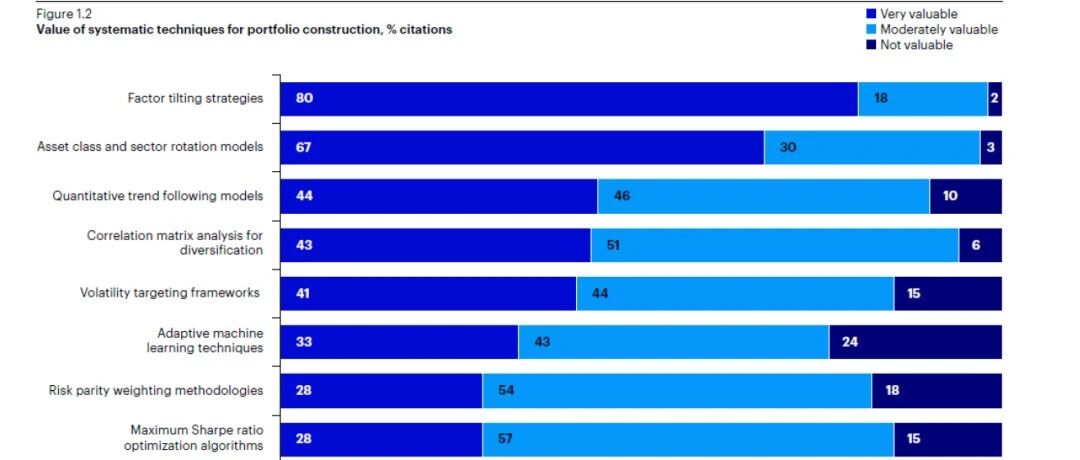
Group 1: Overseas Quantitative Dynamics - The trend of integration between high-frequency trading and quantitative alpha management is emerging in the U.S. private equity market, particularly after a market pullback in 2025 due to a rebound in "junk stocks" [1][2] - High-frequency trading has evolved significantly over the past 20 years, with firms like Citadel and Jane Street facing intense competition, leading them to adopt short-cycle alpha prediction strategies to mitigate pure speed competition [1][2] - Traditional quantitative alpha strategies, which began in the 1980s, have longer holding periods and larger average exposure compared to high-frequency trading, which is now increasingly overlapping with traditional strategies [2][3] Group 2: Market Performance - In the first half of 2025, large quantitative managers like Citadel underperformed smaller managers such as Balyasny and ExodusPoint, with Citadel achieving only 2.5% returns compared to over 7% for smaller firms, primarily due to increased strategy drawdowns from frequent tariff changes [4] - Citadel and Point72's performance improved due to their focus on fundamental, concentrated portfolios, which outperformed their flagship strategies this year [4] Group 3: Regulatory Issues - Jane Street faced regulatory scrutiny in India, with accusations of manipulating market prices on options expiration dates, leading to a suspension of trading privileges and potential penalties [5] Group 4: Overseas Quantitative Perspectives - Machine learning is gaining traction in macro investment, with firms like BlackRock exploring its application to enhance traditional models and extract investment signals from complex macro data [7][10] - AQR's research highlights biases in subjective versus objective stock return predictions, noting that subjective forecasts tend to be overly optimistic, especially following bull markets [15][16] - Invesco's global quantitative survey indicates a rising trend in the use of quantitative methods across multi-asset portfolio management, with a notable increase in the flexibility of factor adjustments [19][22][23] Group 5: Performance Tracking of Quantitative Products - Factor rotation products, such as those from BlackRock and Invesco, have shown varying performance, with BlackRock's products outperforming benchmarks in recent months [28][30] - Machine learning-based stock selection strategies have demonstrated better performance compared to traditional methods, with products like QRFT outperforming AIEQ [43] - The Bridgewater All Weather ETF has shown resilience, recovering quickly from market pullbacks and achieving over 15% cumulative returns since its inception [44][46]


《中国人身保险业经验生命表(2025)》:编表数据首次实现行业全覆盖
Bei Jing Shang Bao· 2025-10-29 09:36
Core Insights - The China Actuarial Association has released the "China Life Insurance Industry Experience Life Table (2025)", marking significant advancements in data collection and analysis for the life insurance sector [1][2][3] Group 1: Highlights of the Life Table Compilation - The life table compilation achieved full industry coverage for the first time, incorporating data from all life insurance companies for policies with a term of one year or more, including death or survival benefits [1] - Data processing efficiency improved, with a 40% reduction in data collection, cleaning, verification, and correction time compared to the previous life table, and the use of AI and machine learning reduced manual claims entry to 5% of the total [1] - The compilation addressed missing death status in policies by employing various methods, ensuring a reasonable death rate and maximizing the use of collected data [1] Group 2: Methodological Innovations - For the first time, trend factors were set based on the insurance industry's historical mortality data rather than population data, providing valuable insights for understanding mortality trends in the insurance sector [2] - A new two-step method for high-age extrapolation was introduced, ensuring that mortality rates for older age groups reflect natural life patterns while considering risk characteristics [2] - A multi-dimensional analysis of mortality rates was conducted, examining factors such as age, gender, distribution channels, coverage amount, and geographic location, allowing for a comprehensive comparison with previous life tables and population mortality rates [2] Group 3: Future Initiatives - The China Actuarial Association plans to conduct promotional training and showcase the project results to the industry and the public, along with the publication of reports to assist in addressing population aging [3]
新检测模型攻克“癌王”早筛难题
Ke Ji Ri Bao· 2025-10-28 23:55
胰腺癌是临床上恶性程度最高的癌症,素有"癌王"之称,患者5年生存率仅为11%。由于缺乏有效的早 期筛查手段,大多数患者确诊时已处于晚期,错过了最佳治疗时机。现有的磁共振成像、内镜超声等检 查手段因成本高昂且具有侵入性,难以适用于大规模筛查;而常用的肿瘤标志物CA19-9在早期诊断中 的特异度和敏感度有限,无法满足临床需求。 郝继辉团队通过整合cfDNA的拷贝数变异、片段长度分布和片段链偏向性等多组学特征,结合机器学习 技术,成功开发出胰腺癌早筛模型。在包含467例样本的训练队列和352例样本的验证队列中,模型展现 出优异的筛查性能,显著优于传统肿瘤标志物CA19-9的筛查能力。 更值得关注的是,团队在1926名糖尿病和肥胖人群组成的前瞻性队列中,还验证了模型的临床价值。该 模型早筛时成功检出6例胰腺癌患者,检出率达75%,所有检出病例均为早期(0期、Ⅰ期或Ⅱ期),而 采用肿瘤标志物CA19-9仅检出1例。与影像学检查相比,该模型能提前45—298天(中位227.5天)发现 病变,为患者进行早期干预治疗赢得了宝贵时间。 记者10月27日从天津医科大学肿瘤医院获悉,该院院长郝继辉教授团队创新性地开发了一种基于循环 ...
报名进行中 | 彭博投资管理论坛(上海)
彭博Bloomberg· 2025-10-28 06:05
Core Viewpoint - The article emphasizes the transformative impact of quantitative research on the asset management industry amidst a rapidly changing global macroeconomic landscape and increasing volatility in international financial markets [1]. Group 1: Event Overview - The event will feature discussions on macro quantitative scenario analysis, risk budgeting applications in the Chinese market, and Bloomberg's portfolio management and factor model solutions [1]. - A roundtable forum will explore how experiences from mature overseas markets can empower the development of quantitative strategy indices in China [1]. Group 2: Key Speakers - Notable speakers include Li Yongjin from CITIC Securities, Arun Verma from Bloomberg, Sue Li from Bloomberg, Wayne Curry from Bloomberg, and several other experts from Bloomberg's global and China teams [2][6]. Group 3: Topics of Discussion - The agenda includes topics such as machine learning strategies driven by macro factors and the application of cutting-edge intelligent technologies in quantitative research [1].

2025谷歌博士生奖学金揭晓,清华、科大、南大等校友入选
机器之心· 2025-10-25 01:03
Core Insights - Google announced the recipients of the 2025 PhD Fellowship, aimed at recognizing and supporting outstanding graduate students in computer science and related fields, with a total funding of over $10 million [5]. Group 1: Fellowship Overview - The Google PhD Fellowship program was established in 2009 to support exceptional research in key foundational sciences [5]. - This year's recipients come from 35 countries and regions across 12 research areas, totaling 255 PhD students [5]. Group 2: Notable Recipients - In the Algorithms and Optimization category, 14 PhD students were awarded, including two Chinese recipients [7]. - In the Computer Architecture category, two PhD students received awards, one of whom is a Chinese recipient [15][16]. - The Human-Computer Interaction category saw 14 awardees, including two Chinese researchers [19]. - The Machine Learning and ML Foundations category had the highest number of recipients, with 38 awardees, including 10 Chinese students [27]. - The Natural Language Processing category included 18 awardees, with one Chinese recipient [81]. - The Privacy and Security category featured 16 awardees, including six Chinese researchers [86]. - The Quantum Computing category had eight awardees, with two being Chinese [103]. Group 3: Research Focus of Chinese Recipients - Tony Eight Lin, a PhD student at Taipei Medical University, focuses on drug discovery and molecular simulation [10]. - Yonggang Jiang from the Max Planck Institute in Germany specializes in algorithm design and analysis, particularly in graph algorithms [14]. - Zhewen Pan, a PhD student at the University of Wisconsin-Madison, has received multiple awards for her work in computer architecture [18]. - Qiwei Li from the University of Michigan focuses on critical technology issues related to gender and AI [23]. - Yichuan Zhang, a PhD student at the University of Tokyo, has presented on human-computer collaboration in time series prediction [26]. - Wei Xiong from the University of Illinois at Urbana-Champaign is researching reinforcement learning applications in large language models [47].


为中国企业“走出去”提供更好更全面的风险保障
Zhong Guo Zheng Quan Bao· 2025-10-23 20:12
Core Viewpoint - The reinsurance industry in China is facing both opportunities and challenges as Chinese enterprises accelerate their global expansion, necessitating enhanced risk management and service capabilities to support these ventures [1][2]. Group 1: Support for Chinese Enterprises Going Global - As of the end of 2024, Chinese investors have established 52,000 overseas enterprises in 190 countries and regions, creating a significant demand for reinsurance services to safeguard overseas interests [1]. - The company aims to strengthen its capabilities, enhance risk management services, and build a robust network to provide comprehensive risk protection for Chinese enterprises venturing abroad [2]. - A recent collaboration between the company and Hyundai Insurance aims to develop data-driven overseas insurance solutions for new energy vehicles, marking a new model for international insurance cooperation in this sector [2][3]. Group 2: Promoting Technological Innovation and Industry Development - Technology insurance is emerging as a critical area, categorized into two types: insurance for technological activities and insurance for technological entities, each presenting unique challenges compared to traditional insurance [3]. - The company is actively exploring innovative paths to adapt to the evolving demands of technology innovation, including the launch of various industry service platforms and pricing models for new technologies [3]. - The application of advanced technologies such as artificial intelligence and machine learning is expected to enhance the service capabilities and operational efficiency of the reinsurance industry [3]. Group 3: Participation in the Shanghai International Reinsurance Center - The company has been deeply involved in the development of the Shanghai International Reinsurance Center, establishing an operational center in Shanghai to support centralized trading and information integration [4]. - In May, the company completed on-site trading agreements with other insurers, with a total signing amount exceeding 5 billion yuan, demonstrating its commitment to facilitating reinsurance transactions [4]. - The company plans to leverage the advantages of the Shanghai International Reinsurance Center to expand its international reinsurance business and contribute to global risk governance [5].
Patterson-UTI Energy(PTEN) - 2025 Q3 - Earnings Call Transcript
2025-10-23 15:00
Financial Data and Key Metrics Changes - Total reported revenue for Q3 2025 was $1.176 billion, with a net loss attributable to common shareholders of $36 million or $0.10 per share, and an adjusted net loss of $21 million [20] - Adjusted EBITDA for the quarter totaled $219 million, with total CapEx at $144 million [20][26] - The company generated $146 million of adjusted free cash flow during the first three quarters of the year [20] Business Line Data and Key Metrics Changes - In the drilling services segment, Q3 revenue was $380 million with an adjusted gross profit of $134 million, while completion services revenue totaled $705 million with an adjusted gross profit of $111 million [22][23] - The drilling products segment reported revenue of $86 million with an adjusted gross profit of $36 million, impacted by higher bit repair expenses [24][26] Market Data and Key Metrics Changes - The U.S. contract drilling business saw an average operating rig count of 95 rigs, with activity stabilizing as the company exited Q3 [22][23] - In Canada, there was a strong recovery in revenue post-spring breakup, while international revenue declined mainly in Saudi Arabia [17] Company Strategy and Development Direction - The company is focused on enhancing commercial strategies through service and product line integration, performance-based agreements, and lowering cost structures [4][5] - Investments are being made in technologies that are in high demand, with expectations of strong returns [8][9] - The company aims to return at least 50% of annual free cash flow to shareholders through dividends and share repurchases [9][20] Management's Comments on Operating Environment and Future Outlook - Management noted that while oil prices have fallen, they have remained more resilient than expected, with long-term global demand growth continuing [5] - The outlook for natural gas appears favorable, with physical demand growth from LNG starting to come online [6] - The company expects lower capital expenditures in 2026 compared to 2025, while still maintaining high-demand fleet and investing in new technologies [8][9] Other Important Information - The company closed Q3 with $187 million in cash and an undrawn $500 million revolver, indicating strong liquidity [9][26] - The company has repurchased 44 million shares since the NextTier merger and Altera acquisition, reducing share count by 9% [21][22] Q&A Session Summary Question: Completion services pricing trends - Management highlighted that their teams are executing high-end work, which has allowed them to maintain pricing without significant pressure to reduce it [34] Question: Fleet renewal programs for 2026 - The company is excited about the 100% natural gas direct-drive emerald systems and plans to continue investing in high-end equipment while allowing lower-tier equipment to attrition [36] Question: Power market opportunities - Management acknowledged their expertise in power generation but noted that entering larger power markets would require significant capital and may not align with immediate shareholder value [42][45] Question: Completion optimization software - The EOS Completions platform is being rolled out across all fleets, which is expected to improve performance and reliability [46] Question: Customer discussions amid macroeconomic uncertainty - Customers are seeking to maintain production levels despite a softer commodity environment, leading to requests for more technology and efficiency [54] Question: Pricing expectations for 2026 - Management indicated that while there may be some pricing movement, overall demand for natural gas services remains strong, which should support pricing stability [70]

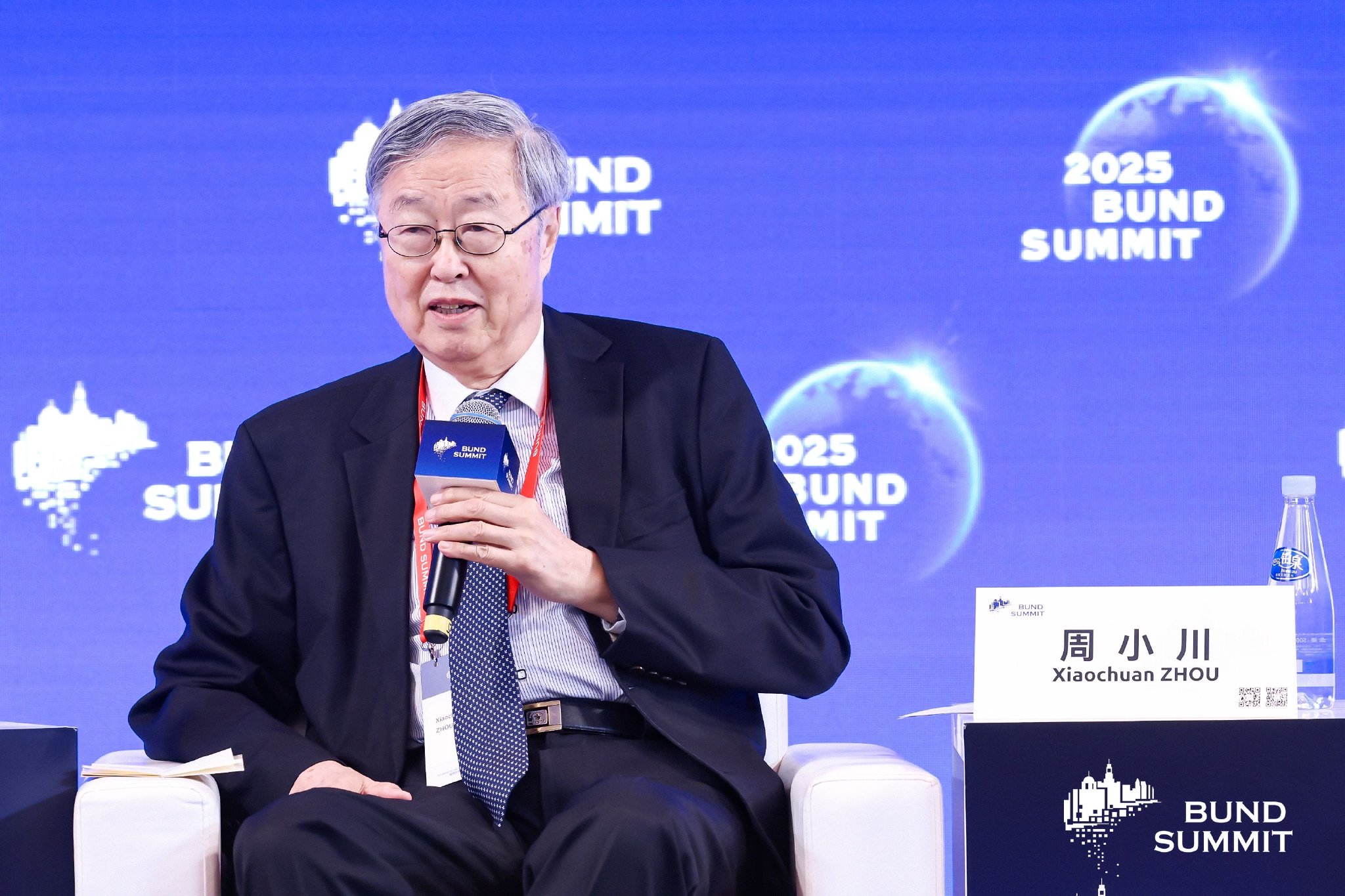
中国人民银行原行长周小川:AI给金融系统带来很大的边际变化
Shang Hai Zheng Quan Bao· 2025-10-23 10:36
Core Viewpoint - The rise of artificial intelligence (AI) represents a significant marginal change in the financial system, building upon historical advancements in information processing, IT, and automation [1] Group 1: Transformation of Banking Industry - The banking industry is transitioning from traditional banking to a data processing industry, fundamentally altering its nature [3] - Payment services are now closely linked to data processing, while deposits and loans rely on big data analysis for pricing [3] - The relationship between humans and machines has evolved from human-led to machine-assisted interactions, with humans primarily serving as interfaces between machines and customers [3] Group 2: Impact of AI on Banking - AI's emergence has led to the utilization of vast amounts of data for machine learning and deep learning, shifting traditional models to intelligent reasoning models [4] - Customer behavior is changing, with a growing preference for machine interactions over human communication in banking services [4] - AI plays a crucial role in payment processing, pricing, risk management, and marketing within the banking sector [4] Group 3: Regulatory Changes - AI can significantly enhance anti-money laundering and counter-terrorism financing efforts by analyzing large datasets to identify suspicious activities [4] - The use of machine learning and deep learning can improve regulatory frameworks by uncovering patterns from historical data [5] - The development of AI introduces challenges related to model opacity, necessitating new regulatory approaches to manage the outcomes of black-box models [6] Group 4: Monetary Policy and Financial Stability - The influence of AI on monetary policy is still under observation, with no significant impact noted thus far [5] - AI could potentially help predict financial instability by analyzing historical financial data and identifying patterns leading to crises [5] - There is a need for broader application of AI to process unstructured data and consider social sentiment in financial stability assessments [5] Group 5: International Cooperation - There is an opportunity for international collaboration to enhance AI infrastructure within the financial sector, particularly in improving connectivity and capabilities [7]
基金配置策略报告:AI看图:K线识别和趋势预测-20251023
ZHESHANG SECURITIES· 2025-10-23 10:18
Core Insights - The report studies a paper titled "(Re-)Imag(in)ing Price Trends," which presents a method for K-line image recognition and trend prediction based on convolutional neural networks (CNN), aiming to localize this approach for the domestic market [1] Group 1: Research Background - The paper automates the visual analysis process of K-line charts, addressing limitations in traditional financial models that rely on subjective human experience [11][14] - The innovative approach utilizes machine learning to discover predictive patterns from data without pre-setting specific models, aligning more closely with how traders analyze charts [11][14] Group 2: Model Essence - The first step involves generating standardized K-line technical charts from historical market data, utilizing daily frequency data from the CRSP database covering 1993-2019 [11][12] - The CNN model is designed to automatically extract local features through convolution and pooling operations, with a focus on predicting future return directions rather than precise values [14][18] Group 3: Empirical Results - The model demonstrates strong predictive accuracy, achieving a 53.3% accuracy rate for predicting 20-day returns, significantly outperforming random guessing [19][20] - In portfolio construction, a long-short strategy based on 20-day images yields an annualized Sharpe ratio of 2.2, far exceeding traditional momentum strategies [22][24] Group 4: Practical Application - The model's transferability is validated, showing that a model trained on U.S. stocks can be applied to 26 other countries, often outperforming locally trained models [25][28] - Initial applications in the domestic market using data from 20 major ETFs since 2020 achieved a classification accuracy of 55.3%, indicating the model's ability to extract valuable information from K-line images [37][39] Group 5: Investment Practice - The report proposes a localized model construction process, emphasizing the importance of data diversity to avoid overfitting and enhance the model's learning capabilities [35][36] - The model's design includes data cleaning, standardization, and the generation of 2D images from raw price-volume data, followed by training using a deep learning framework [36][37]
